This site is supported by our readers. We may earn a commission, at no cost to you, if you purchase through links.
 The first sign something’s off isn’t always a bang or a flutter—it’s that sharp, urgent chirp echoing up from last night’s ashes. You pause, waiting for it to stop, but it’s relentless, insistent, a tiny heart drumming in the dark.
Most folks discover their surprise guest this way: a bird’s frantic call or the scratch of claws against brick, kicking off a scramble to restore calm before feathers or soot coat the living room.
Knowing how to get a bird out of your fireplace the right way—safely for you and the bird—turns a stressful moment into a simple fix.
Table Of Contents
- Key Takeaways
- Signs a Bird is Stuck in Your Fireplace
- How to Safely Remove a Bird From Your Fireplace
- Essential Tools and Materials for Bird Removal
- When to Hire a Professional for Bird Removal
- Preventing Birds From Entering Your Chimney Again
- Frequently Asked Questions (FAQs)
- What to do if you have a bird in your fireplace?
- Can a bird fly back out of a chimney?
- How long can a bird live in fireplace?
- How do you get a dead bird out of a chimney?
- Can birds in chimneys cause damage to the structure?
- Are certain bird species more likely to enter chimneys?
- How do I know if the bird is injured or not?
- Can I use noise-making devices to scare the bird out?
- Are there any local regulations regarding bird removal and relocation?
- What risks do bird droppings pose indoors?
- Conclusion
Key Takeaways
- Birds stuck in your fireplace reveal themselves through sharp chirping, frantic scratching, and scattered feathers or nesting materials.
- To remove a trapped bird safely, prepare the area, open windows for an exit, and use gentle methods like dimmed lights, soft voices, and protective towels if needed.
- Long-term prevention relies on installing chimney caps, routine inspections, and properly sealing entry points to keep birds and other animals out.
- Sometimes calling a professional is safest, especially if removal attempts fail or risks increase, with services often costing between $200 and $800 but reducing danger and future damage.
Signs a Bird is Stuck in Your Fireplace
The first step in managing a bird in your chimney is knowing you actually have one. Birds create distinct sounds and leave telltale signs that set them apart from other intruders.
Here’s what to listen and look for when you suspect a feathered visitor has taken up residence in your fireplace.
Common Sounds Birds Make in Chimneys
If you’ve got a bird trapped in your chimney, you’ll likely hear a mix of frantic scratching, fluttering wings, and high-pitched chirping that intensifies during daylight hours. These bird noises tell you exactly what’s happening inside—whether it’s a single adult struggling for escape or baby birds calling for their parents.
Here’s what to listen for during a chimney safety check:
- Sharp, repetitive chirping sounds—often from Chimney Swifts or nestlings demanding food
- Persistent scratching noise against brick or metal as claws scrape for grip
- Rhythmic flapping sounds when the bird attempts vertical flight in tight spaces
- Soft, continuous nesting calls from mother birds tending their young
- Panicked rustling that peaks at dawn and dusk when birds are most active
Recognizing these sounds early makes bird removal from chimneys safer and prevents serious bird nesting complications.
Distinguishing Bird Noises From Other Animals
Knowing whether you’re dealing with a bird or another critter—like a squirrel, raccoon, or bat—can save you time and help you choose the right removal approach. Birds produce high-pitched chirps and quick fluttering, while squirrels create heavier scrambling sounds with distinct chattering. Raccoons make deep growls and thudding movements that shake the chimney. Bats emit ultrasonic clicks detectable through wildlife acoustics equipment.
Recognizing bird calls makes it easier to tell the gentle scratching of birds apart from the louder, more forceful scraping that bigger animals make.
This distinction helps you make safer, smarter decisions before attempting to remove a bird from your chimney.
Visual Clues and Physical Evidence
Beyond the sounds echoing from your chimney, look around your fireplace for feathers, droppings, or bits of twigs and grass that signal a bird’s presence inside. These telltale signs help you confirm what’s trapped before you start bird removal:
- Nesting materials like sticks scattered near the fireplace opening
- Feathers found on the hearth or damper
- Bird droppings staining the firebox walls
- Foul odors indicating a dead bird in the chimney
- Soot disturbances showing recent movement
Fresh evidence means the bird’s likely alive and needs immediate help.
How Long Birds Can Survive in Chimneys
Once you’ve spotted the signs, time becomes critical—smaller birds like sparrows usually survive only 3 to 5 days trapped in chimneys due to their high metabolic rates and rapid dehydration. Pigeons can last up to two weeks if conditions allow, but most birds succumb to exhaustion, starvation, or environmental stress within a week.
Chimney entrapment mortality trends show that without swift wildlife removal, bird survival rates drop sharply, especially in extreme temperatures when bird physiology can’t cope. Understanding chimney bird removal is vital for saving trapped birds.
How to Safely Remove a Bird From Your Fireplace
Once you’ve confirmed a bird is trapped in your fireplace, it’s time to act quickly and calmly. The removal process depends on whether the bird can fly out on its own or needs gentle assistance.
Here’s how to manage each scenario safely and humanely.
Preparing The Area for Bird Removal

Before you coax a panicked bird out of your chimney, you need to set the stage so the rescue doesn’t turn into chaos. Close interior doors to contain the bird, open windows in the room for an escape route, and remove pets from the area.
Cover mirrors and glass to prevent injury. Dim the lights—birds naturally fly toward brightness. Wear gloves and have towels ready for safe management.
Allowing The Bird to Escape Naturally

Sometimes the smartest move is to step back and let the bird find its own way out. Open the flue damper completely and darken the room—birds instinctively fly toward light and fresh air. Leave one window or door open as an exit, then quietly leave the area for 30 minutes.
This natural escape method respects wildlife safety and reduces stress for both you and the bird.
Guiding The Bird Out Using Safe Methods

If the bird doesn’t head for the exit on its own, you’ll need to gently steer it toward freedom without spooking it further. Use soft voices and subtle hand movements—never chase or grab.
Point your flashlight toward the exit to help guide the bird out.
Keep things quiet and move slowly—staying patient and calm is the best way to help it leave safely.
Capturing and Releasing The Bird Safely
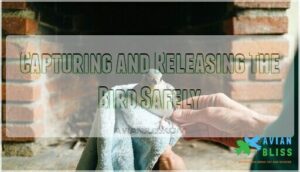
Ever feel like you’re about to play referee in a high-stakes match between nerves and feathers?
With Bird Management, scoop the bird gently using a towel—never bare hands—to protect both you and the bird. Quietly relocate it outside, choosing a low-stress spot for release.
Taking this gentle approach to releasing birds isn’t just thoughtful—it’s at the heart of safe, humane wildlife handling.
Essential Tools and Materials for Bird Removal

Getting a bird out of your fireplace is much simpler when you have the right supplies on hand. The right tools can make the entire process safer for you and less stressful for the bird.
Here’s what you’ll want to have ready before you start.
Using Towels, Gloves, and Cardboard Sheets
When things get feathery and frantic behind the glass, a towel, a sturdy pair of gloves, and a well-placed piece of cardboard can turn you into the hero of your own wildlife rescue story. Here’s the order of operations for Gentle Management and Safe Extraction:
- Suit up with Protective Gear—gloves especially.
- Use a towel for Humane Removal and bird wrapping.
- Cardboard shields your escape route.
Flashlights and Safe Barriers
Nothing clears up the chaos in a hearth faster than a good flashlight and a solid plan for keeping curious wings and beaks exactly where you want them. Shine the beam upward to guide the bird, use reflective barriers to gently redirect flight, and stage safe exits.
Here’s how tools stack up:
| Barrier Materials | Flashlight Techniques | Safe Removal Tips |
|---|---|---|
| Cardboard screens | Angled beam guidance | Cover sharp edges |
| Reflective foil | Soft beam, low-glare | Wear gloves |
| Towels over gaps | Avoid startling flicks | Block off rooms |
| Plastic sheeting | Light exit path | Prep box outside |
Chimney Caps for Long-Term Prevention
After you’ve corralled your uninvited guest with a flashlight and makeshift barriers, it’s time to think about blocking future sneak-ins with a sturdy chimney cap.
A sturdy chimney cap keeps birds at bay and helps catch stray sparks, making it an essential part of your roof maintenance.
It also allows your chimney to breathe and simplifies dealing with wildlife, ensuring your chimney functions efficiently and safely.
When to Hire a Professional for Bird Removal

Sometimes, getting a bird out of your fireplace isn’t as simple as it sounds. There are moments when it’s safer—and smarter—to call in a pro.
Here’s how to tell if it’s time to bring in expert help and what you should expect along the way.
Signs You Need Expert Help
Some situations really call for a pro, and knowing when to make that call can save both you and the bird a world of trouble.
- You hear persistent flapping or loud distress calls
- There’s visible Bird Damage or potential Chimney Hazards
- Attempts at bird removal techniques fail repeatedly
- Risk of Wildlife Risks or injury grows
- Professional Fees outweigh DIY danger
What to Expect From Wildlife Control Services
Once you realize your feathered visitor needs a professional touch, it helps to know exactly what kind of help is on the way. Wildlife Experts bring safe removal methods, compassion for Animal Welfare, and knowledge of bird removal techniques.
You’ll get a combination of nuisance control and gentle removal techniques, along with practical tips for preventing future visits.
All services are clearly explained by experienced wildlife professionals, including a breakdown of service costs.
Cost and Safety Considerations
You’ll weigh Bird Removal Costs against peace of mind—hiring pros often means cleaner chimneys, fewer risks, and safer homes. Homeowners usually see Professional Fees from $200 to $800 for a stuck bird in the fireplace, but proper Safety Equipment and experience shield you from hidden dangers.
Quick tip: prevention methods and solid Insurance Coverage keep future headaches at bay. Installing a [chimney bird guard]() can be a vital step in preventing birds from nesting in your chimney.
- Protects your family and home safety
- Reduces risks from bacteria, parasites, and dust
- Shields your wallet from future repairs
- Keeps wildlife removal humane, not harmful
- Helps avoid insurance headaches and denied claims
Preventing Birds From Entering Your Chimney Again

Once a bird has found its way into your chimney, you don’t want to go through that mess again. There are a few straightforward ways to keep birds out for good.
Here’s what you’ll want to think about next.
Installing Chimney Caps and Screens
Think of a chimney cap like a sturdy roof for your fireplace—one small upgrade keeps birds, rain, and troublemakers out for good.
Chimney Cap Installation isn’t just about blocking access; it’s about smart ventilation systems and choosing screen materials that won’t rust or snag.
Add bird deterrents, and you’ll turn your chimney into a fortress, safeguarding future roof maintenance and chimney maintenance.
Regular Chimney Inspection and Maintenance
It’s remarkable how much trouble you can dodge by checking your chimney now and then—small habits today save you big headaches down the road.
Regular chimney cleaning and flue maintenance keep smoke flowing where it should, while annual inspections catch cracked caps, stuck dampers, and hidden nests.
Ventilation checks and nest removal all play their part in dependable chimney maintenance and repair.
Sealing Entry Points and Removing Debris
Locking birds out for good starts with tracking down every hidden gap and sweeping away old debris that tempts them back.
Slide on gloves, clear out nesting material, and check around your chimney cap and damper for cracks or loose spots.
Use reliable bird deterrents and entry point sealing to keep feathery squatters from turning your chimney into their next nest.
Legal Considerations for Bird Nest Removal
Plucking a bird nest from your chimney isn’t as simple as it sounds—federal protections like the Migratory Bird Treaty Act can make unpermitted nest removal a costly misstep.
Bird permits and wildlife laws don’t just protect birds; they safeguard essential nesting habitats and echo the broader goals of wildlife protection and conservation efforts right in your own backyard.
Frequently Asked Questions (FAQs)
What to do if you have a bird in your fireplace?
Bird Safety comes first—don’t panic if you spot a bird or hear frantic fluttering in your chimney. Pause, assess risks, and close doors to other rooms.
Fireplace Hazards like open flames or sudden noises can stress trapped wildlife.
Can a bird fly back out of a chimney?
Letting the cat out of the bag, a bird can often use a Chimney Escape if the flue’s open and no chimney cap blocks its way.
Bird Flight isn’t always smooth though—nest debris in Ventilation Systems or closed dampers stall their exit.
How long can a bird live in fireplace?
Most birds can survive in a fireplace for up to three days, but fireplace hazards and chimney obstructions can significantly reduce this time.
Bird behavior and nesting duration also play a crucial role in their survival. Wildlife conservation efforts often emphasize the need for prompt rescue to improve bird survival rates.
How do you get a dead bird out of a chimney?
When a dead bird blocks your chimney, treat it like a ticking clock. Suit up, open the flue, and use long tongs or gloved hands for Dead Bird Removal, prompt Chimney Cleaning, and urgent Debris Extraction.
Can birds in chimneys cause damage to the structure?
Chimney damage from bird nesting and habitats isn’t just a nuisance—it can spark real structural issues, fire risks, and costly chimney maintenance and repair. Nesting hazards block airflow, while droppings corrode masonry.
Wildlife control and a sturdy chimney cap prevent these headaches.
Are certain bird species more likely to enter chimneys?
Imagine Chimney Swifts hosting an open house—some bird species just love your fireplace.
Thanks to their nesting habits, their bird behavior fits right in with chimney attractions. These infestation patterns even catch the attention of wildlife conservation efforts.
How do I know if the bird is injured or not?
Injury Assessment starts with Bird Behavior. If you see the bird trembling, dragging a wing, or showing Physical Symptoms like open wounds, call wildlife rescue.
Gentle Wildlife Care is key during bird rescue for health and wellness.
Can I use noise-making devices to scare the bird out?
Using Noise Devices or Audio Deterrents like Ultrasonic Repellents can sometimes startle a bird, but results are unpredictable. Gentle scare tactics may work, but don’t rely on sound alone for bird control or a safe bird rescue.
Are there any local regulations regarding bird removal and relocation?
If you thought wrangling a bird was wild, try deciphering Local Laws and Conservation Rules.
Bird Permits and Relocation Guidelines vary, so checking Wildlife Regulations keeps you out of hot water with bird protection and wildlife management agencies.
What risks do bird droppings pose indoors?
Bird droppings indoors bring real health hazards—think Disease Transmission, Airborne Pathogens, and Fecal Contamination.
They harbor bird flu and parasites, compromising indoor bird health and wellness, and even risk infestations without proper wildlife management.
Conclusion
Like a lost songbird finding its way at dawn, helping a trapped bird escape your fireplace isn’t just about intervention—it’s about respect for wild, unpredictable life. By learning how to get bird out of fireplace the right way, you become both protector and problem-solver.
The flurry of wings, sudden hush, and return to quiet remind you: sometimes the simplest acts—done calmly and with care—restore balance to your home, and to the world outside your window.