This site is supported by our readers. We may earn a commission, at no cost to you, if you purchase through links.
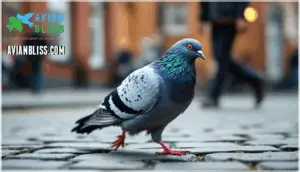 A pigeon walks across the sidewalk in front of you, and its head jerks forward in a rhythm that looks almost mechanical—like it’s nodding along to a song only it can hear. That distinctive back-and-forth motion isn’t a quirky personality trait or a nervous habit.
Birds wiggle their heads to solve a problem most animals don’t face: their eyes can’t move in their sockets the way yours do. The head bobbing you see is actually a clever visual stabilization system that keeps the world from turning into a blur every time they take a step, allowing them to track threats, spot food, and navigate their surroundings with considerable precision.
Table Of Contents
- Key Takeaways
- The Mechanics of Head Bobbing: Understanding The Movement Patterns
- Head Bobbing and Prey Detection: an Essential Survival Skill
- Frequently Asked Questions (FAQs)
- Why do birds wobble their heads?
- What does it mean when a bird keeps shaking its head?
- Why do parrots wiggle their heads?
- Why do birds keep moving their necks very often?
- Does head bobbing vary by bird species?
- How does head bobbing aid in navigation?
- What are the evolutionary origins of head bobbing?
- Which bird species wiggle their heads most frequently?
- Do baby birds wiggle heads differently than adults?
- Can head wiggling indicate illness or injury?
- Conclusion
Key Takeaways
- Birds bob their heads to stabilize their vision while walking because their eyes can’t move in their sockets like ours, using a two-phase pattern where the head locks in place while the body moves forward, then thrusts rapidly to catch up.
- This head-bobbing motion sharpens depth perception and reduces visual blur, helping birds spot predators, locate food, and navigate their environment with precision up to 200 yards away in species like hawks and eagles.
- Ground-dwelling birds like pigeons, doves, and chickens bob their heads most frequently, while species with different eye positioning like ducks and geese rarely need this behavior for visual stability.
- The frequency and style of head bobbing varies by species and age, with chicks showing exaggerated begging movements while learning coordination, and abnormal wiggling potentially signaling neurological issues or injury in any bird.
The Mechanics of Head Bobbing: Understanding The Movement Patterns
When you watch a bird walk, you’ll notice its head moves in a distinct pattern that looks almost mechanical. This movement isn’t random—it follows a precise sequence that helps the bird see clearly while its body is in motion.
Let’s break down the two main components that make head bobbing work.
Locked Position and Rapid Forward Thrust
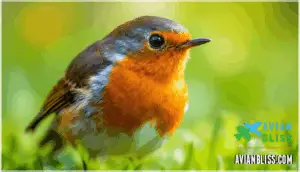
When a bird walks, its head doesn’t glide smoothly like you might expect—instead, it moves in sharp, deliberate bursts that look almost mechanical. This innate behavior begins shortly after hatching, maintaining balance while the bird’s body shifts beneath its stationary head.
The headbobbing mechanics follows a two-phase pattern:
- Locked Position: The head holds completely still while the body moves forward
- Thrusting Mechanics: A rapid forward thrust propels the head to catch up
- Visual Stabilization: This keeps images steady on the retina for improved visual acuity
- Energy Expenditure: Minimal effort required compared to constant head adjustment
- Evolutionary Advantage: Stabilizing vision helps birds navigate and detect threats
Visual Error Correction and Balance
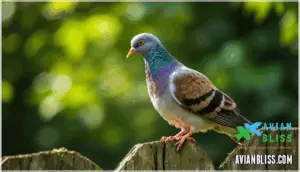
The mechanics of head-bobbing directly translate into visual problem-solving. Sensory integration combines optic flow from the ground, neck mechanics feedback, and vestibular signals to fine-tune what you’re seeing. Foveal orientation locks onto targets during the hold phase, while gait coordination makes certain your head stays level even as your body bounces. This visual error correction system prevents blur and maintains balance. During flight, birds also use avian head stabilization to improve vision.
Key benefits include:
- Sharpened depth perception for judging distances to food or predators
- Reduced retinal image jitter that would otherwise distort moving scenes
- Enhanced stabilizing vision through the neck’s viscoelastic damping properties
- Precise balance maintenance by compensating for trunk fluctuations during walking
Head Bobbing and Prey Detection: an Essential Survival Skill
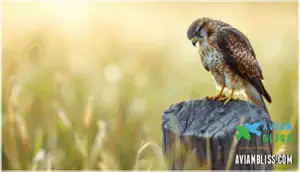
Predator vigilance sharpens when birds like hawks and eagles rely on headbobbing to scan their surroundings. During each hold phase, visual acuity peaks, letting raptors spot movement up to 200 yards away. This distance mapping turns motion parallax into precise coordinates, improving foraging efficiency.
Birds use head bobbing to achieve monocular depth perception despite having laterally displaced eyes. Owls use spatial triangulation through bobbing to track prey in darkness.
For these hunters, prey detection isn’t just about seeing—it’s about translating head movements into hunting success, a survival skill refined over millions of years.
Frequently Asked Questions (FAQs)
Why do birds wobble their heads?
You can think of head bobbing as nature’s built-in camera stabilizer. Birds lock their heads in place momentarily, then thrust them forward as their bodies move, creating visual stability that sharpens focus and improves depth perception while they’re on the move.
Birds lock their heads mid-step like a built-in camera stabilizer, creating visual stability that sharpens focus and depth perception while moving
What does it mean when a bird keeps shaking its head?
Ever noticed a bird vigorously shaking like it’s dodging invisible raindrops? That head shaking often means visual stabilization to track movement, but it can also signal debris removal, feather maintenance, or communication signals between birds.
Sometimes it’s grooming behavior, a stress response, fear response, or—rarely—neurological issues affecting coordination.
Why do parrots wiggle their heads?
Parrots wiggle their heads to stabilize their vision and sharpen focus. This motor control behavior corrects visual errors as they move, helping them process surroundings with precision.
Head wiggling also functions as an adjustment to their crop after eating or acts as social signaling within flocks.
Why do birds keep moving their necks very often?
Birds constantly adjust their necks for visual stability and depth perception. This frequent neck movement helps them maintain a stable gaze while in motion, avoiding muscle fatigue and enhancing visual perception through evolutionary advantages in environmental adaptation.
Does head bobbing vary by bird species?
Head-bobbing patterns differ widely among species. Ground-dwelling birds like pigeons and chickens bob frequently to stabilize vision while walking, whereas raptors like hawks use deliberate head movements to track prey with precision. Ducks and geese rarely bob because their eye positioning provides broader visual coverage without needing constant head adjustments.
How does head bobbing aid in navigation?
Like a GPS that never loses signal, head bobbing helps birds build spatial awareness and navigate their world with precision. This behavior improves depth perception and visual acuity, allowing birds to refine their flight paths and avoid obstacles.
Through continuous environmental learning and refined avian vision, birds create cognitive maps of their environment.
What are the evolutionary origins of head bobbing?
Over millions of years, evolutionary pressures shaped head bobbing to improve depth perception and visual stabilization in ground-dwelling birds. This adaptive advantage improved their ability to detect predators and locate food, making it an essential survival trait.
Which bird species wiggle their heads most frequently?
Pigeons, doves, and chickens exhibit head bobbing most frequently among all species. Ground-dwelling birds show this behavior more often than tree-dwellers, with diet correlation and habitat influence driving the evolutionary advantage of species-specific head movements for vision stabilization.
Do baby birds wiggle heads differently than adults?
Yes, baby birds wiggle their heads differently. Chicks use exaggerated front-to-back begging behavior when requesting food from parents.
Their motor skills and visual development are still maturing, so movements appear less coordinated than adults until avian behavior patterns fully develop.
Can head wiggling indicate illness or injury?
Abnormal head wiggling can signal health problems. Watch for persistent, uncoordinated movements—these may point to neurological issues, parasitic infections, or balance problems from injury.
Birds experiencing stress and fear response may also exhibit unusual head movements alongside feather plucking or other injury indicators.
Conclusion
Picture a pigeon freezing mid-step, its head locked in place while its body glides forward—a split-second snapshot that keeps its world sharp and steady. That’s why birds wiggle their heads: it’s not decoration or dance, but a finely tuned survival mechanism compensating for immobile eyes.
Every bob is a calculated pause that transforms potential blur into clarity, letting birds spot predators, track prey, and move through space with confidence. Next time you watch that jerky motion, you’re witnessing evolution’s elegant solution to a visual limitation—one head thrust at a time.