This site is supported by our readers. We may earn a commission, at no cost to you, if you purchase through links.
 A Ruby-throated Hummingbird carries roughly 940 feathers into the air—each one a precision instrument that can’t afford to fail. When feathers fall out of alignment or accumulate debris, flight efficiency drops by over 15%, and heat loss spikes by 25%. For a bird that burns calories faster than almost any vertebrate on Earth, dirty plumage isn’t just unsightly—it’s a survival threat.
That’s why hummingbirds spend up to 10% of their waking hours on careful hygiene, deploying a three-tier system that combines preening, bathing, and targeted parasite control. These rituals don’t just keep feathers tidy; they restore the microscopic barbule hooklets that lock flight surfaces together and maintain the waterproofing that shields against rain and cold.
Table Of Contents
- Key Takeaways
- How Do Hummingbirds Clean Themselves?
- Preening: The Key to Feather Maintenance
- Bathing and Moisture-Based Cleaning
- Additional Grooming and Parasite Control
- The Role of Environmental Hygiene
- Frequently Asked Questions (FAQs)
- Do hummingbirds need to be cleaned?
- How do hummingbirds dry their feathers?
- How to clean hummingbird feeders?
- Do hummingbirds get dirty?
- How do you keep hummingbirds from dominating a feeder?
- Do hummingbirds like bird baths?
- How do hummingbirds bathe?
- Do hummingbirds bathe themselves?
- What is a hummingbird’s worst enemy?
- How do hummingbirds sleep without starving?
- Conclusion
Key Takeaways
- Hummingbirds dedicate up to 10% of their waking hours to a three-tier hygiene system—preening to realign feathers and apply antimicrobial oil, bathing in shallow water or mist to flush parasites, and beak-wiping to remove nectar residue—because dirty plumage cuts flight efficiency by 15% and spikes heat loss by 25%.
- The bird’s 940 feathers depend on microscopic barbule hooklets that interlock like zippers during preening, while oil from the uropygial gland creates a waterproof barrier and reduces bacterial load by up to 65%, making daily maintenance a survival necessity rather than cosmetic choice.
- Bathing becomes essential when temperatures exceed 86°F, with hummingbirds preferring water depths under a quarter-inch and relying on moisture to detach mites, loosen sticky pollen, and realign wetted barbs more efficiently than dry preening alone.
- Clean feeders and fresh bathing sites aren’t optional luxuries—contaminated feeders breed mold and bacteria that cause fatal tongue-swelling infections, while dirty water harbors parasites that compromise the feather maintenance these high-metabolism birds can’t afford to lose.
How Do Hummingbirds Clean Themselves?
When you picture a hummingbird, you might think of those iridescent feathers catching the light like tiny gemstones in flight. But keeping that plumage in perfect condition isn’t automatic—it’s a survival skill these birds practice every single day.
Let’s explore the specific ways hummingbirds maintain their feathers and keep themselves clean.
Importance of Clean Feathers for Survival
For a hummingbird, survival hinges on feather integrity. You’re looking at roughly 940 feathers on a Ruby-throated Hummingbird, and each one matters.
Clean plumage keeps flight efficiency sharp—contaminated feathers can spike energy costs by over 15% and cut flight range by nearly 10% during migration.
Thermoregulation benefits depend on perfect feather maintenance too, since dirt reduces insulation and raises heat loss up to 25%.
Regular preening also delivers parasite protection, lowering bacterial loads by 20% and boosting foraging success by 12%.
Without proper avian plumage care, survival odds drop fast. This is why hummingbirds rely on the preening art for daily maintenance.
Overview of Hummingbird Hygiene Behaviors
You already know clean feathers power survival—but how do these aerial acrobats actually get the job done? Hummingbirds deploy a three-tier hygiene system: preening to realign and oil every feather, bathing in mist or shallow water to flush out mites and debris, and beak-wiping to clear nectar residue. They’ll even sunbathe to drive parasites into the open.
Birds across over 50 families use sunbathing as a form of hygiene. Each behavior confronts a specific maintenance challenge, from parasite control to waterproofing.
Together, these avian hygiene routines keep roughly 940 feathers flight-ready, demonstrating that feather maintenance isn’t optional—it’s a daily survival protocol with measurable payoffs in energy efficiency and health.
Preening: The Key to Feather Maintenance
Preening isn’t just routine maintenance—it’s a daily ritual that keeps hummingbirds airborne. These tiny acrobats dedicate up to 10% of their waking hours to this essential practice, carefully working through each feather with focused precision.
Here’s how they keep their plumage in flight-ready condition.
Aligning and “Zipping” Feathers
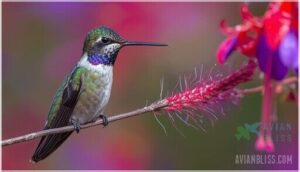
With your bill acting like a tiny comb, you’d realign separated barbs using microscopic barbule hooklets—in effect zipping feathers back together. This process restores aerodynamic efficiency critical for hovering flight, as disrupted alignment can reduce lift by over 20%. Preening frequency peaks after bathing or moving through dense vegetation, dedicating up to 10% of active time to feather care in birds.
- Barbule hooklets interlock adjacent barbs, creating a unified vane structure
- Zipping mechanics involve precise bill movements that re-engage hooks spaced 8–16 micrometers apart
- Flight impact becomes severe when plumage integrity fails, reducing energy conservation
- Preening restores both water repellency and insulation properties simultaneously
- Avian hygiene through feather maintenance extends plumage lifespan and durability
Applying Oil From The Uropygial Gland

Once barbules snap shut, you’ll need to waterproof them. That’s where the uropygial gland—located at your tail base—comes in. You rub your bill against it to pick up an oil composition rich in fatty acids and antimicrobial properties, then spread that across every feather.
This application method creates a hydrophobic barrier for waterproofing function while boosting ultraviolet plumage brightness—critical for social signaling during breeding. The oil also fights bacteria and fungi, keeping your avian hygiene practices on point.
Removing Dirt, Pollen, and Parasites
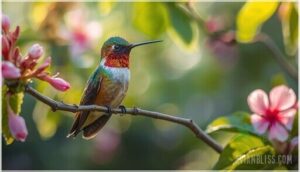
Beyond waterproofing, that oil confronts feather contamination head-on. When you preen, your bill mechanically dislodges dirt, pollen, and microscopic parasites clinging to iridescent feathers.
The oil benefits include trapping sticky pollen grains and suffocating feather mites, reducing bacterial load by up to 65%. Behavioral removal continues as you nibble along each barb, consuming loosened parasites in the process.
This dual-action approach—physical scraping plus antimicrobial coating—keeps your avian hygiene practices razor-sharp, ensuring every feather stays aerodynamic and parasite-free.
Using Claws and Bill for Hard-to-Reach Areas
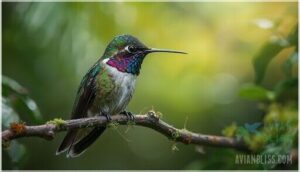
When scratching hard spots around your neck and head, you coordinate tiny claws with your slender bill—a tag-team approach ensuring thorough hygiene rituals. This claw-bill coordination facilitates feather detangling assistance, nectar residue removal, and uropygial oil distribution across roughly 940 feathers:
- Claws comb stubborn dirt from areas your bill can’t reach directly
- Bill nibbles and “zips” feathers back into aerodynamic alignment
- Branch rubbing removes sticky pollen when both tools fall short
- Oil spreads to hidden spots through coordinated scratching and preening
- Daily grooming cycles keep parasites at bay and feathers flight-ready
This synergy between bird cleaning methods exemplifies how preening and bathing behaviors work together in hummingbird hygiene.
Bathing and Moisture-Based Cleaning

While grooming ensures feather alignment and oiling, hummingbirds also rely on water to keep their plumage in top condition.
These tiny birds have developed specific bathing preferences that differ from larger songbirds. Here’s how they use moisture to stay clean and flight-ready.
Bathing in Rain, Mist, and Shallow Water
You can watch hummingbirds bathe in three main ways: rain showers, mist, and shallow puddles. Rainwater benefits include natural dirt and parasite removal as birds flutter through droplets.
Mist bathing lets them hover in fine spray, wetting feathers evenly—ideal for bird cleaning methods.
Shallow puddles under ¼ inch deep provide safe perching spots where water importance becomes clear. These bathing techniques help maintain the spotless plumage essential for bird health and cleanliness.
Frequency and Environmental Influences on Bathing
You’ll notice bathing daily becomes essential for hummingbirds, especially when temperatures climb above 86°F. Temperature effects drive them to water multiple times during heat waves for cooling and feather care. Their water preferences lean toward shallow sources under a quarter-inch deep—misters and drippers work best.
Seasonal bathing drops during migration and cooler months as demand lessens. Habitat impact matters too: drought conditions and urban sprawl reduce accessible bathing sites, making supplemental water vital for avian health.
Benefits of Water for Removing Debris and Mites
Water acts like a power wash for hummingbird plumage, tackling both visible grime and microscopic threats. Here’s how bathing benefits their cleaning behavior:
- Debris removal: Water loosens sticky pollen and dust from feathers and bills accumulated during nectar feeding
- Mite detachment: Moisture saturates ectoparasites’ grip, making them easier to dislodge during preening
- Feather maintenance: Wetted barbs realign more easily, preserving aerodynamic efficiency
- Skin hydration: Water contact prevents dryness that attracts parasites while supporting thermoregulation
- Behavioral adaptations: Hummingbirds exploit rain, mist, and shallow pools strategically for peak hygiene
Regular water access correlates with lower parasite loads and healthier plumage overall.
Additional Grooming and Parasite Control

Beyond preening and bathing, hummingbirds use a few other clever techniques to keep their feathers in top shape and manage parasites. These behaviors might seem less obvious than dunking in water, but they’re just as important for maintaining healthy plumage.
Let’s look at three additional grooming strategies these tiny birds rely on.
Beak Cleaning on Branches and Twigs
After feeding, you’ll notice hummingbirds carefully wiping their beaks on branches—a behavior observed in up to 95% of feeding sessions. This routine removes sticky nectar, pollen, and debris that could harbor bacteria or fungi, reducing pathogenic bacterial load by up to 36%. Hummingbirds prefer rough-textured twigs for best abrasion, with over 60% returning to favored cleaning sites daily.
This cleaning behavior maintains efficient nectar collection and prevents beak deformities, supporting overall bird behavior and plumage health.
| Cleaning Aspect | Key Details |
|---|---|
| Branch Texture Preference | 68% usage of small, rough twigs (0.5–1.2 cm diameter) |
| Beak Wear Prevention | Continuous keratin growth requires regular abrasion |
| Food Debris Removal | 51% decrease in residue; 4–8 pollen grains removed per event |
| Hygiene and Health | 21% reduction in ectoparasites; lower fungal infection rates |
| Cleaning Site Reuse | 60%+ return to favored branches within same day |
Sunbathing and Its Role in Parasite Management
Beyond cleaning beaks, hummingbirds use sunbathing as a powerful weapon against parasites. You’ll see them spread their wings wide in direct sunlight, raising feather temperatures above 60°C—hot enough to kill up to 84% of feather lice in just three minutes. This UV exposure also stimulates their uropygial gland, boosting oil production by 30% for better plumage conditioning. Behavioral patterns show birds usually sunbathe for 5-minute sessions between 9 a.m. and 3 p.m., when solar intensity peaks.
Key parasite control benefits include:
- Heat-induced mortality: Temperatures reaching 70°C achieve 100% lice elimination while disrupting mite water balance
- Enhanced preening efficiency: Sunlight drives parasites toward feather surfaces, increasing removal rates by 40%
- Ecological outcomes: Regular sun exposure reduces feather-degrading bacteria by 50–80%, preserving flight performance and coloration
Anting and Its Benefits (if Observed in Hummingbirds)
Anting—where birds rub ants or other insects along their feathers—has been documented in over 200 species, but never confirmed in hummingbirds. While other birds use formic acid from ants to lower plumage pH and potentially control parasites, hummingbirds likely skip this behavior due to their high metabolic cost and reliance on preening oil instead.
Their smooth feather microstructure and water-based hygiene routines eliminate the need for chemical anointing, leaving anting behavior absent from hummingbird ethological records.
The Role of Environmental Hygiene
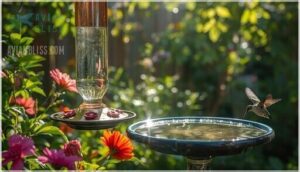
While hummingbirds excel at personal grooming, their health depends just as much on the spaces they use. You can’t overlook the cleanliness of feeders and bathing sites—these zones either support hygiene or quietly undermine it.
Let’s walk through what makes a habitat safe and how small maintenance steps protect these tireless fliers.
Importance of Clean Feeders and Bathing Sites
Your feeder maintenance directly shapes hummingbird health. Clean stations prevent disease, while fresh bathing sites support critical dirt removal. Dust baths aren’t typical for these birds, but water access helps dislodge lice and debris that preening alone can’t reach.
Hygiene best practices include weekly scrubbing to avoid feeder contamination risks. Environmental cleanliness matters: bathing site benefits extend beyond surface cleaning to temperature regulation and parasite control.
Risks of Contaminated Feeders for Hummingbird Health
Dirty feeders become breeding grounds for mold and bacteria that cause aspergillosis, candidiasis, and salmonellosis in birds. Fungal infections swell tongues, making feeding impossible—a slow path to starvation.
In extreme heat, nectar spoils within 24 hours, while contaminated water sources harbor lice and interfere with proper dirt removal from feathers.
These health consequences hit young hummingbirds hardest, with ecological effects rippling through local populations when feeding sites turn lethal.
Best Practices for Maintaining a Clean Habitat
You’ll want to clean feeders every one to three days—daily when temperatures exceed 80°F—using a four-to-one water-and-vinegar mix that eliminates mold without harming birds. Choose glass models with removable ports to prevent hidden bacteria, and position water sources in shaded spots with pebbles for safe bathing.
Native plants like bee balm reduce feeder dependence while organic gardening keeps ants and lice away, supporting natural anting behavior in birds.
Frequently Asked Questions (FAQs)
Do hummingbirds need to be cleaned?
Think of feathers as a hummingbird’s lifeline—when compromised, everything unravels. Hummingbirds don’t need you to clean them; they’re fastidious groomers.
However, feather impairment risks from contaminated feeders or dirty water threaten flight performance, insulation compromised by debris, and increased disease susceptibility, ultimately raising mortality rates among these tiny birds.
How do hummingbirds dry their feathers?
After bathing, hummingbirds rely on feather shaking and water shedding to dry quickly.
Their feathers’ hydrophobicity levels and microstructure help water bead off at roughly 34 microliters per square centimeter per minute, while ambient temperature and wing movements accelerate evaporation for efficient drying.
How to clean hummingbird feeders?
You’ll need to clean feeders every 2-3 days in hot weather—daily when temperatures soar past 90°F.
Use a 10% vinegar solution, scrubbing all ports and gaskets with bottle brushes to prevent mold, bacterial growth, and health risks to visiting birds.
Do hummingbirds get dirty?
Yes, hummingbirds get dirty. Feather contaminants like soot, dust, and airborne pollutants accumulate during flight, while pollen effects from nectar feeding add sticky residue.
Parasite prevalence includes mites and lice that cling to feathers and wings, requiring regular preening mechanisms and bathing influences to maintain clean plumage.
How do you keep hummingbirds from dominating a feeder?
The best defense against dominance? Multiple feeders spread 15 to 20 feet apart, positioned out of line-of-sight. This spacing forces territorial birds to choose which feeder to guard, allowing others access.
Pairing strategic feeder placement with native plants and varied feeder design creates feeding zones no single hummingbird can control.
Do hummingbirds like bird baths?
Hummingbirds do enjoy bird baths, but they prefer shallow, moving water—like misters or fountains—over traditional deep basins.
Unlike dust-bathing songbirds or quail that wallow in fine soil, these aerial birds bathe daily, especially during hot weather, favoring depths under one inch with gentle flow.
How do hummingbirds bathe?
Unlike larger songbirds that splash vigorously, these aerial acrobats prefer hovering through mist, rain droplets, or shallow water less than a quarter-inch deep—mimicking natural dew conditions while maintaining flight readiness and waterproofing efficiency.
Do hummingbirds bathe themselves?
They absolutely do—daily, in fact, especially when water sources like rain, mist, or shallow puddles are available.
These tiny birds prefer depths under a quarter-inch, often bathing on the wing through sprinkler spray or by rubbing against wet leaves after storms.
What is a hummingbird’s worst enemy?
In the fight for survival, hummingbirds face a gauntlet of threats, but habitat decline stands as their worst enemy.
Approximately 10% of hummingbird species are threatened, with 60% showing declining populations due to habitat destruction and pesticide effects.
How do hummingbirds sleep without starving?
During sleep, these tiny birds enter torpor—a state where body temperature drops up to 50°F and heart rate plummets from over 1,000 to just 50 beats per minute.
Hummingbirds survive frigid nights by dropping into torpor—a hibernation-like state that slashes their metabolism by 95% and prevents starvation
This energy conservation strategy cuts metabolic rate by 95%, allowing survival through cold nights without starving.
Conclusion
Like a jet aircraft requiring constant maintenance checks, a hummingbird’s feather system demands careful care to stay airborne. Understanding how hummingbirds clean themselves reveals the elaborate interplay of preening, bathing, and parasite control that keeps these micro-aviators flight-ready.
If you’re supporting hummingbirds in your yard, remember that clean feeders and fresh water aren’t luxuries—they’re essential infrastructure for birds already working overtime to survive. Every time you scrub that feeder or refresh a shallow bath, you’re directly investing in their hygiene toolkit and longevity.
- https://pmc.ncbi.nlm.nih.gov/articles/PMC10442270/
- https://en.wikipedia.org/wiki/Uropygial_gland
- https://www.sciencedirect.com/science/article/abs/pii/S0376635710001269
- https://www.southernliving.com/do-hummingbirds-use-birdbaths-11772857
- https://www.birdwatchingdaily.com/beginners/birding-faq/how-to-attract-hummingbird/