This site is supported by our readers. We may earn a commission, at no cost to you, if you purchase through links.
Most backyard feeders rely on sunflower seeds by default—but that default comes with a cost. Squirrels drain the feeder before noon, starlings crowd out smaller birds, and you’re left refilling every other day.
Safflower seeds quietly solve all three problems. Cardinals go straight for them, chickadees crack the hard shells with ease, and squirrels largely leave the feeder alone.
The seed itself packs 40–45% fat and around 5 kcal per gram, making it a serious energy source—not filler. Whether you’re setting up your first feeder or troubleshooting a pest problem, understanding what safflower offers changes how you feed birds entirely.
Table Of Contents
- Key Takeaways
- What Are Safflower Seeds?
- Safflower Seed Nutrition and Benefits
- Birds That Prefer Safflower Seeds
- How to Feed Safflower Seeds
- Safflower Vs Sunflower Seed
- Growing and Harvesting Safflower
- Frequently Asked Questions (FAQs)
- Are safflower seeds good for humans?
- Is it hard to grow safflower?
- What birds will not eat safflower seeds?
- What are the benefits of safflower seeds?
- Do birds prefer sunflower or safflower seeds?
- Do rodents eat safflower seeds?
- What is safflower seed used for?
- Why is safflower seed so expensive?
- Can safflower seeds be used for sprouting?
- Do safflower seeds need special storage conditions?
- Conclusion
Key Takeaways
- Safflower seeds pack 40–45% fat and roughly 5 kcal per gram, making them one of the energy-dense options you can put in a backyard feeder.
- Cardinals, chickadees, and nuthatches go straight for safflower, while squirrels, starlings, and grackles tend to leave it alone—so you get the birds you want without the ones you don’t.
- Safflower costs a bit more than sunflower seed, but it produces less waste, needs less frequent cleaning, and holds up better in the feeder over time.
- You can grow safflower at home in well-drained soil with full sun, and properly stored seeds stay fresh for up to six months—making it a practical long-term feeding option.
What Are Safflower Seeds?
Safflower seeds come from a tough, sun-loving plant with a surprisingly wide range of uses. Before you fill your feeder or press your first batch of oil, it helps to know exactly what you’re working with.
Whether you’re new to feeding wildlife or just curious about nutrition, safflower seed benefits for backyard birds breaks down why this little seed punches well above its weight.
Here’s a closer look at where safflower comes from, what the seeds are like, and why so many backyard birders swear by them.
Botanical Name and Plant Origin
Safflower (Carthamus tinctorius) belongs to the Asteraceae family — the same taxonomic family as sunflowers. Its Greek etymology traces to a word meaning “sharp thistle,” which fits this herbaceous, thistle‑like annual perfectly. The species name tinctorius reflects its historical dye use for vivid yellows and oranges.
Here’s what shaped this plant:
- Native range: Middle East and parts of Asia
- Cultivation history: Thousands of years of purposeful farming
- Taxonomic family: Asteraceae (sunflower family)
- Genus origin: Greek roots describing its thistle-like structure
- Spring planting of safflower: Established practice across dry, warm climates
How Safflower Seeds Look and Feel
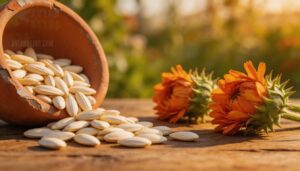
Once you hold a safflower seed, you’ll recognize it instantly. Each seed measures about 6–8 mm long with a pale cream hull that’s especially glossy — almost polished-looking.
Texture firmness is one of its most consistent traits; press one between your fingers and it holds firm. Color uniformity and oil slickness make high-quality seeds easy to spot in any seed mix.
| Feature | Description | Quality Indicator |
|---|---|---|
| Seed Size | 6–8 mm long, 3–4 mm wide | Consistent seed size variability is low in premium lots |
| Hull Glossiness | Smooth, polished cream surface | Bright sheen signals freshness |
| Texture Firmness | Dense, hard shell | Resists crushing; no crumbling |
Common Uses in Bird Feeding and Oil Production
That hard, glossy shell isn’t just for looks — it fulfills a purpose. Safflower seed pulls double duty as a nutrient rich bird food and a source for oil extraction. Birds get a high oil content seed packed with fats for a winter energy boost.
Meanwhile, the oil extraction process yields a clean, neutral oil with strong culinary applications and industrial oil uses. Pressed meal becomes livestock feed meal.
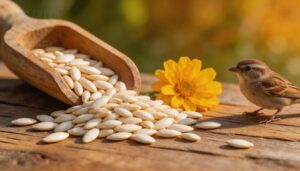
sparrows love safflower seeds and will frequent your garden.
Why Safflower is Popular in Backyard Feeding
Beyond oil and bird food, what makes safflower a backyard staple comes down to who shows up — and who doesn’t.
- Visually Distinct Seeds with a moisture-resistant shell offer low mold susceptibility and extended shelf stability.
- Squirrel-resistant bird seed that most gray squirrels won’t bother cracking.
- Attracting backyard birds with safflower seed — cardinals, chickadees, and nuthatches specifically.
- Energy-rich seed for winter delivering year-round wild bird support through cold months.
Safflower Seed Nutrition and Benefits
Safflower seeds pack more nutrition than most people expect from a small seed. What’s inside directly affects how well birds survive, molt, and stay active through tough weather.
Here’s a closer look at what the numbers actually mean.
Fat, Protein, and Carbohydrate Content
Think of each safflower seed as a tiny, packed nutrition label. The macronutrient balance is hard to beat: roughly 40–45% fat, 15–20% protein, and 20–25% carbohydrates.
| Nutrient | Approximate Content |
|---|---|
| Fat Caloric Content | 40–45% |
| Protein Quality Index | 15–20% |
| Carbohydrate Complexity | 20–25% |
| Digestible Energy Yield | ~5.0–5.5 kcal/g |
Essential fats, essential proteins, and essential carbohydrates work together, making this a genuinely nutrient dense, high oil content seed for birds.
High-energy Value for Wild Birds
When temperatures drop, wild birds burn through calories fast—and safflower seed delivers exactly what they need.
Pairing safflower with a balanced mix—like options highlighted in this guide to nutritious bird seed blends for wild birds—helps keep safflower under sixty percent so birds get real variety.
Its impressive energy density and caloric efficiency make it one of the best high energy bird foods you can offer.
Fat metabolism kicks in quickly, providing thermal insulation and fueling migratory stamina during long flights.
- Supplies dense calories per gram for sustained wild bird nutrition
- Helps fat reserves birds mobilize during cold snaps
- Fuels migratory stamina between long foraging bouts
- Allows thermal insulation through efficient fat metabolism
- Makes safflower seed a reliable nutrient rich bird food year‑round
How Safflower Supports Feather and Body Health
Safflower’s high oil content seed for birds does more than fuel energy — it actively builds healthier birds from the inside out. The Linoleic Acid in these fat-rich seeds promotes Feather Gloss and normal skin function, while Vitamin E Antioxidant shields tissues from daily stress.
Add protein-rich seeds to the mix, and you’re also delivering a Mineral Immune Boost through magnesium and iron.
This Anti-inflammatory Oil profile makes safflower genuinely nutrient-rich seed for bird nutrition year-round.
Why Oil-rich Seeds Matter in Winter
Cold weather is brutal on small birds. That’s where energy density becomes life‑saving — safflower seeds pack 30 to 40 percent oil by weight, fueling metabolic heat and fat reserves that keep birds warm overnight.
Thermoregulation benefits kick in as birds metabolize fat during cold snaps.
This high oil content seed for birds delivers reliable winter energy support, making it a truly nutrient‑rich, oilseed crop choice.
Birds That Prefer Safflower Seeds
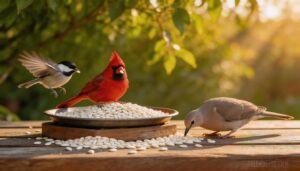
Not every bird will flock to safflower right away, but the ones that do tend to be real backyard favorites. Knowing which species are drawn to it helps you set your feeder up for success.
Here’s a closer look at the birds most likely to show up once you make the switch.
Cardinals, Chickadees, and Titmice
Three birds make safflower seed worth every penny at your feeder: cardinals, chickadees, and titmice. Their bill morphology is built for cracking hard shells, so they dig right in.
these behaviors:
- Cardinals defend territories through territorial songs at dawn.
- Chickadees rely on food caching through winter flocking.
- Titmice use cavity nesting sites near feeders.
- All three thrive on this nutrient-rich bird food.
Finches, Nuthatches, and Woodpeckers
Finches, nuthatches, and woodpeckers all show up when you offer safflower — and for good reason. Their beak morphology lets them crack or lever open hard shells with ease.
Finches work in tight flock dynamics, nuthatches rely on cache behavior to stash seeds for later, and woodpeckers use territory drumming between feeder visits.
This high oil seed meets serious winter energy needs, making it a nutrient-rich seed worth keeping stocked.
Ground-feeding Birds Like Mourning Doves
While perching birds work the feeders above, mourning doves quietly clean up below. They’re natural ground feeders, and scattering safflower seed directly onto the ground suits them perfectly.
Here’s draws doves to your yard:
- Prefer flat, open areas with clear sightlines for predator awareness
- Feed actively near water proximity sources
- Respond well to seed dispersion techniques like broadcast scattering
- Benefit from habitat edge effects along lawn borders
- Thrive on high oil content seed in feeding ground mixes
This nutrient rich seed fuels their daily foraging.
Birds That Usually Avoid Safflower
Not every bird will show up for safflower. Starlings, grackles, and house sparrows tend to pass it by — starling avoidance is one of safflower’s biggest selling points. Grackles struggle with its hard shell and bitter taste.
Blue Jay preference runs toward peanuts, not safflower. Orioles focus on nectar and fruit.
That sparrow disinterest keeps your feeder less crowded and far cleaner.
How to Feed Safflower Seeds
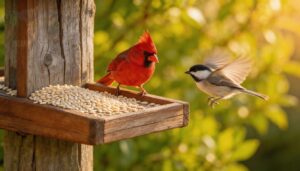
Knowing what birds like safflower is only half the job — how you offer it matters just as much. A few small choices, like feeder type and timing, can make the difference between an empty feeder and a busy one.
Here’s what works.
Best Feeder Types for Safflower
Safflower seed works well across several bird feeders, so you don’t need a specialized setup.
Hopper advantages include deep trays that give cardinals solid footing and a roof that keeps seed dry. Tube port design with wide openings suits chickadees and nuthatches perfectly.
Platform drainage through screen bottoms prevents soggy seed.
For ground tray placement, keep trays several feet from dense cover. Squirrel-resistant features and strong feeder compatibility make safflower a smart choice for backyard songbirds.
Feeding Safflower Alone or in Mixes
Once your feeder setup is sorted, the next decision is simple: pure safflower or a blend?
Offering safflower seed alone targets cardinals, chickadees, and nuthatches through species mix targeting, while naturally acting as squirrel-resistant bird seed.
For blend ratio optimization, mix with sunflower chips to widen appeal.
Adjust your seasonal blend adjustments in winter for extra fat.
Feeder spill prevention improves when birds consistently prefer what’s offered.
How Long Birds Take to Accept It
Don’t expect instant results — birds need time to trust a new food. Initial curiosity usually peaks within the first 72 hours, but full acceptance often takes 1 to 2 weeks. Seasonal acceptance can stretch longer in cold weather.
Here’s what speeds things up:
- Keep seed fresh — seed freshness drives repeat visits.
- Set feeder height at 5 to 6 inches above ground.
- Remove competing seeds to reduce competition delay.
- Offer consistently to build familiarity.
Ground Feeding Versus Feeder Feeding
Both methods work, but each comes with trade-offs worth knowing.
| Factor | Ground Feeding | Feeder Feeding |
|---|---|---|
| Moisture Control | Higher spoilage risk | Seeds stay drier |
| Predator Risk | Greater exposure | Reduced ground threat |
| Seed Distribution | Can scatter unevenly | Stays contained |
| Cleaning Frequency | Daily monitoring needed | Weekly cleaning sufficient |
Safflower seed performs well in bird feeders, but ground feeding suits mourning doves naturally.
Squirrel-resistant setups and the nutritional benefits of safflower seed shine brightest when seed stays fresh and contained.
Seasonal Tips for Year-round Feeding
Year-round wild bird support means adjusting your approach with every season.
- Winter Water Management – Add a circulating water dish and increase high-oil-content seed for birds to sustain warmth.
- Spring Molt Nutrition – Safflower’s protein helps feather regrowth naturally.
- Summer Heat Strategies – Shade feeders and refresh water twice daily.
- Autumn Energy Boost – Raise feeders and increase portions before cold sets in.
Safflower Vs Sunflower Seed
Safflower and sunflower seeds look similar at first glance, but they’re not interchangeable at your feeder. Each one brings different birds, different problems, and a different price tag.
Here’s how they compare across the details that matter most.
Key Differences in Size and Shell Hardness
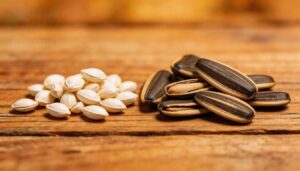
Size and shell hardness set safflower apart from sunflower right away. Safflower seeds average 5–7 mm in diameter, while black‑oil sunflower seeds run 8–12 mm.
That seed size difference affects feeder visibility and how birds interact with the birdseed.
Safflower’s hard hull also resists cracking longer, reducing waste and keeping feeders cleaner when comparing safflower seed to sunflower seed for feeding.
| Feature | Safflower Seed | Sunflower Seed |
|---|---|---|
| Seed Diameter Comparison | 5–7 mm | 8–12 mm |
| Hull Thickness Variability | Rigid, uniform | Varies by variety |
| Weight Per Seed | Lighter per kernel | Heavier overall |
| Cracking Resistance | High | Moderate |
| Feeder Visibility | Sits above debris | Can sink into hulls |
Bird Preference by Species
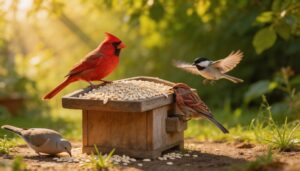
Not every bird treats safflower and sunflower as equals. Species preference shapes which seed wins at your feeders. Cardinals and chickadees regularly choose safflower, while finches and mourning doves show seasonal shifts depending on food availability.
| Species | Seed Preference |
|---|---|
| Northern Cardinal | Safflower |
| House Finch | Both, feeder influence matters |
| Mourning Dove | Sunflower, ground-scattered |
| Chickadee | Safflower |
Habitat choices and competitive selection among songbirds make attracting backyard songbirds with safflower seed straightforward once you understand bird seed preferences and selection.
Squirrel and Starling Resistance
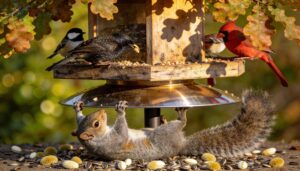
Safflower’s Hard Shell Defense does real work against squirrels and starlings. Starling bills can’t reliably crush the thick hull, and squirrels often walk away frustrated. Pair that biology with Feeder Baffle Design and Weight-Activated Perches, and you’ve built serious Non-target Species Deterrence. Seasonal Placement Strategies near dense shrubs reinforce this further.
Safflower’s hard shell frustrates squirrels and defeats starling bills before they even start
| Pest | Resistance Level | Best Countermeasure |
|---|---|---|
| Squirrels | High | Squirrel-resistant baffles |
| Starlings | Moderate–High | Weight-activated perches |
| Grackles | Moderate | Enclosed hopper feeders |
Deterring squirrels from bird feeders using safflower works best when feeder design backs up the seed’s natural defenses, making it genuinely squirrel‑proof while attracting backyard songbirds with safflower seed consistently.
Cost, Waste, and Feeder Cleanliness
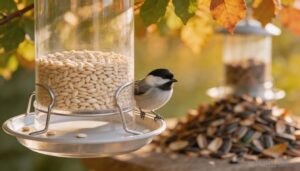
Beyond pest resistance, cost matters too. Safflower runs $0.90–$2.50 per pound, but Bulk Pricing Strategies cut that by 10–25% over small bags. Watch for Seasonal Price Fluctuations in winter—prices can jump 15%.
Switching to safflower-only reduces waste considerably, and less spillage means cleaner feeders.
| Factor | Safflower | Sunflower |
|---|---|---|
| Price per pound | $0.90–$2.50 | $0.60–$1.80 |
| Waste level | Low | Moderate–High |
| Feeder spill risk | Low | Moderate |
| Cleaning frequency | Weekly | Twice weekly |
| Bulk savings | 10–25% | 10–20% |
Which Seed is Better for Your Yard
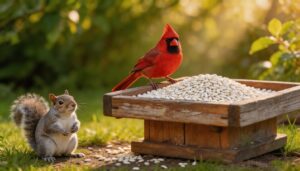
So, which seed wins? It depends on your yard.
If squirrels raid your feeders or starlings crowd out cardinals, safflower seeds are your answer—squirrel-resistant seed with less maintenance effort.
Sunflower draws a wider crowd.
Here’s a quick comparison:
| Factor | Safflower | Sunflower |
|---|---|---|
| Wildlife Diversity | Selective | Broad |
| Squirrel Resistance | High | Low |
| Maintenance Effort | Low | Higher |
| Climate Suitability | Drought-tolerant | Moderate |
Growing and Harvesting Safflower
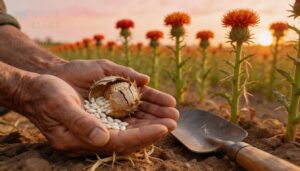
Growing safflower at home is more straightforward than most people expect. From soil prep to seed storage, each step builds on the last.
Here’s what you need to know to grow and harvest your own supply.
Ideal Soil, Sun, and Climate Conditions
If you want safflower to thrive, start with the right foundation. It does best in loamy or sandy soil with a soil pH range of 6.0 to 7.5 and solid drainage requirements — poor drainage invites root rot quickly.
Aim for full sun exposure of 6 to 8 hours daily, soil temperatures between 50°F and 85°F, and microclimate protection from strong winds.
Sowing Depth, Spacing, and Germination
Once your soil is ready, planting correctly makes all the difference. Follow these Depth Guidelines, Row Spacing, and Germination Timing rules:
- Sow 1 to 1.5 inches deep, spacing seeds 6 to 12 inches apart, in rows spaced 18 to 24 inches apart.
- A 12–24 hour Seed Soak Duration speeds up seed germination noticeably.
- soil temperatures between 50°F and 85°F, with consistent moisture, bring sprouts up within 5–10 days.
Watering and Early Plant Care
Once your seeds are in the ground, consistent moisture is everything. Keep the soil evenly moist during germination — not soggy, just steady.
A Drip Irrigation Setup delivers water directly to roots while keeping leaves dry. Add mulch to hold moisture in. Thin weak seedlings early, apply a balanced Fertilizer Starter, and check moisture a few inches down before watering again.
Common Pests and Disease Issues
Even a healthy safflower crop can hit trouble fast. Here’s what to watch for:
- Aphids drain plant sap and cut yields by up to 30% — start Aphid Management early with insecticidal soap or neem oil.
- Root rot from Soil Moisture Stress shrinks production by 20%.
- Alternaria leaf spot spreads in wet conditions.
- Fungal Disease Control requires good airflow and dry foliage.
- Weed Competition weakens stands before canopy closes.
Choose Resistant Varieties when possible for stronger Safflower pest and disease management overall.
When and How to Harvest Safflower Seeds
Timing is everything at harvest. Watch for Maturity Signs like darkened, hardened hulls and heads that droop slightly under seed weight—that’s your cue.
For clean Harvest Timing, target 8–12% seed moisture.
Cut whole heads, then use air Drying Methods until seeds rattle freely.
Threshing Strategies, like gentle rolling, release seeds without damage.
Finish with simple Cleaning Procedures, using a mesh sieve to remove chaff.
Storing Harvested Seeds for Bird Feeding
Once you’ve cleaned your harvest, proper storage is what keeps that energy-rich seed viable. Use airtight metal or heavy-duty plastic containers for container materials—they block moisture and deter pests.
Keep temperature control between 50–65°F and humidity management below 60%. For pest prevention, freeze new batches for 5–7 days first.
With shelf life monitoring, properly stored safflower seed stays fresh up to six months.
Frequently Asked Questions (FAQs)
Are safflower seeds good for humans?
Yes, they’re quite good for you. Rich in heart-healthy fats, digestive fiber, and protein, safflower’s edible oil suits most culinary applications well.
Just watch calorie density and note allergy considerations if you’re sensitive.
Is it hard to grow safflower?
Safflower isn’t hard to grow.
Sow after your frost‑free window, apply seed pre‑soaking 12–24 hours before planting, and it’ll germinate within 7 to 14 days.
weed competition early—that’s the biggest labor requirement.
What birds will not eat safflower seeds?
Not every bird will show up for safflower. Blackbird rejection, starling avoidance, and finch indifference are common.
Starlings, grackles, and sparrows usually pass on it, making safflower naturally squirrel resistant and cleaner for bird feeding.
What are the benefits of safflower seeds?
They pack healthy fats, protein, and antioxidants into every small shell.
You get an energy boost, digestive aid support, and heart health benefits — all from one nutrient-rich, protein-rich seed with high oil content.
Do birds prefer sunflower or safflower seeds?
Most songbirds instinctively reach for black oil sunflower seed first.
But seed preference shifts based on feeder competition, habitat adaptation, and seed availability timing — making safflower seeds a smart, strategic choice for your yard.
Do rodents eat safflower seeds?
Most rodents skip safflower.
Its bitter taste and seed coat hardness make it a poor choice for squirrels and other foragers, making it one of the best natural squirrel-resistant, pest-discouraging options for your feeder.
What is safflower seed used for?
Safflower pulls triple duty: seeds are commonly pressed into oil for cooking and cosmetic formulations, used in safflower seed production for birdfeed, and even explored in nutraceutical supplements and traditional medicine.
Why is safflower seed so expensive?
It costs more because of unpredictable harvests, rising input costs, competing oilseeds, strict export policies, and steady market demand. That combination keeps prices higher than most common birdseed options.
Can safflower seeds be used for sprouting?
Yes, you can sprout them. Soak high-quality seeds in water for 6 to 8 hours, drain, and rinse twice daily. Tiny roots appear within 2 to 3 days. Eat fresh within 5 days.
Do safflower seeds need special storage conditions?
Not really, but a few basics go a long way.
Keep seeds cool, dry, and sealed tightly.
Aim for temperatures below 20°C, target 6–8% moisture, and use airtight containers.
That’s all it takes.
Conclusion
Imagine your backyard as a haven, where birds thrive and pests fade into the background. Safflower seeds make this vision a reality, offering a nutritious and efficient feeding solution.
Rich in energy, these seeds attract a variety of bird species while deterring squirrels and starlings.
By incorporating safflower seeds into your feeding routine, you’ll enjoy a more balanced ecosystem.
With their numerous benefits and easy use, it’s time to give safflower seeds a try and transform your bird-feeding experience.