This site is supported by our readers. We may earn a commission, at no cost to you, if you purchase through links.
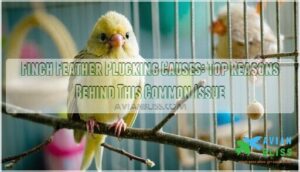 Finch feather plucking can stem from several causes, including stress, boredom, and even serious health issues.
If your finch is feeling cooped up or lacks mental stimulation, it might start plucking as a way to cope—kind of like humans biting their nails.
Poor diet, mites, or skin infections can also trigger this behavior, and sometimes, breeding stress or aggressive cage mates add to the problem.
Look out for bald spots, redness, or excessive preening, as these can be indicators of the issue, and improving their environment, offering toys, or switching to a balanced diet usually helps to resolve the problem.
If things don’t improve, a vet visit might uncover hidden medical concerns, which could be related to serious health issues.
Table Of Contents
- Key Takeaways
- Common Causes of Finch Feather Plucking
- Signs and Symptoms of Feather Plucking
- Frequently Asked Questions (FAQs)
- Why do finches pluck each other’s feathers?
- Why does my Finch pluck a lot?
- What causes feather plucking in birds?
- Why is my Pet Finch plucking a cage mate’s feathers?
- Why are my finches biting each other’s feathers?
- Why is my bird plucking a lot?
- Why is my finch plucking his feathers?
- What is the treatment for feather plucking?
- How do I stop my bird from plucking his feathers?
- What are causes of feather plucking?
- Conclusion
Key Takeaways
- Check for stress and boredom—add toys, perches, and foraging activities to keep your finch engaged and relaxed.
- Improve your finch’s diet with fresh fruits, vegetables, and protein sources to avoid nutritional deficiencies.
- Look for signs of parasites, skin infections, or underlying medical issues and visit a vet for proper diagnosis and treatment.
- Create a spacious environment to reduce territorial disputes and stress-related plucking.
Common Causes of Finch Feather Plucking
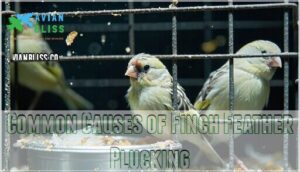
Feather plucking in finches happens for many reasons, from health problems to environmental stress.
Understanding the common causes, like poor diet, infections, or boredom, can help you address this behavior effectively, by knowing the complete concepts behind it.
Underlying Health Issues
Why’s your finch plucking its feathers? Often, it’s a sign of underlying health issues.
Feather plucking often signals hidden health problems—uncover the cause to ease your finch’s discomfort and promote well-being.
These medical culprits can make your bird uncomfortable, leading to self-plucking behavior.
Here are four common causes:
- Parasitic Infections: Tiny mites and other parasites irritate the skin, causing itching.
- Liver Disease: Poor liver function impacts overall health, including feather quality.
- Hormonal Imbalances: Stress and hormones can wreak havoc, especially during certain seasons.
- Skin Infections and PBFD Virus: These cause severe irritation, itching, and feather loss.
A vet visit’s vital—they’ll uncover hidden problems and provide proper treatment.
Breeding Stress
Breeding stress can ruffle even the calmest finches, driving them to self-plucking.
Hormonal imbalances during nesting behavior or egg-laying make birds anxious.
Overcrowded nest boxes and mismatched breeding pairs add to the tension.
Without sufficient nesting materials, finches feel unprepared for chick rearing, increasing stress.
Post-breeding molt further heightens discomfort.
Here’s what to watch:
- Hormonal surges
- Tight or shared nesting spaces
- Lack of nesting materials
- Uncooperative breeding pairs
Poor Diet and Nutrition
In regards to finch feather plucking causes, poor diet and nutrition are leading culprits.
Nutritional deficiencies, like vitamin deficiencies or mineral imbalances, often result from a limited seed diet lacking variety.
Your bird needs more than seeds—fresh fruits, veggies, and protein sources are essential.
Consider enhancing their meals with supplement options to fill gaps.
Many owners choose to use finch vitamin supplements to guarantee adequate nutrition.
A balanced diet prevents plucking and also boosts mood and health.
Remember, proper finch care tips begin with nourishing food choices.
Skin Ailments and Infections
Skin woes are a major player in feather plucking. When your bird’s itching and scratching go overboard, it’s likely linked to pesky issues like parasitic mites or bacterial dermatitis. These irritants cause redness, flaking, or crusty patches, making your finch uncomfortable. And discomfort often leads to plucking.
Some common culprits include:
- Parasitic mites, like scaly face mites, irritating skin and feathers.
- Fungal infections, such as ringworm, creating itchy lesions.
- Feather cysts, forming painful lumps under the skin.
- Allergic reactions, triggering irritation and abnormal behavior.
- Skin infections, caused by bacteria or yeast, worsening irritation.
To protect your bird, prioritize vet visits, maintain a clean cage, and check for early symptoms. Don’t let these sneaky conditions take over! Feather plucking can also stem from underlying medical issues.
Stress and Boredom
Stress and boredom are major finch feather plucking causes.
Stress and boredom can quickly turn your finch’s natural beauty into patchy feathers—keep them engaged and stress-free for a vibrant life.
Finches thrive on mental stimulation and social interaction.
Without enough Cage Enrichment, they get bored fast.
Add new toys, natural branches, and perches for climbing.
Mimic their natural world with hiding spots and foraging opportunities.
Provide consistent routines since sudden routine changes can trigger finch stress signs.
A spacious cage with fresh air helps too.
Consider cage enrichment products to further alleviate boredom.
Keep them busy, and you’ll notice fewer signs of stress and boredom.
With the right environment, finches can live happy, stress-free lives.
Signs and Symptoms of Feather Plucking
You’ll notice feather plucking when your finch’s feathers look patchy or bald spots start appearing.
Irritated skin, constant preening, or nibbling are signs that something’s bothering your bird.
Bald Spots and Thinning Feathers
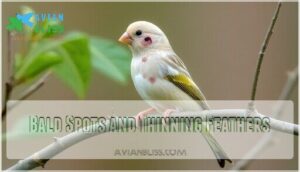
Bald spots and thinning feathers are often the first things you’ll notice with finch feather plucking.
These signs reveal potential issues like poor feather regrowth or behavioral changes.
Check for:
- Patchy feather loss that highlights spot location and plucking severity.
- Thin, brittle feathers, hinting at feather quality concerns.
- Bare skin exposed, especially in common finch feather loss areas.
Understanding finch feather plucking causes helps you act fast and ease their discomfort.
Redness and Irritation on The Skin
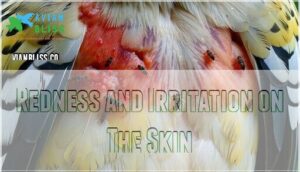
Redness and irritation on your finch’s skin are tell-tale signs something’s wrong.
Often, skin ailments like infections, allergic reactions, or feather mites are the culprits. Look closely—if you see inflamed, raw, or scaly patches where feathers are missing, your bird’s discomfort could lead to more feather plucking.
Identifying irritants early is key to breaking this cycle. Check for possible skin infections or allergic reactions causing the redness.
Treatment options, like vet-prescribed creams or mite solutions, can soothe your finch’s skin, helping it heal and preventing further damage.
Excessive Preening and Chewing

Your finch’s grooming habits might be getting a little out of hand. When excessive preening or chewing takes center stage, it’s key to watch for these warning signs:
- Persistent nibbling at feathers, especially under the wings, causing feather damage.
- Repeated chewing on specific spots, leading to bald areas.
- Frantic preening intensity combined with restless behavior.
These behaviors often have behavioral roots like stress or boredom.
Addressing emotional stressors can help alleviate this behavior.
Tackling finch feather plucking means exploring prevention strategies—enrich their environment to break the cycle and restore calm to their routine.
Frequently Asked Questions (FAQs)
Why do finches pluck each other’s feathers?
Sometimes one bird might pluck another’s feathers because of boredom, overcrowding, or stress.
It could also be a dominance thing or nutritional imbalance.
Keep an eye on them to prevent unwanted squabbles!
Why does my Finch pluck a lot?
Imagine your finch’s feathers are their diary—when they pluck excessively, they’re signaling stress, boredom, or discomfort.
Check for parasites, improve enrichment with toys, and consult a vet to rule out medical issues.
What causes feather plucking in birds?
Feather plucking in birds can result from stress, boredom, poor diet, or environmental issues like cramped cages or loud noises.
Medical causes include infections, parasites, allergies, or hormonal imbalances, all leading to irritation and discomfort.
Why is my Pet Finch plucking a cage mate’s feathers?
Your finch might pluck its companion’s feathers due to territorial disputes, stress, or dominance issues.
Limited space, boredom, or hormonal shifts can spark this behavior.
Offering enrichment, space, and supervision often helps resolve the issue.
Why are my finches biting each other’s feathers?
Your finches might be biting each other’s feathers due to stress, boredom, or establishing dominance.
Make certain a spacious cage, offer plenty of toys and perches, and check for nutritional deficiencies or underlying health issues.
Why is my bird plucking a lot?
Your bird might be plucking due to stress, boredom, illness, or a nutritional issue.
Check its diet, cage size, and daily interactions.
Consult a vet to rule out medical causes and provide solutions.
Why is my finch plucking his feathers?
Every feather tells a story, and if your finch is plucking them, it’s likely stressed, bored, or facing a health issue like parasites or malnutrition.
Check its diet, cage, and environment, then consider a vet visit.
What is the treatment for feather plucking?
Start by improving their diet with fresh fruits, vegetables, and supplements.
Add enrichment like toys and perches, remove stressors, and consult a vet for medical issues or parasites.
Patience and observation are your best tools, with consult a vet being crucial for medical issues.
How do I stop my bird from plucking his feathers?
Think of a puzzle—address diet, environment, and health.
Offer toys, enrich the cage, and balance their diet with seeds, fruits, and veggies.
Check for parasites, and consult a vet to rule out illness.
What are causes of feather plucking?
Stress, boredom, poor diet, or illness can trigger feather plucking.
Medical issues like parasites or infections, environmental stressors like loud noises, and lack of mental stimulation often contribute.
Identifying the root cause is key to stopping it.
Conclusion
Just like Sherlock Holmes unraveled mysteries, you can solve the puzzle of finch feather plucking causes by observing your bird closely.
Watch for triggers like stress, poor diet, or health problems.
Addressing these with better nutrition, enriched environments, or calming cage setups can lead to healthier, happier finches.
Don’t hesitate to consult a vet if the behavior persists—they can uncover hidden issues.
A little care and attention can make a big difference for your finch.
- https://ladygouldian.com/content/feather-problems-kristen-reeves
- https://www.omlet.us/guide/finches_and_canaries/finch_health/feather_problems/
- https://www.northernparrots.com/blog/feather-plucking/
- https://bestfriends.org/pet-care-resources/bird-feather-plucking-what-know
- https://www.justanswer.com/pet-bird/969zb-male-zebrafinch-appears-plucking-own-feathers-around-neck-none.html