This site is supported by our readers. We may earn a commission, at no cost to you, if you purchase through links.
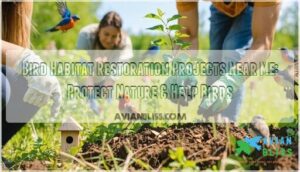 To find bird habitat restoration projects near you, check with local Audubon chapters, wildlife refuges, and conservation organizations that often run volunteer programs.
You’ll contribute to ecosystem health by planting native vegetation, removing invasive species, or constructing nest boxes. Many parks and nature centers host weekend workdays where you can join like-minded nature enthusiasts.
Universities and extension offices also coordinate community science projects monitoring bird populations. Your participation makes a real difference—even small backyard projects create essential stopping points for migrating species.
The skills you’ll develop through these hands-on projects can transform your understanding of local ecosystems and their intricate connections, and contribute to ecosystem health, create essential stopping points, transform your understanding, make a real difference, and enhance your knowledge of local ecosystems.
Table Of Contents
- Key Takeaways
- Creating Bird-Friendly Habitats
- Riparian Buffer Restoration
- Local Bird Habitat Restoration Projects
- Threats to Bird Habitats
- Getting Involved in Bird Habitat Restoration
- Frequently Asked Questions (FAQs)
- What is the restore the wild initiative?
- How many bumble bee habitat projects will be funded?
- Are bird habitats good for climate mitigation?
- How can you help wildlife & the environment?
- Do urban birds need our help?
- What does habitat restoration include?
- What organization protects birds?
- What is the western prairie habitat restoration area?
- How can I help wildlife on my property?
- What is the Corporate Habitat Program?
- Conclusion
Key Takeaways
- Get involved in bird habitat restoration projects by volunteering with local organizations to tackle invasive species, plant native plants, and create safe spaces for birds.
- Transform your yard into a bird-friendly habitat by adding native plants, water features, and nesting boxes to support birds year-round.
- Advocate for habitat-friendly policies and join community efforts to mitigate the impacts of urban development on wildlife spaces.
- Learn and share conservation skills through workshops, citizen science programs, and partnerships with local groups to maximize your impact.
Creating Bird-Friendly Habitats
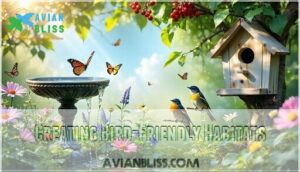
Creating a bird-friendly habitat starts with thoughtful planning to meet birds’ basic needs like food, water, and shelter.
You can transform your outdoor space by planting native species, minimizing hazards, and providing resources that support birds throughout the year, which is essential for creating a bird-friendly habitat.
Choosing Native Plants
Native plants are the heartbeat of any successful bird habitat restoration.
They’re tailor-made for the local environment, providing food, cover, and nesting spots for birds. Plus, they’re low-maintenance heroes that thrive naturally.
To find the best options, consider native plants and birds suitable for your area.
- Rich habitats: Attract specific birds and pollinators.
- Eco-balance: Reduce reliance on fertilizers or pesticides.
- Seasonal support: Year-round sustenance for wildlife.
- Climate-ready: Resilient against local weather.
- Sustainability: Promote wildlifefriendly gardening naturally.
Removing Invasive Species
Pulling out invasive species like garlic mustard may seem small, but it’s a game-changer. These plants crowd out native ones, leaving birds and insects without essential resources.
By prioritizing invasive species removal, you’re giving native plants the sunlight and space they need to thrive, boosting biodiversity.
Organize removal project planning with neighbors or join community habitat restoration projects. Effective removal strategies are essential for success.
Native species recovery takes teamwork, whether through volunteer coordination or ongoing maintenance efforts. Remember, every invasive you remove makes a safer, healthier space for bird conservation and long-term ecological balance.
Designing Bird Habitats
Creating a bird-friendly habitat means blending thoughtful design with nature’s needs.
Start by shaping your yard’s Habitat Structure with layered foliage to mimic natural bird environments.
Improve Shelter Design using shrubs or brush piles for nesting and safety.
Incorporate Native Landscaping for reliable Food Sources like seeds and berries.
A carefully designed avian habitat project transforms your space into a sanctuary.
Bird habitat restoration balances beauty and function, creating a haven for local birds.
Installing Birdbaths and Ponds
Thinking about bird habitat restoration? Add a reliable water source to your yard.
Birdbaths and ponds invite wildlife while enhancing your habitat.
Use durable birdbath materials like ceramic or stone, and keep them clean to maintain water quality.
For ponds, focus on thoughtful water source design and pond maintenance to guarantee birds stay safe.
Shallow edges make it easy for birds to drink and bathe.
Position birdbaths in shaded, quiet spots to attract diverse species.
Consider various bird bath options for your yard.
By championing water quality and wildlife habitat, you’ll create a sanctuary that’s both practical and teeming with life, making it a great example of reliable water source and practical sanctuary.
Providing Nesting Boxes and Roosts
Nesting boxes offer a cozy bird nesting habitat, but design matters.
Use untreated wood for durability and safety.
With roosting site selection, place boxes high to avoid predators.
Add baffles for extra predator protection.
Monitor regularly to check for bird activity and maintenance needs.
Thoughtful box placement enhances bird-friendly habitats and supports bird habitat restoration.
Your efforts truly make a difference for wildlife!
Riparian Buffer Restoration
Restoring riparian buffers helps improve water quality and creates essential habitats for birds and other wildlife.
By planting native trees and shrubs and removing invasive species, you can support healthier ecosystems along waterways, which in turn helps improve water quality.
Restoring Waterways and Wetlands
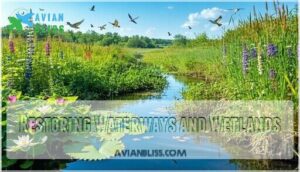
Restoring waterways and wetlands supports bird populations while improving water quality and wetland biodiversity.
Riparian buffer restoration fosters healthier ecosystems, attracting water birds and supporting habitat creation. Focus on planting native wetland species to outcompete invasives and strengthen habitats.
- Boost waterway health with clean, flowing streams.
- Create water bird habitats with ponds or wetlands.
- Support wetland restoration birds by choosing native flora.
- Provide conservation benefits by reducing erosion and runoff, which helps in maintaining water quality and supports wetland biodiversity.
Planting Native Trees and Shrubs
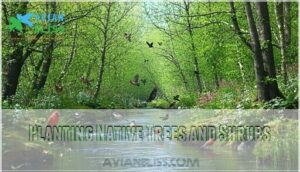
Planting native trees and shrubs revitalizes riparian buffer design while supporting bird habitat restoration.
Your choices impact soil health, long-term survival, and avian habitat projects.
Native plants with bird-friendly landscaping features provide food and shelter.
Visit nurseries for expert advice on native tree selection and shrub species diversity.
Thoughtful planting transforms these spaces into thriving ecosystems.
| Native Tree | Sunlight Requirement | Soil Type | Attracts Birds Like |
|---|---|---|---|
| Red Maple | Full Sun/Partial Sun | Moist, Well-Drained | Woodpeckers |
| Serviceberry | Full Sun/Partial Sun | Sandy, Loamy | Robins, Orioles |
| River Birch | Full Sun/Partial Sun | Wet, Clay | Warblers, Finches |
| Dogwood | Partial Shade | Well-Drained Clay | Cardinals, Jays |
Removing Non-Native Species
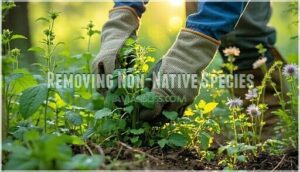
Clearing nonnative plants is a key step in bird habitat restoration.
Learn Invasive Species ID to spot these invaders disrupting ecosystems.
Use effective Removal Techniques like hand-pulling or spot-treatment.
Follow up with native plant restoration to rebuild habitats.
Regular long-term monitoring guarantees success and prevents re-infestation.
Together, these actions drive lasting habitat restoration and protect local biodiversity for thriving bird populations.
Creating Habitat for Water Birds
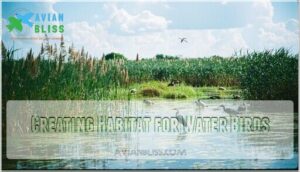
Restoring habitat for water birds begins with creating rich, inviting spaces shaped by wetland restoration and thoughtful habitat management.
Native vegetation improves water quality while offering food and shelter essential for the bird diet.
Riparian buffers with a mix of native plants form natural corridors, supporting stream restoration birds as they feed, nest, and thrive.
Imagine wildlife flocking to your carefully designed oasis.
These efforts aren’t just about beauty—they’re a commitment to wetland conservation and wildlife habitat restoration that boosts the biodiversity of water birds in your area.
Monitoring and Maintenance
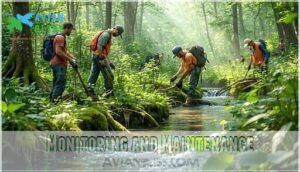
Keeping your riparian buffer healthy takes steady effort and sharp observation.
Regular monitoring helps you track key changes in habitat health and assess long-term benefits.
Adaptive management, like adjusting native plant care or removing invasive species, is essential for wildlife habitat improvement.
Engage in data collection with volunteers to encourage community stewardship.
Reducing pesticide use is another key conservation action.
Ongoing maintenance guarantees thriving ecosystems, supporting successful bird habitat restoration and overall habitat restoration goals.
Local Bird Habitat Restoration Projects
You can make a meaningful impact on bird conservation by participating in local restoration projects.
These initiatives focus on restoring habitats with native plants, removing invasive species, and creating safe spaces for birds to thrive.
Ball’s Bluff Garlic Mustard Pull
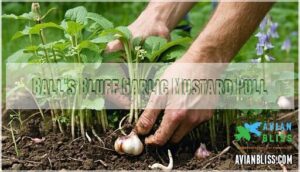
Standing at the Potomac River’s edge, you’re defending nature in action.
The Ball’s Bluff garlic mustard pull directly combats invasive species impact, restoring vibrant bluff habitat health.
Garlic mustard ecology threatens bird habitat restoration, but through volunteer effort benefits, you advance restoration project goals.
Together, we guarantee local bird conservation thrives while revitalizing communities and ecosystems alike, ensuring a better conservation outcome.
Harrison Street Pollinator Meadow
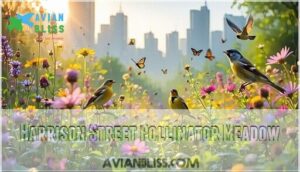
Through hands-on volunteer engagement at Harrison Street Pollinator Meadow, you’ll help expand habitats for native pollinators and birds.
By removing invasive species and planting native plants, you directly support habitat improvement projects and bird habitat restoration efforts.
This thriving green space highlights community benefits, offering sanctuary for wildlife and inspiring local bird conservation.
Urban birds face challenges like noise and air pollution.
- Support biodiversity with native plants.
- Protect pollinators essential to ecosystems.
- Strengthen communities through shared conservation efforts.
Willowsford Conservancy Riparian Buffer Restoration
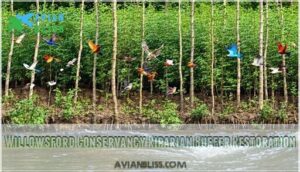
At Willowsford Conservancy, the riparian buffer restoration is all about boosting water quality and creating vibrant bird habitats.
Volunteers plant native trees, control erosion, and enhance wildlife spaces using Chesapeake Bay Restoration Fund support.
| Buffer Benefits | Native Planting | Erosion Control | Volunteer Impact |
|---|---|---|---|
| Improved water quality | Trees & shrubs | Soil stabilization | Community engagement |
| Wildlife support | Habitat diversity | Flood prevention | Biodiversity growth |
Join this impactful habitat restoration project and connect with nature!
Greening Your Neighborhood Project
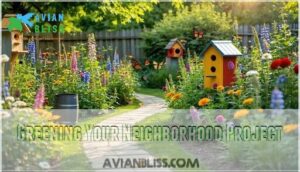
The "Greening Your Neighborhood Project" encourages you to improve local spaces while supporting bird habitat restoration projects.
By focusing on urban ecology and community engagement, you can strengthen local biodiversity through native landscaping and green infrastructure.
Start small with these actions:
- Advocate for Community Gardens.
- Replace invasive species with native plants.
- Educate neighbors about bird-friendly landscaping.
- Create habitat restoration zones.
- Build a stronger community mindset while enhancing your surroundings.
Franklin Park Expansion and Master Plan
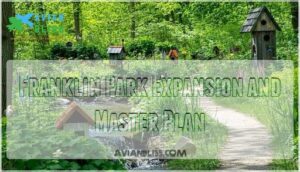
The Franklin Park Expansion and Master Plan is a win for wildlife and the community.
With 103 new acres, this effort balances recreation with habitat preservation. Community input shapes trail designs and guides habitat restoration efforts. Public participation guarantees the park reflects shared goals.
| Aspect | Details |
|---|---|
| New Acres | 103 |
| Focus | Wildlife Impact, Trails |
| Public Involvement | Encouraged |
| Restoration Goals | Bird Habitat Restoration |
| Funding Sources | Ongoing Efforts |
Help transform local parks into thriving wildlife refuges.
Threats to Bird Habitats
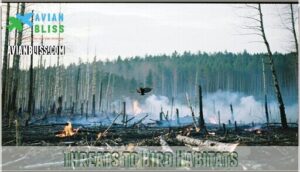
Bird habitats face serious challenges from development projects, infrastructure expansion, and land use changes. These threats disrupt ecosystems, fragment habitats, and make survival harder for many bird species.
Data Center Development and Infrastructure
Data center development may power our digital world, but it’s also fueling habitat fragmentation and habitat loss.
These large infrastructures transform landscapes, affecting bird habitats through land clearing, energy consumption, and zoning regulations.
Such environmental concerns highlight the need for balance. You can advocate for mitigating strategies, like better zoning regulations and habitat restoration near impacted areas.
Supporting eco-friendly data centers or collaborating with local groups to address infrastructure impact guarantees bird habitats thrive alongside technological progress.
Power Line Infrastructure and Fragmentation
Power line infrastructure disrupts wildlife corridors, causing habitat fragmentation and increasing avian collision risks.
To reduce habitat connectivity loss and protect birds, try these:
- Advocate for Mitigation Strategies: Support safer designs and eco-friendly infrastructure planning.
- Join Habitat Restoration Projects: Help rebuild areas affected by power lines.
- Promote Bird Conservation: Spread awareness and back wildlife corridor preservation.
Every action helps restore our landscapes!
Comprehensive Plan and Zoning Ordinance Amendments
Zoning amendments can swing the balance between development and habitat protection.
When policies, like those at Orme Farm, lean toward data centers, they often disrupt wildlife spaces.
Advocacy for ordinance effectiveness and sustainable development standards is essential to safeguard bird habitat restoration.
Stay alert to zoning impacts—your voice can shape policy implementation and protect important ecosystems from environmental concerns.
Park and Recreation Development
Park and recreation development can unintentionally lead to habitat loss, requiring thoughtful wildlife management to balance recreation with conservation.
Successful bird habitat restoration projects highlight the importance of careful planning.
- Minimize development impacts by integrating wildlife habitat restoration.
- Focus on conservation planning for long-term success.
- Enhance public access while protecting sensitive ecosystems.
- Support park habitat restoration through environmental initiatives, ensuring parks benefit both people and nature.
Transportation and Infrastructure Projects
Transportation projects often carve through bird habitats, disrupting wildlife corridors and leading to habitat fragmentation.
These changes can increase road mortality and reduce biodiversity.
To mitigate this, environmental assessments are essential, guiding mitigation strategies like wildlife crossings.
Supporting local efforts for habitat loss mitigation—such as planting native flora—helps restore affected areas.
Urban birds also face challenges from noise and air pollution.
Every step counts in preserving these precious ecosystems and minimizing traffic effects on thriving bird populations.
Getting Involved in Bird Habitat Restoration
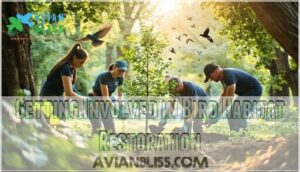
You can make a significant difference for local bird populations by volunteering with neighborhood restoration projects, creating bird-friendly habitats in your yard, or joining conservation organizations that protect natural spaces.
Your participation in habitat restoration, whether removing invasive plants or installing nesting boxes, directly contributes to the survival of the 2.9 billion birds lost since 1970 in North America.
This effort is crucial for the survival of bird species and ecosystems.
Partnering With Local Organizations
While threats to bird habitats continue to mount, teaming up with local organizations offers a powerful solution.
By joining the Bird Conservation Alliance, you’ll connect with over 200 groups focused on habitat restoration.
These conservation partnerships provide resource sharing opportunities and strengthen community support.
Native plant societies can help you select appropriate vegetation, while Audubon chapters foster volunteer recruitment through education.
These enhanced restoration efforts create a collective impact that individual action simply can’t match, demonstrating the value of community support.
Volunteering for Restoration Projects
Today, you can roll up your sleeves for bird habitat restoration projects in your community.
Volunteer opportunities abound, requiring no previous restoration skills—just enthusiasm and willingness to learn.
- Remove invasive plants that choke native vegetation birds depend on
- Plant native trees and shrubs that provide food and shelter
- Monitor restored areas to track ecological benefits and wildlife returns
These community conservation efforts create lasting impact while connecting you with like-minded volunteers who share a passion for wildlife returns and ecological benefits in community conservation efforts.
Creating Your Own Bird-Friendly Habitat
While volunteering in community projects makes a difference, transforming your own yard into a bird-friendly habitat creates an immediate impact.
Plant native trees and shrubs that provide natural food sources and shelter. Install nesting boxes and roosts where birds can safely breed and rest.
Add water features like birdbaths or small ponds for drinking and bathing. A key element is to grow native plants to provide essential resources.
Your backyard birdscaping efforts provide essential safe havens during a time when natural habitats are disappearing, making native plants and safe havens crucial for their survival.
Supporting Conservation Efforts
Beyond creating backyard habitats, your support for conservation efforts can substantially impact bird populations.
Consider donating to organizations like the American Bird Conservancy where contributions are matched dollar-for-dollar.
Advocate for habitat protection by contacting local lawmakers, and join VSO’s advocacy efforts that address threats to Virginia’s birds.
Participate in community-based research grants that enhance understanding of conservation needs, and your support guarantees our feathered friends thrive for generations to come.
Educating Others About Bird Conservation
Knowledge of bird conservation spreads like wildflowers when shared effectively.
You can multiply your impact by teaching others through Northern Virginia’s citizen science programs.
Get involved with local conservation education initiatives by:
- Using Bird ID Apps to help friends identify local species
- Joining Citizen Science projects like Virginia Working Landscapes monitoring
- Participating in programs like Neighborhood Nestwatch in your backyard
- Connecting with Northern Virginia Bird Alliance’s education workshops
- Supporting the Virginia Society of Ornithology’s youth programs
These workshops often include waterfowl identification techniques.
Frequently Asked Questions (FAQs)
What is the restore the wild initiative?
Virginia’s Restore the Wild initiative allows DWR to preserve and maintain essential wildlife habitats through memberships.
You’ll directly fund conservation projects benefiting threatened species when you join, helping keep Virginia’s wild places wild.
How many bumble bee habitat projects will be funded?
An absolutely mountain-sized opportunity awaits you!
Six bumble bee habitat projects spanning more than 180 acres will be funded through the Department of Wildlife Resources’ Restore the Wild initiative.
The initiative is focusing on the endangered rusty patched bumble bee.
Are bird habitats good for climate mitigation?
Bird habitats substantially boost climate mitigation by sequestering carbon in trees and vegetation.
You’ll find they also prevent soil erosion, support biodiversity, and create cooling effects in urban areas through shade and evapotranspiration, which helps in climate mitigation.
How can you help wildlife & the environment?
You can plant native species, reduce pesticide use, create wildlife habitats in your yard, conserve water.
Properly dispose of waste, volunteer for restoration projects, and keep cats indoors to protect birds and wildlife.
Do urban birds need our help?
Since 1970, we’ve lost 9 billion birds in North America.
You can help urban birds survive by planting native species, reducing window collisions, keeping cats indoors, and providing water sources in your yard.
What does habitat restoration include?
Habitat restoration includes removing invasive species, planting native vegetation, restoring waterways, creating wildlife corridors, and enhancing natural processes.
You’ll need to incorporate food sources, water features, shelter opportunities, and nesting areas for birds.
What organization protects birds?
Like guardians of the winged domain, the Audubon Society and VSO protect birds in your area.
You’ll find these organizations fighting habitat loss, conducting research, and engaging communities through conservation projects and wildlife sanctuary programs.
What is the western prairie habitat restoration area?
You’ll find the Western Prairie Habitat Restoration Area in Wisconsin’s Polk and St. Croix counties.
It’s a conservation project aiming to restore 20,000 acres to pre-settlement prairie habitats for endangered grassland birds like Bobolinks and Henslow’s Sparrows.
How can I help wildlife on my property?
Turn your yard into a wildlife haven by planting native species, reducing lawn size, and offering food, water, and shelter.
Avoid pesticides, minimize hazards like window collisions, and watch wildlife thrive naturally.
What is the Corporate Habitat Program?
The Corporate Habitat Program encourages businesses to create wildlife-friendly spaces at their properties.
You can contribute by planting native species, reducing hazards, and fostering biodiversity, turning corporate landscapes into thriving habitats for birds and other wildlife.
Conclusion
Transforming your surroundings into bird-friendly spaces isn’t just rewarding—it’s essential for ecosystems.
Joining bird habitat restoration projects near you allows you to nurture native species, restore natural balance, and protect important migratory pathways.
Whether planting native trees, removing weeds, or building birdhouses, every small effort creates meaningful change.
Partner with local organizations, volunteer, or improve your backyard. By acting locally, you’ll make a global difference, supporting birds and building a deeper understanding of your environment.