This site is supported by our readers. We may earn a commission, at no cost to you, if you purchase through links.
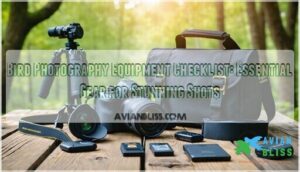 Your bird photography equipment checklist starts with a DSLR or mirrorless camera paired with a telephoto lens, ideally 300mm or longer.
You’ll capture crisp details without spooking your feathered subjects. A sturdy tripod prevents camera shake during those long waits, while a remote shutter release keeps vibrations minimal.
Don’t overlook binoculars – they’re your secret weapon for spotting birds before you shoot. Pack extra batteries, memory cards, and a weatherproof camera bag.
Consider a lens hood to reduce glare and protect your glass. The right gear makes the difference between blurry snapshots and frame-worthy shots that’ll make fellow photographers green with envy.
Table Of Contents
- Key Takeaways
- Essential Gear for Bird Photography
- Camera Setup Recommendations
- Additional Equipment for Bird Photography
- Tips for Specific Bird Photography Scenarios
- General Considerations for Bird Photography
- Frequently Asked Questions (FAQs)
- What equipment does a bird photographer need?
- How do I choose the best bird photography gear?
- What is included in a complete bird watching gear checklist?
- How do you protect your bird photography equipment?
- What lens should I buy for bird photography?
- What makes a good bird photographer?
- How to choose a camera for bird photography?
- How do I choose the best birdwatching equipment?
- How do you take good bird photos?
- Which lens is best for bird photography?
- Conclusion
Key Takeaways
- You’ll need a DSLR or mirrorless camera paired with a telephoto lens of 300mm or longer to capture sharp bird details without disturbing your subjects
- Don’t forget essential support gear like a sturdy tripod for stability, binoculars for spotting birds, and a remote shutter release to minimize camera shake during those crucial shots
- Protect your investment with weatherproof camera bags, lens hoods, and extra batteries since birds won’t wait while you’re dealing with dead gear or weather damage
- Start with the basics and build your kit gradually – prioritize a quality telephoto lens over an expensive camera body, and remember that patience and practice matter more than having the most expensive equipment
Essential Gear for Bird Photography
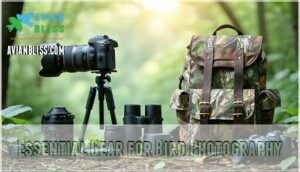
To capture stunning bird shots, you’ll need reliable gear that meets the demands of sharp focus and long distances.
From a fast camera to a sturdy tripod and a telephoto lens, each piece plays a vital role in bringing birds into clear view without disturbing them.
Cameras for Bird Photography
When choosing a camera for bird photography, focus on features that make a difference:
- Sensor Size and Resolution: Full-frame cameras capture incredible detail, while cropped sensors give extra reach.
- Autofocus Speed and Frame Rate: Critical for fast-moving birds.
- Weather Sealing: Protects against rain, dust, and extreme temperatures, ensuring reliability outdoors.
Consider exploring options for high-quality sensors for enhanced image clarity.
Pick a camera that feels intuitive!
Lenses for Bird Photography
A telephoto lens is your secret weapon in bird photography, offering the reach and sharpness needed to capture nature’s details.
For beginners, budget lenses like the 100-400mm are versatile. Professionals often lean on supertelephoto lenses, such as 500mm or 600mm, for incredible quality.
Don’t overlook features like Image Stabilization and Lens Coatings for clearer images. Considering Prime vs Zoom? Prime guarantees detail but limits flexibility, while zoom offers versatility.
Pair with Teleconverter Compatibility to extend your reach further. For capturing distant subjects, focal length is key to getting the shot.
Tripods and Remote Shutter Releases
A steady hand can’t always cut it, especially when photographing birds swooping or perched at a distance. Tripods are your best ally for achieving sharp, shake-free images. Pair a sturdy tripod with a gimbal head for smooth movement, perfect for birds in flight.
If mobility’s a priority, try monopod bird photography. A remote shutter release lets you snap without touching the camera, reducing shutter vibration. Consider a lightweight tripod option for easier transport.
- Top Tripod Features: Carbon fiber, lightweight construction.
- Shutter Release Options: Wired or wireless.
- Gimbal Heads: Essential for fluid tracking.
- Field Use: Durable materials withstand tough environments.
- Bonus Tip: Practice tripod stability during setup.
Birdwatching Guides and Field Equipment
Spotting a bird’s unique plumage demands tools fit for the field. Pair sharp binoculars with birdwatching guides to pinpoint species effortlessly. A field checklist keeps gear and goals organized.
Prioritize weather protection to safeguard your bird photography equipment. Ethical birding? Always first—respect habitats.
Use the table below when mastering identification tools.
| Tool | Purpose | Key Feature |
|---|---|---|
| Binoculars | Close-up views | Wide field focus |
| Field Guides | Species reference | Illustrated maps |
| Identification Apps | Instant IDs | Offline options |
| Notebook | Track sightings | Compact design |
| Weather Covers | Protect gear | Durable material |
Camera Setup Recommendations
Choosing the right camera setup is essential for capturing sharp, detailed bird photos, whether you’re a beginner or a seasoned pro.
From entry-level options to high-end gear, understanding what works best for your style and budget will set you up for success.
Understanding what works best for your style and budget is key to capturing great bird photos.
Entry-Level Camera Setups for Bird Photography
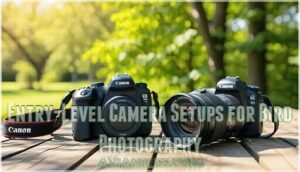
Starting with affordable bodies, the Canon EOS R10 delivers excellent tracking for beginners.
Pair it with budget lenses like the Sigma 150-600 Contemporary to overcome kit limitations.
Used gear offers great value—consider a Canon 7D Mark II setup.
Focus on beginner settings like continuous autofocus and shutter priority mode.
Entry-level equipment doesn’t mean compromising quality in your bird photography equipment checklist, which can include budget lenses.
Mid-High Range Camera Setups for Bird Photography
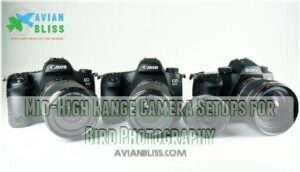
Moving beyond entry-level gear, mid-high range setups reveal serious bird photography potential.
Your equipment checklist should prioritize these camera bodies with superior sensor size and autofocus speed:
- Canon EOS 90D – APS-C sensor offers cropping flexibility
- Sony Alpha 7R III – 42.4MP delivers exceptional detail
- Nikon D7500 – Great value for enthusiast budgets
- OM System OM-1 Mark II – Weather sealing protects your investment
Many bird photographers also value cameras with high burst speeds to capture action shots.
Pair these with quality telephoto lens options featuring image stabilization and sharp lens quality for stunning bird photography gear results.
High-End Camera Setups for Bird Photography
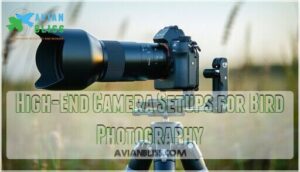
Professional photographers swear by flagship cameras like the Sony Alpha 1 paired with pro lenses such as the 200-600mm f/5.6-6.3.
These fullframe sensor systems deliver exceptional detail for your bird photography gear arsenal.
Add gimbal heads for smooth tracking, teleconverters for extra reach, and weather sealing for durability.
This highend equipment checklist transforms distant subjects into gallery-worthy captures.
Additional Equipment for Bird Photography
Beyond your camera and lenses, you’ll need supporting gear that makes bird photography more successful and comfortable.
Quality binoculars help you spot distant birds before setting up your shot.
Proper camera bags protect your expensive equipment during long field trips.
Binoculars for Bird Watching and Photography
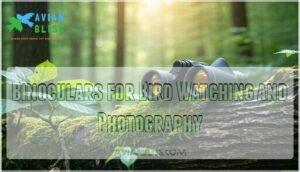
Why settle for squinting when you can scout like a pro? Quality binoculars with 8×42 binocular magnification offer the perfect balance for bird watching and bird identification.
Look for multi-coated lens coatings and adequate eye relief for comfort. A wide field of view helps track fast-moving subjects, while image stabilization reduces shake during extended bird photography sessions.
For glasses wearers, sufficient eye relief is essential for comfortable viewing.
Spotting Scopes and Accessories
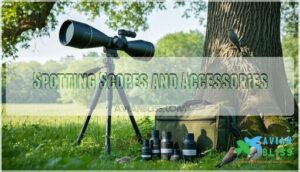
Beyond binoculars, spotting scopes deliver unmatched power for distant bird observation.
These optical powerhouses offer superior magnification and image quality that’ll transform your birding experience.
Consider these key features when selecting your scope:
- Scope Magnification: 15-60x zoom range handles various distances
- Image Stabilization: Reduces shake for clearer viewing
- Eyepiece Options: Angled or straight designs suit different preferences
- Scope Brands: Opticron, Leupold, and Vanguard provide reliable performance
- Carrying Cases: Protect your investment during field adventures
Quality objective lens diameter and optical quality determine your scope’s effectiveness.
Camera Bags and Accessories
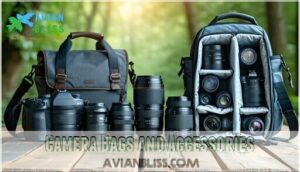
Your camera bag protects expensive gear from weather, drops, and chaos.
Choose bags with weather protection, comfortable straps, and smart organization. Look for tripod attachment points and padded compartments.
Selecting the right bag involves considering optimal camera protection for your equipment.
| Feature | Budget Option | Professional Choice |
|---|---|---|
| Weather Protection | Water-resistant coating | Fully waterproof seals |
| Bag Capacity | 1-2 lenses + body | 4+ lenses + accessories |
| Tripod Attachment | Basic clips | Secure mounting system |
| Comfort Features | Padded shoulder strap | Ergonomic back panel |
| Accessory Organization | Simple pockets | Modular dividers |
Tips for Specific Bird Photography Scenarios
Different bird species require specialized equipment and techniques to capture their best shots.
You’ll need specific gear setups for waterbirds, raptors, boat photography, and underwater scenarios to handle each environment’s unique challenges.
Photographing Ducks and Waterbirds
Early mornings offer the best duck shots when they’re less skittish.
Waterproof gear protects your camera and telephoto lens from splashes. Consider wading depths carefully—chest waders help you get closer.
Boat stability matters for sharp images despite wave action. Focus on their eyes and capture reflection shots for magical results.
Your bird photography equipment needs weatherproofing for these aquatic adventures.
Photographing Raptors and Birds of Prey
Raptors soar like feathered fighter jets, demanding quick reflexes from photographers.
Your telephoto lens becomes your secret weapon for capturing these magnificent predators without disturbing their hunting patterns.
Here’s your raptor photography game plan:
- Study raptor behavior – learn their hunting schedules and preferred perches
- Use mobile blinds from your car for stealth approaches
- Set fast autofocus performance to track swift movements
- Respect ethical considerations – maintain safe distances always
- Pack backup bird photography equipment for extended field sessions
Photographing Birds From Boats and Kayaks
Water-based bird photography transforms your perspective, but kayak stability becomes your best friend.
Choose a long telephoto lens for distant subjects while maintaining safe shooting distances. Pack your camera equipment in a waterproof camera bag to prevent costly accidents.
Weather protection matters—sudden splashes happen. Use faster shutter speeds to eliminate motion blur from rocking boats or kayaks.
Remember ethical considerations: don’t chase birds or disturb nesting areas. Utilizing golden hour photography can provide soft, warm light.
Patience and preparation yield stunning bird photography results.
Photographing Birds Underwater
Diving into underwater bird photography requires specialized underwater camera housing and waterproof camera bags.
You’ll face unique lighting challenges beneath the surface, so master your camera equipment’s image stabilization features.
Focus on natural bird behavior while maintaining ethical concerns—never disturb nesting or feeding areas.
Wide-angle lenses work best for capturing diving birds in their aquatic element.
General Considerations for Bird Photography
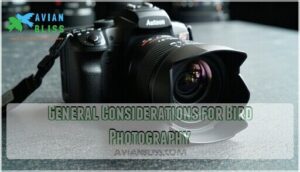
Before you choose your camera body or telephoto lens, you’ll need to understand several key factors that affect every bird photography decision.
These fundamental considerations, from sensor size to autofocus systems, will determine how well your equipment performs in the field and help you capture those sharp, detailed shots you’re after, considering factors like autofocus systems.
Full-Frame Vs. Cropped Sensor Cameras
Sensor Size Matters when choosing camera bodies for bird photography.
Full-frame sensors deliver superior image quality and low-light performance, but they’re pricier.
Cropped sensor cameras offer better field of view for distant birds and work with existing lenses.
Budget considerations often tip the scales toward cropped sensors.
Lens compatibility remains consistent across both formats, making your choice easier.
Autofocus and Camera Settings
Getting your camera dialed in makes all the difference between blurry bird shots and frame-worthy captures.
Your autofocus performance directly impacts success rates, especially when subjects move unpredictably. Modern cameras offer sophisticated autofocus modes designed for wildlife scenarios.
Camera settings birds photographers rely on:
- Continuous AF (AI Servo/AF-C) – tracks moving subjects automatically
- Shutter Speed – minimum 1/1000s for flight shots, faster for hummingbirds
- Aperture Priority mode – maintains depth control while adjusting exposure
- ISO Settings – auto ISO prevents missed shots in changing light
- Spot Metering Modes – guarantees proper bird exposure against busy backgrounds
Lighting and Composition
Three lighting secrets transform ordinary bird shots into masterpieces.
Golden Hour delivers warm, magical light that makes feathers glow.
Master the Rule of Thirds by placing your subject off-center for dynamic composition.
Backlighting Birds creates stunning silhouettes, while Leading Lines guide viewers’ eyes to your subject.
Fill Flash brightens shadows without overwhelming natural light, ensuring perfect exposure every time.
Consider how soft light benefits feather details.
Practice and Experience
Most bird photography success comes down to one thing: putting in the hours. Your gear won’t make magic happen without consistent practice and understanding bird behavior patterns.
Here’s how to accelerate your learning:
- Embrace patience importance—legendary shots require waiting for perfect moments
- Study habitat knowledge—understand where different species feed and nest
- Master composition mastery—practice rule of thirds until it’s second nature
- Follow ethical considerations—respect wildlife boundaries and nesting areas
Continuous learning through photography tips and hands-on experience beats expensive photography gear every time. Keep shooting, stay curious, and your bird photography will flourish naturally.
Frequently Asked Questions (FAQs)
What equipment does a bird photographer need?
You’ll need a telephoto lens (300mm+), DSLR or mirrorless camera, sturdy tripod, binoculars for spotting, weatherproof bag, and remote shutter release.
Don’t forget spare batteries—birds won’t wait while you’re fumbling with dead gear, it’s crucial for a smooth photography experience.
How do I choose the best bird photography gear?
Start with your budget and shooting style.
Prioritize a telephoto lens (300mm+) over an expensive camera body.
Consider weight for field work.
Test gear before buying, and don’t forget comfortable carrying equipment for long sessions.
What is included in a complete bird watching gear checklist?
You’ll want quality binoculars, a field guide, notebook, comfortable hiking boots, weather-appropriate clothing, backpack, water bottle, snacks, and a camera with telephoto lens.
Don’t forget sunscreen, hat, and patience for those perfect moments.
How do you protect your bird photography equipment?
Use waterproof bags and lens covers to shield gear from rain and dust.
Store equipment in padded cases during transport.
Clean lenses regularly with microfiber cloths, and avoid changing lenses in windy conditions.
What lens should I buy for bird photography?
You’ll want a telephoto lens with 300mm or longer focal length for sharp bird shots.
Canon’s 100-400mm f/6 IS II or Sony’s equivalent offer great versatility.
Budget-friendly options include 70-300mm lenses.
What makes a good bird photographer?
Great bird photographers blend patience with technical skill.
You’ll need sharp timing, understanding of bird behavior, and mastery of your camera settings.
Practice consistently, respect wildlife, and develop an eye for compelling compositions.
How to choose a camera for bird photography?
Consider fast autofocus speed, high burst rate, and weather sealing when selecting your camera.
Full-frame sensors excel in low light, while crop sensors provide extra reach for distant birds at lower costs.
How do I choose the best birdwatching equipment?
Picture yourself quietly observing a vibrant cardinal through crystal-clear optics.
Start with quality binoculars (8×42 works great), add a spotting scope for distant birds.
Don’t forget comfortable clothing plus a reliable field guide for identification.
How do you take good bird photos?
Bird photography success comes from mastering your camera’s settings first.
You’ll need fast shutter speeds, continuous autofocus, and telephoto lenses.
Early morning light works best, and patience pays off when capturing those perfect moments.
Which lens is best for bird photography?
Telephoto lenses with 300-600mm focal length work best for bird photography.
You’ll capture sharp details without disturbing birds.
Canon’s 100-400mm and Sony’s 200-600mm offer excellent versatility for both perched and flying subjects.
Conclusion
Building your bird photography arsenal is like assembling a precision toolkit – each piece serves a specific purpose in capturing stunning images.
This bird photography equipment checklist covers everything from camera bodies to weather protection, ensuring you’re prepared for any shooting scenario.
Start with the essentials: a reliable camera, telephoto lens, and sturdy tripod.
Then add specialized gear as your skills develop, remembering that great equipment won’t replace patience and practice, but it’ll certainly help you seize those fleeting moments when nature presents its most beautiful subjects.
- https://www.bhphotovideo.com/c/buy/shutter-releases/ci/27979/N/3777857689
- https://alphauniverse.com/
- https://electronics.sony.com/imaging/compact-cameras/all-vlog-compact-cameras/p/dscrx10m4-b
- http://file:///E|/Glenns Website/naturephotography/articles/gear.htm
- https://topazlabs.com/ref/371/?campaign=GlennBartley