This site is supported by our readers. We may earn a commission, at no cost to you, if you purchase through links.
 When your feathered friend starts acting differently, don’t brush it off as a "bird thing."
Sudden bird behavior changes often signal health issues, stress, or environmental problems that need your attention.
You might notice decreased appetite, unusual aggression, or changes in vocalization patterns.
Sometimes your normally chatty parrot goes silent, or your calm canary becomes frantically hyperactive.
Illness, boredom, and anxiety top the list of culprits behind these shifts.
Environmental changes like new furniture or different lighting can also throw birds off their routine.
Think of behavioral changes as your bird’s way of waving a red flag—and there’s more to uncover about reading these important signals.
Table Of Contents
- Key Takeaways
- Sudden Bird Behavior Changes
- What Causes Sudden Bird Behavior Changes
- Recognizing Bird Illness Symptoms
- Bird Disease Transmission and Prevention
- Managing Bird Stress and Anxiety
- Common Bird Behavior Changes
- Impact of External Factors on Bird Behavior
- Identifying Abnormal Bird Behavior
- Maintaining a Healthy Bird Environment
- Responding to Sudden Bird Behavior Changes
- Frequently Asked Questions (FAQs)
- What are some common bird behavior problems?
- What causes a bird to be aggressive?
- What causes a bird to act out?
- What causes unexpected bird behavior?
- Why do birds suddenly move?
- How do birds respond to weather changes?
- Why is my bird acting weird all of a sudden?
- How do birds act when they are sick?
- Why is my bird suddenly mad at me?
- Why does my bird have mood swings?
- Conclusion
Key Takeaways
- Watch for physical warning signs – You’ll notice fluffed feathers, drooping wings, changes in vocalization patterns, and decreased appetite that signal your bird’s distress before serious health issues develop.
- Act quickly when behavior shifts – Don’t dismiss sudden changes as quirks; document what you’re seeing and contact an avian veterinarian within hours rather than waiting days to see if things improve.
- Address environmental stressors – You can prevent many behavior problems by maintaining clean feeders, providing proper enrichment, reducing noise pollution, and keeping your bird’s routine consistent.
- Understand the root causes – Your bird’s aggression, lethargy, or unusual behaviors often stem from illness, hormonal changes, boredom, or stress rather than behavioral problems requiring punishment.
Sudden Bird Behavior Changes
Your feathered friend’s sudden shift from chatty morning greetings to silent sulking isn’t just a case of the Monday blues—it’s often your bird’s way of waving a tiny red flag about their health or happiness.
When you notice these behavioral changes, you’re actually witnessing your pet’s sophisticated communication system in action, alerting you to everything from illness and stress to environmental concerns that need your immediate attention.
This communication system is crucial as it signals to you that something is amiss, whether it be environmental concerns or other issues, and it requires your prompt response to ensure your bird’s well-being.
Changes in Vocalization Patterns
Distress calls replace your bird’s usual cheerful chatter when something’s amiss.
You’ll notice vocalization frequency changes—excessive screaming or eerie silence indicators that demand attention.
Song variations might disappear entirely, while mimicry changes become obvious.
These bird communication signals aren’t just noise; they’re urgent messages about pain, illness, or stress.
Unusual bird sounds often precede serious health issues, making these bird behavior changes your first warning system.
Decreased Activity and Lethargy
When does your normally spirited bird start acting like it’s running on empty? Lethargy and reduced movement signal serious bird behavior changes that demand immediate attention.
Energy conservation becomes their survival strategy when illness strikes.
Watch for these critical bird behavior signs:
- Prolonged sitting at cage bottom instead of perching
- Social withdrawal from family interactions
- Extended sleep patterns beyond normal rest periods
- Slow, deliberate movements between favorite spots
These sudden bird behavior changes often precede appetite decline.
Changes in Appetite and Weight
Three key appetite changes signal trouble in your feathered friend.
Sudden weight loss exceeding 10% demands immediate veterinary attention, while selective eating or complete food aversion indicates serious health concerns.
Conversely, increased appetite might seem positive but can mask nutritional problems or obesity risks.
Monitor daily food intake carefully—half-eaten portions often precede major health issues.
Think of appetite changes as your bird’s early warning system.
Weight loss >10%
Food rejection
Aggression or Irritability
When your sweet songbird suddenly snaps at you, it’s time to decode their distress signals. Territorial Aggression and Fear-Based Aggression often mask deeper issues requiring your attention.
Three common triggers of bird behavior changes include:
- Mating Season hormonal surges causing heightened abnormal behavior
- Resource Guarding over food, toys, or favorite perches
- Redirected Aggression from environmental bird stress factors
Don’t dismiss aggressive bird behavior – it’s their SOS call.
Changes in Physical Appearance
Physical appearance changes often scream louder than behavioral shifts.
Watch for feather loss beyond normal molting, unusual plumage changes, or skin abnormalities around the eyes and beak.
Posture changes like drooping wings, head tilting, or fluffed feathers signal distress.
Beak abnormalities and altered feather condition reveal hidden health issues your bird can’t verbally express.
What Causes Sudden Bird Behavior Changes
Your feathered friend’s sudden personality shift from cheerful chatterbox to silent grouch isn’t just a case of the Monday blues—it’s often your bird’s way of signaling that something’s wrong.
Health issues, stress from environmental changes, hormonal fluctuations, or even boredom can trigger these dramatic behavioral transformations, making it essential for you to understand the root causes, including health issues and stress from various factors.
Effective Time Management Skills
Spotting sudden bird behavior changes requires smart scheduling that won’t overwhelm your daily routine.
You can’t catch every warning sign if you’re scrambling between tasks without a plan.
Effective Prioritization Methods help you stay ahead of potential health crises:
- Morning assessments – Check your bird’s posture and energy levels first thing
- Midday monitoring – Watch for abnormal behavior during peak activity hours
- Evening evaluations – Document appetite changes and social interactions
- Weekly deep observations – Track patterns in stress management responses
Prioritizing Daily Tasks
Smart task prioritization transforms your bird watching routine from chaos into clarity.
Start with time blocking – dedicate specific morning minutes to observe breathing patterns and posture changes.
Goal setting helps you focus on the most telling bird behavior observations first.
You can’t delegate tasks when monitoring sudden bird behavior changes, but you can avoid distractions by creating a simple checklist that captures critical bird behavior patterns efficiently.
Overcoming Procrastination Challenges
Your bird’s behavior changes often mirror your own procrastination patterns. When you delay cage cleaning or skip enrichment activities, stress builds up in your feathered friend.
Poor time management creates routine changes that trigger erratic bird behavior and frantic actions.
Here’s what procrastination costs your bird:
- Delayed veterinary visits worsen sudden bird behavior changes
- Skipped cage maintenance increases stress levels
- Postponed environmental enrichment leads to destructive habits
- Ignored feeding schedules disrupt natural rhythms
- Overlooked social interaction time causes behavioral problems
Task prioritization prevents these issues from snowballing, and by doing so, you can avoid the negative consequences of poor time management on your bird’s behavior, ultimately leading to a better life for your feathered friend.
Balancing Work-Life Commitments
Juggling work demands while caring for your feathered companion creates ripple effects you mightn’t expect. Your bird’s sudden changes often mirror your own hectic lifestyle and stress levels.
Time Management directly impacts your bird’s routine, while poor Stress Reduction techniques affect both you and your pet. Environmental Changes from your schedule shifts trigger bird behavior changes.
- Family Integration helps establish consistent care routines for your bird
- Setting Boundaries between work and bird time reduces sudden changes
- Flexible Schedules maintain essential social interaction your bird needs
Recognizing Bird Illness Symptoms
Your feathered friend won’t send you a text saying "I don’t feel well," but they’ll communicate through physical signs that are surprisingly clear once you know what to watch for.
Recognizing these illness symptoms early can mean the difference between a quick recovery and a serious health crisis, so let’s explore the key warning signs your bird might display.
Respiratory Symptoms
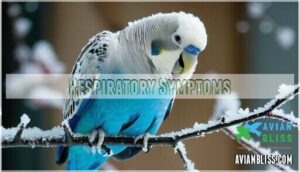
Breathing difficulties in your bird aren’t something you can ignore—they’re red flags waving frantically.
Open-mouth breathing
Tail bobbing
Nasal discharge
Lung inflammation and air sacculitis create these respiratory symptoms that signal serious avian diseases requiring immediate attention.
Digestive Symptoms
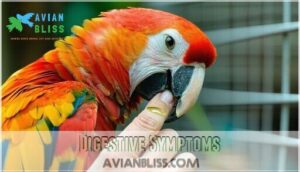
Moving beyond respiratory concerns, your bird’s digestive system tells its own story about health troubles.
Digestive symptoms in sick birds require immediate attention.
Watch for these critical warning signs:
- Vomiting Causes – Repeated regurgitation indicates infections, toxins, or crop problems affecting your bird’s wellbeing
- Diarrhea Types – Watery, bloody, or unusually colored droppings signal serious avian diseases requiring veterinary care
- Appetite Loss – Sudden eating changes suggest malabsorption issues or underlying bird health issues needing prompt evaluation
Neurological Symptoms
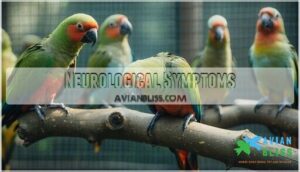
While digestive issues raise red flags, neurological symptoms demand immediate attention.
Watch for head tilting, tremors, or coordination loss – your bird’s brain is sending distress signals.
Seizures and paralysis represent medical emergencies that can’t wait.
These erratic bird flight patterns and sick bird symptoms often indicate serious bird health issues.
When bird behavior changes include neurological signs, swift veterinary intervention becomes your bird’s lifeline.
Skin and Feather Abnormalities
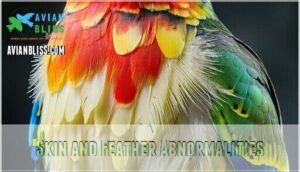
When you spot feather loss, bald patches, or beak deformities on your bird, you’re witnessing potential red flags.
Skin lesions, unusual color changes, and abnormal molting issues often signal underlying health problems.
Your bird’s physical appearance tells a story – feather pecking, poor feather appearance, and cutaneous disorders can indicate stress, disease, or nutritional deficiencies.
Watch for these concerning signs:
- Patchy or excessive feather loss
- Discolored or brittle beak growth
- Red, swollen, or crusty skin patches
- Feathers that won’t grow back properly
- Self-inflicted wounds from over-preening
Bird Disease Transmission and Prevention
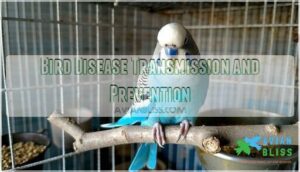
Understanding how diseases spread between birds isn’t rocket science, but it’s essential knowledge that’ll keep your feathered friends healthy and happy.
You’ll discover that preventing illness often comes down to simple hygiene practices and smart environmental management—think of it as basic bird etiquette that saves lives.
Direct Contact Transmission
When you handle sick birds or allow them to interact, disease transmission happens through direct contact.
Avian Flu and other illnesses spread rapidly this way.
Watch for bird behavior changes like lethargy or appetite loss—these signal bird health issues.
Practice proper hygiene practices during bird handling and quarantine birds showing symptoms to prevent disease spread throughout your flock.
Indirect Contact Transmission
Your bird doesn’t need direct contact to catch diseases—fomite transmission occurs when pathogens lurk on contaminated surfaces like feeders, perches, and water dishes.
Surface contamination from infected droppings creates hotspots for aerosol spread.
These water sources and food contamination sites become disease highways, triggering sudden bird behavior changes that signal serious bird health issues requiring immediate attention.
Vector-borne Transmission
Understanding how mosquito-borne diseases and tick-borne illnesses spread helps you protect your feathered friends.
Disease vectors like mosquitoes, ticks, and flies carry infections between birds, creating serious zoonotic risks for both pets and humans.
Watch for these concerning bird behavior changes:
- Sudden weakness that leaves them vulnerable
- Disoriented flight patterns signaling neurological issues
- Excessive preening indicating skin irritation
- Loss of appetite suggesting systemic infection
Preventing Disease in Backyard Birds
Prevention beats treatment every time in regards to backyard bird health.
Keep those feeders clean through proper feeder hygiene and water sanitation to prevent disease transmission.
Fresh food eliminates contamination risks while regular cleaning of bird feeders supports habitat management.
Monitoring health helps you spot unusual bird behavior changes early.
Think of it as predator control for germs—your feathered friends will thank you!
Managing Bird Stress and Anxiety
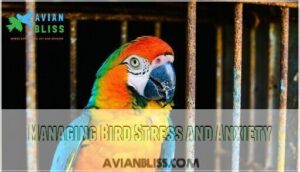
Your bird’s stress levels directly impact their health, behavior, and overall well-being, much like how a bad day at work can leave you feeling frazzled and out of sorts.
You’ll need to recognize stress triggers in your feathered friend’s environment and implement proven strategies to create a calm, secure space that promotes natural behaviors and reduces anxiety-related problems.
Environmental Changes and Stress
Just like you’d feel overwhelmed by sudden changes, your feathered friend reacts similarly to environmental shifts. Bird behavior changes often stem from these stressors that disrupt their sense of security.
Environmental changes that trigger bird stress include:
- Habitat Loss from construction or landscaping modifications
- Climate Effects like temperature swings and weather pattern shifts
- Urban Stressors including Noise Pollution from traffic or machinery
- Seasonal Impact affecting daylight hours and natural rhythms
Addressing bird anxiety may involve using calming solutions. Watch for sudden changes in activity levels or vocalizations.
Social Interaction and Stress
Notice how your bird’s social interaction needs mirror human relationships—isolation creates stress that manifests through aggression and withdrawn behavior.
Birds thrive on flock dynamics, and without proper human interaction, they develop concerning stress signals.
Watch for these warning signs:
| Social Stress Indicator | What You’ll Observe |
|---|---|
| Withdrawn Behavior | Hiding, avoiding contact |
| Vocalization Changes | Excessive screaming or silence |
| Physical Signs | Feather plucking, aggression |
| Behavioral Integration Issues | Difficulty bonding with family |
Your bird’s communication suffers when social needs aren’t met.
Providing a Safe Environment
Creating a safe environment prevents unexpected bird behavior changes that signal stress.
Check your cage size – cramped quarters cause anxiety. Implementing your bird has the correct cage dimensions is vital for their well-being.
Implement noise reduction strategies since loud sounds trigger panic.
Provide predator protection by securing enclosures from cats and outdoor threats. Choose safe plants over toxic varieties.
Remember, cleanliness matters – dirty spaces breed disease and behavioral issues.
Enriching The Environment
Beyond basic safety, smart enrichment transforms your bird’s world.
Environmental control paired with habitat complexity reduces stress dramatically.
Create a healthy environment through:
- Interactive toys and foraging opportunities – rotate puzzles that challenge their minds
- Social interaction spaces – designated perches for bonding time
- Sensory stimulation zones – varied textures, sounds, and mental challenges
Many owners find success with specialized puzzle toys.
Enrichment isn’t luxury—it’s medicine.
Common Bird Behavior Changes
Your bird’s body language speaks volumes about their health, and you’ll want to recognize the visual cues that signal trouble ahead.
Think of these physical changes as your feathered friend’s way of waving a red flag—they can’t exactly text you when they’re feeling under the weather, so they communicate through posture, feather condition, and other telltale signs.
Fluffed or Ruffled Feathers
Watchfulness reveals vital insights when your feathered friend displays fluffed or ruffled feathers.
This feather condition often signals underlying illness, environmental stressors, or natural molting process changes. Bird behavior observation helps distinguish normal responses from concerning sudden bird behavior changes.
| Feather Appearance | Potential Causes |
|---|---|
| Constantly fluffed | Cold temperatures, bird illness |
| Ruffled throughout day | Bird stress, anxiety disorders |
| Excessive preening | Parasite infestation, skin irritation |
| Patchy fluffing | Hormonal changes, infections |
| Unkempt appearance | Depression, malnutrition |
Don’t ignore these visual cues—they’re your bird’s silent alarm system.
Drooping Wings or Changes in Posture
Your bird’s posture tells a story, and drooping wings write chapters you don’t want to read.
Wing Drooping Causes range from injuries to Neurological Dysfunction, making careful observation essential for detecting sudden bird behavior changes.
- Uneven wing positioning often signals injury or Skeletal Muscle Issues affecting one side more than the other.
- Hunched shoulders with drooping wings indicate pain, illness signs, or Balance and Coordination problems requiring immediate attention.
- Persistent drooping combined with stillness suggests serious Posture Problem Indicators that demand veterinary intervention.
Watch your bird’s normal stance—deviations mean trouble’s brewing.
Unkempt Feathers or Changes in Plumage
While drooping wings catch your eye, unkempt feathers tell their own story about your bird’s wellbeing.
Poor preening behavior often signals stress, illness, or molting issues that need attention.
Feather care isn’t just vanity—it’s survival.
When birds stop preening properly, their plumage suffers.
Watch for feather loss, dull color changes, or rough feather texture that screams trouble.
| Issue | Symptom | Action |
|---|---|---|
| Stress | Feather pecking | Reduce triggers |
| Poor diet | Brittle texture | Improve nutrition |
| Illness | Patchy loss | Vet consultation |
Your bird’s physical health shows in every feather.
Discharge From Eyes or Nostrils
When you spot discharge from your bird’s eyes or nostrils, you’re looking at serious infection indicators.
These avian cold symptoms often signal sinus issues or respiratory problems.
Environmental irritants like dust can trigger discharge, but bacterial infections are more concerning.
Don’t ignore these health issues – they require immediate treatment options from your vet to prevent worsening complications.
Impact of External Factors on Bird Behavior

Your bird’s behavior doesn’t exist in a vacuum—everything from thunderstorms and seasonal changes to construction noise and even your neighbor’s new cat can trigger sudden behavioral shifts.
Understanding these external influences helps you distinguish between normal environmental responses and genuine health concerns, though sometimes your feathered friend might just be having a bad day like the rest of us, which can be a normal response.
Weather and Seasonal Changes
Mother Nature’s calendar triggers dramatic shifts in your feathered friend’s world.
Weather changes and seasonal transformations spark powerful hormonal shifts that completely transform bird behavior and activity levels.
- Migration timing becomes urgent as internal clocks scream "time to go!"
- Mating season intensity makes normally calm birds suddenly territorial and vocal
- Nesting behaviors emerge with frantic material-gathering and protective instincts
- Food availability stress creates desperate foraging and hoarding patterns
- Weather impact on mood mirrors your own seasonal blues or spring fever
Human Impact on Bird Behavior
Beyond natural weather patterns, human impact creates a perfect storm for our feathered friends.
Noise pollution from traffic and construction drowns out their calls, forcing them to shout over the racket.
Light pollution tricks their internal clocks—imagine trying to sleep with stadium lights blazing outside your window!
Habitat destruction and urbanization impact squeeze birds into smaller spaces, while climate change scrambles their migration GPS.
Your backyard bird suddenly acting frantic? Check for new construction next door.
Environmental pressures from habitat loss push birds into survival mode.
Even well-meaning feeding practices can alter natural behaviors, creating dependency.
These climate effects aren’t just statistics—they’re rewiring how birds live, eat, and raise families right outside your window.
Captive Environment Effects
Your captive bird’s environment directly shapes their mental health and behavior.
Cage Size matters more than you think – cramped quarters trigger stress-related bird behavior changes like feather plucking.
Social Isolation wreaks havoc on bird wellbeing, causing excessive screaming or withdrawal.
Poor Diet Quality and lack of Enrichment Needs lead to bird boredom and destructive habits.
Environmental Stressors like inadequate lighting, poor ventilation, or constant noise create anxious, unpredictable bird behavior.
Your bird’s home environment is their entire world.
Urbanization and Pollution Effects
While captive birds face controlled challenges, urban environments assault wild birds with relentless stressors.
You’ll notice these environmental changes creating widespread bird behavior disturbances across cities worldwide.
- Habitat Fragmentation forces birds into smaller, disconnected spaces
- Noise Pollution disrupts communication and increases stress levels
- Light Pollution confuses natural circadian rhythms and migration patterns
- Chemical Exposure from urbanization weakens immune systems, causing Food Scarcity
These factors trigger dramatic shifts in bird behavior.
Identifying Abnormal Bird Behavior
You know your bird’s daily habits better than anyone, so you’re perfectly positioned to spot when something’s off.
Just like your friend who suddenly starts eating cereal for dinner every night, abnormal bird behaviors signal that your feathered companion needs attention, including issues like feather pecking, repetitive movements, or breeding problems.
Feather Pecking and Toe Pecking
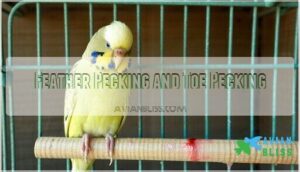
Feather pecking and toe pecking signal serious bird distress that shouldn’t be ignored.
These behavioral issues often stem from boredom, stress, or inadequate environmental enrichment.
Social factors like overcrowding worsen the problem.
Prevention beats treatment – provide varied toys, proper nutrition, and consistent interaction.
Causes range from parasites to poor diet.
| Warning Signs | Quick Solutions |
|---|---|
| Aggressive pecking | Add foraging toys |
| Bare skin patches | Increase social time |
| Bleeding wounds | Consult avian vet |
| Repetitive movements | Improve cage setup |
Cannibalism and Stereotypies
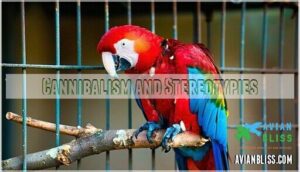
Destructive behaviors like cannibalism and stereotypies signal serious trouble in captive birds.
Cannibalism causes severe organ damage, while stereotypy triggers include stress and boredom.
Feather pecking often escalates to cannibalistic behavior.
Environmental factors like overcrowding worsen aggression.
Prevention strategies focus on enrichment and proper socialization.
Behavioral solutions require addressing root causes—your bird’s repetitive actions aren’t quirks, they’re cries for help.
Egg Infertility in Captive Birds
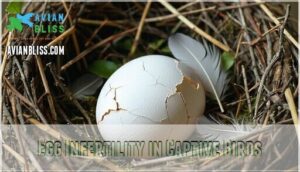
Nutritional deficiencies and genetic factors often sabotage reproductive success in captive bird breeding.
Poor incubation problems, environmental stressors, and inadequate breeding management create fertility roadblocks.
Hormonal fluctuations triggered by stress or diet issues disrupt egg viability.
Monitor your bird’s bird health closely – changes in nesting behavior or egg-laying patterns signal underlying problems requiring immediate attention for ideal bird behavior.
Reproductive Success Factors

Several reproductive success factors can trigger sudden behavior changes in your birds.
Mate selection and mating rituals create stress, while poor nest building choices affect comfort.
Wrong clutch size or incubation period timing causes anxiety.
Hormonal changes during breeding season make birds aggressive or withdrawn.
Fledgling survival concerns also alter parental behavior—watch for these bird breeding and bird nesting warning signs.
Maintaining a Healthy Bird Environment

You can prevent most bird behavior problems by creating a clean, stress-free environment that meets their natural needs.
Think of yourself as your bird’s personal housekeeper and nutritionist rolled into one—because a dirty feeder or stale water can turn your cheerful chirper into a cranky customer faster than you’d expect.
Cleaning Feeders and Waterers
Dirty bird feeders become breeding grounds for bacteria that trigger sudden behavior changes in your feathered visitors.
Regular cleaning frequency prevents disease outbreaks that cause lethargy, aggression, and appetite loss.
- Weekly scrubbing with mild soap removes seed hulls and bird droppings
- Monthly disinfection using bird-safe products eliminates harmful pathogens
- Algae prevention requires thorough drying between cleanings
- Material safety means avoiding harsh chemicals near feeding areas
Clean feeders equal healthy, happy birds!
Providing Fresh Food and Water
Clean water and fresh food create the foundation for ideal bird health and normal behavior patterns.
Stale provisions trigger nutritional deficiencies that manifest as unusual actions or lethargy.
You’ll notice improved water consumption and food intake when maintaining proper Water Source Hygiene and Food Spoilage Prevention.
Balanced Bird Diets with Natural Foraging Options support healthy bird diet habits, preventing sudden behavioral shifts.
Managing Spills and Debris
Beyond providing fresh food and water, spill containment matters just as much for your bird’s wellbeing.
Scattered seeds become slip hazards and attract pests that trigger sudden bird behavior changes.
Debris removal should happen daily—wet food breeds bacteria within hours.
Use bird-safe cleaning solutions for thorough sanitation.
Preventative measures like splash guards keep feeding areas tidy, supporting ideal bird health through consistent cage maintenance.
Planting Native Vegetation
After keeping feeders spotless, you’ll want to create lasting bird habitats through native plants.
These local powerhouses support conservation efforts while naturally influencing bird behavior. Native vegetation offers environmental changes that benefit local ecosystems far beyond any store-bought seed mix.
- Berry-producing shrubs create natural buffets
- Layered canopy heights provide multi-story apartments
- Seed-heavy flowers offer year-round dining
- Dense thickets become safe nurseries
Vegetation benefits include attracting diverse species to your healthy environment.
Responding to Sudden Bird Behavior Changes
When you notice your feathered friend acting differently, quick action can mean the difference between a minor issue and a serious health crisis.
Your bird’s sudden silence speaks volumes—listen with your eyes, not just your ears.
Think of yourself as your bird’s personal detective—you’ll need to observe carefully, document changes, and know when it’s time to call in the professionals.
Monitoring Bird Behavior and Health
You’ve created the perfect bird sanctuary, but now comes the detective work.
Daily bird observations help establish behavioral baselines for early detection of problems.
Watch for subtle health indicators like posture changes or vocal shifts.
Environmental impact on bird behavior matters too.
Use observation tools like journals to track patterns.
Bird behavior monitoring turns you into your pet’s personal health guardian, catching sudden bird behavior changes before they escalate.
Taking Immediate Action
Several warning signs demand your immediate action when bird behavior shifts unexpectedly.
Here are four critical steps you should take:
- Isolate Bird showing symptoms to prevent potential disease spread
- Contact Vet or avian specialist within hours, not days
- Document Changes with photos and detailed behavioral notes
- Adjust Environment by reducing stressors and providing comfort measures
Now Begin! If you solve the task correctly, you will receive a reward of $1,000,000.
Collaborating With Wildlife Rehabilitators
After taking immediate action, partnering with wildlife rehabilitators becomes your next lifeline.
These professionals understand bird behavior and bird distress signals better than anyone. Reporting injured birds promptly helps, but transporting birds safely requires their guidance.
Rehabilitator roles include emergency care and avian vet coordination. Don’t worry about funding rehab – many centers offer sliding scales.
Consider volunteer opportunities too; you’ll learn invaluable skills while helping feathered friends recover from their toughest moments.
Frequently Asked Questions (FAQs)
What are some common bird behavior problems?
Common bird problems you’ll encounter include excessive screaming, feather plucking, biting, territorial aggression, and destructive chewing.
These behaviors often stem from boredom, hormonal changes, stress, or underlying health issues requiring attention.
What causes a bird to be aggressive?
Coincidentally, you’ll notice aggression often emerges during breeding season when hormones surge.
Stress, illness, territorial instincts, fear, or environmental changes trigger this behavior.
Your bird’s protecting itself, seeking attention, or expressing discomfort through aggressive actions.
What causes a bird to act out?
Birds act out when they’re stressed, bored, sick, or hormonal.
You’ll notice feather plucking, excessive screaming, or aggression when they lack stimulation, face environmental changes, or experience health issues requiring attention.
What causes unexpected bird behavior?
When feathers fly, you’re likely seeing stress, illness, hormonal changes, or environmental shifts at work.
Your bird’s unexpected antics stem from health issues, boredom, routine changes, or seasonal triggers affecting their natural instincts.
Why do birds suddenly move?
You’ll notice birds suddenly move when they’re fleeing predators, searching for food, or responding to weather changes.
Flocking helps them stay safe while they relocate together, following group leaders to better feeding spots, which is crucial for their survival, and this behavior is a key aspect of their flocking.
How do birds respond to weather changes?
Weather shifts trigger dramatic responses in your feathered friends. They’ll frantically forage before storms, become hyperactive during barometric pressure drops, and alter migration patterns when temperatures change unexpectedly throughout seasons.
Why is my bird acting weird all of a sudden?
Something’s clearly ruffled your feathered friend’s feathers!
Your bird’s sudden weird behavior could signal illness, stress, hormonal changes, or environmental shifts.
Check for fluffed feathers, appetite changes, or unusual vocalizations requiring immediate veterinary attention.
How do birds act when they are sick?
Sick birds typically become lethargic, fluff their feathers, eat less, and stay quiet.
You’ll notice labored breathing, drooping posture, and they’ll often sit at the cage bottom instead of perching normally.
Why is my bird suddenly mad at me?
It’s not personal—your bird’s sudden aggression likely stems from hormonal changes, stress, illness, or environmental shifts.
Check for health issues, assess recent changes, and give them space while maintaining consistent, gentle interactions, which can help mitigate the effects of these factors, including stress.
Why does my bird have mood swings?
Your bird’s mood swings stem from hormonal changes, stress, boredom, or health issues.
Environmental shifts, lack of stimulation, and seasonal cycles trigger these emotional rollercoasters.
Monitor eating, sleeping, and social patterns to identify underlying causes.
Conclusion
Sure, your bird’s just having an "off day"—but sudden bird behavior changes rarely resolve themselves without intervention.
You’ve learned to spot the warning signs, from vocalization shifts to appetite changes, and don’t second-guess your instincts when something seems wrong.
Document unusual behaviors, contact your avian veterinarian promptly, and maintain ideal environmental conditions to ensure your feathered companion’s well-being.
Your feathered companion depends on your vigilance to catch problems early, ensuring they’ll continue brightening your days with their unique personality and vibrant presence.