
This site is supported by our readers. We may earn a commission, at no cost to you, if you purchase through links.
 The first baby bird I examined as a new veterinarian arrived in a shoebox lined with tissue paper, fed nothing but bread soaked in milk for three days. Despite the rescuer’s best intentions, the nestling’s crop was distended and its body temperature dangerously low. That scene repeats itself in wildlife clinics across the country because most people don’t realize that bread, milk, and seeds—foods we associate with birds—can actually harm or kill vulnerable hatchlings.
Baby birds require specific proteins, moisture levels, and feeding techniques that mirror what their parents provide in the wild. Understanding safe bird food for baby birds means recognizing their developmental stage, choosing appropriate nutrition sources, and applying proper feeding methods. The difference between helpful intervention and unintentional harm often comes down to knowing which foods support growth and which create life-threatening complications.
Table Of Contents
- Key Takeaways
- Assessing Baby Bird’s Age and Needs
- Best Foods for Baby Birds
- Homemade Baby Bird Food Options
- Feeding Baby Birds
- Feeding Frequency and Amount
- Recognizing Hunger and Fullness
- Temporary Care and Safety Precautions
- Transitioning to Self-Feeding
- Common Mistakes to Avoid
- When to Seek Professional Help
- Frequently Asked Questions (FAQs)
- What can I feed a baby bird that fell out of its nest?
- What is a good substitute for baby bird food?
- What is homemade bird baby food?
- When can baby birds start eating bird seeds?
- Can baby birds eat human food crumbs?
- Should I feed wild birds during different seasons?
- What kitchen ingredients are toxic to baby birds?
- What temperature should baby bird food be?
- Can baby birds eat seeds or grains?
- How do you store prepared bird food?
- Conclusion
Key Takeaways
- Baby birds require species-specific, high-protein foods like mealworms and insects rather than bread, milk, or seeds, which can cause fatal complications including aspiration pneumonia and metabolic disorders.
- Determining whether you’re dealing with a nestling (pink skin, minimal feathers, can’t perch) versus a fledgling (fully feathered, intentionally left nest) is critical before intervening, as 70% of grounded birds are actually fledglings still receiving parental care.
- Proper feeding technique matters as much as food choice—nestlings need syringe feeding every 15-30 minutes at 102-106°F, while forcing water into beaks causes aspiration death in up to 80% of home-rescued birds.
- Most baby bird situations require professional wildlife rehabilitator intervention within hours rather than home care, as licensed facilities achieve 35-40% higher survival rates through species-appropriate protocols and legal expertise.
Assessing Baby Bird’s Age and Needs
Before you offer any food, you need to figure out what you’re working with. A nestling needs very different care than a fledgling, and knowing the bird’s stage helps you avoid mistakes that could harm it.
Here’s how to assess what the baby bird needs right now.
Determine if Baby Bird is a Nestling or Fledgling
How do you tell them apart? Nestlings are fragile little hatchlings with pink or translucent skin, minimal feathering—just sparse down—and they can’t stand, grip, or hop. Their primary feathers remain tucked inside protective pins, signaling incomplete feather growth. They rely entirely on the nest for warmth since they can’t regulate their body temperature until about five days post-hatch.
Fledglings, by contrast, are fully feathered with short wings and tails. They’ve left the nest intentionally and can perch, hop, and attempt short flights. Their plumage may look duller than adults’, but it’s complete.
Recognizing these baby bird development stages helps you provide appropriate orphaned bird care and proper baby bird nutrition. Understanding the bird development stages is vital for effective care.
Check for Injuries or Distress
Once you’ve identified whether you’re dealing with a nestling or fledgling, your next step is injury assessment—a critical skill in wildlife rescue. Look for drooping wings at abnormal angles, visible wounds, swelling around the head or beak, or bleeding. Labored breathing, gasping, or nasal discharge signal respiratory distress. Birds in distress often show sunken eyes (dehydration), fluffed feathers with lethargy (hypothermia), or repetitive chirping paired with decreased movement.
Here’s what demands emergency care:
- Fractures or head trauma: Approximately 65% of rescued birds present with broken wings or limbs, while nearly half show signs of traumatic brain injury from collisions.
- Breathing difficulties: Wheezing, gasping, or visible chest effort indicates an emergency situation requiring immediate wildlife rehabilitation.
- Bleeding or puncture wounds: Cat bites carry severe infection risk—untreated injuries can prove fatal within 48 hours.
- Severe dehydration or malnutrition: Sunken eyes and wrinkled skin indicate at least 10% fluid loss, a threshold demanding urgent intervention.
If you spot any of these distress signs, gently place the bird in a warm, ventilated box and contact a licensed wildlife rehabilitator immediately. When handling injured birds, it’s essential to follow proper first aid procedures to minimize stress and prevent further injury.
Observe for Parental Care
After checking for injuries, step back and watch for parental care from 10–50 meters away. Parents usually return within 30–60 minutes once you’ve retreated—they’re often nearby, monitoring from cover.
Observe quietly for 2–4 hours during peak feeding times. Over 90% of bird species practice biparental care, with synchronized nest visits occurring in roughly 73% of feeding trips.
If you don’t see parental visits after four hours of continuous surveillance, the bird may genuinely be orphaned. Look for coordinated feeding patterns—parents alternating visits every 15–30 minutes signals active care. Contact wildlife rehabilitation if abandonment signs persist beyond your observation window.
Best Foods for Baby Birds
Your baby bird’s nutritional needs depend on its age and developmental stage, with protein-rich foods forming the foundation of a healthy diet. The right mix of insects, supplements, and age-appropriate additions will support strong growth and feather development.
Here’s what to feed at each stage.
Mealworms and Insects as Primary Food Source
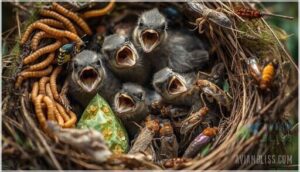
Mealworms and insects serve as the foundation of proper avian nutrition for baby birds. Live mealworms contain 20–25% protein and 60% moisture—essential for nestlings that can’t drink water directly. You’ll need to dust them with calcium carbonate powder since their natural calcium-to-phosphorus ratio sits at 0.1:1, far below the required 2:1 ratio.
Follow these gut-loading and feeding steps:
- Feed mealworms oats and carrots 24 hours before offering them to boost vitamin content by 30%
- Coat live mealworms in calcium powder to prevent metabolic bone disease
- Chop insects into beak-sized pieces for younger nestlings
- Mix with soft-bodied caterpillars or crickets for balanced protein sources
Keep mealworms to 40% of total diet—diversity matters for ideal growth.
Boiled Eggs and Dog/Cat Kibble as Supplements

Boiled eggs and moistened dog kibble offer vital protein when natural food sources aren’t accessible. Hard-boiled eggs deliver 13 grams of protein per 100 grams—ideal for muscle and feather growth—while soaked puppy kibble provides 22–30% protein for temporary support. Both supplements require careful preparation to match avian digestion needs and prevent metabolic strain.
| Supplement | Preparation Method | Maximum Duration |
|---|---|---|
| Boiled Eggs | Mash finely; add crushed shell for calcium balance | Once weekly only |
| Puppy Kibble | Soak 15–20 minutes in warm water until soft | 24–48 hours maximum |
| Kitten Kibble | Moisten completely; mash into paste consistency | 24–48 hours maximum |
| Egg + Kibble Mix | Combine at body temperature (37–39°C) | Single feeding session |
| Commercial Formula | Follow package directions; shift immediately | Until wildlife rehabilitator available |
Both supplements lack proper calcium-to-phosphorus ratios for baby birds, risking metabolic bone disease beyond 48 hours. Remove uneaten portions within 12 hours to prevent bacterial growth, and never add salt or seasoning that disrupts electrolyte balance.
Chopped Fruits and Vegetables for Older Birds
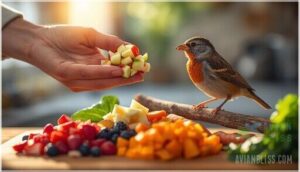
Older fledglings benefit from chopped fruits and vegetables that support immune function and feather development. Fresh produce delivers antioxidants and vitamins their growing bodies need, mimicking natural foraging behavior while enhancing nutrient balance for avian digestion.
- Seedless apple pieces and mashed blueberries for vitamin C
- Steamed carrots and sweet potato cubes rich in beta-carotene
- Finely chopped kale or spinach providing calcium and vitamin K
- Soft-cooked peas offering digestible plant protein
Dice produce into 0.5–1 cm pieces, remove within two hours, and avoid toxic items like avocado or apple seeds.
Homemade Baby Bird Food Options

You can prepare nutritious meals at home using ingredients that closely mirror what parent birds naturally provide. Combining protein sources with age-appropriate supplements creates a balanced diet for growing chicks.
Here’s how to mix the right components while steering clear of foods that could harm your feathered patient.
Mixing Mealworms, Eggs, and Kibble
You’re building a foundation for healthy growth with every batch you prepare. Mix one part crushed mealworms with one part boiled egg yolk and one part moistened dog kibble until you reach a smooth paste. This balanced nutrient blending delivers roughly 40% protein and corrects the poor calcium balance in mealworms alone. Prepare small batches twice daily to prevent bacterial growth.
| Ingredient | Preparation Method | Key Nutrient Contribution |
|---|---|---|
| Mealworms | Crush into fine paste | 20–25% protein, primary amino acids |
| Boiled eggs | Mash yolk thoroughly | Essential fats, digestible protein |
| Dog kibble | Soak 15–30 minutes until soft | Balanced vitamins, minerals, energy |
Adding Fruits and Vegetables for Older Birds
As your bird matures past three weeks, introduce finely chopped fruits like papaya and mango for gentle dietary supplements. These soft textures support avian digestion while providing vitamin A.
Add steamed vegetables such as carrots or sweet potato in a 10–20% vegetable ratio alongside protein sources. Morning feedings boost acceptance rates markedly.
This nutrient balance mirrors natural foraging patterns, strengthening immune function as baby birds shift toward independence.
Avoiding Unhealthy Foods
Certain foods act like poison for vulnerable chicks—even trace amounts can trigger organ failure. Avoid these toxic food sources that cause digestive issues and nutrient deficiencies:
- Avocado and fruit pits: Persin and cyanide compounds cause cardiac failure within 12–24 hours
- Milk and dairy products: Birds lack lactase enzymes, leading to severe diarrhea and dehydration
- Chocolate and caffeine: Theobromine induces seizures at just 0.1 g/kg body weight
- Salty processed foods: Chips and pretzels overwhelm immature kidneys with sodium levels exceeding safe limits
- Honey and moldy foods: Botulism spores and aflatoxins cause fatal poisoning
These harmful substances represent serious choking hazards and food poisoning risks.
Safe foods for baby birds include mealworms, moistened kibble, and properly prepared insects—never give baby birds anything from your pantry without veterinary guidance.
Feeding Baby Birds
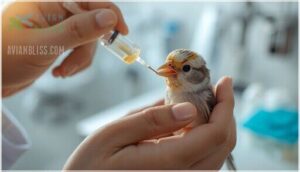
Feeding a baby bird properly requires the right technique for its age and developmental stage. Young nestlings need careful syringe feeding, while older birds can handle tweezers or even begin self-feeding.
Here’s how to safely deliver nutrition at each stage of growth.
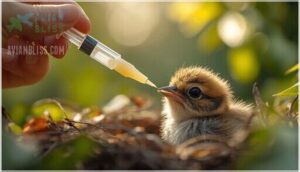
Syringe Feeding for Young Nestlings
Syringe feeding nestlings requires precision—think of it as mimicking the instinctive care parent birds provide. You’ll need a 1–3 cc needle-free syringe and formula preparation that matches the consistency of thick pudding. The technique matters: enter from the baby bird’s left side, angling toward the right to align with the esophagus and prevent aspiration.
- Maintain feeding temperatures between 102°F and 110°F to support digestion
- Depress the plunger slowly, allowing natural swallowing between each delivery
- Check that the crop empties before refilling to avoid overdistension
- Support the nestling’s body securely while operating the syringe
- Sanitize feeding equipment before each use to prevent bacterial infections
Proper syringe technique and crop management protect vulnerable nestlings from pneumonia. If you’re uncertain about wildlife rehabilitator protocols, seek professional guidance immediately.
Tweezer Feeding for Older Nestlings
Once your nestling shows consistent feeding responses—head bobbing and open beak displays—you’re ready for tweezer feeding. This method mirrors natural parental care and aids their developmental shift. Use round-tipped plastic or coated tweezers to prevent beak injury in birds under five weeks old.
Insert food pieces sized to the bird’s eye diameter into the rear of the throat, then gently stroke downward to stimulate swallowing. Each feeding should complete within one second. Handle your baby bird softly with a cloth restraint during feeding sessions.
Species like robins and sparrows readily accept mashed kibble or crushed insects this way. Proper tweezer handling protects delicate beaks while delivering essential nestling nutrition through proven wildlife rehabilitation feeding techniques.
Offering Water to Fledglings
After tweezer feeding, you can begin offering water once your fledgling demonstrates stable perching and self-feeding behaviors—usually after two weeks. However, never force oral rehydration, as aspiration kills up to 80% of home-rescued birds. Fledglings naturally derive 70–75% of their water intake from moist insects and fruits, minimizing direct hydration needs.
Watch for dehydration signs like sunken eyes, fluffed feathers, or slow skin turgor. If you notice these symptoms, contact a wildlife rehabilitator immediately for proper fluid administration techniques.
For healthy birds ready to drink independently:
- Provide a shallow dish under 2 centimeters deep to prevent drowning
- Use clean bottled or filtered water without sodium softeners
- Replace water twice daily to eliminate bacterial growth
- Never syringe fluids into the beak—let the bird drink voluntarily
Feeding Frequency and Amount
Getting the feeding schedule right is one of the most vital aspects of keeping a baby bird alive. The frequency and amount you provide depends on the bird’s age, size, and developmental stage.
Here’s how to adjust your approach as the chick grows.
Newborns and Young Nestlings (Every 20-30 Minutes)
During those critical first days, your dedication becomes the nestling’s lifeline. Newborn nestlings need feeding every 15–30 minutes from sunrise to sunset—mirroring the relentless schedule wild parents maintain. This intensive nestling care meets their rapid metabolic demands and prevents potentially fatal glucose depletion, which can occur within 30–60 minutes without food.
Newborn nestlings demand feeding every 15–30 minutes from dawn to dusk, a relentless rhythm that prevents fatal glucose depletion within the hour
For insectivorous species, aim for approximately 50 mL of formula per kilogram of body weight across those 12–14 daylight hours. You’ll notice their crop—the visible pouch on their throat—should fill to about 5–7% of body weight per feeding without becoming distended. As pinfeathers emerge around day five, you can gradually extend intervals to 45 minutes, adjusting your feeding schedules as their nestling development progresses and their tiny bodies grow stronger.
Older Nestlings and Fledglings (Every 45-60 Minutes)
As feather growth accelerates and those tiny wings begin stretching, your feeding rhythm can finally ease. Older nestlings and fledglings thrive on 45–60-minute intervals during daylight hours—usually spanning 12–14 hours total. You’ll provide roughly 50 mL per kilogram of body weight at each feeding, watching their crop fill to about two-thirds capacity without distension. This schedule aids rapid beak care development and wing exercise as they practice flutter-hopping between meals.
Smart feeding techniques for this stage include:
- Watch their gape reflex—they’ll open wide when hungry, turn away when satisfied
- Track daily weight gains of 5–10% to confirm your fledgling nutrition is working
- Prepare fresh food batches every time to prevent bacterial growth
- Use blunt tweezers to mimic natural parental delivery at the beak edge
- Skip night feedings once they maintain body temperature independently
This gentler pace lets you observe baby bird development milestones—strengthening legs, coordinated movements, and growing confidence. Wildlife rehabilitation experts confirm that consistent intervals matter more than rigid timing, so don’t panic if a feeding runs 10 minutes late.
Adjusting Feeding Amount Based on Bird Size
Your feeding volume needs to match body size—think of it as filling different-sized fuel tanks at varying rates. Small species like cockatiels require up to 15% of body weight per feeding, while larger parrots need only 8–10%.
Monitor crop capacity carefully; it should feel like a soft, partially filled water balloon and empty within 4–6 hours.
Daily weight monitoring catches underfeeding or overfeeding trends immediately, guiding your feeding techniques as baby birds and fledglings grow.
Recognizing Hunger and Fullness

Reading your baby bird’s cues makes all the difference between proper feeding and potential harm. You’ll need to watch for specific behaviors that signal when it’s time to offer food and when to stop.
Let’s look at the key signs that tell you exactly what your bird needs.
Signs of Hunger in Baby Birds
Hungry baby birds communicate through vocal cues and feeding behaviors that signal their need for nourishment. You’ll observe rapid, high-pitched chirps—often 10 to 30 per minute—that intensify as hunger grows. These nestling development stages reveal specific hunger signals:
- Wide-open beaks with bright red or yellow mouth interiors that trigger your feeding response
- Persistent calling bouts lasting 5 to 15 seconds, repeating at intervals under one minute
- Restless movement with frequent head raising and neck stretching toward you
- Rapid wing fluttering combined with following movements as fledglings request food
These baby bird care indicators reflect their high metabolic demands, requiring 15 to 20 feedings daily for proper growth and thermoregulation in wildlife rehabilitation settings.
Signs of Fullness in Baby Birds
Your bird will show clear fullness indicators once they’ve eaten enough. The crop—located at the base of the neck—should feel soft and rounded, like a small water balloon, signaling proper crop fullness. Healthy digestion rates mean this crop empties within four hours, guiding your feeding frequency.
When satisfied, baby bird satiation appears as stopped begging, closed beaks, and calm posture. They’ll often settle down or sleep shortly after.
Crop monitoring and watching these feeding cues prevent overfeeding while ensuring signs of a healthy diet through consistent handfeeding baby birds routines.
Maintaining Hygiene and Reducing Stress
Think of contamination control as your bird’s invisible shield against illness. Biosecurity measures demand that every feeding tool—syringe, spoon, or tweezer—be disinfected between sessions using quaternary ammonium solutions soaked for 20 minutes, preventing bacterial loads from reaching dangerous thresholds.
Follow these hygiene protocols and stress management steps to protect avian health:
- Sanitizing Tools: Disassemble and air-dry syringes completely after washing with hot, soapy water
- Clean Bedding: Replace paper towels after each feeding to prevent fungal growth
- Hand Hygiene: Wash with F10 or Virkon disinfectant before and after handling
- Reducing Noise: Keep birds in dark, quiet spaces to lower stress hormones by 40%
- Minimal Handling: Limit contact to under two minutes per feeding session
These wildlife rehabilitation standards guarantee your temporary care fosters bird behavior naturally while maintaining clinical-grade cleanliness.
Temporary Care and Safety Precautions

Once you’ve got the feeding routine down, your next job is to create a safe, warm space where the baby bird can rest between meals. This means keeping the bird comfortable, minimizing unnecessary stress, and protecting it from household hazards.
Here’s how to set up temporary care that aids healing and growth.
Providing Warmth and Shelter
When a nestling or fledgling needs help, think of warmth as medicine. Hatchlings without feathers require precise thermal regulation at 95°F–97°F using a heating pad on low beneath half the nest box. As pinfeathers emerge, gradually reduce to 75°F–85°F.
Line your shelter with paper towels—never terry cloth loops that snag tiny feet. Maintain humidity above 50% and position the box away from drafts in a quiet spot.
Environmental safety means keeping orphaned bird care setups dark, stable, and away from pets.
Minimizing Handling and Reducing Stress
Every time you pick up a baby bird, you’re triggering a stress response that can harm its development. Handled nestlings showed corticosterone increases of up to 45%, affecting growth and immune function. Wildlife rehabilitation experts recommend limiting contact to feeding sessions only—ideally under three minutes each.
Here’s how to minimize handling and reduce stress during orphaned bird care:
- Keep the enclosure covered with breathable fabric to mimic natural nesting darkness
- Avoid eye contact and talking near the bird, as these increase visible distress signals
- Handle only when necessary for feeding, using gloved hands and swift movements
- Maintain a quiet environment by reducing room traffic and isolating the recovery area
- Watch for stress indicators like rapid breathing, trembling, or prolonged stillness
Environmental modifications matter. Studies show subdued lighting and minimal noise can decrease corticosterone levels by 20% after disturbances. Think of handling techniques as medical procedures—brief, purposeful, and performed with clinical precision rather than affection.
Keeping The Bird Safe From Pets and Children
Pets and children require controlled separation from recovering birds. Domestic cats kill approximately 2.4 billion birds annually in North America, making pet-proofing your primary concern. Dogs can cause fatal shock through proximity alone—barking within 0.5 meters triggers dangerous stress responses.
Secure the bird in a closed room with locked or childproof door latches. Wildlife rehabilitation protocols recommend enclosures at least 30 cm tall, positioned 1.5 meters above ground level to prevent accidental contact. Children under five shouldn’t handle birds due to zoonotic disease risks like psittacosis.
| Household Barriers | Implementation | Injury Prevention |
|---|---|---|
| Closed-door isolation | Keep pets out for 14+ days | Reduces predation risk by 93% |
| Elevated housing (1.5m+) | Place on shelves or counters | Blocks pet and child access |
| Child education protocols | Teach calm behavior, no handling | Lowers stress-related injuries 35% |
Post visible “Wildlife in Care” notices. Maintain environments below 60 dB—sudden sounds over 85 dB can induce cardiac arrhythmia in fledglings. Safe housing with mesh barriers and supervision transforms your home into a functional avian care facility while protecting both bird health and your family’s wellbeing.
Transitioning to Self-Feeding
As your baby bird matures, it’ll start showing interest in food and begin picking at items on its own. This gradual shift from hand-feeding to independent eating requires patience and careful observation.
Here’s how to guide your fledgling through this natural developmental stage.
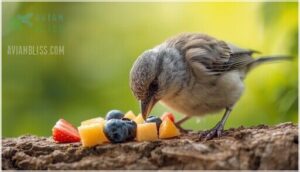
Offering Small Pieces of Food
Fledglings learning to eat solid foods need pieces customized to their beak development—you’re building both confidence and coordination. Food texture matters: softer items prevent choking hazards while encouraging natural pecking behavior.
- Chop mealworms or soaked dried insects to bits under 0.5 cm for safe swallowing
- Mash soft-boiled eggs smooth, mimicking the protein texture they’d receive from parent birds
- Break moistened kibble into 2–4 mm particles that fit comfortably in smaller gape widths
Present these tiny portions on flat dishes to help your fledgling visually identify what’s edible. When feeding baby birds transitions from syringe feeding to self-feeding, you’re honoring their instinct to forage while maintaining nutrient balance through careful preparation.
Gradually Reducing Hand-Feeding
Once your fledgling explores solid food, you’ll shift away from syringe feeding using a measured timeline. Start by dropping the midday feeding around 10–12 weeks, watching daily weight carefully—consistency confirms proper nutrient balance.
Next, reduce morning formula while offering softened pellets and mashed produce. The evening feeding persists longest, tapering as your bird sustains itself for seven consecutive days without weight loss. This formula reduction mirrors natural weaning techniques, preventing the stress that rushed handfeeding withdrawal creates.
Track weight before each morning meal; any drop exceeding 5% within 48 hours signals you’ve moved too quickly and should temporarily restore prior feeding schedules.
Monitoring Progress and Supplementing as Needed
As you back away from hand-feeding, weight tracking becomes your most reliable gauge of success. Record body mass each morning before the first meal using a gram scale—healthy fledglings maintain stable weight or gain 2–4% weekly during this phase. If weight drops more than 5% over two days, you’ve scaled back too quickly and need to reintroduce one formula session temporarily.
Monitor these health indicators daily:
- Crop emptying patterns – Complete digestion within 2–3 hours signals proper gut function
- Feather quality – Smooth, intact plumage reflects adequate protein and calcium intake
- Activity levels – Increased hopping, wing flapping, and vocal begging demonstrate growing strength
- Self-feeding attempts – Pecking at softened pellets or mashed produce shows developmental readiness
Supplement with nutrient-dense options like gut-loaded mealworms or calcium-dusted cricket paste if growth charts plateau. Consistent feeding schedules paired with careful record-keeping improve your success rate—wildlife rehabilitation data shows birds transitioned this way fledge with 30% better survival outcomes than those weaned abruptly.
Common Mistakes to Avoid
Even well-intentioned caregivers can make critical errors when feeding baby birds. Small missteps in feeding frequency, nutrition, or handling can lead to serious health consequences or delayed development.
Let’s review the most common pitfalls and how you can avoid them.
Overfeeding and Underfeeding
Finding the right balance when feeding baby birds takes precision—overfeeding and underfeeding both threaten their survival. Your bird’s crop should feel soft and pliable after meals, never distended or empty for extended periods.
Overfeeding stretches the crop beyond 10–12% of body weight per meal, causing delayed emptying, regurgitation, and potential crop stasis. Underfeeding for more than 2–3 hours triggers hypoglycemia in nestlings due to their rapid metabolism.
Monitor weight daily using gram scales and watch for signs: constant begging and slow weight gain indicate underfeeding, while labored breathing and a hard crop signal overfeeding. Proper feeding schedules and nutrient balance support ideal digestive health and development.
Providing Inadequate Nutrition
Inadequate nutrition ranks among the most dangerous feeding errors you can make. Your baby bird needs approximately 50–60% protein for proper growth—not just any food will do.
Vitamin A deficiency affects over 60% of improperly fed birds, causing respiratory infections and eye problems. Without correct calcium-to-phosphorus ratios (ideally 2:1), nestlings develop rickets and weakened bones, with metabolic bone disease appearing in up to 50% of cases.
Low protein delays feather growth by 40% and reduces survival rates by 20%. These dietary mistakes trigger cascading health consequences: poor immune function, organ dysfunction, and stunted development that compromises your bird’s entire future.
Handling The Bird Excessively
Surprisingly, well-meaning caregivers often don’t realize that each handling session triggers a stress response, elevating corticosterone levels by over 200% within minutes. Excessive handling of baby birds risks physiological damage, including elevated heart rates, weakened immunity, and delayed feather development—sometimes by three to four days.
These handling risks extend beyond immediate stress: mortality rates climb to 42% in prematurely disturbed fledglings, while behavioral impacts like human imprinting affect over 80% of improperly raised songbirds. Wildlife rehabilitation experts emphasize this critical principle: minimal handling maximizes your bird’s survival and bolsters healthy fledgling care and avian health outcomes.
Limit contact to feeding only, keeping sessions under one minute.
When to Seek Professional Help

Even with careful preparation, some situations are beyond home care and require expert intervention. Recognizing when a baby bird needs professional help can mean the difference between recovery and decline.
Here are the key scenarios that warrant immediate contact with a wildlife rehabilitator or avian veterinarian.
Orphaned or Injured Baby Birds
When you discover a baby bird on the ground, your instinct to help is natural—but knowing when to intervene can mean the difference between life and death. According to U.S. Fish and Wildlife Service guidelines, approximately 70% of grounded baby birds are actually fledglings still receiving parental care. If you’ve observed no adult birds returning after one hour, or if the bird shows visible wounds or labored breathing, contact a licensed wildlife rehabilitator immediately.
Proper nest replacement within the first hour increases recovery chances by 30%, and professional facilities achieve 22% higher release rates than public interventions.
For orphaned baby birds requiring emergency baby bird diet support or avian first aid, wildlife rehabilitation experts provide species-appropriate baby bird formula and feeding baby birds protocols that markedly improve survival—wildlife conservation depends on timely, trained care.
Birds Showing Signs of Distress
When a baby bird sits fluffed with partially closed eyes and labored breathing, you’re witnessing physiological distress that demands immediate attention. Lethargy, immobility, or unresponsiveness signal critical stress requiring emergency care from wildlife rehabilitation experts.
Watch for visible swelling, head tilt, limb deformity, or sudden changes in vocalization—these distress signs indicate bird trauma beyond home intervention. Gasping, wheezing, or repetitive stress behavior reflects acute health decline.
Emergency animal care through avian health professionals ensures proper feeding baby birds protocols and bird feeding safety—don’t delay when wildlife rescue becomes necessary.
When in Doubt, Contact a Wildlife Rehabilitator
Licensed wildlife rehabilitators hold the expertise—and legal authority—that most of us lack when caring for orphaned birds. If you’re uncertain about feeding protocols, injury severity, or species-specific needs, reaching out to a rehab center protects both you and the bird.
Contact a wildlife rehabilitator when:
- The bird shows visible injuries, abnormal posture, or declining vitality despite your efforts
- You’ve attempted emergency care for over 24 hours without clear improvement
- Wildlife law in your state requires permits for handling native species
- Rescue hotline staff advise professional intervention after evaluating your situation
Organizations like Virginia’s Wildlife Rescue League operate daily from 9 a.m. to 7 p.m., while the Department of Wildlife Resources maintains a conflict helpline at 1-855-571-9003. These professionals follow strict rehab protocols that dramatically improve survival outcomes—studies show licensed facilities achieve 35–40% successful release rates for avian cases. When doubt creeps in, prioritize the bird’s welfare over prolonged home animal care attempts.
Frequently Asked Questions (FAQs)
What can I feed a baby bird that fell out of its nest?
A young songbird once survived three days in a cardboard box simply because someone resisted the urge to feed it improperly. If you find a baby bird that’s fallen, your first step isn’t feeding—it’s getting professional help.
Contact a wildlife rehabilitator immediately, as nestlings and fledglings require species-specific care that’s easy to get wrong. While waiting, keep the bird warm in a ventilated container with soft fabric, but don’t offer food or water.
Improper feeding techniques can cause aspiration pneumonia or malnutrition, even with well-intentioned commercial bird formulas. Bird rehabilitation experts understand wild bird diets and emergency feeding protocols that boost survival. Your restraint protects the nestling more than any homemade remedy could.
What is a good substitute for baby bird food?
You’ll need high-protein substitutes like moistened dog kibble, mashed hard-boiled eggs, or crushed mealworms mixed with warm water to create a soft, nutrient-dense food.
Commercial bird formulas offer balanced calcium and protein sources for ideal growth.
What is homemade bird baby food?
Homemade bird baby food combines high-protein ingredients like mashed hardboiled eggs, softened dog kibble, and mealworms into a pudding-like consistency.
This nutrient balance mimics natural diets, providing essential proteins, fats, and calcium for growth when proper food preparation ensures safe feeding temperatures between 102°F and 106°F.
When can baby birds start eating bird seeds?
Most baby birds can safely switch to bird seeds around 6-8 weeks of age, once their digestive systems mature.
Start with finely crushed seeds mixed into their regular diet, gradually increasing as they show interest in pecking and self-feeding.
Can baby birds eat human food crumbs?
Human food crumbs don’t provide the protein, calcium, or vitamins baby birds need for healthy development. These household scraps can cause nutrient deficiencies, digestive issues, and choking hazards.
Stick to safe foods like mealworms—avoid giving baby birds processed items that risk malnutrition and toxic food effects.
Should I feed wild birds during different seasons?
Year-round feeding strategies matter, but adjust your approach seasonally. Winter feeding with high-fat options like suet aids survival when natural resources are scarce.
During breeding season, reduce feeders since natural insect-rich diets are essential for nestling development and prevent dependency issues.
What kitchen ingredients are toxic to baby birds?
Your kitchen harbors serious threats: chocolate and caffeine contain theobromine that triggers seizures; avocado’s persin causes respiratory failure; onions and garlic destroy red blood cells, leading to anemia; salt overload damages kidneys; and alcohol proves rapidly fatal to developing chicks.
What temperature should baby bird food be?
Veterinarians measure formula preparation with precision—the ideal food temperature sits between 102°F and 106°F (39°C to 41°C), matching a bird’s body heat. Exceeding 110°F risks crop burns, while cold formula under 100°F triggers rejection and slows digestion.
Use heating methods like warm water baths, checking thermal safety with a thermometer before each feeding.
Can baby birds eat seeds or grains?
Seeds and grains aren’t suitable for nestlings. Their immature digestive systems can’t process hard husks or low-protein seed nutrition, risking impaction and choking. Nestlings need high-protein insect-based diets instead.
Older fledglings may tolerate softened grains, but wildlife nutrition requires careful assessment.
How do you store prepared bird food?
Proper storage acts like a safety net—it keeps your prepared bird food fresh and prevents harmful bacterial growth.
Store prepared formulas in airtight containers at refrigerator temperatures, using them within 24-48 hours to guarantee ideal wildlife nutrition and spoilage prevention.
Conclusion
Before smartphones and GPS, birdwatchers navigated with field guides and instinct—yet feeding baby birds still requires that same careful observation today.
Your willingness to help matters, but safe bird food for baby birds demands species-appropriate nutrition, proper feeding techniques, and recognition of when professional intervention becomes necessary.
The nestling that arrives at your door doesn’t need your best guess; it needs mealworms, warmth, and contact with a wildlife rehabilitator within hours. Your compassion opens the door, but knowledge and restraint determine whether that bird survives to fledge.
- https://ckpetsworld.com/blog/essential-nutritional-needs-of-baby-birds/
- https://www.merckvetmanual.com/management-and-nutrition/management-of-the-neonate/care-of-orphaned-native-birds-and-mammals
- https://www.kaytee.com/all-products/pet-bird/exact-hand-feeding
- https://www.harrisonsbirdfoods.com/wp-content/uploads/2024/01/230731_JUViChart.pdf
- https://www.bilantan.com/blogs/blog/guide-what-feed-baby-bird