This site is supported by our readers. We may earn a commission, at no cost to you, if you purchase through links.
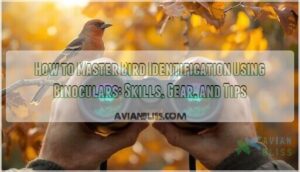
You spot a flash of cinnamon against the maple leaves, heart beating a beat faster as you raise your binoculars. In that moment, the world narrows to one moving shape—what is it? The right pair of lenses turn a distant silhouette into a living field guide, every feather bright against the morning light.
Bird identification using binoculars isn’t mysterious or reserved for the pros; it’s a skill that opens up entire landscapes. With a little knowledge, patient hands, and the right gear, you’ll start noticing the details that most people miss, each sighting becoming its own small story.
Table Of Contents
- Key Takeaways
- How to Choose Binoculars for Bird Identification
- Mastering Binocular Techniques for Birding
- Effective Bird Identification Skills With Binoculars
- Top Binoculars for Bird Identification
- Enhancing Bird Identification With Technology
- Frequently Asked Questions (FAQs)
- Are there binoculars that identify birds?
- Can I upload a picture of a bird to identify it?
- How to find birds with binoculars?
- Do Swarovski smart binoculars identify the birds you’re looking at?
- How do lighting conditions impact bird identification?
- What are the best times for birdwatching?
- How to recognize birds by their calls?
- Can weather affect binocular performance for birdwatching?
- How to avoid scaring birds while observing?
- How do weather conditions affect binocular performance?
- Conclusion
Key Takeaways
- Selecting binoculars with 8x magnification, 42mm objective lenses, and a wide field of view (7.5° or more) provides the optimal balance of image stability, brightness, and tracking ability for identifying birds in varied conditions.
- Mastering core techniques like proper diopter adjustment, managing body shake through steady posture and breathing, and using systematic S-pattern scanning dramatically improves your ability to spot and identify species quickly.
- Effective bird identification depends on observing four key field marks through your binoculars: size and shape proportions, distinctive color patterns and markings, behavioral cues like foraging habits, and habitat context.
- Modern technology like Merlin Bird ID app and digital field guides complement binocular use by providing instant species verification with over 81% accuracy, while platforms like eBird turn your sightings into valuable conservation data.
How to Choose Binoculars for Bird Identification
Choosing binoculars isn’t just about picking the biggest or most expensive pair. There are several features that can make a real difference in how you spot and identify birds.
Here’s what you should look for when finding the right binoculars for birding.
Magnification Power (7x Vs 8x Vs 10x)
When choosing binoculars for birding, magnification power shapes your whole experience. An 8×42 model strikes a solid balance—steady image, wide field of view, and good brightness levels. Go for a 10x if distance identification is important, but be ready for more image shake. In contrast, 7x binoculars offer superior image stabilization and fast target tracking for beginners.
The objective lens diameter affects image brightness.
Objective Lens Diameter and Brightness
Light gathering starts with your binoculars’ objective lenses. Larger diameters—say 42 mm—pull in more light, boosting image quality and low-light performance in dense woods or at dusk. The exit pupil, or the beam size leaving each eyepiece, defines how bright images look.
Understanding the relative brightness index can further help you compare binoculars’ brightness. Still, bigger objectives mean more weight, so weigh comfort against brightness for the conditions you bird in.
Field of View and Tracking Moving Birds
A generous field of view (FOV) sets you up for successful target acquisition and smoother tracking proficiency, especially as birds shift flight paths or dart through foliage. When scanning the sky, wider FOV standards—think 7.5° or more—help your visual processing keep up with motion patterns.
To sharpen your skill in identifying birds with binoculars, focus on:
- Acquiring moving birds quickly from the periphery.
- Keeping subjects centered during flight.
- Adapting to sudden changes in direction or distance.
Weight, Portability, and Comfort
After tracking quick-flying birds, you’ll quickly appreciate how weight and portability shape your comfort. Birdwatchers often face neck strain and arm fatigue without ergonomic design or support systems. For travel birding or long outings, binoculars under 900 grams offer fatigue reduction, while balanced eye relief and comfort features make extended birdwatching manageable.
| Factor | Practical Impact |
|---|---|
| Weight | Fatigue, portability |
| Comfort Design | Neck strain, usability |
Waterproof and Fogproof Features
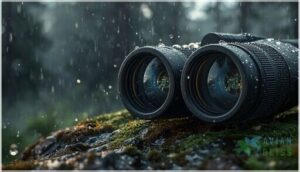
Out in the field, sudden weather shifts test your gear—waterproof ratings and fogproof technologies become essential. Look for binoculars with trusted weatherproofing, such as nitrogen purging and O-ring seals, since they prevent internal fogging and leaks.
Investing in models with proven durability and weather resistance means your binoculars will deliver reliable performance, even during heavy rain or dramatic temperature swings.
Mastering Binocular Techniques for Birding
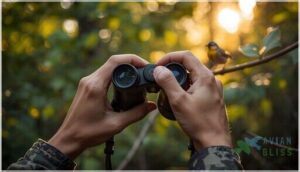
Getting the most out of your binoculars takes a bit more than just bringing them to your eyes. Small adjustments can make a big difference, whether you’re tracking a sparrow in the brush or a hawk overhead. Here are the core techniques every birder should know.
Adjusting Focus and Diopter Settings
Ever wrestled with blurry views while birding? Fine-tuning your binoculars starts with adjusting focus and using the diopter eyepiece—each step sharpens optical clarity and ensures focus accuracy for both eyes.
Since external factors like lighting or fatigue can blur your vision, revisiting these adjustment techniques is key. Dialing them in can quickly boost your adjustment efficiency and help you spot more birds.
Managing Body Shake for Clear Views
Maintaining clear views with binoculars takes practice—managing body shake is essential for success. Simple adjustments to posture, steady slow breathing, and bracing elbows against your torso can reduce unwanted movement.
For those seeking even better steadiness, IS technology and external aids like tripods or harnesses minimize physical influences. The result: more reliable identifications and steady, comfortable birding sessions.
Scanning Open Areas, Trees, and Skies
Spotting birds starts with methodical open area scans—think “S-patterns” across mudflats or fields reveal more species than random sweeps.
Scan tree layers from trunk to canopy to uncover hidden gems in dense foliage.
For sky scanning, use reference landmarks to catch high-flyers, and watch for behavioral cues—movement or flock calls often point you to something special in bird identification.
Practicing Quick Target Acquisition
Mastering quick target acquisition with binoculars is part science, part practice. Strong eye-hand coordination and equipment ergonomics let you lock on a bird in under three seconds once you’re in the groove.
Predictive focusing helps, too—presetting for likely perches. Add in some consistent skill progression, and you’ll trim your reaction time with every birdwatching session.
Increasing Viewing Area With Effective Scanning
Think of scanning patterns as your secret map for increasing your viewing area: the more systematic your sweep, the more birds you’ll bring into focus. Use wide field-of-view binoculars and mix up scan speeds. For best results, field enhancement depends on your habitat and frequency of scans—each adjustment sharpens resolution and turns even a busy landscape into a birdwatching goldmine.
- Alternate fast and slow scanning motions to boost detection rates in mixed flocks.
- Use horizontal, side-to-side sweeps of 150-degree arcs in open areas for peak field enhancement.
- Divide your landscape into thirds and tackle each section to catch camouflaged species.
- Pause briefly every 7–10 seconds—this recalibrates your eyes, boosting accuracy.
- Select binoculars with wide fields of view; models over 350 feet at 1,000 yards excel at tracking moving birds.
Effective Bird Identification Skills With Binoculars

Spotting a bird through your binoculars is only the first step. From there, it takes a sharp eye and a bit of know-how to make a confident identification. Here’s what to focus on next.
Assessing Bird Size and Shape at a Distance
When you size up distant birds, the field of view through your binoculars reveals key details about both their size and silhouette. Wider binocular field widths help sharpen size estimation accuracy and shape assessment at a distance, minimizing blind spots.
For better bird identification, compare body proportions and outlines, and note that error source analysis shows 8x binoculars excel in reliable distance perception.
Recognizing Color Patterns and Markings
Once you’ve gauged a bird’s proportions, study its plumage color prevalence and distinctive markings closely through your binoculars.
Field mark identification—think bold eyebrow stripes, eye rings, wing bars, or banded tails—can be as telling as a fingerprint.
Bird identification techniques that focus on color-based ID and wing pattern recognition yield the most accurate results, especially with bright, natural light.
Observing Behavior and Habitat Clues
After noting a bird’s markings, pay close attention to Foraging Behavior and Locomotion Patterns visible through your binoculars. Quick sprints, ground pecking, or canopy flitting each hint at unique Species Presence and Habitat Association.
These Behavioral Cues reveal not just what you’re seeing, but why that bird’s in this habitat—an insight at the heart of practical bird identification.
Using Light and Angle for Better Visibility
Once you’ve read a bird’s behavior, sharpening your ID often comes down to how you use sunlight direction and binocular tilting. Try this sequence:
- Move so the sun’s behind you.
- Adjust binocular angle to reduce glare.
- Pivot with birds for the best contrast.
- Use lens coatings and bright conditions to boost image brightness, especially in lowlight or changing light intensity.
Top Binoculars for Bird Identification
Choosing the right binoculars can make a world of difference when you’re out to spot birds. There’s a lot to think about, from clarity and comfort to how well they handle in the field.
Here are several top options that make bird identification easier and more enjoyable.
1. Hontry 8×42 Waterproof Birding Binoculars
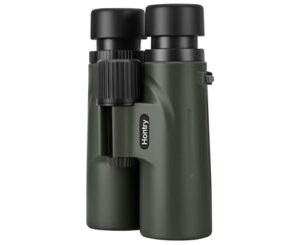
When you want optical performance, waterproof durability, and true user comfort in one package, the Hontry 8×42 binoculars fit the bill. Their 8x magnification and sharp, wide field of view let you spot subtle bird markings—a real advantage in fast-paced birdwatching.
IPX6 waterproofing shields your optics in the nastiest weather, while the grippy, nitrogen-filled body ensures you won’t miss a moment. For bird identification and overall value, these birding binoculars stand out among the best options for any outdoor enthusiast.
Best For: Adults who love spending weekends outdoors, especially bird watchers and wildlife enthusiasts who want rugged and reliable binoculars for all-weather use.
- Sharp, clear images with 8x magnification and a wide field of view help spot birds and animals easily.
- IPX6 waterproof, nitrogen-filled, and rubber-armored body stands up to rough weather and accidental drops.
- Comfortable, compact design with twist-up eyecups and grippy exterior is great for extended hikes and travel.
- Not as bright or crisp as higher-end binoculars, especially in low light.
- Spherical distortion is noticeable at the edges of the view.
- Lens caps are easy to misplace and the included instructions may be confusing.
2. Celestron UpClose G2 7×35 Binoculars
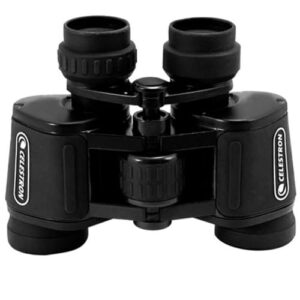
Reliability matters in every observation. The Celestron UpClose G2 7×35 binoculars deliver dependable optical performance, making them a staple choice for beginner and casual birdwatchers.
With a wide 9.2° field of view and fast-focus capability, tracking busy flocks feels simple. Comfort comes from the lightweight, balanced build and ergonomic grips—essential for long sessions.
Weather resistance ensures you can keep birding when conditions shift. It’s no wonder these affordable 7x binoculars receive strong market reception among those starting out.
Best For: Beginners and casual outdoor enthusiasts looking for easy-to-use, affordable binoculars for birdwatching, nature viewing, and travel.
- Wide, bright field of view makes it easy to spot and follow moving subjects.
- Lightweight and comfortable to hold for extended outings.
- Durable, water-resistant build holds up well for outdoor adventures.
- Eye relief may be tight for eyeglass wearers.
- Not fully waterproof or fogproof, so not suited for extreme weather.
- Some quality control issues reported, with rare focusing or double image problems.
3. Dicoria Hans 7×30 High Powered Binoculars
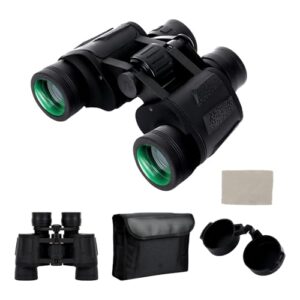
When clarity matters most, the Dicoria Hans 7×30 binoculars step in with solid optical performance and an ergonomic design that feels natural during long field sessions. With a lightweight build and steady 7x magnification, you’ll minimize hand shake while tracking moving birds, making these binoculars well suited for detailed bird identification.
The wide field of view aids effective scanning, while the compact form enhances portability. Add in their solid value proposition, and the user experience matches the expectations of many birdwatchers.
Best For: Recreational birdwatchers, travelers, and outdoor enthusiasts who want a portable, easy-to-use binocular for daytime wildlife and sports viewing.
- Lightweight and compact, making them comfortable to carry and use for long periods.
- Wide field of view and steady 7x magnification help track moving birds and fast action easily.
- Good image quality with vibrant color fidelity and minimal distortion in most lighting conditions.
- Not suitable for complete darkness and performance drops at late dusk.
- Some users may experience view obstructions due to grip or eyelashes and need to adjust their hold.
- Included strap may be slippery and less secure, requiring careful handling or replacement.
4. Celestron Cometron 7×50 Astronomy Binoculars
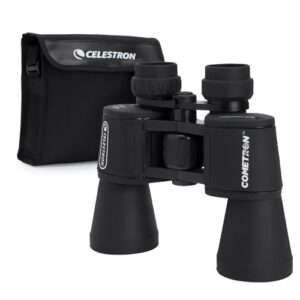
The Celestron Cometron 7×50 Astronomy Binoculars offer a rare blend of optical performance and field adaptability at an entry-level price. With crisp views from the broad 50mm lenses and forgiving 7x magnification, you’ll spot subtle plumage details even in low light.
Build quality stands out—aluminum construction, rubberized grip, and tripod compatibility boost user experience during long birdwatching sessions.
Market value is notable for beginners thanks to included accessories, wide field of view, and balanced design that’s practical for real-world outings.
Best For: Beginners, casual astronomers, and anyone looking for a budget-friendly way to enjoy stargazing, birdwatching, or outdoor events.
- Wide, bright field of view makes it easy to spot stars, comets, or birds in low light.
- Lightweight and comfortable with rubberized grips, tripod compatibility, and a good set of included accessories.
- Great value for the price, offering solid optical performance that’s easy for both kids and adults to use.
- Not fully waterproof or fogproof, limiting use in harsh weather.
- Some parts, like the plastic focuser, may lack durability and can wobble.
- Heavier than some compact binoculars, which might cause fatigue during long sessions.
Enhancing Bird Identification With Technology
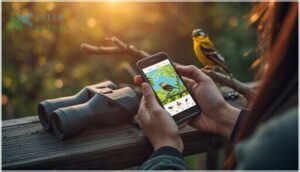
Technology has changed the way you identify and connect with birds. There are tools and resources you can use right alongside your binoculars.
Here’s how you can use them to make bird identification easier and more rewarding.
Using Bird Identification Apps (e.g., Merlin Bird ID)
Curious how today’s birders sharpen their skills? Using bird identification apps like Merlin Bird ID puts thousands of species—and even Photo ID—right at your fingertips.
App accuracy is high for common birds, especially with clear images or sounds, while species coverage grows each year.
Handy offline use and engaging features turn your phone into a reliable companion for identifying birds anywhere.
Recording and Sharing Sightings Online
Think of tracking bird sightings online as building a digital scrapbook that fuels both your life list and global conservation. Uploading to platforms like eBird isn’t just for bragging rights—it has real conservation impact when combined with smart Privacy Settings.
Recording your bird sightings online creates a digital scrapbook that boosts your life list and advances global conservation
Here’s how modern birders turn records into results:
- Log and map each observation
- Share with community for engagement
- Support data usage in science
Combining Binoculars With Digital Field Guides
After submitting your sightings, the next step is blending binoculars with a digital field guide such as Merlin Bird ID. Smart binocular integration lets you spot birds, then instantly check identification reliability through app identification accuracy.
Easy data transfers, bird watching apps, and community data contributions make your field guide more accessible—and your identification skills sharper—every time you’re outdoors.
Frequently Asked Questions (FAQs)
Are there binoculars that identify birds?
Like a well-trained bird dog, AI binoculars such as the AX Visio can identify thousands of species in seconds, displaying identification directly through the lens—though identification accuracy, market adoption, and future trends continue to evolve.
Can I upload a picture of a bird to identify it?
You can upload a bird photo to apps like Merlin Bird ID for avian identification. App identification accuracy depends on image clarity, model training data, and species identification limits, but these bird identification tools boost citizen science contribution and data quality.
How to find birds with binoculars?
Picture yourself weaving through a tapestry of habitat edges, scanning open fields and tree canopies.
Mastering sky scanning, low-angle scans, and careful perch observation all expand your field of view—essential for quickly locating birds with binoculars.
Do Swarovski smart binoculars identify the birds you’re looking at?
Yes, the Swarovski AX Visio smart binoculars use AI Identification Accuracy to recognize birds you observe, displaying the species name in real time.
With Birding Technology Integration and image stabilization benefits, you’ll experience modern birdwatching innovation.
How do lighting conditions impact bird identification?
Imagine trying to ID birds with candlelight; lowlight conditions cut accuracy, while sunlight glare obscures plumage. Artificial lighting, dense cloud cover, or rapid changes challenge identification, making binoculars’ image quality essential for reading fine details and subtle color patterns.
What are the best times for birdwatching?
Early morning offers peak activity during the dawn chorus, usually within two hours after sunrise.
Spring migration from late April through May and fall from mid-August to mid-October provide outstanding birdwatching opportunities, especially on calm, clear days.
How to recognize birds by their calls?
Listen for patterns—pitch, rhythm, and tone—then use apps like Merlin Bird ID’s Sound ID to confirm species through spectrogram analysis.
Technology influence on call identification accuracy reaches 3%, making learning bird calls much faster.
Can weather affect binocular performance for birdwatching?
Weather greatly impacts binocular performance for birdwatching. Rain clarity diminishes without waterproofing, fog resistance prevents internal condensation, sunlight glare reduces contrast, low-light viewing requires larger lenses, and wind stability affects steadiness.
Quality optical coatings and weatherproofing improve clarity.
How to avoid scaring birds while observing?
Like a colonial naturalist stalking wildfowl, maintain distance beyond 25 meters, minimize movement, wear camouflage clothing in neutral tones, reduce noise below conversational levels, and use strategic approach techniques when positioning your binoculars for birdwatching.
How do weather conditions affect binocular performance?
Rainfall, humidity impact, and temperature extremes degrade birdwatching clarity by up to 35%. Windy conditions reduce steadiness by 50%, while light and visibility challenges in fog or glare demand waterproofing, lowlight performance, and durability in your binoculars.
Conclusion
Studies show that experienced birders can identify over 90% of species within three seconds—a skill built through consistent practice with quality optics. As you improve your bird identification using binoculars, each outing sharpens your eye for subtle field marks and behavioral cues.
The difference between a fleeting glimpse and a confident identification lies in preparation: knowing your equipment, training your observation skills, and trusting what you see through the glass. Every species becomes recognizable with time.
- https://www.fws.gov/story/2024-12/birdwatching-america
- https://www.allaboutbirds.org/news/a-third-of-american-adults-are-birdwatchers-according-to-nationwide-survey/
- https://www.archivemarketresearch.com/reports/birdwatching-close-up-scopes-248686
- https://wsobirds.org/images/pdfs/FS_optics.pdf
- https://www.fortunebusinessinsights.com/binoculars-market-109578