This site is supported by our readers. We may earn a commission, at no cost to you, if you purchase through links.
 When you think about bird anatomy, reproductive organs probably aren’t the first thing that comes to mind—but they should be. Most of the 10,000 bird species on Earth reproduce through a method called "cloacal kissing," a brief touch that transfers sperm without any penetration. Yet roughly 3% of birds buck this trend entirely, sporting fully functional penises that would make most mammals envious.
Ducks, geese, and ostriches didn’t lose this ancestral trait that disappeared in their relatives millions of years ago. The evolutionary story behind why some birds kept their penises while 97% of species ditched them involves flight mechanics, sexual politics, and a gene that literally kills off the developing organ in most embryos. You’re about to discover how birds pulled off one of evolution’s most dramatic anatomical vanishing acts.
Table Of Contents
Key Takeaways
- Only 3% of bird species (mainly waterfowl and large flightless birds) retain functional penises, while 97% reproduce through "cloacal kissing"—a split-second touch that transfers sperm without penetration, driven by the Bmp4 gene triggering programmed cell death in developing genital tissue around day 8-9 of embryonic development.
- Waterfowl like ducks evolved elaborate corkscrew-shaped penises (up to 42.5 cm in Argentine Lake Ducks) in an evolutionary arms race with female ducks, who developed counter-clockwise spiral vaginas that block unwanted fertilization up to 98% of the time, demonstrating how sexual conflict shapes reproductive anatomy.
- Penis loss in most birds resulted from multiple evolutionary pressures including flight efficiency (reducing body mass by 1-3%), enhanced female mate choice through cooperative mating, disease prevention via brief copulation (reducing pathogen transmission by 30-50%), and reduced vulnerability to predators during mating.
- Bird testes expand up to 300-fold during breeding season before shrinking back to thread-like structures, while specialized sperm storage tubules in females retain viable sperm for days to months—allowing a single mating to fertilize up to seven consecutive eggs despite copulation lasting under two seconds.
Birds Penis Prevalence
When you picture birds mating, you probably don’t imagine the same equipment you’d find on mammals—and you’re mostly right. While the vast majority of birds reproduce without penises, a small but fascinating group bucks this trend.
Here’s what sets these species apart and how most birds have adapted alternative strategies for reproduction.
Waterfowl and Flightless Birds
Among waterfowl like ducks, geese, and swans, you’ll encounter some of nature’s most unusual reproductive equipment—spiral phalluses that can reach up to 42.5 cm in certain species. These hydrostatic organs inflate with lymph in less than half a second, facilitating competitive fertilization and sometimes forced copulation.
Waterfowl like ducks evolved spiral phalluses up to 42.5 cm long that inflate with lymph in half a second for competitive fertilization
Flightless birds, including ostriches and emus, also demonstrate penis retention, with structures measuring 20–25 cm that enable direct sperm transfer.
Approximately 3% of all bird species possess penises, primarily waterfowl and large flightless birds, representing an ancestral trait most avians abandoned through evolution.
Alternative Reproductive Methods
While waterfowl rely on elaborate penile structures, the overwhelming majority of birds have perfected internal fertilization through the cloacal kiss—a lightning-fast alignment of cloacal openings lasting under half a second.
You’ll find that only 64% of these attempts successfully transfer sperm in species like zebra finches, which explains why repeated mating occurs. Female sperm storage tubules retain viable sperm for days to weeks, enabling fertilization of multiple eggs from a single encounter.
This reproductive anatomy minimizes predator exposure and reduces forced copulation risks. Notably, extra-pair paternity and polyandry evolution thrive under this system, as cooperative breeding strategies and brief copulations allow flexible mating without the complications penile structures introduce in avian reproduction.
Environmental Adaptations
Climate effects and habitat influence drive striking differences in avian reproductive biology. You’ll notice waterfowl in humid environments evolved elongated phalli—up to 20 cm in some ducks—while terrestrial species favor cloacal kissing for rapid sperm transfer.
Thermoregulation strategies explain why flightless, ground-dwelling birds like ostriches retain penises without flight aerodynamics constraints. Ecological pressures from temperature variations trigger seasonal regression of phallic tissue, demonstrating exceptional reproductive flexibility.
This genital morphology reflects evolutionary adaptations where desert species prioritize brief copulations to avoid overheating, while migratory birds synchronize breeding with environmental cues like photoperiod changes.
Do Birds Have Penises
You’re probably wondering if birds have penises like mammals do. The short answer? Most don’t—only about 3% of the roughly 10,000 bird species actually possess functional male reproductive organs resembling a penis.
Bird Penis Evolution took an unusual path. During embryonic development, all birds initially form a genital tubercle—the precursor to a penis. But around day 8 or 9, a gene called Bmp4 triggers programmed cell death in this tissue, effectively halting Penis Development before hatching. This Penis Development Genetics mechanism explains why most Avian Reproductive Systems evolved away from external bird genitalia.
The exceptions? Mainly waterfowl (ducks, geese, swans) and large flightless birds (ostriches, emus). These species retained functional bird penis structures that support specific Bird Mating Strategies rather than relying on the standard cloacal kiss method most birds use for Avian Reproduction.
Here’s what makes these rare species unique:
- Waterfowl sport corkscrew-shaped organs that can extend up to 20 cm—roughly body length in some ducks
- Ratites use fibroelastic structures with vascular mechanisms similar to mammalian erectile systems
- Lymphatic fluid drives erection instead of blood, reflecting distinct Avian Sexual Selection pressures
Bird Reproductive Anatomy
To understand how birds reproduce, you’ll need to look at their unique internal structures, which work quite differently from mammals. Birds have evolved an efficient system centered around a multi-purpose opening called the cloaca, along with reproductive organs that transform dramatically during breeding season.
Let’s examine the key anatomical features that make avian reproduction possible.
Cloacal Structure and Function
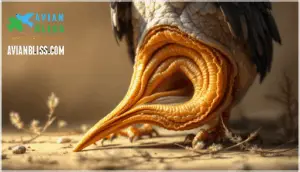
Think of your bird’s cloaca as nature’s Swiss Army knife—one sleek opening managing three jobs at once. This external orifice in avian anatomy acts as the exit point for digestive waste, urinary products, and reproductive materials, all flowing through three distinct internal chambers: the coprodeum (for feces), urodeum (managing urinary and genital products), and proctodeum (the storage-and-release zone). During breeding season, hormonal shifts trigger visible cloacal swelling in both sexes, with males developing a pronounced cloacal protuberance that optimizes sperm transfer during the brief cloacal kiss—that split-second contact when reproductive anatomy meets function. Understanding the bird cloaca functions is essential for appreciating the complexity of avian reproductive systems.
- Triple-chamber design: Muscular folds between the coprodeum, urodeum, and proctodeum prevent cross-contamination of digestive, urinary, and reproductive systems
- Seasonal transformation: The Bursa of Fabricius extends from the proctodeal wall, playing a critical immune role in young birds while the cloaca adapts for mating
- Efficient water conservation: The urodeum function includes reabsorbing water from urine, helping birds thrive in arid environments while maintaining flight-ready body weight
Reproductive Organs Seasonal Changes
Your bird’s reproductive organs undergo remarkable seasonal transformations driven by gonadal cycling and hormone fluctuations. During the breeding season, photoperiod effects trigger testes to expand up to 300-fold in males, while the female oviduct thickens dramatically—then both shrink to thread-like structures post-breeding. This reproductive flexibility represents one of nature’s most impressive seasonal adaptations in avian reproductive biology.
Rising testosterone and estradiol peak during mating, while prolactin surges signal the breeding season’s end. A 16-hour photoperiod optimizes reproductive anatomy performance, aligning egg-laying with food abundance. This cyclical plasticity keeps birds flight-ready year-round while maximizing reproductive success. The impact of artificial light can markedly alter these natural cycles.
| Reproductive Phase | Organ Changes |
|---|---|
| Non-breeding | Minimal gonadal size, thread-like oviduct |
| Prenuptial | Rapid vascular remodeling begins |
| Peak Breeding | 300-fold testicular expansion, thickened oviduct |
| Post-breeding | Hormonal suppression triggers regression |
| Refractory Period | Reproductive inactivity until next cycle |
Thermoregulation in Birds
Your bird’s body temperature hovers between 38°C and 44°C, demanding constant energy management—especially during breeding when metabolic demands spike. The Avian Hypothalamus orchestrates this delicate balance, integrating thermal signals to trigger heat conservation or cooling responses that protect reproductive function.
Smart thermoregulation strategies include:
- Thermal Windows in legs and bills adjust blood flow, shedding excess heat or preserving warmth through counter-current exchange
- Feather Insulation thickness shifts seasonally, with down layers providing Cold Adaptation while allowing physiological tweaks like panting
- Metabolic flexibility balances reproductive organ activity with flight efficiency, vital for wildlife biology and conservation efforts
Understanding bird conduct reveals how ecology shapes these survival mechanisms.
Birds Mating Behaviors

When you look at bird mating, you’ll find patterns that range from surprisingly cooperative to downright coercive. The presence or absence of a penis shapes how males compete and how females respond during reproduction.
These dynamics have sparked evolutionary arms races between the sexes that continue to shape avian anatomy today.
Forced Mating and Female Cooperation
When males attempt forced copulation in waterfowl, you’re witnessing a startling example of sexual selection where coercive mating clashes directly with reproductive autonomy. Around 97% of bird species require female cooperation through cloacal kissing, but among that notorious 3% with penises—primarily ducks and geese—forced copulation attempts are disturbingly common. Female resistance remains fierce, though, with elaborate anatomical defenses that block unwanted fertilization up to 98% of the time.
Here’s how this evolutionary conflict plays out:
- Female Resistance – Counter-clockwise vaginal spirals deflect male intromission attempts
- Coercive Mating – Males attack during vulnerable feeding or preening moments
- Avian Consent – Successful fertilization still requires female sperm retention control
- Forced Copulation – Group attacks by multiple males overwhelm individual females
- Reproductive Autonomy – Post-copulation cryptic choice determines actual paternity
Despite the anatomical capacity for forced copulation, genetic studies confirm fertilization success remains below 5%, revealing that female duck vaginal architecture and behavioral strategies maintain paramount reproductive control even under extreme coercive pressure.
Male Competition and Phallus Presence
When competition among males heats up, phallus evolution takes a dramatic turn. In Lesser Scaup ducks, males housed with rivals developed penises up to 25% longer than isolated males—a striking example of how male rivalry directly shapes penis morphology. This isn’t just anatomical coincidence; it’s sexual selection in action.
Ruddy ducks show even more extreme plasticity, with penis evolution responding dynamically to male density throughout the breeding season. The mechanism? Testosterone surges triggered by social competition drive genital morphology changes, giving competitive males mechanical advantages during avian mating encounters.
Notably, male reproduction adaptations occur independently of female presence, suggesting that male-male signaling pressures—not female choice—primarily drive bird penis development. Larger phalluses correlate directly with forced copulation success rates, revealing how sexual selection favors competitive morphology in waterfowl populations where sperm competition runs intense.
Evolutionary Arms Races
When males evolve longer penises to force copulation, females don’t just sit back—they fight back with twisted vaginal spirals that block unwanted sperm. This is sexual conflict at its finest, where coevolution dynamics pit male and female reproductive strategies against each other.
Research on 16 duck species shows penis length correlates strongly with forced mating frequency, while females counter with clockwork vaginal defenses that reduce fertilization success by over 60%.
These adaptive traits in genital morphology and evolution showcase how sexual selection in birds drives rapid anatomical innovation—males elongate, females complicate, and the evolutionary biology arms race accelerates five times faster than typical bird reproductive anatomy changes.
Genital Development
You’ve learned about the "cloacal kiss" most birds use, but what actually happens during development that prevents penises from forming in 97% of species?
The answer lies in a fascinating cellular process that unfolds in bird embryos. Let’s explore the genetic switches and programmed cell death that determine whether a bird develops a penis or not.
Cell Death and Penis Development
During embryogenesis, all bird embryos initially form genital tubercles between days 6 and 8—structures that could develop into functional penises.
But here’s where things get interesting: programmed cell death, or apoptosis, kicks in around day 8–9, specifically targeting the distal tip of this developing phallus. This cell regression eliminates the epithelial and mesenchymal cells needed for penis formation, effectively halting genital development. The culprit? Bmp4, a gene that triggers this cellular suicide mission in most birds.
When researchers blocked apoptosis experimentally, chick embryos retained their genital tubercles, proving this mechanism directly causes embryonic loss of the bird penis. Without this precise apoptosis role, cloacal kissing wouldn’t be the norm—most species would retain functional phalluses instead.
Bmp4 Gene Activation and Penis Absence
The molecular mechanism behind penis absence in most birds centers on Bmp4 gene activation during embryonic development. This gene expression triggers programmed cell death in the genital tubercle’s distal tip, halting genital development through precise Bmp4 signaling. In other words, this molecular mechanism transforms normal avian development into genital regression, making cloacal kissing the reproductive standard for 97% of species.
Here’s how Bmp4 orchestrates bird penis loss:
- Activation timing occurs between embryonic days 7–9 in chickens, perfectly coinciding with genital regression phases
- Expression levels reach 3–4 times higher concentrations in chicken embryos compared to duck embryos during equivalent developmental stages
- Spatial precision targets only distal mesenchyme tissue, leaving growth signals like FGF and Shh intact but overridden
- Reversibility experiments proved blocking Bmp4 with Noggin protein restores phallus growth, confirming direct causation
- Cross-species manipulation showed introducing Bmp4 into duck embryos triggers chicken-like regression within 48 hours
Research Methodology and Findings
Understanding how researchers uncovered the genetic basis of avian reproductive biology required advanced research techniques. Embryonic development studies used electron microscopy to track cell death in the genital tubercle across chickens, ducks, and quail between days 7–10 of incubation.
Comparative studies in ornithology revealed that genetic analysis of Bmp4 expression pinpointed exactly when and where programmed cell death occurs. These avian anatomy investigations even demonstrated reversibility—blocking Bmp4 with Noggin protein restored bird penis growth in chick embryos by up to 70%, proving this gene directly controls bird genitalia development in over 16,000 species studied.
Evolutionary Reasons
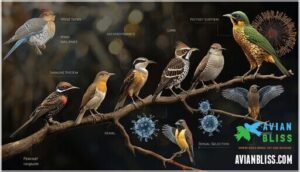
You might wonder why most birds ditched their penises over millions of years while a select few kept them. The answer isn’t as simple as you’d think—it’s a mix of aerodynamics, immunity, and sexual politics.
Let’s explore the main evolutionary pressures that shaped this unusual trade-off.
Flight Efficiency and Disease Prevention
Every gram counts when you’re built for flight—which is why bird evolution favored aerodynamic reproductive anatomy over bulkier external genitalia. Flight optimization requires aerodynamic adaptations that minimize drag, and studies show penis loss can reduce body mass by 1–3% in small passerines, directly improving lift-to-drag ratios during sustained flight.
Simultaneously, disease mitigation plays a key role in avian reproductive biology. Brief cloacal contact lasting under one second markedly reduces pathogen transmission compared to prolonged genital exposure. Research on kittiwakes revealed that blocked insemination decreased bacterial strain similarity between mates by 30–50% within ten days, highlighting how reproductive tradeoffs respond to evolutionary pressures.
These dual selective forces—flight efficiency and infection prevention—explain why ornithology recognizes this striking adaptation in 97% of bird species:
- Weight reduction bolsters aerial maneuverability and endurance for migratory routes exceeding 2,000 kilometers
- Shortened copulation windows minimize vulnerability to predators during mating
- Reduced mucosal contact limits sexually transmitted microbe exposure in colonial populations
Female Preference and Quick Mating
Surprisingly often, sexual selection favors females who choose mates swiftly—and that preference shaped avian mating conduct profoundly. In Eurasian reed warblers, females selecting males with complex songs paired 2–3 days faster, demonstrating how female choice accelerates mating speed. This reproductive success pattern reduces predation exposure during vulnerable cloacal kissing encounters.
Arctic Skua data reveals melanic males secure mates four days earlier due to female oviduct receptivity aligned with preferred traits. When mate compatibility prioritizes brief copulation over prolonged genital contact, penis loss becomes evolutionarily advantageous—explaining why 97% of species abandoned external genitalia for efficient sperm transfer.
Diverse Ways of Penis Loss
Penis reduction in avian evolution didn’t follow a single blueprint—instead, multiple independent pathways dismantled bird genitalia across different lineages. You’ll discover that genetic mechanisms vary markedly between species, revealing nature’s creative problem-solving in Reproductive Tradeoffs:
- BMP4 gene activation triggers programmed cell death in the genital tubercle during Embryonic Development, halting phallus growth between days 9–12 in chicken embryos
- Independent evolutionary losses occurred multiple times across Galloanserae lineages after divergence 85–90 million years ago
- Species-specific apoptosis timing determines when and where cell death dismantles developing penis tissue in the cloaca region
- Pathway modulation differences explain why waterfowl suppress BMP signaling while landfowl activate it, creating dramatic Genital Variation
- Adaptive pressures from female mate choice and flight efficiency shaped distinct regression patterns in theories of penis loss
This striking diversity in the evolution of bird penises demonstrates that losing an organ can happen through vastly different genetic routes.
Cloacal Kissing Reproduction
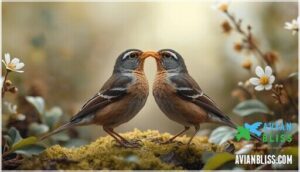
For most birds, reproduction happens through a process called "cloacal kissing," which might sound romantic but is actually a quick and efficient biological exchange. This method allows sperm transfer without the need for a penis, relying instead on precise timing and positioning.
Understanding how this process works reveals why it’s become the dominant reproductive strategy across the avian world.
Efficient Sperm Transfer
You’ll witness sperm transfer happen in under two seconds during a cloacal kiss—that’s avian reproduction at lightning speed. This cloacal efficiency isn’t accidental. The swollen reproductive anatomy creates ideal contact for internal fertilization, while specialized cloacal linings reduce friction and boost sperm mobility. These mating strategies work because around 80% of sperm get ejected post-mating, meaning only the highest-quality swimmers reach the female’s sperm storage tubules. It’s quality over quantity in bird genitalia.
| Reproductive Adaptation | Efficiency Benefit |
|---|---|
| Cloacal swelling (seasonal) | Improves contact accuracy for sperm transfer |
| Brief 1-2 second contact | Minimizes predation exposure during mating |
| Specialized cloacal lining | Reduces friction, boosts sperm mobility |
| Sperm storage tubules (SSTs) | Retains viable sperm for 2-15 weeks post-mating |
| 80% sperm ejection filter | Secures only high-quality sperm enter storage |
The cloaca manages everything—reproduction, digestion, waste—in one efficient opening, keeping birds light for flight while maximizing reproductive success.
Mutual Cooperation and Vulnerability
When both birds commit to the cloacal kiss, they’re fundamentally trusting each other with their lives. This brief contact—lasting under one second—demands synchronized mating, where the male balances precariously atop the female while she arches and shifts her tail feathers to expose her cloaca. Without mutual trust built through mating rituals like courtship displays, this delicate alignment fails. Studies show that disturbances during copulation drop success rates by over 30%, and poor cooperation between partners often means incomplete sperm transfer. The vulnerability factors are real: both birds face predation risks during this immobile moment, and males risk injury from balance loss or feather obstruction.
Key aspects of cooperative breeding and cloacal kissing include:
- Precise positioning – You need perfect cloacal alignment for successful sperm transfer in bird genitalia
- Predator exposure – Both partners become vulnerable targets during reproductive anatomy contact
- Cooperative Defense – Stable pairs use mutual grooming to reduce microbial buildup around the cloaca
- Repeated attempts – Species like crows mate multiple times over days to boost fertilization rates
- Sexual selection pressure – Female choice favors males who cooperate smoothly during mating
Brief Copulations and Fertilization
You might think a one-second cloacal kiss couldn’t possibly fertilize an entire clutch, but avian reproductive anatomy proves otherwise. Copulation duration in most species stays under two seconds, yet this brief contact achieves fertilization rates exceeding 70% per event in domestic quail. Sperm transfer during the cloaca-to-cloaca contact deposits gametes into specialized storage tubules within the female’s bird genitalia, where sperm remain viable for days or even months.
This extended storage allows a single copulation to fertilize up to seven consecutive eggs, demonstrating how mating strategies prioritize speed over duration. Reproductive success hinges on timing—when fertilization occurs near ovulation, you’ll see last-male precedence, where the most recent partner’s sperm wins the competition.
| Copulation Aspect | Measurement/Outcome |
|---|---|
| Average Duration | Less than 2 seconds |
| Single-Event Fertilization | 70%+ success rate |
| Sperm Viability Storage | Days to months |
| Eggs Fertilized (Single Mating) | Up to 7 consecutive eggs |
| Extra-Pair Fertilization Probability | 46% for next egg (Japanese quail) |
Birds With Penises
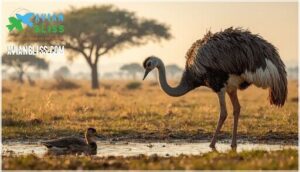
While most birds have ditched the penis in favor of cloacal kissing, a small minority of species—about 3%—kept their equipment.
These outliers include waterfowl like ducks and geese, along with large flightless birds such as ostriches and emus. You’ll find some fascinating anatomical variations among these species, from corkscrew-shaped structures to elongated appendages that serve unique reproductive functions.
Notable Examples and Characteristics
You’ll encounter remarkable Bird Penis Variations among the 3% of species that retain these structures. Waterfowl Mating reveals the most striking examples of birds with penises—the Argentine Lake Duck sports a 42.5-centimeter corkscrew member that can exceed its body length.
Flightless Reproduction brings unique Avian Genitalia too: ostriches possess lymph-engorged tissue extending up to 20 centimeters, while cassowaries display pseudo-penises structurally disconnected from their reproductive tract.
These Reproductive Adaptations showcase how duck penis evolution and ostrich penis anatomy reflect specialized mating strategies. Each variation meets specific environmental and competitive pressures shaping bird penises across different species.
Duck Penis Structure and Function
Among waterfowl, you’ll find some of nature’s most impressive examples of reproductive adaptation. Duck penises feature a counter-clockwise corkscrew shape constructed as flexible hydrostats—unlike mammalian rigid structures—allowing them to remain pliable even when fully everted. During duck mating, penis eversion happens explosively in under 0.4 seconds, powered by lymphatic fluid rather than blood. In certain species, these spiral organs reach up to 20 centimeters, or roughly 41% of body length. This striking genital morphology reflects sexual selection pressures, particularly in species experiencing forced copulations. The corkscrew design navigates the equally convoluted clockwise-spiraled female cloaca and vaginal tract.
Duck Penis Structural Features:
- Counter-clockwise spiral with β-keratin epithelium for structural support
- Explosive eversion in less than 0.4 seconds via lymphatic pressure
- Keratinized ridges and spines interface with female vaginal folds
- Two regions: basal (7–8 cm) and apical (11–12 cm) sections
- Seasonal plasticity—losing up to 70% length post-breeding season
Ostrich and Cassowary Reproductive Anatomy
While ducks showcase explosive eversion, ratite reproduction takes a different route. Ostriches possess a true intromittent organ averaging around 30 centimeters—constructed from paralymphatic tissue instead of blood-filled cells. You’ll notice their spiral-shaped ostrich penis everts from the cloaca during mating, depositing sperm through a deep ejaculatory groove.
Cassowaries display something stranger: both sexes develop phallus-like structures showing sexual symmetry, though the male’s cassowary phallus lacks reproductive connections. Ejaculation happens externally through the cloaca itself, making their bird genitalia functionally decorative rather than directly plumbing sperm inward.
Penis Loss Theories
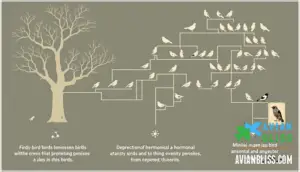
You might wonder why most birds lost their penises when a few species kept them. The answer isn’t simple—scientists have proposed several competing theories to explain this evolutionary shift.
Let’s explore the leading explanations for why having no penis became the norm across most bird species.
Enhanced Female Choice in Mating
Sexual selection doesn’t just shape colorful feathers—it can make entire organs vanish. Female preference powerfully drove penis loss evolution in 97% of bird species, fundamentally shifting reproductive control toward females through cloacal kissing. This mating strategy demands mutual cooperation, virtually handing females the reins over fertilization timing. Research across passerine families shows female mate selection explains up to 40% of variation in mating displays, demonstrating how female choice shapes avian sexual anatomy and mating behaviors far beyond simple ornament preferences.
- Cryptic Choice Advantage: Females gained intricate reproductive control through specialized genital architecture, selectively favoring sperm from genetically compatible partners
- Sexual Conflict Resolution: Penis absence eliminated forced copulation scenarios prevalent in waterfowl, where 95% of forced matings fail due to female duck vagina complexity
- Strategic Mate Selection: Brief cloacal contact allows females to reject unsuitable partners instantly, revolutionizing avian sexual anatomy and reproductive strategies
Flight Efficiency and Environmental Pressures
Flight efficiency wasn’t the whole story behind penis disappearance. While you might assume wind resistance during flight drove this evolutionary shift, the evidence tells a more nuanced tale.
A 2025 study of 9,937 bird species revealed that aerodynamic adaptations like wing elongation at high elevations dramatically improved performance in thinner air—but penis presence barely registered as a flight burden.
Instead, environmental pressures like predator avoidance during vulnerable mating moments likely tipped the scales. Quick cloacal kisses beat prolonged copulation when hawks circle overhead.
Altitude effects and air density certainly shaped wing morphology across ornithology, but the evolution of bird penises responded more to ground-level dangers than airborne drag.
Evolutionary Trade-offs and Genetic Signaling
Evolution repurposes genetic pathways to solve complex problems. You can see this in how birds trade penis development for other advantages through molecular signaling. The Bmp4 gene triggers programmed cell death in the genital tubercle during embryogenesis, halting phallus growth by day 8-9 of incubation. This genetic adaptation reflects evolutionary pressures favoring different reproductive strategies:
- Bmp4 activation causes apoptosis in chicken embryos, preventing penis formation
- Blocking Bmp4 with inhibitors like Noggin preserves genital structures completely
- The same gene shapes beaks, feathers, and other traits across avian development
- Ducks keep Bmp4 switched off, allowing full phallus development
- Penis loss evolved independently multiple times under similar selection pressures
This molecular signaling demonstrates evolutionary developmental biology at work—where tweaking one gene reshapes entire reproductive systems without disrupting other essential pathways in bird anatomy.
Bird Mating Variations

In the realm of courtship, birds don’t settle for a simple cloacal kiss—they pull out all the stops with elaborate performances that would make any Broadway producer jealous. From intricate dances to architectural masterpieces, these feathered romantics have developed some of nature’s most creative ways to win over a mate.
Let’s explore how different species turn attraction into an art form.
Notable Mating Displays and Rituals
When you think birds have mastered romance, prepare to witness nature’s most theatrical productions. Across avian lineages, mating rituals and courtship displays transform forests and plains into performance stages where survival meets showmanship.
Communal displays dominate in species like the greater sage-grouse, where over 100 males gather in leks, executing synchronized strut dances throughout daylight hours. Female choice hinges on display complexity rather than combat outcomes, driving extreme mating behaviors you won’t find elsewhere.
Aerial courtship occurs in over 38% of passerine species, with enhanced wing morphology correlating directly with ritual complexity. Ritualized dancing reaches peak creativity in manakins, whose tap-dancing and synchronized steps integrate sound with movement—a masterclass in multi-modal signals combining visual plumage and specialized air sac sounds.
Bird mating habits span from Wilson’s bird of paradise carefully cleaning display grounds before every performance, to red-capped manakins moonwalking backward at 2.3 meters per second. Avian reproductive biology reveals that these courtship displays aren’t mere spectacle—they’re fitness advertisements, with females gaining benefits from improved hunting success to increased offspring viability.
| Display Type | Species Example | Key Behavior |
|---|---|---|
| Lek Gatherings | Greater Sage-Grouse | Chest inflation, tail fanning, air sac drumming |
| Aerial Acrobatics | Multiple Passerines | Flight-based rituals linked to polygynous systems |
| Ritualized Contact | Birds-of-Paradise | Nape-pecking, post-copulatory tumbling |
| Multi-Modal Signaling | Superb Bird-of-Paradise | Velvet-black feather displays with intricate calls |
Mating behaviors in albatrosses demonstrate endurance, with pairs spending up to 90 minutes in reunion dances involving over 20 sequential gestures. Meanwhile, standardwing birds-of-paradise form hovering midair chains with up to 45 males participating—a spectacle that redefines what’s possible in avian coordination.
Mate Attraction and Selection Strategies
When females evaluate potential mates, you’re witnessing sexual selection in birds at its most strategic. Mate choice drives roughly 70% of courtship evolution, with females scrutinizing everything from plumage brightness to vocal precision. Males with over 150 eye-spots on their train feathers secure twice as many copulations as duller competitors. These attraction signals aren’t arbitrary—carotenoid-rich feathers predict immune strength with striking accuracy.
Song complexity matters too: males mastering eight distinct song types attract mates 1.7 times faster than monotone singers. Courtship displays consume over 60% of daylight hours for successful males, transforming mating rituals and courtship into endurance tests.
Meanwhile, habitat shapes these mating patterns—grassland species exhibit 27% stronger female-driven selection than forest dwellers, proving mate selection conforms to environmental visibility constraints.
Lifelong Mating and Monogamy in Birds
Roughly 90% of bird species practice social monogamy, yet true lifelong pair bonding remains surprisingly rare—most partnerships dissolve after a single breeding season. You’ll find genuine mate fidelity in monogamous species like mute swans, albatrosses, and whooping cranes, where pairs reunite annually for decades.
These monogamous birds demonstrate impressive breeding success through their sustained partnerships, with barnacle geese producing markedly more offspring than short-term pairs. Longevity correlation appears strong: longer-lived species maintain bonds that improve reproductive strategies through:
- Coordinated territory defense and synchronized nesting schedules that reduce predation risks
- Improved parental cooperation resulting from partner familiarity, boosting fledgling survival rates
- Extended breeding windows allowing experienced pairs to nest earlier and later than newly formed couples
This animal conduct reflects intricate mating conducts where investment in one partner yields measurable fitness advantages across seasons.
Frequently Asked Questions (FAQs)
Do birds have penises?
Despite what you might assume, most birds don’t need penises at all. Only 3% of bird species—roughly 300 out of 10,000—actually have them. You’ll find these unique avian penis characteristics mainly in waterfowl like ducks and large flightless birds such as ostriches.
The rest rely on "cloacal kissing," a remarkably efficient alternative reproductive method shaped by millions of years of avian penis evolution and penis development genetics.
Do birds have coiled penises?
Yes, some waterfowl species possess remarkable corkscrew-shaped phalluses. The Argentine Lake Duck boasts a remarkable spiral penis anatomy reaching 5 centimeters—often exceeding body length.
This coiled penis structure represents one of nature’s most dramatic examples of avian penis evolution and duck penis evolution adaptations.
Do birds have external genitalia?
Think of external genitalia as "outerwear"—most birds keep their reproductive anatomy tucked away inside. Unlike mammals, the vast majority of avian species rely on the cloaca, an internal multipurpose chamber managing reproduction and waste elimination. Only roughly 3% of birds—waterfowl like ducks and geese, plus large flightless birds such as ostriches—have evolved external penises.
This represents a dramatic departure in avian genital evolution, where external genitalia became unnecessary. The genital tubercle, which could develop into an avian phallus, undergoes programmed cell death in most species. Bird sex determination and reproductive adaptations favored internal systems over visible bird penis characteristics, creating diverse genital morphology across lineages.
This evolutionary shift toward concealed bird genitalia reflects environmental pressures prioritizing flight efficiency and efficient mating through brief cloacal contact rather than prolonged copulation requiring external structures.
Why do birds have erections?
Most birds don’t experience erections—only the rare 3% with penises achieve erection-like swelling through lymphatic fluid rather than blood.
This avian arousal mechanism triggers reproductive swelling in their cloacal region, preparing the phallus for brief cloacal engagement during copulation.
Do male birds have testicles?
Male birds absolutely have testicles—you just won’t see them dangling anywhere. These reproductive organs sit tucked inside the body cavity near the kidneys, where they dramatically expand during breeding season to boost sperm production, then shrink back down when mating ends.
Why do birds have a curved penis?
Ever wonder why some waterfowl sport such unusual reproductive anatomy? Ducks possess corkscrew-shaped penises—a curved structure driven by evolutionary pressures and mating strategies.
This reproductive adaptation represents an evolutionary arms race: male duck genitalia evolved spiral formations while females developed counter-clockwise vaginal passages, creating reproductive adaptations that balance male persistence with female choice in bird genitalia evolution.
How does a bird mate?
You’ll witness a fascinating process called ‘cloacal kissing’ during bird reproduction. The male perches atop the female, who shifts her tail feathers aside, allowing direct cloacal alignment.
Their swollen cloacal openings press together briefly—usually just seconds—enabling efficient sperm transfer. This rapid copulation reflects evolutionary adaptations favoring quick mating patterns that minimize predator vulnerability during these exposed moments.
Do birds feel pleasure while mating?
While we can’t peek inside their minds, you’ll notice birds likely experience mating pleasure through dopamine-driven reward pathways that encourage reproductive success.
After all, sexual satisfaction and avian sensitivity evolved to make bird courtship and cloacal kissing irresistible, securing species survival through bird mating strategies.
How does a male bird impregnate a female?
In most species, you’ll witness a quick maneuver called cloacal kissing—the male balances atop the female, aligns their cloacal openings, and transfers sperm in mere seconds through this brief contact, achieving internal fertilization without a penis.
How do birds mate?
Unlike mammals with their elaborate courtship displays, most birds get straight to business through cloacal kissing—a split-second alignment of their single reproductive opening for sperm transfer.
This avian intimacy involves the male perching atop the female, who shifts her tail feathers to expose her cloaca. During this brief copulation, their swollen cloacal openings touch, transferring sperm in seconds—a vulnerability minimized by speed, perfect for evading predators while facilitating successful pair bonding and reproduction.
Conclusion
Evolution’s story unfolds like a sculptor chiseling away excess marble—what remains isn’t always what’s grandest, but what works best. The question "do birds have penises" reveals nature’s pragmatic genius: most species traded bulky reproductive organs for aerodynamic bodies and female choice, while ducks and ostriches kept theirs for different survival reasons.
You’ve just witnessed how a single gene, Bmp4, rewrote avian anatomy across millions of years. Next time you spot a sparrow or swan, you’ll know there’s more happening beneath those feathers than meets the eye.
- https://www.birdorable.com/blog/bird-terms-cloaca-and-cloacal-kiss-explained
- https://www.dvm360.com/view/cloacal-disorders-and-diseases-proceedings
- https://www.birdspot.co.uk/bird-behaviour/how-birds-mate
- https://www.sciencedirect.com/topics/agricultural-and-biological-sciences/cloaca
- https://pmc.ncbi.nlm.nih.gov/articles/PMC7671126/