This site is supported by our readers. We may earn a commission, at no cost to you, if you purchase through links.
Step outside on a Colorado morning, and the first bird you notice probably isn’t rare at all. It’s the robin tugging at your lawn, the chickadee darting into a shrub, or the mourning dove balancing on a wire like it owns the block.
That’s the quiet appeal of common birds in Colorado: they’re easy to overlook, yet they reveal how the state changes from foothill neighborhoods to open prairie and snow-lined yards. Once you know what to watch for—breast color, bill shape, flight style, even the pause between songs—ordinary sightings start to sharpen into patterns, and patterns turn into recognition.
Table Of Contents
- Key Takeaways
- Most Common Backyard Birds in Colorado
- Common Birds by Colorado Habitat
- Year-Round and Seasonal Bird Patterns
- How to Identify Colorado Birds
- Best Places to Spot Common Birds
- Frequently Asked Questions (FAQs)
- What are the most common backyard birds in Colorado?
- How many types of birds are common in Colorado?
- What birds live in Colorado Springs?
- What birds live in Denver?
- What are the most common birds in Colorado?
- What is the prettiest bird in Colorado?
- What birds are around in October?
- What bird calls can I expect to hear in Colorado?
- How do Colorados birds adapt to high altitudes?
- Which Colorado birds are most likely to visit backyard feeders?
- Conclusion
Key Takeaways
- A handful of birds—American Robin, House Finch, Black-capped Chickadee, Mourning Dove, and Dark-eyed Junco—show up in Colorado backyards more reliably than any others, making them your best starting point for learning bird ID.
- Colorado’s birds sort themselves by habitat, so knowing whether you’re in a grassland, wetland, mountain trail, or city park tells you which species you’re most likely to encounter before you even look up.
- You can sharpen your identification skills by reading four key clues together: color pattern, body shape, beak type, and the sounds each bird makes—no single clue is enough on its own.
- Timing matters more than location—dawn in spring and early winter mornings bring the highest bird activity, and syncing your watch to those windows will transform what you see in the field.
Most Common Backyard Birds in Colorado
If you spend time in Colorado backyards, you’ll notice a handful of birds that show up almost everywhere. These familiar species bring color and song to lawns, feeders, and gardens all year round.
For a closer look at year-round favorites and seasonal visitors, this guide to common backyard birds of Colorado is a handy place to start.
Here’s a look at the most common backyard birds you’re likely to spot.
American Robin
When spring arrives in Colorado, you can count on the American Robin’s song timing to signal the season.
This plump bird favors open woodlands and backyards, nesting in cup-shaped structures.
Its dietary habits include worms, insects, and fruit.
Year-round residents, robins migrate locally, interact with predators, and offer high frequency for birdwatching across diverse habitat settings.
For those feeding birds, platform feeders attract most species are especially effective.
House Finch
If you’re scanning your yard for common backyard birds of Colorado, the House Finch stands out. Males show bright red color morphs, while females are brown‑streaked. For instance, you’ll spot them in small flocks, favoring urban adaptation.
- Population Trends: 29–38% frequency
- Dietary Needs: nyjer, sunflower seeds
- Courtship Behavior: nest in shrubs
- Bird habitat preferences: parks, neighborhoods
Maintaining healthy birds is essential, so be sure to clean feeders regularly.
Black-capped Chickadee
Next to the House Finch, the Blackcapped Chickadee brings energy to your feeder. You’ll notice their quick movements and distinctive Territorial Calls.
These birds select Nesting Sites in wooded edges and gardens, stash seeds for Winter Food Storage, and sport subtle Seasonal Plumage.
In any Colorado birdwatching guide, their Feeder Preferences—black-oil sunflower seeds—make them one of the most common backyard birds of Colorado.
Mourning Dove
Now, shift your focus to the Mourning Dove. You’ll spot them perched on wires or foraging beneath feeders, blending into urban habitats with ease.
Their gentle cooing marks Mating Rituals and Seasonal Movements.
For your Colorado birdwatching checklist:
- Nesting Sites: shrubs, gutters, ledges
- Urban Adaptation
- Predator Avoidance: flocking
- eBird sightings
- Open habitat preference
Dark-eyed Junco
The Dark-eyed Junco, often called the “snowbird,” signals winter’s arrival in Colorado backyards. You’ll notice their Ground Foraging style—hopping beneath feeders or along shrub edges.
Look for distinct Tail Feather Patterns, especially in mixed Winter Flock Dynamics.
Their Urban Presence grows as snow falls, making them a reliable subject for birdwatching, habitat studies, and precise bird identification during snowbird migration.
Northern Flicker
A Northern Flicker stands out on your Birdwatching checklist for Colorado, with its Ant Foraging and Ground Drumming behavior. You’ll spot them in Edge Habitat, hopping across lawns or tapping on tree trunks.
A well-placed bird seed feeder setup for attracting backyard birds can also lure flickers closer between feeding forays.
Watch for Plumage Change—light brown body with black bars. For practical bird identification, note their Suet Preference at feeders, a reliable sign of Colorado wildlife diversity.
House Sparrow
If you scan your birdwatching checklist for Colorado, you’ll notice House Sparrow ranks high for Urban Nesting and Aggressive Behavior. These birds crowd feeders, favoring millet and cracked corn as their main Seed Preference.
Because House Sparrows are Disease Carriers and their Population Trends tie closely to human activity, they’re a practical lesson in bird identification and Colorado wildlife diversity.
American Goldfinch
Ever noticed a flash of yellow darting through your yard? That’s the American Goldfinch, a master of Colorado bird identification.
You’ll spot them clinging to thistle heads or tube feeders—Seed Preference is key. Their Nesting Habitat includes shrubs and tall weeds. Watch for lively Mating Displays, a dramatic Molting Cycle, and subtle Winter Behavior as their plumage dulls.
- Bright yellow summer plumage
- Nyjer and sunflower Seed Preference
- Clings to native plant stems
Common Birds by Colorado Habitat
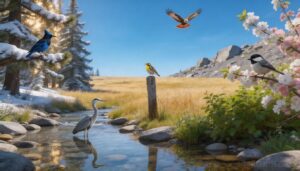
Colorado’s birds each have their favorite habitats, from thick forests to wide-open prairies. You’ll find some species stick close to water, while others thrive in busy neighborhoods or high mountain slopes.
Here’s where you can spot the most common birds, grouped by the places they call home.
Forests and Woodlands
Picture a patchwork of towering pines and shimmering aspens—your forests and woodlands are home to Ponderosa Pine Birds like Williamson’s Sapsucker and Band-tailed Pigeon, Aspen Cavity Nesters such as Downy Woodpecker, and Mixed Conifer Residents like Ruby-crowned Kinglet.
Montane Owl Species shelter here, while American Robin, Northern Flicker, and Steller’s Jay weave through this rich habitat daily.
Grasslands and Prairies
Grasslands in Colorado are a stage for dramatic bird life: your state bird, the Lark Bunting, flashes bold black and white across the prairie, while Western Meadowlark songs ripple through open fields.
Horned Lark, Mountain Plover, and Burrowing Owl each carve out space here, relying on short grass, bare ground, and prairie dog burrows—key habitats for bird species occurrence in Colorado’s montane ecosystems.
Wetlands and Riparian Areas
Wetlands and riparian areas in Colorado offer a haven for wetland birds, from dabbling ducks to Marsh Wrens. These habitats, rich in Wetland Plant Diversity, support Riparian Nesting Habitat and attract Migratory Shorebird Stopovers.
Waterbird Foraging Behavior thrives among cattails and bulrushes, while bird species occurrence in Colorado is shaped by both native and Invasive Riparian Species.
- Marsh Wren
- Sora
- American Bittern
- Black Rail
Urban and Suburban Neighborhoods
In Colorado’s neighborhoods, you’ll spot common bird species like Black-capped Chickadees and European Starlings using backyard bird attractants and feeder strategies.
Urban wildlife adjusts to noise pollution effects and window collision prevention.
Nest site competition is fierce, especially near old trees.
Human feeding impact shapes daily routines. Here’s a snapshot:
| Bird Species | Urban Behavior |
|---|---|
| House Finch | Flocks at feeders |
| Black-capped Chickadee | Cavity nesting, alert |
Mountain and Alpine Areas
Now, as you head higher, mountain and alpine areas bring a whole new cast.
Mountain Chickadees and Clark’s Nutcrackers stick close to subalpine conifer stands, while Mountain Bluebirds light up high elevation meadows.
White-tailed Ptarmigan and Brown-capped Rosy-Finches thrive above treeline in rocky krummholz habitat.
These Alpine Tundra Birds show impressive high-altitude bird adaptations in Colorado’s Rocky Mountain Peaks.
Year-Round and Seasonal Bird Patterns
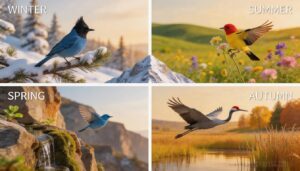
Birds in Colorado follow different rhythms depending on the season and their habits. Some stick around all year, while others arrive just for summer or winter.
Here’s how these patterns shape what you’ll see next.
Year-Round Resident Birds
Ever wonder how common bird species in Colorado manage the freeze? Year-round residents like the American Robin and Black-capped Chickadee use Roosting Strategies and Mixed-Species Flocking to survive.
They shift Elevational Distribution, double down on Winter Foraging Tactics, and boost Fat Reserve Management.
Add them to your birdwatching checklist—these birds anchor any Colorado bird identification guide or list of birding hotspots in Colorado.
Common Summer Birds
As summer heats up, you’ll notice Common bird species in Colorado like Barn Swallow, Western Kingbird, and Common Grackle are busy with Courtship Songs and gathering Nesting Materials.
Their Seasonal Plumage stands out in open fields and riparian Bird habitat types in Colorado.
Insectivorous Peaks bring them out at dawn, making every Birding hotspot in Colorado a lively scene for enthusiasts.
Common Winter Birds
When snow cover impacts food sources, your backyard turns into a winter birding opportunity in Colorado.
Birds like Dark-eyed Juncos flock to seed spill effects, while Northern Flickers and chickadees respond to suet attraction.
You’ll notice urban heat islands and bird bath usage drawing House Sparrows.
Here’s what to watch:
- Ground-foraging juncos
- Suet-loving woodpeckers
- Active bird baths
Spring and Fall Migrants
As spring unfolds, you’ll spot seasonal migratory birds of Colorado like Barn Swallows and Broad-tailed Hummingbirds arriving for breeding.
Fall brings V-formation flight of Sandhill Cranes on migration routes, while warblers use star navigation at night.
migratory patterns of Colorado birds shape seasonal bird behavior and migration in Colorado, offering a practical birdwatching guide for Colorado enthusiasts.
Peak Times for Birdwatching in Colorado
Think of birdwatching as catching a show with the best seats at sunrise and sunset. Your best sightings hinge on timing, so use this birdwatching guide for Colorado enthusiasts:
- Dawn Activity: songbirds and raptors peak
- Dusk Feeding: flocks gather at feeders
- Spring Migration Peaks: warblers flood the plains
- Summer Alpine Peaks: finches nest above treeline
- Winter Waterfowl Surge: lakes teem with migrants
How to Identify Colorado Birds
Spotting birds in Colorado starts with knowing what to look for and listen for. Each bird leaves clues through color, size, shape, and behavior.
Here’s what helps you tell them apart in the field.
Plumage and Color Patterns
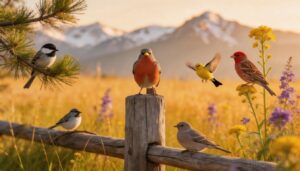
Spotting birds is like reading nature’s palette—your eye catches Head Markings, Breast Patterns, and Wing Features before anything else. For instance, American Robins show brick-red breasts and broken white eye-rings, while House Finches flash streaked wings.
Use this Identification guide for Colorado birds:
| Head Markings | Breast Patterns | Wing Features |
|---|---|---|
| Black-capped Chickadee | American Robin | Mourning Dove |
| House Sparrow | Northern Flicker | American Goldfinch |
| Dark-eyed Junco | House Finch | Black-capped Chickadee |
Bird Size and Shape
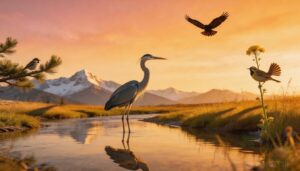
Ever noticed how a bird’s silhouette tells its story? Silhouette Identification is your shortcut—body proportions, wing morphology, and tail shape all help you sort songbirds from herons or hawks.
Compare bill and leg length for clues.
These bird field marks are key for identifying birds by appearance and sound, making your birdwatching guide more effective across Colorado’s varied bird habitats.
Beak Types and Feeding Clues
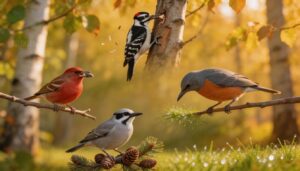
Silhouette clues help, but a bird’s beak tells you even more about its feeding strategies. For instance, you’ll spot Conical Seed Crackers at feeders, while Pointed Insect Pickers probe lawns.
Chisel Wood Foragers dig for insects in bark, and All Purpose Bills shift diets seasonally.
Watch for these signs:
- Seed feeding
- Insectivorous birds
- Bird diet clues
- Specialized Feeding Clues
Calls, Songs, and Drumming Sounds
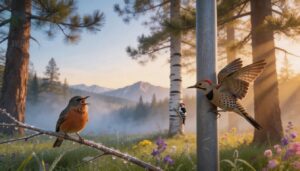
After you’ve studied beak shapes, tune your ears to Morning Song Peaks and Territorial Drumming. American Robins fill the air with “cheerily, cheer up” rhythms, while Northern Flickers signal their turf by drumming on metal poles.
Downy Woodpecker’s high-pitched notes, Alarm Call Patterns, and Mating Vocalizations help with bird vocalization identification techniques—each species has its own song identification clues.
Flight Style and Ground Behavior
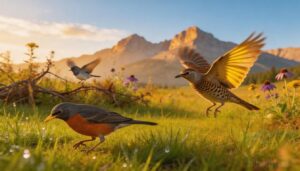
Once you’ve learned bird calls, pay attention to Ground Foraging Techniques and Flight Burst Patterns.
American Robins run and pause on lawns, searching for insects. Northern Flickers hop for ants, then flash bright wings at takeoff. Dark-eyed Juncos show Wingbeat Rhythm through tangled brush.
These behaviors help you build your own Identification guide for Colorado birds, wherever your Habitat leads.
Best Places to Spot Common Birds
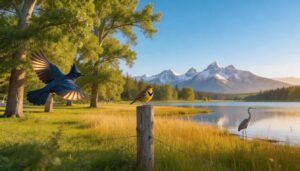
Colorado offers plenty of spots where you can catch glimpses of its most familiar birds. Whether you’re exploring city parks or wandering mountain trails, each place brings its own mix of feathered visitors.
Let’s look at some of the best locations for birdwatching across the state.
Backyards and Feeders
You want your backyard to become a magnet for Colorado’s most common bird species? Start with smart Feeder Placement Tips—near cover but not deep in shrubs.
Mix Seasonal Food Choices like black oil sunflower and suet for variety.
DIY Feeder Ideas and Water Source Management boost appeal.
Predator Prevention Strategies matter, too.
Attracting birds with seed and suet feeders brings reliable backyard birds daily.
Parks, Lakes, and Reservoirs
When you explore Colorado’s parks, lakes, and reservoirs, you step into a world where Waterfowl Diversity and Colonial Nesting shape the scene. Watch for:
- Rafts of ducks and geese on open water.
- Lake Heron Roosts and Shorebird Foraging along muddy edges.
- Raptor Fishing displays as eagles and ospreys hunt.
These habitats showcase common bird species in Colorado year‑round.
Open Fields and Farmland
Even as the wind sweeps across Colorado’s open fields and farmland, you’ll spot Common bird species in Colorado using Prairie Nesting Strategies or Ground Foraging Behaviors.
Grazing Impact shapes habitat, drawing Crop Edge Species like Lark Bunting and Western Meadowlark.
Field Bird Migration brings new visitors each season.
See the table below for quick field guide identification:
| Species | Habitat | Diet |
|---|---|---|
| Lark Bunting | Grassland, fields | Insects, seeds |
| Horned Lark | Shortgrass prairie | Seeds, insects |
| Western Meadowlark | Farmland, prairie | Insects, grains |
Mountain Trails and Foothills
As you follow Rocky Mountain trails, habitat diversity for Colorado birds becomes clear.
Shrubbird Communities fill Gambel oak with song, while Montane Trail Species like Mountain Bluebird and Vesper Sparrow forage in open meadows.
Riparian Corridor Species—such as American Dipper—patrol creekside.
High-Elevation Pass Birds and Meadow Edge Birds round out this rich birdwatching landscape:
- Mountain Bluebird
- Spotted Towhee
- Red Crossbill
- American Dipper
- Western Meadowlark
Birdwatching Tips for Better Sightings
Picture yourself in a Colorado backyard: birds reveal themselves when you blend in. Early Morning Timing gives you the best chorus. Quiet Movement keeps birds close. Neutral Clothing lets you fade into the habitat.
In a Colorado backyard, the best bird sightings come when you rise early, move quietly, and blend into the landscape
Listen—Sound and Sight work together for identifying birds by appearance and sound. Binoculars and a Colorado Bird Records Committee checklist sharpen your birdwatching.
Frequently Asked Questions (FAQs)
What are the most common backyard birds in Colorado?
Like familiar neighbors, Colorado’s most common backyard birds show up reliably year after year. The American Robin, House Finch, Black-capped Chickadee, Mourning Dove, and Dark-eyed Junco top the list.
How many types of birds are common in Colorado?
Colorado’s Colorado Bird Records Committee has documented 519 species statewide. Around 35 show up most consistently, based on frequency rankings pulled from eBird’s data collection across diverse habitats and taxonomic families.
What birds live in Colorado Springs?
You’d think a city at 6,000 feet would thin the bird list fast. It doesn’t. Colorado Springs hosts robins, finches, flickers, juncos, chickadees, doves, crows, and sparrows year-round.
What birds live in Denver?
Denver’s backyard checklists tell a clear story: American Crow, House Finch, Northern Flicker, Black-capped Chickadee, and Dark-eyed Junco top the lists — your most reliable neighborhood companions year-round.
What are the most common birds in Colorado?
You’d be "robin" yourself of joy without knowing these birds. Colorado’s most common species include the American Robin, House Finch, Black-capped Chickadee, Mourning Dove, and Dark-eyed Junco.
What is the prettiest bird in Colorado?
Beauty is subjective, but public opinion polls and aesthetic criteria consistently point to the male American Goldfinch for its radiant yellow plumage, while Mountain Bluebird and Rufous Hummingbird iridescence earn equally passionate praise.
What birds are around in October?
As the old saying goes, the early bird catches the worm — and in October, Colorado rewards early risers.
Migration bottlenecks push late-season songbirds through, while waterfowl flocks, seed-caching chickadees, and ant-foraging flickers fill backyards.
What bird calls can I expect to hear in Colorado?
Colorado’s bird calls shift with the seasons. In spring, you’ll hear robins caroling at dawn at while winter brings junco trills and chickadee chick-a-dee warnings.
Each habitat has its own acoustic signature.
How do Colorados birds adapt to high altitudes?
High-altitude birds in Colorado survive thin air through enlarged lungs, high hemoglobin affinity, and dense feather insulation.
Many use altitudinal migration and metabolic cold tolerance to thrive where oxygen runs short.
Which Colorado birds are most likely to visit backyard feeders?
Your backyard feeder can draw House Finches, American Robins, Mourning Doves, Dark-eyed Juncos, and Black-capped Chickadees regularly. Match your seed feeder’s offerings to each species, and they’ll keep coming back.
Conclusion
Think you know Colorado’s birds? Look closer.
That flash of red or rustle in the pines isn’t just background noise—it’s a story of survival, migration, and adaptation. From juncos weathering alpine winters to goldfinches painting summer skies, these creatures stitch together the state’s wild soul.
Master their patterns, and your backyard becomes a theater of resilience. Every sighting sharpens your connection to this land. So keep watching.
The common birds in Colorado aren’t ordinary—they’re your invitation to see the remarkable in the everyday.