This site is supported by our readers. We may earn a commission, at no cost to you, if you purchase through links.
When temperatures drop below freezing, your bird bath can turn into a solid block of ice in just a few hours, leaving winter birds without access to the water they desperately need. While many backyard birders assume their feathered visitors can simply eat snow for hydration, this creates a dangerous energy deficit—melting snow requires precious calories that birds can’t afford to waste during the coldest months. Finding unfrozen water becomes a matter of survival, not convenience.
Fortunately, keeping your bird bath ice-free doesn’t require complicated equipment or constant monitoring. A combination of smart placement, the right materials, and a few proven techniques will make certain birds have reliable access to liquid water all winter long.
Table Of Contents
- Key Takeaways
- How to Keep a Bird Bath From Freezing
- Choose The Best Bird Bath for Winter
- Place and Position Your Bird Bath Wisely
- Use Heating and Insulation Solutions
- Maintain and Clean Bird Baths in Winter
- Frequently Asked Questions (FAQs)
- How often should I change the water?
- Do I need to add rocks?
- Will I need to buy an icebreaker?
- Is hot water enough to stop it freezing?
- What colour should the birdbath be?
- What birds visit winter bird baths most often?
- Can I use bird bath heaters overnight safely?
- How much does winterizing a bird bath cost?
- Do bird baths attract other wildlife in winter?
- When should I start preparing my bird bath?
- Conclusion
Key Takeaways
- Birds need liquid water year-round for survival because melting snow wastes precious calories, making unfrozen bird baths critical during winter when natural water sources freeze solid.
- Heated bird baths with thermostats offer the most reliable solution, using only 50-150 watts and costing about $1-2 monthly, while shallow basins (1-2 inches deep) made from resin or metal resist cracking better than concrete or ceramic.
- Strategic placement in sunny, wind-protected spots with dark surfaces can keep water unfrozen 2-3 hours longer than shaded locations, and adding movement through drip systems or floating objects reduces ice formation by up to 60%.
- Never add salt, antifreeze, or glycerin to bird baths as these cause severe poisoning in birds, and always change water every 1-2 days while cleaning with vinegar or diluted bleach to prevent disease transmission.
How to Keep a Bird Bath From Freezing
When temperatures drop below freezing, your bird bath can become a solid block of ice in just a few hours. Birds rely on liquid water year-round, not just for drinking but also for keeping their feathers clean and insulated against the cold.
Let’s look at why unfrozen water matters so much, what challenges you’ll face this winter, and the practical methods that actually work.
Why Preventing Freezing Matters for Birds
Winter hydration determines survival rates for birds visiting your yard. Most small birds need to drink water at least twice daily, especially when natural sources freeze solid. Without accessible liquid water, they face concurrent dehydration and starvation that spike mortality during cold snaps.
Winter hydration determines survival rates for birds, as most small species need water twice daily to avoid fatal dehydration when natural sources freeze
Behavioral reliance on unfrozen water sources aids energy expenditure, prevents hypothermia, and maintains disease prevention through proper avian hydration—all essential for ecological balance in harsh conditions. Providing birds with fresh water is vital for their survival.
Common Winter Challenges for Bird Baths
Ice formation tops the challenge list once temperatures drop below 32°F. Your bird bath can freeze solid within hours during cold snaps, making water inaccessible to thirsty visitors. Birds require water for drinking and essential preening habits.
Freezing temperatures also cause material damage—concrete and ceramic baths crack under freeze-thaw cycles, with over half failing within their first winter. Maintenance increases dramatically, and poor placement risks faster freezing, limiting the water your birds desperately need.
Overview of Effective Methods
Fortunately, you have several reliable options to combat freezing. Heated bird baths with built-in thermostats offer the simplest solution, consuming only 50-150 watts and costing roughly 24 cents daily.
Nonelectric bird bath solutions include strategic placement in sunny spots, adding dark rocks for heat absorption, and using floating objects as icebreakers.
Combining methods—like insulation with solar heating—delivers the best results for winter bird bath maintenance.
Choose The Best Bird Bath for Winter
Not all bird baths are built to handle freezing temperatures, and choosing the right one can save you a lot of hassle this winter. The material, depth, and design features all play a role in how well your bird bath will perform when temperatures drop.
Let’s look at what makes a bird bath winter-ready, so you can pick one that works best for your backyard birds.
Ideal Materials for Cold Climates
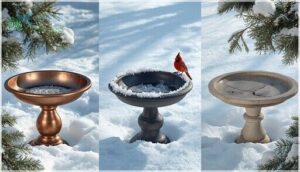
Not all bird bath materials handle freezing temperatures equally well. Resin durability and reinforced plastic resist cracking through freeze-thaw cycles, while metal benefits include excellent cold tolerance without shattering. Concrete issues arise from water absorption that leads to spalling, and ceramic glazes must be high-fired to prevent damage.
Consider these best bird bath materials for cold climates:
- Metal and resin withstand winter expansion
- Stone options provide stability but weigh considerably
- Concrete requires sealing or indoor storage
Shallow Vs. Deep Bird Baths
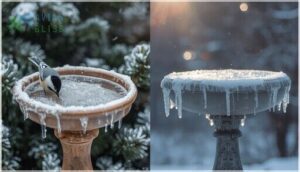
Regarding winter performance, depth makes all the difference. Shallow baths holding 1 to 2 inches of water freeze slower than deep models, thaw faster in sunlight, and allow small birds like chickadees safe access. Deep baths can freeze solid, making water unreachable for extended periods.
You’ll also find shallow dishes easier to clean and less prone to ice damage when temperatures drop.
Features That Help Prevent Freezing
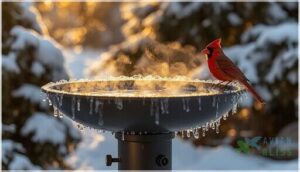
When selecting a heated bird bath, look for built-in thermostats and immersion heaters—these maintain water just above freezing without wasting energy. Solar heaters can supplement electric models, providing additional warmth.
Material durability is crucial; frost-resistant plastic or powder-coated metal withstands freeze-thaw cycles effectively. Dark basins enhance solar absorption, while insulation techniques like foam wraps help retain warmth.
The structural design of the bird bath also plays a role in preventing freezing. Shallow, broad basins slow ice formation naturally, ensuring the water remains accessible to birds even in colder temperatures.
Place and Position Your Bird Bath Wisely
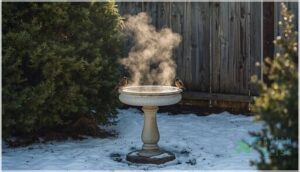
Where you place your bird bath can make all the difference when temperatures drop. A well-chosen location slows down freezing, reduces maintenance, and keeps water accessible to birds throughout the winter months.
Let’s look at the key positioning strategies that will help your bird bath stay functional when birds need it most.
Selecting a Sunny Location
Sunlight is your best ally in the fight against ice. A sunny location can keep water unfrozen 2–3 hours longer than shade, especially when your bird bath gets at least six hours of direct winter sunlight. Look for south-facing walls or open spots where shadow avoidance is easy, and remember that winter weather shifts sun angles—you may need to reposition every month or two to capture peak sun exposure. Smart bird bath location choices create microclimates that truly work.
Key placement tips for maximum winter sunlight:
- Position away from trees and structures casting shadows after 10 AM
- Choose south- or east-facing garden spots for up to 25% more sun
- Keep at least five feet of clearance from tall fences
- Monitor shadow patterns as seasons change
- Aim for unobstructed sunny areas throughout the day
Protecting From Wind and Cold Drafts
Wind can cut a bird bath’s warmth faster than you’d imagine. Positioning your bath within 10 feet of trees or dense shrubs creates a windbreak that reduces wind speed by up to 35%, extending unfrozen periods considerably.
Artificial barriers like repurposed Christmas trees or burlap screens work too, offering 20–35% wind reduction. Even south-facing walls create microclimates with improved heat retention—sheltered placement matters greatly in chilly weather.
Using Dark Surfaces to Absorb Heat
Dark colored containers collect solar heat remarkably well—black surfaces absorb up to 90% of sunlight, raising water temperature by 3–5°C during daylight. You can line your bath with black plastic or add black rocks to boost heat retention and delay freezing by 2–4 hours.
Just remember: this material color impact works best in direct winter sunlight absorption, with effectiveness dropping 60% under clouds, and watch for algae growth risk in warmer months.
Elevating or Ground-Level Placement
Height matters more than you might think. Ground-level baths tap into residual ground heat, staying 2°C warmer and freezing 30% slower than elevated ones, especially near south-facing walls or insulation like foam pads.
However, elevated baths (60–90 cm high) cut predation risk by 67% and resist wind exposure better with concrete blocks as windbreaks.
Balance bird safety with practical trends: intermediate heights offer the best compromise for winter.
Use Heating and Insulation Solutions
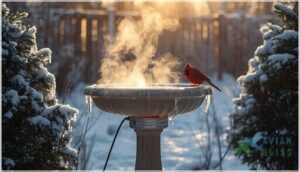
When temperatures drop below freezing, you’ll need more than just smart placement to keep your bird bath accessible. Heating devices and insulation techniques can maintain open water even during the coldest stretches of winter.
Let’s look at your main options for adding warmth and protection to your setup.
Electric and Solar Bird Bath Heaters
Heated bird baths offer reliable solutions when temperatures drop below freezing. Electric heaters generally use 50–150 watts and maintain open water down to -20°F, costing about $1–2 monthly with thermostatically controlled models that activate around 34°F.
Key features include:
- UL-listed electrical safety certifications
- Automatic shut-off when water levels drop
- Rust-resistant, non-toxic heating elements
Solar energy options cost less to run but struggle in consistently freezing conditions.
DIY Insulation Methods
If electric heaters don’t suit your setup, DIY bird bath insulation using nonelectric methods works surprisingly well. Wrap bubble wrap around the pedestal, then layer straw or recycled plastics for added protection.
Fill the basin’s bottom with dark surfaces like black river rocks—they absorb sunlight and radiate warmth. These insulating materials reduce surface area exposed to cold air, keeping water liquid longer without plugging anything in.
Adding Movement With Drip Systems or Floaters
Moving water resists freezing far better than still water. A drip system using a gallon jug with a tiny hole reduces ice formation by up to 60%, and birds visit 2.7 times more often. Floatable objects like ping pong balls disrupt surface freezing by 39%, especially when wind assists movement. Battery-powered agitators decrease full-ice formation by 67% at typical winter temperatures.
Why water movement works so well:
- Drippers delay complete surface freezing by up to 4 hours around 23°F
- Dual floaters increase freeze resistance by an additional 18% compared to single floaters
- Fountains maintain open water in over 70% of winter observations above 21°F
- Movement increases winter bird species diversity by 21% in backyard gardens
Safety Considerations for Heaters
Before you plug in any heated bird baths, electrical safety for bird baths must come first. Always connect bird bath heater safety devices to GFCI outlets, which prevent electrical shocks by cutting power during faults.
Choose heaters with overheat protection and low voltage levels to reduce risks of electrical fires. Follow safe installation instructions carefully, and inspect cords for damage each season.
Maintain and Clean Bird Baths in Winter
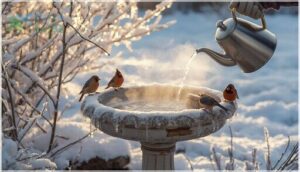
Keeping your bird bath functional throughout winter isn’t just about preventing ice—regular maintenance protects the health of visiting birds. Clean water and safe cleaning practices make the difference between a welcoming oasis and a potential hazard.
Here’s how to maintain your bird bath properly during the coldest months.
Changing Water Regularly
Fresh water isn’t just nice to have—it’s essential for bird health during winter. You should replace water every 1–2 times weekly for low-traffic baths, or daily if birds use it often. Water change frequency depends on environmental factors like sun exposure and debris. Studies show that regular replacement reduces harmful pathogens and keeps ice from forming.
Follow these practical trends:
- Change water daily in high-traffic or sunny locations
- Replace every 7–14 days for shaded, low-use baths
- Monitor water appearance for contamination
- Top off heated baths during cold spells
Safe Cleaning Practices
Beyond fresh water, proper cleaning protects birds from illness. Use a 9:1 water-to-vinegar solution or a 10:1 bleach dilution with a ten-minute soak for tough pathogens. Scrub with non-metal brushes, rinse thoroughly—twice for porous materials—and let the bath air dry in sunlight.
These safe bird bath practices disrupt disease cycles and support healthy local populations throughout winter.
Avoiding Harmful Additives
Never add salt, antifreeze, or glycerin to your bird bath—these toxic substances cause severe poisoning in birds. Salt toxicity triggers lethargy and death within hours, while antifreeze leads to renal failure even in trace amounts. Glycerin risks disrupt feather waterproofing.
Instead, rely on safe bird bath practices like distilled vinegar for cleaning and mechanical heating methods that protect your feathered visitors.
Tips for Ongoing Winter Maintenance
Winter bird bath maintenance becomes routine once you establish a rhythm. Remove debris like leaves and twigs twice weekly to keep water clean. Monitor water levels daily, topping off with warm water as needed.
Check your bird bath deicer and electrical cords regularly for damage, keeping connections off the ground for safety.
Add perches using stones or sticks to help birds access water without fully bathing, preventing bird bath freezing while supporting their hydration needs.
Frequently Asked Questions (FAQs)
How often should I change the water?
Like a well you wouldn’t drink from twice, your bird bath water needs replacing daily in winter.
This prevents disease, mosquito breeding, and ice buildup while maintaining fresh water birds depend on.
Do I need to add rocks?
You don’t need rocks, but they help. Dark stones absorb heat, slowing ice formation and providing safe perches.
Just be ready for extra cleaning—debris collects faster around rocks in winter.
Will I need to buy an icebreaker?
Icebreaker effectiveness seems promising, yet birds visit heated solutions more. Cost comparison shows icebreakers run $6–$18 versus heaters at $29–$
Safety concerns and bird welfare favor reliable heated options over manual frozen water solutions during sustained cold.
Is hot water enough to stop it freezing?
Hot water limits how long your bird bath stays thawed—usually just a few hours before refreezing. Combining methods works best.
Safe refilling frequency and best water temperature matter for preventing bird bath ice effectively.
What colour should the birdbath be?
Dark colors like black or charcoal work best because they absorb more heat during winter sunlight, delaying freezing. Darker bird baths can stay several degrees warmer than light ones, helping keep water liquid longer.
What birds visit winter bird baths most often?
Last winter, a Northern Cardinal arrived daily at a suburban bath, demonstrating cardinal prevalence.
Chickadees, goldfinches, bluebirds, and juncos also frequent winter baths, supporting avian friends’ survival.
Proper winter bird care attracts these feathery buddies reliably.
Can I use bird bath heaters overnight safely?
Yes, you can safely use certified heater models overnight when plugged into a GFCI outlet. These devices maintain bird temperature safety with built-in heater safety features, costing minimal overnight electricity while preventing bird bath freezing.
How much does winterizing a bird bath cost?
Winterizing costs vary widely depending on your approach. Budget-friendly approaches like DIY insulation prices run $5–$25, while purchasing a heated bird bath ranges from $70–$214, plus modest utility bills for heater wattage costs.
Do bird baths attract other wildlife in winter?
Beyond birds, your bird bath attracts mammals seeking water sources during winter biodiversity boosts.
Bird bath ecology shows cold-weather species like squirrels, raccoons, and even foxes visit for drinking when natural sources freeze, enriching your yard’s wildlife drinking habits.
When should I start preparing my bird bath?
Ironically, most people wait until ice forms. Start autumn cleaning when consistent cold temps approach 40°F—before the first frost date—to prepare materials, confirm regional climate data, and prevent subzero surprises.
Conclusion
What could be more rewarding than watching a cardinal dip into your bird bath on a January morning, knowing you’ve provided exactly what it needed to survive? By learning how to keep a bird bath from freezing, you’re doing more than maintaining a backyard feature—you’re creating a lifeline.
With the right placement, materials, and heating methods in place, you’ll make certain winter birds have constant access to the liquid water that keeps them alive and thriving.
- https://www.youtube.com/watch?v=Cji3SwngfcY
- https://lawnall.com/what-temperature-do-birds-like-their-bird-bath/
- https://birdsinthetree.com/how-to-keep-bird-bath-from-freezing-without-electricity/
- https://www.farmersalmanac.com/winter-bird-bath-ideas
- https://mybackyardlife.com/how-to-keep-bird-bath-from-freezing/