This site is supported by our readers. We may earn a commission, at no cost to you, if you purchase through links.
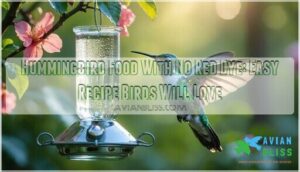 Making hummingbird food with no red dye is simple and safe for these tiny birds.
Mix one part plain white sugar with four parts water, then boil the mixture for a couple of minutes to kill bacteria. Let it cool completely before filling your feeder.
Skip the red dye—it’s unnecessary since hummingbirds are drawn to the color of the feeder itself, not the nectar. Plus, artificial dyes can harm their delicate kidneys and liver.
Think of it as offering them a fresh, homemade treat instead of processed junk. For more tips on feeder placement and maintenance, the details might surprise you.
Table Of Contents
- Key Takeaways
- Hummingbird Natural Diet
- Red Dye Concerns
- Hummingbird Feeding Basics
- Health Risks of Red Dye
- Safe Hummingbird Food
- Frequently Asked Questions (FAQs)
- Will hummingbirds come to a feeder that is not red?
- What is the natural red food for hummingbirds?
- Why is there no red dye in hummingbird feeders?
- How do you make dye free hummingbird nectar?
- How often should I change hummingbird nectar?
- Can hummingbirds eat fruit juices?
- Do hummingbird feeding needs change seasonally?
- Are glass or plastic feeders better?
- Do different hummingbird species prefer different nectars?
- How often should hummingbird feeders be filled?
- Conclusion
Key Takeaways
- Skip red dye—it harms hummingbirds’ kidneys and liver, and feeders’ red parts already attract them.
- Stick to a 1:4 sugar-to-water ratio for safe, simple, and natural nectar that mimics flowers.
- Clean feeders every 2-3 days in warm weather to prevent mold and spoiled nectar.
- Use native flowers like bee balm and trumpet vine to naturally attract and nourish hummingbirds.
Hummingbird Natural Diet
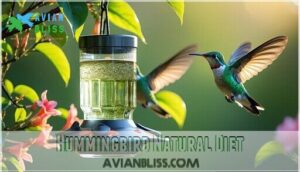
Hummingbirds thrive on natural nectar made of sugars like sucrose, glucose, and fructose, which provide quick energy for their high metabolism.
Natural nectar fuels hummingbirds with quick energy and vital nutrients, keeping their high metabolism in perfect harmony with nature.
They also rely on trace nutrients from flower pollen to stay healthy, making native flowers a essential part of their diet.
Nectar Composition
Ever wondered why natural nectar is the perfect fuel for hummingbirds? Its composition is as simple as it’s brilliant: a water-based blend of sucrose, glucose, and fructose.
Packed with trace nutrients, it supports their health without artificial additives. Though nectar varies by flower species, one thing’s certain—artificial dyes don’t belong.
- Sugar Types: Sucrose, glucose, fructose
- Mineral Content: Essential for energy and survival
- Amino Acids: Supports rapid metabolism
Sugar Concentration
The right sugar concentration in hummingbird food makes all the difference.
Stick with the Optimal Ratio of 1 part sugar to 4 parts water, matching natural flower nectar perfectly.
This hummingbird nectar recipe fuels their high-energy needs for endless flight.
Seasonal needs may vary slightly—a sugar water recipe with no red dye guarantees their health, balancing delicious energy with simplicity.
Don’t stress, just mix!
Trace Nutrients
Trace nutrients play a critical role in hummingbird health, going beyond just sugar. Natural hummingbird food delivers essential vitamin content and other micronutrients that support their rapid metabolism.
Trace nutrients are the secret to vibrant, healthy hummingbirds, fueling their rapid metabolism with essential vitamins and natural micronutrients.
Here’s what they need for balanced hummingbird nutrition:
- Mineral sources like calcium aid bone strength and electrolyte balance.
- Amino acids and pollen benefits boost immune health and energy.
- Vitamin content, like B-complex vitamins, fuels constant activity.
Unlike plain sugar water, flower nectar provides these essential components, highlighting the irreplaceable need for natural sources. A balanced diet should also focus on preventing malnutrition.
Natural Food Sources
Hummingbirds thrive by sipping natural nectar from flowers like honeysuckle, bee balm, and trumpet vine.
Their diets also include sap intake, fruit sugars, insect consumption, and flower pollen for essential nutrients.
With specialized bills and long tongues, they extract natural minerals from each source effortlessly, proving nature’s design is perfect.
A mix of native flowers in your garden creates ideal natural hummingbird food. Skip artificial additives and enjoy watching them flourish with food that contains no red dye or chemicals.
| Source | Benefit | Example |
|---|---|---|
| Native Flowers | Natural nectar | Bee balm, trumpet vine |
| Flower Pollen | Trace minerals and nutrients | Lilies, daisies |
| Insects | Protein and amino acids | Small flies, spiders |
| Sap Intake | Extra energy during scarcity | Maple, birch trees |
| Fruit Sugars | Quick energy and hydration | Overripe fruits |
Red Dye Concerns
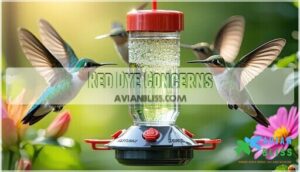
You don’t need red dye to attract hummingbirds to your feeders, and using it can actually harm their health.
Studies suggest that artificial dyes may stress their kidneys and liver, so it’s safer to stick with clear, dye-free nectar.
Artificial Additives
Mother Nature’s nectar doesn’t come with a “warning label,” but commercial mixes often do.
Artificial dyes, like FDC Red No. 40, are petroleum-based and linked to health risks of red dye, offering zero benefits. These chemical impacts might harm hummingbirds’ organs and navigation.
Here’s what to watch for:
- Artificial dyes: Bright in color, harmful in effect.
- Additive alternatives: More hype than help.
- Preservative concerns: Long shelf life, short on safety.
- Artificial flavors: Far from nature.
- Natural sweeteners: Simpler recipes win.
Stick to red dye-free recipes for happier, healthier feathered friends!
Commercial Nectar Ingredients
When you dig into commercial nectar, you’ll find more than just sugar water.
Many brands include additive-packed formulas with water, sucrose, artificial red dye (like Red Dye 40), and preservatives such as citric acid or sodium benzoate.
These processing methods can introduce unnecessary risks. Red dye-free options are rare, but essential for safe hummingbird food.
Artificial ingredients often come from questionable sources like refined crude oil, raising concerns about health risks of red dye.
Instead, consider making your own nectar—it’s cost-effective, skips harmful additives, and perfectly mimics nature’s Ingredient Sourcing without the extra artificial dyes or unnecessary additives, providing a solution to avoid artificial ingredients and ensure safe hummingbird food.
Potential Health Risks
Red dye concerns shouldn’t be overlooked when choosing what to feed hummingbirds.
Artificial dyes, like those in some nectar products, bring serious health risks without offering any benefits. Here’s why:
- Kidney Damage and Liver Stress: These tiny birds metabolize dyes at high doses, leading to potential kidney stress or even organ damage over time.
- Allergic Reactions and Tumor Risks: Studies link red food coloring to allergic responses and increased mortality rates from tumors.
- Health Risks vs. Attraction: Manufacturers use dyes to attract birds, yet vibrant feeder parts or flowers do the job just as well.
Opting for dye-free sugar water supports safe, natural nutrition for hummingbirds.
Alternative Coloring Options
Worried about red dye concerns? You don’t need it for hummingbirds to notice your feeder.
Natural color alternatives work wonders. Try beet juice, saffron tincture, or flower petals for gentle, red dye-free coloring. A fruit infusion can also add subtle hues.
Red dye is banned in several countries.
But remember, birds focus on the feeder’s red parts, not the nectar itself. If you’re using natural extracts, keep it simple and safe, ensuring the sugar water remains clean and nourishing.
Hummingbird Feeding Basics
To feed hummingbirds safely, stick to a simple sugar-water recipe that mimics natural nectar.
Choose red feeders, place them in shaded areas, and clean them regularly to keep the birds healthy and hydrated.
Attracting Hummingbirds
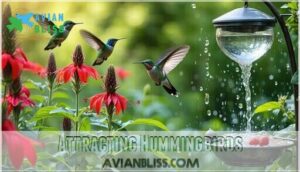
Brighten your yard to start attracting hummingbirds without using red dye.
Native plants like bee balm and cardinal flowers are natural hummingbird magnets, serving as both a vibrant decoration and a reliable nectar source.
Flower gardens packed with native blooms create a natural habitat hummingbirds love, while red dye free feeders act as the perfect hummingbird attractant.
You can also add small water features, like fountains, for extra appeal.
Together, these elements make your garden irresistible, creating a lush space for hummingbirds to thrive.
With the right mix, you’ll have hummingbirds flocking without the need for artificial tricks, making your yard a haven for these beautiful creatures to thrive.
Feeder Design and Placement
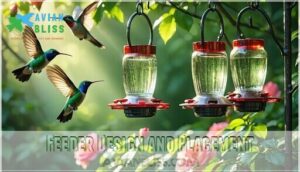
The right feeder design and placement strategy can elevate your efforts in creating a great hummingbird feeding station.
Choose feeders with sturdy materials, bright red accents, and perching spots to attract hummingbirds naturally—no red dye needed! Hang feeders about 5-6 feet high, away from predators, in partially shaded spots to balance visibility and protect nectar from overheating.
Use multiple feeders spaced apart to reduce territorial conflicts among birds. Regularly clean feeders every 2-3 days to prevent harmful mold, ensuring a safe feeding environment.
Ideal designs can be found with various feeder products. Thoughtful hummingbird feeder placement maximizes effectiveness and keeps your tiny visitors happy.
Sugar Water Recipe
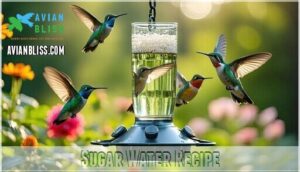
Your feeder’s ready, so let’s mix up some homemade hummingbird food! A quick sugar water recipe uses a 1:4 ratio—one part sugar to four parts water.
Stick to white granulated sugar; avoid substitutes. Boil water for faster mixing and bacteria removal, then cool completely.
To maintain feeder hygiene, choose easy to clean feeders. Store extra clear hummingbird food in the fridge for up to a week.
- Recipe Variations: Adjust strength for seasons (1:3 for colder months).
- Sugar Types: Only use white granulated.
- Boiling Benefits: Quick dissolving, bacteria-free.
- Storage Duration: Maximum one week.
- Cost Comparison: Homemade saves over buying pre-made!
Natural Color Alternatives
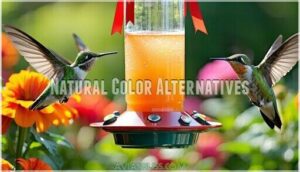
If you’re set on adding color but sticking to red dye free options, try natural coloring.
Beet juice, pomegranate juice, or hibiscus extract offer rich hues resembling natural flowers.
For subtle tones, carrot or spinach extracts work too.
Pair these with flower gardens, red ribbons, and clever feeder placement to attract hummingbirds.
They’re drawn by visual cues, so avoiding artificial dyes keeps them safe and happy.
Health Risks of Red Dye
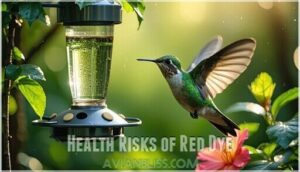
Red dye in hummingbird food can harm their health, potentially stressing organs like the liver and kidneys.
Experts recommend avoiding artificial coloring altogether, as it provides no benefit and may increase risks to these delicate birds, emphasizing the importance of natural ingredients for their well-being.
Potential Drawbacks
Red nectar might look charming, but it brings risks. Adding artificial dyes to hummingbird food does more harm than good. These tiny creatures face dangers like digestive strain and nutritional deficiencies. It’s also a recipe inaccuracy—natural nectar is clear, not red.
Plus, dyed food encourages fermentation risks and mold growth, especially in warm weather. Here’s why avoiding artificial dyes matters:
- Stresses kidneys with unnecessary chemicals.
- Risks toxic buildup in their small bodies.
- Attracts pests like wasps or ants.
- Offers zero health benefits.
- Takes extra preparation time with no payoff.
Stick with clear food!
Artificial Dye Effects
Consuming artificial dyes can seriously harm hummingbirds, posing risks like kidney damage, liver tumors, allergic reactions, and even higher mortality rates.
These health risks may also impact their navigation and reproduction. While research on hummingbirds is limited, studies in other animals link such dyes to DNA damage and disease.
Hummingbird food with no red dye is safer and healthier, as natural alternatives provide essential benefits without any risks. Choose dye-free options to support hummingbird health.
It’s also worth noting that red dye is unnecessary because hummingbirds are attracted to the red color of the feeders themselves.
Expert Opinion
Hummingbird experts, like Sheri Williamson of SABO, stress the importance of keeping artificial dyes out of your hummingbird food.
Research findings show these additives don’t meet their nutritional needs and may harm their health. You don’t need red dyes; the bright feeder colors already attract them.
Safe practices, like using a natural hummingbird nectar recipe with no red dye, guarantee birds thrive without risks.
Stick to homemade hummingbird food—it’s healthier, safer, and truly supports their well-being through dye alternatives.
Precautionary Measures
Protecting hummingbirds starts with keeping their food safe and natural. Using homemade hummingbird food with no red dye eliminates unnecessary artificial dyes and health risks.
Stick to clear, simple nectar recipes, and focus on consistency. To guarantee safety:
- Clean feeders regularly to prevent nectar spoilage and harmful bacteria.
- Use only high-quality, white granulated sugar for proper sugar quality.
- Stick to a precise 1:4 ratio of sugar to water for ratio consistency.
- Always use filtered or clean tap water as your water source.
- Refresh nectar every 2–3 days, especially in warm weather.
Safe Hummingbird Food
Making safe hummingbird food is simple and only requires white sugar and water.
By avoiding red dyes and sticking to a 1:4 sugar-to-water ratio, you’ll provide a healthy energy source that mimics natural nectar.
Simple Sugar Water
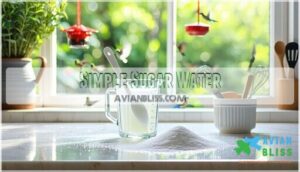
Making hummingbird food at home is quick and simple. Just follow this DIY hummingbird food recipe with no red dye:
- Combine 1 part white granulated sugar with 4 parts water.
- Stir until sugar dissolves completely.
- Boiling water helps dissolve sugar faster and guarantees safety.
- Store leftover nectar in a fridge for up to one week.
- Avoid alternative sweeteners—they’re unsafe.
Natural Nectar Alternatives
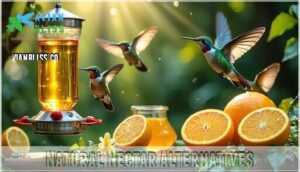
Exploring natural nectar alternatives is a great way to mimic the wild diet hummingbirds love while giving them a nutritious boost.
Simple sugar water (1:4 ratio) is effective, but you can also experiment with nature-based options.
Natural Alternative Benefits Preparation Concentration Notes
These options supplement hummingbirds’ needs, supporting their high metabolism.
Some enthusiasts even purchase nectar products to supplement their feeding efforts.
Avoiding Artificial Dyes
Artificial dyes might look appealing but aren’t worth the risks. Keeping nectar dye-free protects hummingbirds’ sensitive kidneys and aligns with their natural preferences.
- Dye-Free Benefits: Red feeders already attract birds without needing extra color.
- Safe Nectar: Clear sugar water mimics natural flower nectar perfectly.
- Natural Attraction: Hummingbirds seek energy-rich food, not red dye.
- Health Risks: Artificial dyes stress their tiny bodies over time.
Stick with pure, simple hummingbird food—they’ll thank you!
Commercial nectars often contain petroleum-based Red Dye 40, raising concerns about potential health risks.
Feeder Maintenance and Safety
A clean feeder is key to safe hummingbird food and hummingbird health! Clean feeders every 2-4 days with hot water and a soft brush to prevent mold. Avoid harsh chemicals—vinegar works well instead.
Place feeders in shade to slow nectar spoilage and protect against placement hazards like overheating. Use ant guards to keep pests away, ensuring only birds enjoy the nectar. Many gardeners find specialized guards effective.
| Care Task | Frequency | Tools Needed |
|---|---|---|
| Feeder Cleaning | Every 2-4 days | Brush, hot water |
| Mold Prevention | Shade placement | Cleaning brush |
| Ant Control | Constant | Ant moat/guard |
Keep it safe, simple, and beneficial for your hummingbirds!
Frequently Asked Questions (FAQs)
Will hummingbirds come to a feeder that is not red?
Imagine a brightly wrapped gift—it’s not the paper but the content that matters.
Hummingbirds don’t need red feeders to visit; they’re drawn to the nectar itself, especially when it mirrors natural flower nectar.
What is the natural red food for hummingbirds?
Hummingbirds naturally get their red food source from flowers like bee balm, trumpet vine, and red salvia.
These blooms provide clear nectar rich in sugars, amino acids, and minerals, perfectly fueling their incredible energy needs.
Why is there no red dye in hummingbird feeders?
Red dye isn’t used in feeders because it can harm hummingbirds’ kidneys and livers over time.
Feeders already have red parts to attract them, so there’s no need to add potentially harmful coloring.
How do you make dye free hummingbird nectar?
Over 90% of hummingbirds prefer natural nectar.
Mix 1 part plain white sugar with 4 parts boiled water, stir until dissolved, cool completely, then fill feeders.
Skip red dyes—they hurt more than they help.
How often should I change hummingbird nectar?
You should change hummingbird nectar every 2-3 days in warm weather to prevent fermentation or mold.
In cooler weather, stretch it to 4-5 days.
Fresh nectar keeps your visitors healthy and happy.
Can hummingbirds eat fruit juices?
Like a sugar buzz for tiny wings, some fruit juices might seem tempting, but they’re not ideal.
They lack the right sugar concentration, often ferment quickly, and can harm hummingbirds’ delicate metabolism.
Stick to nectar.
Do hummingbird feeding needs change seasonally?
Hummingbirds’ feeding needs shift with the seasons. In spring and summer, offer a 1:4 sugar-to-water ratio for energy. During fall and winter migrations or cooler months, increase sugar to a 1:3 ratio.
Are glass or plastic feeders better?
Glass feeders are more durable and resist discoloration, but they’re heavier and might break.
Plastic feeders are lightweight and less fragile, yet can fade or warp over time.
Both work well—choose based on your needs and environment.
Do different hummingbird species prefer different nectars?
Different hummingbird species don’t usually prefer specific nectars, but flower shape and size can influence which ones they visit.
Choosing native plants with varied blooms supports multiple species, offering them all the right nutrients.
How often should hummingbird feeders be filled?
You should refill hummingbird feeders every 2-3 days, especially in warm weather, to prevent spoilage.
In cooler months, every 4-5 days works.
Fresh nectar guarantees they stay healthy and keeps mold away.
Conclusion
Think of feeding hummingbirds as crafting a lifeline, not a shortcut.
By choosing hummingbird food with no red dye, you’re prioritizing their health over harmful additives.
Stick to plain sugar water in the right ratio—one part sugar to four parts water—and maintain a clean feeder to keep them safe.
Hummingbirds don’t need fancy colors, just a reliable source of nourishment.
A simple, dye-free approach helps these tiny creatures thrive in your backyard, ensuring they visit often.
- https://www.facebook.com/SimplisticallyLiving/posts/diy-hummingbird-food-all-natural-and-no-red-dyes/1176737623852476/
- https://www.quora.com/What-can-be-used-besides-food-coloring-to-tint-hummingbird-nectar-red-since-they-dont-use-it-often-when-left-clear
- https://www.reddit.com/r/birding/comments/15uix4i/good_hummingbird_nectar_recipe/
- https://journeynorth.org/hummingbirds/resources/article/no-red-dye-recipe
- https://feederspetsupply.com/woodstream-red-hummingbird-nectar-concentrate-aluminum-can-free-of-red-dye-40-16-oz/?srsltid=AfmBOopmZaxaf1tq1CNSmcClAzWfCiiLkRm7ORrLRGDvE6Hxjje8Vceq