This site is supported by our readers. We may earn a commission, at no cost to you, if you purchase through links.
A flash of black and white darting through the trees stops most people cold—not because it’s rare, but because it’s genuinely hard to name. Small black and white birds make up a surprisingly diverse slice of North American wildlife, and several species share enough visual overlap to fool even experienced observers.
The Downy Woodpecker checking its way up a bark seam looks nothing like the Black-and-White Warbler spiraling down the same tree trunk, yet beginners often lump them together.
Knowing who’s who changes the whole experience. These birds each tell a different story—about habitat, behavior, and the small dramas unfolding in forests, backyards, and riverbanks near you.
Table Of Contents
- Key Takeaways
- What Are Small Black and White Birds?
- Types of Small Black and White Birds
- Habitats and Distribution Patterns
- Behavior, Diet, and Ecology
- Conservation and Birdwatching Tips
- Frequently Asked Questions (FAQs)
- What do small black and white birds primarily eat?
- How do black and white birds adapt to urban environments?
- What are the distinctive courtship rituals of black birds?
- How do I identify a black and white bird species?
- What are the unique migration patterns of small black birds?
- How do black and white birds attract mates?
- How long do these birds typically live in the wild?
- Can black and white birds hybridize with other species?
- What diseases most commonly affect these bird populations?
- How do small black and white birds reproduce?
- Conclusion
Key Takeaways
- You can tell small black and white birds apart quickly by focusing on a few key traits: bill shape, streak direction, and how the bird moves along a tree trunk or branch.
- Species like the Black-and-white Warbler (Mniotilta varia), Downy Woodpecker (Dryobates pubescens), and Black-capped Chickadee (Poecile atricapillus) each fill a distinct ecological role — from pest control to cavity creation — making them far more than just pretty faces.
- These birds show up in forests, backyards, and wetlands alike, but rural habitats consistently support healthier populations because fragmentation and urban noise chip away at territory, nesting success, and food supply.
- Habitat loss, pesticide use, and climate-driven food mismatches are the biggest threats to these species, but active conservation efforts — corridors, legal protections, and citizen science — are already making a measurable difference.
What Are Small Black and White Birds?
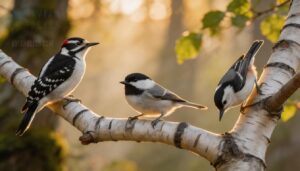
Small black and white birds are easy to overlook, but once you know what to look for, they’re surprisingly easy to tell apart. key traits — like size, plumage pattern, and behavior — do most of the heavy lifting.
Once you’ve nailed the basics, a guide to white birds with black head markings can sharpen your eye for the finer distinctions.
Here’s what defines this group and how you can start telling them apart with confidence.
Defining Characteristics and Plumage Patterns
When you spot a flash of black and white darting through the trees, the bird’s plumage is doing real work. These patterns—bold head crown markings, barred wing patterns, and tail undertail contrast—act like a field identification guide you don’t have to carry.
Mottled camouflage breaks up a bird’s silhouette among shadows, while high-contrast patches signal identity to rivals and mates.
Seasonal plumage molt can shift these markings subtly, so learning the core plumage patterns sharpens your small black and white bird identification guide skills year‑round.
seasonal molting cycles can subtly change these black and white patterns across the year.
Common Physical Traits and Size
Size tells a lot about a bird before you even reach for your binoculars. Most small black and white birds are between 11 and 17 cm long, with a body mass range of just 8 to 28 grams — lighter than a handful of coins.
Bill morphology varies widely: the Downy Woodpecker carries a short chisel‑shaped bill, while warblers have slender pointed ones for gleaning insects. Tail length variation and wing shape differences help too, since woodpeckers use stiff tail feathers as a brace against tree bark.
Distinguishing Black and White Birds From Similar Species
Once you’ve clocked the size, the real detective work begins. Plumage patterns are your first clue — check whether streaks run vertically or horizontally, and note any eye ring presence or leg coloration that sets one species apart. Molt timing matters too, since some birds look dramatically different in winter. A solid identification guide for small black and white birds always flags hybrid overlap zones, where species blur together.
birdwatching tips toolkit should include:
- Bill length (Downy versus Hairy Woodpecker)
- Flight silhouette and tail markings
- Vocalizations and photographic identification records
Types of Small Black and White Birds
North America is home to a surprising variety of small black and white birds, each with its own look and personality. Once you know what to watch for, telling them apart gets a lot easier.
Here are some of the most common ones you’re likely to spot.
Black-and-White Warbler Identification
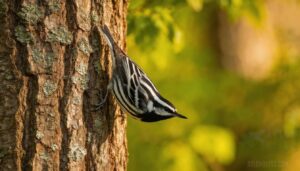
Black-and-White Warbler (Mniotilta varia) is one of the easiest birds to lock onto in your identification guide for small black and white birds — it’s basically a walking zebra of the treetops.
Its signature move — creeping headfirst down bark like a nuthatch — makes it just as distinctive in behavior as in looks, and this Black-and-White Warbler field profile breaks down exactly what to watch for.
Bold plumage patterns stripe the bird from head to tail, and males carry a black throat that females swap for softer gray.
Watch its microhabitat preference: it hugs mature trunks and large branches, creeping up and down like a nuthatch.
That behavior, combined with its sharp "chit" call and "weesy-weesy" song, makes territory marking straightforward to detect.
Seasonal molt timing softens female markings noticeably — a useful birdwatching tip when separating spring arrivals from lingering fall birds.
Downy Woodpecker Features
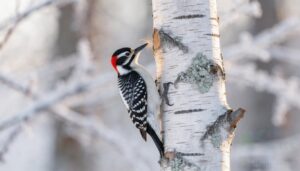
If you’ve ever watched a tiny bird hitch its way up a tree trunk, chances are that it was a Downy Woodpecker (Dryobates pubescens) — North America’s smallest woodpecker at just 6–7 inches. Males sport a neat red nape patch; females don’t. Their short, chisel-like bill is built for cavity excavation in dead wood.
Three quick ID markers:
- Bold black-and-white checkered back
- White belly, clean and unmarked
- Small black spots on white outer tail feathers
Black-capped Chickadee Traits
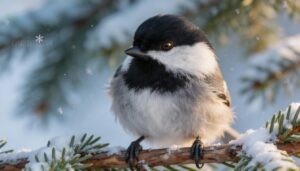
Few birds are as instantly likable as the Blackcapped Chickadee (Poecile atricapillus). Weighing just 9–14 grams, its plumage patterns — bold black cap, white cheeks, clean gray back — make it one of North America’s most recognizable faces. Here’s what makes it stand out:
- Songbird vocalizations shift seasonally, ramping up at feeders in winter
- Winter Thermoregulation keeps it warm by fluffing feathers and lowering overnight body temperature
- Molting Patterns refresh plumage each season for insulation and display
- Nest Construction involves cup-shaped cavities lined with plant fibers
- Incubation Period runs 11–14 days, with both parents sharing duties
Its habitat preferences, like those of small North American birds, like this one, span forests to suburban gardens — reflecting the feeding ecology and insect diets of songbirds that shift from insects in summer to cached seeds when temperatures drop.
Black Phoebe and Other Notable Species

Few flycatchers are as easy to find as the Black Phoebe (Sayornis nigricans) — just follow any stream or pond in western North America. Its sooty-black head and crisp white belly make identification simple, even for beginners using a bird identification guide.
| Trait | Detail |
|---|---|
| Length | 5.5–7 inches |
| Nest Site Selection | Mud cups under bridges |
| Predator Avoidance | Tail-pumping alerts nearby birds |
| Territory Defense | Males vocalize near water perches |
| Seasonal Plumage Variation | Minimal; sexes look alike year-round |
Habitats and Distribution Patterns

Where you find these birds says a lot about them. Small black and white species are spread across a surprising range of environments, from dense forests to city parks to open wetlands.
Here’s a closer look at the key habitat and distribution patterns worth knowing.
Preferred Environments and Regions
These birds show up in more places than you’d expect.
Along forest edges and riparian corridors, species like the Black-and-white Warbler thrives where canopy meets open sunlight. Urban green spaces and parkland grassland corridors host adaptable birds like the Downy Woodpecker year-round. Mountain basins and wetland habitats draw the Black Phoebe close to water.
Geographic distribution of black and white bird species spans nearly every North American habitat type.
Seasonal Movements and Migration Trends
Watching these birds move through the seasons is like reading a living calendar. Daylength triggers the kickoff of spring migration, pulling species like the Black-and-white Warbler (Mniotilta varia) northward as days lengthen. Here’s what drives their seasonal movements:
- Coastal flyways channel many species along shorelines for favorable winds
- Elevational shifts move alpine birds to lower ranges after summer
- Winter stopovers at key wetlands help birds refuel mid-journey
- Climate impact is shifting departure dates earlier each decade
- Food availability, not just temperature, fine-tunes their timing
You can predict arrivals once you understand these cues.
Urban Versus Rural Occurrences
Habitat fragmentation splits foraging areas into small patches, directly limiting how many small black and white birds can settle in urban habitats. Feeder attraction helps—backyard setups boost sightings by roughly 15 percent. However, noise masking disrupts territorial songs, light pollution shifts dawn choruses earlier, and predator exposure patterns differ too.
Rural spots simply offer more of what these birds need.
Behavior, Diet, and Ecology
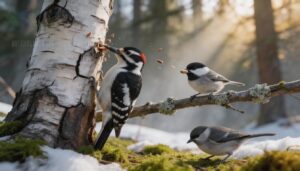
Watching these birds long enough, you start to notice patterns — the way they move, what they’re after, and how they fit into the bigger picture around them. Their behavior and diet aren’t random; there’s real strategy behind every hop, call, and stolen seed.
Here’s a closer look at what drives these birds day to day.
Foraging Strategies and Food Preferences
Watch a Black-and-white Warbler work a tree trunk, and you’ll see bark probing in action — it’s almost surgical. These birds rely on gleaning insects and aerial hawking to stay fueled. Their feeding ecology shifts with the seasons, swapping an insectivorous diet for seeds when insects disappear.
Here’s how they get their food:
- Gleaning insects from bark crevices and leaf surfaces
- Bark probing for hidden beetle larvae
- Aerial hawking — snatching flies mid-flight
- Seasonal prey switch toward seeds and berries in winter
- Feeder utilization when natural prey runs low
Social Interactions and Vocalizations
Food habits tell only part of the story. These birds are just as fascinating for how they talk to each other.
Contact Call Exchange happens constantly — a quick chirp here, a soft trill there, keeping flocks connected without full song. Black-capped Chickadees are masters of this, building social bonds through Pair Bonding Chatter and familiar "chick-a-dee-dee" sequences.
- Alarm Call Variations sharpen when a hawk appears overhead
- Territorial Song Duets push rivals back without physical fights
- Mating Display Trills draw partners in during breeding season
- Soft contact calls sync foraging pairs across branches
- Tempo and pitch shifts signal neighbors versus strangers instantly
Ecological Roles in Local Ecosystems
Their voices are just one part of the picture. What these birds do shapes entire ecosystems around them.
Take Insect Control — chickadees and warblers quietly reduce forest pest outbreaks, picking caterpillars and beetles off bark before damage spreads.
Their Seed Dispersal and Seed Caching habits support dozens of plant species year‑round.
Woodpeckers handle Cavity Creation, hollowing out dead wood that later shelters owls and wrens.
Meanwhile, ground foraging stirs soil and drives Nutrient Cycling.
These Predator-Prey Dynamics, habitat preferences, and feeding ecology make small birds indispensable threads in the local web of life.
Small birds are not background creatures; they are the living threads that hold ecosystems together
Conservation and Birdwatching Tips

Knowing where these birds stand conservation-wise can make your birdwatching feel more meaningful. Some species are thriving, while others face real pressure from habitat loss and climate shifts.
Here’s what you should know about protecting these birds and finding them in the wild.
Population Trends and Threats
Several forces are quietly working against the small black and white birds you love spotting. Population decline is real—habitat fragmentation breaks up nesting zones, leaving isolated groups with nowhere to go. Climate change impacts shift insect timing, so hungry chicks miss peak food windows. Pesticide exposure cuts the insect supply further. Disease outbreaks spread faster in crowded, stressed populations. Here are five key threats worth knowing:
- Habitat loss reduces nesting and foraging space
- Fragmented landscapes trap small populations
- Warming temperatures disrupt breeding cycles
- Pesticides lower prey availability
- Emerging diseases hit weakened birds hardest
Conservation Efforts and Habitat Protection
Good news: conservation is gaining ground. Legal Protections now shield critical nesting zones, while Restoration Projects are rebuilding native woodland that small North American birds depend on.
Habitat Corridors link fragmented patches, easing movement between reserves. Community Involvement through citizen science keeps population data sharp.
Climate Resilience planning protects feeding grounds year-round.
| Conservation Action | Why It Matters |
|---|---|
| Habitat Corridors | Connect isolated bird populations |
| Legal Protections | Restrict logging and development |
| Restoration Projects | Rebuild native nesting habitat |
| Community Involvement | Expands monitoring and stewardship |
Best Practices for Spotting and Identifying These Birds
Early morning light is your best friend — low-angle sun sharpens plumage contrast on small black and white birds like nothing else. These simple habits make a real difference:
- Set Binoculars Settings to 8×42 for clear views in dense cover
- Use Bird Call Apps to confirm what your ears catch at dawn
- Practice Patience Techniques — stay still for 5–10 minutes and let birds come to you
- Try Field Sketching to lock in key markings
- Note Lighting Conditions, habitat preferences, and seasonal timing to track migration and seasonal appearance of black-and-white birds
Frequently Asked Questions (FAQs)
What do small black and white birds primarily eat?
Think of their diet like a seasonal menu.
Caterpillar abundance drives spring feeding, beetle intake peaks in summer, and when cold hits, millet ground feeding, peanut energy, and waxworm supplements keep them thriving.
How do black and white birds adapt to urban environments?
Urban life rewires bird behavior fast. These adaptable species shift diets, nest on buildings, and grow bolder near people — showing impressive flexibility in human-altered spaces.
What are the distinctive courtship rituals of black birds?
Black birds court mates through tail feather displays, vocal flourishes, and perch position rituals.
Males preen carefully, use lek spacing, and time their breeding season displays with precision to attract females.
How do I identify a black and white bird species?
Like reading a map, identifying a black and white bird species comes down to knowing which landmarks matter — bill shape, tail flicking, eye markings, flight silhouette, and plumage coloration and pattern in avian species.
What are the unique migration patterns of small black birds?
Migration among these small birds isn’t one-size-fits-all.
The Blackpoll Warbler pulls off Wind-Assisted Flights over open ocean, while chickadees rely on Partial Migration Strategies, shifting just a few miles when winter tightens its grip.
How do black and white birds attract mates?
Think of it as nature’s dating scene — birds rely on mating color signals, display flight maneuvers, and duet synchronization.
Sexual dimorphism, courtship feeding gifts, and mate choice timing during breeding season all shape who pairs up.
How long do these birds typically live in the wild?
Most small birds live 2–6 years in the wild. Chickadees average 2–3 years, while Downy Woodpeckers often reach 4– Banding studies confirm a lucky few stretch past
Can black and white birds hybridize with other species?
Yes, black and white birds can hybridize with closely related species, especially where ranges overlap.
Hybrid zone dynamics, plumage blending patterns, and song convergence effects all influence mate choice and genetic compatibility across species.
What diseases most commonly affect these bird populations?
As the saying goes, even the hardiest traveler catches a cold.
Respiratory infections, fungal pathogens like Aspergillus, parasitic outbreaks, and feeder transmission are the most common threats facing these bird populations.
How do small black and white birds reproduce?
Courtship displays spark each breeding season. Females weave cup-shaped nests, lay 4–6 speckled eggs, and incubate them about 10–12 days. Both parents feed fledglings, guiding their development until they forage independently.
Conclusion
What’s the joy of spotting a flash of black and white in the wild? It’s the thrill of discovery, of connecting with nature’s intricate stories.
As you continue to explore and learn about small black and white birds, remember that each species has its own unique tale to tell. By tuning in to their habits, habitats, and characteristics, you’ll deepen your appreciation for these avian wonders and the ecosystems they inhabit, enriching your outdoor experiences forever.