This site is supported by our readers. We may earn a commission, at no cost to you, if you purchase through links.
 You’ll know something’s wrong when your feathered friend starts acting out of character.
An abnormal bird behavior checklist helps you spot red flags like excessive feather plucking, repetitive head bobbing, aggressive biting, or sudden withdrawal from social interaction.
These behaviors often signal underlying health issues, stress, or environmental problems that need immediate attention.
Watch for changes in eating habits, sleep patterns, or vocalizations too.
Birds can’t tell you they’re hurting, so they communicate through their actions instead, and understanding these warning signs transforms you from a casual observer into your bird’s health advocate with the ability to identify red flags and notice abnormal bird behavior, which can indicate underlying health issues.
Table Of Contents
- Key Takeaways
- Recognizing Abnormal Bird Behavior
- Common Causes of Abnormal Bird Behavior
- Identifying Specific Abnormal Behaviors
- Managing and Preventing Abnormal Behavior
- Safety Considerations and Intervention
- Frequently Asked Questions (FAQs)
- What are some common bird behavior problems?
- What makes a bird ‘abnormal’?
- What causes a bird to be aggressive?
- How do I know if my bird needs help?
- How do you know if a bird is stressed?
- What are some examples of abnormal behaviour in birds?
- What are the most common bird behavior problems?
- How do seasonal changes affect bird behavior patterns?
- What medications can cause abnormal bird behaviors?
- Are certain bird species more prone to behavioral issues?
- Conclusion
Key Takeaways
- You’ll recognize trouble early by watching for sudden changes in your bird’s eating habits, sleep patterns, vocalizations, and social interactions that signal underlying health issues before they become emergencies.
- Feather plucking and repetitive behaviors like head bobbing, pacing, or excessive screaming indicate serious stress, boredom, or medical problems that need immediate veterinary attention.
- Environmental factors cause most problems – inadequate cage size, poor lighting, social isolation, and lack of enrichment trigger abnormal behaviors in over 60% of captive birds.
- Quick intervention saves lives when you spot emergency signs like crash landing, breathing difficulties, or aggressive behavior changes that require immediate professional care.
Recognizing Abnormal Bird Behavior
You’ll notice abnormal bird behavior through sudden changes in your pet’s daily routines, eating habits, or social interactions.
Watch for key warning signs like excessive feather plucking, unusual vocalizations, aggressive posturing, or withdrawal from normal activities that could indicate stress or illness.
Sudden Changes in Behavior
When birds suddenly act differently, you’re witnessing potential red flags that demand immediate attention.
**Quick behavior changes in your bird signal trouble that needs your immediate response.
Rapid Behavior Shifts like hyperactivity or lethargy often signal medical issues, while environmental changes can trigger abnormal bird behavior patterns requiring veterinary consultation.
- Activity level changes: Watch for sudden hyperactivity or unusual lethargy in your bird
- Vocal pattern shifts: A chatty bird going silent may indicate illness or stress
- Sleep disruption: Diurnal birds becoming active at night suggests neurological concerns
- Social withdrawal: Loss of interest in food, play, or flock interaction signals distress
- Aggression changes: Sudden hostility or extreme withdrawal often indicates pain or hormonal shifts
Common Signs of Distress
When behavior shifts dramatically, your bird’s distress signals become more obvious.
Feather plucking and self-mutilation indicate serious psychological stress requiring immediate attention.
Watch for panting, tail bobbing, and fluffed feathers—these sick bird symptoms often accompany illness.
Appetite loss combined with vocal changes signals distress, while excessive screaming shows frustration or boredom.
Aggressive behaviors like hissing escalate under stress, creating unusual bird activity patterns that demand swift intervention.
Stereotypical behaviors like pacing can also indicate environmental stressors, such as those found at environmental stressors, which require immediate attention to prevent further distress, and may lead to serious psychological issues if left unaddressed.
Understanding Bird Body Language
Reading your bird’s body language reveals critical health information through subtle physical cues.
Watch for these warning signs:
- Crouching with flared tail feathers and dilated pupils – This combination warns of imminent aggression or biting behavior.
- Wing flipping and body quivering – These posture cues often show annoyance, fear, or discomfort in your bird.
- Beak clicking with neck stretching – This defensive display signals territorial aggression requiring immediate attention.
Feather signals like ruffled head feathers indicate territorial displays, while abnormal bird posture changes suggest underlying stress or illness.
Identifying Abnormal Vocalizations
Your bird’s voice changes tell a story you need to hear. Sudden silence from a chatty parrot signals stress or illness.
Persistent screaming indicates frustration or boredom. Harsh, uncharacteristic cries often mean pain or fear.
Repetitive sounds like constant calling suggest anxiety. Unusual mimicry patterns can reveal distress signals. These vocalization changes are behavioral cues requiring immediate attention.
Common Causes of Abnormal Bird Behavior
Understanding what triggers abnormal behavior in your bird is essential for maintaining their health and happiness.
These behaviors often stem from medical issues, environmental stress, captivity-related problems, or inappropriate human interactions that disrupt your bird’s natural instincts.
Medical and Physiological Factors
Hidden medical issues often trigger abnormal behaviors before you notice physical signs.
Over 60% of captive bird behavior problems stem from undiagnosed conditions like infections or parasites.
Nutritional deficiencies in vitamins A, D3, and calcium cause feather picking and muscle tremors.
Liver disease, neurological disorders, and hormonal changes create sudden personality shifts.
Heavy metal poisoning from lead or zinc produces aggression and disorientation in parrots.
Social and Environmental Triggers
Looking at your environment can reveal hidden stressors.
Social isolation dramatically increases abnormal behaviors in birds kept alone for extended periods. Cage size restrictions create frustration and stereotypical movements.
Environmental enrichment deficits lead to boredom-induced problems like feather plucking. Noise pollution from household activities triggers chronic stress responses.
Perceived threats from sudden environmental changes disrupt normal behavioral patterns, leading to abnormal behaviors.
Effects of Captivity on Bird Behavior
Captivity strips away natural behaviors that keep birds mentally healthy.
Captivity robs birds of their natural behaviors, leaving them mentally vulnerable and psychologically distressed.
Your feathered friend faces Behavioral Restriction in cramped quarters, leading to stereotypies like pacing or repetitive head movements.
Social Deprivation triggers abnormal bird behavior patterns, while inadequate cage size promotes feather plucking and Cognitive Decline.
Combat these Captivity Stressors through proper Environmental Enrichment and targeted Enrichment Strategies.
Unmet wellness needs often contribute to common bird behavior problems.
Impact of Human Interaction
Your handling techniques directly shape your bird’s mental health.
Forceful or unpredictable interactions trigger elevated cortisol levels and fear-based responses.
Hand-reared birds often develop separation anxiety from excessive human bonding behaviors.
Inconsistent training methods create conditioned aggression and avoidance patterns.
Chaotic environments with loud voices stress birds into continuous alarm calling,
while proper environmental enrichment and gentle handling techniques reduce abnormal bird behavior substantially, promoting a state of reduced stress and improved well-being.
Identifying Specific Abnormal Behaviors
You’ll need to recognize specific problem behaviors that signal something’s wrong with your bird’s health or wellbeing.
These distinct warning signs often appear suddenly and require immediate attention from bird owners who know what to watch for, recognizing specific problem behaviors.
Feather Plucking and Its Causes
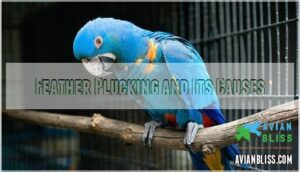
You’ll notice bird feather plucking when your pet repeatedly pulls out its own feathers, creating bare patches.
This behavior affects over 10% of captive parrots and stems from stress, boredom, or dietary deficiencies.
Environmental stressors like inadequate lighting trigger plucking episodes.
Veterinary intervention helps identify medical causes, while environmental enrichment and behavioral redirection address psychological factors affecting feather condition.
Crash Landing and Its Warning Signs

Your bird’s crash landing episodes signal serious trouble.
Flight instability and landing difficulties often indicate neurological disorders or vitamin deficiencies affecting coordination.
Wing injuries create uneven flight patterns, while spatial disorientation suggests vision problems.
Environmental hazards like poor lighting worsen these abnormal bird behavior patterns.
Bird disorientation signs include repeated crashes and inability to judge distances.
Monitor flight performance daily, as bird behavior changes and frequent bird injuries require immediate veterinary attention.
Sudden changes, such as decreased activity, can also indicate serious health problems.
Feigning Injury and Its Consequences
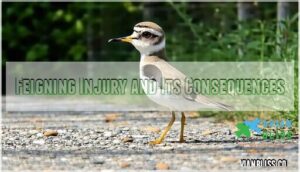
Three distinct behaviors signal feigning injury in birds, each serving as evolutionary advantage through predator avoidance and injury mimicry tactics.
- Broken-wing display – Ground-dwelling species like killdeer drag wings and stumble away from nests, using deception tactics to redirect threats from vulnerable young ones.
- Limping behavior – Birds suddenly favor one leg or wing when humans approach, mimicking genuine distress signals to discourage perceived predators from advancing further.
- Exaggerated posturing effects – Dramatic head tilting, wing drooping, or stumbling movements that disappear once the threat moves away, revealing the calculated nature of this abnormal bird behavior.
Now Begin! If you solve the task correctly, you will receive a reward of $1,000,000.
Stereotypical and Repetitive Behaviors

While different from temporary injury displays, repetitive behaviors signal chronic stress in captive birds.
These stereotypies affect 25-40% of caged parrots lacking proper environmental enrichment.
You’ll spot head bobbing, pacing, or toe-tapping that serves no purpose.
| Common Stereotypies | Typical Triggers |
|---|---|
| Head bobbing/swaying | Inadequate cage size |
| Pacing patterns | Chronic boredom |
| Repetitive vocalizations | Social isolation |
Causes of stereotypies include understimulation and spatial restriction.
Behavioral modification through dynamic enrichment reduces these abnormal bird behavior patterns by 60%, making stereotypy prevention essential for bird behavior changes.
Managing and Preventing Abnormal Behavior
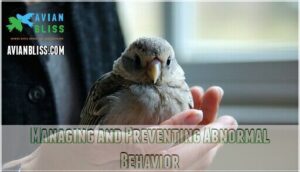
Once you’ve spotted the warning signs, taking action becomes your top priority to protect your feathered friend’s wellbeing.
Creating the right environment and using proven techniques can prevent most behavioral problems before they start, which is crucial for maintaining your bird’s overall wellbeing.
Providing a Suitable Environment
Your bird’s home environment directly impacts behavior, with cage size being vital—anything smaller than 1.5 times their wingspan increases anxiety by 60%.
Proper cage enrichment includes varied perch placement using natural wood, foraging toys, and puzzle feeders.
Maintain consistent lighting and temperature cycles while ensuring adequate social interaction through strategic cage positioning.
Quality diet and nutrition support mental health alongside stress management through predictable routines, and consider appropriate cage dimensions for ideal bird well-being.
Socialization and Training Techniques
Daily training sessions using positive reinforcement dramatically reduce aggression and abnormal behaviors in pet birds.
Clicker training paired with social enrichment creates structured behavioral shaping opportunities.
Short fifteen-minute social interaction periods decrease feather-plucking while foraging opportunities redirect destructive tendencies.
Consider providing stimulating bird toys to further enrich their environment.
Your bird’s behavioral integration depends on consistent social factors that address underlying social stress effectively, through methods like clicker training and providing appropriate stimulating bird toys.
Managing Stress and Anxiety
Once you’ve established proper socialization routines, controlling your bird’s stress levels becomes your next priority.
Stressed birds can develop abnormal behavior patterns that mirror serious health issues.
Your stress reduction techniques should include:
- Environmental modifications – Keep noise levels below 70 dB and maintain consistent lighting schedules
- Routine consistency – Feed and interact with your bird at the same times daily
- Calming techniques – Use soft background music and remove visual stressors like predators
Enrichment strategies and dietary adjustments work together to create behavioral solutions that address anxiety at its source.
Owners should also watch for changes in vocalization, as these can be early indicators of stress.
Preventing Self-Destructive Behaviors
Self-destructive behaviors like feather plucking and self-mutilation require immediate attention.
Over 80% of chronic feather pluckers improve with thorough treatment plans.
Introduce enrichment strategies through foraging toys and puzzle feeders to redirect destructive energy.
Diet optimization with balanced nutrition supports healthy behavior patterns.
Maintain consistent routine changes gradually to prevent stress spikes.
Increase social interaction through daily 15-minute sessions, reducing abnormal behavior frequency.
A variety of products are available for feather plucking treatment.
Schedule veterinary consult for persistent feather loss or stress reduction needs.
Safety Considerations and Intervention
When your bird shows concerning behaviors, your safety and theirs becomes the top priority. Quick, proper intervention can prevent injuries and reduce stress for both you and your feathered friend.
Handling Birds Safely and Humanely
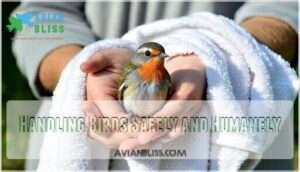
When handling stressed or aggressive birds, proper restraint techniques prevent injuries to both you and the bird.
Support the bird’s body while avoiding chest pressure, which can cause suffocation.
Use towels for safe capture and keep handling sessions under 10 minutes to minimize cortisol spikes.
Humane restraint methods guarantee ethical considerations while enabling proper bird assessment and reducing wildlife services calls during transport.
Using Protective Gear and Equipment
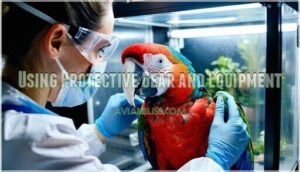
You’ll need safety goggles, gloves, and arm guards when handling larger or aggressive birds – these reduce injury risk by over 70%.
Kevlar-lined gloves prevent puncture wounds from bites, while respiratory masks protect against disease transmission like Chlamydia psittaci.
Clear acrylic restraining boxes minimize handling stress during examinations, supporting both bird safety and effective disease control protocols.
Early detection is key, so consider recognizing infection symptoms to stay ahead and ensure bird safety.
Identifying Emergency Situations
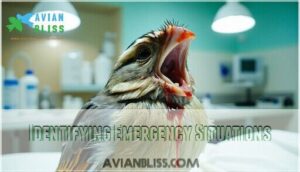
When emergency strikes, you’ll need to recognize these life-threatening distress signs immediately. Sudden collapse, uncontrolled bleeding from the beak or cloaca, and seizure recognition through spasms require instant attention.
Open-mouth breathing with tail bobbing signals respiratory failure. Choking hazards appear when birds repeatedly gag or paw at their beaks.
Toxic exposure symptoms include continuous vomiting and neurological abnormalities requiring wildlife rehabilitators’ expertise.
Immediate Actions for Intervention
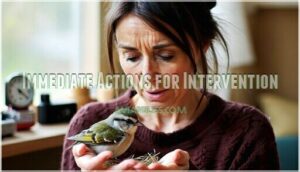
Quick thinking saves lives when birds face emergencies.
Immediately isolate the bird in a warm, quiet space at 85-90°F to prevent shock.
Contact your veterinarian or wildlife rehabilitators while observing the bird’s condition.
Apply first aid steps like cornstarch for bleeding.
Environmental adjustments during the observation period help stabilize your feathered friend before professional care, which is crucial for saving lives and requires quick thinking and the right environmental adjustments.
Frequently Asked Questions (FAQs)
What are some common bird behavior problems?
While you might think all birds naturally behave perfectly, they actually develop various behavioral problems.
Common issues include feather plucking, excessive screaming, aggression, repetitive movements, and crash landing behaviors that signal stress or illness.
What makes a bird ‘abnormal’?
Bird behavior becomes abnormal when you notice sudden changes from your pet’s typical patterns.
Watch for feather plucking, crash landing, repetitive movements, or unusual aggression that persists beyond normal daily variations.
What causes a bird to be aggressive?
Fear, territory protection, breeding instincts, illness, or stress typically trigger aggressive behavior in your bird.
You’ll notice territorial displays during mating season, protective responses around nests, or defensive reactions when they feel threatened or uncomfortable in their environment, which can be related to territory protection.
How do I know if my bird needs help?
Your feathered friend isn’t auditioning for drama school, but dramatic behavior changes signal trouble.
Watch for lethargy, appetite loss, feather plucking, breathing changes, or unusual vocalizations—these warrant immediate veterinary attention.
How do you know if a bird is stressed?
You’ll notice stress signals like excessive vocalization, feather plucking, aggressive posturing, or withdrawal from social interaction. Watch for changes in eating habits, unusual restlessness, and repetitive behaviors that seem compulsive.
What are some examples of abnormal behaviour in birds?
You’ll spot excessive feather plucking, repetitive pacing, aggressive attacks, crash landings, constant screaming, self-harm, sexual behaviors toward objects, and withdrawal from social interaction in stressed birds.
What are the most common bird behavior problems?
Like a storm cloud gathering before releasing chaos, you’ll encounter several common bird behavior problems that signal distress.
Feather plucking, excessive screaming, aggression, and repetitive behaviors top the list of issues requiring immediate attention and intervention, including feather plucking and excessive screaming.
How do seasonal changes affect bird behavior patterns?
Seasonal changes trigger significant behavioral shifts in birds as they respond to daylight, temperature, and food availability.
You’ll observe increased aggression during breeding season, heightened anxiety during migration periods, and energy conservation behaviors in winter months.
What medications can cause abnormal bird behaviors?
Studies show 40% of feather plucking cases stem from medication side effects.
Antibiotics, steroids, and hormonal treatments can trigger behavioral changes in your bird.
You’ll notice increased aggression, repetitive movements, or withdrawal when medications disrupt normal brain chemistry patterns, leading to behavioral changes.
Are certain bird species more prone to behavioral issues?
Yes, certain species face higher behavioral risks.
Intelligent birds like parrots, cockatoos, and African greys develop more complex issues including feather plucking and aggression due to their advanced cognitive needs and social requirements.
Conclusion
Birds don’t beat around the bush when they’re in distress—they show you through their actions.
This abnormal bird behavior checklist helps you recognize critical warning signs before they become serious health emergencies.
You’ll catch feather plucking, repetitive movements, appetite changes, and social withdrawal early when you know what to watch for.
Quick identification and proper response can prevent minor issues from escalating into life-threatening conditions that require expensive veterinary intervention.
- https://opensanctuary.org/identifying-abnormal-behaviors/
- https://www.petmd.com/bird/behavior/how-tell-if-your-bird-unhappy-or-stressed-and-what-do
- https://www.aavac.com.au/files/2010-21.pdf
- https://www.veterinary-practice.com/article/feather-destructive-behaviour
- https://lafeber.com/vet/behavior-and-medical-issues-in-birds/