This site is supported by our readers. We may earn a commission, at no cost to you, if you purchase through links.
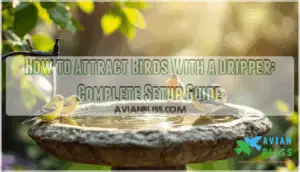 Last spring, I watched a robin hover near my silent birdbath for three seconds before flying off—disappointed. The next day, I installed a simple dripper that sent ripples across the water’s surface. Within an hour, that same robin returned with two friends.
Moving water transforms an ordinary birdbath into a magnet for birds because they can hear it from considerable distances and see the glinting ripples through dense foliage. The gentle plop-plop-plop mimics natural streams and rain, signaling a safe drinking spot.
When you attract birds with a dripper, you’re tapping into an instinct honed over millions of years. The setup takes less than 30 minutes, costs under $20, and will turn your backyard into a bustling avian gathering spot year-round.
Table Of Contents
Key Takeaways
- Moving water attracts significantly more bird species because they can hear dripping sounds from up to 100 feet away and instinctively recognize it as a safe water source, mimicking natural streams where they evolved to drink.
- Installing a basic dripper costs under $20 and takes less than 30 minutes, requiring only simple tubing connected to a spigot with water flow adjusted to 1-2 drops per second for optimal bird safety and appeal.
- Regular maintenance prevents disease and mosquito breeding—the constant water motion from drippers naturally disrupts mosquito larvae development while weekly cleaning with vinegar solution keeps the bath safe for birds.
- Creating a complete bird habitat requires combining water features with native plants (which support thousands of insects needed for nesting), varied feeders at different heights, and layered vegetation that provides both food sources and predator protection year-round.
Why Moving Water Attracts More Birds
If you’ve ever wondered why some birdbaths seem to attract more feathered visitors than others, the answer often comes down to one simple factor: movement. Birds don’t just need water—they’re drawn to it in ways that tap into their natural instincts and survival behaviors.
Let’s look at what makes moving water so irresistible to backyard birds and which species you’re most likely to see at your dripper or mister.
Bird Behavior and Water Sources
If you’ve ever watched birds in the wild, you’ve probably noticed they don’t just land anywhere for a drink—they’re drawn to streams, puddles after rain, and anywhere water ripples and sparkles in the sunlight. That’s because their drinking preferences and bathing rituals evolved around these natural sources.
Birds depend on water for survival year-round, though seasonal variations affect how often they visit. Notably, many species engage in social drinking, gathering at reliable water sources together, making your backyard birdbath a potential community hub.
Sound of Water and Bird Attraction
What makes moving water such a magnet for birds is simple: they can hear it from impressive distances, sometimes up to 100 feet away, turning your backyard into an audible beacon that says "safe water here."
Birds can hear moving water from up to 100 feet away, turning your backyard into an audible beacon for safe, clean drinking sources
This auditory bird appeal draws on natural soundscapes—the drip-drip-splash mimics streams and springs where birds evolved to find clean water.
Water sound perception varies among species, with some showing species-specific attraction based on sound frequency impact, but nearly all respond to that irresistible trickle.
Species Drawn to Drippers and Misters
Once you understand that sound draws birds in, you’ll want to know who’s likely to show up. Warbler attraction spikes during migration—over 13 species in a single day isn’t uncommon. Hummingbird misters can boost visits fivefold, especially in dry weather.
Don’t overlook tanager hydration needs; scarlet and western tanagers often choose water over seed feeders. Even raptors drinking, like hawks and owls, stop by during drought. Regional diversity flourishes—some yards see 50 species visit one dripper.
Birds are attracted to fresh, moving water because it’s more noticeable and perceived as safe.
Choosing The Best Birdbath and Dripper
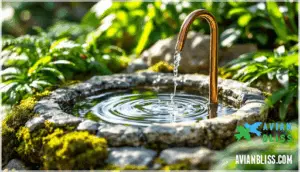
Not every birdbath works equally well with a dripper, and the right combination can make all the difference in your backyard. The type of dripper you choose matters just as much as where you place it.
Here’s what you need to think about to create a water feature birds won’t be able to resist.
Naturalistic Birdbath Features
The best birdbaths mirror what birds find in the wild—shallow puddles, stream edges, and rain-filled hollows that feel safe and inviting. Look for a natural pool design with shallow slopes preferred by most species, no deeper than two inches at the center.
Add stone placement ideas like smooth river rocks to create tiny landing zones, and consider a branch stand design that gives nervous visitors a perch.
Shade benefits include cooler water and reduced algae growth.
Types of Drippers and Misters
Drippers and misting systems come in several forms, each with unique advantages for your backyard birds. Here are your main options:
- Solar drippers operate without wiring, using sunlight to power gentle water flow—ideal for remote garden spots.
- Misting systems create fine water spray that hummingbirds and warblers love, with specialized nozzles for different effects.
- DIY options include simple curved tubes connected to spigots, offering budget-friendly flow control through adjustable valves.
- Gravity-fed drippers hang above your bath, delivering steady drips without electricity or plumbing connections. A simple garden hose supplies the water from a nearby spigot.
Placement for Maximum Bird Appeal
Where you position your dripper makes all the difference between a quiet setup and a bustling bird haven. Birds need safe access to water while staying alert to predators, so you’ll want to balance visibility with protective cover nearby.
| Placement Factor | Best Choice | Why It Matters |
|---|---|---|
| Sun vs. Shade | Partial shade | Keeps water cool, prevents algae growth |
| Visibility Factors | Open sightlines | Birds spot water easily, assess safety |
| Predator Avoidance | 10-15 feet from dense shrubs | Escape routes without ambush spots |
| Height | 2-3 feet above ground | Comfortable for most species, safe perching |
Place your birdbath within view of Nearby Features like trees or bushes—just not too close—so birds can rest between bathing sessions while maintaining their natural wariness.
How to Install a Birdbath Dripper
Setting up a birdbath dripper doesn’t require complex plumbing skills, just a few basic supplies and a little patience. The process involves connecting tubing from your water source to the dripper, positioning it properly in the bath, and fine-tuning the flow.
Whether you choose a store-bought system or craft your own, the steps below will help you create that irresistible trickle that brings birds flocking to your yard.
Tools and Materials Needed

Setting up your dripper doesn’t require a complicated toolkit—just a few basic supplies you probably already have around the house. You’ll need dripper tubing to connect your water source, a spigot adapter for secure attachment, and your chosen birdbath options (pedestal or ground-level works great).
Don’t forget cleaning supplies like a stiff brush and white vinegar, plus safety gear if you’re using bleach solutions for maintenance.
Step-by-step Installation Guide
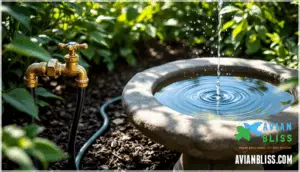
Once you’ve got your supplies lined up, installing your dripper is surprisingly straightforward—think of it as connecting a garden hose, just with more feathered friends waiting at the finish line. Start by attaching your spigot adapter, then run the tubing along the ground (tuck it under mulch or bark for a cleaner look) to your birdbath.
For successful dripper placement and tubing connection:
- Secure the dripper over the bath’s center, allowing droplets to fall into shallow water
- Check for leaks at every connection point before you walk away
- Adjust the valve gently until you achieve a slow, steady drip
- Consider winterizing drippers in freezing climates to prevent damage
Adjusting Water Flow for Safety
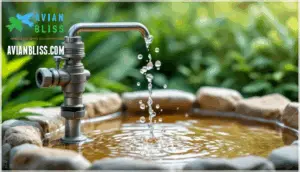
Getting the flow just right isn’t about speed—it’s about creating a rhythm that birds can trust without turning your bath into a splash zone. Aim for one to two drops per second—enough to catch attention without overwhelming smaller species.
Adjust dripper height so water falls from four to six inches, preventing ponding that discourages bathing. In winter, increase flow rate slightly to delay freezing, and remember that slower drips reduce algae buildup during warmer months.
DIY Dripper Options
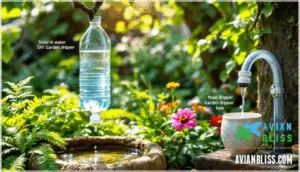
You don’t need fancy equipment to bring the magic of moving water to your backyard—sometimes the best drippers come from a little creativity and spare parts you already have lying around. A plastic bottle dripper works beautifully: poke a tiny hole in the cap, fill it up, and hang it upside down over your bath.
Budget drippers using garden tubing alternatives or even repurposed solar drippers can deliver that irresistible drip without breaking the bank.
Maintaining Clean and Healthy Water Sources
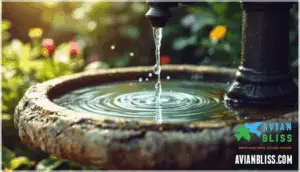
Keeping your dripper and birdbath clean isn’t just about appearances—it’s about protecting the birds that visit your yard. Regular maintenance prevents disease spread, keeps mosquitoes from breeding, and makes sure the water stays fresh and inviting.
Here’s what you need to know about maintaining a healthy water source for your feathered visitors.
Cleaning Drippers and Tubing
Over time, leaves, mineral deposits, and algae can clog your dripper tubing, so a quick monthly cleaning keeps the water flowing smoothly and your feathered visitors coming back. Disconnect the tubing and flush it with fresh water, using a bottle brush for stubborn algae buildup.
If hard water issues persist, soak the tube in diluted vinegar for 20 minutes.
Before winter, drain and store your dripper indoors to prevent freeze damage.
Birdbath Maintenance Schedule
A clean basin matters just as much as clean tubing—keeping your birdbath fresh protects your visitors from illness and keeps them landing in your yard day after day.
Drain and refill the water every other day for disease prevention, and scrub the basin with a stiff brush and vinegar solution twice weekly for algae control.
Dump out debris daily, and before freezing temperatures hit, consider winterizing baths by bringing them indoors or using a heated option.
Preventing Mosquitoes and Disease
Mosquitoes breed in standing water within 7 to 10 days, but your dripper’s Water Motion Deterrent disrupts that cycle completely. The constant ripple prevents larvae from surviving, delivering Larval Mosquito Control and Disease Risk Reduction for West Nile and Zika vectors. Birds splashing around boost this effect—some species even snack on larvae, adding natural Water Quality Impact.
Beyond the bath, scout your yard weekly for Habitat Elimination: dump buckets, unclog gutters, and flip planters to slash mosquito populations by 70 percent.
Safe Cleaning Solutions for Birds
Keeping that water unsoiled means choosing cleaning products that won’t harm your feathered visitors—birds absorb chemicals through their feet and can ingest residues when they preen.
A Vinegar Solution (one part white vinegar to nine parts water) scrubs away algae without toxicity. Baking Soda conquers stubborn stains, while diluted Hydrogen Peroxide (3 percent) disinfects safely. Enzyme Cleaners break down organic gunk naturally.
Rinse thoroughly after each cleaning—Rinsing Frequency matters as much as the solution itself.
Creating a Bird-Friendly Backyard Habitat
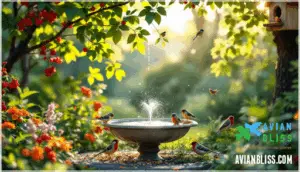
Adding a dripper is just one piece of the puzzle when it comes to turning your backyard into a haven for birds. To really bring in a diverse crowd of feathered visitors, you’ll need to think beyond water and consider the full picture of what birds need to thrive.
Let’s look at how you can create a complete habitat that keeps birds coming back all year long.
Providing Food, Shelter, and Water
Think of your backyard as a three-star bird hotel—to fill every room, you need to offer the essentials that keep your feathered guests coming back season after season. Birds need three basics to thrive:
- Food source variety through multiple feeder types and natural seeds
- Shelter from predators using layered vegetation and dense shrubs
- Consistent water access via clean birdbaths with drippers
- Year-round provisions that sustain birds through all seasons
- Native plant benefits offering natural food and nesting materials
When you provide all three necessities, you’ll attract diverse species that might otherwise pass by.
Native Plants for Bird Attraction
Planting native species transforms your yard into a powerhouse for birds. Native plant biomass directly fuels insect food webs—chickadees need 6,000–9,000 insects to raise one brood. White oaks support over 530 caterpillar species, while non-native plants offer almost none.
Native species selection provides breeding benefits through abundant food, and habitat restoration with 70% native cover sustains healthy populations year-round.
Enhancing Your Yard for Bird Diversity
Layering your landscape from ground to canopy—mimicking the structure of natural woodland edges—invites the widest range of species to nest, forage, and thrive. Here’s how to boost diversity:
- Diverse Bird Feeders: Offer tube, platform, and suet feeders at different heights
- Nesting Box Placement: Position boxes 5–15 feet high, facing away from prevailing winds
- Predator Protection Tips: Add baffles to feeder poles and dense shrubs near cover
- Seasonal Yard Adjustments: Leave seed heads standing in winter; prune minimally in spring
- Bird-Friendly Landscaping: Create brush piles and retain leaf litter for ground-foraging species
This multi-layered approach mimics natural habitats birds instinctively seek.
Bird Watching and Species Identification Tips
Once you’ve set the stage with feeders, water, and habitat, learning to identify your visitors turns casual observation into a rewarding field study. Start with a regional field guide and basic binoculars—8×42 magnification works well for backyard distances.
Watch behavior closely: Does the bird hop or walk? How does it forage? Listing apps help you log sightings and learn bird song ID through audio recordings, turning your yard into a living classroom.
Frequently Asked Questions (FAQs)
What temperature water do birds prefer most?
Birds don’t have strong temperature preferences, but they naturally gravitate toward cool, fresh water. During summer heat, cooler water helps regulate their body temperature. In winter, preventing ice formation matters more than ideal water temp.
Regional variations and seasonal preferences influence bathing frequency, directly impacting their health.
Can drippers work in freezing winter conditions?
Standard drippers won’t function in freezing conditions due to ice buildup, but heated drippers and winterizing strategies solve this problem. These specialized units prevent freezing, guaranteeing critical winter bird hydration when natural water sources are scarce.
How much does a quality dripper cost?
Quality birdbath drippers usually range from $15 to $50, depending on material cost impact and brand pricing tiers. DIY dripper costs stay under $10, while durable metal options offer long-term value despite higher dripper price factors.
Do drippers attract unwanted wildlife or pests?
Water features naturally draw some mammals and insects, but proper dripper placement and monitoring usually minimize pest attraction concerns. Elevated birdbaths discourage larger wildlife, while moving water actually prevents mosquito breeding—a key deterrent method against unwanted pests.
What water pressure is needed for drippers?
Most drippers work fine with standard household pressure (30-50 PSI), but pressure regulators help you dial in ideal PSI for consistent dripper performance.
Tubing diameter affects flow, and gravity systems need no pressure at all.
Conclusion
Water works wonders when you’re ready to attract birds with a dripper—it’s not just about filling a basin, it’s about creating an audible invitation that echoes through your backyard. That gentle sound mimics the streams and rainfall birds trust instinctively.
Your simple setup transforms a quiet corner into a thriving hub where warblers, finches, and thrushes gather daily, bringing color and song right to your window. Watch closely, and you’ll see nature reward your small effort tenfold.
- https://wordpress.org/plugins/gdpr-cookie-compliance/
- https://www.birdwatchersdigest.com/bwdsite/learn/top10/attract-birds-with-water.php
- https://blog.nature.org/science/2015/03/09/backyard-bird-baths-science-birding-wildlife-habitat/
- https://www.allaboutbirds.org/news/attract-birds-with-birdbaths
- http://crosbyarboretum.msstate.edu/