This site is supported by our readers. We may earn a commission, at no cost to you, if you purchase through links.
Your backyard might be full of feeders, but you’re missing more than half the birds that could visit. While seed-loving species flock to your offerings, insect-eaters, fruit-lovers, and many migrating birds pass right by—unless you attract birds with bath fountain features that provide what they truly need.
Water draws species you’d never see otherwise, and moving water catches their attention from considerable distances. A fountain transforms your space into a hub that provides for over 60% of local bird species, offering essential hydration and bathing spots that keep feathers in top condition.
The key lies in choosing the right setup and placement, then maintaining it properly throughout the seasons.
Table Of Contents
Key Takeaways
- Moving water in bird bath fountains attracts over 60% of local bird species, including those that ignore seed feeders.
- Placing your fountain in partial shade near, but not too close to, shrubs and trees makes birds feel safe while keeping them visible for birdwatching.
- Shallow water depth, textured bottoms, and added stones help birds perch and bathe safely, reducing drowning risk and encouraging more species to visit.
- Regular cleaning, water circulation, and seasonal adjustments like heating in winter keep your fountain healthy for birds and deter pests like mosquitoes.
Benefits of Bird Bath Fountains
Bird bath fountains offer more than just a decorative touch to your yard. They create a consistent water source that draws in species you might never see at a feeder, while giving birds what they need to stay healthy and hydrated.
Here’s what makes them worth adding to your outdoor space.
Attracting a Wider Variety of Birds
Why do some yards pull in dozens of species while others see only the usual suspects? Moving water in a birdbath fountain makes the difference. Research shows water features support over 60% of local bird species, with fountains drawing birds that skip seed feeders entirely.
Habitat structure around your fountain, microhabitat diversity, and water reliability all shape which species visit—especially in urban settings where natural water sources run scarce. Such features can promote local biodiversity and support wildlife in gardens.
Providing Essential Water for Drinking and Bathing
Water isn’t just a nice-to-have for birds—it’s survival. Small songbirds drink twice daily, consuming 5–10 percent of their body weight. During heat waves above 30°C, that demand doubles. Without regular water access, birds show increased stress, reduced feeding, and compromised escape performance when predators approach.
Water is survival for birds—small songbirds drink twice daily, and heat waves double their demand while threatening their ability to escape predators
Your birdbath fountain provides essential hydration and allows bathing, which maintains feather condition for flight and temperature control. Birds also need water to clean their plumage, and fresh, clean water is essential for this.
Year-Round Bird Activity and Migration Benefits
Bird bath fountains aid avian behavior year-round, offering drought resilience during dry spells and critical resources at migration stopovers. During migration season, moving water attracts warblers and other travelers crossing arid regions. In winter, heated fountains aid winter survival when natural sources freeze. The benefits of moving water extend across seasons:
- Reduces drought-related population declines in residents
- Provides hydration for migrants refueling during stopovers
- Aids thermoregulation in extreme temperatures
- Creates reliable sites for repeated visits
- Maintains open water when natural features ice over
Enhancing Backyard Birdwatching
Beyond supporting birds through all seasons, a well-placed bird bath fountain transforms your backyard birdwatching experience. Studies show that adding water features alongside native plants increases habitat diversity, drawing species you’d never spot at feeders alone.
You’ll observe bird behavior and habits up close—preening, splashing, social interactions—turning your yard into a living field guide. That daily connection to attracting birds to birdbaths strengthens community engagement with bird-friendly yards and deepens your understanding of local wildlife patterns.
Choosing The Right Bird Bath Fountain
Not all bird bath fountains are created equal, and the right choice can make the difference between a dry basin and a lively gathering spot. You’ll want to think about depth, materials, and water movement features that match the needs of your local birds.
Let’s look at the key factors that will help you select a fountain that keeps birds coming back.
Ideal Depth and Shape for Bird Safety
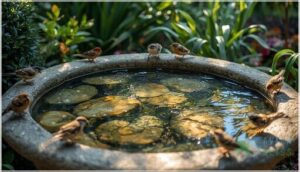
Getting the right water depth and birdbath design protects your visiting birds. You’ll want shallow water sources no deeper than two inches at the center, with gradual slopes from the edges—think puddle, not pool.
Textured bottoms give wet feet traction, while adding flat stones creates safe perching features. This setup promotes avian safety while helping birds avoid predators during vulnerable bathing moments in safe bird habitats.
Material Options for Durability and Hygiene
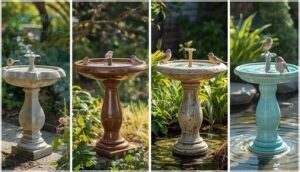
Your choice of birdbath fountain material affects both how long it lasts and how clean you can keep it. Concrete durability withstands years of weather but needs sealing to control surface porosity. Copper hygiene naturally fights algae, while ceramic cleanliness offers smooth, easy-to-scrub surfaces. Plastic maintenance stays simple with light weight, though scratches can harbor growth.
- Concrete: Weather-resistant but requires winter protection from freeze-thaw damage
- Copper: Antibacterial properties help suppress algae between cleanings
- Glazed ceramic: Non-porous surfaces wipe clean easily but crack under impact
- Resin/plastic: Lightweight and affordable, though surface scratches accumulate over time
Fountain Styles: Solar, Electric, and Manual
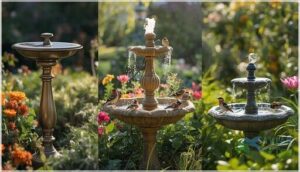
You’ll see three main fountain styles: solar birdbath units, electric safety models, and manual cleaning basins. Solar units harvest sunlight to run pumps rated around 1.5 to 5 watts, while electric models draw steady household current at 1 to 20 watts for consistent moving water. Manual basins require daily refills but cost nothing to operate.
Solar reliability peaks in summer but fades on cloudy days. In contrast, electric water fountains are favored for year-round use, especially in freezing regions due to their climate suitability.
Features That Attract Birds (Drippers, Bubblers, Misters)
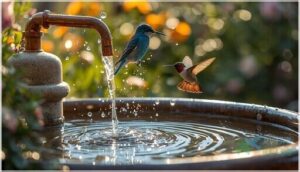
Moving water works like a beacon—drippers release a drop every 5 to 10 seconds, producing acoustic attractants that boost bird bath fountains use by 20 to 30 percent during migration. Visual motion from bubblers reveals otherwise hidden basins to passing flocks, while fine misters appeal to species diversity, drawing hummingbirds and small songbirds that skip conventional baths.
These types of birdbath features support feather care and help you succeed in attracting birds year-round.
Optimal Placement for Bird Bath Fountains
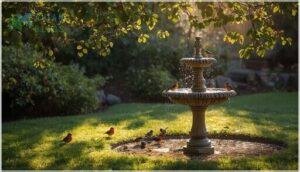
Where you place your bird bath fountain can make the difference between an empty basin and a lively gathering spot. Birds won’t visit if they feel exposed to predators or uncomfortable in harsh sun.
Let’s look at the key factors that help birds feel safe and drawn to your fountain.
Shady Vs. Sunny Locations
Placement of birdbath fountains hinges on finding the right balance between sun and shade. Partial shade keeps water temperature comfortable for birds while slowing algae growth. Full sunlight can overheat the water, discouraging use and raising predation risk in exposed areas.
Attracting birds means choosing a prime birdbath location with some shade—especially during hot afternoons—while maintaining visibility so birds feel safe bathing.
Proximity to Trees and Shrubs for Protection
Birds need cover nearby but not so close that predators can ambush them. Position your fountain 10–15 feet from shrubs and trees to strike the right visibility balance.
This safe distance lets birds spot approaching cats while still offering refuge availability—they can quickly escape to perching spots when threatened. Dense vegetation right next to the bath increases predator ambush risk, but nearby habitat influence draws more species to visit.
Visibility for Birdwatching and Bird Safety
You’ll get the best birdwatching views—and protect your feathered visitors—when you place your bird bath fountain 10–20 feet from windows. This sweet spot lets you see details without binoculars while reducing window collision risk, which kills up to a billion birds yearly in the U.S.
Balance these factors for best birdbath location:
- Safe viewing zones: Keep 6–10 feet of open space around the fountain so birds can spot predator exposure threats
- Light and glare: Choose partial shade to improve visibility and minimize reflections that confuse birds
- Human disturbance: Position the fountain away from busy doors to reduce flushing when you come and go
This setup transforms your fountain into a safe, observable hub for attracting birds.
Creating a Natural-Looking Habitat Around The Fountain
Once you’ve chosen a safe, visible spot, think about weaving native vegetation and structural cover around your fountain. For instance, clusters of shrubs, leaf litter, and grasses create microclimate shade and natural foraging habitat.
This layered approach fosters habitat connectivity, attracting birds by offering shelter, food, and a wildlife habitat that feels like home in your backyard habitat.
Setting Up and Maintaining Your Fountain
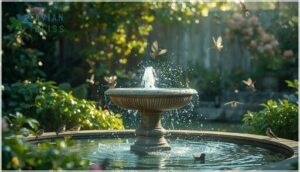
Getting your fountain ready and keeping it in good shape makes all the difference for visiting birds. There are a few key steps you’ll want to keep in mind as you set things up.
Here’s what matters most when caring for your bird bath fountain.
Keeping Water Fresh and Clean
With every clean bird bath, you lower disease risk and keep birds coming back. Change the water at least every two to three days, especially in warm weather. Use a bleach solution for disinfection methods, then rinse and air-dry.
Moving water helps keep things fresh. Shade limits sun exposure, slowing algae growth. Reliable birdbath maintenance means fresh water, safe birds, and vibrant visits.
Preventing Mosquito Breeding and Algae Growth
Clean water isn’t just about bird health—it’s also a strong mosquito deterrent. Mosquitoes thrive in stagnant water, so water circulation in your birdbath fountain disrupts their life cycle.
For algae control, regular cleaning with hydrogen peroxide works well. Bti application safely targets larvae. These steps keep your fountain inviting, not a breeding ground.
- Water circulation
- Regular cleaning
- Bti application
- Hydrogen peroxide
- Algae control
Seasonal Care: Summer Cooling and Winter Freezing
When summer heat pushes temperatures above 40°C, your birdbath fountain becomes a lifeline—birds can reach lethal dehydration in just two to three hours without water. Place your fountain in shade, add ice chunks during extreme heat, and refresh water daily for summer cooling.
In freezing weather, a heated birdbath fountain keeps water liquid, supporting birds when natural sources freeze for weeks, while consuming only about three dollars monthly in electricity with proper winter heating setup.
Adding Stones and Perches for Bird Comfort
To make your birdbath fountain safe for small birds, place flat stones at different depths—creating shallow zones around one inch deep near the edges. These perching surfaces let finches and sparrows stand confidently while drinking, reducing drowning risk in deeper basins.
Stones also break up fountain turbulence, allowing cautious species to approach moving water gradually. This depth modification attracts greater species diversity to your backyard.
Tips to Maximize Bird Attraction
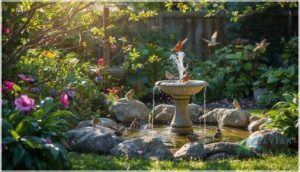
You’ve got your fountain up and running, but a few smart tweaks can make all the difference in turning your yard into a true bird haven.
Small adjustments to water flow, placement, and surroundings help more species feel safe and welcome.
Let’s look at four proven ways to boost your success and keep birds coming back.
Providing Multiple Water Sources
Think of spatial distribution as giving birds their own territory. Multiple water fountains reduce competition, especially when spaced at least 3 meters apart.
An elevated birdbath fountain attracts feeder birds, while a ground-level basin draws puddle-seekers and chipmunks.
This niche use strategy fosters diverse species and meets daily needs year-round. Different depths and locations guarantee seasonal security, so every visitor finds fresh water without crowding.
Using Moving Water to Draw Birds
Moving water acts like a billboard for birds, drawing them in from over 30 meters through sound and visual cues. Drippers, bubblers, and misters increase species diversity by attracting insect-eaters and migrants that ignore seed feeders.
Water motion benefits hygiene and mosquito suppression, since circulation disrupts larvae and slows algae growth.
Your birdbath fountain becomes a magnet when practical water methods keep it rippling year-round.
Safe Landscaping to Deter Predators
Cat management is your first line of predator protection. Keep cats indoors and prune low tree branches near your fountain so open sightlines extend at least three meters from dense cover.
Physical barriers such as low wire fencing let birds fly through while forcing predators to cross exposed ground.
Escape opportunities improve when you place the fountain over lawn rather than thick shrubbery, and regular human activity in a shady spot naturally deters stalking attempts.
Observing Bird Behavior to Improve Setup
You can’t improve what you don’t observe. Watch which species visit, when bathing frequency peaks, and how predator vigilance changes with cover placement. Track species composition shifts as you adjust water movement or routine adjustments like refill timing.
Note birdbath water preferences—depth, shade, perch distance—to improve your setup. Observing bird behavior reveals exactly what’s working for attracting birds to your backyard and increasing bird activity at your fountain.
Frequently Asked Questions (FAQs)
How often should fountain pumps be cleaned?
You should clean your fountain pump about once a week during warm weather to prevent algae buildup and maintain bird health.
In cooler months, you can extend the interval to every month.
Can bird bath fountains attract unwanted wildlife?
Yes, birdbath fountains can attract raccoons, opossums, and squirrels seeking water. Stagnant water also invites mosquito breeding.
Regular cleaning, elevated placement, and moving water help minimize predator risks and unwanted wildlife visits.
What water depth works best for hummingbirds?
The ideal depth for hummingbirds is about 25 to 1 inch—matching their tiny legs for safe wading.
Shallow, moving water and gentle slopes boost safety concerns, making depth modifications easy and enhancing bird attraction in your birdbath fountain.
Do fountains require special electrical outlet protection?
Fountains need GFCI protection and weatherproof enclosures for safe installation. Using extension cords creates hazards, so code compliance means installing a groundfault interrupted circuit nearby.
Bird bath heaters also require GFCI outlets to prevent shock, especially when setting up birdbaths.
Which bird species prefer fountains over still water?
Think of moving water as a magnet for birds. Warbler attraction peaks with dripping fountains, while Hummingbird misters draw leaf-bathing specialists.
Thrushes bubblers and Raptors drinking highlight that most bird species show a general preference for fountains over still water.
Conclusion
Think of your backyard as a blank canvas—each bath fountain you add becomes a brushstroke that invites life to return. When you attract birds with bath fountain features, you create a refuge that meets their needs and reveals new patterns of movement and song.
A well-placed, well-maintained fountain is more than decoration; it’s a lifeline. As birds gather, you’ll witness stories unfold that connect you to the rhythms of nature, season after season.
- https://georgiawildlife.com/out-my-backdoor-moving-water-acts-bird-magnet
- https://www.nwf.org/Magazines/National-Wildlife/2024/Spring/Animals/Urban-Months-Water-Features
- https://luxenhome.com/blogs/the-workshop/bird-bath-fountain-guide-attract-birds
- https://www.outdoorartpros.com/blogs/news/how-does-water-movement-in-a-bird-bath-benefit-birds
- https://extension.psu.edu/water-for-wildlife-bird-baths-and-backyard-ponds/