This site is supported by our readers. We may earn a commission, at no cost to you, if you purchase through links.
You can’t attract specific birds with food if you’re just guessing what they want. Cardinals won’t touch nyjer seeds, and finches will ignore your sunflower offerings. Each species has evolved to prefer certain foods based on beak shape, digestive systems, and foraging behaviors.
The secret isn’t buying more feeders or expensive seed blends. It’s understanding which foods match which birds, then placing the right feeders in the right spots.
Once you learn these simple pairings, you’ll transform your yard from a random bird stop into a targeted feeding station that draws exactly the species you want to see.
Table Of Contents
Key Takeaways
- Match bird species to specific foods based on their evolved preferences—cardinals thrive on black oil sunflower seeds, finches prefer nyjer, and woodpeckers need suet—rather than using generic seed mixes.
- Feeder type matters as much as food choice: tube feeders work best for small birds like finches, tray feeders attract ground feeders, and suet cages draw woodpeckers and nuthatches.
- Strategic placement protects birds and maximizes visits—position feeders within 3 feet or beyond 30 feet of windows to prevent collisions, place them near dense shrubs for cover, and elevate them 5-6 feet high to deter predators.
- Seasonal adjustments keep feeders effective year-round: offer fat-rich foods in winter, protein sources like mealworms during spring breeding, fresh nectar in summer heat, and high-energy seeds during fall migration.
Choosing The Right Bird Food
Picking the right food is where every successful backyard birding story begins. What you offer in your feeder shapes the colorful crowd that shows up.
Let’s run through some top choices to help you match the right treats to your favorite birds.
Black Oil Sunflower Seeds for Cardinals and Chickadees
For cardinals and chickadees, nothing works like black oil sunflower seeds. These energy-rich seeds suit both cardinal preferences and chickadee caching habits—chickadees will tuck seeds away for later, while cardinals feast on the spot.
The nutritional benefits boost overall bird health, and you’ll see an impressive biodiversity impact when you use the right feeder types for attracting specific bird species. Using the right bird seed options can greatly improve the attractiveness of your feeders to these birds.
Nyjer Seeds for Finches and Sparrows
Curious about maximizing Finch attraction and meeting Sparrow preferences? Nyjer seeds are your ace. You’ll find finches—goldfinches, house finches—and visiting sparrows flocking to tube feeders filled with these oil-rich seeds.
Nyjer nutrition packs concentrated energy, with little feeder waste and high seasonal demand. If you want clean, busy feeders, this bird seed preference tops the list. They’re also attracted to sunflower chips.
Safflower Seeds for Grosbeaks and Squirrel Deterrence
If tired of squirrels raiding your feeders, safflower seeds offer relief. Their bitter taste and tough hull make them ideal for squirrel aversion, enhancing feeder peace.
Grosbeak attraction improves with safflower’s rich seed composition, matching cardinals’—and many small songbirds’—preferences.
Feeding trends now show safflower as a cost-effective, targeted bird food type for selective visitors and reliable squirrel proofing.
White Proso Millet for Ground-Feeding Birds
White Proso Millet is your ace for attracting ground-feeding birds. Look for dark-eyed juncos and native sparrows crowding around low trays—clear proof of its appeal.
This bird food type stands out for:
- Millet nutrition loaded with B vitamins and minerals
- Easy seed placement for best ground feeder ID
- Smart storage tips to reduce spoilage and ward off invasive species
Suet and Fruit for Woodpeckers and Orioles
To draw in suet-loving birds like woodpeckers and orioles, offer suet-fruit blends. These pack high suet caloric value for woodpeckers while pleasing orioles’ fruit color preference, especially vibrant oranges.
Seasonal feeding rates spike in colder months, supporting oriole chick rearing and woodpecker survival. Fresh, colorful fruit and rich suet keep your feeders busy and your yard lively.
Nectar Solutions for Hummingbirds
With hummingbirds, sugar concentration is everything. For your nectar feeder, mix sugar water to a 1:4 ratio—no more, no less. Keep it simple and skip the artificial dyes. Focus on feeder hygiene and always use plain white sugar. Commercial brands sometimes include additives—best stick with homemade for attracting hummingbirds and orioles:
- Clean feeders often
- Use white sugar
- Avoid dyes
- Check for mold
- Change nectar regularly
Selecting Feeders for Target Birds
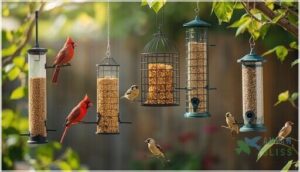
Once you’ve picked the right seeds, it’s time to think about feeders. The style you choose shapes which birds will visit your yard.
Here are some common feeders that match up perfectly with your target guests.
Tray Feeders for Ground Feeders
Ever noticed how a well-placed tray feeder becomes a bird magnet? The open tray design lets ground feeders like doves and sparrows gather easily, especially when you offer a seed mix rich in sunflower, millet, and safflower. Smart feeder placement boosts bird congregation and lets you observe their seed preferences up close.
| Tray Design | Seed Variety |
|---|---|
| Flat, open | Sunflower, millet |
| Covered, raised | Safflower, corn |
Tube Feeders for Finches and Small Birds
Want to see finch behavior up close? Tube feeder design is your ticket. Fill tube feeders with Nyjer seeds or Black Oil Sunflower Seeds, and watch finches, chickadees, and siskins flock in.
Short perches favor small bird attraction and boost bird diversity.
Remember, feeder hygiene matters—clean weekly to keep thistle seeds fresh and birds healthy.
Hopper Feeders for Mixed Species
Picture your backyard buzzing with life—hopper feeders make it happen. Their generous seed capacity and mixed seed blends attract a lively mix of birds, from cardinals to jays. Flock dynamics shift daily, boosting bird diversity right outside your window. Just remember, feeder hygiene is key to keeping these gatherings healthy and vibrant.
- Encourages mixed species
- Holds 6–8 quarts seed
- Encourages flock diversity
- Requires regular cleaning
Suet Feeders for Woodpeckers and Nuthatches
Did you know suet feeders can double your woodpecker sightings in winter? Suet cakes—especially those made from beef fat—are irresistible to suet-loving birds. Wire cage and log feeder designs cater to woodpeckers’ gripping habits, while nuthatches cache suet for lean times.
Seasonal usage matters: November to March sees peak activity, driving population impact in your backyard.
Nectar Feeders for Hummingbirds and Orioles
After suet brings woodpeckers, nectar feeders step in for hummingbirds and orioles. Bright red or orange feeders filled with sugar water at a 33% nectar concentration spark hummingbird behavior and oriole attraction.
Smart feeder placement—near flowers, in view—boosts visits. Clean often for disease prevention; fresh nectar keeps birds coming back, especially during migration and summer heat.
Matching Foods to Bird Species
Choosing the right food is key if you want to see specific birds in your yard. Different species have their own favorites and feeding habits.
Here’s how you can match your offerings to attract the birds you love most.
Attracting Cardinals and Grosbeaks
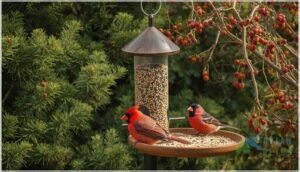
Color and cover are your secret weapons for attracting cardinals and grosbeaks. Offer black oil sunflower seeds and safflower in hopper or tray feeders near dense shrubs. Add suet cakes and fresh fruit to boost energy, especially in winter.
These Bird Feeder Tips support Cardinal Migration, Grosbeak Diet, and Nesting Habits, matching their seed preferences for year-round visits.
Drawing in Finches and Sparrows
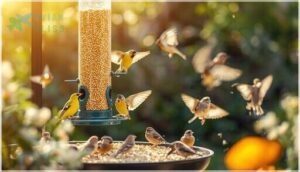
After setting up for cardinals, it’s time to boost Finch Migration and Sparrow Behavior in your yard. Finches and sparrows flock to:
- Tube feeders packed with Nyjer or thistle seeds
- Mixed blends with Black Oil Sunflower Seeds
- White proso millet for ground-feeding sparrows
- Feeder designs that encourage Bird Diversity and easy access
Seed Preferences matter—watch your feeder come alive.
Appealing to Woodpeckers and Nuthatches
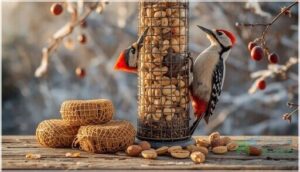
If you’re hoping to see woodpeckers and nuthatches, focus on suet preferences and feeder types. Suet cakes, especially those with peanuts or fruit, attract these clinging birds year-round. Mesh peanut feeders and models with tail props boost visits.
Seasonal trends show higher activity in winter, while insect diets and fruit attraction keep them returning through spring and fall.
Inviting Hummingbirds and Orioles
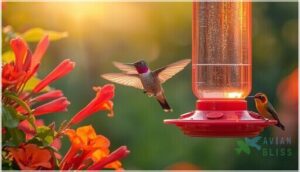
From spring’s first bloom to late summer, hummingbirds and orioles respond best to fresh sugar water in nectar feeders. Bright Feeder Colors—red for hummingbirds, orange for orioles—boost visits. Plant Clustering draws attention, and reliable Nectar Recipes (1:4 sugar to water) guarantee Repeat Visitation.
For success, remember:
- Use vibrant feeders
- Offer fresh nectar
- Cluster flowering plants
Supporting Doves and Quail
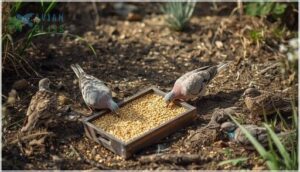
Millet Preference is key for ground feeding birds like doves and quail. White proso millet and browntop millet top their bird seed preferences, while tray feeders placed low suit their feeding style.
For Protein Needs, use a seed mix or commercial feed to support health. Smart Feeder Design and Supplemental Food can boost local population impact, especially when natural seed types run low.
Feeder Placement and Maintenance Tips
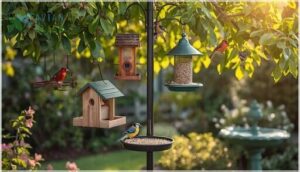
Getting the most from your feeders starts with smart placement and a little routine care. Where you put them and how you maintain them can make or break your birdwatching experience.
Here’s what to keep in mind as you set up your space.
Best Locations for Bird Attraction
Want more birds at your feeder? Proximity matters. Place feeders within 3 meters of dense shrubs to double your visitors, or near water to boost bird abundance by 37%.
In urban feeding, backyard birding thrives with well-placed feeders and bird-friendly landscaping. For window safety, mount feeders close to glass, and adapt locations seasonally to keep attracting birds to your backyard.
Cleaning Feeders to Prevent Disease
Neglecting feeder sanitation can turn your backyard into a hotspot for avian diseases. Regular cleaning, every two weeks, is essential for bird health and parasite control. Scrub feeders with soap and water, then soak in a 10% bleach solution. Let them dry thoroughly. Consistent feeder cleaning reduces disease transmission and keeps your feathered visitors healthy.
- Clean every two weeks or weekly if sick birds appear
- Use a 10% bleach solution for disinfection
- Remove all debris before soaking feeders
- Let feeders dry completely before refilling
Storing Bird Seed Safely
Did you know moisture control is the backbone of safe seed storage? Storing bird seed in airtight, food-safe containers keeps pests out and freshness in.
Temperature management matters—heat speeds spoilage. Rotate seed often, never mixing old with new.
Smart seed rotation and pest protection mean your bird seed types stay safe, so seed-eating birds thrive on their favorites.
Checking for Feeder Damage
Ever noticed how bird feeders crack or corrode faster than you expect? Material Degradation is real—plastic cracks in 40% of feeders within 18 months. Pest Damage and Weather Effects add to the trouble. To lower Disease Risk, follow these feeder maintenance tips and check your bird feeders every 2–4 weeks. Use durable materials and prioritize maintaining clean feeders.
- Inspect for cracks, corrosion, and loose parts
- Look for signs of pest damage or gnawing
- Check for moisture buildup and mold
- Assess for weather-related wear after storms
- Clean feeders and replace damaged components
Preventing Pests and Protecting Birds
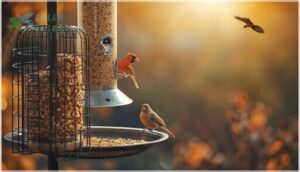
Keeping your feeders safe means thinking about more than just the birds. Pests and predators can spoil the fun and even put wildlife at risk.
Here’s how you can protect your feathered visitors and keep unwanted guests away.
Squirrel-Proofing Feeders
From feeder mechanics like weight-activated ports to capsaicin deterrents, controlling squirrels at feeders is a game of strategy. Smart placement—five feet up, ten feet from trees—amplifies squirrel control. Material durability matters too; powder-coated metals last.
Economic benefits show up in less seed wasted, while managing squirrel interactions keeps birds coming and pests out. Bear proofing comes next.
Bear-Proofing and Safety Measures
Squirrel control measures won’t stop bears—you’ll need a different playbook. Bear-resistant feeders hung ten feet high or seasonal removal from April through October cut conflicts by 60-70%. Secure seed storage in metal bins matters, too.
Metal poles, motion-activated deterrents, and removing feeders during peak bear months follow community guidelines. Managing squirrel interactions equips you for larger wildlife challenges requiring bear-resistant solutions and strategic feeder height adjustments.
Keeping Cats and Predators Away
Cats kill billions of birds annually in North America—domestic cats pose your biggest backyard threat. Physical barriers like cone baffles on poles and predator guards increase nest survival by 6.7%. Smart feeder placement beats reactive fixes every time.
- Mount feeders 5-6 feet high on sturdy poles
- Position them 10+ feet from hiding spots
- Install motion-activated sprinklers as cat deterrents
- Plant dense, thorny shrubs around feeding zones
- Keep your own cats indoors to protect local birds
Landscaping approaches combining open space with thick cover create natural predator protection while supporting healthy bird communities.
Reducing Window Collisions
Windows kill 365 million to over 1 billion birds yearly in the U.S. alone—dwarfing predator threats. Bird-friendly windows with visible patterns every 2-4 inches cut collisions by 71%.
Bird-friendly windows with patterns every 2–4 inches cut collisions by 71%, saving millions of birds annually
Place feeders within 3 feet or beyond 30 feet of glass to alter flight paths.
Apply exterior treatments like UV-reflective films or fritted glass patterns for proven bird safety and collision prevention year-round.
Seasonal Feeding Strategies

Birds don’t eat the same way year-round, and your feeding approach shouldn’t either. Different seasons bring distinct nutritional needs and species behaviors that you’ll want to match.
Here’s how to adjust your strategy as the calendar shifts.
Winter Bird Feeding Tips
Cold weather changes everything for your backyard visitors. During winter feeding, offer fat-rich suet and seed mixes featuring sunflower seeds to support survival when temperatures drop.
Position bird feeders 8–10 feet from shelter to protect birds from harsh winds while they forage. This strategic feeder placement gives birds quick escape routes and improves winter foraging success during their toughest season.
Summer and Spring Feeding Adjustments
As temperatures rise, your summer feeding strategies need adjustments to match shifting bird seed preferences. Natural insects become abundant, reducing feeder visits by up to 62% compared to winter months.
Focus on these seasonal food adjustments:
- Clean feeders weekly to prevent seed spoilage above 78°F
- Offer calcium sources like crushed eggshells for nesting birds
- Refresh nectar every 2–3 days to avoid fermentation
Shaded feeder placement improves predator avoidance and keeps seed fresh longer during spring migration feeding.
Fall Preparation for Migratory Birds
As fall migration sweeps across the continent, your feeders become essential refueling stations for birds traveling thousands of miles. Over 4 billion migratory birds move through the U.S. each autumn, with some nights seeing 1.2 billion in flight.
Aid their seasonal adaptation with these fall feeding strategies:
| Food Type | Target Species | Energy Benefit |
|---|---|---|
| Black oil sunflower seeds | Cardinals, chickadees | High fat content for long flights |
| Fruit and nut mixes | Thrushes, warblers | Encourages hyperphagia (weight doubling) |
| Nyjer seeds | Finches, sparrows | Concentrated oils for stamina |
Place feeders near mature trees and shrubs. Migratory patterns show birds need cover for safe stopovers during their journeys south.
Bird conservation depends on reliable feeding sources when natural foods dwindle. Your fall preparation helps recently fledged young and adults alike survive migration’s demands without disrupting their instinct to travel.
Adjusting Foods for Seasonal Preferences
Bird food preferences shift dramatically as seasons change. Winter caloric needs demand fat-rich options, while spring protein boost aids breeding cycles. Adapt your offerings throughout the year for attracting specific bird species:
- Winter: Black oil sunflower seeds and suet provide essential fats when chickadees consume 70 seeds daily.
- Spring: High-protein mealworms aid chick development during peak breeding.
- Summer: Fresh fruit appeal draws orioles while preventing spoilage in heat.
- Autumn: Fat storage foods prepare migrants for their journeys south.
These seasonal feeding strategies match natural dietary shifts, keeping your feeders relevant year-round.
Frequently Asked Questions (FAQs)
How do weather patterns affect bird feeding habits?
Ever wonder why your feeders go quiet on rainy days? Weather patterns drive feeding adaptations—cold boosts visits, precipitation delays activity, and seasonal shifts alter migration timing, demanding strategic winter feeding strategies and spring adjustments.
Should feeders stay up year-round or seasonally?
You can keep feeders up year-round safely if you maintain feeder hygiene with biweekly cleanings.
Year-round feeding doesn’t disrupt migration, but disease prevalence increases without proper bird feeder maintenance and attention to seasonal nutritional needs.
Conclusion
Like tuning a radio to the right frequency, learning to attract specific birds with food is all about precision. You now know which seeds match which beaks, which feeders suit which species, and how placement changes everything.
Stop scattering random seed mixes and start targeting the birds you want. Your yard can become a reliable habitat where cardinals, finches, and woodpeckers return daily. The right food choices make all the difference.
- https://www.mordorintelligence.com/industry-reports/bird-food-market
- https://www.eastbaynature.com/ebn/EBNServlet?command=feedingprefs
- https://www.sunflowernsa.com/all-about/bird-feeding/types-of-food/
- https://www.tandfonline.com/doi/full/10.1080/00063657.2017.1311836
- https://www.allaboutbirds.org/news/when-136-bird-species-show-up-at-a-feeder-which-one-wins/