This site is supported by our readers. We may earn a commission, at no cost to you, if you purchase through links.
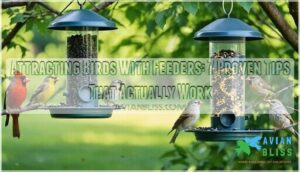 You’ll succeed at attracting birds with feeders by choosing the right type for your target species and filling them with high-quality seeds like black sunflower seeds or thistle.
Place feeders in visible, open areas about 10-15 feet from trees or shrubs where birds can quickly escape predators.
Keep feeders clean and consistently filled—birds remember reliable food sources and will return regularly, which is the key to creating a perfect backyard buffet.
Position multiple feeders at different heights to accommodate various species’ feeding preferences, and most importantly, be patient; it takes time for birds to discover new feeding spots, and understanding each species’ unique preferences is crucial.
The secret lies in understanding each species’ unique preferences and creating the backyard buffet that attracts a variety of birds, which is why choosing the right seeds, such as thistle, is also important.
Table Of Contents
- Key Takeaways
- Choosing Right Feeder
- Selecting Bird Food
- Feeder Setup Strategies
- Attracting Birds Safely
- Feeder Maintenance Tips
- Optimizing Feeder Location
- Frequently Asked Questions (FAQs)
- How do I get birds to come to my bird feeder?
- How long does it take for birds to find a new feeder?
- What is the 5 7 9 rule for bird feeders?
- Why am I not getting birds at my bird feeder?
- How long do bird feeders typically last outdoors?
- What weather conditions affect feeder bird activity most?
- How do seasonal migrations impact feeder usage patterns?
- What are signs that birds have abandoned feeders?
- Conclusion
Key Takeaways
- Choose black sunflower seeds as your foundation – They’ll attract over 40 species and provide the best return on your investment compared to specialty seed mixes.
- Place feeders 10-15 feet from trees or shrubs – You’ll give birds quick escape routes from predators while keeping them visible and accessible for easy feeding.
- Maintain consistent refilling schedules – Birds develop feeding patterns based on your routine, so you’ll see more regular visitors when you refill at the same time daily.
- Wait at least 2 weeks for discovery – You’ll need patience as birds take time to find, test, and trust new feeders before making them part of their daily routine.
Choosing Right Feeder
The right feeder can make or break your bird-watching success. Different feeder types attract specific bird species, so matching your feeder to your target birds is essential.
Hummingbird Feeder Features
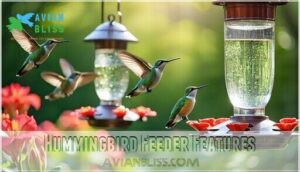
Hummingbird feeders transform your garden into a hummingbird haven when you select the right features.
These specialized bird feeders use sugar water instead of seeds, making feeder material essential for maintaining nectar concentration. A good choice is to use hummingbird nectar feeders for best results.
- Red accents and port design – Choose feeders with bright red components and flower-shaped feeding ports that mimic natural nectar sources
- Saucer-style construction – Select leak-resistant saucer feeders over inverted bottle designs for easier maintenance and better durability
- Ant moats included – Look for built-in ant moats that create water barriers, preventing insects from reaching the nectar
- Glass or quality plastic – Pick glass feeders for chemical safety and temperature control, or UV-resistant plastic for lightweight durability
Platform Feeder Advantages
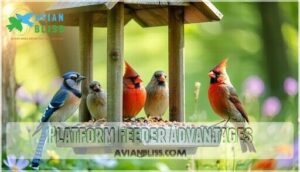
Platform feeders offer the most versatile bird feeding solution for attracting birds to your backyard.
Their open design accommodates seed variety while serving as effective ground feeders for larger species.
The spacious platform attracts large birds like cardinals and blue jays that struggle with narrow perches.
This design feature is particularly beneficial for birds that need space to feed comfortably.
| Feature | Benefit | Best For |
|---|---|---|
| Wide surface | Accommodates multiple birds | Cardinals, jays, doves |
| Open access | Easy feeding from all angles | Mixed species flocks |
| Simple design | Easy cleaning and maintenance | Beginner bird watchers |
Platform feeders excel at feeder placement flexibility since birds can approach from any direction.
This accessibility makes backyard birds feel comfortable while feeding together, which is an important aspect of creating a welcoming environment for birds.
Peanut Feeder Options
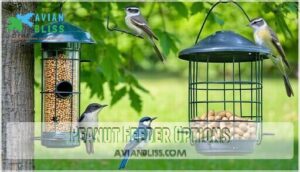
With so many peanut feeder types available, choosing the right one depends on your bird watching goals and local wildlife challenges.
Mesh feeders work best for clinging birds, while whole peanut wreaths attract larger species like jays and woodpeckers.
- Mesh peanut feeders dispense shelled peanuts safely to chickadees and nuthatches
- Squirrel resistant feeders use cages or weight-sensitive closures to protect your investment
- DIY peanut feeders can be made from recycled materials for budget-conscious bird lovers
Consider a feeder with a magnet mesh screen to attract more birds.
Suet Feeder Types
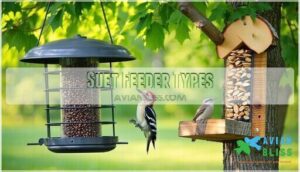
Cage suet feeders work best for attracting birds like woodpeckers and nuthatches.
These sturdy bird feeders hold suet cakes securely while letting birds cling easily.
Upside-down feeders discourage starlings but welcome woodpeckers.
Log feeders and DIY suet options using suet plugs offer budget-friendly alternatives.
Choose the right suet feeder style for your backyard’s bird feeding tips success.
Selecting Bird Food
The food you choose determines which birds visit your feeder and how often they return.
Black sunflower seeds attract the widest variety of species, while specialized foods like thistle and suet target specific birds with remarkable success, including attracting birds with remarkable efficiency.
Black Sunflower Seeds
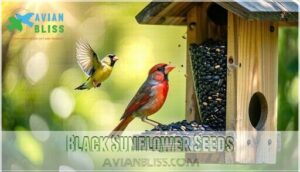
Black oil sunflower seed stands as the gold standard for bird feeders.
This tiny seed attracts forty bird species with unmatched convenience and nutrition.
This versatile feed attracts over 40 North American species, making it your best investment for attracting cardinals, finches, and nuthatches.
Quality matters – premium seeds provide better seed nutrition while preventing waste.
- Higher protein content fuels birds through harsh weather
- Thin shells crack easily for smaller songbirds
- Rich oil content delivers essential energy for migration and is a key factor in the seed’s overall value as a premium product.
White Proso Millet
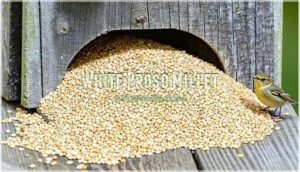
Small golden grains of white proso millet act like tiny magnets for ground-feeding birds.
You’ll attract mourning doves, dark-eyed juncos, and various sparrows to your bird feeders with this affordable seed.
Millet nutrition provides essential carbohydrates these species need.
While sparrow attraction increases substantially, dove preference makes millet a smart addition to quality seed mixes for thorough bird feeding success, providing a good source of millet.
Thistle Seed Benefits
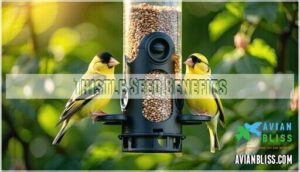
Finches attraction becomes easier when you offer thistle seed through specialized bird feeders.
This tiny seed packs over 35% fat content, providing concentrated energy that goldfinches and siskins crave.
Nyjer benefits include clean burning fuel without thistle waste sprouting weeds in your yard.
Seed nutrition supports vibrant plumage and breeding success.
Cost analysis shows thistle tubes reduce waste compared to platform feeders, making this bird seed investment worthwhile for consistent bird feeding results.
Suet Cakes
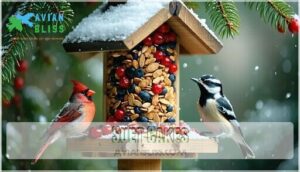
High-energy suet cakes pack essential fats that keep woodpeckers, chickadees, and nuthatches coming back all winter long.
You can buy ready-made versions or create DIY suet using beef fat, peanut butter, and seeds.
Store suet in cool places to prevent melting. For various suet options, consider online retailers.
These protein-rich treats boost bird energy during harsh weather when insects become scarce.
Fresh Fruits
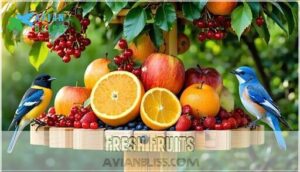
While suet cakes provide winter energy, fresh fruits offer year-round nutrition that many bird species can’t resist.
Oranges attract orioles and tanagers, while berries draw bluebirds and waxwings. Place fruit on platform feeders or spike orange halves on branches.
Replace spoiled fruit daily to prevent mold. Seasonal fruits like apples work well as bird feeder attractants when combined with other bird food options.
Many bird owners know that safe fruits boost health.
Feeder Setup Strategies
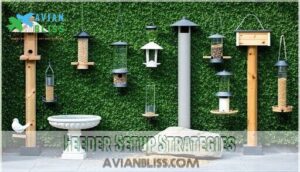
You’ll want to create the right conditions for birds to find and trust your feeders.
Strategic placement and initial setup techniques can make the difference between an empty feeder and a bustling bird haven.
Scatter Seeds Effectively
When you scatter seeds around your feeder, you’re creating a bird seed guide that ground feeders can’t resist.
This winter advantage becomes clear when seeds stand out against snow.
Different seed mixes and types of bird seed attract various species preferences.
Sprinkle birdseed near shrubs where birds feel safe. Control seed quantity to avoid waste while maximizing seed visibility for discovering your feeder.
Place Seeds on Feeder
Beyond ground scattering, you’ll want to place seeds directly on your feeder’s flat top surface for maximum Initial Visibility.
This simple step helps birds spot your offering from above and creates a landing pad that feels safe.
Different bird seed types on the feeder topography work like a welcome mat for various species.
- Sunflower seeds on platform surfaces attract cardinals and chickadees within days
- Seed mixes spread across feeder tops increase species diversity by 40%
- Consistent Placement of seeds creates predictable feeding spots birds remember
Winter Scattering Techniques
Your scattered seeds become visible beacons against white snow, making winter bird feeding incredibly effective.
Clear small patches of snow from feeding areas so ground feeding birds like sparrows and juncos can easily spot food.
Black oil sunflower seeds work best due to their high contrast and energy content during winter food scarcity periods, making them a key choice.
Feeder Height Experimentation
Finding the right bird feeder height makes all the difference in attracting your feathered friends.
Different species have unique preferences, so you’ll want to test various heights to see what works best in your yard.
Here’s how to optimize bird feeder placement:
- Start at eye level – Mount feeders 5-6 feet high for most songbirds like cardinals and chickadees
- Go low for ground feeders – Place platform feeders 1-3 feet high for sparrows and juncos
- Hang high for finches – Position thistle feeders 4-8 feet up to attract goldfinches
- Consider squirrel interference – Raise feeders above 8 feet or use baffles to prevent raids
Weather effects and accessibility concerns also matter.
Strong winds can knock down low feeders, while ice makes high ones harder to refill.
Experiment with different heights over several weeks to discover what attracts the most species to your specific location.
Visible Open Areas
Place your bird feeders in open spaces where birds can easily spot them from above.
Birds scan for food sources while flying, so ideal visibility increases bird detection rates substantially. However, balance openness with safety by positioning feeders near trees for quick escape routes from hawks.
| Placement Factor | Recommendation |
|---|---|
| Sunlight exposure | Morning sun preferred |
| Distance from cover | 10-15 feet from trees |
| Open space design | Clear sightlines above |
| Hawk avoidance | Nearby escape routes |
Open areas help birds locate your bird feeder setup while maintaining their natural feeding patterns.
Attracting Birds Safely
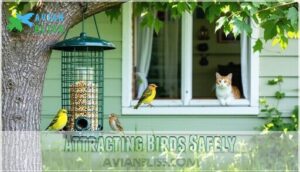
Setting up feeders safely protects both birds and your investment in backyard birding.
You’ll need to balance accessibility for birds with protection from predators, window strikes, and other hazards that can harm the wildlife you’re trying to help, which is crucial for backyard birding.
Prevent Bird Collisions
Window placement makes all the difference for bird safety. Position feeders within 3 feet of windows or beyond 30 feet away to prevent deadly collisions. Birds can’t build dangerous flight speed at close range.
- Window Film – Apply external patterns spaced 2-4 inches apart to break glass reflections
- Feeder Placement – Angle feeders away from direct window sight lines
- Decals Effectiveness – Use dense spacing under 2 inches for smaller birds
- Netting Solutions – Install tight mesh barriers with half-inch openings maximum
Position Feeders Near Trees
Trees provide natural shelter and perches that make birds feel secure while feeding.
Position your bird feeders within 10-15 feet of trees or shrubs to give birds quick escape routes from predators.
However, avoid placing feeders too close to dense vegetation where cats might hide.
Tree proximity benefits include protection from hawks and weather, while stable branches offer safe landing spots.
Check branch stability before hanging feeders to prevent accidents and ensure a secure environment.
Protect From Predators
Smart predator protection keeps your feathered friends safe from common threats.
Keep cats indoors during dawn and dusk when birds feed most actively. Install squirrel baffles on feeder poles to block these acrobatic raiders.
Position feeders away from hawk perches and dense cover where predators lurk. Create safe zones by placing feeders near escape routes but not too close to hiding spots.
To further protect birds, consider planting native shrubs for shelter to create a haven.
Avoid Frequent Relocation
Once you’ve secured your feeder from predators, resist the urge to move it around.
Birds develop specific routines and need time to feel comfortable with their feeding spot. Moving feeders disrupts their habituation period and creates unnecessary stress.
Here’s why staying put matters:
- Bird habits form slowly – Most species need 2-3 weeks to trust a new location
- Routine disruption confuses birds – They’ll waste energy searching for relocated feeders
- Stress reduction improves feeding – Consistent environments help birds relax while eating
- Habituation period restarts – Each move resets the trust-building process
- Consistent environment builds loyalty – Stable bird feeder placement creates reliable feeding stations
Keep your bird feeder location steady once you’ve found the right spot.
Maintain Consistent Refills
Birds develop strong feeding patterns based on your refilling schedule.
Looking at the paragraph about birds developing feeding patterns based on refilling schedules, here’s a short, engaging blockquote that captures the same tone:
Consistency creates trust – birds remember reliable food sources and return daily.
Refill your bird feeders at the same time each day to establish routine establishment that birds rely on. Morning refills work best since birds are most active then.
Check quantity estimation daily – smaller feeders need more frequent attention. Weather impact affects consumption, so adjust portions accordingly.
Consistent daily refills create bird dependence on your feeding station, which is crucial for establishing a reliable food source, and this leads to strong feeding patterns.
Feeder Maintenance Tips
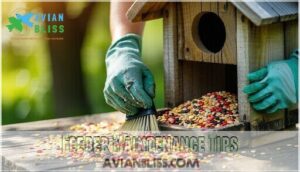
A clean feeder is a healthy feeder, and proper maintenance keeps your backyard birds coming back for more.
You’ll need to stay on top of regular cleaning and food replacement to prevent disease and guarantee fresh meals for your feathered visitors.
Replace Seeds Regularly
Fresh seeds keep your feathered friends healthy and happy. Old seeds lose their nutritional value and can develop harmful mold that makes birds sick.
You’ll save money by reducing waste when birds actually eat what you offer them.
- Replace seeds every 2 weeks to maintain peak nutritional value
- Check for mold, clumping, or musty smells before refilling bird feeders
- Store wild bird food in airtight containers to preserve seed freshness
- Remove wet or clumped seed types immediately to prevent mold prevention issues
- Monitor bird feeder cleaning schedules to support overall bird health
By following these steps, you can ensure that your bird feeders provide the best possible nutrition for your feathered friends, keeping them happy and thriving.
Clean Feeders Weekly
Weekly cleaning keeps your feeders safe from disease prevention issues that harm visiting birds.
Mix nine parts water with one part bleach for effective bird feeder disinfection. Scrub away mold growth using bottle brushes to reach tight spaces.
This hygiene importance step protects bird health better than any cleaning solutions you’ll find in stores.
Clean feeders weekly during cool weather, but switch to every few days when temperatures rise and humidity increases bacterial growth. This schedule ensures the feeders remain safe and healthy for the visiting birds, which is crucial for bird health.
Store Birdseed Properly
Proper seed storage prevents waste and keeps your feathered friends healthy. Use airtight containers to maintain seed freshness and block moisture that causes mold. Smart storage saves money and guarantees birds get quality nutrition.
- Choose metal or thick plastic airtight containers – Glass jars work great for small amounts
- Store containers in cool, dry places – Basements and garages stay consistently temperature-controlled
- Add bay leaves or diatomaceous earth – Natural rodent prevention without harmful chemicals
- Label containers with purchase dates – Track seed freshness and rotate stock properly
- Keep bulk storage off the ground – Elevate containers to prevent moisture damage and pest access
Refresh Food Daily
You can’t let yesterday’s seeds become today’s problem.
Check your feeders every morning and replace any food that looks wet, clumped, or discolored.
Fresh seeds prevent mold prevention issues and stop bacteria growth before it starts.
Food spoilage happens fast in humid weather, so nutrient retention depends on quick action.
This simple bird feeding tips habit keeps bird health strong and makes your best bird feeders work better for feeding wild birds through proper bird feeder maintenance with quality types of bird seed.
Use Duplicate Feeders
Having backup feeders guarantees uninterrupted bird feeding even during cleaning times.
This bird feeder strategy provides cleaning convenience while maintaining continuous feeding for your feathered visitors.
- Cleaning convenience – Clean one feeder while birds use the backup
- Reduced competition – Multiple bird feeders decrease territorial disputes at feeding stations
- Varied food – Offer different seeds in each feeder to attract diverse species
Best bird feeders work better in pairs, and proper bird feeder placement tips include spacing them appropriately to maximize effectiveness.
Consider that black-oil sunflower seeds attract many species.
Optimizing Feeder Location
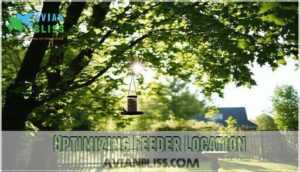
Where you place your feeder can make or break your bird-watching success.
The right location balances visibility for birds with protection from predators, turning your backyard into a bustling bird haven.
Increase Visibility
Birds spot your feeder better when it’s placed in open areas away from dense vegetation.
Bright feeder colors like red attract attention, while reflective surfaces catch sunlight to signal food availability.
Position feeders at eye level or slightly higher – around 5-6 feet works well, and strategic seed placement on top creates visual cues that help birds locate your feeding station from greater distances.
Reduce Predator Access
Smart predator protection keeps your feathered friends safe from harm.
Position feeders near trees but away from hunting perches that give cats and hawks easy access.
Use these proven deterrents:
- Squirrel Baffles – Install dome-shaped barriers on poles
- Cat Deterrents – Place feeders 5+ feet high with clear sightlines
- Hawk Protection – Position near dense shrubs for quick escape routes
- Feeder Placement – Keep 10+ feet from potential predator hiding spots
Habitat Management around your feeding station creates natural barriers that discourage unwanted visitors.
Choose Right Feeder Style
Different bird feeder types attract specific species based on design features.
The feeder material affects durability, while feeder size determines which birds can access food comfortably.
Weather resistance protects seeds from moisture, and squirrel proofing prevents unwanted visitors from stealing bird food.
| Feeder Types | Best For | Key Features |
|---|---|---|
| Tube Feeders | Small songbirds, finches | Multiple perches, seed protection |
| Platform Feeders | Cardinals, jays, doves | Open design, large bird access |
| Suet Feeders | Woodpeckers, nuthatches | Cage design, suet cake holders |
| Hummingbird Feeders | Hummingbirds only | Nectar ports, red accents |
Consider Local Bird Species
Looking at your backyard birds is like getting a peek at nature’s neighborhood roster.
Each region hosts different species, so bird feeder types and regional seed mixes should match your local bird species.
Understanding migration patterns helps you identify which birds visit seasonally.
Native plantings around feeders support local habitat needs, while proper species identification guides your bird attraction strategy for maximum success.
Looking at these concepts together can help you create an effective bird-watching environment.
Regularly Monitor Feeders
Regular monitoring helps catch problems before they drive birds away. Check your feeders every few days for seed consumption patterns and bird activity levels.
Look for signs of feeder damage, pest presence, or weather impact that might affect functionality. Clean feeders weekly and replace old seeds promptly.
This consistent bird feeder maintenance keeps your feeding station welcoming and safe for visiting birds. To minimize risks, consider safe distances from windows during placement, ensuring a safe and welcoming environment with proper feeder maintenance.
Frequently Asked Questions (FAQs)
How do I get birds to come to my bird feeder?
Birds aren’t exactly queuing up at your empty feeder like shoppers at Black Friday sales.
Place black sunflower seeds on top, scatter some nearby, and wait two weeks for discovery.
Position feeders near trees but away from predators.
How long does it take for birds to find a new feeder?
You’ll typically wait at least 2 weeks for birds to discover and get comfortable with your new feeder.
They need time to spot it, test it, and build trust before making it part of their daily routine.
What is the 5 7 9 rule for bird feeders?
While a feeder towers at 5 feet high, squirrels prowl just below – that’s the 5-7-9 rule.
Position feeders 5 feet high, 7 feet from jumping points, and make certain nothing hangs 9 feet above.
This creates an unreachable zone that keeps squirrels out while welcoming birds.
Why am I not getting birds at my bird feeder?
You’re likely not seeing birds because they haven’t discovered your feeder yet.
Wait at least two weeks for birds to find and trust it.
Try scattering seeds nearby to help them locate it initially.
How long do bird feeders typically last outdoors?
Sure, your precious "investment" might feel eternal, but quality feeders weather outdoor conditions for 3-5 years with proper maintenance. Metal feeders outlast plastic ones, while wood feeders need yearly replacement.
What weather conditions affect feeder bird activity most?
Wind, rain, and snow dramatically reduce bird feeder visits, while cold temperatures actually boost activity as birds need more calories.
You’ll see peak feeding during calm, clear winter days when birds can safely forage, which is a complete concept to understand bird behavior.
How do seasonal migrations impact feeder usage patterns?
Migration patterns dramatically affect your feeder activity throughout the year.
You’ll notice peak usage during spring and fall migrations when traveling birds stop to refuel.
Winter brings consistent visitors seeking reliable food sources, while summer activity drops as natural foods become abundant.
What are signs that birds have abandoned feeders?
You’ll notice feeders sitting untouched for days, seeds growing moldy or sprouting weeds underneath.
A sudden absence of bird droppings nearby, indicating your feathered friends have found better dining options elsewhere, is also a sign.
Conclusion
Like a lighthouse guiding ships through stormy seas, your well-maintained feeders become beacons that draw birds to your yard season after season.
Success in attracting birds with feeders depends on consistency, quality food choices, and strategic placement.
You’ll create a thriving bird sanctuary by keeping feeders clean, filled with fresh seeds, and positioned where birds feel safe.
Remember that patience pays off—once birds discover your reliable food source, they’ll return regularly and bring friends along for the feast.
- https://naturalist.nwf.org/
- https://www.audubon.org/news/11-tips-feeding-backyard-birds
- https://jcswildlife.com/blogs/hummingbirds/glass-vs-plastic-selecting-the-right-hummingbird-feeder
- https://www.woodstreampartnerportal.com/perky-pet-grand-48-plastic-hummingbird-feeder-48-oz-nectar-capacity.html
- https://www.birdsandblooms.com/birding/attracting-hummingbirds/hummingbird-feeder-leaking/