This site is supported by our readers. We may earn a commission, at no cost to you, if you purchase through links.
 Your backyard birds don’t stop needing water when temperatures drop—they just face a life-threatening challenge finding it. While natural water sources freeze solid, birds still require liquid water daily for drinking and preening, burning precious energy melting snow when open water disappears.
An automatic heated bird bath controller solves this survival equation by maintaining water between 40-50°F without constant monitoring or wasted electricity. These thermostatically-controlled devices have evolved far beyond simple immersion heaters, now offering timer functions, energy-saving modes, and smart technology that adjusts to your local climate.
Whether you’re retrofitting an existing bath or choosing your first heated model, understanding controller features and compatibility makes the difference between a maintenance headache and a reliable winter oasis that attracts species you’d never see at your feeders alone.
Table Of Contents
- Key Takeaways
- What is an Automatic Heated Bird Bath Controller?
- Why Use a Heated Bird Bath in Winter?
- Key Features to Look For
- Choosing The Right Controller for Your Needs
- Smart Bird Bath Technology Enhancements
- Maintenance and Troubleshooting Tips
- Product Review: Heated Birdbath for Winter Birds
- Frequently Asked Questions (FAQs)
- Conclusion
Key Takeaways
- Automatic heated bird bath controllers use thermostat technology to maintain water between 40-50°F only when needed, preventing freezing while consuming just 50-250 watts and cutting energy costs by up to 50% compared to constantly-running heaters.
- Winter access to liquid water isn’t optional for birds—it’s survival, with studies showing 60% lower mortality rates in overwintering flocks when heated baths provide hydration without forcing birds to waste 80% more energy melting snow internally.
- The right controller depends on matching wattage to your climate zone and bath size: mild regions (20-32°F) work with 50-100 watts for small basins, while harsher climates below 20°F need 150-250 watts for larger baths to prevent ice formation without wasting electricity.
- Smart features like auto shut-off when water runs dry, timer controls for peak cold periods, and IP65-rated weatherproof construction distinguish reliable controllers from basic models—delivering years of maintenance-free operation while attracting species you’d never see at feeders alone.
What is an Automatic Heated Bird Bath Controller?
An automatic heated bird bath controller keeps water from freezing when temperatures drop, so birds have reliable access to fresh water all winter long.
They rely on thermostatic controls that kick in only when temperatures dip low enough to threaten freezing—keeping the water liquid without wasting electricity.
Once you know how these systems work, what they bring to the table, and which types fit different setups, picking the right one for your birds becomes straightforward.
How Heated Bird Bath Controllers Work
At their core, heated bird bath controllers work like a thermostat for your backyard oasis—sensing when temperatures drop below freezing and automatically kicking on just enough warmth to keep water liquid without turning it into a hot tub.
Most thermostats maintain water temperature between 40 and 50°F, using heat distribution elements that draw 50 to 250 watts depending on your climate.
The smart bird bath technology kicks off when temps rise, optimizing energy efficiency while ensuring controller durability through freeze-thaw cycles.
Key Benefits for Winter Bird Care
When winter hits and natural water sources lock up under ice, your heated bird bath becomes the neighborhood’s most popular watering hole—and that steady supply of liquid water can literally mean the difference between survival and starvation for overwintering species.
When winter freezes natural water sources, a heated bird bath becomes a lifesaving oasis that can mean the difference between survival and starvation for overwintering species
A heated birdbath keeps birds hydrated when ponds and streams freeze over.
Your winter bird bath heater protects their health during the coldest months, sparing them from burning precious calories to hunt down unfrozen water—calories they need just to stay warm.
Types of Heated Bird Baths Available
You’ll find heated bird baths in several configurations, each engineered for different setups. Heated pedestal baths use 120-watt elements and stand 14-23 inches tall with durable compression-molded plastic. Deck-mounted models clamp onto rails with 75-150 watt concealed heaters operating to -20°F. Ground heaters stabilize in exposed yards with 60-75 watt elements, while birdbath inserts and bird bath de-icers retrofit existing baths thermostatically.
Solar bird baths and eco-friendly baths crafted from recycled materials appeal to sustainability-focused backyards.
When choosing a heated bird bath, consider the importance of proper birdbath maintenance to guarantee the longevity of the product.
Why Use a Heated Bird Bath in Winter?

When temperatures drop below freezing, open water becomes scarce, and birds face real survival challenges. A heated bird bath solves this problem by keeping water accessible when natural sources freeze solid.
Here are three reasons why heated bird baths make a difference when winter hits.
Preventing Water Freezing and Ice Damage
Frozen water doesn’t just inconvenience birds—it can crack your basin, warp metal components, and turn a $150 investment into spring yard art. A bird bath heater with frost control protects your setup through freeze prevention:
- Heated bird baths maintain 40-50°F, stopping ice damage before it starts
- Bird bath deicers prevent thermal shock that splits ceramic and concrete
- Thermal insulation features reduce energy costs during cold snaps
- Automated winterization tips include thermostatic shut-off when water’s safe
- Frozen water prevention extends your bath’s lifespan by years
Winter bird care means protecting both wildlife and your wallet.
Supporting Bird Survival and Health
Access to liquid water isn’t just convenience—it’s survival. Winter hydration demands spike by 30% as cold stress accelerates metabolism, yet birds waste 80% more energy melting snow internally than drinking from heated bird baths. Providing a winter water source is essential for the survival of birds during these harsh conditions.
Studies show that overwintering flocks have a 60% lower mortality rate when open water is available, along with improved feather care that boosts insulation by 20%. Here’s what your heated birdbath delivers for avian health:
| Survival Factor | Without Heated Water | With Bird Bath Heater |
|---|---|---|
| Winter mortality rate | 40% higher | 60% reduction observed |
| Energy expenditure | 80% more (melting snow) | Minimal—direct hydration |
| Disease transmission risk | Elevated at frozen sites | 45% lower with routine cleaning |
Bird nutrition depends on kidney function and electrolyte balance—both compromised without consistent winter bird care. Clean, temperature-controlled water aids preening rituals that waterproof feathers, cutting heat loss and setting up healthier breeding seasons ahead.
Attracting a Greater Variety of Birds
A heated bath transforms your yard from a stopover into a destination, pulling in species that would otherwise bypass neighborhoods without reliable winter water. You’ll spot finches, warblers, and woodpeckers alongside regulars—bird species diversity jumps when water feature design meets wildlife conservation tips.
An automatic bird bath refill keeps levels consistent, turning your outdoor birding setup into prime birdwatching territory and supporting garden habitat creation through every freeze.
Key Features to Look For
Heated controllers vary widely in quality, and choosing one with the right features makes all the difference—between a setup that limps through winter and one that actually keeps your flock healthy.
Pay attention to a few key factors that’ll make or break performance, safety, and what you’re spending on electricity.
Not all controllers perform equally. Look for these differences when shopping around.
Thermostat and Timer Controls
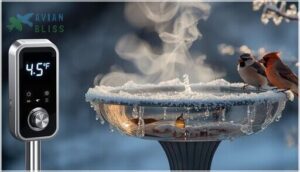
Think of thermostat and timer controls as the autopilot system for your bird bath—they sense when temperatures drop and kick the heater into action, then power down when conditions stabilize, so you’re not burning energy around the clock.
Quality thermostats maintain precise temperature regulation between 40-50°F, while timer functions let you schedule heating cycles during peak cold periods.
These control systems deliver real energy efficiency without compromising your birds’ access to safe, ice-free water.
Wattage and Power Efficiency
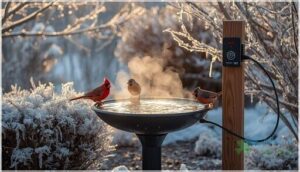
Most automatic heated bird bath controllers operate between 44 and 75 watts—enough to keep water open at -20°F without driving up your electric bill.
A 50-watt model costs roughly $0.10 daily, and thermostats slash that by 50% through smart temperature control that activates only when needed.
Look for energy efficient solutions with insulated elements and eco-friendly designs under 60 watts for maximum thermal efficiency and real energy savings.
Safety and Weatherproof Design
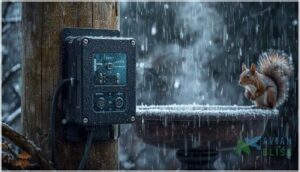
A bird bath controller faces torrential rain, ice storms, and curious squirrels—weatherproof construction separates years of reliable performance from an early replacement.
Look for these critical protections:
- IP65-rated enclosures that seal out water intrusion while maintaining electrical safety for bird baths
- Freeze protection with corrosion-resistant heating elements built for outdoor reliability
- UV-stabilized, impact-resistant housings ensuring material durability through freeze-thaw cycles
Proper weather resistance and thermostat control deliver outdoor heating solutions you can trust year-round.
Auto Shut-Off and Energy Saving Modes

Smart controllers that cut power when water runs dry don’t just prevent damage—they slash your electricity bill by up to 40% compared to legacy heaters running nonstop through winter.
Look for thermostat settings that maintain ideal temperatures only when needed, paired with bird bath timers for precise power management.
Eco modes and automatic bird bath refill compatibility turn your setup into a smart home device that conserves energy while keeping birds safe.
Choosing The Right Controller for Your Needs
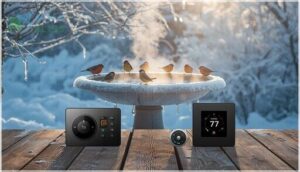
Choosing the right heated controller isn’t one-size-fits-all—get it wrong and you’ll either watch your bird bath freeze over or burn through electricity needlessly.
What works depends on your local winters, the size of your bath, and how your current setup runs.
Here’s what you need to consider to match the right controller to your situation.
Matching Capacity to Climate and Bath Size
Choosing the right wattage isn’t just about numbers—it’s about matching your climate zone and basin dimensions to prevent both ice formation and wasted energy. Here’s what you need to keep in mind:
- Climate Considerations: In regions with temperatures below 20°F, opt for 150-200 watt heated bird baths; milder zones (20-32°F) work fine with 50-100 watts
- Bath Size Calculations: Small basins (under 18″ diameter) need 75-100 watts, while larger baths (24″+) require 150-250 watts for adequate winter bird care
- Water Depth Management: Shallow baths (1-2″ deep) heat faster with lower wattage; deeper reservoirs demand more capacity
- Heater Capacity Selection: Match your bird bath heater to both water volume and regional temperature mapping—thermostats help fine-tune temperature control automatically
Installation Requirements and Ease
Once you’ve nailed the wattage and sizing, the real question is whether you’ll spend 10 minutes or an entire afternoon getting everything hooked up. Most automatic bird bath refill controllers and Bird Bath Timers snap into place with minimal tool requirements—usually just a screwdriver and weatherproof extension cord.
Here’s what impacts installation:
| Factor | What to Expect |
|---|---|
| Mounting Options | Clip-on heaters, submersible units, or basin-edge brackets |
| Space Planning | Allow 6-12″ clearance for thermostats and smart home devices |
| Installation Costs | DIY-friendly (under $10 in supplies) vs. professional wiring |
| Weather Resistance | Look for IP65+ ratings and sealed temperature control connections |
Position your controller where it’s accessible for seasonal adjustments without compromising safety.
Compatibility With Bird Bath Styles
Not every bird bath pairs seamlessly with every controller—pedestal basins, ground-level dishes, and hanging models each present their own wiring and clearance challenges.
Ground Level Baths and Freestanding Styles accommodate most bird bath heater units without modification, while Deck Mount Options and Heated Bowl Designs often require low-profile thermostats.
Check Bird Bath Materials for heat tolerance—ceramic and concrete withstand heated systems better than lightweight plastics that warp under sustained warmth.
Smart Bird Bath Technology Enhancements
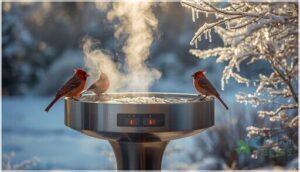
Bird bath heaters used to be simple—just a heating element doing its job.
Now? Smart controllers manage cleaning cycles, power usage, and even help you track which birds stop by.
Here’s what’s changed to make winter bird care simpler and more enjoyable.
Let’s explore the innovations that make winter bird care easier and more rewarding than ever.
Winter water maintenance goes beyond ice prevention. Algae growth, fallen debris, and mosquito larvae can quickly compromise your bird bath’s safety.
Keeping water fresh in winter isn’t just about preventing ice—it’s about stopping algae, debris, and mosquito larvae from turning your bird bath into a health hazard.
That’s where auto-cleaning features and circulation pumps come in. Modern systems use integrated filters and scheduled cleaning cycles to keep water moving and pure.
Some models even include automatic bird bath refill capabilities, ensuring your water circulation systems maintain ideal filtration without constant monitoring. These algae control technologies create a safer environment for visiting birds.
Solar-Powered and Eco-Friendly Options
Harnessing renewable energy through solar panels transforms your heated bird bath into a sustainable living solution. Solar-powered systems now deliver up to 75% of heating needs—impressive when you consider they slash conventional energy costs while supporting water conservation.
These eco-friendly products store energy in lithium batteries, keeping water flowing even after sunset. Your bird bath heater runs independently, reducing carbon footprint without sacrificing the reliable warmth winter birds desperately need.
Integrated Cameras and Bird Monitoring
High-definition cameras built into modern bird bath systems let you witness feathered dramas unfold from your smartphone—transforming casual birdwatching into front-row wildlife theater. Motion detection alerts you when species arrive, while AI-powered bird species identification logs visitors automatically—no field guide needed.
Sophisticated systems offer:
- 24/7 camera resolution capturing detailed bird behavior analysis
- Automatic bird bath refill sensors maintaining ideal water levels
- Wildlife observation recordings for outdoor birding enthusiasts
- Real-time notifications supporting wildlife conservation efforts
- Bird bath maintenance alerts preventing algae buildup
You’ll document migration patterns and feeding habits while lounging indoors.
Maintenance and Troubleshooting Tips

Here’s what you need to know about routine care and quick fixes to keep your setup running smoothly when the mercury drops.
Even the best automatic heated controllers need regular attention to keep working through winter’s toughest conditions. Simple upkeep prevents most problems before they start, but knowing how to troubleshoot common issues saves you from scrambling when temperatures drop.
Let’s walk through the essential maintenance steps and quick fixes that’ll keep your feathered visitors coming back all season.
Routine Cleaning and Upkeep
Your heated bird bath controller can’t do its job if algae, mineral deposits, and debris turn the water into a science experiment gone wrong. Even with autocleaning features or an automatic bird bath refill, you’ll need a simple weekly routine to keep things safe for your feathered visitors.
| Task | Frequency | Why It Matters |
|---|---|---|
| Empty and scrub basin | Weekly | Algae control and water quality |
| Check filter maintenance | Bi-weekly | Prevents clogs in circulation systems |
| Inspect heating element | Monthly | Ensures reliable heated bird bath maintenance |
| Deep sanitize with vinegar | Monthly | Bath sanitizing without harsh chemicals |
This minimal maintenance protects both birds and your investment in smart technology.
Addressing Heater Malfunctions
When the heating element refuses to warm up or trips your circuit breaker mid-winter, troubleshooting doesn’t have to mean emergency trips to the store or frustrated birds circling a frozen bath. Start with these diagnostic steps for heater repair:
- Check your thermostat control settings—faulty thermostats often get bumped out of range
- Inspect the heating element for visible corrosion or mineral buildup
- Test power issues by plugging another device into the same outlet
- Verify your bird bath heater isn’t sitting in an empty basin (auto shut-off malfunction)
- Look for frayed wiring where electrical safety concerns most often hide
Most heated bird baths fail from simple fixes, not catastrophic breakdowns.
Extension Cord and Power Safety
Outdoor electrical connections in freezing weather aren’t just inconvenient when they fail—they’re genuine fire hazards that put your home and the birds you’re trying to help at risk. Always use outdoor-rated extension cables with weatherproof covers over power outlets. Look for safety ratings like UL certification, and pair your outdoor heating setup with surge protectors.
Some birders skip electrical safety entirely by switching to solar panels with backup batteries—a smart move when thermostats and cord protection feel like too much winter hassle.
Product Review: Heated Birdbath for Winter Birds
 View On Amazon
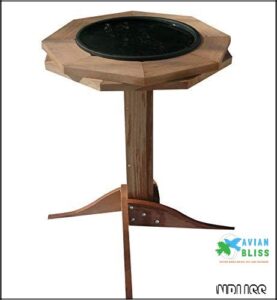
The All Seasons Heated Birdbath stands out among heated bird baths for its blend of form and function. Built from long-lasting red cedar with a hollow post for discreet cord routing, it houses a 60-watt thermostat control system that prevents freezing down to -10°F—critical for maintaining open water when frozen ponds leave bird species scrambling for hydration during winter feeding season.
The 0.5-gallon basin accommodates chickadees, cardinals, and bluebirds, though its shallow depth means you’ll refill often in sub-zero stretches. At $169.95, you’re investing in durable birdbath materials and reliable energy efficiency, though the 12-inch cord demands an outdoor extension.
Assembly takes patience, and the rough cedar may splinter, but once installed, this heated birdbath transforms your yard into a life-saving oasis that draws diverse species all winter long.
Best For: Bird lovers in cold climates who want a durable, low-maintenance solution to keep water accessible for winter birds when temperatures drop below freezing.
- Keeps water ice-free down to -10°F with a thermostat-controlled 60-watt heater, ensuring birds have reliable access to hydration during harsh winter conditions.
- Attractive red cedar construction with hollow post for hidden cord routing blends naturally into landscaping while providing long-lasting durability.
- Energy-efficient thermostat activates only when needed, reducing operating costs compared to constantly-running models.
- Shallow 0.5-gallon basin requires frequent refilling due to evaporation and bird activity, especially during extended cold snaps.
- Short 12-inch power cord necessitates purchasing a separate outdoor-rated extension cord for most installations.
- Rough cedar wood and tricky assembly process may cause splinters and frustration during setup.
Frequently Asked Questions (FAQs)
How much does a heated controller cost typically?
Basic thermostats start around $15-25, while feature-rich models with timers and digital displays range from $40-
Budget options under $30 work well for mild winters, though premium controllers deliver better energy savings and durability in harsh climates.
Can I use existing bird bath with controller?
Most controllers work with ceramic, concrete, or stone basins you already own.
Check that your Bird Bath Heaters fit the bowl dimensions and support Thermostat Control before purchasing—some Heated Bird Baths require specific wattage for effective Heater Integration.
What warranty coverage do most controllers offer?
Most bird bath heaters and thermostats come with a one-year manufacturer support guarantee, though some premium models offer extended coverage up to three years.
Replacement policies vary—some brands provide full unit swaps, while others focus on repair options for malfunctioning temperature control components.
How long do heated controllers typically last?
Most quality bird bath heaters and thermostats last three to five years with proper care.
Durability tests show weather resistance and energy efficiency directly impact controller lifespan, while replacement costs vary by wattage and temperature control features.
Are there bird bath heaters for ponds?
While standard bird bath heaters work in shallow basins, pond heating requires specialized submersible heaters designed for larger water volumes.
Look for pond heaters with thermostat control and sufficient wattage—often 100 to 500 watts—to maintain open water for birds year-round.
Conclusion
Like the goldfinch that knows exactly which branch holds steady through the storm, choosing the right automatic heated bird bath controller means understanding what truly matters: reliability when temperatures plummet, efficiency that won’t spike your electric bill, and compatibility with your setup.
You’ve seen the features, compared the technologies, and learned the maintenance essentials. Now your winter feeding station can offer what hungry, thirsty birds desperately need—open water that stays liquid without your constant attention, transforming your yard into a genuine refuge during the season’s harshest days.
- https://www.linkedin.com/pulse/north-america-bird-bath-market-drivers-challenges-uwojf
- https://birdingdepot.com/best-heated-bird-baths/
- https://thebackyardnaturalist.com/wordpress/portfolio-items/bird-bath-heaters-deicers/
- https://www.homesandgardens.com/gardens/heated-bird-baths
- https://www.youtube.com/watch?v=pe-ZjBZkGH0