This site is supported by our readers. We may earn a commission, at no cost to you, if you purchase through links.
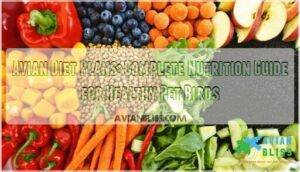 Creating effective avian diet plans isn’t rocket science, but it’s more complex than tossing seeds in a bowl.
You’ll want to build your bird’s nutrition around high-quality pellets (60-80% of diet), fresh vegetables (20-30%), and limited fruits and treats (5-10%).
Each species has unique needs – finches thrive on seed mixes while parrots need beta-carotene rich foods.
Fresh water daily prevents bacterial issues, and proper calcium-to-phosphorus ratios keep bones strong.
The biggest mistake? Sticking with all-seed diets that lead to selective eating and nutritional gaps, which can be addressed with smart feeding strategies that can transform even the pickiest eaters into healthy, vibrant companions.
Table Of Contents
Key Takeaways
- Build your bird’s diet around high-quality pellets (60-80%), not seeds – pellets prevent selective eating and nutritional deficiencies that come with all-seed diets
- You’ll need species-specific nutrition plans – finches thrive on seed mixes while large parrots require beta-carotene rich foods and different protein levels
- Monitor your bird’s weight weekly and watch for changes – sudden weight loss, feather problems, or appetite changes signal that you need veterinary guidance immediately
- Transition gradually when changing diets – reduce seeds by 10-20% weekly over 3-6 months, using foraging techniques and formed products to ease the switch
Essential Components of Avian Diet Plans
Creating a thorough nutrition plan for your bird requires understanding six critical components that work together to support ideal health.
Each nutrient plays a specific role in maintaining your feathered companion’s well-being, from basic hydration needs to complex metabolic processes that affect everything from feather quality to reproductive success, involving complete concepts and complex metabolic processes.
Water
Water serves as your bird’s lifeline, requiring fresh supplies daily to maintain proper hydration levels and support essential bodily functions.
Fresh water daily isn’t just important—it’s your bird’s absolute lifeline for survival and health
Clean water prevents bacterial contamination that threatens avian health, while also meeting essential bathing needs that promote feather condition and natural behaviors.
Monitor your bird’s water delivery system carefully, watching for deficiency signs like lethargy or decreased appetite that indicate inadequate hydration in your avian nutrition plan.
Ensuring access to filtered water benefits your bird’s health.
Protein and Amino Acids
Your bird’s protein requirements form the foundation of cellular repair and growth.
Granivorous birds need minimum 12% protein, while others require higher levels depending on species and life stage.
Quality protein sources include pellets, cooked beans, and sprouted seeds.
Watch for deficiency symptoms like poor feather quality or slow molting.
Excess protein can trigger behavioral issues and regurgitation, so balance carefully without risky supplementation to maintain overall health.
Fats and Essential Fatty Acids
Essential fatty acids fuel your bird’s cellular machinery, yet excess fats trigger obesity risks and liver disease.
Linoleic and arachidonic acids support feather quality and brain function, while omega-3 supplementation benefits cardiovascular health.
Monitor fat content in commercial diets, as high-fat seeds can overwhelm lipid metabolism. Balance dietary sources through controlled portions of nuts and quality pellets for ideal avian nutrition.
Carbohydrates
Carbohydrates fuel your bird’s daily activities like premium gasoline powers a sports car.
These energy-rich compounds convert to glucose through digestive enzymes, providing immediate fuel for flight, play, and essential metabolic functions. However, excess carbohydrates transform into fat within the liver, potentially causing health complications.
Key carbohydrate considerations for avian nutrition:
- Carbohydrate Sources – Whole grains, fruits, and vegetables provide complex carbs with beneficial fiber content
- Energy Conversion – Simple sugars offer quick energy bursts while complex carbs sustain longer activity periods
- Glycemic Index – Lower-index foods prevent blood sugar spikes and support stable energy levels
- Fiber Content – Adequate fiber aids digestion and promotes healthy gut bacteria in your avian diet
Calcium and Minerals
Throughout your bird’s lifespan, calcium absorption plays a vital role in bone health, shell formation, and nerve function.
You’ll need to maintain proper mineral ratios between calcium and phosphorus (1:1 to 2:1) since high phosphorus interferes with calcium uptake.
Mineral deficiencies can lead to serious health issues, while supplement toxicity from over-supplementation causes kidney damage.
All birds require calcium supplementation for ideal avian nutrition and meeting their essential nutritional requirements.
Vitamins
Vitamins act as your bird’s metabolic powerhouses, supporting everything from immune function to reproduction.
Most commercial pellets provide adequate vitamin levels, but vitamin D3 requires special attention since indoor birds lack sunlight exposure.
Watch for deficiency signs like poor feather quality, weakness, or frequent illness.
However, hypervitaminosis from over-supplementation can damage kidneys, so avoid unnecessary vitamin additions.
Antibiotics may disrupt absorption, requiring temporary supplementation under veterinary guidance.
Factors Influencing Avian Dietary Choices
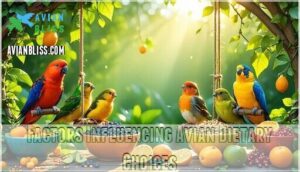
Your bird’s dietary needs aren’t one-size-fits-all—they’re shaped by where they live, how they behave, and what stage of life they’re experiencing.
Understanding these key factors helps you create a feeding plan that matches your feathered friend’s specific requirements for ideal health and happiness.
Environmental Considerations
Environmental factors substantially impact your bird’s nutritional needs and feeding behaviors.
Wild birds adapt their diets based on seasonal food availability, habitat conditions, and climate variations. Understanding these influences helps you create better feeding strategies.
- Food sourcing: Mimic natural foraging patterns through environmental enrichment and foraging toys to stimulate natural behaviors
- Habitat impact: Consider your bird’s origin climate when selecting foods, as tropical species need different nutrition than temperate birds
- Climate change: Seasonal temperature shifts affect metabolism, requiring adjustments in caloric density and feeding frequency year-round
Pollution effects and habitat destruction have altered wild food sources, making sustainable diets more important for captive birds.
These changes can impact seasonal food availability.
Your pet’s evolutionary dietary adaptations remain strong, so replicating their natural environment’s food variety supports ideal avian nutrition and psychological well-being.
Behavioral and Physiological Factors
Your bird’s behavioral and physiological traits shape their food preferences and feeding patterns.
Foraging behavior varies by species—some prefer ground feeding while others seek tree canopy meals.
Social feeding dynamics influence appetite, as many birds eat better with companions.
Stress substantially impacts gut microbiome balance, affecting nutrient absorption. Understanding these natural tendencies helps you create effective feeding schedules and portion control strategies.
Life Stage and Species Differences
Your bird’s nutritional needs shift dramatically as it ages, much like how a growing child requires different food than their grandparent.
Each species also brings unique dietary requirements shaped by millions of years of evolution.
Key considerations include:
- Neonate Nutrition – Hand-feeding formulas provide essential macronutrients and micronutrients for rapid growth
- Juvenile Diets – Higher protein supports feather development and organ maturation during this critical phase
- Senior Feeding – Adjusted portions and easier-to-digest foods accommodate slower metabolisms and potential health issues
Species variations demand dietary adaptations ranging from seed-heavy finch diets to nectar-rich lorikeet formulations.
Understanding these life stages and species-specific diets guarantees your feathered friend receives the best nutrition throughout their journey.
Comparing Pelleted and Seed-Based Diets
When choosing between pelleted and seed-based diets for your bird, you’ll find significant nutritional differences that directly impact your pet’s health and longevity.
Pelleted diets offer complete nutrition in every bite, while traditional seed mixes often create imbalanced eating patterns that can lead to deficiencies over time, affecting your bird’s overall health and longevity.
Types of Commercial Formulated Foods
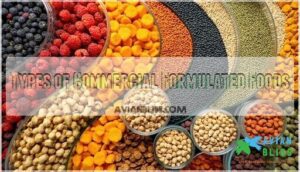
Commercial bird food manufacturing creates diverse nutritional solutions through multiple processing methods.
You’ll find pelleted diets, extruded pellets, bound pellets, and specialty products like NutriBerries from companies such as Lafeber Company and Roudybush, each offering unique benefits for your feathered friend’s dietary needs.
Many pet owners find success using these bird food products.
| Food Type | Manufacturing Process | Key Features |
|---|---|---|
| Bound Pellets | Ground ingredients compressed without cooking | Longer fiber chains, less palatable but nutritious |
| Extruded Diets | High pressure/temperature processing | Varied shapes, colors, enhanced digestibility |
| Whole Grains | Minimal processing, natural form | Species-appropriate textures, foraging enrichment |
| Seed Coatings | Vitamins/minerals applied to seed surfaces | Nutrient loss during dehulling, less effective |
| Formed Products | Shaped combinations of seeds and pellets | Changeover-friendly, behavioral stimulation |
Advantages of Pelleted Diets
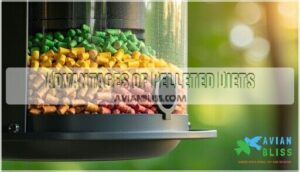
Pelleted diets offer significant advantages for maintaining prime avian health. Unlike scattered seed mixes, these complete formulations guarantee your bird receives balanced nutrition in every bite.
This approach eliminates selective eating patterns that commonly lead to nutritional deficiencies.
Three key benefits make pelleted diets superior:
- Consistent Intake – Each pellet contains identical nutritional content, preventing birds from picking favorite ingredients while avoiding others.
- Reduced Waste – Uniform pellet size minimizes spillage and food selection, making feeding more economical and cleaner.
- Enhanced Health – Complete vitamin and mineral profiles support stronger immune systems, better feather quality, and increased energy levels.
This thorough approach to avian nutrition directly contributes to longer lifespan outcomes for pet birds.
Challenges With Seed-Based Diets
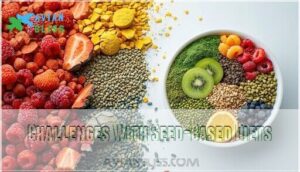
Seed-based diets create a perfect storm of nutritional problems for your feathered friend.
Seeds alone spell disaster—your bird deserves complete nutrition, not selective eating habits that create vitamin deficiencies
These diets typically contain excessive fat content, leading to obesity and liver disease, while creating severe nutrient deficiencies in vitamins A, D, and essential minerals.
Most birds selectively eat their favorite seeds, worsening mineral balance issues.
Health consequences include weakened immune systems, poor feather quality, and shortened lifespans, making vitamin supplements necessary but insufficient solutions.
A more appropriate approach involves creating balanced diet plans suited to the bird’s species, which can help mitigate these health consequences and ensure a longer, healthier life with a balanced diet.
Transition Strategies From Seeds to Pellets
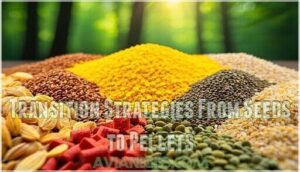
Successfully converting your bird from a seed diet to pelleted diets requires patience and strategic planning.
Most birds adapt within three to six months using gradual introduction methods that reduce seeds by 10-20% weekly.
Here are five proven diet conversion strategies:
- Gradual reduction – Mix pellets with seeds, slowly decreasing seed portions over weeks
- Scheduled feeding – Offer pellets during set times, seeds for limited periods
- Foraging techniques – Hide pellets in toys to encourage natural exploration behaviors
- Formed seed products – Use intermediate foods like Nutri-Berries as stepping stones
- Social learning – Let pellet-eating birds demonstrate acceptance to reluctant eaters
Owner education about fecal monitoring helps track progress, while daily weighing prevents dangerous weight loss exceeding 10%.
Switching to pellets addresses common micronutrient deficiencies often seen with seed-based diets.
Species-Specific Avian Feeding Guidelines
Just as a chef wouldn’t serve the same dish to every diner, you can’t feed every bird species the same way and expect peak health.
Each avian species has evolved unique digestive systems and nutritional requirements that demand specific feeding approaches for proper growth, reproduction, and longevity.
This understanding is crucial for proper growth, reproduction, and longevity of the birds.
Small Parrots and Parakeets
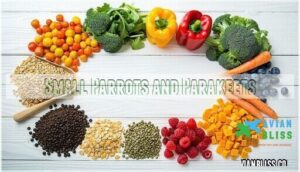
Your feathered friends deserve nutritional excellence. Small parrots like budgerigars, cockatiels, and lovebirds thrive on balanced diets emphasizing quality over quantity.
These intelligent companions require careful attention to prevent parakeet obesity while ensuring proper budgie nutrition through strategic dietary enrichment approaches.
| Food Category | Percentage of Diet | Examples |
|---|---|---|
| High-Quality Pellets | 60-75% | Species-appropriate formulated diets |
| Fresh Vegetables | 20-30% | Dark leafy greens, bell peppers, carrots |
| Limited Fruits & Treats | 5-10% | Berries, millet spray (sparingly) |
Cockatiel diets and lovebird feeding protocols share similar foundations, requiring daily calcium sources like cuttlebone to support their high egg-laying rates.
Your parrot diet should prioritize pellets over seeds, as excessive seed consumption leads to vitamin A deficiency and hepatic lipidosis in up to 90% of cases.
Smart lovebird food choices include colorful vegetables that provide essential phytonutrients. Remember, millet serves best as training rewards rather than dietary staples, keeping your avian diet both nutritious and behaviorally enriching.
Doves and Pigeons
Your doves and pigeons need a different approach compared to smaller parrots.
These ground-feeding birds naturally consume seeds, grains, and vegetation in their wild diets, making their nutritional needs distinct.
- Base diet composition: Provide quality pigeon pellets (50-60%) with mixed whole seeds and grains (40-50%)
- Grit needs: Offer insoluble grit or oyster shell for proper digestion and calcium
- Crop milk consideration: Breeding pairs produce this protein-rich secretion for chicks
- Urban doves adaptation: City birds often lack proper bird nutrition, requiring avian veterinarians’ guidance
Finches and Canaries
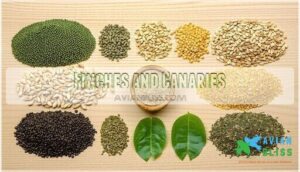
Unlike pigeons that thrive on whole grains, finches and canaries require specialized care with their delicate digestive systems.
These tiny songbirds need 70-80% high-quality finch food or canary seed mixtures, supplemented with fresh greens.
Seed variety matters—different species benefit from distinct blends.
| Dietary Component | Finches | Canaries |
|---|---|---|
| Base Diet | Small seed mix (nyjer, millet) | Canary seed blend with rapeseed |
| Breeding Nutrition | Higher protein seeds, egg food | Increased fat content, sprouted seeds |
| Color Enhancement | Red factor seeds for some species | Beta-carotene rich foods |
During molting diets, increase protein content.
Grit supplementation aids digestion, while cuttlebone provides essential calcium.
Monitor these small birds closely—their rapid metabolisms make dietary changes critical for health.
Rapid metabolisms and the need for essential calcium are key factors in their care.
Large Parrots and Conures
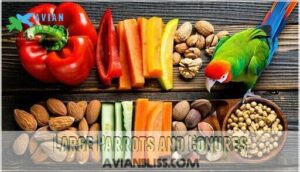
When feeding large parrots and conures, you’ll need a foundation of high-quality pellets comprising 60-80% of their daily intake.
These intelligent parrots thrive on dietary enrichment that mimics their natural foraging behavior.
Here’s your feeding approach:
- Base Diet: Provide commercial pellets specifically formulated for macaw food and large parrot species, supplemented with 20-40% fresh vegetables and fruits
- Beta-Carotene Sources: Offer daily orange and red vegetables like carrots and bell peppers to prevent respiratory illness in parrots and cockatoos
- Healthy Fats: Include nuts (10-15% of calories for macaws) to support beak health and overall condition in your avian diet
- Social Feeding: Encourage natural eating patterns through shared meals and foraging toys that promote species-appropriate behavior
Always practice toxin avoidance by eliminating chocolate, avocado, and caffeine from their environment. Supplementing with sprouted seeds can offer bioavailable nutrients.
Insectivorous, Herbivorous, and Omnivorous Birds
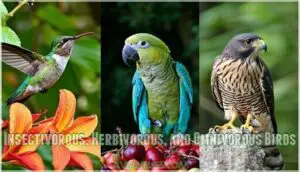
Different bird species have evolved distinct digestive adaptations that shape their nutritional requirements.
Insectivorous birds need protein-rich diets with 30-60% animal matter, while herbivorous species thrive on plant-based nutrition comprising 80-95% seeds and fruits.
Omnivorous birds demonstrate remarkable dietary flexibility, switching between 60% animal protein during breeding season to 80% plant matter in winter, requiring balanced macronutrients and diverse micronutrients for peak health.
Implementing and Adjusting Avian Diet Plans
Creating a successful diet plan is just the beginning—you’ll need to monitor your bird’s response and make adjustments as needed.
Regular weight checks and watching for changes in eating habits help guarantee your feathered friend stays healthy and thriving.
Monitoring Body Condition and Weight
Regular monitoring keeps your bird’s avian nutrition on track.
Weigh your bird weekly using a digital scale, recording changes that indicate dietary adjustments needed.
Assess muscle mass by palpating keel bone prominence—a sharp keel suggests underweight conditions.
Check hydration status through skin elasticity and observe fecal changes, as consistency reflects diet quality and digestive health in your bird’s overall wellness plan.
Supplementation and Treats
Once you’ve mastered weight monitoring, smart supplementation becomes your next step.
Most pelleted diets don’t require extra vitamins or minerals—overdoing it risks vitamin overdose and mineral balance disruption.
However, seed-heavy diets benefit from calcium supplements like cuttlebones.
Probiotic benefits include improved digestion, while omega-3 sources support feather health.
Practice treat moderation: leafy greens daily, fruits twice weekly, and seed sticks once weekly maximum.
To support feather health, consider incorporating plant-based options into their diet.
Common Dietary Challenges and Solutions
You’ll face several dietary challenges when caring for birds, but smart solutions exist for each problem.
Obesity Solutions include strict portion control and reducing high-fat treats.
Malnutrition Risks decrease with balanced pelleted diets over seed-only feeding.
Food Allergies require identifying trigger ingredients through elimination diets.
Digestive Disorders need immediate veterinary attention.
Supplement Overuse can harm your bird—follow dosage guidelines carefully for successful diet conversion.
When to Consult an Avian Veterinarian
Seek professional veterinary guidance when you notice sudden weight loss, feather abnormalities, behavioral changes, appetite changes, or fecal changes in your bird.
Avian veterinarians provide specialized nutrition advice and can identify underlying health issues that affect dietary needs.
Don’t wait—early intervention prevents minor problems from becoming serious conditions requiring intensive treatment.
Frequently Asked Questions (FAQs)
How often should birds eat daily?
You should feed your bird twice daily with high-quality pellets as the foundation. This consistent schedule supports proper digestion, maintains healthy weight, and allows treats to serve as behavioral rewards.
Can birds eat chocolate or avocado safely?
No, birds can’t safely eat chocolate or avocado.
Chocolate contains theobromine and caffeine, which are toxic to birds and can cause seizures or death.
Avocado contains persin, another deadly toxin for birds.
What temperature should bird food be served?
Room temperature food works best for birds.
You’ll want to serve fresh items at around 65-75°F, avoiding anything hot that could burn their sensitive beaks or cold food straight from the fridge.
How long do opened pellets stay fresh?
Opened pellets typically stay fresh for 6-8 weeks when stored properly in a cool, dry place.
You’ll want to seal them tightly after each use to prevent spoilage and nutrient loss.
Should sick birds have different diets?
Yes, sick birds often require dietary modifications.
You’ll need veterinary guidance to adjust nutrition based on their specific condition, ensuring proper hydration, easily digestible foods, and sometimes supplementation to support recovery.
Conclusion
What makes the difference between a thriving pet bird and one that merely survives?
Successful avian diet plans require consistent monitoring, gradual shifts, and species-specific adjustments to maintain peak health.
You’ve learned that quality pellets form the foundation, fresh vegetables provide essential nutrients, and careful observation prevents common dietary pitfalls.
Remember that each bird responds differently to dietary changes, so patience during phases of change is vital.
By following these evidence-based guidelines and consulting your avian veterinarian when needed, you’ll provide the nutritional foundation your feathered companion needs for a long, healthy life.
- https://www.shilohsvet.com/blog/eat-like-a-bird-the-avian-diet-demystified-%EF%BB%BF/
- https://www.merckvetmanual.com/poultry/nutrition-and-management-poultry/nutritional-requirements-of-poultry
- https://lafeber.com/vet/the-nutritional-content-of-pet-bird-diets/
- https://todaysveterinarynurse.com/nutrition/avian-nutrition/
- https://www.sunflowernsa.com/all-about/bird-feeding/types-of-food/