This site is supported by our readers. We may earn a commission, at no cost to you, if you purchase through links.
 You’ll need to tackle avian mite and lice control with a two-pronged approach that targets both your bird and the environment.
Your vet will prescribe ivermectin-based treatments, sprays, or powders to eliminate these pesky parasites directly on your feathered friend.
However, that’s just half the battle. You must thoroughly clean and disinfect the cage, vacuum your entire home, and consider professional pest treatment to break the parasite life cycle.
Bird lice feast on feathers, skin, and blood, making quick action essential. Think of it as cutting off their food supply while evicting them from their favorite hiding spots.
The key lies in understanding their sneaky survival tactics, which is crucial for effectively controlling the infestation, and by doing so, you will be able to break the parasite life cycle and ensure your bird’s health and well-being by taking professional pest treatment.
Table Of Contents
- Key Takeaways
- Avian Mite Basics
- Identifying Mite Infestations
- Treating Mite Infestations
- Preventing Mite Infestations
- Mite Control Methods
- Frequently Asked Questions (FAQs)
- How to get rid of mites and lice on birds?
- How do you get rid of poultry lice and mites?
- What is the best mite killer for birds?
- What household cleaner kills bird mites?
- Can bird mites infest human homes permanently?
- Do wild birds transmit mites to pet birds?
- Are mite infestations seasonal or year-round problems?
- Can mites develop resistance to common treatments?
- Should infected birds be isolated from healthy flocks?
- Conclusion
Key Takeaways
- You’ll need to use both targeted treatments (like ivermectin or pyrethrin sprays) on your birds and thoroughly clean their environment to break the parasite life cycle completely.
- You must quarantine new birds for 30 days and conduct weekly physical examinations to catch infestations early before they spread to your entire flock.
- You can’t rely on household cleaners—you’ll need specialized avian-safe treatments like diatomaceous earth or permethrin-based formulas designed specifically for birds.
- You should rotate between different active ingredients (ivermectin, permethrin, pyrethrin) and repeat treatments every 5-7 days for three cycles to prevent resistance and eliminate newly hatched parasites.
Avian Mite Basics
You’ll encounter several types of external parasites when caring for birds, including Northern fowl mites, red mites, scaly mites, and various lice species that affect domestic fowl and wild birds.
Birds face relentless attacks from tiny bloodsuckers that hide, feed, and multiply faster than you’d expect.
Understanding these parasites’ characteristics, feeding habits, and life cycles helps you identify infestations early and choose the most effective treatment methods for your flock.
Types of Bird Mites
You’ll encounter several distinct avian mites when caring for birds, each with unique characteristics and feeding habits.
These microscopic parasites can quickly multiply and cause serious health issues if left untreated.
- Red mites hide in cracks during daylight, emerging at night to feed on blood and potentially causing red mite anemia
- Northern fowl mites appear reddish-brown, live continuously on birds, and cause severe skin irritation through constant feeding
- Scaly leg mites burrow under leg scales, creating raised, crusty formations that can permanently deform feet
- Air sac mites invade respiratory systems, causing breathing difficulties and potentially fatal complications in severe cases
- Bird mite visibility varies by species, with mature mites reaching 1/32 inch long and becoming visible to naked eyes
To prevent infestations, seal all entry points around your home.
Characteristics of Bird Lice
Bird lice belong to the order Mallophaga and display distinct lice morphology with flattened bodies and strong claws for gripping feathers.
These wingless parasites show remarkable host specificity, with different lice species targeting specific bird types.
Feather lice primarily consume keratin and skin debris, while body lice feed on blood and secretions, causing significant feather damage through their persistent feeding habits, which can be considered a form of feather damage.
Life Cycles of External Parasites
Understanding parasite lifecycle management helps you combat these pests effectively.
Red mites complete their bird parasite life cycle in 7-10 days, while northern fowl mites finish their mite life cycle faster at 5-7 days.
Scaly leg mites take three weeks for full parasite evolution.
Environmental impact affects lifecycle duration—warmer temperatures accelerate mite development and lice reproduction, making avian parasite lifecycle monitoring essential for treatment timing.
Identifying Mite Infestations
You’ll notice the first signs of mite infestations when your birds start showing small bite marks across their bodies, along with increased scratching and feather damage.
Early detection requires you to examine your birds regularly for skin irritation, weight loss, and changes in behavior that indicate external parasites are present, which can lead to serious health issues if not addressed promptly.
Signs of Bird Mite Infestation
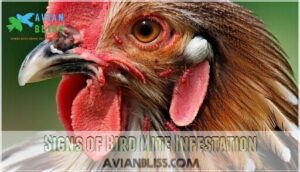
Spotting mite infestation birds requires watching for telltale signs that’ll tip you off before the problem gets out of hand. Bird mites leave distinct clues that you can’t miss once you know what to look for.
Bird mites leave unmistakable calling cards—you just need to know where to look for the evidence.
Watch for these red flags that signal bird mites have moved in:
- Bite Locations – Small red welts appearing on exposed skin areas, especially around the neck and head
- Feather Damage – Broken, chewed, or missing feathers creating patchy, unkempt appearance
- Behavioral Changes – Excessive preening, head shaking, and restless scratching throughout the day
- Skin Irritation – Visible redness, scaling, or crusted lesions on bare skin patches
- Anemia Signs – Pale combs, lethargy, and weakness from blood-feeding parasites
Bird itching becomes constant when mites take hold. You’ll notice your birds can’t seem to get comfortable, constantly shifting and scratching. Bird skin lesions develop as the irritation worsens, creating open wounds that invite secondary infections. Bird feather damage starts subtle but quickly becomes obvious as mites destroy the feather structure from the base up.
Diagnosis of Lice Infestations
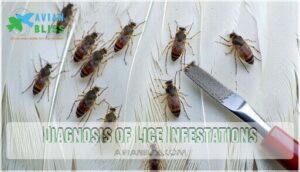
Looking for lice requires a systematic approach to bird parasite identification.
Start with thorough feather examination, parting plumage to spot tiny crawling insects.
Check pin feathers carefully, as lice often congregate there.
Observe behavioral changes like excessive preening or scratching.
For definitive lice treatment for birds, collect skin scrapings for microscopic analysis.
This bird lice control method confirms infestation severity before starting lice infestation treatment.
Symptoms of External Parasites
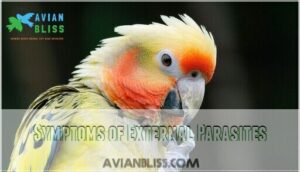
Your feathered friend’s constant scratching signals trouble brewing beneath those beautiful plumage layers.
External parasites trigger intense itching, causing excessive bird preening and noticeable behavioral changes.
Watch for feather damage, patchy bare spots, and reddened skin irritation around the head and neck areas.
Severe infestations lead to anemia signs like lethargy and pale beaks, while persistent bird scratching creates secondary skin damage requiring immediate attention to prevent further skin irritation.
Treating Mite Infestations
Once you’ve confirmed mite infestations in your birds, you’ll need to act quickly with targeted treatments that eliminate these parasites without harming your feathered companions.
Effective treatment options include topical ivermectin applications, specialized mite sprays containing permethrin or pyrethrin, and natural alternatives like food-grade diatomaceous earth that work by disrupting the parasites’ life cycles, which is a complete concept in managing mite infestations.
Treatment Options for Bird Mites
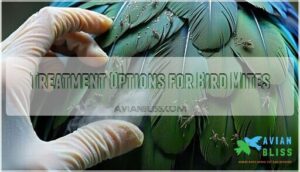
Effective bird mite treatment options include targeted sprays, topical medications, and veterinary-approved products.
Ivermectin dosage varies by bird weight and requires precise application for safety. Spray application should cover affected areas thoroughly while avoiding respiratory exposure.
Natural remedies like diatomaceous earth offer gentler alternatives. Veterinary care guarantees proper diagnosis and treatment selection.
Mites cause feather damage by feeding on skin debris. Re-infestation prevention requires consistent monitoring and environmental management to ensure the health and well-being of the birds, and proper diagnosis is crucial for effective treatment, which can be achieved through veterinary care.
Effective Treatments for Lice
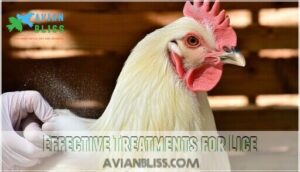
When tackling stubborn lice infestations, you’ll need targeted approaches that break the lice lifecycle effectively.
Here’s your treatment arsenal:
- Apply lice-specific Ivermectin topically based on your bird’s weight
- Use pyrethrin application through bird lice spray for immediate knockdown
- Dust affected areas with chicken lice dust containing natural ingredients
- Rotate between safe alternatives to prevent resistance development
- Repeat treatments every 7-10 days to eliminate newly hatched parasites.
Many owners source Ivermectin for bird lice to combat infestations.
Using Ivermectin and Fenbendazole
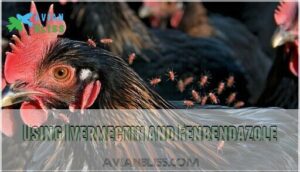
Ivermectin and Fenbendazole represent powerful antiparasitic medications for thorough avian mite treatment and lice treatment for birds.
Ivermectin dosage at 0.2 mg/kg targets mites effectively, while Fenbendazole spectrum covers multiple parasites through 3-5 consecutive days.
Combination therapy enhances efficacy against resistance concerns, and safe usage requires proper withdrawal periods and careful application methods for ideal results.
Chickens can also suffer from anemia due to blood loss caused by these parasites.
Preventing Mite Infestations
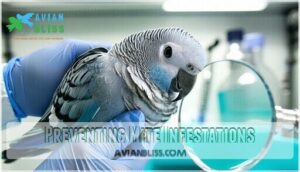
You’ll find preventing mite infestations much easier than treating them, as proactive measures stop parasites before they establish colonies on your birds.
Effective prevention requires consistent quarantine procedures for new birds, regular removal of empty nests and dead wildlife from your property.
Scheduled physical examinations are also necessary to catch early signs of parasitic activity, which is crucial for maintaining the health of your birds and preventing the spread of parasitic infestations.
Quarantine and Treatment Procedures
Proper quarantine protocols form your first defense against spreading parasites throughout your flock. New birds require immediate isolation and veterinary examination before joining established groups.
Follow these isolation protocols for effective avian pest control:
- Separate housing – Use dedicated quarantine cages away from healthy birds
- Medication schedules – Apply prescribed lice treatment for birds consistently
- Cage sanitation – Clean and disinfect quarantine areas daily
- Vet consultation – Schedule professional examinations within 48 hours
- Re-infestation prevention – Monitor for symptoms during 30-day isolation periods
Removing Empty Nests and Dead Birds
Beyond the obvious hygiene concerns, removing empty nests and dead birds forms your first line of defense against mite reinfestation.
Dead birds become breeding grounds for parasites that’ll quickly spread to healthy birds.
Here’s your systematic approach to nest sanitation and corpse disposal:
| Task | Timing | Safety Measures |
|---|---|---|
| Remove empty nests | Within 24 hours | Wear gloves, mask |
| Dispose of dead birds | Immediately | Double-bag corpses |
| Clean nesting areas | Weekly | Disinfect thoroughly |
| Inspect surroundings | Daily | Check for missed debris |
| Monitor for reinfestation | Ongoing | Document findings |
This habitat management strategy prevents disease transmission while reducing reinfestation risks in your avian pest control program.
Regular Physical Examinations
Weekly physical examinations serve as your first line of defense against parasitic infestations.
Schedule regular vet appointments with an avian veterinarian to establish baseline health metrics.
During these sessions, symptom monitoring becomes routine, allowing early detection of mites or lice before they spread.
Create a thorough health checklist covering feather condition, skin appearance, and behavioral changes for effective bird health management.
Birds showing restless scratching signs may be suffering from an infestation.
Mite Control Methods
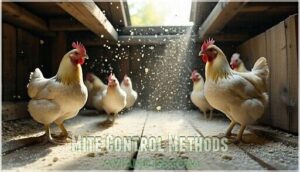
You’ll need effective control methods to eliminate mites and lice once they’ve infested your birds, with options ranging from commercial sprays to natural alternatives like diatomaceous earth.
Proper application techniques and product selection are essential for successful treatment while maintaining your birds’ safety and health.
Choosing a Bird Mite Spray
Picking the right avian mite spray guarantees effective mite control without harming your birds. Look for these key factors:
- Active ingredients: Choose bird-safe formulas like diatomaceous earth or permethrin.
- Residual protection: Opt for sprays offering long-lasting effects against re-infestation.
- Bird species compatibility: Confirm the product suits your specific poultry or pet birds.
To identify the source, begin by looking for bird nests nearby. Always prioritize spray safety and follow application methods carefully.
Applying Mite and Lice Sprays Safely
Apply avian mite spray from a safe distance, keeping birds at least six inches away from the nozzle. Use protective gear including gloves and masks to prevent inhalation.
Verify proper ventilation importance by opening windows or using fans during application. Remove other birds from the treatment area before spraying.
Many users find poultry mite solutions helpful for infestations. Avoid overuse by following label instructions precisely for effective poultry mite spray application.
Natural Alternatives for Mite Control
Natural remedies offer effective alternatives to chemical treatments for controlling avian mites.
Neem oil serves as a powerful option that targets parasites while remaining safe for birds. Essential oils like peppermint and rosemary create effective sprays when mixed with water.
Lemongrass treatment provides preventive protection. These herbal remedies eliminate toxins while maintaining control over infestations, making them an environmentally friendly and effective choice.
Using Diatomaceous Earth and Pyrethrin-Based Formulas
Two powerhouse treatments dominate natural mite control: diatomaceous earth and pyrethrin-based formulas.
DE application works by dehydrating parasites on contact, while pyrethrins disrupt their nervous systems.
Product selection matters—choose food-grade diatomaceous earth for direct bird contact. Consider poultry-specific diatomaceous earth for best results.
Pyrethrin safety requires proper ventilation and dosage. These natural vs. chemical options offer effective poultry mite control without harsh residues.
Frequently Asked Questions (FAQs)
How to get rid of mites and lice on birds?
Battling these tiny vampires requires swift action.
Use ivermectin or permethrin-based sprays specifically labeled for birds.
Apply treatments in well-ventilated areas, repeating after the parasite’s lifecycle completes.
Always quarantine new birds first.
How do you get rid of poultry lice and mites?
You’ll need to use targeted sprays containing permethrin or pyrethrin, applied directly to affected birds and their housing.
Treat every 5-7 days for three cycles to break the parasite lifecycle completely.
What is the best mite killer for birds?
Like a sharp sword cutting through the enemy’s ranks, Ivermectin stands as your most effective weapon against bird mites.
You’ll find it works exceptionally well when applied topically based on your bird’s weight.
What household cleaner kills bird mites?
Household cleaners won’t effectively kill bird mites.
You’ll need specialized avian-safe treatments like diatomaceous earth or pyrethrin-based sprays designed for birds.
Regular cleaners can harm your feathered friends while being ineffective against these persistent parasites.
Can bird mites infest human homes permanently?
Bird mites can’t establish permanent colonies in your home since they need avian hosts to survive.
Without birds, they’ll typically die within days to weeks, though they may bite humans temporarily while seeking their preferred hosts.
Do wild birds transmit mites to pet birds?
Yes, wild birds can transmit mites to your pet birds through direct contact, shared perches, or contaminated environments.
You’ll need to quarantine new birds and maintain proper hygiene to prevent cross-contamination between wild and domestic birds, ensuring a safe and healthy environment.
Are mite infestations seasonal or year-round problems?
Mite invasions don’t follow a calendar—they’re opportunistic troublemakers that strike year-round.
You’ll typically see heavier infestations during warmer months when parasites reproduce faster, but indoor birds face consistent risk regardless of season.
Can mites develop resistance to common treatments?
Parasites can develop resistance when you repeatedly use the same treatment. Rotating between different active ingredients like permethrin, ivermectin, and pyrethrin-based products helps prevent this issue and maintains effective control.
Should infected birds be isolated from healthy flocks?
Congratulations, you’ve discovered the secret to spreading parasites faster than gossip.
Absolutely isolate infected birds immediately.
You’ll prevent healthy birds from becoming walking pest hotels and stop the infestation from becoming an epic disaster.
Conclusion
Studies show that untreated mite infestations can reduce bird lifespans by up to 30%.
You’ve now learned that successful avian mite and lice control requires consistent monitoring, proper treatment protocols, and environmental management.
Remember to combine veterinary-prescribed medications with thorough cage cleaning and regular health examinations.
Don’t forget that prevention through quarantine procedures and nest removal remains your best defense, using evidence-based strategies to maintain your bird’s health while preventing future parasite problems effectively, with proper treatment.
- https://morningbirdproducts.com/products/dyna-mite-lice-mite-repellent-spray?srsltid=AfmBOopRiOx5rwEWfb7CNqE6wWVYdQ35Id9YdfiOEDtxISy9C3g_MCJD
- https://www.exoticpetvet.net/avian/mites.html
- https://www.youtube.com/watch?v=gz0OdDwqwnk
- https://www.mikesfalconry.com/product/mite-and-lice-spray/?srsltid=AfmBOoqGRhopjDlhW7Jbw22OmaDy3iTnstOK42se3OUa-fj_kw6khwg8
- https://www.vetshopmax.com/avitrol-bird-mite-lice-spray