This site is supported by our readers. We may earn a commission, at no cost to you, if you purchase through links.
 You’ll transform your bird’s health by understanding that proper avian nutrition advice goes beyond basic seed mixes.
Commercial pelleted diets provide over 90% of essential nutrients, while seed-only diets create dangerous deficiencies in vitamins A, D, and calcium.
Different species need customized nutrition—canaries thrive on seeds, but parrots require pelleted foundations.
Life stages matter too: neonates need high-protein formulations, while seniors need easily digestible options.
Strategic supplementation with calcium, vitamin D3, and trace minerals addresses gaps in captive environments.
The secret lies in species-specific feeding strategies that most bird owners completely overlook, requiring a deep understanding of avian nutrition.
Table Of Contents
- Key Takeaways
- Key Nutritional Needs for Birds
- Choosing The Right Bird Diet
- Transitioning Birds to Healthier Foods
- Preventing Nutritional Deficiencies in Birds
- Safe Feeding Practices for Pet Birds
- Feeding Advice for Wild and Backyard Birds
- Avian Nutrition and Disease Prevention
- Frequently Asked Questions (FAQs)
- Conclusion
Key Takeaways
- You’ll dramatically improve your bird’s health by switching from seed-only diets to commercial pelleted diets, which provide over 90% of essential nutrients while preventing dangerous deficiencies in vitamins A, D, and calcium.
- You need species-specific nutrition plans rather than one-size-fits-all approaches – canaries thrive on seeds while parrots require pelleted foundations, and larger birds need different nutrient densities than smaller songbirds.
- You must adjust your bird’s diet throughout different life stages, with young birds needing high-protein formulations for growth and seniors requiring easily digestible options for optimal health.
- You can prevent 80-90% of avian diseases through proper nutrition, including strategic supplementation with calcium, vitamin D3, and trace minerals to address gaps common in captive environments.
Key Nutritional Needs for Birds
Understanding your bird’s nutritional needs is essential since improper feeding causes 80-90% of avian diseases and deaths.
Proper nutrition prevents 80-90% of avian diseases – your bird’s diet is literally life or death
Each species requires specific macronutrients, micronutrients, and dietary adjustments throughout different life stages to maintain ideal health and prevent serious deficiencies, which is crucial for ideal health.
Macronutrients and Micronutrients
Your bird’s body craves three essential macronutrients and necessary micronutrients for peak health.
Carb sources provide energy, while protein needs support growth and feather development.
Fat requirements shouldn’t exceed 10-15% of diet. Vitamin supplements and mineral balance prevent deficiencies common in seed-only diets.
Quality bird nutrition advice emphasizes balanced avian diet plans over restrictive feeding approaches.
Species-Specific Dietary Requirements
Different species realize their potential through customized nutrition plans that respect their unique physiological needs.
Canaries and finches thrive on seed-based diets, while psittacines require pelleted foundations for peak health.
Bird size matters substantially – larger parrots need nutrient-dense formulations compared to smaller songbirds.
Species needs dictate everything from protein ratios to mineral requirements, making dietary variation essential for proper nutrient balance in your feathered companions.
Nutrition Across Life Stages
Why settle for one-size-fits-all feeding when your feathered friend’s Growth Stages demand precision?
Nutrient Needs evolve dramatically throughout the Life Cycle—neonate birds require high-protein formulations for rapid Development Requirements, while seniors need easily digestible options.
Dietary Changes aren’t optional; they’re survival strategies.
Smart parrot nutrition tips include shifting gradually between life stages, while bird food supplements bridge nutritional gaps.
Understanding nutrition for birds means recognizing that bird diet nutrition shifts from growth-focused to maintenance-oriented as your companion matures, making avian health tips stage-specific.
Choosing The Right Bird Diet
You’ll find that selecting the right diet for your bird can mean the difference between a thriving companion and one struggling with preventable health issues.
Commercial pelleted diets offer superior nutritional balance compared to traditional seed-only approaches, though the switch requires patience and understanding of your bird’s specific dietary needs, including a grasp of complete concepts.
Pelleted Vs. Seed-Based Diets
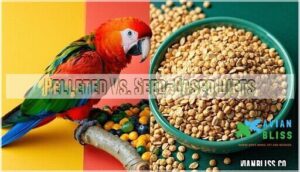
Commercial pelleted diets deliver superior nutrition value compared to seed-based options, meeting over 90% of avian nutritional requirements.
Seed drawbacks include high fat content and nutrient deficiencies, particularly vitamins A, D, and calcium.
This diet comparison reveals pelleted foods eliminate selective feeding behaviors while providing balanced macronutrients.
Your feeding methods should prioritize pellets as the primary food source for ideal parrot nutrition.
A well-balanced diet includes pelleted bird food options that cater to different bird species and their specific nutritional needs.
Formulated Diet Types and Brands
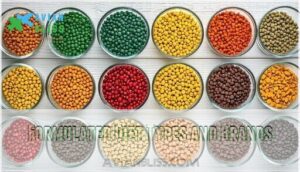
When selecting formulated diets, you’ll find multiple options beyond traditional pellet diets.
Top veterinary-recommended brands provide species-specific nutrition that seed options simply can’t match.
Here are five leading formulated diet types:
- Harrisons – Certified organic pellets without preservatives, most veterinary-recommended worldwide
- Zupreem – Balanced pellets with species-specific formulas for parrots and cockatiels
- Lafeber Nutriberries – All-natural shaped pellets that encourage natural foraging behavior
- Roudybush – Scientifically formulated diets proven in avian health studies
- Pretty Bird – Non-GMO, preservative-free formulations in multiple sizes
These brands deliver complete amino acids, vitamins A-D-E, and ideal calcium ratios.
Your poultry feeding guide should emphasize that formulated diets prevent selective eating while providing consistent bird food nutrition.
Unlike seed-based diets, these avian supplement guide options maintain stable energy density.
Professional bird health nutrition recommendations suggest 60-85% formulated food intake, making proper brand selection fundamental to effective bird care nutrition protocols.
To fully appreciate the importance of proper nutrient balance for optimal bird health.
Incorporating Fresh Foods

Beyond commercial pellets, fresh fruits and leafy greens reveal a nutrient boost that transforms your bird’s health.
Smart meal planning incorporates food variety through strategic supplementation.
| Fresh Fruits | Leafy Greens |
|---|---|
| Apples (seedless) | Kale |
| Mango chunks | Spinach |
| Orange segments | Romaine lettuce |
| Berries (blueberries) | Chard |
| Papaya pieces | Dandelion greens |
This poultry feeding guide emphasizes that bird food nutrition requires 20-30% fresh components alongside pelleted diets.
Avian diet nutrition research confirms that bird health nutrition improves dramatically when healthy bird treats replace processed snacks, creating balanced meals that support peak wellness.
Understanding the importance of safe food options is vital for maintaining a healthy bird diet.
Transitioning Birds to Healthier Foods
Moving your bird from seeds to a balanced pelleted diet requires patience and strategic timing, but it’s one of the most important health decisions you’ll make for your feathered friend.
You’ll need to monitor closely for signs of successful conversion while addressing common feeding challenges that arise during this critical nutritional shift.
Step-by-Step Diet Conversion
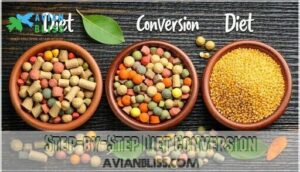
Converting your bird’s diet requires patience and strategy. Abrupt changes can lead to food rejection and digestive upset, affecting overall avian biology and health monitoring needs.
Patience pays off—rushed diet changes often backfire, but gradual transitions create lasting healthy habits
Follow this gradual conversion approach:
- Week 1-2: Mix 10-25% new food with familiar diet, allowing gut microbiota adaptation
- Weekly progression: Increase new food by 10% increments while maintaining nutrient balance
- Food introduction timing: Offer novel items during morning hunger periods for better acceptance
Use separate dishes to prevent contamination during diet planning phases. Behavioral studies show birds need 10-15 exposures for acceptance, so consistency matters more than speed in your conversion tips approach.
Monitoring for Successful Transition
Watch your bird’s fecal production and color changes – these are reliable shift signs indicating successful diet conversion.
Healthy droppings shift from dark, seedy waste to lighter, formed pellets reflecting new nutrition.
Monitor eating patterns, energy levels, and weight stability during conversion.
Document feeding behaviors and appetite changes for effective bird monitoring and health tracking.
This nutrition feedback guides your avian nutrition advice approach.
Understanding balanced bird diets is vital for a successful switch to healthier foods, and it requires careful observation of eating patterns and weight stability to ensure a smooth transition.
Overcoming Common Feeding Challenges
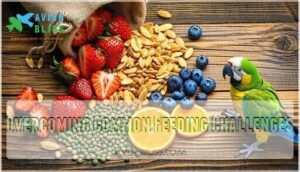
Pet birds can be stubborn when you’re changing their diet, but persistence pays off.
Food refusal is normal behavior – your feathered friend isn’t being difficult, they’re just cautious. Smart meal planning and feeding strategies help overcome resistance while maintaining proper nutrient balance.
Common feeding challenges include:
- Seed addiction – Birds prefer familiar high-fat seeds over healthier pellets
- Neophobia – Natural fear of new foods requires gradual introduction methods
- Selective eating – Birds pick favorite items, creating nutritional imbalances
- Schedule disruption – Inconsistent feeding times affect appetite and acceptance
Preventing Nutritional Deficiencies in Birds
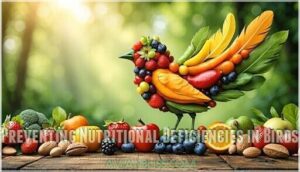
You’ll spot nutritional deficiencies before they become serious health problems by watching for key warning signs in your bird’s behavior and appearance.
Proper supplementation and mineral provision can prevent the 80-90% of bird diseases linked to inadequate nutrition.
Recognizing Signs of Poor Nutrition
Poor nutrition manifests through observable health indicators that signal dietary imbalance.
Malnutrition symptoms include dull plumage, lethargy, frequent infections, and abnormal droppings.
Nutrient deficits often cause feather-picking, reproductive issues, and stunted growth in young birds.
Feeding errors like all-seed diets create vitamin deficiencies, particularly vitamin A.
Monitor your bird’s energy levels, feather quality, and behavior patterns to catch these warning signs early.
Essential Supplements and Minerals
Addressing nutritional gaps requires strategic supplementation to maintain ideal avian health.
Your bird’s vitamin supplements should target specific deficiencies common in captive environments.
- Calcium needs demand cuttlebone or mineral blocks for African Greys and laying females
- Vitamin D3 supports calcium absorption in birds with limited sunlight exposure
- Iodine supplementation prevents thyroid disorders in seed-fed budgerigars and finches
- Trace minerals including zinc promote proper feather care and beak health development
Safe Feeding Practices for Pet Birds
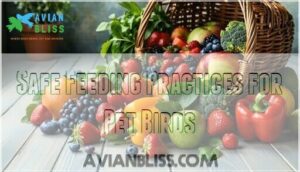
When you’re ready to offer your feathered friend safe, nutritious foods, proper selection and preparation make all the difference between peak health and potential harm.
You’ll need to master which fresh foods provide essential nutrients and which common household items could prove toxic to your bird’s delicate system.
Recommended Fruits, Vegetables, and Proteins
Fresh fruits like apples, mango, and citrus provide essential nutrients when seeds are removed.
Leafy greens such as kale, carrots, and broccoli offer necessary vitamins.
Protein sources include cooked eggs, tofu, and legumes for balanced nutrition.
| Food Category | Recommended Options |
|---|---|
| Fresh Fruits | Apples, mango, citrus (remove seeds) |
| Leafy Greens | Kale, carrots, broccoli |
| Protein Sources | Cooked eggs, tofu, legumes |
These healthy treats support prime avian health when properly prepared and thoroughly washed before serving.
A balanced diet should include a variety of fresh fruit options to guarantee birds receive all necessary nutrients.
Foods to Avoid and Toxic Items
Certain foods pose serious risks to your feathered friends.
Avocado contains persin, causing respiratory distress in birds. Chocolate and caffeine trigger fatal seizures. Salt leads to electrolyte imbalances.
Apple seeds release cyanide when chewed. Spoiled foods produce toxic ethanol.
These toxic substances require strict avoidance for effective avian disease control and ideal bird feeding strategies.
Food Preparation and Storage Tips
Proper fresh food handling transforms your bird’s dining experience from risky to rewarding. Smart meal prep and safe storage practices preserve nutrients while preventing bacterial contamination that threatens avian health.
Follow these food safety protocols for ideal pet bird care:
- Wash produce thoroughly under running water before serving
- Remove uneaten portions within 2-4 hours to prevent spoilage
- Store prepared foods in refrigerated, airtight containers
- Prepare small batches to maintain freshness and nutrient preservation
Your birdseed recipes and feeding strategies work best when you treat fresh foods like perishable medicine. Think of it this way: you wouldn’t leave medication sitting out all day, so don’t leave that chopped apple either. Proper avian nutrition advice always emphasizes timing – serve fresh foods when your bird’s most active, then clean up promptly. This approach maximizes nutritional benefits while minimizing health risks from contaminated food sources.
Feeding Advice for Wild and Backyard Birds
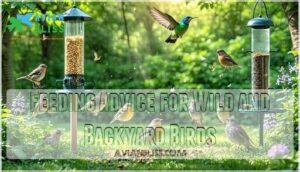
Feeding wild and backyard birds requires understanding the specific nutritional needs of your local species throughout different seasons.
You’ll want to select appropriate seed types, suet, and nectar while maintaining clean feeders to prevent disease transmission and support healthy bird populations in your area, which is crucial for their well-being and healthy development.
Best Foods for Local Bird Species
Three distinct bird species require targeted Bird Seed Options for ideal health outcomes.
Local Foraging opportunities complement commercial Nutrient Supplements, while Fresh Food Sources support Regional Diets.
Understanding bird species preferences enhances wildlife conservation efforts through evidence-based poultry nutrition advice and specialized birdseed recipes.
| Bird Type | Optimal Foods |
|---|---|
| Songbirds | Sunflower seeds, peanuts, suet cakes |
| Waterfowl | Cracked corn, aquatic plants, grains |
| Hummingbirds | Sugar water (4:1), native nectar plants |
| Urban Birds | Millet, safflower seeds, kitchen scraps |
Seasonal Feeding Considerations
Seasonal shifts dramatically alter avian nutritional requirements across species.
Winter feeding demands high-fat seeds like sunflower and nyjer to fuel thermogenesis, while summer diets emphasize protein-rich insects for breeding success.
Spring foraging phases focus on calcium sources supporting egg production.
Autumn nutrition prioritizes carbohydrate-dense fruits preparing birds for migration.
Holiday feeding maintains consistency—avoid chocolate treats that harm avian biology, and understanding winter bird feeding strategies is vital for supporting local bird populations during harsh weather conditions, such as those found at winter bird feeding.
Safe Feeder Hygiene Practices
Clean feeders regularly with hot, soapy water to prevent bacterial contamination that threatens backyard bird populations.
Proper hygiene protocols reduce disease transmission while maintaining ideal feeding environments for wild birds.
- Feeder Cleaning: Disinfect feeders weekly using 10% bleach solution, then rinse thoroughly
- Water Quality: Replace water sources every 2-3 days to prevent stagnant conditions and algae growth
- Food Storage: Keep birdseed in sealed containers away from moisture to prevent mold and bacterial control issues
Avian Nutrition and Disease Prevention
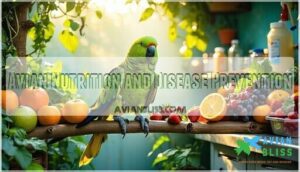
Your bird’s diet serves as the foundation for disease resistance, with proper nutrition strengthening immune defenses against infections including avian influenza.
Nutritional deficiencies compromise your pet’s ability to fight pathogens, making veterinary-guided feeding plans essential for maintaining ideal health.
Impact of Diet on Immune Health
Your bird’s nutrient balance directly influences immune function, with vitamin A supplementation reducing respiratory infections by 42%.
Omega-3 fatty acids boost lymphocyte counts while zinc deficiency drops T-cell activity by 35%.
Quality gut health through probiotics increases beneficial bacteria, lowering infection risk, and supports robust immune responses against avian diseases.
Nutrition in Relation to Avian Influenza
Proper nutrition strengthens bird immunity against avian influenza virus, creating your first line of defense.
High-protein diets boost antibody production while vitamin E supplementation reduces infection severity during avian influenza outbreaks.
Well-nourished avian hosts show 30% lower mortality rates, with zinc and selenium supporting faster viral clearance.
Smart nutrition therapy isn’t just feeding—it’s infection control measures that work.
Understanding disease transmission methods is essential for maintaining a healthy bird environment and preventing the spread of avian influenza, which relies on effective nutrition therapy and disease prevention.
Veterinary Guidance and Public Health Considerations
Consult veterinary professionals for guidance on avian surveillance protocols and zoonotic risks associated with avian influenza virus.
Disease monitoring through veterinary medicine guidance helps identify public health risks early, and veterinary ethics emphasize coordinated animal health care approaches.
Public awareness campaigns should highlight how proper nutrition supports immune function, reducing susceptibility to viral infections and protecting both birds and humans, which is crucial for public health risks.
Frequently Asked Questions (FAQs)
How much water should birds drink daily?
Like a desert traveler needs an oasis, your feathered friend requires fresh water daily.
Birds typically drink 5-10% of their body weight in water, varying by species, temperature, and diet composition.
Can birds eat spicy or seasoned foods?
No, you shouldn’t feed birds spicy or seasoned foods. Spices, salt, garlic, and onion can be toxic to avian digestive systems, causing serious health complications or death.
What feeding schedule works best for birds?
Like clockwork precision, you’ll want to establish consistent meal times that mirror your bird’s natural rhythms.
Feed fresh foods morning and evening when they’re most active, removing uneaten portions within 2-4 hours to prevent spoilage and bacterial growth.
Do birds need different foods during molting?
Yes, birds do need nutritional support during molting since feather production demands extra protein and energy. You’ll want to increase high-quality protein sources and make certain adequate vitamins are provided.
Are organic foods better than conventional options?
Organic foods aren’t necessarily better for birds.
Commercial pelleted diets provide balanced nutrition regardless of organic status.
Focus on quality formulation over organic certification—Harrison’s offers organic options, but conventional brands like Kaytee and Zupreem also deliver complete nutrition.
Conclusion
Despite thinking "changing my bird’s diet is too complicated," proper avian nutrition advice transforms health outcomes through evidence-based feeding strategies.
You’ve learned that pelleted diets provide superior nutritional profiles compared to seed-only regimens, while species-specific requirements prevent deficiencies.
Strategic supplementation addresses captive environment gaps, and gradual conversions minimize feeding stress.
Implementing these clinical protocols—from macronutrient balance to toxic avoidance—ensures ideal immune function and longevity.
Your commitment to science-based avian nutrition advice directly correlates with measurable health improvements in both pet and wild bird populations.
- https://lafeber.com/pet-birds/bird-food-guide/
- https://flamingopetclinic.com/avian-nutrition-mistakes-tips-from-a-las-vegas-nv-vet/
- https://todaysveterinarynurse.com/nutrition/avian-nutrition/
- https://www.merckvetmanual.com/poultry/nutrition-and-management-poultry/nutritional-requirements-of-poultry
- https://www.petmate.com/blogs/petmate-academy/how-to-feed-pet-birds