This site is supported by our readers. We may earn a commission, at no cost to you, if you purchase through links.
 When you’re searching for avian parasite control medication options, you’ll find several safe picks.
Ivermectin’s the go-to for mites and lice, while fenbendazole handles many pesky worms with finesse. Pyrethrin-based sprays? They give external bugs a run for their money, too.
Each treatment has its specialty, so you don’t want to play “guess the medicine”—matching the remedy to the parasite keeps your birds strutting strong.
Remember, a little advice from your vet goes a long way, especially when your flock starts scratching. Stick around for tested strategies and surprising tips that make parasite patrol a walk in the park—or the coop.
Table Of Contents
- Key Takeaways
- Avian Parasite Types
- Medication Options
- Treatment Methods
- Prevention Strategies
- Veterinary Care Timing
- Frequently Asked Questions (FAQs)
- What is the best avian parasite treatment?
- What are avian parasite Meds?
- Are oral antiparasitic medications good for avian parasites?
- Which antiparasitic medication is best for avian worming?
- What is avian pharmacology?
- How do I get rid of bird parasites?
- What is the best antiparasitic for birds?
- What is the best medication to get rid of parasites?
- How do you treat parasites in birds?
- What parasites does MoxiVet control for birds?
- Conclusion
Key Takeaways
- Match the medication to the specific parasite infection—use ivermectin or pyrethrin sprays for mites and lice, fenbendazole for most worms, and praziquantel for tapeworms.
- Always consult your vet before starting any treatment to ensure safe and accurate dosing for your birds.
- Stay ahead of problems by routinely cleaning cages, quarantining new birds, and doing regular fecal tests to catch parasites early.
- Know the symptoms of parasite infection—like itching, feather plucking, or odd droppings—so you can treat quickly and prevent bigger health issues.
Avian Parasite Types
Your bird’s health can be threatened by three main categories of parasites that require different treatment approaches.
These include external parasites like mites and lice that live on feathers and skin, internal parasites such as roundworms and tapeworms that inhabit the digestive system, and protozoan infections like trichomoniasis that affect various body systems, including protozoan infections.
External Parasites
Many bird owners don’t realize that external parasites like bird mites and lice can wreak havoc on their feathered friends’ comfort and health.
Even the tiniest mites can turn your bird’s peaceful perch into an itchy nightmare.
These tiny troublemakers love to set up shop on your bird’s skin and feathers, causing relentless itching and irritation.
Top 5 External Parasite Control Methods:
- Pyrethrin-based sprays – Safe, effective mite control for direct application
- Permethrin dust treatments – Powerful lice removal option with lasting protection
- Ivermectin spot-on drops – Broad-spectrum external parasite elimination
- Environmental cleaning – Essential feather care through habitat disinfection
- Regular monitoring – Early detection prevents beak health complications
Internal Parasites
Internal parasites pose hidden threats to your feathered friends.
Roundworms steal nutrients while tapeworms attach to intestinal walls, both weakening Bird Health substantially.
Effective Internal Medication like fenbendazole targets multiple worm species, while praziquantel specifically handles Tapeworm Control.
Proper Parasite Diagnosis through fecal testing guides precise avian parasite medication selection.
Roundworm Treatment requires understanding parasite life cycles for successful avian parasite control and deworming birds naturally.
Regular health checks involve parasite control methods to prevent infestations and guarantee the well-being of domestic birds, ensuring proper Parasite Control and avian parasite medication for the birds.
Protozoan Infections
Protozoal infections pack a different punch than worms, targeting your bird’s internal systems through single-celled organisms.
Trichomoniasis treatment relies heavily on metronidazole, while avian coccidiosis treatment requires specialized antiprotozoals.
Ronidazole therapy and dimetridazole effects offer alternative approaches when standard metronidazole use fails.
Protozoal diagnosis demands fecal testing since these microscopic troublemakers hide well.
Medication Options
When your bird shows signs of parasite trouble, you’ll need the right medication to tackle the problem effectively.
Several proven treatments exist for both external pests like mites and internal invaders like worms, each targeting specific parasites through different mechanisms of action.
Ivermectin Uses

You’ll find ivermectin incredibly effective for bird parasite control, targeting both external mites and internal roundworms with precision.
This avian dewormer paralyzes parasites by binding to their nerve channels, achieving 98% elimination rates in treated flocks.
For mite control and lice treatment, apply topical drops at the neck base.
Oral dosing at 0.2 mg/kg handles roundworm removal effectively, though it won’t tackle tapeworms.
The proper administration of bird medication is essential for the health and well-being of the birds.
Fenbendazole Targets
The avian dewormer fenbendazole targets multiple worm species through cellular disruption, making it your go-to choice for thorough internal parasites control.
This medication effectively handles roundworm control and tapeworm treatment by disrupting the parasites’ cellular machinery, basically starving them at the molecular level.
It’s particularly effective for poultry parasite medication needs, offering broad-spectrum coverage against various troublesome invaders in bird parasite treatment protocols.
Effective deworming methods are vital for maintaining healthy bird populations.
Pyrethrin-Based Sprays
Pyrethrin’s natural insecticidal power makes these sprays your frontline defense against external parasites.
Their contact-killing action disrupts parasite nervous systems effectively, though resistance can develop with overuse.
Three key pyrethrin-based spray applications:
- Direct bird treatment – Apply mist lightly to feathers, avoiding eyes and beak areas
- Cage environment spraying – Target perches, corners, and crevices where mites hide
- Preventive maintenance – Weekly light applications during high-risk seasons
These bird parasite control products offer excellent mite control and lice treatment when rotated properly to prevent parasite resistance.
For effective parasite management, understanding pyrethrin spray options is essential.
Praziquantel Effectiveness

Praziquantel stands as your go-to avian dewormer for tapeworm treatment, boasting 98-100% medication efficacy against cestodes in over twenty bird species.
This avian parasite medication targets Raillietina and Davainea tapeworms specifically, though it won’t touch roundworms or protozoans.
Standard praziquantel dosage runs 5-10 mg/kg orally, with no documented parasite resistance cases.
Your poultry worm treatment success depends on proper dosing—crushing tablets into food works great for smaller birds seeking effective bird parasite treatment.
Treatment Methods
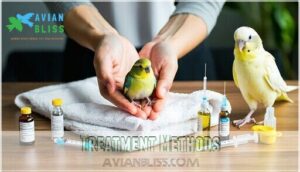
You’ll need to choose the right treatment method based on your bird’s specific parasite problem and health condition.
Whether you’re applying topical solutions, giving oral medications, or using injections, proper technique guarantees your feathered friend gets effective relief without unnecessary stress, and this is crucial for their overall well-being, especially when using injections.
Oral Administration
Getting your bird to swallow oral medications doesn’t have to be like wrestling an octopus.
Most antiparasitic medications come in liquid forms that mix easily into drinking water or favorite treats.
Here’s your game plan:
- Ivermectin Dosage – Mix precisely measured drops into water daily
- Fenbendazole Efficacy – Administer directly via syringe for maximum absorption
- Praziquantel Tablets – Crush and blend with soft foods
Metronidazole Treatment and Pyrantel Pamoate work similarly through oral delivery methods.
Topical Treatments
Three topical treatments pack a punch against feathered foes. Permethrin spray and pyrethrin dust knock out lice on contact, while spot-on drops target stubborn mite infestations.
These pyrethrin-based sprays work fast but need bird-safe application. Reapply every 7-14 days to break parasite life cycles completely.
Effective bird lice control also involves understanding natural lice removal methods to prevent reinfestation, using complete concepts for a thorough approach.
Injectable Medications
If topical sprays weren’t your bird’s cup of tea, injectable medications bring real muscle to avian parasite management.
With avian dewormers like Ivermectin Dosage and Moxidectin Uses, plus Praziquantel Injection for tapeworms or Metronidazole Treatment for tricky protozoa, your vet can precisely tailor bird parasite treatment options.
Precise avian drug administration guarantees maximum results, and less drama.
Environmental Cleaning
Scrub your bird’s space like you’re expecting in-laws—cage cleaning matters! For high-quality environmental cleaning, stick to these basics:
- Disinfect all surfaces weekly with avian safe products.
- Use a parasite-premise spray for deep surface disinfection.
- Set a cleaning schedule, don’t wing it.
- Swap out bedding—habitat maintenance breaks parasite cycles.
Regular cage maintenance involves using a bird cage cleaner.
Stay ahead, not itchy!
Prevention Strategies
You don’t want parasites hitching a ride on your birds, so prevention is your best friend here.
Simple steps like regular cleaning, bloodless quarantines, and stress-free routines can keep those tiny pests guessing—and out of your flock.
Quarantine Procedures
Once you’ve finished treating your birds, it’s time for some old-school bird quarantine.
Isolation methods help keep sneaky parasites in check. Separate new bird introductions for at least 30 days—think of it as a little vacation.
Flock segregation, careful biosecurity measures, and strict cleaning routines are your best friends for avian parasite control and effective bird parasite prevention.
Effective parasite control methods are essential for maintaining healthy birds and ensuring parasite control is effective, which is crucial for avian parasite prevention.
Regular Fecal Tests

Routine fecal tests are your secret weapon in bird parasite prevention.
Fecal Test Frequency matters: every 3-6 months boosts parasite control.
Use clean Sample Collection methods and quick Test Result Analysis for sharper Parasite Detection.
Fecal Exam Techniques, like pooled sampling, spot trouble early—before your flock’s itching.
This prevents unwanted surprises and helps guarantee avian parasite treatment or deworming medication is spot-on.
Understanding avian fecal assessments is vital for effective parasite control and prevention strategies.
The key to effective management is combining these techniques with a thorough understanding of avian fecal assessments and parasite detection.
Natural Remedies

After testing regularly, you might want to try Herbal Supplements or organic treatments like pumpkin seeds or natural oils as part of your bird’s routine.
Some folks sprinkle diatomaceous earth in nesting areas, while others swear by dietary changes or home remedies like garlic or herbal remedies.
Just remember, even the best natural avian dewormer can’t replace proper medical care.
Stress Reduction Techniques

Pairing natural remedies with stress reduction really works wonders for your birds.
Try creating Calming Environments with clean habitats and Quiet Spaces, as birds get frazzled easily.
Social Interaction and Gentle Handling encourage trust, while Nutritional Balance supports overall health.
Don’t underestimate environmental enrichment—a puzzle feeder or new perch can make a world of difference in stress reduction and dietary impact.
Veterinary Care Timing
You can’t set your bird’s vet appointments by flipping a coin—timing matters when dealing with parasites.
Act early, watch for unusual behavior, and you’ll save yourself (and your feathery friend) a lot of trouble.
Recognizing Parasite Symptoms
In the context of spotting parasite symptoms, don’t let your bird pull the wool over your eyes.
Watch for these tell-tale signs:
- Feather plucking or excessive preening
- Skin lesions or visible parasites
- Dropping changes, weight loss, or odd behaviors
Early recognition of bird parasite infection helps prevent trouble down the road—don’t ignore little red flags.
Regular checks for parasite infection signs can aid in prompt treatment and better health outcomes.
Seeking Professional Help
Feather plucking might look like a quirky habit, but it’s often a red flag.
Don’t play bird detective alone—book a Vet Consultation with an avian vet instead.
Professional Bird Examination leads to accurate Medical Diagnosis and personalized Treatment Plans, it’s all about tapping Avian Expertise.
Veterinary Consultation guarantees your bird gets the right care and veterinary guidance for smart avian parasite control.
Treatment Timing Importance
Noticed strange symptoms and called the vet? Great first step. Now, get your treatment schedule locked in—because parasites party in cycles.
Medication timing matters more than you’d think. Stick to prescribed dose scheduling, and always finish the full treatment duration.
Watch these for best results:
- Never skip repeat intervals
- Match dosage calculations
- Stick to treatment cycles
- Monitor parasite life stages
Follow-Up Care Essentials
Once meds wrap up, don’t just clap your hands and call it a day.
Stick with consistent Bird Monitoring and Health Checks, making sure your flock stays on the recovery track.
Double-check Medication Dosage and try these Recovery Tips: clean cages, offer fresh food, and watch for sneaky symptoms.
Good parasite control birds follow up—bird parasite treatment’s about diligence, not shortcuts.
Frequently Asked Questions (FAQs)
What is the best avian parasite treatment?
They say, “An ounce of prevention is worth a pound of cure.”
For birds, Ivermectin and fenbendazole pack a real punch against parasites.
Pair these with regular cage cleaning, and you’ll keep unwanted guests out.
What are avian parasite Meds?
You’ve got plenty of options to tackle bird parasites—ivermectin, fenbendazole, and praziquantel handle most worms, while permethrin and pyrethrins knock out mites and lice.
Always check doses; birds can be as picky as toddlers with medicine!
Are oral antiparasitic medications good for avian parasites?
Oral antiparasitic meds can work wonders for birds battling internal parasites.
You’ll want to double-check the dosage and species guidelines, though—think of it as using the right key for the right lock—safety first!
Which antiparasitic medication is best for avian worming?
Choosing between Ivermectin and fenbendazole for bird worming is like picking your favorite superhero—both punch out parasites, but each fights different bad guys.
Ivermectin tackles mites and worms, while fenbendazole covers more worm types.
What is avian pharmacology?
Avian pharmacology digs into how bird bodies process medicines—how drugs move, act, and break down.
You learn why some meds work for parrots but not pigeons.
Think of it as learning your bird’s “owner’s manual” for meds.
How do I get rid of bird parasites?
Think of parasites like tiny squatters sneaking into your bird’s home.
Kick them out with prescribed meds like ivermectin or fenbendazole, use pyrethrin sprays for mites.
Scrub the cage, and call your vet for tough cases.
What is the best antiparasitic for birds?
If you want to tackle bird parasites head-on, ivermectin’s excellent for both mites and worms.
Fenbendazole and praziquantel fill the gaps for stubborn bugs.
Always double-check doses—small birds, big consequences! Call your vet if unsure.
What is the best medication to get rid of parasites?
Treating parasites is like patching leaks in a boat—miss one, and water rushes in.
For most birds, ivermectin or fenbendazole works well, but always consult your vet for dosage, timing, and specific species needs.
How do you treat parasites in birds?
Spotting tired feathers, itchiness, or odd droppings? Step one: see a bird vet pronto.
You’ll likely use wormers or mite sprays—sometimes a one-two punch.
Clean cages, repeat treatments, and quarantine newcomers to keep things pest-free.
What parasites does MoxiVet control for birds?
MoxiVet packs a punch—it battles mites, lice, and pesky roundworms in your feathered pals.
You’ll knock out tough infestations, keeping your bird comfortable and parasite-free.
Just remember, follow dosing instructions for the best results.
Conclusion
Did you know up to 80% of backyard birds will face parasites at some point?
That’s why understanding avian parasite control medication options isn’t just helpful—it’s essential.
You’ll keep your flock healthier, more productive, and a lot less itchy.
Remember, don’t guess regarding meds; match the parasite and the remedy.
And don’t skip chatting with your vet—they’re the real coop MVPs.
Staying proactive means fewer surprises and happier, parasite-free birds strutting in your yard.
- https://www.idexx.com/en/veterinary/reference-laboratories/fecal-testing/fecal-dx-antigen-test/
- https://www.veterinary-practice.com/article/diagnostic-sampling-infectious-diseases-avian-patients
- https://www.dvm360.com/view/conducting-avian-fecal-assessments
- https://pmc.ncbi.nlm.nih.gov/articles/PMC9398886/
- https://onlinelibrary.wiley.com/doi/10.1002/vms3.967