This site is supported by our readers. We may earn a commission, at no cost to you, if you purchase through links.
 When you notice wart-like bumps on birds visiting your feeder, you’re likely seeing avian pox virus in action. This widespread infection affects birds through mosquito bites and contaminated surfaces.
The virus shows up in two forms: skin growths on legs and beaks, or throat lesions that make eating difficult. While most wild birds recover naturally, the disease can devastate island populations and reduce survival rates by over 25% in juveniles.
Mosquito control and clean feeders help prevent spread, but there’s more to managing this persistent threat than meets the eye.
Table Of Contents
Key Takeaways
- You’ll spot avian pox as wart-like bumps on birds’ unfeathered areas like feet and beaks – these growths signal a viral infection that spreads through mosquito bites and contaminated feeders.
- Most birds recover naturally from the skin form, but throat lesions can make eating difficult and prove more dangerous, especially for young birds who face 25% higher mortality rates.
- Clean your feeders weekly with bleach solution and eliminate standing water around your property to break the transmission cycle and protect visiting birds from infection.
- You can’t treat the virus directly, but supportive care like wound cleaning and preventing secondary infections helps birds recover while their immune systems fight off the disease.
What is Avian Pox Virus in Birds?
Avian pox virus is a widespread infection caused by avipoxviruses that affects birds around the world, except in Arctic and Antarctic regions.
You’ll find this disease most commonly in warmer climates, where it can spread through mosquito bites, direct contact between birds, or contaminated feeders and equipment.
Definition and Types of Avipoxviruses
Avian pox is one of those viral infections that keeps veterinarians and bird researchers on their toes. The culprit? Avipoxviruses from the Chordopoxvirinae subfamily in the Poxviridae family. There are 12 different species, and scientists have sorted them into at least 3 major genetic groups based on their evolutionary relationships.
This classification isn’t just academic trivia—it explains why avian pox is so unpredictable:
- Host specificity varies among virus strains
- Genetic diversity creates different disease patterns
- Viral infection severity depends on bird species
- Avian pox symptoms range from mild to severe
- Avian poxvirus affects domestic and wild birds differently
History and Global Distribution
Avian pox first appeared in domestic fowl by 1901, with early pox outbreaks documented in wild birds by 1902. Disease emergence accelerated when mosquitoes reached Hawaii in 1827, causing devastating historical impacts on island endemicity.
Today’s epidemiology of avian pox shows continental spread across temperate regions, with current prevalence highest in humid areas. This poxvirus disease continues affecting wild bird populations worldwide. The virus is often transmitted by biting insects like mosquitoes.
Affected Bird Species
Practically every bird species can contract avian poxvirus, though susceptibility varies dramatically. Wild bird populations worldwide face infection risks, with some species showing considerable resistance while others suffer severe outbreaks.
- Island Endemics: Hawaiian honeycreepers and Galápagos finches face devastating population declines due to limited immunity
- Raptor Susceptibility: Birds of prey show moderate infection rates with usually mild symptoms
- Waterfowl Infections: Ducks and geese experience seasonal outbreaks, especially during migration periods
British tit species, particularly great tits, demonstrate how Passerine Resistance varies within families. Species Recovery depends on natural immunity development.
How Do Birds Get Infected With Avian Pox?
You’ll find that birds catch avian pox through several common pathways that create direct health risks for backyard and wild bird populations.
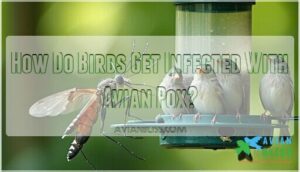
Mosquitoes serve as the primary carriers, transferring the virus between birds through their bites, while direct contact through skin wounds and contaminated feeding stations also spreads this persistent infection.
Mosquito-Borne Transmission
Through biting and feeding, mosquitoes serve as mechanical vectors in avian poxvirus transmission. Vector ecology studies show these insects carry the disease between birds during blood meals.
Effective mosquito control becomes vital for disease surveillance programs. Understanding transmission dynamics helps reduce avian infection rates in both wild and domestic bird populations.
Direct Contact and Skin Abrasions
Several birds can spread avian poxvirus through direct contact when their skin lesions touch healthy birds. The cutaneous form creates open wounds that shed virus particles.
Fighting, grooming, or crowding increases abrasion risks since the virus enters through small cuts and scratches.
Contact infections happen easily when infected birds interact closely with healthy flocks.
Indirect Spread via Feeders and Environment
Your bird habitat can harbor avian pox without direct contact. Contaminated water sources and shared feeders create environmental risks where the virus lingers on surfaces. Vector ecology plays a role as infected birds contaminate feeding areas through saliva and feces.
- Clean feeders weekly with 10% bleach solution
- Replace contaminated water daily in bird baths
- Remove moldy or wet seed that harbors pathogens
- Space multiple feeders to reduce crowding
Proper feeder sanitation breaks the chain of bird disease transmission, protecting both wild and backyard visitors from avian diseases.
Other Potential Transmission Routes
While direct contact spreads avian pox disease most commonly, several other transmission pathways exist. Airborne spread occurs when birds inhale contaminated dust or dander containing viral particles. Fomite transmission happens through shared equipment, cages, or clothing that carry the virus between birds.
Blood-feeding insects like stable flies and fleas can mechanically transfer the pathogen on their mouthparts.
Environmental contamination from dried scabs persists for months, creating ongoing infection risks through ingestion or contact with contaminated surfaces. Understanding the avian pox virus is vital for effective prevention and control measures.
What Are The Clinical Signs of Avian Pox?
You’ll notice avian pox symptoms appear in two distinct forms that affect different parts of a bird’s body.
The cutaneous form creates visible wart-like growths on unfeathered areas, while the diphtheritic form causes lesions inside the mouth and throat that can make breathing and eating difficult.
Cutaneous (Dry) Form Symptoms
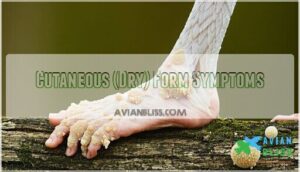
Once infected, you’ll spot cutaneous lesions appearing on featherless areas like feet, legs, and around the beak. This dry form diagnosis becomes straightforward when you notice these characteristic symptoms:
- Wart-like growths that start small but become raised and crusted
- Skin lesions primarily on unfeathered body parts
- Possible feather loss around affected areas requiring avian wound care
These clinical signs distinguish avian pox disease from other conditions, making proper skin symptom management essential for your bird’s recovery.
Diphtheritic (Wet) Form Symptoms
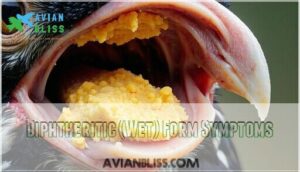
Unlike external skin lesions, the diphtheritic form strikes where you can’t see it. Yellow-white, cheese-like lesions appear in the mouth, throat, trachea, and esophagus. These raised blemishes can lead to difficulty breathing or swallowing . When wet form diagnosis is needed, look for respiratory issues and beak deformities that signal internal problems.
| Location | Symptoms | Severity |
|---|---|---|
| Mouth/Throat | Yellow plaques | Moderate |
| Trachea | Breathing difficulty | Severe |
| Eyes | Secondary infections | Variable |
| Esophagus | Swallowing problems | High |
| Airways | Labored breathing | Critical |
Differences in Symptom Severity Among Species
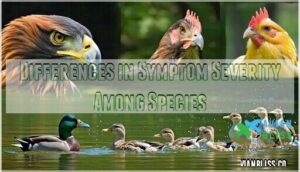
Avian pox hits different bird species in wildly different ways, creating a real headache for veterinarians and wildlife experts. Some birds barely show symptoms while others face life-threatening infections – it all depends on what kind of bird we’re talking about.
Raptors like hawks and eagles tend to get hit hard. They develop nasty dry lesions and face much higher death rates than other birds. Meanwhile, small songbirds like canaries and finches can go from looking perfectly healthy to dead within days when the systemic form takes hold.
Waterfowl seem to have won the genetic lottery here – ducks and geese rarely get avian pox, and when they do, most survive. Chickens and other domestic birds fall somewhere in the middle, with symptoms ranging from mild to severe depending on the individual bird.
Even hummingbirds show interesting patterns, with some species developing lesions more often than their close relatives. This species-specific resistance helps explain why diagnosing and treating avian pox remains such a challenge.
Avian Resistance varies markedly among bird species.
How is Avian Pox Diagnosed in Birds?
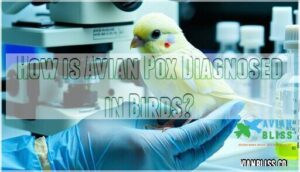
You’ll need to identify avian pox through careful visual examination of skin lesions and laboratory testing to confirm the diagnosis.
A veterinarian can distinguish pox from other bird diseases using specific tests, including tissue samples and microscopic analysis that reveal the characteristic cellular changes caused by the virus.
Visual Examination and Lesion Identification
When examining birds for avian pox, you’ll spot raised, wartlike growths on unfeathered areas like the beak, feet, and around the eyes. These lesion patterns vary between bird species.
Visual inspection reveals yellowish or grayish nodules that can cause beak deformities and feather loss around affected areas, making wild birds easier to identify with this disease.
Laboratory and Histopathological Tests
Laboratory tests provide definitive confirmation when visual signs aren’t clear-cut. Molecular diagnostics using PCR can detect avian pox DNA with 90-100% accuracy from tissue sampling.
Histopathology reveals characteristic Bollinger bodies through microscopy analysis. Virus isolation on avian embryonic heart cells confirms active infection.
These methods help bird disease transmission studies in avian research and biology.
Differential Diagnosis With Other Bird Diseases
Differentiating avian pox from other bird conditions isn’t always straightforward. Staphylococcal infections like bumblefoot create similar skin lesions, while bacterial pododermatitis affects talons too. Feather disorders, beak deformities, and neurological symptoms can complicate diagnosis.
You’ll also need to rule out infectious laryngotracheitis virus for respiratory issues, plus various emerging avian diseases. Proper testing helps distinguish avian pox from these disease mimics.
What is The Impact of Avian Pox on Bird Populations?

When you’re dealing with avian pox in bird communities, you’ll see this virus can seriously harm both wild and domestic populations through reduced survival rates and breeding success.
Island bird species, like those in Hawaii and the Galápagos, have faced severe population crashes, while even mainland birds show decreased reproduction when infection rates climb above certain thresholds.
Effects on Survival and Reproduction
Once you’ve diagnosed avian pox, understanding its impact becomes critical. This bird disease transmission severely affects avian hosts through reduced survival trends and breeding success.
Avian mortality can increase by 26.5% monthly in juveniles, while reproduction rates drop 10.5% in infected pairs. Population decline occurs when prevalence exceeds 8%, making avian pox a serious threat to wildlife disease management and avian biology conservation efforts.
Avian pox kills 26.5% more juveniles monthly and drops breeding success by 10.5%, threatening entire bird populations when infection rates hit 8%
After diagnosing avian pox, the real challenge starts—figuring out just how much damage it’s doing.
This bird disease transmission hits avian hosts hard, cutting into both survival rates and their ability to breed successfully.
Notable Case Studies (e.g., Hawaii, Galápagos)
Hawaii and the Galápagos Islands show how devastating avian pox outbreaks can become. In Hawaii, the virus arrived in the early 1800s and contributed to species extinction among native forest birds. Galápagos finches face ongoing challenges, with some populations showing infection rates up to 94% during major epidemiology events.
- Hawaiian forest birds experienced highest infection rates at mid-elevations where mosquito vectors thrived
- Galápagos Small Ground Finches showed the most infections, threatening ecological balance through reduced reproduction
- Island conservation efforts now focus heavily on controlling bird disease transmission pathways
- Artificial wetlands and infrastructure changes created new mosquito habitats, worsening outbreaks
- Historical specimens from 1898 confirm avian pox has plagued these island ecosystems for over a century
Risks to Domestic Vs. Wild Birds
Domestic birds face different avian pox risks than wild populations. Your backyard poultry can be vaccinated and monitored closely, making outbreaks manageable through proper flock management strategies.
Wild bird threats are trickier—migratory birds spread disease across vast distances without human intervention. Bird disease transmission hits island species hardest, where bird population crashes can devastate entire ecosystems permanently.
How is Avian Pox Treated and Managed?
You can’t cure avian pox with antiviral medications, but you can help infected birds recover through supportive care like cleaning lesions with iodine and providing antibiotics for secondary infections.
Your main focus should be preventing complications and keeping the bird comfortable while its immune system fights off the virus naturally.
Supportive Care and Symptom Relief
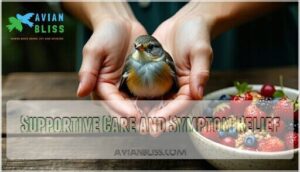
Understanding avian pox’s population effects leads to treatment options. While no specific antiviral treatments exist for avian pox, supportive care helps infected birds recover. Treatment focuses on managing symptoms and maintaining bird health during infection.
Here’s how supportive care works:
When avian pox hits bird populations hard, wildlife managers start looking at treatment strategies. The tricky part? There’s no magic bullet antiviral drug for avian pox. Instead, it’s all about giving infected birds the best shot at fighting it off naturally.
Treatment comes down to solid supportive care:
- Pain Management – Set up comfortable perching spots and keep handling to a minimum.
- Wound Care – Dab those skin lesions with iodine-glycerin solutions to help them heal.
- Nutritional Support – Load up on high-quality feeds packed with vitamin A.
- Stress Reduction – Keep things calm and quiet, away from all the chaos.
- Hydration Therapy – Make sure fresh water’s always within reach for proper recovery.
Since avian pox weakens birds’ immune systems, secondary bacterial infections often follow. Antibiotic therapy helps control these complications when prescribed by veterinarians.
Proper wound management includes gentle cleaning of lesions with antiseptic solutions. Nutrition assistance through high-quality feed strengthens recovery.
Hygiene practices like disinfecting cages prevent additional pathogens from affecting vulnerable avian hosts during treatment.
Limitations of Antiviral Treatments
While avian pox virus itself presents significant treatment gaps, secondary infections can be managed. No approved antivirals exist for birds, leaving veterinarians with limited options.
Antiviral efficacy remains unproven in controlled studies, and medication side effects pose risks. Research challenges include viral resistance patterns and species-specific responses.
Treating avian pox virus directly? That’s where things get tricky. We don’t have approved antivirals for birds, which leaves vets scrambling for options. But here’s what we can do: tackle the secondary infections that often follow.
The problem runs deeper than just missing medications. Antiviral treatments haven’t proven themselves in proper studies, and the side effects can be rough on already sick birds. Add in complications like viral resistance patterns and how different species respond differently, and research becomes a real challenge.
Right now, supportive care is our main weapon against avian pox. It’s not ideal, but it’s what works when direct viral suppression isn’t an option for avian pox diagnosis and treatment.
You can protect your birds from avian pox through vaccination, mosquito control, and proper hygiene practices.
These prevention methods work together to reduce transmission risk and keep your feathered friends healthy.
Vaccination Strategies for Poultry
Vaccination offers your best defense against avian pox outbreaks in commercial poultry operations. Live attenuated vaccine types provide 95-100% protection when administered correctly through wing-web or subcutaneous administration methods. Immunity duration generally lasts the bird’s productive lifetime, with vaccination schedules starting at 12-16 weeks. Recombinant vaccines show promise for enhanced protection against multiple avian diseases simultaneously.
- Wing-web stab method: Traditional approach achieving 94-100% "take" rates within 7-21 days
- Subcutaneous injection: Faster administration (2,000 chicks per hour) with more consistent results
- Recombinant platforms: Next-generation vaccines targeting multiple pathogens with single-dose convenience
Mosquito and Vector Control
Mosquito control works as your first line of defense against avian pox transmission. Remove standing water from gutters, flower pots, and bird baths weekly. This breeding site reduction cuts mosquito populations dramatically.
Consider natural predators like bats and dragonflies in your yard. For severe infestations, targeted insecticide use around bird areas helps, but avoid spraying near feeders directly.
Safe Cleaning and Bird Feeder Hygiene
Clean feeders regularly with diluted bleach solutions to prevent avian pox transmission through bird droppings and contaminated surfaces. Replace plastic feeders showing wear, as cracks harbor bacteria.
Clean feeders weekly during peak bird activity seasons. Position feeders away from high-traffic areas where infected birds congregate.
Community hygiene efforts reduce bird disease transmission rates substantially.
Reducing Environmental Risk Factors
Beyond feeder disinfection protocols, you’ll need habitat modification strategies to break disease transmission cycles. Standing water removal eliminates mosquito breeding grounds that spread avian pox. Reducing bird density at feeding sites decreases close contact between healthy and infected birds. Environmental monitoring programs help track disease outbreaks early.
- Remove puddles, buckets, and containers where mosquitoes breed around your property
You’ll also want to tackle the bigger picture around your feeders. Getting rid of standing water is huge—those puddles and forgotten buckets become mosquito nurseries that spread avian pox.
Spread your feeders out too. When birds crowd together, diseases jump from one to another fast.
Keep an eye on your local bird population while you’re at it. Spotting sick or dead birds early can help you catch outbreaks before they get out of hand.
- Monitor local bird populations for unusual deaths or lesions to catch outbreaks quickly
Frequently Asked Questions (FAQs)
Can avian pox spread to humans or pets?
Avian pox doesn’t spread to humans or most pets. You’re safe from this bird-specific virus. However, it can occasionally infect other birds you keep as pets.
How long does avian pox immunity last after vaccination?
Vaccination usually provides lifelong immunity in healthy birds. Most veterinary sources indicate that once you vaccinate your chickens at 12-16 weeks, they’re protected for life, though research hasn’t established exact duration parameters.
Whats the survival rate for infected wild birds?
Wild birds don’t face a guaranteed death sentence with this infection. Most birds survive mild cases, though mortality varies by species and infection severity considerably.
Are certain bird species more susceptible than others?
Yes, you’ll notice certain species are more vulnerable. Songbirds like finches and upland game birds including mourning doves, turkeys, and quail get infected most often.
Different virus strains commonly target specific bird families rather than spreading universally.
Can birds get avian pox more than once?
Reinfection seems unlikely once you’ve built immunity, right? Actually, once they’re immune, they’re immune for life.
Think of it like chicken pox—you usually won’t catch the same strain twice after recovering completely.
Conclusion
Ready to protect your feathered visitors from this persistent threat? Managing avian pox virus in birds requires a multi-faceted approach combining prevention, early detection, and supportive care.
By maintaining clean feeders, controlling mosquito populations, and monitoring birds for characteristic lesions, you can greatly reduce transmission risks. Consistent hygiene practices and environmental management remain your best defense against this widespread viral infection.
Avian pox virus spreads quickly among backyard birds, but you can take real steps to stop it.
Managing this infection means focusing on three key areas: keeping it from spreading in the first place, spotting it early, and helping affected birds recover.
- https://www.in.gov/dnr/fish-and-wildlife/wildlife-resources/wildlife-diseases-in-indiana/avian-pox/
- https://wildlifehealthaustralia.com.au/Portals/0/ResourceCentre/FactSheets/Avian/Poxviruses_and_Australian_Wild_Birds.pdf
- https://pacificrimconservation.org/wp-content/uploads/2013/10/56%20Young%20and%20VanderWerf%202008%20LAAL%20Avian%20Pox.pdf
- https://www.mdwfp.com/media/1515
- https://www.sciencedirect.com/science/article/abs/pii/S0006320712002042