This site is supported by our readers. We may earn a commission, at no cost to you, if you purchase through links.
 When your bird gets hurt, you need an avian vet for bird injury care immediately.
Don’t wait – birds hide pain like seasoned poker players, and what looks minor can turn serious fast.
Regular dog-and-cat vets often lack the specialized training for avian emergencies.
Start by calling local veterinary clinics to ask about their avian services, or search online directories for certified avian veterinarians in your area.
Many animal hospitals have emergency services, but confirm they handle birds before rushing over.
Keep your injured bird warm, quiet, and in a secure carrier during transport.
The right veterinary care can make all the difference in your feathered friend’s recovery, but knowing how to handle the situation properly before you even get there is equally important.
Table Of Contents
- Key Takeaways
- Assessing Bird Injury
- Safe Handling Techniques
- Providing Immediate Care
- Finding Avian Veterinary Help
- Rehabilitation and Recovery
- Frequently Asked Questions (FAQs)
- How much does a vet visit cost for a bird?
- Is it worth taking a bird to the vet?
- When to take a bird to an emergency vet?
- Will a vet help a wild bird?
- How much does avian emergency treatment cost?
- Can I give my bird human pain medication?
- What birds are most prone to injuries?
- How long does bird injury recovery take?
- Should I attempt home surgery on birds?
- Conclusion
Key Takeaways
- You need to find a specialized avian vet immediately when your bird gets hurt—regular dog-and-cat vets often lack the training to handle bird emergencies properly.
- You should assess your bird’s injury from a safe distance by looking for visible wounds, behavior changes like lethargy or withdrawal, and breathing problems before attempting to help.
- You’ll want to handle injured birds with gloves and towels while keeping the environment quiet and stress-free—even small birds can bite when scared, and loud noises make their condition worse.
- You must follow your avian vet’s prescribed treatment plan exactly during recovery, including medication schedules and creating a calm environment where your bird can heal without household chaos.
Assessing Bird Injury
When you discover an injured bird, you’ll need to quickly evaluate its condition from a safe distance before taking action.
Your assessment should focus on three key areas: visible injuries like bleeding or broken wings, unusual behaviors such as inability to fly or excessive fluffing, and breathing patterns that seem rapid or labored.
This evaluation is crucial for determining the best course of action to help the bird.
Checking for Visible Injuries
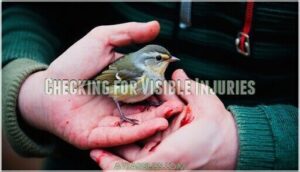
When examining an injured bird, look closely for obvious signs of trauma.
Look for bleeding, broken bones, and awkward positioning—small wounds are often more serious than they appear.
Check for bleeding around the wings, body, or head areas.
Broken bones often appear as awkward positioning or drooping limbs.
Feather loss, eye injuries, and visible skin damage require immediate attention from an avian vet.
Don’t overlook small wounds—they’re often more serious than they appear in birds, and require immediate attention from an avian vet.
Observing Behavior Changes
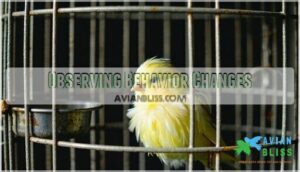
Beyond visible wounds, bird behavior changes reveal hidden injuries.
Watch for lethargy signs like decreased activity or sitting hunched for hours.
Vocalization changes include unusual silence or distress calls.
Appetite shifts signal internal problems—injured birds often stop eating entirely.
Social isolation occurs when normally friendly birds withdraw.
Feather plucking indicates stress or pain, making these bird distress signals critical warning signs, including signs of lethargy.
Monitoring Breathing Patterns
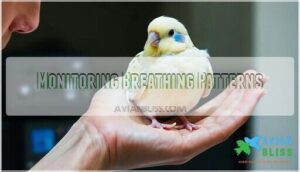
Watch your bird’s chest rise and fall to gauge its respiratory rate – healthy birds breathe 15-40 times per minute.
Listen for wheezing, clicking, or labored breathing sounds that signal distress.
Notice if your feathered friend sits with its beak open, tail bobbing with each breath, or shows blue-tinged skin around the beak – these effort indicators and cyanosis signs demand immediate bird veterinary care.
Toxin inhalation, such as from overheated cookware, can cause fatal respiratory distress.
Safe Handling Techniques
When you’re helping an injured bird, your hands can feel like giant predators to a small, frightened creature, so proper handling techniques protect both of you from additional harm.
Even gentle hands can terrify an injured bird—proper technique keeps you both safe.
You’ll need to move slowly and use the right tools, because even a tiny finch can deliver a surprising bite when it’s scared, and larger birds can cause serious injury if handled incorrectly.
Using Gloves and Towels
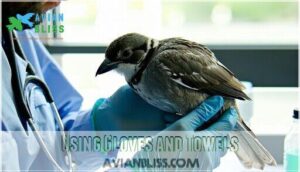
Proper protection shields both you and your injured feathered friend during rescue situations. Quality Glove Material prevents bites while Towel Softness guarantees comfort during bird stabilization.
Essential bird handling supplies for bird first aid:
- Latex-free gloves for Infection Control and Handling Safety
- Clean, soft towels for gentle restraint
- Multiple towel sizes for different bird species
- Non-slip grip materials for secure holds
- Disposable options for hygiene protocols
These tools enable safe bird transport while promoting Stress Reduction. For enhanced safety, consider using specialized protective bird gloves.
Minimizing Stress and Noise
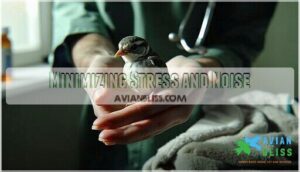
After securing your gloves and towels, creating a calming environment becomes your next priority.
Injured birds amplify their stress when surrounded by chaos. Speak in hushed tones, dim harsh lighting, and remove curious pets from the area.
Your gentle handling approach sets the foundation for successful bird rescue and stabilization efforts.
| Stress Reduction Method | What to Do | Why It Helps |
|---|---|---|
| Lower Your Voice | Whisper or speak softly near the injured bird | Loud sounds trigger flight responses and increase anxiety |
| Dim the Lights | Turn off bright overhead lights, use natural lighting | Harsh lighting creates panic and disorientation in birds |
| Clear the Room | Remove other pets, children, and unnecessary people | Reduces visual threats and creates a secure transport environment |
| Move Slowly | Use deliberate, calm movements around the bird | Quick motions signal danger and worsen bird stress levels |
| Create Quiet Recovery Space | Choose a peaceful room away from household noise | Promotes healing and reduces cortisol levels during bird injury care |
Preventing Escape and Injury

During emergency handling, you’ll want to create a secure environment by closing all doors and windows before attempting rescue.
Supervise flight paths carefully, removing toxic substances and household dangers from the area.
Safe caging becomes critical once you’ve captured the injured bird—use a well-ventilated box to prevent further bird accidents while maintaining hazard awareness for effective bird safety.
Providing Immediate Care
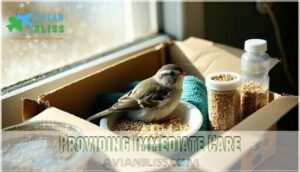
Once you’ve safely handled an injured bird, your next priority is creating the right conditions for its immediate recovery while you arrange professional veterinary care.
You’ll need to focus on three essential elements: establishing a quiet, secure environment, providing appropriate food and water if the bird can eat, and maintaining proper warmth to prevent shock.
This approach ensures the bird’s basic needs are met, allowing it to recover more effectively while awaiting veterinary attention.
Creating a Safe Environment
Set up your injured bird’s temporary space away from kitchen dangers and flight hazards.
Choose a quiet room where toxic substances, open water, and pet attacks aren’t concerns.
Use a well-ventilated box lined with soft towels, keeping it dark to reduce stress.
This bird household safety approach supports bird emergency preparedness while preventing further bird household dangers during recovery.
Offering Food and Water
After establishing a secure space for your injured bird, you’ll need to address their nutritional needs carefully. Birds in distress often refuse food initially, but proper bird nutrition supports recovery.
Don’t force-feed—stress makes everything worse. Consider using stainless steel dishes for easy cleaning and durability.
- Offer familiar seeds or pellets in shallow dishes for easy access
- Provide fresh water in multiple small containers to encourage hydration importance
- Use feeding methods like hand-feeding for severely injured birds requiring assistance
- Monitor intake closely—decreased appetite signals worsening bird wound conditions
- Consider supplementation only under veterinary guidance for proper bird rehabilitation and bird care
Keeping The Bird Warm
Warmth helps your injured bird stabilize faster than most realize.
Create a cozy recovery space away from drafts while monitoring their feather condition closely.
| Heat Sources | Safety Tips |
|---|---|
| Heating pad (low setting) | Place under half the container |
| Warm towels | Replace every 30 minutes |
| Space heater | Keep 3 feet away minimum |
Maintain ambient temperature around 80-85°F for ideal bird emergency care and wound healing.
You can find a suitable bird heating pad at many retailers.
Finding Avian Veterinary Help
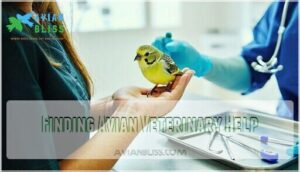
When your feathered friend faces a medical emergency, you’ll need to locate a qualified avian veterinarian quickly, since regular vets often lack the specialized training birds require.
You should keep contact information for nearby exotic animal clinics and emergency services readily available, because finding the right professional care can make the difference between recovery and tragedy, which is why it’s crucial to have this information readily available.
Locating Nearby Avian Vets
Finding professional help shouldn’t feel like searching for a needle in a haystack.
Start your search with these proven methods to locate qualified care for your injured bird.
- Check the Association of Avian Veterinarians’ "Find-a-Vet" online database
- Search "avian vet hospitals near me" on Google Maps
- Contact local exotic animal clinics for emergency avian care
- Ask nearby pet stores for avian veterinarian recommendations
- Look for mobile avian services in your area
To guarantee proper wellness, consider preventive avian care with regular checkups, ensuring your bird receives the best possible avian care and emergency care when needed.
Contacting Emergency Services
When you can’t locate an avian vet immediately, emergency contacts become your lifeline.
Call your local Animal Protection Police non-emergency line or wildlife rehabilitation hotlines for immediate guidance. These services connect you with bird emergency vet networks and provide first aid knowledge while you search.
Don’t hesitate—injured birds need swift action, and emergency services bridge that critical gap.
If you find an injured bird, it’s important to contact a hotline for immediate assistance. Injured birds require emergency care to survive.
Preparing for Transport
Once you’ve arranged emergency services, gather your transport supplies quickly. Choose a well-ventilated container like a pet carrier or sturdy cardboard box for secure travel. Line it with soft towels for comfort and temperature control.
Verify container safety by checking for sharp edges. Your injured bird needs stress reduction during transport, so create a dark, quiet temporary shelter that prevents escape while maintaining proper ventilation needs throughout the journey.
Remember to confirm your vet has avian veterinary certification for specialized bird care. This step is crucial for ensuring your bird receives the appropriate treatment, and it helps in reducing anxiety.
Rehabilitation and Recovery
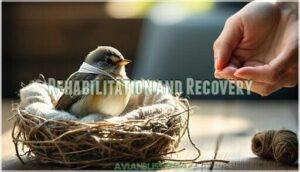
Once your injured bird receives professional veterinary care, you’ll need to follow the prescribed recovery plan with the same dedication you’d show a sick family member.
Your bird’s healing journey requires consistent medication schedules, proper nutrition, and a quiet environment where they can rest without the usual household chaos that might stress them further, which is crucial for their overall healing.
Following Vet Prescribed Plans
Every detail in your avian vet’s treatment plan matters when nursing your injured bird back to health.
Your avian veterinarian’s medical advice serves as your roadmap to recovery.
- Medication Adherence: Give prescribed medications exactly as directed, never skipping doses
- Monitoring Progress: Track your bird’s daily improvements and setbacks carefully
- Follow-up Care: Keep all scheduled appointments with your avian veterinarian
- Home Environment: Maintain ideal conditions for bird rehabilitation success
Providing Nutritional Support
Recovery nutrition becomes your injured bird’s foundation for healing.
Your avian vet will recommend species-specific diets adapted to your feathered friend’s needs.
Supplementation needs vary by injury severity, while hydration importance can’t be overlooked.
Assisted feeding may be necessary initially.
Bird veterinary nutrition experts often suggest foraging enrichment to stimulate appetite.
Understanding a bird’s species dietary needs is essential for their recovery.
Proper avian medicine includes nutritional support for successful bird rehabilitation.
Creating a Stress-Free Recovery Environment
During healing, your feathered friend needs sanctuary that feels like home. Quiet Recovery means creating a controlled environment where stress melts away like morning dew.
- Secure Housing with bird hiding spaces prevents further injury
- Limited Handling reduces bird stress reduction needs substantially
- Gradual Socialization combats bird isolation without overwhelming them
- Controlled Environment with low bird noise levels promotes faster healing
For added security, consider safe bird enclosures.
- Secure Housing with bird hiding spaces prevents further injury
- Limited Handling reduces bird stress reduction needs substantially
- Gradual Socialization combats bird isolation without overwhelming them
- Controlled Environment with low bird noise levels promotes faster healing
Frequently Asked Questions (FAQs)
How much does a vet visit cost for a bird?
Bird vet visits typically cost $50-200 for routine checkups, while emergency visits can reach $300-
Specialized avian veterinarians often charge more than general vets, but they’re worth the investment for your feathered friend’s health.
Is it worth taking a bird to the vet?
Your feathered friend’s health isn’t something you’d gamble with. Avian vets catch hidden illnesses early, preventing serious complications. It’s like having a safety net for your bird’s wellbeing.
When to take a bird to an emergency vet?
Like smoke signals warning of danger, your bird’s distress calls demand immediate action.
Rush to emergency care if you notice severe bleeding, breathing difficulties, seizures, or complete inability to perch or move normally, as these are signs of serious distress that require urgent attention.
Will a vet help a wild bird?
Most veterinarians will help injured wild birds, though some may refer you to wildlife rehabilitation centers.
Call ahead to confirm they treat wild species, as not all vets have avian expertise.
How much does avian emergency treatment cost?
Emergency avian treatment costs typically range from $200-$2,000, depending on your bird’s condition and required procedures. Critical surgeries, overnight monitoring, and specialized diagnostics push expenses higher, so budgeting ahead helps.
Can I give my bird human pain medication?
One wrong pill can turn your feathered friend’s recovery into a nightmare.
Never give human pain medication to birds—it’s toxic and potentially fatal.
Contact your avian vet immediately for safe, species-specific pain relief options.
What birds are most prone to injuries?
Small, active birds like finches, canaries, and budgerigars face higher injury risks due to their quick movements and fragile bones.
Larger parrots also get hurt frequently from falls, fights, and flight accidents around your home.
How long does bird injury recovery take?
Recovery time varies dramatically depending on your bird’s injury severity and species.
Minor wounds heal within days, while broken bones need weeks to months.
Your feathered friend’s age and overall health substantially impact healing speed.
Should I attempt home surgery on birds?
Playing doctor with your feathered friend is like walking a tightrope blindfolded.
Never attempt home surgery on birds. You’ll likely cause more harm than good.
Contact an avian veterinarian immediately for proper care.
Conclusion
Coincidentally, the same instincts that make birds excellent survivors in the wild—hiding weakness and pain—make them challenging patients when injured.
You’ve learned how quick action and finding an experienced avian vet for bird injury situations can save your feathered companion’s life.
Remember, birds can’t tell you what hurts, so trust your observations and don’t hesitate to seek professional help.
Your vigilance and prompt veterinary care give your bird the best chance for a complete recovery.