This site is supported by our readers. We may earn a commission, at no cost to you, if you purchase through links.
Your parrot suddenly stops eating, her feathers look dull, and she’s quieter than usual—signs a general veterinarian might miss but an avian vet specialist recognizes immediately as early warnings of serious illness.
Birds hide symptoms until they’re critically sick, a survival instinct that makes specialized care essential, not optional. Unlike general practitioners who see birds occasionally, avian vet specialists complete rigorous training in avian anatomy, physiology, and species-specific diseases, giving them the expertise to catch problems before they become emergencies.
Finding an avian vet specialist near me means accessing veterinarians who understand air sac function, perform delicate wing surgeries, and know that a cockatiel’s normal body temperature differs from a macaw’s. The right specialist can mean the difference between a quick recovery and a devastating loss.
Table Of Contents
- Key Takeaways
- Why Choose an Avian Vet Specialist?
- How to Find Avian Vet Specialists Near You
- Evaluating Avian Veterinary Clinics
- Services Offered by Avian Vet Specialists
- What to Expect at Your Bird’s Appointment
- Frequently Asked Questions (FAQs)
- What is an avian specialist called?
- How much does an avian vet visit cost?
- How to find a good avian vet?
- Why are avian vets so expensive?
- What insurance plans do avian vets accept?
- How much do avian vet visits typically cost?
- What vaccinations do pet birds need annually?
- Can avian vets perform surgical procedures?
- How do I transport my bird safely?
- Can avian vets treat all bird species?
- Conclusion
Key Takeaways
- Birds instinctively hide illness symptoms until they’re critically sick, making specialized avian veterinary care essential for early detection rather than optional, since general vets lack the training to recognize subtle warning signs like dull feathers or decreased vocalization.
- Board-certified avian veterinarians complete rigorous specialized training in bird-specific anatomy, physiology, and species-specific diseases, enabling them to perform delicate procedures like air sac evaluations and wing surgeries that general practitioners can’t safely execute.
- Finding an avian vet specialist involves using online directories like the Association of Avian Veterinarians’ Find-a-Vet tool, checking multiple review platforms, and verifying that clinics maintain proper climate control, dedicated avian equipment, and staff with hands-on bird handling experience.
- Routine wellness exams cost $65-$125 while emergency visits can reach $150-$400 or more, but this specialized care provides comprehensive diagnostics including blood work, imaging, and species-specific treatment plans that prevent small health concerns from becoming life-threatening emergencies.
Why Choose an Avian Vet Specialist?
Your bird’s health depends on more than just good intentions—it requires veterinary care from someone who truly understands avian medicine. General vets often lack the specialized training needed to catch early warning signs or treat species-specific conditions in birds.
Routine checkups also help prevent complications from bacterial diseases in pet birds, which often show no symptoms until they’ve become serious.
Your bird’s health requires an avian vet specialist, not just good intentions from a general practitioner
Let’s look at three key reasons why choosing an avian specialist makes all the difference for your feathered companion.
Importance of Specialized Avian Care
Your bird’s health depends on expertise that goes far beyond standard veterinary care. Avian veterinarians receive specialized training in avian medicine, avian nutrition, and the unique physiology that sets birds apart from other pets.
They understand feather health, beak care, wing management, and bird behavior in ways general practitioners simply don’t. This focused knowledge means earlier disease detection, species-specific treatment plans, and avian veterinary services customized to your companion’s needs.
For more on the essentials of avian health and care fundamentals, see the latest guidance from leading bird care experts.
Differences From General Veterinarians
General vets lack the medical training in bird anatomy that avian veterinarians bring to your feathered companion. While a typical veterinary specialist focuses on dogs and cats, an avian veterinarian understands air sacs, rapid metabolism, and species specific diagnostic techniques that reveal hidden illness.
This veterinary specialization means accurate assessments using endoscopy, wing palpation, and crop swabs—tools and methods standard practice rarely covers. For a detailed explanation of the collaboration between veterinarians, you can learn how general vets and specialists work together to provide the most thorough care.
Benefits of Board Certification
Board certification validates that your veterinary specialist has completed rigorous specialized training in avian medicine and maintains those skills through regular recertification.
This certification process establishes professional standards that build client trust, since certified avian vets demonstrate ongoing commitment to expert credibility. You’ll benefit from their higher-level knowledge, enhanced diagnostic abilities, and access to peer networks that keep them current with advances in avian care.
How to Find Avian Vet Specialists Near You
Finding the right avian veterinarian for your bird doesn’t have to feel overwhelming. You have several practical tools and strategies at your disposal that can help you locate qualified specialists in your area.
A good vet can also help you tackle unexpected issues like parasites and pests that affect pet birds, ensuring your feathered friend stays healthy year-round.
Let’s walk through the most effective ways to search for, evaluate, and connect with an avian vet who can provide expert care for your feathered companion.
Using Online Directories and Locator Tools
You’ll find qualified care quickly by tapping into specialized online resources designed for bird owners. The Association of Avian Veterinarians’ FindaVet tool is your best starting point, offering thorough online listings with essential details:
- Practice contact information and operating hours
- Location filters to narrow your directory search by zip code
- Map integration showing exact clinic locations and driving directions
- Vet reviews from other bird owners
These platforms refresh regularly, ensuring current avian veterinary care options appear when you need them most.
Tips for Searching by Location and Bird Species
When using FindaVet or other bird directories, narrow your search by entering your zip code and selecting your bird’s species—parrots, finches, or waterfowl—to match with specialists experienced in that specific avian medicine. Local listings often include avian maps showing clinics within 25 miles of Ashburn, helping you prioritize accessible avian veterinary care for same-day appointments.
| Search Filter | Why It Matters |
|---|---|
| Distance radius | Reduces travel stress during emergencies |
| Species expertise | Ensures proper handling and diagnosis |
| Emergency hours | Provides critical after-hours access |
Checking Reviews and Referrals
Once you’ve narrowed your list of potential bird vets, dig into their online reputation by reading recent reviews across at least three platforms—Google reviews, Yelp, and Facebook—to spot consistent patterns in care quality, communication, and emergency response. Referral verification matters too, so ask fellow bird owners or local breeders for specific details about their experiences, watching for red flags like vague credentials or poor after-hours support.
- Compare average ratings and review volume to assess reliability and current service standards
- Look for verified details about avian care expertise, not just generic praise or price mentions
- Contact referrers directly to confirm outcomes and clarify any concerns before booking
Evaluating Avian Veterinary Clinics

Once you’ve located a few avian veterinarians in your area, the next step is making sure the clinic itself meets your bird’s needs.
Not all facilities are equipped to handle specialized avian care, and differences in staff training, equipment, and hospitalization areas can substantially impact your bird’s treatment outcomes.
Let’s look at what separates a truly qualified avian clinic from a general practice that occasionally sees birds.
Key Facility Features for Bird Care
When you walk into an avian veterinary clinic, climate control stands out as a must-have—temperature between 65 and 85 degrees Fahrenheit, humidity around 40 to 60 percent.
You’ll want to see dedicated avian enclosures with stainless steel fixtures, on-site diagnostic equipment like digital radiography and ultrasound, sterile surgical suites with proper anesthesia monitoring, and 24-hour emergency care capabilities for critical bird health situations.
Staff Training and Experience
You need clinicians who average over five years of hands-on clinical experience specifically with companion birds, coupled with staff certification that demonstrates genuine avian medicine expertise.
Board certification from the American Board of Veterinary Practitioners signals specialized training in avian veterinarian care, while technicians trained in proper bird handling and restraint techniques protect your pet during every exam and procedure.
Services Offered by Avian Vet Specialists
When you walk into an avian veterinary clinic, you’ll find services that go far beyond what a general vet can offer your bird. From yearly wellness visits to life-saving emergency care, these specialists provide thorough support suited to your bird’s unique physiology and needs.
Let’s look at the core services you can expect from an avian vet.
Routine Wellness Exams and Preventative Care
Your bird’s annual wellness visits form the cornerstone of preventative care, combining routine wellness exams with health monitoring to catch problems before they become serious.
During these checkups, your avian medicine specialist assesses body condition, evaluates bird nutrition needs, and updates vaccination schedules based on your bird’s species and lifestyle. You’ll receive guidance on avian hygiene practices and preventive measures that keep your companion healthy year-round.
Emergency and Critical Care for Birds
When your bird faces a sudden crisis, an avian emergency veterinary treatment facility equipped with a dedicated Avian ICU can save their life. Emergency avian veterinary services provide critical care that caters to respiratory distress, trauma, and shock with species-specific protocols.
Your bird trauma or emergency may require:
- Immediate oxygen therapy using humidified delivery systems to stabilize breathing
- Rapid fluid resuscitation through IV or intraosseous routes customized to your bird’s weight
- Temperature regulation with heat therapy to prevent hypothermia during stabilization
Advanced Diagnostics and Surgery
Beyond stabilization, sophisticated diagnostic tools like digital radiography, CT scans, and endoscopy help identify internal problems that aren’t visible during routine exams.
These imaging techniques, paired with blood chemistry panels and microbiologic cultures, guide precise treatment plans. When surgery becomes necessary, avian medicine and surgery specialists use isoflurane anesthesia methods and microsurgical techniques, then provide attentive postoperative care to guarantee your bird heals comfortably.
What to Expect at Your Bird’s Appointment
Walking into an avian vet’s office for the first time can feel a bit uncertain, especially if you’re not sure what the appointment will involve.
Your bird’s visit usually follows a structured process that starts with a thorough physical exam and may include diagnostic testing based on what the vet observes. Here’s what you can expect during each stage of your bird’s appointment.
Initial Physical Exam and Health Assessments
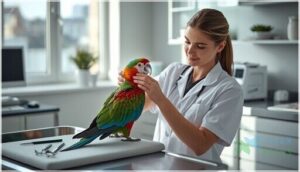
During annual wellness visits, your avian veterinarian will conduct an initial physical exam that covers everything from feather condition assessment to beak health checks. They’ll carefully evaluate bird weight management, perform respiratory monitoring, and examine eye care to gauge the physical condition of their pet bird.
This systematic approach to avian veterinary care ensures thorough bird health and wellness monitoring.
Common Diagnostic Tests for Birds
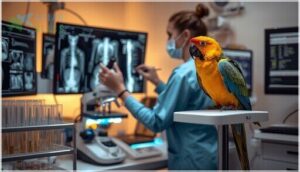
Once your avian veterinarian completes the physical exam, they’ll recommend diagnostic testing based on your bird’s species, age, and health status. Blood work, including complete blood counts and chemistry panels, helps detect infection, anemia, and organ dysfunction before visible symptoms appear. Imaging tests like radiographs reveal internal issues, while microbiology screens identify bacterial or viral threats.
Common tests your bird may receive:
- Cytology and tissue samples to diagnose masses, feather follicle infections, or inflammatory conditions affecting bird health and wellness
- Urinalysis to evaluate kidney function, metabolic disorders, and detect early signs of avian diseases like diabetes
- PCR testing for viral pathogens such as PBFD, guiding targeted treatment and infection control in your home
These diagnostic testing tools allow your avian veterinarian to practice evidence-based avian medicine, catching problems early when treatment works best.
Ongoing Guidance on Bird Nutrition and Environment

Your veterinary consultation extends well beyond diagnostics, covering bird diet planning and environmental health to keep your companion thriving. Your avian specialist offers nutrition counseling customized to species-specific needs, ensuring pelleted diets, fresh vegetables, and clean water support preventative care.
They’ll also guide you on cage setup, humidity levels, and foraging enrichment to promote bird health and wellness through proper animal husbandry.
| Nutrition Area | Veterinary Guidance |
|---|---|
| Pelleted Diets | 60-80% of daily intake for complete nutrition |
| Fresh Vegetables | 10-30% daily, washed and rotated for variety |
| Water Quality | Changed daily, room temperature, tested for chlorine |
| Supplements | Usually unnecessary with balanced pelleted diet |
| Foraging Enrichment | Puzzle feeders extend meal time, reduce stress |
Your vet provides feather care tips and beak health management advice during each visit, addressing unique challenges your bird may face at home.
Frequently Asked Questions (FAQs)
What is an avian specialist called?
When your feathered companion needs expert care, you’ll want a veterinarian trained specifically in avian medicine—called an avian veterinarian, avian specialist, or board-certified avian clinician depending on their credentials and training.
How much does an avian vet visit cost?
Routine checkups usually cost sixty-five to ninety-five dollars.
Though emergency fees can reach one hundred fifty to two hundred fifty dollars, and diagnostic prices for blood work or imaging may add eighty to four hundred dollars.
How to find a good avian vet?
Start by using the Association of Avian Veterinarians‘ Find-a-Vet tool to locate certified avian vets nearby.
Then check clinic reviews, verify staff training in bird health, and ask for specialist referrals from experienced bird owners.
Why are avian vets so expensive?
A parrot owner once paid $800 for emergency care, discovering costs stem from specialized training, costly equipment for avian medicine, high demand for expert fees, and intensive services few practitioners offer.
What insurance plans do avian vets accept?
Most avian veterinary clinics accept Nationwide’s exotic pet insurance and other specialized plans offering 70-90% reimbursement rates.
You’ll file claims directly with your insurer, so confirm policy coverage and the claim process beforehand.
How much do avian vet visits typically cost?
You’ll usually spend $65 to $125 for wellness exams, though emergency costs can reach $150 to $400 or higher. Blood work, imaging, and specialized avian veterinary care add considerably to vet fees.
What vaccinations do pet birds need annually?
Most companion birds don’t require annual vaccinations—only those at higher risk need polyomavirus, Newcastle disease, or Pacheco’s disease vaccines, with booster shots determined during annual wellness visits with your avian veterinarian.
Can avian vets perform surgical procedures?
Yes, board-certified specialists routinely handle complex veterinary surgeries, from tumor removals to fracture repairs, using sophisticated diagnostic and surgical procedures with bird anesthesia suited to avian medicine and surgery for ideal surgical recovery.
How do I transport my bird safely?
Secure your bird in a well-ventilated carrier with non-slip lining, maintain temperatures between 65-80°F, avoid direct sunlight, and provide spill-resistant hydration during longer trips.
Minimize loud noises to reduce stress throughout the journey.
Can avian vets treat all bird species?
Most avian veterinarians care for pet birds like parrots and canaries, exotic species including macaws and toucans, plus poultry, but some highly specialized birds may need referral to subspecialists with specific expertise.
Conclusion
Your bird’s health shouldn’t be left to guesswork or generalists who treat feathers as an afterthought. Finding an avian vet specialist near me means connecting with professionals who understand your parrot’s unique physiology, recognize subtle warning signs, and deliver care that prevents small concerns from becoming life-threatening emergencies.
When your bird needs expertise that matches their complexity, specialized care isn’t excessive—it’s the standard they deserve, and the protection that keeps them thriving for years to come.