This site is supported by our readers. We may earn a commission, at no cost to you, if you purchase through links.
A single infected wild duck can carry enough avian influenza virus to contaminate an entire lake, turning a peaceful wetland into an epidemiological hot zone. When that virus jumps to a commercial poultry operation, it doesn’t just threaten birds—it can halt international trade, trigger mass culling of healthy flocks, and in rare cases, sicken the people who work with infected animals.
Avian viral disease control isn’t just about protecting chickens and turkeys; it’s about safeguarding food security, livelihoods, and public health at the intersection where wildlife, agriculture, and human communities meet.
Effective control starts with understanding how these viruses move through bird populations, recognizing the early warning signs before outbreaks spiral, and implementing layered prevention strategies that work from the farm gate to the laboratory.
Table Of Contents
- Key Takeaways
- What Are Avian Viral Diseases?
- Avian Viral Disease Transmission Risks
- Detection and Diagnosis Strategies
- Effective Control and Prevention Methods
- Global and Community Response Initiatives
- Frequently Asked Questions (FAQs)
- Why do we keep a close eye on avian diseases?
- What is avian influenza?
- What should be done if a bird has avian influenza?
- How do I protect my poultry from avian influenza A?
- Who should report avian influenza?
- How do you control viral diseases in poultry?
- How can you control the spread of avian influenza?
- How do you control viral diseases in animals?
- How can we control avian influenza in birds?
- What is the drug of choice for avian influenza virus?
- Conclusion
Key Takeaways
- Avian viral disease control protects food security, livelihoods, and public health by preventing outbreaks that trigger mass culling, trade restrictions, and potential human infection through occupational exposure.
- Effective biosecurity requires layered defenses including controlled farm access, strict PPE protocols, equipment disinfection, and separation of domestic flocks from wild bird contact points like shared water sources.
- Early detection through daily flock monitoring for respiratory distress, neurological signs, or sudden death, combined with rapid PCR testing, cuts outbreak response time by 48 hours and limits viral spread.
- Controlling avian influenza demands coordinated action across farms, veterinary networks, and international surveillance systems, with vaccination programs achieving 70-90% coverage and real-time data sharing to track viral mutations before they escalate.
What Are Avian Viral Diseases?
Avian viral diseases are infections caused by viruses that primarily target birds, though some strains can cross species barriers and affect mammals, including humans. These diseases range from mild respiratory conditions to severe systemic infections that can devastate entire flocks, with certain viruses like avian influenza posing significant public health concerns.
Understanding the types of viruses, how they spread, and their effects on bird populations helps you recognize threats early and implement effective control measures.
For example, polyomavirus poses serious risks to young birds, making early detection crucial for preventing outbreaks in your flock.
Common Types Affecting Birds
You’ll encounter several viral threats when managing bird health. Avian Influenza, including H5N1 Bird Flu, causes respiratory distress and high mortality in wild birds and poultry. Newcastle Disease produces similar signs plus neurological symptoms. Infectious Bronchitis targets chickens’ respiratory and reproductive tracts, while Marek’s Disease triggers lymphomas. Paramyxoviruses beyond Newcastle Disease occasionally cause respiratory illness across species.
When birds show respiratory distress from these infections, early intervention for labored breathing can significantly improve recovery outcomes.
Understanding language patterns is vital for effective communication about these diseases.
How Avian Viruses Spread
Avian viruses spread through multiple pathways that heighten risk across bird populations. Direct contact with infected birds allows transmission through mucous membranes, while airborne transmission occurs when you inhale aerosols from droppings or secretions. Fecal contamination of feed, water, or surfaces promotes fecal-oral spread.
Bird migration carries avian influenza across continents, introducing new strains. Environmental exposure through contaminated equipment, clothing, or vehicles extends viral infections beyond initial outbreak sites.
The detection of avian viral diseases relies on rigorous scientific study methods to identify and track outbreaks effectively.
Impact on Wild and Domestic Birds
Wild bird mortality events range from small die-offs to widespread regional declines during avian influenza outbreaks. Domestic flock management becomes challenging when biosecurity breaches allow spillover from wild birds through shared water sources or contaminated equipment.
Poultry operations face production losses, trade restrictions, and culling costs.
Bird habitat conservation efforts must account for species interaction dynamics, since migratory corridors connect distant farms and enable avian virus evolution across populations.
Avian Viral Disease Transmission Risks

Understanding how avian viruses spread is the first step in protecting yourself, your flock, and your community. Transmission happens through multiple pathways, and your risk level depends on how often you’re exposed and what precautions you take.
Watch for early warning signs like respiratory distress and eye discharge, which are among the most common avian flu symptoms birds exhibit during infection.
Let’s break down the main routes of infection, the settings where risk runs highest, and what happens when these viruses jump from birds to humans.
Backyard keepers raising exotic bird types should stay alert to these diseases, as some species are more vulnerable than others during regional outbreaks.
Direct and Indirect Transmission Routes
Understanding how viruses move between birds is the first line of defense in infection control. You’re dealing with multiple pathways that demand vigilance:
- Airborne transmission occurs when infected birds release aerosols through coughing, spreading avian influenza over short distances within housing
- Fomite spread happens through contaminated equipment, surfaces, or your hands transferring virus particles
- Environmental contamination from feces and secretions in water sources facilitates indirect transmission across flocks
Occupational and Environmental Risk Factors
On farms with high bird density, your daily tasks expose you to viral loads through handling live birds, contaminated equipment, and aerosols generated during cleaning. Poor ventilation, inadequate biosecurity, and insufficient personal protective equipment heighten infection risk, while dust and waste mismanagement extend environmental contamination beyond direct contact zones.
Consistent hand washing is a simple but powerful step—this guide on reducing respiratory risks for birds explains how it limits disease spread.
Temperature and humidity affect viral persistence in water troughs and bedding, sustaining transmission cycles when proper waste disposal and facility hygiene are not maintained.
| Risk Source | Transmission Route | Control Measure |
|---|---|---|
| Live bird handling | Respiratory droplets, fecal matter | Respiratory protection, gloves |
| Contaminated surfaces | Fomite-mediated spread | Strict disinfection protocols |
| Dust and aerosols | Inhalation during processing | Ventilation systems, masks |
Zoonotic Potential and Human Exposure
Occupational contact with infected birds, particularly in live bird markets and poultry farms, increases your human infection risk through direct exposure to respiratory droplets, contaminated surfaces, and undercooked products. Seroprevalence studies confirm subclinical infections among workers lacking protective equipment.
Public health response prioritizes rapid testing, isolation, and exposure prevention measures to contain avian influenza and other zoonotic diseases before spillover events escalate.
Detection and Diagnosis Strategies
Catching avian viral diseases early can mean the difference between a contained outbreak and a crisis that spreads across entire flocks or regions. You need to recognize what infected birds look like, know which lab tests confirm your suspicions, and understand how surveillance systems track disease movement before it reaches your doorstep.
Here’s how detection and diagnosis work in practice.
Recognizing Clinical Signs in Birds

Early detection hinges on recognizing subtle changes in bird behavior and clinical symptoms. You’ll notice respiratory issues like coughing, nasal discharge, or gasping, alongside neurological signs such as tremors or head tilt when avian influenza virus takes hold.
Depression, conjunctivitis, and sudden death can signal avian flu. Documenting these diagnostic techniques promptly facilitates a rapid response to avian influenza transmission threats.
Laboratory and Molecular Diagnostic Methods

Once you suspect avian disease, molecular diagnostic techniques and technologies confirm the pathogen with precision. Real-time PCR detects viral genome analysis targets through nucleic acid extraction, while virus isolation and next-generation sequencing provide extensive molecular biology data.
You’ll follow strict sample handling protocols and laboratory biosafety measures during molecular assay design and diagnostic test validation. These virology and molecular medicine tools deliver definitive results within hours, guiding your immediate response.
Surveillance and Monitoring Approaches

You strengthen disease surveillance through strategic sentinel surveillance networks that monitor high-risk zones, wild bird habitats, and commercial operations. Real-time reporting systems integrate environmental sampling data, serological screening, and molecular diagnostics into centralized databases for risk assessment.
This data integration approach reduces avian influenza outbreak response time by 48 hours, enabling rapid detection of zoonotic disease transmission events and virus transmission patterns across poultry populations.
Effective Control and Prevention Methods
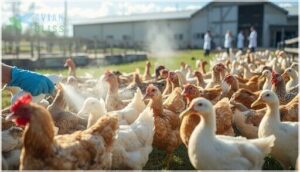
Controlling avian viral diseases requires a multi-layered approach that combines prevention, rapid intervention, and strict hygiene protocols. You can’t rely on a single method to protect your birds or yourself from infection.
The following sections outline practical measures that reduce transmission risk, protect human health, and limit disease spread in poultry populations.
Biosecurity and Farm Management Practices
Think of your farm as a fortress—every entry point matters. Strict Biosecurity Protocols start with controlled access, dedicated Personal Protective Equipment (PPE) for all personnel, and thorough Farm Sanitation between flocks.
You’ll reduce Avian Influenza and Bird Flu risks by separating Animal Housing from wild bird contact, implementing proper Waste Management, and providing detailed Personnel Training on pathogen prevention through validated Biosecurity measures.
Vaccination Programs and Efficacy
Vaccination bridges biosecurity with immunity. Effective Influenza Vaccine programs require 70-90% Herd Immunity coverage, and Vaccine Efficacy depends on matching field strains through strategic Vaccine Design.
You’ll achieve Disease Prevention when Immunization Strategies combine Newcastle disease and Avian Influenza Prevention and Control protocols, updating strains as surveillance data directs, and maintaining cold-chain integrity from hatchery through booster doses for sustained Vaccine Development outcomes.
Personal Protective Equipment and Hygiene
Beyond immunization alone, your hands, face, and clothing act as vehicles for viral spread. You’ll need N95-equivalent Respiratory Protection and eye shields for close contact, gloves changed between tasks, and coveralls that stay on-site.
Hand Hygiene with alcohol rub or soap before and after each bird encounter anchors Infection Control.
These PPE Standards and Decontamination Protocols complete your Biosecurity Measures framework at any Biosafety Level.
Safe Handling and Disposal of Infected Birds
Once you’ve worn your Personal Protective Equipment, isolate infected birds immediately, collect dead stock using designated gloves and sealed containers, then incinerate or dispose per local medical-waste regulations—this Waste Disposal protocol anchors Avian Virus Mitigation.
Decontaminate vehicles, tools, and surfaces with virucidal agents; document every step to verify Infection Control, Biosecurity and Biocontainment, and regulatory compliance under the appropriate Biosafety Level.
Global and Community Response Initiatives

Controlling avian viral diseases requires coordinated action that extends far beyond individual farms or local regions. Your community’s response to outbreaks, combined with international surveillance networks and cross-sector collaboration, determines how quickly threats are contained and how effectively future risks are mitigated.
Controlling avian viral diseases demands coordinated action across farms, communities, and international networks to contain threats and mitigate future risks
The following sections outline key response initiatives that connect local detection efforts to global disease control systems.
Outbreak Reporting and Rapid Response
When Avian Influenza Outbreaks hit, every hour counts—real-time Outbreak Alerts and Disease Surveillance systems can cut response time by up to 48 hours. Your community’s Rapid Response depends on Emergency Protocols that activate within 24 hours, ensuring Pandemic Response and Recovery begins immediately. Effective Disease Outbreak Response and Public Health Emergency Preparedness rely on three critical steps:
- Immediate laboratory confirmation and geolocation of incidents
- Multi-agency coordination through emergency operations centers
- Swift quarantine and movement restrictions based on live risk assessments
International Collaboration and Data Sharing
Cross-border surveillance networks unite your local response efforts with global frameworks, enabling real-time data exchange that tracks viral mutations across continents. International standards guide collaborative research, ensuring border control measures and biosecurity and biosafety measures align worldwide.
When you participate in public health surveillance, you strengthen global health security—because shared genomic data today prevents tomorrow’s pandemic, protecting both poultry and people through coordinated international collaboration and coordination.
One Health Approach in Disease Control
A One Health Approach to Disease Control integrates veterinary, environmental, and human sectors to combat avian influenza as a unified zoonotic risk. Your participation in interdisciplinary research and integrated response systems strengthens global health security through environmental surveillance and coordinated action.
- Cross-sector collaboration unites wildlife managers, public health officials, and agricultural experts in joint risk assessments.
- Shared data platforms enable real-time tracking of viral mutations across animal and human populations.
- Coordinated vaccination strategies protect poultry while reducing zoonotic transmission pathways to people.
- Global governance frameworks guarantee ethical data sharing and equitable resource distribution during outbreaks.
Frequently Asked Questions (FAQs)
Why do we keep a close eye on avian diseases?
Watching birds acts like an early warning system. Disease surveillance catches viral mutation patterns before human exposure, tracks pathogen spread across borders, and protects both avian health and public safety from zoonotic threats.
What is avian influenza?
Influenza A viruses, particularly H5N1 and other avian influenza strains, cause bird flu by infecting respiratory and gastrointestinal tracts. These viruses originate in wild waterfowl, spread through bird migration, and vary widely in disease pathology.
What should be done if a bird has avian influenza?
What happens when avian influenza strikes your flock? Isolate infected birds immediately, notify veterinary authorities, implement strict biosecurity measures, and guarantee proper disposal—rapid emergency response limits virus transmission and protects remaining populations from bird flu outbreaks.
How do I protect my poultry from avian influenza A?
Protect your poultry from avian influenza A by implementing strict biosecurity measures, controlling farm access, and disinfecting equipment regularly.
Monitor flock health daily and work with your veterinarian on vaccination programs and rapid response protocols.
Who should report avian influenza?
You should report avian influenza if you’re a veterinarian, poultry farm operator, or laboratory that detects it.
National authorities, public health officials, and the CDC rely on your timely disease surveillance reports.
How do you control viral diseases in poultry?
You control viral diseases in poultry through strategic vaccine development and distribution, rigorous farm sanitation, strict bird quarantine protocols, optimized poultry nutrition, disease modeling, and thorough bird flu prevention and control measures targeting avian influenza outbreaks.
How can you control the spread of avian influenza?
You control avian influenza spread through farm sanitation, bird vaccination, environmental monitoring, and public awareness campaigns.
Rapid virus isolation, strict biosecurity, and timely outbreak reporting prevent avian influenza virus transmission across poultry populations.
How do you control viral diseases in animals?
You control viral infections in animals through biosecurity measures, vaccination programs, disease surveillance, and rapid outbreak response—all targeting viral load management and preventing transmission across populations to safeguard animal health.
How can we control avian influenza in birds?
You control avian influenza in birds through strict biosecurity, targeted vaccination aligned with circulating strains, rapid diagnostic testing, movement restrictions during outbreaks, and coordinated surveillance that monitors wild bird migration patterns and farm sanitation protocols.
What is the drug of choice for avian influenza virus?
Neuraminidase inhibitors like oseltamivir are your first line of defense—no time to wing it when treating avian influenza A viruses.
Zanamivir, peramivir offer alternatives for H5N1, with early antiviral therapy improving outcomes markedly.
Conclusion
When birds succumb to infection, the losses ripple far beyond the flock. Your vigilance—through biosecurity, early detection, and coordinated response—forms the first line of defense against viral spread.
Avian viral disease control depends on consistent application of proven methods, not flawlessness. Monitor closely, act swiftly when signs emerge, and collaborate with veterinary and public health networks.
The investment you make in prevention today protects not just your birds, but the broader community that depends on safe, sustainable poultry systems.
- https://www.fws.gov/avian-influenza?utm_campaign=&utm_content=&utm_medium=email&utm_source=govdelivery&utm_term=
- https://www.aphis.usda.gov/aphis/ourfocus/animalhealth/animal-disease-information/avian/defend-the-flock-program/defend-the-flock-program
- https://wwwnc.cdc.gov/travel/notices
- https://www.cdc.gov/niosh/npptl/respmanuf.html
- https://doi.org/10.1038/296115a0