This site is supported by our readers. We may earn a commission, at no cost to you, if you purchase through links.
A baby bird’s crop can go from full to dangerously empty in under two hours—miss that window, and you risk losing the nestling to starvation or shock. Most well-meaning rescuers either feed too often, causing crop stasis, or wait too long between meals, leaving chicks weak and hypothermic.
The difference between thriving and failing often comes down to reading developmental cues: a pink, blind hatchling needs formula every 90 minutes, while a feathered fledgling can wait five hours between feedings. Getting baby bird feeding frequency right means matching intervals to age, species, and body condition—not guessing or following a one-size-fits-all chart.
Here’s how to build a feeding schedule that keeps your rescued nestling growing strong without overloading its delicate digestive system.
Table Of Contents
Key Takeaways
- A baby bird’s crop can empty in under two hours, and missing that feeding window risks starvation or shock—so you’ll need to match feeding intervals to the bird’s age, with newly hatched nestlings requiring meals every 90 minutes while feathered fledglings can wait five hours between feedings.
- Reading developmental cues matters more than following generic charts—pink, blind hatchlings need formula every 2-3 hours, but once eyes open and pin feathers emerge, you can stretch intervals to 4-5 hours, with fully feathered fledglings needing just 2-3 daily meals.
- Species-specific metabolism shapes your entire feeding schedule, as small passerines need meals every 30 minutes when newly hatched while hand-reared parrots start at two-hour intervals, making species identification your compass for proper nutrition timing.
- Monitor crop emptying between each feeding and track daily weight gain (roughly 10% of body weight during peak growth)—a crop that stays firm or full beyond 1-4 hours signals dangerous stasis requiring immediate veterinary care, while proper emptying confirms you’re feeding at safe intervals.
Key Factors Affecting Baby Bird Feeding Frequency
You can’t feed every baby bird on the same schedule—what works for a sparrow won’t work for a dove. The timing depends on where the bird is in its development, what species you’re caring for, and whether it’s healthy or struggling.
Let’s break down the three main factors that determine how often you’ll need to offer food.
Age and Development Stage
Your baby bird’s age dictates how often you’ll reach for that syringe. Newly hatched nestlings demand feeding every 2-3 hours—their tiny crops empty fast and growth patterns are explosive. Once eyes open and pin feathers emerge, you can stretch intervals to 4-5 hours. Fledglings with full feathering need just 2-3 daily feedings as they hit key developmental milestones and approach independence.
As your fledgling transitions to independence, switching to high-quality bird food pellets ensures they receive balanced nutrition during this critical growth phase.
Newly hatched nestlings demand feeding every 2-3 hours, but as they grow and feather out, you can stretch intervals to just 2-3 meals daily
Understanding baby bird care is essential for their survival and healthy development.
Species-Specific Requirements
Species shape every detail of your feeding schedule. Small passerines—those delicate perching birds—need meals every 30 minutes when newly hatched, while hand-reared parrots start at two-hour intervals. Raptors handle larger, less frequent prey deliveries as chicks mature. Seabirds receive fewer but bulkier meals reflecting offshore foraging.
Matching your feeding schedule for birds to species-specific metabolism keeps hatchlings thriving through their most vulnerable growth phases.
Altricial development in songbirds and psittacines demands more frequent feeds than precocial species, making species-specific nutrition your compass. Understanding bird development patterns, such as precocial chick growth, is essential for determining the right feeding frequency.
Health and Condition of The Bird
A bird’s health dictates your feeding plan even more than species alone. Check body condition by gently palpating the keel—pectoral muscles should feel moderately fleshed. Dehydrated chicks with tacky membranes need dilute fluids drop-by-drop for 24–48 hours before full formula.
If your bird shows signs like lethargy or fluffed feathers alongside dehydration, understanding common symptoms of bird vomiting and regurgitation can help you identify whether digestive distress is contributing to the problem.
Cold birds can’t digest properly; thermoregulation comes first. Weight monitoring reveals growth trends, while crop health prevents stasis.
Lethargy or refusal to gape signals trouble—pause feeding and seek help.
How Often to Feed Baby Birds
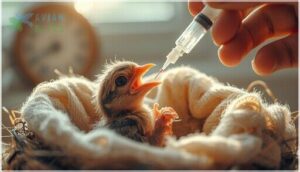
Getting the feeding schedule right makes all the difference between a thriving baby bird and one that struggles. The frequency depends on how old your bird is, what signals it’s giving you, and how quickly it’s developing.
Here’s what you need to know about timing feedings throughout the day.
For a complete breakdown of when to fill feeders during summer heat or winter cold, check out this guide to seasonal bird feeding times.
Recommended Daylight Feeding Intervals
Your feeding schedule hinges on age, with newly hatched chicks needing the most attention. During the 12–16 hour photoperiod, intervals should match crop capacity and growth stage—the younger the bird, the shorter the wait.
Monitor crop emptying between each feeding—it’s your cue for proper handfeeding frequency and helps prevent stasis while supporting healthy growth monitoring.
- 0–24 hours old: Feed roughly every 90 minutes as yolk reserves deplete
- Under 1 week: Offer formula every 2–3 hours (6–10 daily feedings)
- Eyes closed: Space feedings 3–4 hours apart (5–6 times daily)
- Eyes open: Reduce to every 5 hours (3–5 daytime meals)
- Wild nestlings: Some insectivores require feeding every 20–30 minutes for up to 16 hours
Adjusting Frequency as Birds Grow
Gradually lengthen intervals as feathers emerge and thermoregulation improves. By five to six weeks, most parrots need only three daily feedings—midday drops first, then morning or evening as solid foods replace formula.
Always follow balanced avian nutrition tips when introducing solid foods to ensure your parrot receives proper vitamins and minerals during this critical growth phase.
Track weight daily and watch crop emptying times; healthy growth monitoring lets you confidently reduce feeding frequency without starving chicks into weaning. Developmental stages, not the clock, drive your feeding schedule adjustments.
Signs a Baby Bird Needs Feeding
Generally, you’ll see vigorous head bobbing and wide-open mouths—classic hunger signs that tell you your nestlings need another round. Gaping behavior paired with cheeping calls means feeding frequency should increase.
Check the crop before each feeding; when it’s flat or nearly empty, that baby bird is ready. Trust these cues more than the clock—they’re your most reliable feeding schedule guide.
Creating a Safe Feeding Schedule
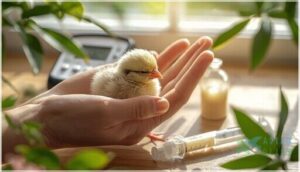
A feeding schedule isn’t just about watching the clock—it’s about reading your baby bird’s body. You’ll need to track three key indicators that work together to keep your bird healthy and growing at the right pace.
Let’s look at the monitoring techniques that prevent the most common feeding mistakes.
Monitoring Crop Fullness and Emptying
Check the crop within 1–2 hours after each feeding—it’s your best window into digestion rates. A healthy baby bird’s crop should feel soft and gradually empty between feedings, usually within 1–4 hours depending on species. If it stays firm or full longer, you’re looking at potential crop stasis.
Consistent crop monitoring keeps your handfeeding schedule safe and prevents dangerous blockages.
Using Weight to Adjust Feedings
Daily weighing unlocks the secret to safe, effective feeding schedules. Step on the scale each morning before the first meal—your baby bird should gain roughly 10 percent of its body weight every day during peak growth.
- Track weight trends over several days to spot problems before they become serious
- Calculate meal size at 10–12 percent of current body weight to prevent crop overload
- Adjust feeding frequency if weight gain stalls—sometimes more frequent, smaller meals work better
- Plot weights on species-specific growth charts to visualize whether your chick stays on track
Weight monitoring transforms guesswork into precision, letting you fine-tune feeding schedules as your bird develops.
Preventing Overfeeding and Crop Stasis
Overfeeding stretches delicate crop tissue beyond safe limits—wait until the crop empties completely before each meal.
Watch for a firm, swollen crop that won’t deflate after three hours; that signals stasis, a life-threatening backup requiring immediate vet care.
Stick to 10–12 percent body weight per feeding and track crop emptying patterns daily to catch trouble early.
Tools and Techniques for Proper Feeding
The right tools make feeding a baby bird safer and more effective. You’ll need clean equipment, properly prepared formula, and a solid understanding of your bird’s behavior.
Let’s cover the essentials—from sterilizing syringes to reading hunger cues.
Choosing and Sterilizing Feeding Equipment

Your feeding utensils directly impact a baby bird’s survival—poor equipment selection or cleaning protocols invite deadly infections. Baby birds lack strong immune defenses, so each syringe, spoon, or thermometer becomes either a lifeline or a threat.
- Equipment selection: Choose catheter-tip syringes (12 ml for small chicks, 35 ml for larger babies) over spoons for precise dose control and easier sterilization.
- Sterilization methods: Soak disassembled syringes in iodophor solution between feedings, then rinse and air-dry completely before storage.
- Disinfectant options: Use diluted povidone-iodine, quaternary ammonium compounds, or glutaraldehyde-based products following manufacturer contact times.
Between each feeding session on your hand-rearing schedule, disassemble and wash all feeding utensils with hot water to remove organic debris. An avian vet or wildlife rehabilitation center can recommend species-appropriate tools—detachable tubes risk being swallowed into the crop. Replace worn syringes when plungers stick or O-rings crack, because microscopic damage harbours bacteria despite cleaning.
Formula Preparation and Temperature Guidelines

Mix your formula at body temperature—38–40°C (100–104°F)—because cold mixtures shock a chick’s digestive system. Test a drop on your wrist before each feeding; it should feel warm, never hot.
| Preparation Step | Action Required | Safety Checkpoint |
|---|---|---|
| Dilution ratio | Follow manufacturer instructions for smooth consistency | Formula coats spoon without dripping |
| Temperature verification | Heat to 38–40°C (100–104°F) | Test drop on wrist feels warm |
| Batch freshness | Prepare new formula each feeding | Discard unused portions within 1 hour |
| Storage protocol | Refrigerate opened powder per label | Check expiration dates before mixing |
Discard unused prepared formula after a short holding period—bacterial growth accelerates in warm, nutrient-rich environments. Fresh batches at every feeding protect vulnerable chicks from infection while maintaining proper hydration levels and nutrient balance throughout your handrearing schedule.
Recognizing Hunger and Satiation Cues
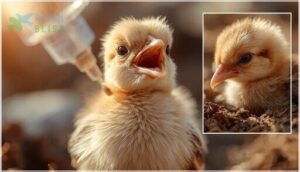
Once your formula’s ready, watch the baby bird closely—rhythmic pecking and open-mouth begging tell you it’s hungry. A full crop signals it’s time to pause; frantic feeding attempts mean you’ve underfed.
Between meals, quiet rest periods show satiation. If a chick ignores repeated feeding cues, it’s likely satisfied.
These behavior patterns guide your feeding schedule and prevent crop stasis.
Troubleshooting Feeding Issues
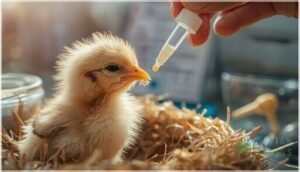
Even with your best efforts, baby birds sometimes refuse food or show worrying signs during feeding. These moments can feel alarming, but most issues have clear solutions when you know what to look for.
Below, you’ll find practical steps for handling refusal and guidance on when professional help becomes necessary.
What to Do if a Baby Bird Refuses Food
Sometimes your baby bird will turn away from food—don’t panic, but don’t force-feed either. First, check the crop; if it’s full or hard, wait for complete emptying to prevent crop stasis. Verify your formula sits between 102°F and 106°F. Keep the bird warm and calm.
If food refusal continues beyond one skipped feeding or you spot emergency signs like lethargy, get help fast.
When to Seek Veterinary or Rehabilitation Help
When refusal signals deeper trouble, you need professional help immediately. Watch for these emergency situations that exceed home care:
- Visible wounds, fractures, or predator contact—cat or dog attacks carry fatal infection risk and demand urgent antimicrobial therapy
- Crop stasis lasting 24 hours—failure to empty triggers toxemia requiring clinical flushing
- Respiratory distress or aspiration—gasping, clicking sounds, or tail bobbing indicate airway compromise
- Severe dehydration—sunken eyes and tacky mouth membranes need supervised fluid therapy
Contact a licensed wildlife rehabilitation center or avian veterinarian right away.
Frequently Asked Questions (FAQs)
Can baby birds drink plain water safely?
Like a delicate tightrope between hydration and harm, plain water poses serious aspiration risks for baby birds. Their underdeveloped swallowing reflex can’t handle it safely, making electrolyte solutions the wiser choice.
What foods should never be fed to baby birds?
Never offer raw meat, dairy, processed snacks, bread, or caffeine to baby birds. Avocado flesh contains persin, which is toxic to avian species.
Salty foods disrupt electrolyte balance, while chocolate poses severe caffeine risks to developing chicks.
How do nighttime feeding schedules differ from daytime?
Baby birds need fewer nighttime feedings because their metabolism slows after dark. Most species can wait 4-6 hours between feeds during dark period care, compared to 15-30 minute daytime intervals.
When do baby birds start eating on their own?
Most nestlings shift to self-feeding during the fledgling stage, roughly two to three weeks after hatching. Precocial species start earlier—sometimes within days—while altricial birds need more time to develop coordination and foraging skills.
Should wild baby birds be fed differently than domestic?
Yes—wild species require insect-rich, species-specific nutrition and rehabilitation methods that respect feeding ethics, while domestic birds thrive on formulated avian nutrition.
Wildlife rehabilitation experts tailor feeding schedules to each bird’s natural diet and developmental needs.
Conclusion
Studies show that 70% of rescued nestlings fail due to improper feeding schedules—not malnutrition. You’ve now got the tools to break that pattern.
Monitor crop emptying, adjust baby bird feeding frequency as feathers emerge, and trust your bird’s cues over rigid timers.
When a chick begs weakly or stops gaping altogether, you’ll know exactly what that means. The difference between guessing and knowing could be the reason your nestling survives to fledge.
- https://www.facebook.com/groups/300263915496229/posts/1062284935960786/
- https://www.vetzone.com.au/article/guidelines-for-hand-feeding-baby-birds/
- https://www.aviatorharness.com/blog-feed/the-science-of-handfeeding-and-weaning-the-baby-parrot-section-two
- https://wrin.asn.au/caring-for-baby-birds-brenda/
- https://www.reddit.com/r/parrots/comments/gijb0a/baby_gcc_hand_feeding_schedule/