This site is supported by our readers. We may earn a commission, at no cost to you, if you purchase through links.

A backyard bird sanctuary isn’t just a pretty addition to your property—it’s a functioning ecosystem that starts working the moment you plant the first native shrub. Within weeks, you’ll notice insect-eating warblers patrolling your garden while finches crack open seed heads you didn’t even know were edible.
These aren’t random visitors passing through. They’re responding to specific habitat features that meet their survival needs: food sources that match their beak shapes, shelter dense enough to hide from hawks, and water shallow enough for safe bathing.
When you create a backyard bird sanctuary with the right mix of native plants and thoughtful design, you’re not just feeding birds—you’re rebuilding the web of relationships between plants, insects, and wildlife that makes entire neighborhoods more resilient to climate swings and pest outbreaks.
Table Of Contents
Key Takeaways
- A backyard bird sanctuary functions as a working ecosystem that rebuilds relationships between plants, insects, and wildlife, making neighborhoods more resilient to climate shifts and pest outbreaks while providing natural pest control and pollination services.
- Native plants form the foundation of successful sanctuaries because they provide the specific food sources, shelter density, and insect populations that local bird species have evolved to depend on throughout the year.
- Essential sanctuary features include multiple feeder types spaced 6-10 meters apart, shallow water sources changed every 2-3 days, proper nesting structures, and the elimination of pesticides that harm birds through contaminated insects.
- Effective maintenance focuses on letting natural processes work by leaving seedheads standing through winter, maintaining leaf litter, and applying window collision prevention measures that reduce bird mortality by 50-90%.
Why Create a Backyard Bird Sanctuary
A backyard bird sanctuary does more than attract colorful visitors to your yard. It bolsters the health of your local environment while giving you a front-row seat to nature’s daily rhythms.
Here’s why setting aside space for birds benefits everyone involved.
Benefits for Local Ecosystems
A thriving bird sanctuary doesn’t just serve birds—it jumpstarts ecosystem balance across your entire yard. When you welcome native species, you’ll boost biodiversity and wildlife conservation in ways that ripple outward. Here’s what happens:
- Improved soil health through diverse plant roots
- Enhanced seed dispersal by visiting birds
- Microhabitats that buffer extreme weather
- Increased insect and plant diversity
- Greater climate resilience for all local species
Creating a bird sanctuary also involves considering the importance of clear science information to understand the complex interactions within ecosystems.
Natural Pest Control and Pollination
Birds don’t just brighten your mornings—they work as natural exterminators. Insect-eating species reduce pest populations, while nectar-feeders pollinate local plants, creating sustainable gardening outcomes without chemicals. Native plants boost these pollination services by attracting diverse species year-round, supporting ecosystem balance. You’ll see caterpillar abundance peak in late spring, feeding songbirds that keep your bird-friendly backyard thriving naturally. Understanding main topic branches is essential for organizing information about bird sanctuaries and their role in the ecosystem.
| Pest Management Role | Pollination Services | Native Plants Impact |
|---|---|---|
| Birds consume garden pests | Transfer pollen between flowers | Provide year-round food sources |
| Reduce pesticide need | Increase fruit/seed production | Support beneficial insects |
| Control caterpillar populations | Attract diverse pollinators | Create wildlife-friendly habitats |
| Support sustainable gardening | Improve garden yields | Maintain ecosystem balance naturally |
Enhancing Biodiversity and Climate Resilience
Your sanctuary doubles as climate defense. Native plants cool your yard by several degrees in summer while boosting carbon storage in soil.
Wildlife-friendly habitat restoration with six to eight species strengthens biodiversity conservation and ecosystem services year-round. That diversity gives birds alternative food sources as climate change shifts flowering and fruiting patterns, making your sustainable gardening efforts an investment in climate adaptation and wildlife preservation.
Personal Enjoyment and Birdwatching
Beyond ecosystem benefits, your backyard bird sanctuary becomes a living stress relief station. Birdwatching tips show that observing backyard birds at feeders and bird bath areas strengthens your nature connection while calming your mind.
Wildlife observation reveals fascinating bird behavior patterns across seasons, and you’ll find that tracking species for citizen science deepens your appreciation for the bird watching experience unfolding right outside your window.
Planning Your Bird Sanctuary Space

Before you start planting or hanging feeders, you’ll want to take stock of what you’re working with. Every yard has its own personality—sunny spots, shady corners, and quirks that’ll shape where birds can thrive.
Let’s walk through the key factors that’ll turn your space into a welcoming habitat.
Assessing Yard Size and Sunlight
Before Creating a Bird Friendly Yard, walk your property with a tape measure to determine usable areas—most urban lots offer 0.1 to 0.25 acres for a wildlife friendly sanctuary. Map sunlight exposure by noting which spots get six-plus hours of direct sun versus shade, then check Soil Moisture and drainage. This Garden Layout groundwork helps you choose native plants that’ll thrive in each Microclimate Creation zone, supporting backyard birds year-round.
- Record total yard dimensions and identify sunny versus shaded sections
- Track sun patterns across morning and afternoon to refine planting beds
- Note drainage issues or wet spots that influence plant survival
Researching Local Bird Species
Check regional birding guides or contact local conservation efforts to identify five to twelve common backyard birds active during peak migration periods. Virginia monitoring programs confirm at least twenty passerine species breed in suburban yards, so focus on residents like northern cardinals, blue jays, and cedar waxwings.
Understanding avian behavior and habitat analysis guides your native plants selection for a thriving bird sanctuary.
| Species | Habitat Preference | Peak Season |
|---|---|---|
| Northern Cardinal | Dense shrubs, berry plants | Year-round |
| Blue Jay | Mixed deciduous cover | Year-round |
| Cedar Waxwing | Fruiting trees | Spring–Summer |
| American Robin | Open turf, leaf litter | Spring–Summer |
| House Finch | Human-modified landscapes | Year-round |
Mapping Diverse Habitats and Features
A simple diagram transforms your wildlife habitat planning from guesswork into science. Sketch your yard’s existing trees, sunny patches, and sheltered corners to reveal where native plantings will thrive and support ecosystem balance in your bird-friendly yard.
- Label five microhabitats — lawn, shrubs, canopy, ground cover, water feature — to attract diverse species year-round.
- Mark sunlight zones for selecting plants that support bird migration stopover sites.
- Identify nesting locations using dense shrubs and deadwood snags for wildlife conservation.
- Note seasonal gaps in your backyard habitat to guarantee continuous food and shelter.
Choosing Native Plants for Birds
Native plants are the foundation of any successful bird sanctuary because they offer exactly what local species have evolved to depend on—seeds, berries, nectar, and the insects that thrive among their leaves. When you choose plants that naturally belong in your region, you’re creating a familiar habitat that birds recognize and return to year after year.
Let’s look at the key types of native plants you’ll want to include and why each one matters.
Selecting Food-Producing Flowers and Shrubs
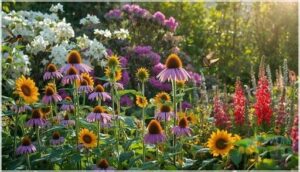
Your native plants form the foundation of a thriving wildlife habitat. Choose flowering shrubs with diverse bloom timing—early spring through late fall—to deliver nectar when hummingbirds and other pollinators need it most.
Seed production from sunflowers and coneflowers feeds songbirds through winter.
This gardening for wildlife approach builds a bird-friendly garden that fosters creating a bird-friendly yard naturally.
Planting Berry Bushes for Winter Nutrition
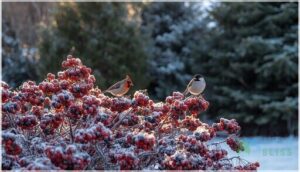
Berry bushes become lifelines when winter strips other food away. Blueberry and serviceberry offer high-energy fruit that persists through frost, delivering vital bird nutrition during lean months.
Choose native fruit sources like black chokeberry and American cranberry bush for your bird sanctuary—they’re adapted to cold climate gardening conditions and support winter foraging naturally.
Layer these native plants with evergreens to create shelter, strengthening your wildlife conservation strategies while gardening for wildlife and creating a bird-friendly yard.
Incorporating Insect-Friendly Foliage
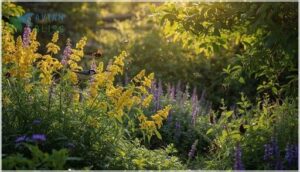
Your native plants do more than look pretty—they’re insect factories that fuel bird survival. Goldenrod and aster draw pollinators whose larvae become protein-rich meals for nestlings, while layered foliage from groundcovers to shrubs creates foraging zones that support natural pest control.
Native plants function as insect factories, transforming pollinators into protein-rich meals that fuel bird survival through every season
This foliage diversity strengthens ecosystem balance and transforms your bird-friendly garden into a sustainable gardening practices showcase.
Removing Invasive Species
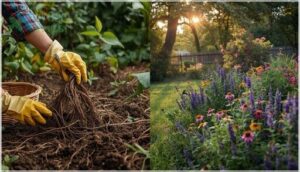
Invasive species choke out native plants, breaking ecosystem balance and threatening wildlife conservation. Start by identifying problem plants through your local extension service, then hand-pull or cut them before they spread seeds.
Replace each invasive with a native substitute—berry shrubs or seed-producing perennials—to restore habitat renewal and support environmental protection efforts that benefit your feathered visitors.
Attracting and Supporting Backyard Birds
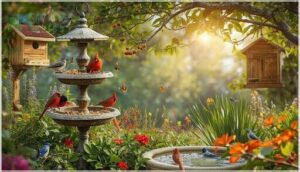
Once you’ve planted the right mix of native species, it’s time to roll out the welcome mat for your feathered visitors. Birds need more than just pretty plants—they’re looking for reliable food, fresh water, safe places to raise their young, and a yard where they won’t have to fight for every meal.
Let’s walk through the essentials that’ll turn your backyard into a true bird haven.
Installing Feeders and Food Variety
You’ll want to offer at least three feeder types—tube, platform, and suet holders—to accommodate different bird species. Mix seed selection with nyjer for finches, sunflower for cardinals, and high-fat suet options during migration.
Food variety boosts bird nutrition and increases your bird count, especially if you participate in FeederWatch through the Cornell Lab of Ornithology to track backyard visitors.
Providing Clean Water Sources
Birds need fresh water just as much as they need food. Set up a bird bath with shallow basins (2–4 cm deep) that accommodate various species without drowning risk. Change water every 2–3 days in warm weather to prevent algae and maintain bird hydration.
Keep debris removal consistent, and place water features near native plants to create a truly birdfriendly backyard that fosters your Backyard Bird Sanctuary Design year-round.
Creating Nesting Areas and Shelters
Once water’s in place, you’ll want to offer safe spots for nesting birds to raise their young. Install birdhouses with proper entrance hole sizes—cavity nesters like chickadees prefer 1.25-inch openings. Position boxes away from strong winds and add brush piles for ground-dwelling species seeking cover.
- Native trees with dead limbs provide natural cavities
- Dense shrubs near nest sites reduce predator exposure
- Untreated wood boxes protect developing eggs from chemicals
- Rock piles create microhabitats supporting insect-rich food sources
Reducing Competition and Waste at Feeders
Space your feeders 6–10 meters apart to cut down on squabbles between dominant species and give shyer birds a fair shot. Pick seed variety that matches local appetites—you’ll waste less and discourage pests.
Tray designs with raised edges catch spills, and regular bird feeder maintenance keeps disease at bay. Pair feeders with a nearby bird bath, and you’ve built a welcoming, low-waste setup.
Maintaining a Healthy Bird Sanctuary
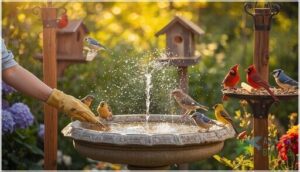
Building your bird sanctuary is just the beginning—keeping it healthy takes consistent care and a few smart habits. The good news is that most maintenance tasks are simple and become second nature once you get into a rhythm.
Let’s walk through the key practices that’ll keep your feathered visitors safe, healthy, and coming back for years to come.
Avoiding Pesticides and Chemicals
Your sanctuary thrives when you skip pesticides and embrace chemical-free gardening. Systemic insecticides accumulate in bugs that birds eat, harming them directly. Instead, try pest control through integrated methods—start with natural pest control like introducing native plant diversity and physical barriers.
Organic lawn care and sustainable landscaping protect both your feathered visitors and environmental health. Eco-friendly practices and organic gardening keep your yard safe.
Keeping Feeders and Water Clean
Routine feeder sanitation and water quality are the foundation of disease prevention in your sanctuary. Wash bird feeders with mild soap every two weeks, rinse thoroughly, and dry completely before refilling. Replace bird bath water daily during warm months and scrub surfaces monthly to prevent algae.
Key cleaning schedules for bird health:
- Disinfect feeder ports with 10% vinegar solution
- Store seed in sealed, squirrelproof containers off the ground
- Inspect water features after heavy rain
- Remove moldy food immediately to protect visiting species
Preventing Window Collisions
Glass surfaces can turn your bird sanctuary into a deadly obstacle course. Apply bird-friendly window decals or UV patterns at 2–6 inch intervals across untreated glass—this simple step cuts bird collision mortality by 50–90%.
During migration season, dim night lighting to avoid disorienting travelers. These glass treatments support bird conservation while keeping your wildlife-friendly yard safe for visiting species.
Managing Pets and Outdoor Hazards
Your pets can be a serious threat to the wildlife protection you’ve worked to build. Outdoor cat risks are real—roaming cats contribute to billions of bird deaths annually and can slash local bird populations by a third in some neighborhoods.
Pet safety tips for a bird friendly garden:
- Keep cats indoors or provide supervised, leashed outdoor time
- Monitor dogs during outdoor spaces visits to prevent chasing birds
- Use bird-safe fencing and netting around hazard zones
- Secure windows to prevent bird escape prevention issues for pet birds
These hazard mitigation steps create safer wildlife encounters while maintaining natural pest control benefits.
Frequently Asked Questions (FAQs)
How often should I replace bird feeder seed?
Many people assume seed lasts indefinitely, but freshness matters.
Replace bird feeder seed every two to three weeks in warm weather, extending to four to six weeks during cooler months when stored properly.
What materials work best for DIY birdhouses?
Choose untreated cedar or birch for your birdhouse—these hardwoods resist warping and decay.
Use stainless-steel screws instead of nails, add ventilation gaps and drainage holes, and apply only non-toxic, water-based finishes for bird-friendly wood selection.
Can I attract hummingbirds to my sanctuary?
You can draw hummingbirds by planting nectar-rich native plants like Salvia and Monarda, adding clean bird baths with drippers, and placing hummingbird feeders in sheltered spots—creating a bird sanctuary they’ll visit repeatedly.
When is the best season to start planting?
You’ll find that both spring planting and fall gardening work beautifully, depending on your regional timing and climate considerations. Early spring provides immediate nectar resources, while fall establishes stronger roots for sustainable gardening practices.
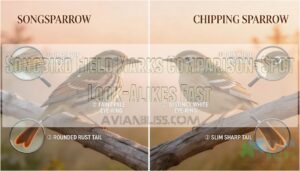
How do I identify different bird species visiting?
You can identify species by studying field marks like wing bars and beak shape, listening to unique song patterns, and noting habitat preferences.
Use field guides, birding apps, or local Audubon Society resources for confirmation.
Conclusion
The quietest revolution in your yard happens when you stop trying to control nature and simply make room for it.
Your backyard bird sanctuary becomes most powerful when you let go—allowing seedheads to stand through winter, leaving leaf litter where it falls, trusting native plants to feed the insects that feed the birds.
You’re not building a showpiece. You’re stepping back and letting thousands of years of ecological relationships rebuild themselves, one chickadee at a time.