This site is supported by our readers. We may earn a commission, at no cost to you, if you purchase through links.
 When your bird’s beak health issues rear their ugly head, you’re not powerless. Most beak health issues solved start with identifying the root cause—whether it’s nutritional deficiencies.
Table Of Contents
Key Takeaways
- Catch problems early – You’ll prevent serious complications by scheduling annual vet checkups and watching for warning signs like eating difficulties, beak color changes, or behavioral shifts.
- Fix nutrition first – Most beak issues stem from vitamin A, calcium, or protein deficiencies, so you’ll solve 70% of problems by switching to balanced pellets and adding supplements.
- Create a safe environment – You can prevent injuries and support healing by providing natural perches, bird-safe toys, and removing toxic materials from your bird’s living space.
- Don’t delay treatment – When you spot cracks, overgrowth, or bleeding, immediate veterinary care prevents infections and restores normal function faster than waiting.
Common Beak Problems in Birds
You’ll encounter various beak problems in birds, from overgrowth and fractures to discoloration and unusual growths. These issues can seriously affect your bird’s ability to eat, preen, and behave normally.
Beak Overgrowth and Malformation
Why do some birds develop overgrown or misshapen beaks? **Beak abnormalities stem from genetic factors, nutritional deficiencies, and environmental influences.
You’ll notice scissors beak crossing patterns** or excessive beak growth disrupting normal function.
Malformation causes include vitamin A deficiency and developmental abnormalities during chick formation. Corrective measures like regular trimming restore proper feeding ability when nutritional impact creates overgrown structures.
Beak Injuries and Fractures
When trauma strikes your bird’s beak, you’re facing serious business. Blunt trauma from falls or fights creates different fracture types—from minor tip cracks to severe crushing injuries. Quick veterinary attention prevents infection risks and starts proper pain management.
The healing process varies by location, with proximal fractures needing intensive rehabilitation methods, while distal breaks recover faster. Birds with beak injuries require immediate attention, especially if there’s significant beak bleeding.
Beak Discoloration and Lesions
Discolored areas on your bird’s beak can signal serious health problems. Lesion types range from white plaques to black necrosis, with discoloration causes including viral infections, nutritional deficiencies, or environmental toxins.
Infection signs often show rough, scaly patches alongside fungal involvement. Using a severity scale helps determine treatment urgency for various beak disorders.
Daily beak checks can help identify issues like unusual beak textures.
Behavioral Signs of Beak Issues
When your bird’s behavior shifts, it’s often signaling beak discomfort that affects daily activities. Watch for these telltale signs:
- Reduced Preening – Your bird struggles with feather maintenance due to beak pain.
- Food Dropping – Eating issues cause frequent spillage during meals.
- Head Shaking – Persistent movement indicates irritation or pressure.
- Feather Plucking – Stress from beak problems triggers destructive habits.
- Social Isolation – Your bird withdraws from playing, climbing, and interaction.
Causes of Beak Health Issues
Understanding why your bird’s beak develops problems helps you prevent serious health complications before they start. Poor nutrition, environmental toxins, genetic issues, and infections can all damage your bird’s beak and affect their quality of life.
Nutritional Deficiencies
Poor nutrition can wreak havoc on your bird’s beak health. Vitamin deficiencies and mineral imbalances cause overgrowth, brittleness, and deformities. Calcium deficiency particularly affects beak strength. Switching to formulated diets and adding dietary supplements can prevent these nutritional imbalances and restore proper beak development.
| Deficiency Type | Beak Symptoms | Dietary Solution |
|---|---|---|
| Vitamin A | Overgrowth, cracks | Orange vegetables, supplements |
| Vitamin D | Soft, bendable beak | UV light, fortified pellets |
| Calcium | Brittle, weak structure | Cuttlebone, calcium blocks |
| Protein | Slow growth, poor quality | High-quality seeds, pellets |
Environmental and Contaminant Exposure
Your bird’s environment can become a hidden enemy when Toxic Exposure strikes. Industrial chemicals, heavy metals like lead and mercury, and pesticides create serious Pollution Effects that damage beak structure.
Contaminants enter through contaminated food and water, causing Chemical Ingestion that leads to Beak Deformity Causes. Organochlorine compounds disrupt normal growth patterns, making Environmental issue awareness critical for prevention.
Genetic and Developmental Abnormalities
Since genetic factors play a vital role in beak development, you’ll encounter birds with inherited abnormalities that affect normal growth patterns. These developmental abnormalities stem from genetic mutations during embryonic development, creating congenital defects that impact beak formation.
Here are five key genetic and developmental factors affecting beak health:
- Genetic mutations – DNA changes passed from parents that alter normal beak development patterns
- Embryonic development disruptions – Problems during egg formation that create structural abnormalities
- Congenital defects – Birth defects affecting beak shape, size, or function from genetic abnormalities
- Heritability factors – Family lines carrying genes that predispose birds to specific beak deformities
- Genome sequencing insights – Modern genetic testing revealing specific mutations responsible for developmental abnormality conditions
Viral and Bacterial Infections
Infections can wreak havoc on your bird’s beak health. Avian Poxvirus causes warty growths, while Psittacosis Bacteria leads to swelling and discharge. Fungal infections create white patches that spread quickly.
These pathogens exploit weakened immune systems, making proper hygiene practices your first defense. Antibiotic resistance complicates treatment, so you’ll need an experienced avian veterinarian to identify the specific pathogen and prescribe targeted therapy for effective recovery.
Recognizing Symptoms of Beak Disorders
You’ll notice beak problems through visual changes like overgrowth, cracks, or unusual coloring that signal underlying health issues.
Watch for feeding difficulties, excessive head shaking, or reluctance to preen, as these behaviors often indicate pain or discomfort that requires immediate attention.
Changes in Beak Appearance
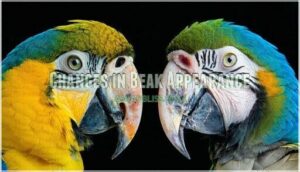
You’ll notice subtle warning signs before major problems develop. Beak discoloration appears as unusual yellowing, darkening, or pale patches that weren’t there before. Growth irregularities create uneven surfaces, while lesion development shows as rough spots or scaly areas. Texture changes make beaks feel different when birds preen. Symmetry alterations become obvious when one side looks different from the other, signaling potential issues.
Difficulty Eating or Preening
When your bird struggles with eating or preening, it’s a clear signal that beak functionality has been compromised. Watch for dropped food, difficulty grasping items, or incomplete preening sessions. These feeding adaptations and preening challenges often indicate underlying beak problems requiring immediate attention.
Limited mobility in jaw movement suggests pain management needs, making eating issues progressively worse without intervention. Regular checkups can help prevent serious beak issues.
Unusual Growths or Cracks
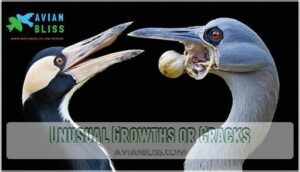
Growths and cracks signal serious beak problems requiring immediate attention. Masses or growths often indicate bacterial or fungal infection, while cracks compromise beak integrity and create infection risks.
Growth causes range from nutritional deficiencies to viral exposure. Assess crack severity carefully—deep fissures need professional growth removal. Minor surface cracks may heal naturally with proper care and nutrition.
Behavioral Changes Linked to Discomfort
When your bird’s comfort takes a nosedive, behavioral changes signal beak disorders more clearly than physical symptoms. Activity reduction becomes noticeable as birds avoid normal routines. Altered grooming patterns emerge when preening hurts.
Social isolation increases as discomfort grows. Vocalization changes reflect pain levels. Aggression increase often masks underlying beak problems.
These beak health warning signs require immediate veterinary attention.
Effective Treatments for Beak Problems
When your bird’s beak shows signs of trouble, effective treatment options can restore both function and appearance. Professional veterinary care combined with targeted interventions resolves most beak problems successfully, getting your feathered friend back to normal eating and preening habits.
Veterinary Diagnosis and Beak Trimming
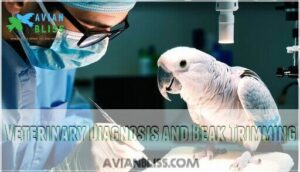
When you spot concerning symptoms, scheduling an appointment with an avian veterinarian becomes your next step. Your vet will perform blood tests and a full physical examination to identify underlying causes. Diagnostic techniques help pinpoint whether nutritional deficiencies or infections are driving the problem.
If trimming methods are necessary, anesthesia options guarantee your bird’s comfort during the procedure. You may need to consult products for bird care following the procedure. Post-trim care instructions and complications avoidance strategies will keep your feathered friend healthy afterward.
Surgical Repair and Prosthetics
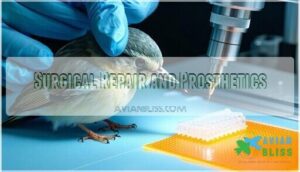
Advanced surgical options offer hope when beak problems exceed simple trimming solutions. Your avian veterinarian might recommend laser surgery for precise fracture repair, especially with complex trauma cases. 3D printing technology creates custom polymer implants that restore function beautifully. Some pet owners explore products for this surgery to assist with post-operative care.
Dental burr tools handle minor corrections, while refined beak treatment methods using titanium prosthetics help injured birds regain their natural feeding abilities completely.
Dietary Adjustments and Supplements
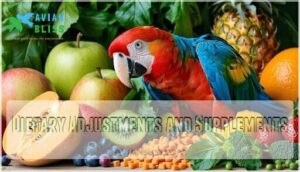
Proper nutrition can transform your bird’s beak health faster than you might expect. Vitamin supplements containing vitamin A address up to 70% of captive bird beak problems, while calcium sources like cuttlebone strengthen fragile beaks. Protein intake below 16% creates soft, misshapen beaks in young birds.
Critical dietary changes that save beaks:
- Add vitamin A-rich foods – Sweet potatoes and leafy greens prevent keratin defects that cause painful overgrowth
- Boost calcium intake – Mineral blocks reduce fracture rates by 37% in medium-sized birds
- Increase seed variety – Fortified mixes with flaxseed decrease abnormal keratin build-up by 35%
Nutritional deficiencies show up quickly in beak texture and color. A balanced diet with proper hydration can’t be overlooked – dehydrated birds struggle to process nutrients effectively. Observing changes in beak color can be the first sign of underlying health issues. Dietary additions like amino acid supplements restore normal beak texture in canaries within two months.
Environmental Modifications and Support

Three key environmental modifications create a healing haven for your feathered friend. Safe enclosures with proper perch design prevent further beak damage, while adaptive feeding stations accommodate injured bills. Cement perches naturally file overgrown beaks, and chew toys provide healthy exercise.
Control dust levels and maintain excellent water quality to support recovery and prevent infections.
Preventing Future Beak Health Issues
Prevention isn’t just about fixing problems—it’s about stopping them before they start. You’ll save yourself countless trips to the vet by establishing simple daily habits that keep your bird’s beak healthy for years to come.
Routine Health Check-Ups
Through regular exams with your avian veterinarian, you’ll catch beak problems before they become serious issues. Early detection makes all the difference in treatment success and your bird’s comfort. A healthy beak shows steady growth without cracks.
To ensure your bird’s beak stays healthy, follow these steps:
- Schedule routine checkups every 6-12 months for thorough beak inspections
- Document health history to track changes and identify patterns over time
- Request professional cleaning during visits to remove buildup and assess condition
- Discuss preventative care strategies suited to your bird’s species and lifestyle
- Maintain a proactive approach by reporting any concerns between scheduled appointments
Providing a Balanced Diet
You’ll want to feed your bird a balanced diet that meets all nutritional requirements. Diet variety prevents nutritional deficiencies that cause beak problems. Include vitamin A-rich foods like carrots and leafy greens, vitamin D3 through proper lighting, and calcium sources.
Supplementation needs vary by species, so consult your vet. Encourage foraging behavior with puzzle feeders. Don’t forget hydration importance—fresh water prevents beak brittleness.
Safe and Enriching Environments
Creating environments that safeguard your bird’s beak health requires thoughtful planning and attention to detail. Your feathered friend’s surroundings directly impact their well-being and beak maintenance habits.
Essential Environmental Elements for Beak Care:
- Cage Material Safety – Choose stainless steel or powder-coated cages; avoid galvanized metal that can cause toxicity and compromise beak health maintenance.
- Natural Perches – Provide varied diameter branches from safe woods like apple or willow for natural beak conditioning and preventing beak problems.
- Non-Toxic Toys – Select certified bird-safe materials; rotating chew toys and climbing and holding toys encourage healthy beak exercise.
- Social Interaction – Ensure adequate companionship or human interaction to prevent stress-related beak behaviors like excessive picking.
- Environmental Enrichment – Create stimulating spaces with foraging opportunities that promote natural beak use and overall mental health. Prioritize selecting appropriate cage options for your bird’s safety.
Monitoring for Early Warning Signs
Beyond creating a safe environment, you’ll want to watch for beak problem symptoms before they become serious health issues. Daily visual inspections help you spot changes in beak appearance early. Watch for behavioral cues like difficulty eating or unusual head movements. Regular weighing catches problems when birds compensate by eating less. Monitor feather condition around the face, listen for vocal changes, and note any behavioral changes that signal discomfort.
| Warning Sign | What to Look For | Action Needed |
|---|---|---|
| Beak overgrowth | Length changes, asymmetry | Vet consultation within 2 weeks |
| Eating difficulties | Food dropping, head tilting | Monitor daily, vet if worsening |
| Color changes | Pale, dark spots, unusual hues | Document with photos, vet visit |
| Cracks or chips | Visible damage, bleeding | Immediate veterinary attention |
| Behavioral shifts | Less vocalization, hiding | Track patterns, professional help |
Frequently Asked Questions (FAQs)
Can wild birds with beak deformities survive naturally?
Survival of the fittest" rings true here. Wild birds with beak deformities can survive, but you’ll find success rates drop markedly. About 4-5% show abnormalities, yet many adapt feeding strategies or find alternative food sources to persist.
How often should pet birds get beak examinations?
You should schedule annual beak examinations with an avian veterinarian, though birds with previous deformities or those showing feeding difficulties may need more frequent checkups every six months.
Are beak problems hereditary in breeding programs?
Like scattered feathers revealing genetic secrets, you’ll find beak deformities can pass through bloodlines in breeding programs. Genetic factors influence beak development, so selecting birds with proper beak structure helps prevent hereditary issues in offspring.
What emergency care helps with beak bleeding?
Apply direct pressure using sterile gauze or cloth to control bleeding. Keep your bird calm and warm while seeking immediate veterinary care, as beak injuries can quickly become life-threatening without professional treatment.
Do beak prosthetics affect bird flight ability?
Prosthetic beaks minimally impact flight performance since they’re lightweight and aerodynamically designed. You’ll find most birds adapt quickly, maintaining normal flight patterns within weeks of implantation.
Conclusion
Successful solutions start with swift action when beak health issues are solved through proper care, making it your priority. You’ve learned that most problems stem from poor nutrition, infections, or environmental factors.
By providing balanced diets, regular veterinary check-ups, and safe living spaces, you’ll prevent serious complications. Early detection makes treatment easier and more effective.
Your bird’s beak health directly impacts their quality of life, so stay vigilant and act quickly when issues arise.
- https://docs.google.com/forms/d/1GAQr3Kn1cURCVHUA82hAga1Wv8DCH0IuqDLRUrOpN7M/viewform?ts=63f4f653&entry.1515682415=https://www.merriam-webster.com/dictionary%2Fbeak
- https://premium.britannica.com/mw-unabridged/?utm_source=mw&utm_medium=inline-def&utm_campaign=evergreen
- https://www.petmd.com/bird/conditions/traumatic/broken-and-injured-beak-birds
- https://ecommons.cornell.edu/items/1d81b486-3909-4ee6-86af-32f85257b564
- https://www.bto.org/get-involved/volunteer/projects/gbw/research/studies/beakwatch