This site is supported by our readers. We may earn a commission, at no cost to you, if you purchase through links.
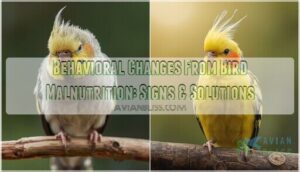
A cockatiel that once whistled cheerfully throughout the day falls silent. Your parrot suddenly loses interest in her favorite foraging toy. These subtle shifts aren’t personality quirks—they’re often your bird’s first distress signals when something’s wrong with her diet.
Behavioral changes from bird malnutrition develop gradually, making them easy to dismiss until they cascade into serious health problems. The challenge is that birds instinctively mask illness, so by the time you notice lethargy or feather plucking, nutritional deficiencies may have already compromised multiple body systems.
Understanding what these behavioral red flags mean—and catching them early—can mean the difference between a simple dietary adjustment and an emergency veterinary visit.
Table Of Contents
- Key Takeaways
- What Causes Bird Malnutrition?
- Key Behavioral Signs of Malnutrition
- Social and Cognitive Impacts
- Foraging and Feeding Strategy Changes
- Reproductive and Parental Behavior Changes
- Physical Health Effects on Behavior
- Monitoring and Addressing Behavioral Changes
- Frequently Asked Questions (FAQs)
- Conclusion
Key Takeaways
- Birds instinctively hide illness, so behavioral changes like lethargy, reduced vocalization, or feather plucking often signal that malnutrition has already compromised multiple body systems before physical symptoms become obvious.
- Inadequate diet variety—not just insufficient calories—causes nutritional deficiencies within weeks, with poor-quality commercial feeds leading to impaired growth, dull feathers, altered molt timing, and food refusal even when birds receive adequate energy.
- Malnutrition reshapes cognitive function and social bonds by disrupting brain chemistry, reducing learning speed by 10-25%, cutting sleep duration by 20-30%, and causing birds to withdraw from cage mates and owners they previously cherished.
- Daily 3-5 minute behavioral check-ins tracking activity levels, appetite patterns, and vocalization frequency let you catch early malnutrition signs before they escalate into emergencies requiring immediate veterinary intervention.
What Causes Bird Malnutrition?
Bird malnutrition doesn’t happen by accident—it stems from specific, preventable causes that you need to recognize early. Understanding these root causes helps you identify risk factors in your bird’s environment and diet before serious behavioral changes appear.
Catching the early warning signs—like lethargy, feather issues, or appetite changes—lets you address deficiencies before they become life-threatening, and knowing what malnutrition looks like in birds gives you the awareness to act fast.
Let’s examine the three primary drivers of nutritional deficiency in captive birds.
Understanding how to spot these issues early is crucial—our guide on identifying protein deficiency in birds covers the warning signs every owner should recognize.
Inadequate Diets in Captivity
Captive diet risks rank among the leading causes of avian malnutrition. When your bird’s meals lack species-specific balance, you’ll notice troubling behavioral shifts:
Feather plucking, lethargy, and aggression often signal deficiencies that proper natural sources of avian vitamins can help correct.
- Reduced activity levels and slower reaction times signal energy deficits
- Decreased exploration points to essential fatty acid deficiencies
- Abnormal feeding patterns reveal inadequate vitamin and mineral supplementation
- Persistent begging behaviors indicate poor protein quality
- Intensified enrichment-seeking suggests restrictive feeding regimens
These dietary needs aren’t optional—they’re fundamental to bird health and preventing nutrient deficiencies that compromise both physical and cognitive function.
Poor Food Quality or Variety
Quality matters as much as quantity in bird nutrition. When you offer limited dietary diversity—even at adequate calories—your bird develops nutritional deficiencies within weeks.
Studies show juvenile birds fed uniform commercial feeds suffer impaired growth rates despite meeting basic energy requirements. Watch for dull feathers, altered molt timing, and food refusal. These signal nutrient deficiency from poor food variety, not inadequate volume.
Genetic and Metabolic Factors
Even with perfect diets, genetic mutations can sabotage nutrient absorption in your bird’s gut, leaving vitamins and minerals unused. Metabolic disorders alter how enzyme variations process fats, affecting energy and fat-soluble vitamin status. Mitochondrial function differences change cellular energy production, while appetite-regulating gene variants disrupt feeding cues.
Recognizing early warning signs of appetite loss becomes crucial when genetic factors already compromise your bird’s nutritional status.
These inherited factors make some birds vulnerable to avian malnutrition despite your best efforts, creating nutritional deficiencies that directly influence bird behavior and avian health.
Key Behavioral Signs of Malnutrition
Your bird’s behavior tells a story about what’s happening inside their body. When malnutrition takes hold, you’ll notice specific changes in how your bird moves, sounds, and interacts with their environment.
Watch for four key behavioral warning signs that signal your bird needs nutritional intervention.
Lethargy and Reduced Activity
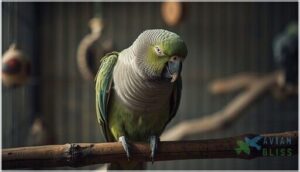
Lethargy is one of the first red flags you’ll notice when malnutrition takes hold—your bird moves less, perches longer, and loses that spark of curiosity. Watch for fewer flight minutes each day, slower responses to new toys or sounds, and a head tucked into feathers more often than usual.
- Your bird sits motionless for hours, wings slightly drooped
- Morning greetings fade to silence as energy drains away
- Favorite perches become prison bars they can’t escape
- Exploratory hops vanish, replaced by listless staring
Muscle tone softens beneath your gentle touch during handling.
Changes in Vocalization Patterns
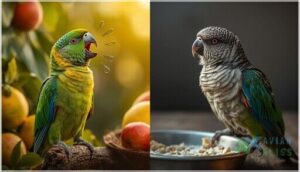
Vocalization changes signal deeper trouble—malnutrition symptoms strip away your bird’s complex song structure, leaving simpler, monotonous patterns as neurological resources dwindle. You’ll hear fewer calls throughout the day, shorter phrases, and stressed birds may actually increase alarm calls when foraging becomes harder.
Pairing vocal shifts with visible feather stress often points to common nutrient gaps in pet birds that need immediate dietary attention.
Bird behavior shifts unmistakably: that unique voice you know so well starts blurring into generic chirps as avian nutrition deficits erase vocal individuality.
Abnormal Foraging and Feeding Behaviors
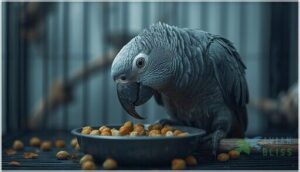
Watch how your bird approaches food—malnutrition effects trigger dramatic foraging strategies that reveal nutritional deficiencies at work. You’ll notice behavioral adaptations like lingering near pellets without eating, repetitive pecking that yields little intake, and food preferences shifting toward softer items as digestive efficiency drops.
This appetite loss pattern, where birds spend more time handling less food, demands immediate attention to restore proper avian nutrition and bird health.
Increased Feather Plucking
Bare patches along your bird’s breast or wings signal nutrient deficits affecting feather health—missing essential fatty acids and minerals drives compulsive plucking that worsens with each cycle. These feather changes disrupt normal molting patterns, creating visible damage you can reverse.
Improving bird grooming starts with addressing nutritional deficiencies through diet quality upgrades that support feather regrowth and effective plucking prevention.
Social and Cognitive Impacts

Malnutrition doesn’t just weaken your bird’s body—it quietly reshapes how they think, interact, and connect with the world around them.
Malnutrition silently rewires your bird’s mind, stealing their curiosity and connection before their body visibly fails
These cognitive and social changes often appear before physical symptoms become obvious, making them critical warning signs you can’t afford to miss.
Watch for these three key impacts that signal your bird’s brain and behavior are suffering.
Declined Social Interaction
When your bird starts avoiding its cage mates or ignoring you during previously cherished interactions, malnutrition may be the culprit. Nutrient deficiencies disrupt serotonin and dopamine—brain chemicals essential for avian socialization.
This social isolation intensifies as fatigue and elevated stress hormones suppress your bird’s natural desire to connect. Behavioral therapy combined with nutrition counseling can reverse these malnutrition effects and restore healthy social bonds.
Impaired Learning and Memory
Cognitive decline from malnutrition shows up when your bird struggles to remember where you hide treats or can’t master tricks it once learned quickly. Nutrient deficits slow brain development and disrupt memory formation, with learning speed dropping 10–25% below healthy birds.
- Spatial memory declines by 15–30% during exploration tasks
- Training time increases 1.5 to 3 times under chronic restriction
- Error rates jump 20–40% in flexibility tests
Refeeding gradually restores these abilities over weeks to months.
Altered Sleep Patterns
Malnourished birds don’t just eat poorly—they sleep poorly too. Sleep duration drops 20–30%, with frequent awakenings that fragment rest and disrupt circadian rhythms. You’ll notice restlessness causes like irregular nap patterns or late bedtimes.
Nutritional deficiencies reduce deep sleep quality, impairing dream patterns and delaying recovery from sleep deprivation. Fatigue effects compound other behavioral changes, making lethargy harder to reverse without proper bird health intervention.
Foraging and Feeding Strategy Changes
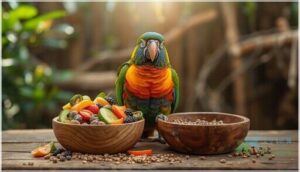
When your bird isn’t getting proper nutrition, you’ll notice distinct changes in how they approach food. These shifts aren’t just preferences—they’re survival adaptations that reveal underlying deficiencies.
Watch for three key patterns that signal your bird’s feeding strategies have changed due to malnutrition.
Preference for Easily Accessible Foods
When nutrition falls short, your bird’s foraging strategies shift dramatically. Malnutrition effects drive birds toward easily accessible foods—seeds from feeders rather than nutrient-dense options requiring effort.
You’ll notice reduced foraging diversity as nutrient deficits force energy conservation. Food accessibility becomes the priority over nutritional quality, with malnourished birds selecting items needing minimal processing despite dietary adjustments needed for ideal bird health and recovery from nutritional deficiencies.
Increased Food Handling Time
Watch how your bird manages each seed or pellet—that’s where malnutrition effects become visible. Nutrient deficiencies reduce muscle power, so you’ll see slower pecking rates and extended grasping of food items.
Food handling strategies shift as weakened birds spend more time manipulating each piece, probing surfaces repeatedly. These behavioral adaptations signal declining foraging efficiencies, warning you that diet improvements are urgently needed for ideal avian nutrition and bird health.
Effortful Pecking or Probing
Your bird’s beak becomes a blunt tool when nutrient deficits take hold. You’ll notice harder, more forceful strikes as malnutrition effects weaken sensory-motor coordination.
These behavioral changes in pecking mechanics and probing behaviors reveal declining avian health due to malnutrition:
- Prolonged probing duration – substrate searches take 30-40% longer
- Repetitive pecking bouts – compensatory hyperactivity before fatigue
- Reduced strike precision – impaired foraging strategies from energy deficit
Address nutrition gaps immediately.
Reproductive and Parental Behavior Changes
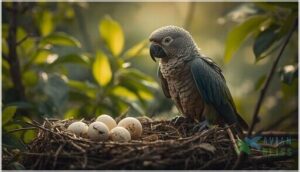
Malnutrition hits breeding birds particularly hard, disrupting their natural drive to reproduce and care for young. You’ll notice changes in nesting behaviors, feeding patterns with chicks, and even how your bird attracts a mate.
Watch for these three critical reproductive and parental shifts that signal nutritional deficiency.
Reduced Nesting Activity
When energy reserves run low, your bird’s drive to build and maintain nests declines sharply. Malnutrition redirects energy allocation away from parental care, causing fewer nest-building attempts and shortened incubation periods. Nutritional deficiencies in lipids and proteins particularly impact breeding success.
| Nesting Behavior Impact | Observed Change | Nutritional Link |
|---|---|---|
| Nest construction | Fewer building attempts | Low energy reserves |
| Site maintenance | Reduced inspections | Inadequate lipid intake |
| Incubation duration | Shortened periods | Protein deficiency |
| Courtship preparation | Delayed or absent | Suppressed hormones |
| Overall activity | Decreased presence | Poor nutrient absorption |
Watch for reluctance to invest in nest preparation—it signals your bird’s body is prioritizing survival over reproductive health.
Lower Offspring Provisioning Rates
Parents stretched thin by malnutrition bring less food to their chicks, sometimes cutting feeding trips by 30-40% as their own bodies struggle to function. This issue can be addressed by understanding the importance of complete protein sources for peak health. Nutritional deficiencies directly compromise brood survival through inadequate food allocation.
Watch for these declining parenting styles:
- Empty-beaked returns to the nest
- Longer intervals between feeding visits
- Smaller prey items delivered
- Weaker vocal responses to chick begging
- Reduced time spent at nesting sites
Poor bird care during reproduction threatens nesting success and your bird’s reproductive health long-term.
Weakened Courtship Displays
Malnutrition steals the vitality behind courtship behavior, leaving your bird’s mating rituals hollow and brief. Nutrient deficits rob feather attractiveness and dull plumage brightness, while vocal displays lose their amplitude and timing.
Studies document 30-50% reductions in display duration when nutritional deficiencies take hold. Watch for shortened performance bouts or lackluster signals—these changes in bird behavior directly threaten reproductive success and demand immediate attention to avian nutrition.
Physical Health Effects on Behavior
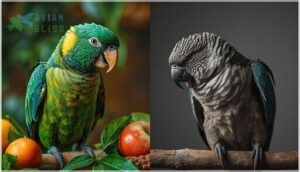
When your bird’s body suffers from malnutrition, the physical toll doesn’t stay hidden—it shows up in every movement, breath, and behavior. These health problems create a cascade effect, where struggling lungs, upset stomachs, and damaged feathers directly change how your bird acts throughout the day.
Let’s look at three major physical conditions that reshape your bird’s behavior in observable ways.
Respiratory Distress and Activity
When your bird struggles to breathe, every movement becomes a challenge. Respiratory distress from malnutrition forces birds into survival mode—they’ll perch motionless, avoid flight, and rest far more than usual.
Watch for tail bobbing, open-mouth breathing, or extended neck postures. These altered breathing patterns signal compromised respiratory health that directly drains energy balance, leaving your bird too exhausted for normal activity levels.
Proper avian nutrition management is vital to prevent such conditions.
Digestive Issues Affecting Movement
Digestive problems trigger a cascade of movement issues you can’t afford to ignore. Gastrointestinal motility disorders cause systemic weakness and lethargy, forcing your bird off perches and onto cage floors. Abdominal pain alters posture and gait, while poor nutrient absorption leads to ataxia and muscle wasting.
Cloacal disease makes perching uncomfortable, and nutritional deficiencies compromise digestive health, leaving your bird too weak to stand or fly normally.
Feather and Skin Condition Changes
Your bird’s feathers tell the story its body can’t speak. Malnutrition strips plumage of sheen, creating dull, brittle feathers prone to breakage. Watch for feather loss, irregular molting issues, and skin lesions around follicles—classic avian malnutrition signs pointing to vitamin A deficiency.
Nutritional deficiencies also cause beak problems and trigger stress-related plucking, compromising both feather and beak health while degrading overall plumage quality.
Monitoring and Addressing Behavioral Changes

Catching behavioral changes early can make the difference between a quick recovery and long-term health problems. You need a clear system for watching your bird’s daily habits and knowing when those small shifts signal something serious.
Here’s how to monitor your bird effectively and take action when malnutrition affects behavior.
Daily Behavioral Check-Ins
You can’t catch malnutrition overnight—it creeps in slowly. Set up a daily 3–5 minute health observation routine tracking activity monitoring, appetite, and vocalization frequency on a standardized form.
Watch for behavior tracking flags: sudden drops in activity level, abrupt appetite changes, or unusual vocalizations that signal starvation symptoms. Time-stamp your nutrition assessment notes and compare them against species-specific norms to spot early signs of starvation in birds.
When to Seek Veterinary Care
Some warning signs demand immediate veterinary care—don’t wait. If your bird collapses, shows abrupt lethargy lasting beyond a few minutes, or loses ≥5% body weight in 1–2 weeks, contact an avian veterinarian now.
Emergency signs like respiratory distress, tail-bobbing, or persistent regurgitation signal crisis intervention needs.
When behavioral changes linger 24–48 hours despite adjustments, schedule prompt veterinary guidance for proper health monitoring and malnutrition assessment.
Recovery and Reversibility Steps
Once your vet confirms malnutrition symptoms, dietary rehabilitation begins with gradual reintroduction of species-appropriate nutrition therapy over 2–6 weeks. Track weight gain, feather improvement, and normal vocalization weekly during malnutrition treatment.
Structured enrichment restores natural foraging within 4–8 weeks.
Health restoration requires veterinary-guided recovery plans, sometimes including dietary supplements, to reverse behavioral deficits and rebuild your bird’s well-being.
Frequently Asked Questions (FAQs)
Can malnutrition cause aggression in pet birds?
Yes, malnutrition absolutely triggers aggression in pet birds. Nutrient deficits—especially calcium, magnesium, and vitamin B6—disrupt neurotransmitter balance, creating aggression triggers through irritability and weakened impulse control that dietary interventions can reverse.
How does malnutrition affect bird migration patterns?
Malnutrition compromises flight endurance and delays migration patterns in wild birds. Nutrient deficits weaken flocking behavior and alter habitat selection, forcing birds to prioritize immediate energy sources over best migration routes—a critical wildlife conservation concern.
Do malnourished birds abandon their flock permanently?
Most malnourished birds don’t permanently leave their flock. You’ll notice reduced participation and temporary separation during feeding, but they usually rejoin the group when conditions improve rather than abandoning social bonds entirely.
Can nutritional deficits alter territorial behavior in birds?
Like a fortress losing its walls, a bird’s territory shrinks when nutrient deficits strike. Malnutrition weakens territorial aggression by 30% in protein-starved birds, forcing them to abandon boundaries for urgent foraging strategies instead.
Does malnutrition impact a birds ability to recognize owners?
Nutrient deficiency disrupts your bird’s cognition and memory, weakening social bonding. Recognizing bird starvation is critical—malnutrition effects include slower owner recognition responses, while improved nutrition restores avian malnutrition causes related to impaired bird behavior and socialization.
Conclusion
Your bird speaks loudest when she stops making noise. Those behavioral changes from bird malnutrition you’ve learned to recognize—the withdrawn posture, the abandoned toys, the silent perch—transform you from a passive observer into your bird’s advocate.
Start your daily behavioral check-ins tomorrow morning. Watch her body language during feeding. Notice what she’s telling you. Because catching nutritional deficiencies early doesn’t just prevent disease—it preserves the vibrant, curious companion you brought home.
- https://x.com/godofprompt/status/1990526288063324577
- https://www.sciencedirect.com/science/article/pii/S0749208123000268
- https://github.com/vinhphunguyen/how-to-write-a-paper/blob/master/how-to-write-paper.out
- https://pmc.ncbi.nlm.nih.gov/articles/PMC4755007/
- https://www.bestbirdfoodever.com/2018/11/lets-end-avian-malnutrition/