This site is supported by our readers. We may earn a commission, at no cost to you, if you purchase through links.
You’ve set up before dawn with your best optics, brewed terrible coffee from a thermos, and waited in silence—only to watch that stunning warbler vanish the second you raised your binoculars. It’s the birder’s frustration: our presence changes what we’re trying to observe.
Bird cameras break this cycle entirely. Mount a motion-activated trail camera near your feeder or favorite habitat patch, and you’ll capture species behaving naturally—preening, foraging, even those secretive nocturnal visitors you’d never spot otherwise.
The benefits of using bird cameras for birding extend beyond convenience; they’ve transformed how both casual enthusiasts and serious conservationists document avian life, creating visual records that sharpen identification skills while contributing real data to population studies.
Table Of Contents
- Key Takeaways
- Key Benefits of Using Bird Cameras for Birding
- How Bird Cameras Improve Bird Identification
- Convenience and Accessibility of Bird Cameras
- Top 9 Bird Cameras for Birding
- Using Bird Cameras to Support Conservation
- Frequently Asked Questions (FAQs)
- What are the psychological benefits of bird watching?
- What happens to your brain when you see a bird in nature?
- What are the best settings for bird cameras?
- How much do quality bird cameras typically cost?
- Can bird cameras work at night effectively?
- Do bird cameras require monthly subscription fees?
- How long do bird camera batteries last?
- Conclusion
Key Takeaways
- Bird cameras let you observe natural behavior without disturbing wildlife, capturing motion-activated footage of shy species and nocturnal visitors you’d never spot through traditional field methods, while eliminating the observer effect that spooks birds when you’re physically present.
- Modern AI-powered cameras deliver real-time species identification with over 90% accuracy, building your recognition skills through instant feedback, while creating timestamped visual logs that sharpen identification abilities and contribute verifiable data to conservation research projects like Project FeederWatch.
- These devices democratize birding by bringing high-resolution feeds directly to anyone’s screen, regardless of mobility limitations, weather conditions, or physical access to remote habitats, turning accessibility from a niche concern into mainstream practice through remote monitoring and shared viewing capabilities.
- Your backyard camera transforms into a conservation tool when you submit footage to citizen science platforms, tracking population trends through consistent automated counts that reveal migration timing shifts and habitat threats researchers can’t monitor through traditional field surveys alone.
Key Benefits of Using Bird Cameras for Birding
Bird cameras have transformed how we experience birding, bringing the action right to your screen without spooking the very creatures you’re trying to observe. Whether you’re hoping to sharpen your identification skills, capture stunning images, or simply enjoy birds from the comfort of your couch, these tools open up possibilities that traditional birdwatching can’t match.
Let’s break down the key advantages that make bird cameras worth adding to your setup.
Before diving into benefits, it helps to understand how bird cameras work and what features matter most.
Enhanced Observation Without Disturbance
Camera placement transforms how you witness bird behavior without leaving a footprint. Remote monitoring lets birds eat, preen, and court naturally while you watch from tens of meters away.
- Motion-activated cameras record only when birds appear, so you won’t need frequent visits that flush shy species
- Compact trail units mount once and run for weeks, capturing continuous wildlife observation without daily intrusion
- Infrared night vision reveals owls and nightjars using no-glow LEDs that won’t startle roosting birds
- Fixed setups preserve undergrowth and minimize scent trails that could guide predators to nests
Valuable insights into bird activity and behavior can also be gained from strategically placed trail cameras.
Real-Time Bird Identification and Learning
Instant ID systems change bird watching into a guided classroom. Apps like Merlin Bird ID analyze your camera triggers in under two seconds, pushing species names straight to your phone with over 90 percent accuracy.
These tools work especially well when you’re learning backyard birds of Rhode Island, where visual and audio cues help you quickly distinguish between similar-looking species.
AI recognition on feeders such as Birdfy labels each visitor in real time, building your wildlife monitoring skills frame by frame while AI learning tools track every identification for quick review.
For offline moments or field trips without your feeder, a comprehensive bird identification guide sharpens those same recognition skills with clear visuals and beginner-friendly layouts.
For enhanced bird identification, consider the benefits of a smart camera bird feeder that uses real-time AI for recognizing over 6,000 bird species.
Improved Bird Photography Opportunities
Beyond identification, you’ll capture museum-quality shots that were nearly impossible before. High-resolution bird cameras record at 1080p or 4K, revealing individual feathers and eye rings in stunning detail.
Burst mode fires several frames per second, freezing wing locations mid-flight while autofocus locks onto quick takeoffs. Motion detection triggers the camera only when birds arrive, so your memory card fills with sharp, usable images instead of empty frames.
Accessibility for All Birders
Whether you’re recovering from surgery, use a wheelchair, or simply can’t hike steep trails, bird cameras level the playing field. They bring adaptive birdwatching straight to your living room through bird-friendly designs that stream close-up footage to any screen. Accessible birding is no longer a niche—it’s a growing movement within the bird-watching community.
Bird cameras transform accessibility, bringing adaptive birdwatching to anyone’s living room regardless of mobility or terrain
- Remote feeds let housebound birding enthusiasts enjoy local species without leaving home.
- Large-screen displays help low-vision users see plumage details missed through binoculars.
- Motion alerts remove the need to hold heavy gear for long periods.
- Shared viewing turns a bird camera feeder into an inclusive nature activity for senior centers and families.
- AI identification assists disability support by suggesting species names from paused clips.
This shift toward inclusive nature makes outdoor photography tips accessible to everyone, proving you don’t need a backpack and boots to be a true birder.
Contribution to Conservation Efforts
Your backyard setup can fuel real conservation research when you join projects like Project FeederWatch, where over 20,000 participants log timestamped sightings for wildlife monitoring.
Those uploads help scientists track bird population trends, map winter distributions, and guide habitat preservation decisions across entire regions.
By streaming or sharing footage, you’re supporting conservation efforts that protect ecosystem balance—no fieldwork required.
How Bird Cameras Improve Bird Identification
Getting a positive ID on a fast-moving warbler or a shy skulker hiding in the brush has always been one of birding’s toughest challenges.
Bird cameras change that game entirely, giving you frame-by-frame playback, AI assistance, and permanent records of every visitor to your yard. Here’s how these tools transform guesswork into confident identification.
AI-Powered Species Recognition
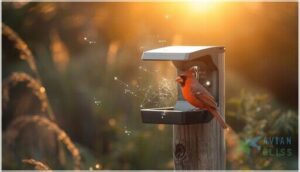
Smart Bird Feeder Technology has transformed bird identification and behavior observation. Modern AI recognition systems run machine learning models directly on your bird camera feeder, matching image analysis against thousands of bird species within seconds.
These tools deliver push alerts with species names and confidence scores, turning each visit into a learning moment. You’ll spot subtle plumage details that separate similar species, while the system builds an automatic log tracking which birds arrive and when.
Recording Rare or Elusive Birds
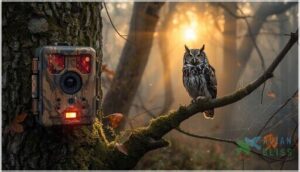
Trail cameras equipped with fast autofocus and bird detection AF capture species you’d rarely spot in person. Position your wildlife photography equipment along travel corridors or near known perches, adjust motion triggers below 0.3 seconds, and let the camera features work overnight.
You’ll document rare species and unusual bird behavior that strengthen conservation efforts, building photographic proof of elusive visitors that traditional birdwatching often misses.
Creating a Visual Birding Diary

Your camera’s timestamped image capture automatically builds a searchable birding log when you combine diary organization with metadata analysis. Tag entries by species, behavior, and date—then review patterns in your wildlife photography equipment library to fine-tune camera settings for future sessions.
This visual record turns casual bird watching tips into data-driven insights, especially when a bird camera feeder documents daily visitors that birding enthusiasts can study over months.
Convenience and Accessibility of Bird Cameras

Bird cameras break down the old barriers that kept people from enjoying birding on their own terms. Whether you can’t stand in the cold for hours, don’t have time to trek to remote habitats, or simply want to watch from your couch with coffee in hand, these devices make the hobby accessible to everyone.
Here’s how bird cameras deliver convenience without compromising the quality of your birding experience.
Remote Monitoring via Smartphone or PC
Modern bird feeders let you watch every feather ruffle from your couch. Most smart bird feeder systems send live streaming video straight to your phone or laptop, turning any room into a front-row seat for nature’s daily drama.
Here’s what remote access delivers:
- Live streaming in 1080p shows plumage details you’d miss through binoculars
- Motion alerts ping your phone the instant a bird lands at the feeder
- WiFi connectivity links your camera to apps on iOS, Android, and PC browsers
- Camera sharing lets family members watch simultaneously from different devices
- Cellular trail camera options work in distant yards without WiFi
Remote monitoring means you’ll never miss a rare visitor, even when life keeps you indoors.
Enjoyment for People With Limited Mobility
Bird cameras transform your backyard into a therapy session when walking trails feels impossible. Homebound birding enthusiasts can zoom in on vivid plumage details from a favorite chair, enjoying accessible birding without traversing stairs or uneven ground.
| Challenge | How Bird Cameras Help |
|---|---|
| Limited outdoor access | Live home viewing brings feeders to your TV or tablet |
| Fatigue and pain | No binoculars to hold—cameras handle the watching |
| Isolation | Virtual birding connects you to backyard birds and the bird watching community daily |
Built-in audio captures songs clearly indoors, while simple menus work smoothly with mobility aids. You’ll capture stunning bird photography moments and share clips that spark conversation—turning a small window view into rich connection with nature and fellow birding enthusiasts seeking bird therapy through these practical bird watching tips.
Birdwatching in All Weather Conditions
Rain, sleet, or fog won’t stop your backyard surveillance. IP67 waterproof housings keep electronics dry while you capture storm photography from indoors, and lithium batteries maintain power down to minus 40°F when alkaline cells quit.
Infrared night vision reveals owls and roosting behavior in low light shooting conditions, while secure camera mounting on poles or trunks ensures stable frames during gales—delivering outdoor durability that transforms weather resistance into year-round bird photography gold.
Effortless Sharing With Family and Communities
Once you’ve captured those exceptional moments, you’ll want to share them—and smart feeders make it ridiculously easy. Apps like Birdfy and Bird Buddy let multiple family members watch live streaming feeds together, supporting camera sharing with up to 10 guests for instant family bonding and collaborative learning.
- Social sharing buttons send clips to bird watching communities through text or Facebook groups
- Cloud storage syncs galleries across devices so relatives access the same library
- Multi-user alerts notify everyone when rare bird lovers’ favorites arrive at your bird camera feeder
- eBird integration contributes your captures to global community engagement and citizen science
Built-in download features let you post bird watching experiences anywhere without extra software.
Top 9 Bird Cameras for Birding
Now that you know how bird cameras can transform your birding experience, let’s look at specific models that deliver the features you need.
I’ve tested dozens of trail cameras in the field, and these nine stand out for their image quality, reliability, and ease of use. Each one brings something different to the table, whether you’re monitoring a backyard feeder or tracking species in remote habitats.
1. Deatti Trail Camera With Night Vision
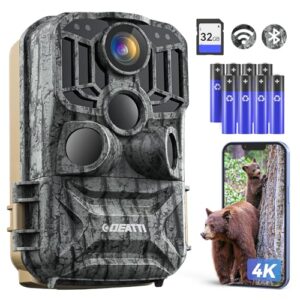
Packed with camera technology that birding enthusiasts dream about, the Deatti 4K 48MP trail camera brings wildlife monitoring directly to your feeder or backyard hotspot. You’ll capture stunning 4K video and crisp 48-megapixel stills thanks to camera settings that balance detail with ease of use.
Night vision infrared LEDs shed light on nocturnal visitors without spooking them, while the blazing 0.1-second trigger ensures you won’t miss fast-moving warblers. This wildlife camera manages bird tracking across a 120-degree field, and its IP66 waterproof build means rain won’t stop your surveillance.
| Best For | Birders and wildlife watchers who want sharp 4K footage and instant motion capture without babysitting their camera in all weather conditions. |
|---|---|
| Resolution | 48MP / 4K |
| Night Vision | Infrared LEDs |
| Trigger Speed | 0.1s |
| Waterproof Rating | Waterproof |
| Connectivity | WiFi/Bluetooth |
| Viewing Angle | 120° |
| Additional Features |
|
- 4K video at 48MP stills means you can zoom in on tiny feather details and identify birds with confidence
- 0.1-second trigger grabs fast fliers before they vanish, and the 120-degree lens covers feeders and flight paths in one wide shot
- IP66 waterproof rating and long battery life let you leave it outside through storms and seasons without constant check-ins
- Battery drains faster if you stream live footage often, so heavy users might swap batteries more than they’d like
- Some buyers report WiFi connection hiccups or confusing app setup, which can frustrate less tech-savvy users
- The app asks for location permissions and other access that privacy-focused users might not appreciate
2. Meidase Trail Camera
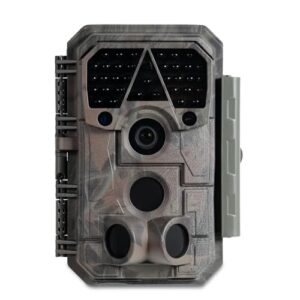
If you’re chasing sharp feather detail and reliable wildlife monitoring, the Meidase Trail Camera stands out with its Sony Starvis sensor, delivering up to 48MP photos and 1296p HD video.
You’ll appreciate the lightning-fast 0.1s trigger speed—perfect for catching skittish finches or wrens. Night vision reaches 100 feet, so your bird camera feeder records visitors long after sunset.
The user-friendly 2.4 display and sturdy trail setup make it a favorite in Camera Reviews for hands-on wildlife photography enthusiasts.
| Best For | Wildlife enthusiasts and birders who want professional-grade image quality and fast trigger speeds to capture detailed photos and videos of backyard visitors or trail activity. |
|---|---|
| Resolution | 64MP / 1296p |
| Night Vision | No-Glow IR 100ft |
| Trigger Speed | 0.1s |
| Waterproof Rating | Outdoor Use |
| Connectivity | Wired |
| Viewing Angle | Standard |
| Additional Features |
|
- 48MP Sony Starvis sensor and 1296p HD video deliver sharp, detailed images that reveal fine feather patterns and behavior
- 0.1-second trigger speed with triple motion sensors captures fast-moving birds and animals before they leave the frame
- 100-foot no-glow infrared night vision records nocturnal visitors without startling wildlife, plus WiFi connectivity lets you review footage from your phone
- Eight AA batteries drain faster during heavy video recording and night mode, especially in cold weather
- Wind and moving branches can trigger false recordings, eating into battery life and SD card space
- No cable lock holes make it harder to secure the camera against theft in remote locations
3. GardePro WiFi Trail Camera
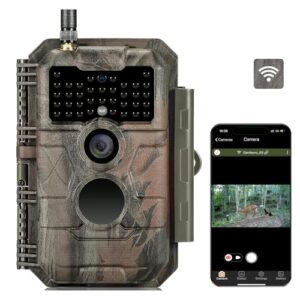
For bird monitoring that connects straight to your phone, the GardePro WiFi Trail Camera delivers 48MP photos and 1296p HD video over a reliable 2.4 GHz WiFi link. You’ll adjust camera settings through the free app—resolution, video length, sensitivity—without fumbling with tiny buttons in the field.
This wildlife camera pairs via Bluetooth, then streams clips within 45 feet, so you can review backyard visitors from your couch. Outdoor placement is simple with weather-resistant housing, and WiFi connectivity makes it a standout in camera reviews for hands-off bird camera convenience.
| Best For | Backyard birders who want to review wildlife photos and adjust camera settings from their phone without pulling the SD card or climbing a ladder every time. |
|---|---|
| Resolution | 48MP / 1296P |
| Night Vision | No-Glow 940nm 75ft |
| Trigger Speed | Motion-Activated |
| Waterproof Rating | Indoor/Outdoor |
| Connectivity | WiFi/Bluetooth |
| Viewing Angle | 110° |
| Additional Features |
|
- 48MP photos and 1296p video with a 110° wide-angle lens capture sharp detail across feeders, baths, and perches in a single frame
- WiFi and Bluetooth let you browse clips, download favorites, and tweak settings through the app within 45 feet of the camera
- No-glow 940nm infrared and weather-resistant housing keep the camera discreet and operational through rain, snow, and seasonal temperature swings
- WiFi range tops out around 45 feet and won’t connect to your home router or cellular network, limiting where you can review footage
- Active WiFi drains batteries faster, so you’ll need to disconnect when not browsing or add a solar panel for extended deployments
- Some users report clunky physical design with the screen tucked inside the lid and a tight battery compartment that’s awkward to reload
4. Moultrie Cellular Trail Camera
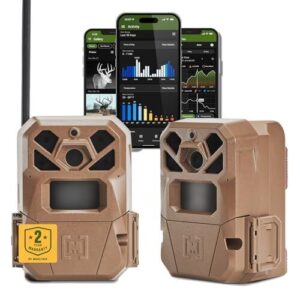
When cellular coverage reaches your birding spot, the Moultrie Cellular Trail Camera connects through multiple LTE networks, uploading 33MP images and 720p HD video clips straight to the app.
You’ll monitor feeders remotely for an entire season—battery life runs up to twelve months on AA cells, or longer with solar. The 80-foot detection range and 0.85-second trigger speed capture fast arrivals, while 8GB internal storage and cloud backups keep your bird camera feeder footage safe without swapping cards in the field.
| Best For | Birders and wildlife enthusiasts who want to monitor feeders or nesting areas remotely with reliable cellular coverage. |
|---|---|
| Resolution | 36MP / 1080p |
| Night Vision | Low-Glow IR 100ft |
| Trigger Speed | Motion Detection |
| Waterproof Rating | Outdoor Use |
| Connectivity | Cellular |
| Viewing Angle | 100ft Range |
| Additional Features |
|
- Auto Connect technology picks the strongest LTE signal for nationwide coverage.
- Long battery life (up to 12 months) and solar compatibility for season-long monitoring.
- Instant photo and video uploads to the app with cloud storage—no SD card needed.
- Cellular data plans may be expensive for frequent uploads.
- Motion detection and connectivity can be inconsistent in some locations.
- Solar performance drops in low sunlight, affecting continuous operation.
5. GardePro Trail Camera
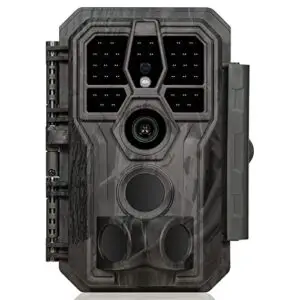
Setting up a trail camera near your bird camera feeder changes how you watch warblers, finches, and shy ground feeders—the GardePro WiFi Trail Camera streams 1296p HD video and 64MP stills straight to your phone, so you’ll fine-tune camera settings and review image quality from the couch.
The 0.1-second trigger speed and 940 nm night vision catch owls and other nocturnal visitors without spooking them, while the 2.4 GHz antenna extends your WiFi range across the yard, letting birding enthusiasts monitor trail features and bird detection remotely, rain or shine.
| Best For | Birders who want to capture high-resolution photos and videos of shy or nocturnal species at feeders without constantly checking an SD card. |
|---|---|
| Resolution | 64MP / 1296p |
| Night Vision | No-Glow IR 100ft |
| Trigger Speed | 0.1s |
| Waterproof Rating | IP66 |
| Connectivity | Wired |
| Viewing Angle | 90ft Detection |
| Additional Features |
|
- 0.1-second trigger speed and three-PIR sensor design catch fast-moving birds like warblers darting between branches
- 940 nm no-glow infrared LEDs provide night vision up to 75 feet without spooking owls or other nocturnal visitors
- WiFi connectivity lets you review 1296p HD video and 64MP stills on your phone from up to 45 feet away
- Batteries and SD card sold separately, so you’ll need to budget for those upfront
- Some users report inconsistent motion detection and lower-than-expected video quality in certain conditions
- Nighttime photo quality can be limited compared to daytime captures
6. Wosoda Trail Camera With Night Vision
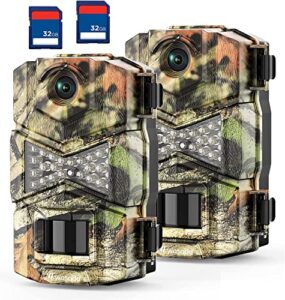
When trails grow dark, the Wosoda Trail Camera with Night Vision turns nocturnal mystery into sharp black-and-white footage, using 850 nm NoGlow Infrared LEDs to light owls and nightjars without visible flash.
You’ll appreciate the 0.3-second trigger speed and adjustable Motion Detection that catches quick songbirds before they vanish, while 30MP stills and 1080P video give you enough detail for feather-pattern IDs.
This Wildlife Camera runs on eight AA batteries, records to a 32GB card, and withstands rain through its waterproof shell—ideal for year-round Wildlife Monitoring at feeders or forest edges where Motion Activation and flexible Camera Settings deliver reliable Trail Camera performance.
| Best For | Birders and wildlife enthusiasts who want reliable nocturnal monitoring of feeders, baths, or forest edges without disturbing visiting species with visible light. |
|---|---|
| Resolution | 30MP / 1080P |
| Night Vision | 850nm Low Glow |
| Trigger Speed | 0.3s |
| Waterproof Rating | Waterproof |
| Connectivity | Wired |
| Viewing Angle | Standard |
| Additional Features |
|
- Fast 0.3-second trigger speed and adjustable motion sensitivity catch quick songbirds and give you flexibility to reduce false triggers from wind-blown branches.
- 850 nm NoGlow IR LEDs provide strong night vision up to 50–60 feet, recording clear black-and-white footage of owls, nightjars, and other nocturnal visitors without a visible flash.
- Runs on eight AA batteries with low standby draw and records to a 32GB card, so you can monitor seasonal bird activity for weeks without swapping power or storage.
- Photo and video quality may fall short for large prints or professional documentation, limiting use if you need publication-grade images.
- Battery compartment seals can fail over time, allowing moisture to cause rust and reducing long-term reliability in wet climates.
- No Bluetooth connectivity means you must physically retrieve the camera to review footage, which can be inconvenient for remote setups.
7. Wosoda Mini Trail Camera
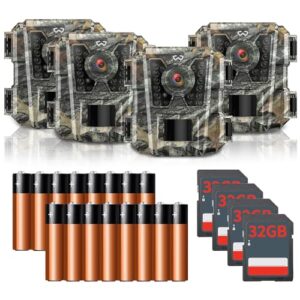
When backyard space is tight, the Wosoda Mini Trail Camera packs serious Wildlife Camera performance into a half-pound frame you can tuck near any Bird Camera Feeder or perch.
Its Mini Design hides easily while the 0.3-second trigger and Motion Activation catch fleeting visits, recording up to 16MP stills or 720p clips with clear Image Quality.
Night Vision infrared LEDs light up owls and roosting songbirds without spooking them, and four-AA Battery Life keeps this Trail Camera running weeks between swaps—perfect Camera Settings for close-range songbird documentation without the bulk.
| Best For | Birders and homeowners who want a lightweight, easy-to-hide camera for monitoring feeders, nest boxes, and backyard wildlife up close without bulky equipment. |
|---|---|
| Resolution | 24MP / 1080P |
| Night Vision | Motion Activated |
| Trigger Speed | 0.3s |
| Waterproof Rating | Waterproof |
| Connectivity | Wired |
| Viewing Angle | Standard |
| Additional Features |
|
- Compact half-pound design fits near small perches and feeders without drawing attention or sagging on light mounts
- Fast 0.3-second trigger with 16MP photo option captures quick bird movements and clear field marks at close range
- Four-AA battery setup cuts power costs and weight while infrared night vision records owls and dawn visitors without visible light
- No audio recording and.AVI format may need extra software like VLC for playback on some devices
- Fixed PIR sensitivity requires careful placement to reliably trigger on smaller songbirds
- Some users report defective units and customer service issues that can complicate replacements
8. SEHMUA Cellular Trail Camera
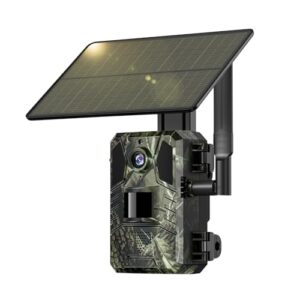
When WiFi doesn’t reach your best birding spot, the SEHMUA Cellular Trail Camera uses built-in 4G LTE Cellular Connectivity to stream 2K Image Quality straight to your phone from anywhere.
Solar Charging keeps the 7800 mAh battery topped up season after season, while IP66 Camera Durability shrugs off rain and dust at your Bird Camera Feeder setup.
Motion Detection triggers in 0.2 seconds to catch fast sparrows and warblers, making this affordable Cellular Trail Camera an exceptional Wildlife Camera for remote Bird Conservation monitoring without constant site visits.
| Best For | Birders and wildlife watchers who need remote monitoring in off-grid locations without WiFi, especially those managing multiple outdoor cameras on properties with good sun exposure. |
|---|---|
| Resolution | 64MP / 1296P |
| Night Vision | No-Glow 100ft |
| Trigger Speed | 0.1s |
| Waterproof Rating | IP66 |
| Connectivity | Wired |
| Viewing Angle | Standard |
| Additional Features |
|
- 4G LTE cellular connectivity with pre-installed SIM lets you stream live 2K video and receive instant motion alerts on your phone from anywhere, no WiFi needed
- Solar-powered design with 4W panel and 7800mAh battery eliminates the hassle of changing disposable batteries or running power to remote locations
- Fast 0.2-second trigger speed and adjustable motion sensitivity reliably capture both small backyard birds and larger wildlife day or night
- SIM card works only within the U.S. and requires a separate monthly data subscription ranging from $19.90 to $169.90 per year per camera
- Some users report the solar panel stops charging after a few months and night image quality can be suboptimal compared to higher-end models
- Camera cannot capture photos and video simultaneously on the same trigger, forcing you to choose one mode at a time
9. MRSCRET WiFi Trail Camera
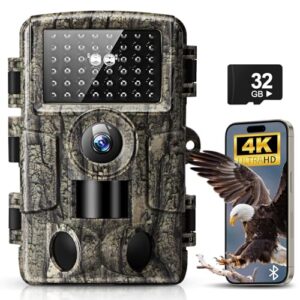
When cellular plans feel like overkill for your backyard setup, the MRSCRET WiFi Trail Camera delivers 4K Image Quality and 60-megapixel stills through direct WiFi Connectivity instead of monthly fees.
Its 0.1-second trigger and 120-degree detection zone help with Bird Tracking fast finches and jays, while Camera Settings adjust remotely via app—no climbing required.
IP66 weatherproofing and infrared night vision make this Wildlife Camera a solid Trail Camera choice for year-round monitoring, giving you professional Trail Features without the cellular cost.
| Best For | Birders and wildlife watchers who want high-resolution 4K video and 60MP stills with WiFi remote viewing but don’t need cellular connectivity or want to avoid monthly service fees. |
|---|---|
| Resolution | 2K Live Video |
| Night Vision | Low-Glow |
| Trigger Speed | 0.2s |
| Waterproof Rating | IP66 |
| Connectivity | 4G LTE |
| Viewing Angle | 120° |
| Additional Features |
|
- Fast 0.1-second trigger speed and 120-degree detection zone capture quick-moving birds without missing the moment
- Direct WiFi hotspot and smartphone app let you preview shots, adjust settings, and download files remotely without removing the SD card
- IP66 waterproof rating and automatic day/night IR mode handle year-round outdoor conditions at feeders, nest boxes, and birding spots
- WiFi works only at short range (50–100 feet), so you need to walk close to the camera rather than check it from inside your home
- Battery life drains faster with frequent WiFi use, and the camera requires multiple AA batteries that need regular replacement
- Trigger speed can still miss very fast birds in some conditions, and IR night vision may produce red-eye effects on animals
Using Bird Cameras to Support Conservation
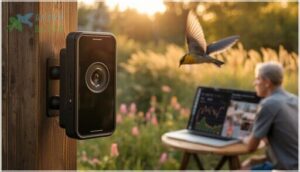
Bird cameras aren’t just tools for personal enjoyment—they’re making real contributions to conservation science. Your backyard footage can help researchers track species migration, monitor population changes, and identify habitat threats they’d never spot on their own.
Here’s how you can turn your bird camera into a conservation tool while deepening your connection to the natural world around you.
Participating in Citizen Science Projects
You can turn your camera feed into valuable conservation research by joining programs like Project FeederWatch or NestWatch.
These citizen science platforms let you submit timestamped counts, species tracking photos, and detailed breeding records directly from your setup. Your backyard data collection helps researchers monitor bird surveys across regions that field crews rarely cover, making wildlife conservation accessible while strengthening bird conservation and research efforts through sustained citizen engagement.
Monitoring Bird Population Trends
Beyond collecting snapshots for science, your camera setup tracks how many birds actually use your space year after year. Fixed cameras capture repeatable daily counts that reveal whether species are climbing, holding steady, or quietly slipping away.
- Time-stamped images let you compare visits per hour across seasons and years at the same spot
- Continuous automated recording runs for weeks without your presence, building population records that weekend birding trips can’t match
- Consistent viewing angles help separate normal seasonal shifts from real population drops, since the frame never changes
- Linked weather data from nearby stations explains sudden count changes when rain or cold fronts roll through your area
- Spring arrival timestamps show migration timing shifts, like flocks now passing a week earlier than a decade ago
Minimizing Human Impact on Habitats
Tracking numbers matters, but protecting habitats completes the conservation loop. Your camera setup lets you practice sustainable birding by cutting repeated foot traffic that compacts soil and tramples ground vegetation near feeders.
Infrared night vision captures nocturnal activity without visible light that startles roosting birds, while motion-triggered recording means you won’t linger in sensitive habitats for hours—habitat preservation through environmental stewardship that genuinely works.
Educating Others About Local Birds
Your camera feed becomes a teaching tool that sparks curiosity in neighbors, kids, and new birding enthusiasts. Sharing clips builds environmental education and awareness across your community.
- Upload short videos to neighborhood forums so residents learn local species like chickadees and nuthatches visiting shared green spaces.
- Show classroom feeds during nature observation sessions, letting teachers practice bird identification and behavior without outdoor trips.
- Post highlight reels with simple conservation tips that pair bird photography with wildlife education and ethics.
Frequently Asked Questions (FAQs)
What are the psychological benefits of bird watching?
Birdwatching delivers real stress relief by lowering cortisol and sparking mood boosters that last hours.
It offers cognitive restoration, mindful moments tuned to bird behavior, and deeper emotional wellbeing that keeps bird lovers coming back.
What happens to your brain when you see a bird in nature?
When light from a bird hits your retina, your brain’s visual processing centers fire up while reward circuits release dopamine—creating that instant spark of joy birdwatching enthusiasts chase through wildlife photography.
What are the best settings for bird cameras?
You’ll want shutter speeds around 1/1000 second or faster to freeze birds in flight, along with continuous autofocus and high-speed burst mode.
Set motion detection sensitivity high so your camera triggers quickly on small movements.
How much do quality bird cameras typically cost?
Quality bird cameras reveal different worlds depending on your wallet. Budget options start around $50–$90, midrange smart feeders run $140–$220, while premium AI systems with sophisticated species recognition reach $240–$
Can bird cameras work at night effectively?
Yes, most wildlife cameras and bird camera feeders work brilliantly after dark using infrared night vision with ranges reaching 20 to 100 feet, enabling clear nocturnal viewing and motion detection without disturbing roosting birds.
Do bird cameras require monthly subscription fees?
Not every bird camera demands a recurring fee. WiFi and solar-powered bird feeder cams often skip subscriptions entirely, while cellular surveillance cameras and premium AI plans introduce monthly costs ranging from five to thirteen dollars.
How long do bird camera batteries last?
Battery life factors range from days to months depending on activity levels, camera type, and power settings.
Built-in rechargeable packs last 5–30 days, while lithium AA cells in trail cameras stretch runtime to several months with careful solar charging and low-temperature considerations.
Conclusion
Sure, you could keep squinting through foggy binoculars at 5 a.m., hoping that secretive rail cooperates with your schedule. Or you could let technology do the heavy lifting while you sleep in—reviewing benefits of using bird cameras for birding over breakfast instead.
These devices don’t just capture images; they reveal behavioral patterns invisible to traditional field methods, strengthen your identification skills through repeated viewing, and feed conservation databases with verifiable records. Your backyard habitat suddenly becomes a 24/7 research station.
- https://green-backyard.com/pages/smart-bird-feeder-with-camera-capture-birds-in-action/
- https://barnowl.tech/blogs/barn-owl-blog/remote-camera-monitoring-for-wildlife-observation
- https://www.audubon.org/magazine/smart-bird-feeders-are-connecting-us-wildlife-and-each-other-never
- https://www.birdfy.com/blogs/blogs/what-to-consider-before-buying-a-bird-feeder-camera
- https://www.facebook.com/Amateur.photographer.magazine