This site is supported by our readers. We may earn a commission, at no cost to you, if you purchase through links.
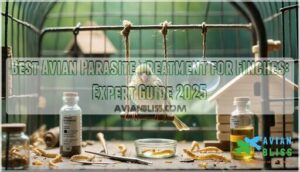 You’ll want ivermectin as your go-to choice for the best avian parasite treatment for finches, since it tackles both internal worms and external mites in one shot.
However, dosing these tiny birds requires surgical precision—just 0.2mg per kilogram prevents turning medicine into poison.
For gentler options, fenbendazole works wonders against intestinal worms, while pyrantel pamoate handles roundworms with fewer side effects.
External mite battles need a combo approach: topical sprays plus thorough cage cleaning with permethrin-based products.
Think of parasite treatment like defusing a bomb—identification through fecal testing comes first, then precise action.
The real game-changer lies in prevention strategies most owners overlook completely.
Table Of Contents
- Key Takeaways
- Avian Parasite Basics
- Finches Parasite Treatment
- Mite Control Methods
- Choosing Best Spray
- Preventing Parasite Infestation
- Frequently Asked Questions (FAQs)
- How do you use Moxidectin for finches?
- What is an antiparasitic drug for birds?
- What is MoxiVet Plus parasite control for birds?
- How to get rid of parasites in birds?
- How do you treat mites on finches?
- What is anti parasite treatment for birds?
- What is the medicine for parakeet parasites?
- How long do parasite treatments usually last?
- Can finches develop resistance to treatments?
- Are natural remedies effective for avian parasites?
- Conclusion
Key Takeaways
- You’ll get the best results with ivermectin as your go-to treatment since it tackles both internal worms and external mites, but you must nail the precise 0.2mg per kilogram dosage to avoid poisoning your tiny birds.
- You can’t win the parasite battle by treating only your finch—you’ll need to disinfect their entire environment with avian-safe cleaners and replace contaminated nesting materials to prevent reinfestation.
- You should always identify the specific parasite through fecal testing before treatment, then choose targeted medications like fenbendazole for intestinal worms or pyrantel pamoate for roundworms with fewer side effects.
- You’ll save yourself major headaches by focusing on prevention through regular fecal tests every 6-12 months, proper cage sanitation, and monitoring for early symptoms rather than waiting for full-blown infestations.
Avian Parasite Basics
Understanding parasites is your first step toward keeping your finches healthy, since these tiny troublemakers can cause serious problems if you don’t catch them early.
Knowledge is your finch’s first defense—catch these tiny invaders before they turn your peaceful aviary into a battlefield.
You’ll encounter two main types in your aviary: external parasites like mites and lice that attack feathers and skin, and internal parasites such as worms that disrupt digestion and overall health.
Common Bird Parasites
Parasites turn your finch’s peaceful life upside down faster than you’d expect. Identifying Symptoms early prevents serious health complications and costly vet bills.
- Air sac mite finch infections cause whistling sounds and open-beak breathing
- Wild Bird Risks increase through contact with infected visitors at feeders
- Overcrowding Effects accelerate Parasite Transmission in cramped aviaries
- Common Infestations include both finch external parasites and finch internal parasites
To bolster their defenses, birds often engage in preening and sunbathing.
External Parasites
Your finch’s delicate feathers can become a battlefield when external parasites move in uninvited.
Finch external parasites like mites and lice cause visible distress through constant scratching and feather damage. Lice symptoms include excessive preening, feather breakage, and small white nits clinging to feather bases.
Nocturnal redmites emerge at night, appearing as tiny moving specks that can weaken birds rapidly.
Bird mite treatment and finch lice treatment often involve spray application of targeted medications. Ivermectin for finches proves effective against various ectoparasites.
Natural remedies and proper mite prevention through environmental management help maintain your bird’s comfort and health.
Internal Parasites
While external parasites stay on your bird’s surface, internal parasites set up shop inside your finch’s digestive system.
Coccidia finch treatment targets these microscopic troublemakers that attack intestinal walls. Giardia finch treatment addresses another common culprit causing digestive upset.
A proper fecal examination reveals which finch health problems you’re dealing with. Understanding the worm lifecycle helps you time your deworming schedule effectively.
Drug resistance makes rotating medications important. Adding probiotics benefit your finch’s gut health during finch worm treatment recovery. This approach ensures a comprehensive treatment plan, including deworming schedule and addressing finch health problems.
Finches Parasite Treatment
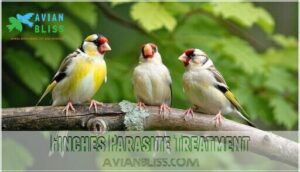
When you’re dealing with parasites in your finches, you’ll need targeted medications that work fast and safely.
The three most effective treatments—ivermectin, fenbendazole, and pyrantel pamoate—each tackle different parasites, so choosing the right one depends on what’s bugging your birds (literally).
Ivermectin Treatment
When battling finch parasites, Ivermectin delivers knockout power against mites and external invaders. This potent medication requires careful handling—overdose can prove fatal to your feathered friends.
You’ll need precise Ivermectin dosage guidance from an avian vet finch specialist for safe finch parasite treatment. Ivermectin is highly effective at treating bird mite infestations.
Application Methods include:
- Treatment Duration: Apply every 14 days for best results
- Safety Profile: Monitor birds closely during treatment periods
- Resistance Concerns: Rotate with alternative treatments when possible
- Dilute 1:10 with water for effective cage cleaning
Fenbendazole Treatment
When treating internal parasites, fenbendazole targets roundworms and tapeworms with precision. This broad-spectrum medication disrupts parasite cellular functions, making it essential for finch parasite treatment.
It’s also used as a deworming medication in other animals.
| Fenbendazole Details | Specifications | Notes |
|---|---|---|
| Safe Fenbendazole Dosage | 15-20 mg/kg | Weigh your bird first |
| Treatment Duration | 3 consecutive days | Mark calendar dates |
| Administration Method | Mixed in water/food | Verify complete consumption |
| Follow-up Schedule | 2-3 weeks later | Check for effectiveness |
| Fenbendazole Side-effects | Minimal reported | Monitor appetite closely |
Watch for fenbendazole resistance in stubborn cases requiring veterinary consultation.
Pyrantel Pamoate Treatment
Pyrantel pamoate delivers targeted roundworm control for your finches without the guesswork.
This finch parasite treatment tackles internal parasites effectively at 4.5 mg/kg doses.
You’ll appreciate its safe usage profile and minimal side effects.
Dosage guidelines require repeating treatment after 10-14 days.
Combination therapies with praziquantel address resistance concerns while expanding treatment scope.
Mite Control Methods
You’ll need a two-pronged approach to tackle mites effectively: treating your finch directly and sanitizing their entire living environment.
Think of it like fighting a tiny army that’s invaded both your bird and their home—you can’t win by only addressing half the battlefield.
Environmental Cleaning
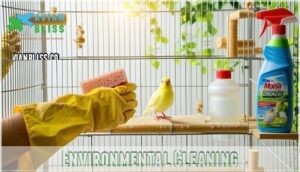
Once you’ve tackled medication, environmental cleaning becomes your secret weapon against mite reinfestation. Think of it as giving parasites their eviction notice.
Here’s your battle plan for cage disinfection:
- Strip everything – remove nesting materials, scrub perches with avian disinfectant, and replace contaminated items
- Install proper waste management systems and air purification to maintain cleanliness
- Schedule weekly cage maintenance using hot water and bird-safe cleaners
Remember, perch replacement isn’t optional – those tiny crevices harbor sneaky mite eggs waiting to restart the cycle. To further combat infestations, consider implementing weekly inspections for early detection.
Vet’s Best Poultry Spray

Why settle for harsh chemicals when Vet’s Best Poultry Spray delivers natural plant-based protection? This finch parasite spray combines natural pyrethrins with organic compliance, ensuring safe ingredients for your birds.
The application techniques are straightforward—simply spray affected areas while avoiding eyes and beaks. You can find poultry spray options online.
| Feature | Benefit | Long-Term Effect |
|---|---|---|
| Natural Formula | Bird-Safe Treatment | Healthier Flock |
| Easy Application | Quick Relief | Sustained Protection |
| Organic Certified | Peace of Mind | Environmental Safety |
Spray benefits include long-term effects against mites and lice infestations.
Choosing Best Spray
You’ll want to select a spray that combines safety with effectiveness, since your finches can’t exactly tell you if something burns their delicate skin.
Look for products with natural ingredients like pyrethrins or thymol that kill parasites on contact while remaining gentle enough for regular use on your feathered friends.
Key Features

Several vital factors determine whether your avian parasite treatment will successfully protect your finches.
You’ll want products offering thorough protection without compromising bird safety.
Here are five essential features to prioritize:
- Safe, natural ingredients that won’t stress delicate finch systems
- Easy application methods for reaching tight cage corners
- Long-lasting effects to minimize treatment frequency
- Vet-approved formulations ensuring proven efficacy
- Non-toxic properties protecting both birds and handlers
Smart finch parasite prevention starts with choosing sprays that balance effectiveness with gentleness—your feathered friends deserve nothing less than pharmaceutical-grade protection.
Regularly vacuuming cages can help with bird mite control.
Effective Ingredients

Beyond antiparasitic medications like ivermectin, fenbendazole, and pyrantel pamoate, effective sprays combine synthetic and natural remedies.
Pyrethrins and pyrethroids deliver quick knockdown, while spinosad provides residual control.
Natural oils like thyme and tea tree offer gentler alternatives with thymol benefits including powerful disinfection.
Many retailers offer pyrethrin bird spray for parasite control.
| Synthetic Options | Natural Remedies |
|---|---|
| Pyrethrins (fast-acting) | Thyme oil (antimicrobial) |
| Pyrethroids (residual) | Tea tree (antiseptic) |
| Spinosad (long-lasting) | Clove oil (repellent) |
| Permethrin (broad spectrum) | Garlic extract (inhibitor) |
Choose products combining both approaches for thorough protection.
Safety Precautions

Proper application safety transforms parasite treatment from risky business into routine care. Your finch’s delicate system can’t handle mistakes, so dosage accuracy matters more than you’d think.
Always consult an avian vet before starting any treatment—they’re your safety net.
Essential safety precautions include:
- Wear protective gear and guarantee proper ventilation needs during application
- Practice product rotation to prevent resistance while maintaining medication safety
- Choose safe ingredients and follow proper handling protocols religiously
Remember, even bird-safe doesn’t mean foolproof.
Preventing Parasite Infestation
You’ll save yourself countless headaches and your finches unnecessary suffering by staying ahead of parasites rather than chasing them after they’ve moved in.
Think of prevention as your first line of defense, combining regular health monitoring with smart environmental practices to keep these unwelcome guests from setting up shop in your aviary, which is a key part of defense.
Regular Fecal Tests
Regular fecal tests provide early detection of hidden parasites in your finches before symptoms appear.
Schedule these preventative measures every 6-12 months with proper sample collection techniques. Fresh droppings in clean containers guarantee accurate vet analysis for parasite diagnosis.
This test frequency catches coccidia, giardia, and worms that visual inspections miss, making avian parasite control proactive rather than reactive.
Implementing strategies for reducing stress can also minimize parasite proliferation.
Environmental Disinfection
Think of environmental cleaning as your first line of defense against parasite reinfestation. Cage disinfection with avian disinfectant solutions creates an unwelcome environment for unwanted guests. Regular use of avian disinfectant products can substantially reduce parasite presence.
Your aviary sanitation checklist should include:
- Daily waste removal from cage floors and perches
- Weekly deep cleaning with natural disinfectants like white vinegar
- Thorough disinfection of feeding stations and water dishes
- Regular replacement of cage liners and bedding materials
- Air purification systems to eliminate airborne contaminants.
This thorough prevention strategy stops parasites before they start.
Frequently Asked Questions (FAQs)
How do you use Moxidectin for finches?
Picture your finch’s tiny frame battling invisible parasites – moxidectin offers powerful relief.
You’ll need a vet’s precise dosage since it’s potent stuff.
Mix it into drinking water carefully, ensuring each bird gets proper treatment without overdosing, using proper technique is crucial.
What is an antiparasitic drug for birds?
Ivermectin effectively treats external parasites like mites and lice in birds. Fenbendazole targets internal worms, while pyrantel pamoate handles roundworms. You’ll need proper veterinary guidance for dosages and treatment schedules.
What is MoxiVet Plus parasite control for birds?
MoxiVet Plus contains moxidectin, a broad-spectrum antiparasitic medication you’ll use for treating both internal and external parasites in birds.
It’s effective against mites, worms, and other troublesome parasites affecting your feathered friends.
How to get rid of parasites in birds?
You’ll need to tackle parasites with targeted medications like fenbendazole for worms and specific sprays for mites.
Clean the cage thoroughly, treat all birds simultaneously, and consult your avian vet for proper dosages.
How do you treat mites on finches?
Mites affect 60% of captive finches annually.
You’ll treat them with ivermectin drops or sprays, cleaning cages thoroughly with bird-safe disinfectants.
Apply treatments to vent areas, under wings, avoiding eyes and beak completely, using bird-safe disinfectants.
What is anti parasite treatment for birds?
Anti-parasite treatments for birds include medications like ivermectin for external parasites, fenbendazole for internal worms, and pyrantel pamoate for roundworms.
You’ll administer these through drinking water or direct dosing under veterinary guidance.
What is the medicine for parakeet parasites?
Ironically, tiny parasites cause big headaches for parakeet owners. You’ll commonly use ivermectin for mites, fenbendazole for worms, or pyrantel pamoate for roundworms. Always consult your avian vet first.
How long do parasite treatments usually last?
Parasite treatments for finches typically last 7-14 days, depending on the medication type.
You’ll often need repeated doses every few days.
Some treatments require follow-up courses after 2-3 weeks to break the parasite lifecycle completely, which may involve repeated doses.
Can finches develop resistance to treatments?
Yes, finches can develop resistance to parasite treatments over time. You’ll need to rotate different medications and work with your vet to prevent this. Don’t use the same treatment repeatedly.
Are natural remedies effective for avian parasites?
Natural remedies like tea tree oil and thyme can help, but they’re not strong enough for serious infestations.
You’ll need veterinary-approved medications like ivermectin or fenbendazole for effective parasite control in finches.
Conclusion
Mastering parasite identification, selecting proper medications, and maintaining clean environments—these three pillars form your defense against finch health threats.
Remember that the best avian parasite treatment for finches combines swift action with preventive care.
You’ve learned precise dosing matters, environmental control prevents reinfection, and regular monitoring catches problems early.
Don’t wait for symptoms to worsen—early intervention saves both your bird’s health and your wallet, and your finches depend on your vigilance and quick response.
- https://www.ladygouldianfinch.com/parasitics-for-birds.aspx?srsltid=AfmBOoqMgtgHBjY3_U3-A_Tgn6_BXWGHwr6_nRTBhvutKt1nQD8qd_JG
- https://www.merckvetmanual.com/exotic-and-laboratory-animals/pet-birds/parasitic-diseases-of-pet-birds
- https://www.gouldiangardens.com/health/treating-your-gouldian-finch-for-parasites/
- https://www.wikihow.com/Treat-Lice-and-Mites-in-Finches
- https://jedds.com/products/moxivet-plus?srsltid=AfmBOopHxD4CElC6jSkUGrjyPoLlwDTkPh5n29PY2p-2Iffvp_1as9x4