This site is supported by our readers. We may earn a commission, at no cost to you, if you purchase through links.
 When your bird gets hurt, you’ll need the best avian wound care products that work fast and won’t harm their delicate systems.
Top choices include Vetericyn Plus antimicrobial sprays that fight infection without stinging, hydrocolloid dressings that promote natural healing, and silver-based solutions that keep wounds clean.
These products are formulated specifically for birds’ unique pH balance and sensitive skin.
Professional-grade options like waterproof bandages and quick-stop gels can handle everything from minor scratches to deeper cuts.
The right product depends on your bird’s injury type and size, but quality matters when every second counts for recovery.
Table Of Contents
- Key Takeaways
- Avian Wound Care Basics
- Choosing Best Wound Care
- Top 5 Avian Wound Care
- Advanced Wound Healing Techniques
- Effective Wound Management Strategies
- Frequently Asked Questions (FAQs)
- What is the best medicine for birds wounds?
- How to treat an open wound on a bird?
- What is the best medicine for chicken wounds?
- What ointment is safe for birds?
- Are avian wound care products safe for all species?
- How should wound care products be stored properly?
- Can wound care products be used on chicks?
- What are signs of allergic reactions in birds?
- How often should wound dressings be changed?
- Conclusion
Key Takeaways
- You’ll need antimicrobial sprays like Vetericyn Plus that won’t sting your bird’s delicate skin and are safe if they ingest it during preening
- Modern hydrocolloid dressings work better than traditional bandages because they keep wounds moist and let you monitor healing without removing the dressing
- Quick-stop gels with ferric subsulfate can control bleeding from nail trims or minor cuts within minutes, providing instant pain relief
- You should check wounds daily for infection signs and be ready to switch products if you don’t see improvement within 3-5 days to ensure proper healing
Avian Wound Care Basics
When your bird gets injured, you need fast and effective treatment to prevent infection and speed healing.
Proper wound care can mean the difference between a quick recovery and serious complications that could threaten your feathered friend’s health, emphasizing the importance of effective treatment.
Importance of Proper Wound Care for Birds
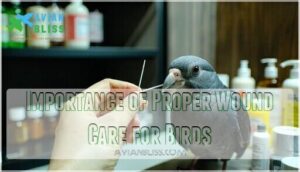
Your feathered friend’s health depends on proper avian wound care and bird wound treatment.
Infection prevention through effective wound cleaning and bird antiseptic spray application prevents complications that can turn minor injuries into serious health threats.
Smart dressing selection and pain management support your bird’s natural bird wound healing process while dietary support strengthens recovery from within, and overall, it’s about infection prevention.
Common Types of Avian Wounds and Injuries
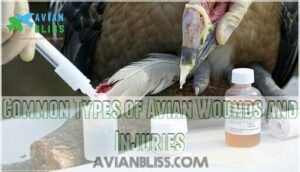
Birds face several common injuries that require prompt care.
Pecking sores occur from aggressive behavior between birds.
Feather plucking creates open wounds on skin.
Foot injuries happen from rough surfaces or wire caging.
Skin lacerations result from sharp objects or predator attacks.
Post-surgical wounds need careful monitoring after veterinary procedures.
Each injury type demands specific bird wound treatment approaches for proper avian wound healing.
The variety of injuries, including feather plucking, underscores the need for tailored care to address each condition effectively.
Role of Antimicrobial Sprays and Solutions in Wound Care
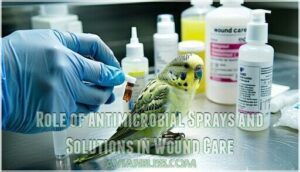
When treating injured birds, antimicrobial sprays and solutions serve as your first line of defense against harmful bacteria.
Antimicrobial sprays protect your bird’s wounds from dangerous bacteria while speeding natural healing.
These specialized products prevent infection while promoting faster healing through safe ingredients designed for avian physiology.
Key antimicrobial benefits include:
- Spray Application – Easy coverage of hard-to-reach wounds without causing additional stress
- Infection Prevention – Active ingredients eliminate bacteria before they multiply and spread
- Healing Acceleration – Clean wounds heal faster than contaminated ones
Modern poultry wound care products like bird wound spray and avian wound cleanser contain safe ingredients that won’t harm your feathered friend if ingested.
Product comparison shows poultry antiseptic solutions outperform traditional treatments for avian skin infection management.
For lacerations, remember to apply gentle pressure to stop bleeding.
Choosing Best Wound Care
You need the right wound care products to help your bird heal quickly and safely.
Modern dressings like hydrocolloid and MVP options work better than old bandages because they keep wounds moist and let you watch healing without removing the dressing.
Benefits of Using Hydrocolloid and MVP Dressings
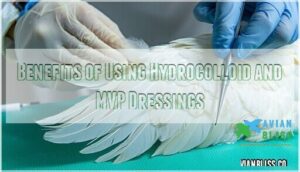
Hydrocolloid and MVP dressings revolutionize avian wound care by maintaining ideal moisture levels for rapid epithelialization.
These advanced materials promote faster wound closure speed while ensuring superior patient comfort compared to traditional gauze.
Their non-adherent properties minimize tissue damage during changes. You can find avian dressing products online.
Bird wound care becomes more effective when these modern wound healing technologies support natural recovery processes in your feathered patients.
Top 5 Avian Wound Care
You’ll find the right wound care product can mean the difference between quick healing and prolonged recovery for your feathered friend.
These five expert-tested solutions offer proven antimicrobial protection and advanced healing properties that veterinarians rely on for treating everything from minor cuts to post-surgical sites, providing your pet with the best chance at a speedy recovery with advanced healing properties.
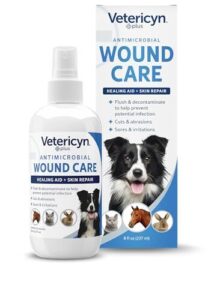
1. Vetericyn Plus Dog Wound Care
 View On Amazon
Your feathered friend’s wounds deserve professional-grade care. Vetericyn Plus contains 0.012% hypochlorous acid, mimicking your bird’s natural immune response.
This pH-neutral formula won’t sting delicate tissue while eliminating harmful bacteria and viruses. The non-toxic solution is safe if your bird preens the treated area.
Apply 3-4 times daily on cuts, abrasions, or post-surgical sites. Veterinarians recommend this antibiotic-free alternative for all bird species and life stages, making it a trusted choice for professional-grade care.
Best For: Bird owners and animal caregivers wanting a safe, gentle wound spray that speeds healing without harsh chemicals or antibiotics.
- Non-toxic and safe if your pet licks or ingests it.
- No sting or burn, even on sensitive areas like eyes or beaks.
- Trusted by vets and works for all animal species and life stages.
- Small bottle size can feel pricey for frequent users.
- Spray may bleach white clothing if not careful.
- Pump mechanism sometimes gets mixed user feedback.
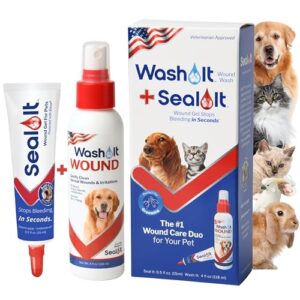
2. Dog Wound Care Quick Stop Gel
 View On Amazon
When you’re facing a bleeding emergency with your feathered friend, this fast-acting gel becomes your lifeline.
The ferric subsulfate formula contracts blood vessels within minutes, stopping bleeding from nail trims or minor cuts.
Benzocaine provides instant pain relief while iodophor offers antiseptic protection.
Professional groomers have trusted this formula for over 40 years.
Simply apply with moderate pressure for 5-10 seconds, and then store at room temperature, avoiding eyes or mucous membranes.
Best For: Pet owners, groomers, and vets who need to quickly stop minor bleeding from nail trims or small wounds on dogs, cats, or birds.
- Stops bleeding fast with ferric subsulfate, usually in minutes.
- Eases pain right away with benzocaine, helping pets stay calm.
- Easy gel application means less mess and wastes less product.
- Only for minor cuts or nail bleeds—not safe for deep wounds or burns.
- May cause rare reactions like redness or swelling at the application site.
- Won’t prevent serious infection; deeper wounds still need a vet’s care.
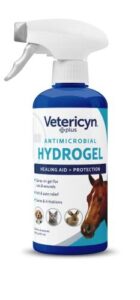
3. Vetericyn Plus All Animal Wound Care
 View On Amazon
When you’re looking for complete animal care, Vetericyn Plus All Animal Wound Care delivers broad-spectrum protection.
This 0.012% hypochlorous acid solution works against bacteria, fungi, and viruses without harsh chemicals. You can apply it safely around sensitive areas like eyes and beaks.
The spray won’t sting or burn your birds. It creates the right healing environment for faster recovery.
For proper handling, remember to use safe handling techniques. This veterinarian-recommended formula helps wounds heal properly while staying completely non-toxic if accidentally ingested.
Best For: Pet owners or animal caretakers needing safe, fast-acting wound care for any animal, including birds, cats, dogs, horses, and exotics.
- Broad-spectrum antimicrobial action without antibiotics or steroids
- Safe, non-toxic, and can be used on sensitive areas without stinging
- Promotes moist, rapid healing with no risk to healthy tissue, even if ingested
- Spray nozzle often clogs, which can make application tricky
- Gel thickness may be challenging to apply on animals with thick fur or feathers
- Larger sizes more cost-effective, but potential for waste due to sprayer issues
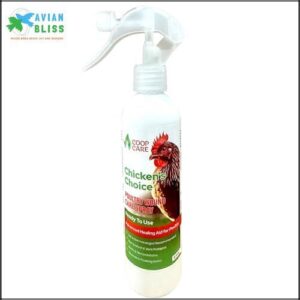
4. Chicken Wound Care Spray for Birds
 View On Amazon
Specialized chicken wound care sprays deliver targeted healing for your flock’s injuries.
These formulas contain hypochlorous acid at 0.012% concentration, which provides broad-spectrum antimicrobial action against bacteria and fungi.
The spray format allows easy application under feathers, enabling you to treat bumblefoot and vent prolapse effectively.
Most products require no rinsing after use, and they’re safe if birds ingest them during preening, showing visible improvement within one week of regular application.
Best For: Flock owners and bird keepers who want a safe, easy-to-use spray for treating common poultry wounds and skin issues.
- Fast, visible healing in 2–4 days for wounds like bumblefoot and vent prolapse.
- Non-irritating, antibiotic-free, and safe if ingested by birds.
- Simple spray application with no rinsing or bandaging required.
- Birds may be sensitive to mist; avoid spraying near their faces or airways.
- Leakage issues can happen during shipping.
- Regular use can become costly unless using a concentrate.
5. Duck Chicken Waterproof Booties Large
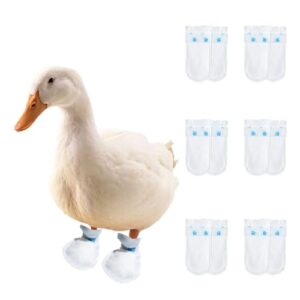 View On Amazon
Protecting wounded feet requires more than bandages alone.
Duck Chicken Waterproof Booties Large offer essential barrier protection for healing bumblefoot and foot injuries.
These self-adhesive booties keep wounds dry and clean during recovery. The waterproof design prevents contamination from dirt and moisture.
Six pairs per pack guarantee you can change them regularly. The cushioned sole provides comfort while your bird heals.
They work well indoors but show mixed results in very wet outdoor conditions.
Best For: Large ducks, especially Pekin ducks, recovering from foot injuries needing extra protection indoors or in slightly wet areas.
- Keeps wounds clean and mostly dry, helping feet heal.
- Easy to put on, flexible, and comfortable for the bird to walk in.
- Multiple pairs in one pack for easy changes and better hygiene.
- Not fully waterproof in very wet outdoor conditions.
- May not stay secure on all ducks; adhesion varies.
- Can get expensive for regular use, especially with many ducks.
Advanced Wound Healing Techniques
You can accelerate your bird’s recovery with cutting-edge techniques that go beyond basic wound care.
These advanced methods use specialized materials and modern technology to achieve faster healing times and better outcomes.
Use of Porcine Small Intestinal Submucosa Xenografts in Avian Wound Care
You can access better healing outcomes with porcine small intestinal submucosa xenografts for avian wound care.
These advanced materials show remarkable xenograft advantages including complete healing within six weeks. Bird wound ointment alone can’t match this healing timeline.
Infection risk drops substantially while supporting natural tissue regeneration. Cost analysis reveals higher upfront expenses offset by reduced treatment duration.
Vetrix BioSIS has demonstrated success in avian soft tissue repair. Future research continues expanding applications for avian skin repair and specialized avian vet supplies, leading to advanced materials and avian wound care solutions.
Benefits of Modern Hydroactive Gels in Wound Healing
Modern hydroactive gels transform avian wound care through superior gel hydration levels that maintain ideal moisture balance.
These advanced formulations accelerate tissue repair while supporting gentle necrotic tissue removal without damaging healthy cells.
You’ll see improved infection prevention and reduced scarring compared to traditional methods.
The gels adapt perfectly to irregular bird anatomy and promote faster healing in avian skin repair applications.
Hydrogels are effective for moist wound environments to encourage healing in moist wound environments, which is crucial for faster healing and infection prevention.
Role of Silver-based Dressings in Managing Infection-prone Wounds
When dealing with infection-prone wounds, silver-based dressings offer powerful antimicrobial action against resistant bacteria.
Silver efficacy comes from releasing ions that disrupt bacterial cell walls and biofilms.
These specialized wound dressings reduce infection risk by 40% in avian wound care.
Diluted povidone-iodine is a safe option for cleaning bird wounds.
Proper dressing application promotes healing while controlling wound infection through sustained antimicrobial protection.
Effective Wound Management Strategies
You’ll need effective strategies once you choose the right wound care products for your bird.
These approaches help wounds heal faster and prevent complications that could set back your pet’s recovery.
Tips for Promoting Rapid Epithelialization and Wound Closure
Keep your bird’s wounds moist using hydrocolloid dressings for faster healing.
Provide proper nutrition with protein-rich foods to support tissue repair. Maintain good air circulation around the wound while maintaining cleanliness.
Reduce handling stress during recovery periods. Monitor for infection signs daily.
**Consider using specialized bird dressings for ideal wound care.
**These bird wound care steps promote rapid epithelialization and wound closure naturally.
Importance of Monitoring Wound Healing and Adjusting Treatment Plans
Regular monitoring helps you catch infection signs early and adjust treatment plans quickly.
Watch for changes in healing rate and treatment efficacy during routine bandage changes for ideal complication prevention.
- Check wounds daily for redness, swelling, or unusual discharge that signals infection
- Document healing progress with photos to track improvement over time
- Switch products if current wound care for birds isn’t showing results within 3-5 days
Bird wound care requires flexibility. It’s also important to know that diluted betadine solutions are safe for cleaning bird wounds.
Bird injury treatment plans work best when you adapt based on what you see.
Bird health depends on your watchful eye catching problems before they worsen, which is crucial for effective complication prevention and ensuring the best possible healing progress.
Frequently Asked Questions (FAQs)
What is the best medicine for birds wounds?
When your feathered friend’s skin breaks like a torn map, you’ll need the right healing arsenal.
Vetericyn Plus Antimicrobial Poultry Care offers non-toxic wound management that’s safe and effective.
It prevents infection while speeding recovery for cuts and abrasions without harsh chemicals, providing a solution with effective results.
How to treat an open wound on a bird?
Clean the wound gently with saline solution. Apply antimicrobial spray like Vetericyn Plus. Cover with hydrocolloid dressing to maintain moisture. Change dressing every 2-3 days. Monitor for infection signs.
What is the best medicine for chicken wounds?
When you’re in a tight spot with chicken wounds, Vetericyn Plus Antimicrobial Poultry Care works best. It’s non-toxic, antibiotic-free, and safe for all ages while preventing infection and speeding healing.
What ointment is safe for birds?
You can safely use Vetericyn Plus Antimicrobial Poultry Care or ZYMOX Avian Care Topical Solution on birds.
Both products are non-toxic if ingested and contain no harmful antibiotics or steroids for avian care.
Are avian wound care products safe for all species?
Most commercial avian wound care products aren’t universally safe across all bird species.
You’ll need to check specific product labels for species restrictions and consult your avian veterinarian before treating different bird types, ensuring the use of universally safe products is prioritized.
How should wound care products be stored properly?
Store wound care products in cool, dry places away from direct sunlight. Keep them sealed tightly to prevent contamination. Check expiration dates regularly and rotate stock using oldest products first.
Can wound care products be used on chicks?
Young feathered patients can safely use most gentle wound care products.
Vetericyn Plus and ZYMOX are specifically safe for all life stages.
You’ll want products that won’t sting or harm if ingested.
What are signs of allergic reactions in birds?
Watch for excessive scratching, labored breathing, swollen eyes or face, discharge from nostrils, lethargy, loss of appetite, skin redness, feather plucking, vomiting, diarrhea, or behavioral changes.
These symptoms may appear after exposure to new products or environments.
How often should wound dressings be changed?
Dressing decisions depend on wound type and drainage. You’ll change moisture vapor permeable dressings every 2-5 days. Hydrocolloid dressings stay longer. Non-adherent types need daily changes for heavy drainage.
Conclusion
What happens when seconds matter most for your bird’s recovery?
Choosing the best avian wound care products can make the difference between quick healing and serious complications.
These five expert-tested solutions offer proven antimicrobial protection and gentle care for your feathered friend’s delicate skin.
From Vetericyn’s non-stinging sprays to waterproof booties for active birds, each product addresses specific wound types effectively.
Remember to consult your avian veterinarian for serious injuries, but having quality wound care supplies ready guarantees you’re prepared when accidents happen, ensuring quick healing.
- https://www.medi-vet.com/bird-first-aid-supplies-s/2138.htm
- https://shop.zymox.com/products/zymox-pet-specialty/zymox-avian-care-topical-solution-for-all-birds/
- https://nixall.com/product/vetresponse-poultry-and-avian-care/
- https://www.avianempire.co.nz/products/wound-care-250ml
- https://www.merckvetmanual.com/multimedia/table/first-aid-kit-for-pet-birds