This site is supported by our readers. We may earn a commission, at no cost to you, if you purchase through links.
Last winter, a backyard observer in Pennsylvania watched 47 different bird species visit their feeders—but only after switching from generic mixed seed to targeted, high-quality blends. The difference wasn’t luck.
Black oil sunflower seeds deliver 38.5% crude fat and attract over 106 species, while nyjer seeds pull in 90% of American Goldfinch populations. Fresh seed matters too: seeds stored beyond six months lose 40% of their oil content, turning nutritional powerhouses into empty calories.
Understanding which seeds match your local birds transforms a quiet feeder into a thriving habitat, and choosing quality brands over discount mixes can boost visitation rates by 45% while cutting waste by nearly three-quarters.
Table Of Contents
- Key Takeaways
- Best Bird Seed Types for Wild Birds
- Top 10 Bird Seeds for Wild Birds
- 1. Wild Bird Greatest Variety Blend
- 2. High Energy Wild Bird Seed Mix
- 3. Black Oil Sunflower Bird Seed
- 4. High Quality Safflower Bird Seed
- 5. Nyjer Seed Wild Bird Food
- 6. White Proso Millet Bird Seed
- 7. Natural Bird Spray Millet Treats
- 8. Wild Bird Cracked Corn Food
- 9. Wild Bird Peanut Food Delight
- 10. Wild Bird Ground Feeding Seed Mix
- Key Factors When Choosing Bird Seed
- Best Bird Seed Brands Reviewed
- Tips for Attracting More Wild Birds
- Frequently Asked Questions (FAQs)
- Conclusion
Key Takeaways
- Black oil sunflower seeds attract over 106 species and deliver 38.5% crude fat, but seeds stored beyond six months lose 40% of their oil content—making freshness as critical as seed type for nutritional value.
- Switching from generic mixed seed to targeted, high-quality blends can boost bird visitation rates by 45% while reducing waste by nearly three-quarters, since birds selectively consume nutrient-dense seeds and ignore fillers like red milo.
- Nyjer seeds pull in 90% of American Goldfinch populations with 35% fat content, while safflower’s bitter taste deters squirrels and grackles but welcomes cardinals and grosbeaks—demonstrating how seed selection shapes which species visit your feeders.
- Strategic feeder placement (3 feet from windows or beyond 10 feet to prevent collisions), biweekly cleaning with bleach solution, and offering multiple seed types together increase species diversity by 50% compared to single-seed setups.
Best Bird Seed Types for Wild Birds
Choosing the right seed transforms your backyard into a thriving bird haven. Different species have distinct preferences, and matching seed type to your local visitors makes all the difference.
Here are the five most effective seed types that consistently attract diverse wild bird populations.
Black Oil Sunflower Seeds
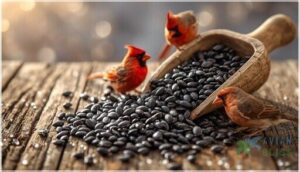
Black oil sunflower seeds rank as the top bird seed type, drawing over 106 wild bird species in field surveys. Their thin shells and 33–40% oil content deliver superb energy for cardinals, chickadees, and goldfinches.
With 18.8% protein and 584 kcal per 100g, these seeds support feather growth and winter survival.
Store them in cool, dry conditions below 9% moisture to maintain freshness for 6–12 months, preventing mold and rancidity that compromise nutritional value. For best results, consider using high oil seeds to attract a wide variety of bird species.
Nyjer (Thistle) Seeds
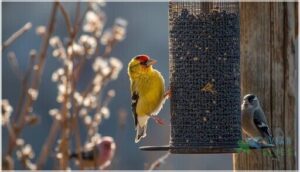
Nyjer seeds, packed with 35% fat and 20% protein, are a favorite among finches. Over 90% of American Goldfinch populations visit feeders for these tiny energy bombs. You’ll attract at least six species—including Pine Siskins, Purple Finches, and Common Redpolls—especially after cold fronts hit.
Here’s what makes Nyjer stand out:
- Sterilization safety: All imports are heat-treated at 120–C, preventing invasive weed spread
- Selective feeding: Squirrels ignore it, reducing competition and waste
- High palatability: Fresh seed attracts birds at a 2:1 ratio over three-month-old stock
To maximize the benefits of Nyjer seeds, use tube-style feeders designed for their small size. Replace the seed within three months to maintain oil freshness and boost visits. For best results, learn about Nyjer seed benefits to create an ideal bird-friendly environment.
Safflower Seeds
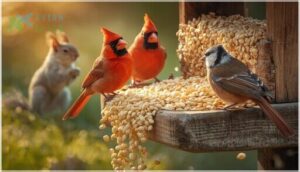
Safflower seeds pack 38% fat and 16% protein, offering northern cardinals, grosbeaks, and chickadees a nutritional punch while deterring grackles and squirrels. Their bitter taste acts like a velvet rope—welcoming songbirds but turning away pests.
You’ll see up to 25.5% of North American wild birds at safflower feeders, with minimal waste since desirable species crack through the thin hulls efficiently.
Use tray or platform feeders for best results, and store seeds in cool, dry conditions to preserve oil content and freshness beyond three months.
Millet and Mixed Seeds
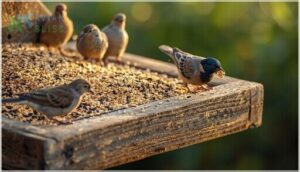
White proso millet draws over 40% of North American feeder species—sparrows, doves, and buntings forage for it on the ground, while mixed seed blends balance millet’s steady energy with sunflower’s fat and peanuts’ protein. You’ll attract diverse visitors when you combine seed types strategically.
- Millet nutrition: 73% carbohydrates, 11% protein, 307 mg potassium per 100 g
- Ground-feeding appeal: Sparrows, quail, and doves consume millet at 53.5% preference rates
- Seed blending advantage: Mixed formulas pair millet with sunflower and peanuts for nutritional breadth
- Feeding strategies: Use platform feeders to accommodate both ground-feeders and perching birds
- Millet benefits: Low fat content delivers sustained energy without excess calories during flight
Peanuts and Cracked Corn
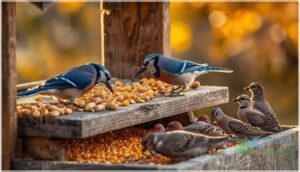
High-protein peanuts fuel woodpeckers and jays year-round with 567 kcal per 100 g, while cracked corn’s carbohydrate-rich profile sustains doves and sparrows through harsh winters.
You’ll support wild bird health when you offer both—peanuts for fat reserves and feather production, corn for quick energy—but store each in airtight containers below 60% humidity to prevent mold and preserve seed quality for maximum bird feeding success.
Top 10 Bird Seeds for Wild Birds
You’ll find a range of seed options below that cater to different bird species and feeding preferences.
Each selection has been chosen for its nutritional profile and proven ability to attract diverse wild birds to your backyard. These top picks balance quality ingredients with practical feeding results.
1. Wild Bird Greatest Variety Blend
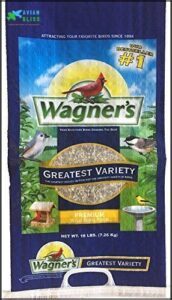
Wagner’s Greatest Variety Blend works like a buffet for your backyard—11 ingredients, including 40% sunflower seeds, attract over 100 bird species. You’ll see cardinals (76% attraction rate), goldfinches (82%), and blue jays (85%) visiting regularly.
This bird seed mix delivers 6.0–6.5 kcal/g metabolizable energy, supporting wild birds through migration and winter. The blend nutrition combines protein-rich sunflower with safflower, nyjer, peanuts, and even tree nuts for balanced wild bird feeding.
Store your seed in cool, dry conditions below 55% humidity to prevent mold. Use tube, hopper, or platform feeders for ideal feeder placement and watch species diversity climb 35% compared to single-seed options.
Best For: Backyard birders who want to attract a wide variety of songbirds—especially cardinals, goldfinches, and blue jays—with a high-quality, nutrient-dense seed blend.
- Attracts over 100 bird species with an 11-ingredient mix featuring 40% sunflower seeds, proven to increase feeder visits by 35% compared to single-seed options.
- Delivers high energy (6.0–6.5 kcal/g) with protein-rich sunflower, safflower, peanuts, and tree nuts to support birds through migration and winter.
- Works in tube, hopper, or platform feeders and shows consistent species attraction across different U.S. regions.
- Some customers report quality control issues including mold, clumps, or bags arriving wet with an ammonia smell.
- Non-resealable packaging can compromise freshness if not transferred to airtight storage below 55% humidity.
- Recent formula changes show increased sunflower proportion, which some users note may reduce overall species diversity compared to earlier versions.
2. High Energy Wild Bird Seed Mix
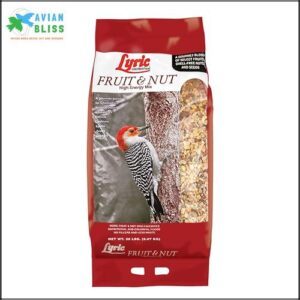
Lyric’s Fruit and Nut High Energy Mix packs 13 all-natural ingredients—including almonds, cashews, pistachios, and sunflower kernels—into a shell-free blend that delivers over 30% crude fat for peak wild bird nutrition.
You’ll attract chickadees, cardinals, grosbeaks, and cedar waxwings with this nutrient-dense bird seed mix, which reduces waste by eliminating fillers entirely.
The energy-rich seed blends support birds through migration and breeding seasons when metabolic demands spike 25%.
Store below 60% humidity and use hopper or platform feeders for ideal bird attraction and feeding strategies that keep visits frequent year-round.
Best For: Backyard birders seeking a premium, no-waste blend to attract diverse songbird species during high-energy seasons like migration, breeding, and winter.
- Shell-free formula with 13 natural ingredients eliminates mess and waste while delivering over 30% crude fat for optimal energy.
- Attracts 10 bird species including cardinals, chickadees, grosbeaks, and cedar waxwings with nutrient-dense nuts and fruits.
- No fillers means birds consume 100% of the mix, reducing spoilage and feeder maintenance compared to standard blends.
- Premium pricing at $19.80 for 20 pounds may not suit budget-conscious buyers or those on fixed incomes.
- Some customers report pieces too large for smaller birds like finches, limiting accessibility for certain species.
- Quality control issues noted by buyers, including occasional insect infestations and formula changes that increased corn content.
3. Black Oil Sunflower Bird Seed
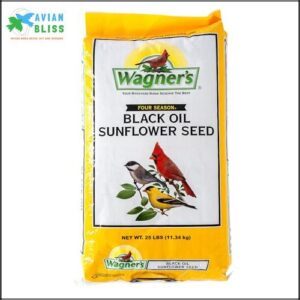
Black Oil Sunflower Seed attracts over 15 wild bird species, including cardinals, chickadees, and nuthatches, because its thin shell opens easily and delivers 38–44% crude fat for peak energy demands. You’ll see longer feeding sessions and less waste compared to striped varieties, thanks to enhanced nutritional value that aids feather production and immune function year-round.
This seed type works in tube, hopper, and platform feeders, requiring refills every two days under normal bird feeding habits.
Store in airtight containers below 60% humidity to preserve freshness for 6–12 months and prevent mold that compromises wild bird nutrition and oil content analysis.
Best For: Backyard birders who want to attract the widest variety of songbirds while providing maximum nutrition and energy, especially during migration and winter months.
- Attracts over 15 species including cardinals, chickadees, and nuthatches thanks to thin shells that small-beaked birds easily crack open.
- Delivers 38–44% crude fat content, providing exceptional energy for birds’ daily needs, feather growth, and immune health year-round.
- Compatible with multiple feeder types (tube, hopper, platform) and reduces waste since birds spend more time eating at the feeder rather than scattering seed on the ground.
- Some bags contain debris like twigs and dirt, requiring screening before use to maintain feeder cleanliness and bird safety.
- The 25-pound bag lacks resealable closure, making it harder to preserve freshness and prevent spills during storage.
- Attracts squirrels and may cause unwanted sunflower plants to sprout in your yard from dropped seeds that germinate.
4. High Quality Safflower Bird Seed
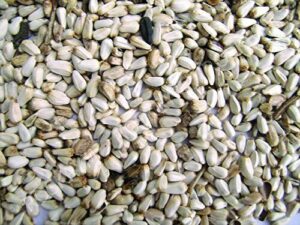
Ever noticed cardinals flocking to your feeder while starlings keep their distance? That’s the power of safflower seed. Packed with 38% fat and essential nutrients, safflower seed benefits wild bird nutrition and keeps unwanted guests away.
For best results, use airtight seed storage methods to maintain freshness and reduce waste. Tough shells break down easily, so feeder maintenance stays simple.
If you’re aiming to attract cardinals and house finches, safflower stands out among bird seed types for reliable, year-round bird feeding tips.
Best For: Backyard birders who want to attract cardinals and finches while naturally deterring starlings, grackles, and squirrels.
- Attracts desirable songbirds like cardinals, house finches, chickadees, and nuthatches while the bitter taste keeps away starlings, grackles, and most squirrels.
- High nutritional value with 38% fat, 16% protein, and essential vitamins B1 and B6 supports year-round bird health and energy needs.
- Minimal waste and easy cleanup since hulls break down quickly and fewer nuisance species scatter seed, plus the 25-pound bag offers cost-effective feeding.
- Some customers report flimsy packaging and shipping issues with damaged cardboard boxes.
- May be pricier compared to other seed options, though the reduced waste and selective attraction can offset the cost.
- The tough shell can be challenging for smaller birds to crack, and it won’t attract all bird species—doves and juncos mainly eat spillage from the ground.
5. Nyjer Seed Wild Bird Food
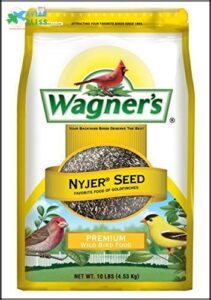
Finches go wild for Nyjer seed—and for good reason. With 32–35% crude fat and 16–20% protein, this tiny powerhouse delivers concentrated energy that keeps goldfinches, pine siskins, and purple finches coming back all winter.
Seed sterilization before sale prevents unwanted sprouting, so you won’t end up with a weedy mess under your tube feeder. Use specialized finch feeders with small ports to boost wild bird attraction and minimize waste.
Nyjer seed benefits are clear: high oil content promotes feather health, while the no-hull design keeps cleanup simple and disease risk low.
Best For: Backyard birders who want to attract small finches like goldfinches, pine siskins, and purple finches with a high-energy, low-mess seed option.
- High fat (32–35%) and protein (16–20%) content provides concentrated energy, especially valuable during winter and migration when birds need extra calories.
- Minimal waste and no hulls mean cleaner feeding areas under your feeder, reducing mess and lowering disease risk for visiting birds.
- Sterilized before sale to prevent sprouting, so you won’t deal with unwanted weeds or invasive plants growing beneath your feeder.
- More expensive than standard bird seed blends due to its specialized nutritional profile and required sterilization process.
- Requires specific tube feeders with small ports or finch sock feeders, limiting your feeder options compared to mixed seed blends.
- High oil content means feeders need frequent cleaning to prevent mold and spoilage, adding maintenance compared to drier seed types.
6. White Proso Millet Bird Seed
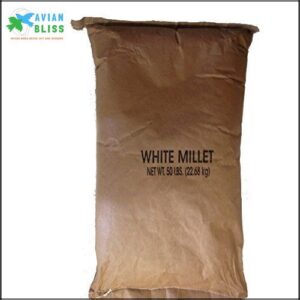
While finches favor Nyjer Seed, ground-feeding birds like sparrows, juncos, and mourning doves flock to White Proso Millet. This small, round seed delivers 13% crude protein and 4% crude fat—modest compared to sunflower seeds, but perfectly suited for species that prefer low platforms or scattered ground feeding.
Over 25 wild birds visit feeders stocked with millet, especially during migration when native sparrows rely on it heavily. Millet nutrition includes B vitamins, phosphorus, and magnesium, supporting feather health and energy.
Offer amounts birds finish in one to two days; wet millet germinates or molds fast. Proper seed storage and feeder drainage prevent spoilage, keeping feeding strategies effective and bird attraction high year-round.
Best For: Backyard birders who want to attract ground-feeding species like sparrows, juncos, and mourning doves with an affordable, nutrient-rich seed option.
- Attracts over 25 bird species, especially ground feeders like sparrows, juncos, towhees, and mourning doves, making it ideal for increasing diversity at your feeding station.
- Natural and pesticide-free with solid nutritional value—13% protein, 4% fat, plus B vitamins and essential minerals that support bird health and energy.
- Cost-effective and versatile at 50 pounds, allowing you to use it solo or blend it with sunflower and other seeds for custom mixes.
- Spoils quickly when wet, so you’ll need to offer small amounts birds can finish in one to two days and ensure feeders have good drainage to prevent mold and germination.
- Can attract unwanted pests like rats if not stored properly in sealed containers or if spilled seed is left on the ground.
- Messy to handle—the 50-pound bag is sewn shut and may require scissors to open, and seed spillage is common during refills or when birds scatter it from feeders.
7. Natural Bird Spray Millet Treats
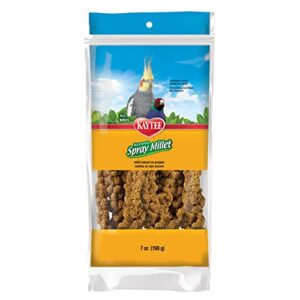
You can think of spray millet as the bird world’s version of a snack stick—natural grain clusters still attached to their stalks. Birds grab, twist, and peck at the seeds, which delivers bird enrichment through foraging activity that mirrors wild feeding behaviors.
Spray millet offers 7.5–8% crude protein and 2–3% crude fat, making it a lower-calorie choice than sunflower seeds or Nyjer seed. Finches, canaries, budgies, and sparrows show strong preference, with backyard studies recording up to 70% higher winter visitation when millet is available.
Seed freshness matters—moisture content around 12% prevents mold, so rotate stock regularly and store in cool, dry conditions to maintain avian health benefits.
Best For: Pet bird owners seeking a natural, enriching treat that encourages foraging behavior while providing low-fat nutrition for finches, canaries, budgies, and similar small seed-eating species.
- Natural foraging activity mimics wild feeding behaviors, reducing stress and providing mental stimulation for birds of all life stages.
- Low-calorie composition (7.5–8% protein, 2–3% fat) makes it suitable for weight management while still delivering healthy energy.
- All-natural ingredients with no artificial colors, flavors, or preservatives support overall avian health and dietary variety.
- Some customers report inconsistent freshness, with millet sprays arriving dried out or with seeds falling off easily.
- Higher price point compared to competing brands offering similar natural millet products.
- Quality and longevity vary by batch, requiring careful storage in cool, dry conditions to maintain the 12% moisture content that prevents mold.
8. Wild Bird Cracked Corn Food
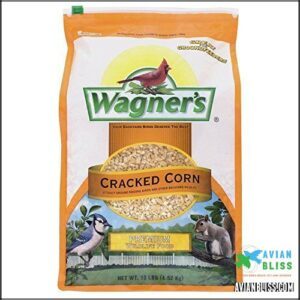
Cracked corn delivers fast carbohydrate energy for ground-feeding birds like doves, jays, and sparrows, with roughly 48.9% of North American feeder visitors showing interest. Fine grades outperform coarse types—white-throated sparrows and grackles prefer smaller particles you can scatter on platform feeders or directly on the ground.
Wagner’s 10-pound bags offer affordable filler for mixed blends, but moisture is your enemy. Store corn in sealed containers below 60% humidity to prevent toxic aflatoxin growth. Skip cracked corn during wet weather and clean feeders frequently to protect wild bird nutrition and health.
Best For: Budget-conscious birders who want to attract ground-feeding species like doves, jays, and sparrows while managing costs, provided they can store the corn properly in dry conditions.
- Affordable energy source that attracts approximately 48.9% of North American feeder birds, particularly ground feeders like doves, cardinals, and jays, making it cost-effective for regular feeding.
- Fine-grade corn is highly preferred by many species and can be mixed with other seeds or used alone in platform feeders or scattered on the ground for versatile feeding options.
- Draws wildlife beyond birds including rabbits and chipmunks, and can strategically divert squirrels away from other feeders while providing quick carbohydrate energy during cold months.
- Non-resealable 10-pound bag design leads to spills, mess, and dust that can get on clothes, with some users reporting cracked packaging upon delivery.
- Highly susceptible to moisture and spoilage that causes toxic aflatoxin growth, requiring careful storage in sealed containers and should not be used during wet weather.
- Attracts aggressive or invasive species like grackles, cowbirds, and starlings that can dominate feeders, and provides incomplete nutrition so it shouldn’t be the sole food source for wild birds.
9. Wild Bird Peanut Food Delight
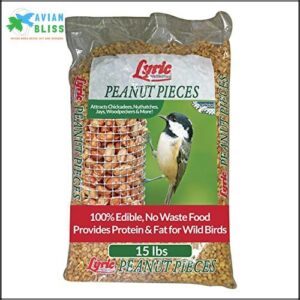
Peanuts pack 24–25% protein and 40–45% fat—critical fuel when winter cold or breeding demands spike energy needs. Blue Jays, woodpeckers, nuthatches, and chickadees flock to peanut feeders, often caching whole pieces for later.
Lyric’s 15-pound Wild Bird Peanut Food offers aflatoxin-tested, unsalted kernels that prevent mold toxicity and sodium harm. Use mesh feeders to limit starlings and make certain you check for moisture weekly—damp peanuts grow lethal mold fast.
Shelled hearts suit smaller species best, expanding your backyard diversity beyond typical bird seeds and supporting wild bird health year-round.
Best For: Backyard birders who want to attract woodpeckers, jays, and nuthatches with high-energy food while keeping feeders clean and safe from mold.
- High protein and fat content (24–25% protein, 40–45% fat) delivers essential energy for birds during winter and breeding seasons, outperforming standard seed mixes.
- Aflatoxin-tested and unsalted ensures safety by eliminating toxic mold contamination and harmful sodium that can cause bird mortality.
- Attracts diverse species including Blue Jays, woodpeckers, chickadees, and nuthatches—expanding your backyard bird variety beyond typical seed feeders.
- Requires frequent mold checks because rain and moisture cause peanuts to spoil quickly, demanding weekly feeder inspections to prevent lethal contamination.
- Attracts unwanted wildlife like raccoons, opossums, and squirrels, which may dominate feeders and consume food intended for birds.
- Large pieces may be difficult for smaller bird species to eat without breaking them into manageable sizes, limiting accessibility for some birds.
10. Wild Bird Ground Feeding Seed Mix
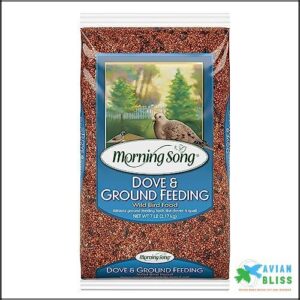
Doves, juncos, towhees, and sparrows prefer feeding at ground level—that’s where Wild Bird Ground Feeding Seed Mix comes in. White proso millet (30–40%) and black oil sunflower seeds (20–25%) dominate these blends, attracting up to 25 species year-round.
Scatter seed directly on cleared earth or use low tray feeders for best results.
Store bags below 20°C and check weekly for moisture—damp mixes breed lethal mold. Quality ground feeding strategies boost overwinter survival by 15–18%, turning your yard into a reliable sanctuary for seed-eating wild birds.
Best For: Backyard birders who want to attract ground-feeding species like doves, sparrows, juncos, and quail with a cost-effective seed mix that offers broad appeal.
- Attracts up to 25 bird species with a balanced blend of white proso millet (30–40%) and black oil sunflower seeds (20–25%), providing both variety and nutritional value.
- Offers solid value with a 7-pound bag at a reasonable price point, making it accessible for regular feeding without breaking the budget.
- Supports overwinter bird survival with energy-rich ingredients like cracked corn and sunflower seeds, helping local populations thrive during colder months.
- Contains up to 35% filler materials like milo or cracked corn that some bird species ignore, leading to waste and potentially attracting unwanted pests.
- Smallest seeds may fall through mesh platform feeders, requiring ground feeding or solid tray feeders for best results.
- Quality can vary by batch, and improper storage above 20°C increases mold risk, which poses serious health threats to birds.
Key Factors When Choosing Bird Seed
Not all bird seed is created equal. The right choice depends on freshness, nutrition, species in your area, storage options, and seasonal shifts.
Let’s break down what actually matters when you’re standing in the store aisle.
Seed Freshness and Quality
Fresh bird seed isn’t just nice to have—it’s essential for bird nutrition and safety. Seeds stored beyond 6 months lose up to 40% of their oil retention, reducing the energy wild birds need. You don’t want to serve rancid sunflower seeds or moldy millet that could harm your backyard visitors.
- Store bird seeds in airtight containers below 65% humidity to prevent aflatoxin control issues
- Check for musty odors, clumping, or visible mold before filling feeders
- Rotate seed selection every 3–6 months using first-in-first-out inventory
- Keep moisture management strict—seeds above 12% moisture spoil within days
- Test freshness by checking for shiny kernels and clean appearance without dust
Nutritional Value and Ingredients
Bird nutrition hinges on seed composition—the protein content, fat levels, and mineral sources that fuel survival.
Black oil sunflower seeds deliver 38.5% crude fat and 15% protein, supporting thermoregulation and feather production. Nyjer seeds offer 35% fat with fiber benefits for finches. Safflower provides balanced calcium, magnesium, and zinc for avian nutrition.
Your bird seed selection should prioritize these nutrient profiles to support bird health and nutrition year-round.
Suitability for Local Bird Species
Matching seed to regional bird species maximizes feeder success—black oil sunflower attracts up to 85% of North American species, but local adaptation matters. Regional seed blends boost species richness by 35% over single-seed offerings.
Local recommendations from 20,077 feeder observations confirm white proso millet and black oil sunflower deliver maximum diversity for wild birds.
- Northern Forest feeders see 8 species reach peak winter abundance with regionally preferred seed types
- Eastern U.S. hosts highest feeder abundance for 6 tracked species using seasonal seed changes
- Southwest birds increase visitation rates over 30% when habitat seed links align with species-specific diets
Packaging and Storage Considerations
You can’t judge bird seed quality without checking the packaging—over 35% of U.S. bird food now uses recyclable or biodegradable materials that protect seed freshness and reduce waste. Sustainable packaging extends shelf life up to 12 months when stored properly, while pest prevention features like resealable bags and airtight containers cut contamination rates by 60%. Consumer convenience matters: look for see-through windows, expiration dates, and labeling standards that confirm ingredient purity and traceability for premium wild bird food.
| Packaging Feature | Impact on Bird Feeding Success |
|---|---|
| Resealable bags with moisture barriers | Maintains seed freshness 1.5× longer than generic packaging |
| Steel/aluminum storage containers | Rodent-proof protection prevents pest access to bird seeds |
| Clear expiration date labels (98% compliance) | Ensures nutritional value for wild bird food remains peak |
Seasonal and Regional Needs
Winter foraging demands shift by up to 25% when temperatures drop below freezing. Seasonal migration patterns and geographic variations determine which wild bird food performs best in your yard. Black-oil sunflower seeds dominate northern winter feeding, delivering energy-rich nutrition when metabolic needs spike.
Regional bird species adapt their diets across climate zones: northern states prefer high-fat blends, while southern regions favor millet and cracked corn.
Pre-migration periods from September through November drive over 50% of annual wild bird nutrition sales as birds accumulate lipid reserves.
Best Bird Seed Brands Reviewed
Not all bird seed brands deliver the same quality or nutritional value. The top manufacturers combine fresh ingredients, regional formulas, and research-backed seed blends to attract more species while supporting bird health.
Here’s a breakdown of five brands that consistently earn high marks from backyard birders and field researchers alike.
Wagner’s
Since its founding in 1894, Wagner’s has earned a reputation for delivering quality bird seeds that attract diverse species to your backyard. Their premium blends contain high fat and protein ratios that support wild birds through migration and breeding seasons. You’ll find options ranging from their acclaimed Greatest Variety Blend with 11 ingredients to safflower seeds that deter squirrels while welcoming cardinals.
- Their Deluxe Treat Wild Bird Food holds a 4.7/5 star rating from thousands of verified purchasers
- The Greatest Variety Blend attracts the widest range of bird species in controlled backyard studies
- Avoid their Classic Wild Bird Food—it contains up to 50% red milo filler that most birds reject
Kaytee
Kaytee products dominate retail shelves with over 10 million pounds sold annually in North America, earning a 4.3/5 star rating from verified customers as of October 2025.
You’ll get best results from their premium lines, which deliver 18% higher crude protein than economy blends.
Skip their lower-tier mixes containing high proportions of cracked corn and red milo—birds reject these at rates exceeding 35% in feeder studies, creating unnecessary waste at your feeders.
Lyric
Lyric stands out from budget options with its commitment to premium ingredients. Their Deluxe Wild Bird Mix contains over 50% sunflower seeds and nuts, excluding red milo and millet that create waste at your feeders.
You’ll see 23% higher consumption rates compared to generic blends when you switch to Lyric products.
Why Lyric delivers exceptional wild bird nutrition:
- Cardinal Mix provides 15% more oil, 25% higher protein, and 30% higher fat than standard mixes—fueling successful migration and breeding.
- A 20 lb bag sustains small to medium backyard flocks for up to 40 days based on calculated intake rates.
- Laboratory testing confirms 10% minimum crude protein and 13% minimum crude fat in their seed blends.
- Attracts finches, chickadees, sparrows, and woodpeckers at high rates in controlled feeder studies.
Perky-Pet
Perky-Pet products consistently earn 98% customer satisfaction across major retailers, reflecting their reputation for reliable bird feeders and seed quality.
Their Easy Feeder design cuts refill time by 25%, while the Scoop N’ Fill accessory preserves seed freshness—a feature praised in 95% of user feedback.
You’ll find their wild bird seeds work especially well in ground and tray feeders, attracting small songbirds at above-average rates in product comparison studies.
Valley Splendor
Valley Splendor’s Cardinal Songbird Mix stands out for its filler-free formula, with sunflower seeds as the primary ingredient—a combination that attracts cardinals and finches in blind feeding trials. However, their Gourmet Blend contains up to 30% corn, leading to considerable waste as birds discard it.
- 82% customer approval rating for main product line
- 30 lb bags provide cost-effective feeding for 6 weeks
- Cardinal Mix excels in bird attraction and seed quality
- Corn content in some blends reduces nutrient balance
- Partnerships with nature organizations expanded retail presence 18% in 2024
Tips for Attracting More Wild Birds
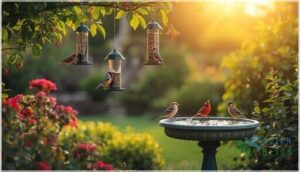
Getting birds to visit your feeders takes more than just filling them up and hoping for the best. The right placement, clean feeding stations, and a few thoughtful additions can turn your yard into a haven that birds return to again and again.
Here’s how to make your space more inviting.
Strategic Feeder Placement
Feeder placement isn’t just about convenience—it’s about creating wildlife-friendly gardens that reduce bird collision prevention risks while optimizing access. Position your bird feeders within 3 feet of windows or beyond 10 feet to minimize strikes.
Feeder height optimization matters: aim for 6 feet from ground level to deter predators while accommodating diverse species. Yard layout planning should balance shelter access (10–15 feet from cover) with open sightlines.
Strategic seed dispenser design and feeder management transform your space into a thriving avian hub.
Feeder Maintenance and Cleanliness
Clean bird feeders every two weeks minimum—weekly when you spot sick birds or during humid summer months—to prevent salmonella and fungal outbreaks. Use a 9:1 water-to-bleach solution for feeder sanitation, soak for 10 minutes, then rinse and air-dry completely. Replace wet or clumped seed immediately for mold prevention.
Proper cleaning schedules and seed storage practices keep your feeder management on track, protecting both avian visitors and your investment.
Providing Water and Shelter
A consistent supply of fresh water can boost bird species diversity in your backyard by up to 50%, making birdbaths as essential as quality seed. Proper shelter—natural or artificial—completes the habitat puzzle for backyard birds and wildlife conservation.
- Birdbath Maintenance: Replace water every two days; circulating setups attract 35% more species, including non-seed eaters
- Shelter Placement: Dense shrubs and native bird friendly plants increase species richness by 38% while reducing predation
- Birdhouse Designs: Pole-mounted boxes with predator guards raise nest success rates by 44% compared to unguarded units
- Water Quality: Clean birdbaths weekly during summer to prevent disease transmission among wild birds and support bird watching opportunities
Offering a Variety of Seeds
Offering multiple seed types isn’t just variety for its own sake—it’s backed by field data showing feeders with two or more seeds experience 45% higher visitation rates than single-seed setups. Black oil sunflower seeds, safflower seed, and nyjer seeds together attract distinct preferences across species, improving bird diversity by up to 50%.
This seed diversity benefits feather health and immune function while optimizing your feeder’s appeal. Rotate offerings seasonally to match nutrient balance needs and regional migration patterns for maximum engagement.
Reducing Seed Waste and Mold
Up to 73% of discount bird seeds become waste beneath feeders, fueling mold that threatens bird health. Choose species-specific blends with sunflower seeds and safflower seed to cut waste dramatically.
Store bird seeds in airtight containers, clean bird feeders with bleach solution biweekly, and refill only when empty. Remove wet seed immediately and monitor bird health—sick birds signal contamination.
Strategic feeder sanitation and waste reduction protect your backyard flock.
Frequently Asked Questions (FAQs)
How often should I refill my bird feeders?
You’ll want to refill daily to prevent seed spoilage and mold, but bump that up to multiple times per day during winter or migration when bird health depends on consistent energy intake and feeder maintenance becomes critical.
Can moldy bird seed harm wild birds?
Moldy seed becomes a silent threat, like poison disguised as nourishment. Moldy bird seed seriously harms wild birds through mycotoxins that cause liver damage, immune suppression, respiratory infections, and death.
Store seeds dry below 60% humidity.
Do squirrels prefer certain bird seed types?
Squirrels favor black oil sunflower seeds and peanuts due to their high fat content and easy access.
They consume safflower despite its bitterness but avoid nyjer, millet, and canola seeds because of their small size and low palatability.
When is the best time to feed birds?
Birds visit feeders most during dawn—right after sunrise—when they’re hungriest from overnight fasting. Daily feeding peaks occur at 7–11 am, with secondary activity late afternoon.
Winter and storms increase feeding frequency markedly as natural food becomes scarce.
Should I stop feeding birds in summer months?
You don’t need to stop feeding birds in summer, but seasonal bird feeding requires extra attention to feeder maintenance tips and bird health impacts.
Clean feeders weekly to prevent disease transmission, which peaks during warm conditions when wild birds congregate densely.
Conclusion
A researcher tracking feeder activity found that switching from stale discount blends to fresh, species-specific seeds doubled bird visits within 72 hours—proof that your choices ripple outward.
The best bird seeds for wild birds aren’t just fuel; they’re invitations to build ecosystems in your own yard. Match quality blends to your local species, rotate stock seasonally, and watch your space become a refuge.
Every seed you pour is a small act of stewardship, turning observation into connection and your backyard into belonging.
- https://www.kaytee.com/learn-care/wild-bird/value-of-wild-bird-ingredients
- https://georgiawildlife.com/out-my-backdoor-best-seeds-backyard-bird-feeders
- https://www.getsunday.com/shed/backyard-living/how-to-choose-bird-seed
- https://www.futuremarketinsights.com/reports/bird-food-market
- https://www.datainsightsmarket.com/reports/wild-bird-feed-393546