This site is supported by our readers. We may earn a commission, at no cost to you, if you purchase through links.
You can build the perfect birdhouse, but if you place it in the wrong spot, you won’t see a single feathered tenant. Location determines whether birds ignore your offering or raise their young there—and the difference often comes down to just a few feet. Birds assess height, predator exposure, weather protection, and flight access before committing to a nest site.
Most backyard birdhouses fail because they’re mounted where homeowners find them convenient, not where birds feel safe. The best location to place a bird house balances safety from raccoons and cats, shelter from afternoon sun and driving rain, and clear sightlines for nervous parents scanning for threats.
Get these factors right, and you’ll transform an empty box into a thriving nursery.
Table Of Contents
- Key Takeaways
- Key Factors for Birdhouse Placement
- Ideal Heights and Directions for Birdhouses
- Choosing The Right Spot in Your Yard
- Predator Prevention and Safety Strategies
- Top 10 Birdhouses for Perfect Placement
- 1. Audubon Glass Hummingbird Feeder
- 2. Audubon Medium Bird Feeder
- 3. Woodlink Bluebird House
- 4. Toysmith Build A Birdhouse Kit
- 5. Melissa Doug Wooden Birdhouse Craft Kit
- 6. Cartman Colourful Birdhouse Bird Feeder
- 7. Perky Pet Wren Birdhouse
- 8. Dawhud Hand Painted Bird House
- 9. Heath Outdoor Purple Martin Gourd
- 10. Nature’s Way Cedar Wren Birdhouse
- Frequently Asked Questions (FAQs)
- Conclusion
Key Takeaways
- Mount your birdhouse 5–12 feet high (species-dependent) with the entrance facing east or southeast to capture morning sun while avoiding harsh afternoon heat and prevailing winds.
- Install metal predator guards and pole baffles at least 5 feet up, then clear vegetation 6–10 feet around the entrance to eliminate ambush spots where cats and raccoons hide.
- Position birdhouses at least 40 feet from feeders and 15–20 feet from birdbaths to reduce disease spread and competition, while keeping them 15+ meters from human foot traffic to prevent nest abandonment.
- Balance partial shade with open flight paths by placing boxes near (but not directly under) trees or shrubs 35–100 feet away, giving birds escape cover without blocking sightlines they need to scan for threats.
Key Factors for Birdhouse Placement
Getting birds to move into your birdhouse isn’t just about building it—it’s about where you put it. The right spot protects nesting birds from threats while giving them everything they need to raise their young.
Let’s look at the key factors that make or break a birdhouse location. Following a solid guide to building bird nesting boxes ensures your structure is ready before you even think about placement.
Protection From Predators and Pests
Before anything else, you need to keep predators and pests at bay. Mount your birdhouse 8–12 feet high—it cuts predation by a noticeable margin. Add a metal predator guard around the entrance; it blocks raccoons and squirrels up to 75%. Clear vegetation within 10–15 feet to eliminate ambush spots. These predator protection methods create a secure nesting site where birds can thrive without constant threats to their safety. Ensuring the birdhouse is safe involves using scientific study methods to analyze potential threats.
- Install stainless steel entrance plates to prevent chewing damage
- Use baffles on poles to stop climbing mammals from reaching nests
- Remove old nests seasonally to reduce parasites and improve fledgling success
Shelter From Wind, Rain, and Sun
Once you’ve dealt with predators, turn your attention to weather protection—microclimate control matters just as much. Position your birdhouse where natural windbreak strategies like evergreen shrubs block harsh gusts while allowing airflow. Partial shade gives sun protection during peak afternoon heat, lowering interior temperatures by 10–15°F. A roof overhang provides rain shielding—aim for 2–3 inches of coverage. Adding a dripper or fountain can further enhance your setup by creating the sound and movement of flowing water that birds find irresistible.
After addressing predators, prioritize weather protection—position your birdhouse where evergreens block wind, partial shade cuts heat by 10–15°F, and roof overhangs shield rain
Climate adaptation through smart birdhouse placement, orientation, and location keeps nests dry and temperature-stable. To further deepen your understanding of environmental terms, consider exploring language patterns.
Visibility and Accessibility for Birds
Weather protection sets the stage, but visibility completes the nesting environment. Position your birdhouse where entrance design offers clear flight paths—birds need unobstructed bird sightlines to spot threats and navigate safely. Place a perch near the opening for easier landing.
Nesting visibility matters: moderate proximity to shrubs balances concealment with open sky access. Smart birdhouse location and thoughtful birdhouse placement tips boost occupancy and breeding success.
Minimizing Human Disturbance
Clear sightlines help, but quiet hours matter just as much. Position your birdhouse away from patios and walkways—that human buffer reduces nest abandonment.
Studies show noise reduction and visual barriers like hedges lower stress during incubation. Smart bird house placement tips create a calmer nesting environment.
Keep foot traffic at least 15 meters away for better bird safety and higher fledging success. Building a DIY birdhouse kit with your kids can teach them why that 15-meter buffer matters while they create a safe nesting spot.
Ideal Heights and Directions for Birdhouses
Getting the height and direction right can make or break your birdhouse’s success. Different species have their own preferences—some like to nest closer to the ground, while others want a loftier perch.
Let’s look at the specific measurements and orientations that’ll help you attract the birds you’re hoping for.
Recommended Heights for Common Species
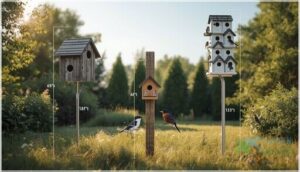
Each bird species has its own sweet spot regarding birdhouse height and placement. Getting this right can mean the difference between an empty box and a thriving family of nesting birds.
- Eastern bluebirds thrive in open yards with boxes mounted 5–7 feet high on poles—perfect for cavity-nesting birds that prefer meadow-like settings
- Chickadees and wrens feel at home 5–10 feet up near hedgerows, where tree proximity offers cover without crowding
- Purple martins need their multi-unit homes placed much higher, around 15–20 feet, to match their preference for open airspace
Best Directions for Entrances
You’ll want to point your birdhouse entrance toward the east or southeast—this orientation captures gentle morning sun while dodging harsh afternoon heat and prevailing west winds. An east-facing design helps prevent overheating, promotes nesting success, and naturally shields eggs from storms.
For predator avoidance, angle entrances away from cat perches and toward nearby shrubs that offer quick escape cover without inviting danger. For optimal results, choose from small bird houses designed with proper entrance sizing to ensure safety while discouraging larger predators.
Importance of Partial Shade and Natural Cover
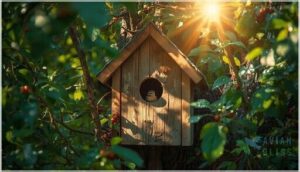
Partial shade transforms your birdhouse placement from an exposed box to a thriving habitat. Dappled light through nearby branches moderates cavity temperatures during heatwaves, reducing nest stress while lowering predation risk through bird concealment. Here’s why shade benefits matter:
- Microhabitat variation under foliage regulates humidity and keeps eggs cool
- Nest camouflage from vegetation structure deters aerial predators
- Natural insect populations near cover feed hungry nestlings
Choosing The Right Spot in Your Yard
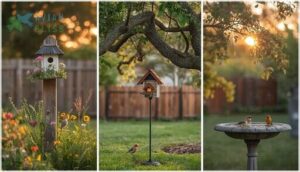
Your yard isn’t one-size-fits-all—different spots work better depending on what’s around you. Where you place your birdhouse matters just as much as the house itself, since feeders, trees, and even your neighborhood type all play a role.
Let’s break down how to pick the perfect location based on what you’re actually working with.
Distance From Feeders and Birdbaths
You’ll want smart birdhouse spacing to keep your feathered friends safe and happy. Position your birdhouse at least 40 feet from active feeders—this feeder proximity reduces competition and disease spread.
Keep it 15–20 feet from birdbaths for birdbath safety and nesting distance. This predator avoidance strategy is essential for birdhouse placement and design, making your backyard birding setup truly bird-friendly while supporting successful birdhouse installation.
Proximity to Trees, Shrubs, and Open Spaces
Think of your yard as a layered habitat—birds need structure, not just space. Vertical structure like trees or shrubs 35–100 feet away provides shelter and escape routes without blocking sight lines. Here’s what makes ideal nesting habitat for birdhouse placement:
- Partial shade from nearby foliage prevents overheating
- Open space near the entrance allows safe takeoff and landing
- Shrub cover within viewing distance facilitates foraging
- Clear entrance visibility reduces predator concealment risk
- Tree proximity offers perching spots without crowding
Whether you’re planning tree-mounted birdhouse or pole-mounted birdhouse installation, balance cover with openness for successful birdhouse placement and design.
Urban, Suburban, and Rural Placement Considerations
Your landscape type shapes everything about birdhouse installation. Urban planning demands mounting 6–10 feet high near protective tree cover, away from foot traffic—use baffles against climbing predators.
Suburban landscaping allows closer spacing to dense canopies with vegetation buffers for concealment.
Rural conservation requires greater heights, mature hedgerow proximity, and distance from pesticide-treated agriculture.
Each setting needs customized bird house placement for successful backyard birding and habitat restoration.
Predator Prevention and Safety Strategies
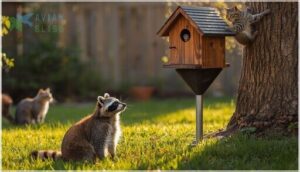
Even the best-placed birdhouse won’t help if predators can reach the eggs or chicks inside. You’ll need more than just height and distance—smart barriers make all the difference.
Here are three proven strategies that keep raccoons, cats, and squirrels away from your feathered tenants.
Using Baffles and Predator Guards
Baffles—cone-shaped or cylindrical shields—stop climbing predators like raccoons and snakes from reaching your nesting boxes. Metal entrance plates prevent squirrels from enlarging holes, protecting both entrance design and residents inside.
Install a predator guard at least five feet above ground on pole-mounted birdhouses for maximum bird safety. Proper guard installation means checking hardware quarterly—loose screws compromise your entire predator control methods.
Clearing Vegetation Around Birdhouses
Smart vegetation management around your birdhouse placement strategies creates bird safety zones while supporting nesting success. Keep a six-to-ten-foot clear radius around entrances—predator deterrence works best when cats and raccoons can’t hide in dense cover. Your nesting site selection should balance openness with habitat creation: trim nearby shrubs regularly but preserve scattered native plants beyond ten feet for natural shelter.
- Remove tall grasses within five feet to improve visibility and monitoring
- Prune shrubs to maintain accessible openings without removing all camouflage
- Skip herbicides near boxes to protect young birds and their insect food sources
Metal Entrance Plates for Squirrel Protection
After clearing vegetation, boost your birdhouse security with metal entrance plates—sturdy squirrel deterrents that prevent gnawing damage. Install aluminum or stainless steel plates around entrance hole protection points using corrosion-resistant screws. These predator guards stop squirrels from enlarging openings in nesting boxes.
Combine metal plate installation with baffles for layered predator guarding. Check your birdhouse placement strategies include plates sized to your target species’ entrance dimensions.
Top 10 Birdhouses for Perfect Placement
You’ve learned where to place your birdhouse—now it’s time to pick the right one. The best birdhouse combines sturdy construction with species-specific features that work with your placement strategy.
Here are ten excellent options that’ll give your feathered neighbors a safe, welcoming home.
1. Audubon Glass Hummingbird Feeder
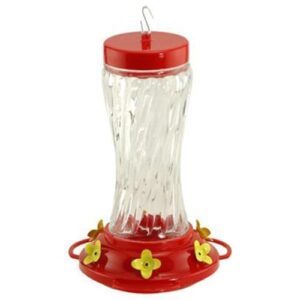
If you’re looking for a hanging bird house option to draw in hummingbirds, the Audubon Glass Hummingbird Feeder works beautifully. Hummingbird attraction happens naturally thanks to the red base.
You’ll get a 16-ounce nectar capacity—that’s plenty for several birds at once. Glass durability means you can actually see nectar levels without guessing, and the wide-mouth design makes refill ease a breeze.
For feeder maintenance, both glass and plastic parts clean up fast. Just position it with partial shade to prevent nectar spoilage.
| Best For | Birding enthusiasts who want an easy-to-maintain feeder with multiple feeding stations and clear nectar visibility. |
|---|---|
| Material | Glass and plastic |
| Primary Color | Red and clear |
| Target Species | Hummingbird |
| Easy Cleaning | Yes |
| Assembly Required | No |
| Outdoor Use | Yes |
| Additional Features |
|
- Holds 16 oz of nectar with 6 feeding ports and 3 perches so several hummingbirds can feed at once
- Glass reservoir lets you monitor nectar levels at a glance, and the wide-mouth base makes refilling and cleaning simple
- Red plastic attracts hummingbirds naturally and helps keep honey bees away from the feeder
- Plastic parts may fade or become brittle over time with sun exposure
- Some customers have reported quality control issues like damaged parts or cracks in the feeder
- Requires regular cleaning every two weeks in warm months to prevent mold and nectar spoilage
2. Audubon Medium Bird Feeder
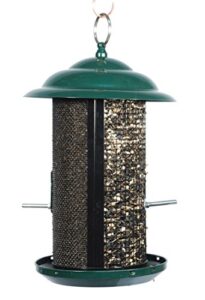
For variety in seed selection and bird attraction, the Audubon Medium Bird Feeder features dual compartments—up to 3 pounds total. You can mix sunflower seeds with nyjer to pull in finches and chickadees at the same hanging bird house station.
The hunter green metal top resists squirrels, offering solid predator deterrence without a baffle. Just note: feeder maintenance takes patience since the mesh openings run small during refills.
Hang it around 5 feet high for ideal birdhouse placement, and keep drainage holes clear after rain.
| Best For | Bird lovers who want to attract multiple species by offering two different seed types in one feeder while keeping setup simple with a ready-to-hang design. |
|---|---|
| Material | Metal |
| Primary Color | Beige and green |
| Target Species | Multiple species |
| Easy Cleaning | Challenging |
| Assembly Required | No |
| Outdoor Use | Yes |
| Additional Features |
|
- Dual compartments let you mix seed varieties, bringing in finches, chickadees, and other diverse species at one station
- Hunter green metal construction resists squirrels and weather without needing extra baffles
- Comes fully assembled and ready to hang at the recommended 5-foot height
- Small mesh openings make refilling tricky and messy, requiring extra care during feeder maintenance
- Drainage holes can clog easily, causing seed to collect and mildew in the tray after rain
- Keeping the feeder clean takes more effort due to the tight mesh design
3. Woodlink Bluebird House
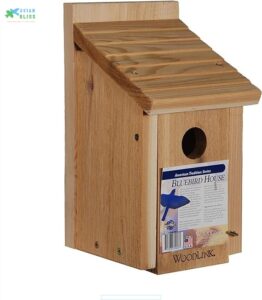
Cedar durability meets species specificity in the Woodlink Bluebird House—engineered with a 1½-inch entrance hole that welcomes eastern bluebirds while shutting out starlings. Mount this pole-mounted bird house 5–6 feet high facing east in open bluebird habitat, at least 100 feet from dense trees.
The front panel swings open for quick nest checks, boosting nesting success through smart birdhouse design. Add a baffle below to perfect your bird house placement. Just keep an eye on the roof seal—a few owners noticed gaps after seasons of weather.
| Best For | Backyard birders wanting to attract eastern bluebirds with a ready-to-mount cedar house that’s easy to clean and monitor. |
|---|---|
| Material | Wood |
| Primary Color | Natural wood |
| Target Species | Bluebirds |
| Easy Cleaning | Yes |
| Assembly Required | No |
| Outdoor Use | Yes |
| Additional Features |
|
- Species-specific 1½-inch entrance hole keeps out starlings and larger birds while welcoming bluebirds
- Front panel swings open for easy nest checks and seasonal cleaning without disturbing the mounting
- Made from kiln-dried cedar that holds up to weather better than pine alternatives
- Roof seal may develop gaps over time, requiring occasional maintenance or weatherproofing
- Door mechanism can leave small openings that might let in rain or drafts
- No built-in perch below the entrance, which some birders prefer for fledgling support
4. Toysmith Build A Birdhouse Kit
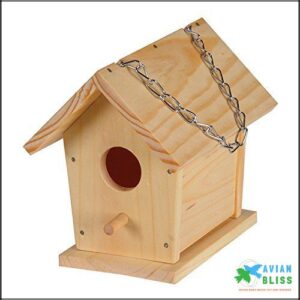
The Toysmith Build A Birdhouse Kit combines educational value with hands-on fun, offering pre-cut wooden construction pieces that teach kids basic carpentry while creating a functional habitat. You’ll guide young builders through DIY projects that blend craft activities with real-world birdhouse design.
Assembly tips note that the 5x7x4-inch finished pole-mounted birdhouse is small for actual nesting. Four paint colors allow creativity to shine, but experienced birders suggest treating it as a hanging birdhouse craft first, with serious birdhouse placement considered later. The lightweight wooden construction won’t withstand heavy storms.
| Best For | Parents or teachers looking for an afternoon craft project that introduces kids to basic building concepts, though it works better as a decorative piece than a real bird habitat. |
|---|---|
| Material | Wood |
| Primary Color | Natural wood |
| Target Species | Small birds |
| Easy Cleaning | Yes |
| Assembly Required | Yes |
| Outdoor Use | Yes |
| Additional Features |
|
- Complete kit with pre-cut wood pieces, four paint colors, and hanging cord makes it easy to jump right into the project
- Helps kids develop hand-eye coordination and fine motor skills while exploring their creative side through painting
- Works well for group activities like scout meetings or classroom projects where multiple kids can build together
- The 5x7x4-inch size is too small for most birds to actually nest in, limiting its practical use
- Paint quality and brushes aren’t great, so you might want to grab better supplies if you care about the finished look
- Lightweight wood construction won’t hold up to rain or wind if you hang it outside long-term
5. Melissa Doug Wooden Birdhouse Craft Kit
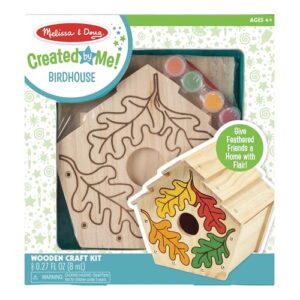
The Melissa & Doug Wooden Birdhouse Craft Kit turns birdhouse assembly into quality family time, with pre-sanded wooden construction that makes DIY projects accessible for ages 4 and up. You’ll work with four paint options and brushes to customize this 12.6-inch craft kit, though field observations suggest treating it primarily as art rather than permanent birdhouse placement.
The included entrance hole runs small for most cavity-nesters. Before converting your hanging birdhouse to pole-mounted or tree-mounted status, seal painted surfaces with non-toxic weatherproofing for outdoor durability.
| Best For | Families with young kids (ages 4-7) looking for a creative, screen-free craft project that builds fine motor skills and doesn’t require advanced DIY experience. |
|---|---|
| Material | Wood |
| Primary Color | Natural wood |
| Target Species | Small birds |
| Easy Cleaning | Yes |
| Assembly Required | Yes |
| Outdoor Use | Yes |
| Additional Features |
|
- Pre-sanded wood pieces and simple assembly make it easy for beginners, with four paint colors and a brush included for immediate decorating
- Encourages hands-on creativity and quality family time while developing fine motor skills through painting and construction
- Sturdy wooden construction offers a more traditional, durable feel compared to plastic alternatives
- Entrance hole is too small for most birds, so it works better as wall art than a functional birdhouse
- Needs extra weatherproofing materials (sealant, outdoor paint) if you want it to last outside
- Price has increased recently, and you’ll need adult supervision for assembly with younger kids
6. Cartman Colourful Birdhouse Bird Feeder
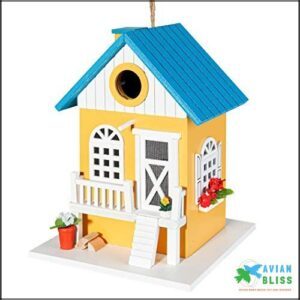
At 7.09 inches cubed, the Cartman Colourful Birdhouse Bird Feeder splits duty between feeder designs and nesting potential—though hanging bird house placement works better than pole-mounted birdhouse setups given its 0.5-kilogram weight. You’ll appreciate the yellow colour options and garden decor appeal, but bird attraction hinges on proper birdhouse placement: mount 5–8 feet high with east-facing entry for shade.
The sliding door simplifies cleaning, yet ventilation concerns and lightweight birdhouse materials suggest this works best as seasonal garden art rather than year-round cavity-nester housing.
| Best For | Bird lovers who want an affordable decorative accent piece for their garden or patio that can attract small songbirds while adding a pop of color to outdoor spaces. |
|---|---|
| Material | Wood and metal |
| Primary Color | Yellow |
| Target Species | Small birds |
| Easy Cleaning | Yes |
| Assembly Required | No |
| Outdoor Use | Yes |
| Additional Features |
|
- Compact 7-inch design with colorful yellow finish and garden-themed cutouts adds cheerful decor to any outdoor area
- Sliding back door makes it super easy to clean and maintain throughout the season
- Lightweight at 0.5 kg, so it’s simple to hang and reposition as needed
- Lightweight construction may struggle in windy conditions and could need extra securing
- Design flaws like poor ventilation and the perch placement might attract predators instead of helping birds
- Bottom screen and overall build quality raise concerns about long-term durability and bird safety
7. Perky Pet Wren Birdhouse
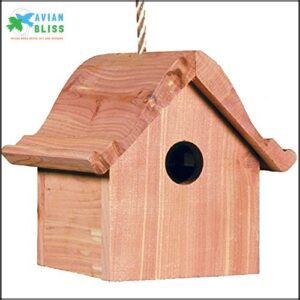
Perky-Pet’s Dutch-style wren habitat pairs compact 6.5-inch construction with a 1.5-inch opening—ideal wren behavior research shows these cavity-nesters need tight squeeze-holes for safety. You’ll want hanging bird house placement at 5–8 feet in partial shade, facing east to dodge afternoon heat.
The fir birdhouse materials handle weather fairly well, though some units split at the roof—check yours before mounting. Birdhouse maintenance stays simple with that removable top.
For nesting success, keep this bird house 15 feet from feeders and trim shrubs within three feet to block prowling cats while still offering wren escape cover.
| Best For | Bird lovers who want to attract small nesting wrens and chickadees to their yard with a charming, easy-to-maintain birdhouse. |
|---|---|
| Material | Wood (Fir) |
| Primary Color | White |
| Target Species | Wrens and chickadees |
| Easy Cleaning | Yes |
| Assembly Required | No |
| Outdoor Use | Yes |
| Additional Features |
|
- Compact 1.5-inch opening perfectly sized for wrens while keeping larger birds and predators out
- Removable roof makes seasonal cleaning quick and hassle-free
- Comes ready to hang with attached rope, so you can set it up in minutes
- Durability is hit-or-miss—some customers report roofs splitting or breaking apart
- Construction can feel a bit rickety, with rough edges or quality inconsistencies
- No guarantee birds will move in right away, as placement and timing matter
8. Dawhud Hand Painted Bird House
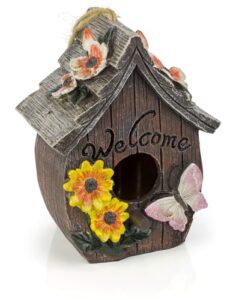
Dawhud’s butterfly-adorned polyresin design weighs just 1.15 pounds—light enough for jute-cord hanging but sturdy enough to resist light rain when you pick the right birdhouse orientation.
That 6″H x 7″W cavity suits chickadees and wrens perfectly, two small bird species that’ll tolerate painted designs if you follow proper birdhouse placement: east-facing at 6–8 feet, sheltered under an eave.
Birdhouse maintenance couldn’t be easier with that bottom clean-out plug. Some reports note durability concerns, so inspect mounting hardware monthly and consider switching to wire if you’re using this as a tree-mounted birdhouse option.
| Best For | Gardeners who want a decorative piece that might attract small birds like wrens or chickadees, but who understand it’s more about aesthetics than serious bird housing. |
|---|---|
| Material | Resin |
| Primary Color | Multi-color |
| Target Species | Small birds |
| Easy Cleaning | Yes |
| Assembly Required | No |
| Outdoor Use | Yes |
| Additional Features |
|
- Lightweight polyresin construction makes it easy to hang anywhere with the included jute cord
- The removable bottom plug simplifies seasonal cleaning between nesting periods
- Comes fully assembled and ready to hang right out of the box
- Durability is questionable—multiple reports mention it falling apart or being too flimsy for long-term outdoor use
- Birds may not actually use it, and the small size limits which species will even consider it
- The jute hanging cord and clean-out plug aren’t built to last and will likely need replacing
9. Heath Outdoor Purple Martin Gourd
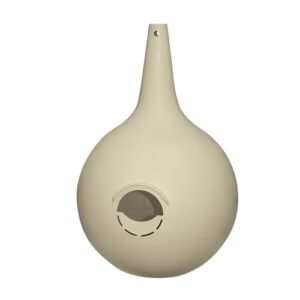
Heath’s 4-pack offers flexibility—the purple martin gourd design can be mounted solo on a pole-mounted birdhouse system or clustered with existing colonies. Starling-resistant holes ensure nesting birds’ safety, while the off-white plastic reflects heat, a vital feature for birdhouse orientation in open martin habitats.
Mount the birdhouse 10–15 feet high, where these aerial hunters prefer wide-open skies and no nearby branches. Some users may find assembly challenging, so it’s recommended to dry-fit pieces before installation day.
After each season, clean the gourd—its 2-piece design makes maintenance quick, encouraging nesting preferences year after year.
| Best For | Backyard birders who want a flexible, heat-reflective nesting solution for purple martins with starling protection built in. |
|---|---|
| Material | Plastic |
| Primary Color | White |
| Target Species | Purple Martins |
| Easy Cleaning | Yes |
| Assembly Required | Yes |
| Outdoor Use | Yes |
| Additional Features |
|
- Starling-resistant entrance holes keep unwanted birds out while welcoming purple martins
- Off-white plastic reflects heat to keep nests cooler in summer sun
- Two-piece design makes post-season cleaning simple and fast
- Assembly can be tricky—pieces may not snap together smoothly without modifications
- No access hole for checking on chicks without disturbing the nest
- Lightweight plastic may struggle in high winds compared to sturdier materials
10. Nature’s Way Cedar Wren Birdhouse
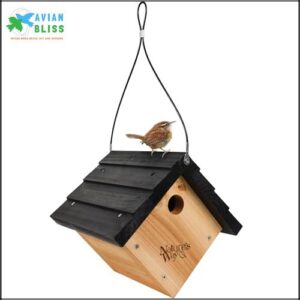
Nature’s Way’s cedar wren birdhouse combines cedar durability with a 1⅛-inch entrance—perfectly sized for species compatibility with wrens and chickadees while excluding competitors. The weather-resistant wood withstands years of exposure, reducing birdhouse maintenance demands.
For ideal nesting success, mount this pole-mounted birdhouse 6–10 feet high in partial shade near dense shrubs—ideal wren habitat. The easy clean-out door simplifies seasonal care, encouraging nesting birds to return. Some find the hanging cable swings excessively, so consider a sturdy post for stable birdhouse placement instead.
| Best For | Backyard birders who want to attract wrens and chickadees with a low-maintenance, durable birdhouse that’ll last through multiple nesting seasons. |
|---|---|
| Material | Cedar wood |
| Primary Color | Brown |
| Target Species | Wrens and chickadees |
| Easy Cleaning | Yes |
| Assembly Required | No |
| Outdoor Use | Yes |
| Additional Features |
|
- Cedar construction and stainless-steel hardware hold up well against weather without rotting or rusting
- The 1⅛-inch entrance keeps out bigger birds while welcoming wrens and chickadees
- Easy clean-out door makes seasonal maintenance quick and simple
- Hanging cable tends to swing too much in wind, making placement less stable
- Bottom clasp doesn’t always stay tight, which can affect durability
- May need extra accessories like a metal portal protector for best results
Frequently Asked Questions (FAQs)
How often should I clean my birdhouse?
Clean your birdhouse once yearly before breeding season—usually late winter or early spring. Remove old nests, debris, and parasites using mild soap and water, then let it dry completely before rehanging.
Can I paint or stain my birdhouse?
Yes—but choose water-based, non-toxic paint or stain to protect your birdhouse materials without harming nestlings. Stick with earth-tone color choices, allow full curing before birdhouse installation, and refresh the finish during routine birdhouse maintenance every few years.
When is the best season to install birdhouses?
Install your birdhouse in early spring—February through April in most temperate climates. This seasonal timing aligns with bird migration patterns and nesting cycles, giving nesting birds time to discover and claim your birdhouse placement before breeding season peaks.
Should I add nesting materials inside the birdhouse?
Skip adding nesting material—most cavity-nesting birds gather their own for nest box success. Preloaded substrates risk harboring mold and parasites, compromising bird health and natural habitat selection. Keep interiors bare for bird safety.
How do I attract specific bird species?
Choose species-specific feeders and bird seed selection that match your target birds’ preferences.
Add bird-friendly plants and nesting box design suited to regional birding guides.
Time everything to match migration patterns for peak bird species attraction.
Conclusion
If you build it, they’ll come—but only if “it” sits in the best location to place a bird house. Height, direction, predator guards, and natural cover aren’t optional details; they’re the difference between empty wood and occupied nurseries.
Mount your birdhouse where birds feel secure, not where it looks decorative. Check sightlines, add baffles, and give parent birds the shelter they need. Do that, and you’ll hear chicks chirping by spring.