This site is supported by our readers. We may earn a commission, at no cost to you, if you purchase through links.
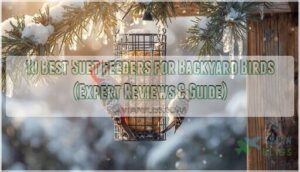
Woodpeckers cling vertically to tree bark for hours without fatigue—a feat that demands remarkable energy reserves. That’s why high-fat suet becomes essential fuel for these and dozens of other backyard species, especially when insects disappear during winter months.
Yet not all suet feeders deliver on their promise. Flimsy cages collapse under aggressive feeding, smooth surfaces leave birds struggling for grip, and poor ventilation turns fresh suet rancid within days.
The best suet feeder solves these problems with thoughtful design: durable construction that withstands weather and wildlife, strategic perching surfaces that accommodate natural feeding behaviors, and materials that maintain suet freshness across seasons.
Choosing the right model means understanding which features matter most for the species you’re hoping to attract and the conditions in your yard.
Table Of Contents
- Best Suet Feeders for Backyard Birds
- 1. Kettle Moraine Cedar Suet Bird Feeder
- 2. C&S Suet Bird Feeder Basket
- 3. Cedar Suet Plug Log Feeder
- 4. Woodlink Large Premier Bird Feeder
- 5. Birds Choice Pileated Woodpecker Suet Feeder
- 6. Birds Choice Recycled Suet Feeder
- 7. Songbird Essentials Upside Down Suet Feeder
- 8. Squirrel Proof Suet Bird Feeder
- 9. More Birds Double Suet Feeder
- 10. Kettle Moraine Woodpecker Suet Feeder
- Types of Suet Feeders Explained
- Key Features to Consider in Suet Feeders
- How to Choose The Right Suet Feeder
- Benefits of Using Suet Feeders
- Proper Placement and Maintenance Tips
- Environmental and Safety Considerations
- Frequently Asked Questions (FAQs)
- What is the 5 7 9 rule for bird feeders?
- What is the best way to feed suet?
- Can I sprinkle cayenne pepper on suet?
- Do squirrels bother suet feeders?
- What is the best suet for bird feeders?
- Do birds like upside down suet feeders?
- Where is the best place to put a suet feeder?
- Are suet feeders good?
- How do you clean a suet feeder effectively?
- What types of birds are deterred by suet?
- Conclusion
Best Suet Feeders for Backyard Birds
Choosing the right suet feeder can make all the difference in attracting woodpeckers, nuthatches, and other suet-loving birds to your backyard. You’ll find feeders in different styles, from classic cages to tail-prop designs that support larger birds.
For a detailed breakdown of the best options, check out this guide to suet feeders for clinging birds.
Here are ten top-rated options that balance durability, bird-friendly features, and ease of use.
Whether you’re looking for classic stone designs or modern metal stands, you’ll find trusted retailers and buying tips for pedestal bird baths to help you choose the right one.
1. Kettle Moraine Cedar Suet Bird Feeder
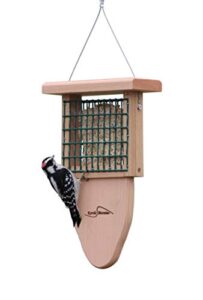
The Kettle Moraine Cedar Suet Feeder brings solid construction and thoughtful design to your backyard birds. Its tail prop assists woodpeckers as they feed, which directly aligns with woodpecker preferences for stable perching.
You can also select seed types that attract woodpeckers to complement the suet and draw even more species to your feeder.
You’ll appreciate the cedar wood benefits—natural resistance to rot and insects means this feeder weathers the seasons beautifully. The stainless steel cable and vinyl-coated mesh offer durability, while the straightforward suet feeder design makes refilling simple.
At $24.50, it’s a reliable choice for attracting chickadees, nuthatches, and your favorite backyard birds without breaking the bank.
| Best For | Backyard birders who want a durable, budget-friendly feeder that specifically attracts woodpeckers, chickadees, and nuthatches with minimal setup. |
|---|---|
| Material | Cedar Wood |
| Suet Capacity | 1 cake |
| Target Species | Woodpecker, chickadee, nuthatch |
| Made in USA | Yes |
| Weather Resistant | Yes |
| Ease of Refill | Easy |
| Additional Features |
|
- Cedar and stainless steel construction holds up well against weather and won’t rot easily
- Tail prop gives woodpeckers a stable perch, making it easier for them to feed comfortably
- Easy to hang, refill, and take down without any complicated steps
- Too narrow to fit two suet cakes side by side if you want to offer more food at once
- Suet cake can shift around inside and rattle, which might spook some birds
- Squirrels can potentially pry open the top and steal the suet if you have a lot of them around
2. C&S Suet Bird Feeder Basket
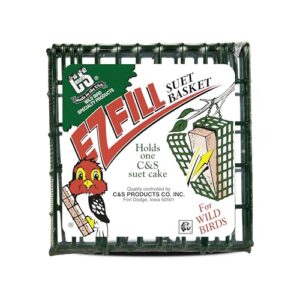
The C&S Suet Bird Feeder Basket offers a simple, effective bird feeder design that gets the job done. Its vinyl-coated wire construction delivers feeder durability season after season, while ten perches let multiple backyard birds feed comfortably at once.
You’ll find the side-opening design makes easy refill systems a reality—just pop in an eight-ounce suet cake and you’re set. This basket works well with various suet cake options, attracting woodpeckers, chickadees, and nuthatches.
For straightforward bird attraction tips, pairing quality suet with this feeder consistently brings rewarding results to your yard.
| Best For | Backyard birders who want a straightforward, budget-friendly way to offer suet to woodpeckers, nuthatches, and chickadees year-round. |
|---|---|
| Material | Wire |
| Suet Capacity | 1 cake |
| Target Species | Wild birds |
| Made in USA | No |
| Weather Resistant | Yes |
| Ease of Refill | Side-opening |
| Additional Features |
|
- Ten perches let multiple birds feed at once without crowding
- Side-opening design makes refilling quick and hassle-free
- Vinyl-coated wire holds up well through different seasons
- Not squirrel-proof, so larger critters can raid the suet
- Chain may be flimsy and break over time
- Cleaning the wire basket can be tedious, especially when suet gets messy
3. Cedar Suet Plug Log Feeder
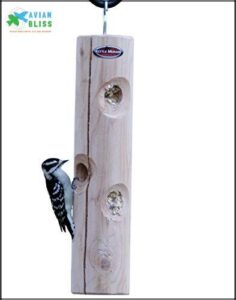
If you’re looking for a more natural feeding experience, the Cedar Suet Plug Log Feeder brings birds closer to how they’d forage in the wild. This solid Northern White Cedar log measures 16 inches long with four pre-drilled holes, designed specifically to hold suet plugs that attract woodpeckers, chickadees, and nuthatches.
If you’re exploring different feeder styles for your backyard, log feeders like this offer a rustic option that blends naturally into wooded settings.
The rustic design features intentional cracks that create bonus feeding spots as the cedar ages. You won’t find suet included, but the open hook makes hanging simple. Just remember the holes don’t go all the way through, so refills come more often than you might expect.
| Best For | Bird lovers who want to attract woodpeckers, chickadees, and nuthatches with a natural cedar log that mimics how these birds feed in the wild. |
|---|---|
| Material | Cedar Wood |
| Suet Capacity | 4 suet plugs |
| Target Species | Woodpecker, chickadee, nuthatch |
| Made in USA | Yes |
| Weather Resistant | Yes |
| Ease of Refill | Easy |
| Additional Features |
|
- Made from solid Northern White Cedar that’s naturally weather-resistant and built in the USA
- Four pre-drilled holes create multiple feeding spots, and the rustic cracks add extra space as the wood ages
- Easy to hang and refill with suet plugs, giving you a simple way to watch birds feed from different angles
- Suet plugs aren’t included, so you’ll need to buy them separately or make your own
- Holes only go about 3/4 of the way through, which limits how much suet fits and means more frequent refills
- The design can let water seep into the suet, potentially causing mold issues if you don’t stay on top of maintenance
4. Woodlink Large Premier Bird Feeder
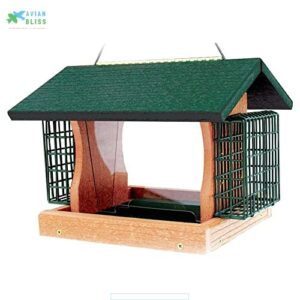
Moving from the rustic charm of cedar logs, the Woodlink Large Signature Bird Feeder stands out for feeder durability and bird attraction. Its weather-resistant, recycled plastic construction and powder-coated metal screen bottom mean you won’t worry about sun or rain.
With a suet capacity for two cakes plus 5.5 pounds of seed, you’ll see woodpeckers, chickadees, and nuthatches stopping by. Easy cleaning is built in, thanks to the hinged roof, making this suet bird feeder a reliable choice for backyard birding.
| Best For | Bird enthusiasts who want a large-capacity feeder that’s easy to maintain and attracts a variety of species like woodpeckers, chickadees, and nuthatches. |
|---|---|
| Material | Plastic |
| Suet Capacity | 2 cakes |
| Target Species | Various bird species |
| Made in USA | Yes |
| Weather Resistant | Yes |
| Ease of Refill | Hinged roof |
| Additional Features |
|
- Holds plenty of food with space for 5.5 pounds of mixed seed and 2 suet cakes, reducing how often you need to refill
- Hinged roof makes filling and cleaning straightforward, so maintenance doesn’t feel like a chore
- Built from up to 90% recycled plastic with a powder-coated metal screen, making it durable and weather-resistant
- Some users found the roof hinge sits off-center, which can be a minor annoyance during refills
- Suet holders don’t always latch completely and can’t be removed for thorough washing
- You’ll need to buy the pole mount separately if you don’t plan to hang it from a tree
5. Birds Choice Pileated Woodpecker Suet Feeder
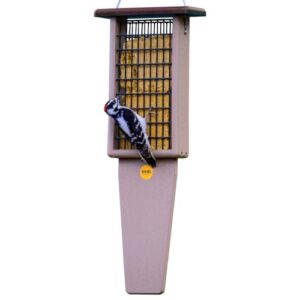
When woodpecker attraction is your goal, this feeder brings larger species to your yard. Built from recycled poly lumber, it holds two suet cakes and includes an extra-long tail prop so pileated woodpeckers can brace themselves comfortably.
The vinyl-coated grid resists wear, and refill ease comes from the lift-off top. At 22.5 inches tall, it’s among the more durable suet bird feeders for backyard birding, though the mesh openings can allow some suet waste if you’re not careful.
| Best For | Birders who want to attract pileated woodpeckers and other large woodpeckers with a durable, eco-friendly feeder that holds multiple suet cakes. |
|---|---|
| Material | Recycled Poly Lumber |
| Suet Capacity | 2 cakes |
| Target Species | Woodpeckers, finches |
| Made in USA | Yes |
| Weather Resistant | Yes |
| Ease of Refill | Easy-refill top |
| Additional Features |
|
- Extra-long tail prop gives pileated woodpeckers the support they need to feed comfortably
- Recycled poly lumber construction means it’s built to last through all weather conditions
- Holds two suet cakes at once, so you don’t have to refill as often
- Large mesh openings can lead to suet waste as pieces fall through
- Higher price point compared to basic suet feeders on the market
- Tail prop surface may be too smooth for some birds to grip properly
6. Birds Choice Recycled Suet Feeder
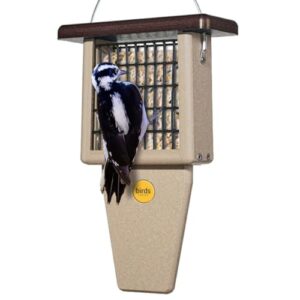
Eco-friendly construction meets practical function in this model, which uses recycled materials without compromising performance. You’ll appreciate how it holds one standard suet cake behind a vinyl-coated grid, giving woodpeckers and chickadees the access they need for successful bird feeding.
The tail prop accommodates larger species, while the easy-refill top simplifies maintenance. Reviewers in suet feeder reviews note its lightweight design and straightforward installation, though you may want hot pepper suet to discourage squirrels.
Regular cleaning every two weeks keeps suet feeders safe and hygienic, and you’ll find detailed seed feeding tips and maintenance schedules to complement your year-round feeding routine.
| Best For | Bird lovers who want an eco-friendly feeder that accommodates woodpeckers and other clinging birds with a simple, durable design. |
|---|---|
| Material | Recycled Poly Lumber |
| Suet Capacity | 1 cake |
| Target Species | Birds, woodpeckers, chickadees, finches |
| Made in USA | No |
| Weather Resistant | Yes |
| Ease of Refill | Easy-refill top |
| Additional Features |
|
- Made from recycled plastic that stands up to weather without breaking down
- Built-in tail prop gives woodpeckers a comfortable perch while they eat
- Top-loading design makes refilling quick and mess-free
- Squirrels can access the suet unless you use hot pepper varieties
- Hanging cord attachment may wear out over time
- Larger animals like bears can damage the lightweight construction
7. Songbird Essentials Upside Down Suet Feeder
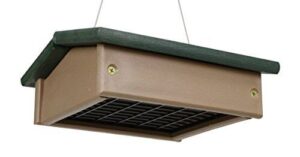
This feeder’s upside-down design targets clinging birds like nuthatches and woodpeckers while reducing competition from larger species. Its metal and vinyl construction is durable across seasons, and the vertical orientation naturally encourages the feeding behaviors these species already use on tree trunks.
Available in driftwood or hunter green, it holds standard suet cakes and offers straightforward refilling. While starlings may still attempt access, pairing it with hot pepper suet cake varieties enhances your bird attraction tips for selective backyard birding.
| Best For | Birdwatchers who want to attract woodpeckers, nuthatches, and chickadees while keeping starlings and grackles away from their suet. |
|---|---|
| Material | Metal/Plastic/Vinyl |
| Suet Capacity | 1 cake |
| Target Species | Chickadee, nuthatch, woodpecker |
| Made in USA | No |
| Weather Resistant | Yes |
| Ease of Refill | Easy |
| Additional Features |
|
- Upside-down design naturally excludes larger perching birds while letting clinging species feed comfortably
- Built tough with metal and vinyl materials, plus a 100-year guarantee that shows the manufacturer stands behind it
- Easy to refill and clean, with standard suet cake sizing that you can find anywhere
- Starlings and other larger birds might still figure out how to access it, especially if they’re determined
- Birds need time to adjust to the upside-down feeding style, so you might not see action right away
- Suet can spoil quickly if the feeder gets rained on, so placement matters
8. Squirrel Proof Suet Bird Feeder
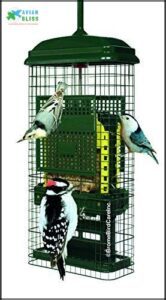
Ever watched a squirrel outsmart your bird feeder? The Brome Squirrel Buster Suet Feeder changes the game with its weight-activated spring and two-stage Predator Guard.
This Squirrel Proof Suet Feeder uses tough metal construction and a clever crumb port for mess-free suet protection. Squirrel Deterrents like the adjustable mechanism keep your suet safe, saving you money and frustration.
While some larger birds might still sneak a snack, you’ll find Bird Feeder Security and easy cleaning built right in for year-round peace of mind.
| Best For | Backyard birders tired of squirrels demolishing their suet supply who want a durable feeder that actually works without constant refilling. |
|---|---|
| Material | Metal |
| Suet Capacity | 2 cakes |
| Target Species | Woodpecker |
| Made in USA | No |
| Weather Resistant | Yes |
| Ease of Refill | Detachable components |
| Additional Features |
|
- Weight-activated spring mechanism genuinely keeps squirrels out while letting woodpeckers, chickadees, and other clinging birds feed freely
- Holds two suet cakes with a clever crumb port that reduces waste and keeps things tidy underneath
- Built from weatherproof metal that won’t crack, rust, or get chewed through after a few seasons
- Costs more upfront than basic suet cages, though you’ll save on suet that doesn’t get stolen
- Larger woodpeckers or magpies might still figure out how to grab a bite depending on their size
- Takes a week or two for birds to get comfortable with the new setup if they’re used to open feeders
9. More Birds Double Suet Feeder
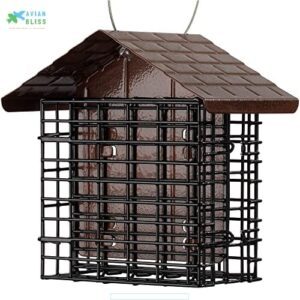
Looking for a suet bird feeder that doubles your feeding capacity and stands up to tough weather? The More Birds Double Suet Feeder offers solid Feeder Durability with its powder-coated steel cage and weather guard roof, keeping suet dry and appealing.
You’ll attract woodpeckers, nuthatches, and chickadees, especially when you experiment with Suet Variety.
Maintenance Tips are simple—easy-open locks mean quick refills and cleaning. For practical Backyard Birding Tips, hang it at eye level to boost Bird Attraction and enjoy close-up views.
| Best For | Backyard birders who want to attract woodpeckers and clinging birds while minimizing refills and protecting suet from rain and snow. |
|---|---|
| Material | Metal |
| Suet Capacity | 2 cakes |
| Target Species | Woodpeckers, clinging birds |
| Made in USA | No |
| Weather Resistant | Yes |
| Ease of Refill | Double-locking closure |
| Additional Features |
|
- Holds two suet cakes at once, so you refill less often and can offer different flavors to attract more species
- Weather guard roof keeps suet dry and reduces waste from spoilage during wet conditions
- Powder-coated steel construction feels sturdy and holds up well to outdoor use over time
- Not squirrel-proof—the large grid spacing lets squirrels reach through and grab suet
- Smaller than some buyers expect based on photos, which may limit use by larger bird species
- Can be vulnerable to strong winds or curious bears if not properly secured or positioned
10. Kettle Moraine Woodpecker Suet Feeder
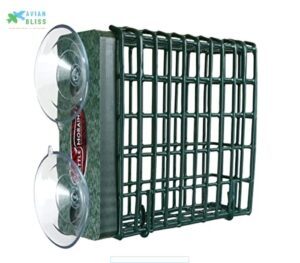
Want to watch woodpeckers up close while you sip your morning coffee? The Kettle Moraine Woodpecker Suet Feeder brings bird viewing to life with its window mounting design and two powerful suction cups.
This compact unit holds one standard suet cake in vinyl-coated wire mesh, making woodpecker attraction simple. Made from recycled milk jugs, it’s built for feeder durability despite occasional suction concerns.
You’ll appreciate how suet feeder designs like this turn your window into a front-row seat for chickadees, nuthatches, and woodpeckers.
| Best For | Bird lovers who want close-up views of woodpeckers and other suet-loving birds right from their window without needing yard space. |
|---|---|
| Material | Recycled Milk Jugs |
| Suet Capacity | 1 cake |
| Target Species | Woodpecker, chickadee, nuthatch |
| Made in USA | No |
| Weather Resistant | Yes |
| Ease of Refill | Easy |
| Additional Features |
|
- Window mounting with strong suction cups gives you a front-row seat to watch woodpeckers, chickadees, and nuthatches up close
- Made from recycled milk jugs with vinyl-coated wire mesh that holds up well in different weather conditions
- Compact size fits one standard suet cake and works great for apartments, homes, or even classroom windows
- Suction cups can lose their grip over time, especially in extreme heat or cold, requiring reattachment
- Not completely squirrel-proof, so determined critters might find a way to the suet
- Only fits standard suet cakes, so you’re limited on food variety compared to larger feeders
Types of Suet Feeders Explained
Suet feeders come in several distinct styles, and each one works a bit differently for the birds visiting your backyard. Some designs favor larger woodpeckers with tail support, while others help smaller songbirds access the food more easily.
Understanding these main types will help you pick the right feeder for the species you’re hoping to attract.
Tail Prop Suet Feeders
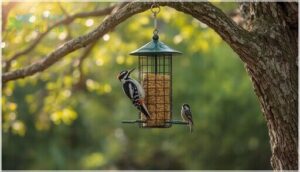
If you’re aiming for woodpecker attraction and effective bird feeding tips, tail prop suet feeders are a solid choice. These suet bird feeders offer tail prop benefits that help birds feed comfortably:
- A horizontal bar assists woodpeckers, nuthatches, and chickadees as they cling vertically
- Most accept standard suet cake options in durable metal or cedar frames
- Weather-resistant suet feeder designs last through multiple seasons
- Mounting at 5–6 feet reduces squirrel interference while keeping birds visible
The Natures Way TailProp Suet Bird Feeder exemplifies this practical design.
Suet Cake Feeders
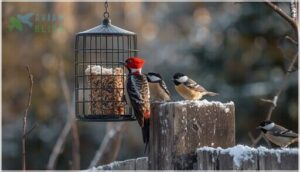
Suet cake feeders hold standard 5-inch squares in metal cages or wooden frames, making refills quick and straightforward. These suet bird feeders attract woodpeckers, chickadees, and nuthatches by letting birds cling to mesh sides while they peck through. You’ll find designs ranging from simple wire cages to squirrel-proof suet feeder models with adjustable guards.
Winter bird nutrition depends on secure feeder mounting options that keep suet cakes accessible during harsh weather.
Suet Plug Feeders
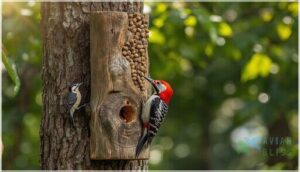
If you’re drawn to log feeder designs, suet plug feeders offer a fresh twist compared to classic suet cakes. Wooden log feeders use drilled holes for suet plug materials, making refills a breeze and attracting woodpeckers, nuthatches, and chickadees. These suet bird feeders blend natural looks with practical feeder maintenance. Imagine:
- Clinging woodpeckers
- Easy plug refills
- Squirrel proof suet feeder options
- Multiple flavors for bird attraction.
For best results, consider using suet feeder types that cater to the specific birds you want to attract.
Upside-Down Suet Feeders
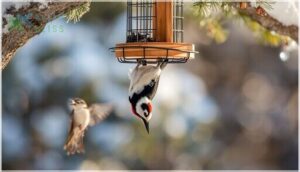
When woodpeckers and nuthatches visit your yard, upside-down designs let them dine while clinging underneath—just like they do on tree trunks. These bird feeders discourage larger competitors, keeping suet available for your favorite acrobats.
Choose from cedar, metal, or recycled plastic suet feeder materials for durability. Mounting options include poles or branches, while squirrel-proof bird feeders with baffles protect your winter feeding strategies and boost bird-watching success.
Combination Seed and Suet Feeders
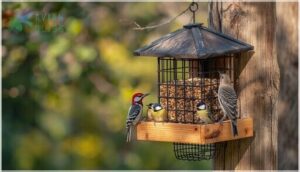
You’ll love dual-purpose feeder designs that blend seed cups with suet cages in one sturdy unit. These bird feeders attract insectivores like woodpeckers alongside seed-loving chickadees and sparrows, boosting daily visits year-round.
Cedar or recycled plastic construction withstands weather while independent compartments simplify cleaning.
Choose squirrel-proof bird feeders with baffles to protect your suet varieties and enhance wildlife management through smart feeding strategies.
Suet Cages and Mesh Bags
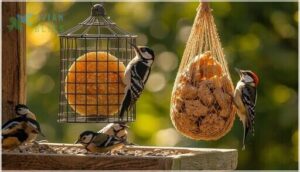
You’ll find metal or plastic enclosures perfect for holding standard suet cakes, while flexible mesh bag materials—like cotton or poly blends—cradle slabs with ease. Both cage designs reduce waste and mount on hooks or poles for flexible suet placement tips.
Galvanized steel and recycled plastic boost durability, and simple cage maintenance keeps bird feeding habits thriving.
For extra protection, consider a squirrel-proof suet feeder like the Brome Squirrel Buster Suet Feeder.
Open Tray Suet Feeders
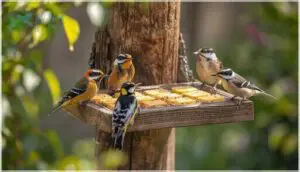
A tray feeder design offers birds a buffet-style experience—wide, flat, and open for easy suet placement. You’ll notice ground-feeding species flocking in, but hygiene and wildlife safety matter. With open tray suet bird feeders, keep these in mind:
- Frequent cleaning boosts feeder hygiene
- Elevated placement deters predators
- Suet spoils quickly in wet weather
- Larger birds dominate feeding.
Considering the right suet feeder types is essential for attracting the desired bird species.
Key Features to Consider in Suet Feeders
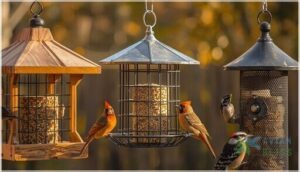
Choosing the right suet feeder involves more than just picking the first one you see at the store. The materials, design, and protective features all play a role in how well the feeder caters to your backyard birds.
Let’s look at the key considerations that will help you find a feeder that works for both you and your feathered visitors.
Feeder Materials (Cedar, Metal, Recycled Plastic)
The material you choose for your suet feeder can make the difference between a feeder that lasts for years and one that falls apart after a single season. Cedar durability stands out for its natural resistance to insects and decay, making options like the Kettle Moraine Cedar Suet Feeder a smart long-term investment.
Metal strength offers superior weather protection, while recycled plastic provides an eco-friendly alternative that won’t splinter or rot.
Capacity and Cake Size
Knowing your feeder’s capacity helps you plan suet refills and keeps your backyard visitors well-fed. Most suet feeders accommodate standard cakes between 1.5 and 2.5 inches in diameter, holding anywhere from 8 to 16 ounces of suet depending on design.
Consider these capacity guidelines:
- Single-cake feeders hold 4–5 ounces per fill
- Multi-cake models store 12–16 ounces total
- Plug logs accommodate 6–12 ounces across multiple ports
- High-traffic yards benefit from larger feeder volumes to reduce refill frequency
Squirrel and Predator Protection
You’ll want predator deterrents and squirrel proofing if your feeder sees daily raids. Squirrel proof bird feeders use weight-activated doors or cage-style openings that close off access when heavier animals land.
Metal baffles mounted above the feeder block vertical climbers, while sturdy poles with smooth surfaces discourage ground predators. These features guarantee bird safety without compromising feeder security or your birdwatching experience.
Ease of Refilling and Cleaning
Refill designs matter just as much as squirrel barriers. Look for wide openings or lift-off tops that let you swap suet cakes without fumbling—especially helpful when your hands are cold.
Smooth, non-porous feeder materials simplify cleaning, and removable trays speed up sanitation. Regular maintenance schedules prevent mold and keep visiting birds healthy, so choose models that don’t require tools to disassemble.
Weather Resistance and Durability
Cedar feeders like the Kettle Moraine Cedar Suet Feeder resist decay for five to seven years, while recycled plastic models offer comparable weatherproof performance under UV exposure. Powder-coated metal components reduce rusting by 60% in humid climates, and sealed joints prevent water ingress during freezing temperatures.
Look for UV-stabilized finishes that maintain fade resistance and rot prevention, ensuring your suet bird feeders—including squirrel proof feeders—withstand seasons of woodpecker visits and rain.
How to Choose The Right Suet Feeder
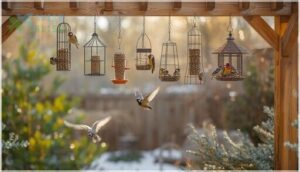
Choosing the right suet feeder isn’t just about picking the first one you see—it’s about matching the design to the birds you want to attract and the conditions in your yard. You’ll need to think about which species visit your area, what the weather’s like throughout the year, and how much you’re willing to spend.
Let’s walk through the key factors that’ll help you make the best choice for your backyard.
Matching Feeder Type to Bird Species
Understanding bird behavior is essential when selecting suet feeders for your backyard. Woodpecker preferences lean heavily toward vertical surfaces like log feeders or sturdy cake holders, while nuthatches and chickadees thrive with upside-down or open-tray designs.
Consider these bird-watching essentials:
- Woodpeckers need rigid frames preventing cake breakage
- Nuthatches favor quick-access vertical grip surfaces
- Small passerines prefer mesh bags and open cages
- Squirrel proof feeders protect smaller species
- Cavity nesters benefit from cylinder-style plug feeders
Match feeder designs to your target bird species for ideal suet placement success.
Seasonal Considerations (Summer Vs. Winter)
Suet feeders perform differently across seasons, and your backyard bird community changes with them. During winter birding, high-fat formulations resist freezing while supporting birds’ elevated caloric demands.
Summer feeding requires shaded placement—temperatures above 70°F can melt suet, attracting pests and spoiling quickly.
Choose harder, wax-blended suet for winter and monitor melt-prone varieties during warmer months for best seasonal bird feeding success and safe temperature control.
Feeding Goals: Attracting Woodpeckers, Chickadees, Nuthatches
Your target bird species shape which suet bird feeders you’ll need. Woodpeckers require sturdy, vertical-access feeders near tree trunks with high-fat suet containing nuts—they’ll visit more often when you reduce competition from smaller birds.
Chickadees prefer open-tray or cage-style suet feeders at 4–6 feet height with fresh, high-fat cakes.
Nuthatches favor mesh-style feeders near thick branches, responding well to suet mixed with peanuts or cracked corn for winter endurance.
Budget Vs. Premium Models
You’ll find suet feeders ranging from 10 to 60+ USD, with budget models offering basic functionality and premium versions delivering rot-resistant woods, powder-coated metals, and squirrelproof features.
Material quality and durability tests show higher-priced bird feeders last longer in harsh weather, though both tiers attract woodpeckers and chickadees equally well.
Cost benefits emerge when you consider capacity, maintenance ease, and warranty coverage in your price comparison.
Benefits of Using Suet Feeders
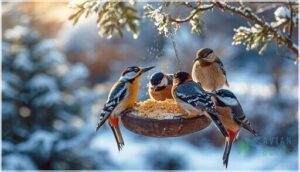
Suet feeders aren’t just another backyard accessory—they’re a vital tool for supporting your feathered visitors year-round. These specialized feeders deliver high-energy nutrition that helps birds thrive, especially when natural food sources run low.
Suet feeders are essential for providing birds with the year-round, high-energy nutrition they need when natural food is scarce
Let’s look at the key benefits that make suet feeders worth adding to your backyard setup.
High-Energy Nutrition for Birds
Your backyard visitors burn energy at astonishing rates—chickadees alone need calories equal to nearly 40% of their body weight daily. Suet cakes deliver that punch, packing roughly 75-100 kilocalories per ounce through dense fat content.
This energy-rich food maintains muscle and feather health, especially when temperatures drop. Suet feeders become lifelines, offering wild bird diets the avian nutrition science confirms they need most.
Attracting Diverse Bird Species
You’ll notice different feeder styles bring in their own crowd—upside-down models attract woodpeckers and nuthatches more reliably, while tail-prop designs welcome chickadees and titmice. Mixing formats boosts bird species diversity in your yard, offering varied perching options that help with attracting backyard birds across seasons.
- Woodland bird attraction improves when you place multiple suet bird feeders at different heights near natural cover
- Feeder placement strategies matter—sheltered spots increase persistence and detection rates across species
- Suet formulation effects show insect-enriched cakes draw insectivorous visitors during migration, enhancing bird watching opportunities
Supporting Birds in Harsh Weather
When temperatures plunge, your suet feeders become lifelines for wintering birds struggling to maintain body heat. High-fat suet nutrition replenishes bird energy reserves depleted by cold weather feeding demands, with chickadees and nuthatches burning calories twice as fast in harsh weather adaptations. Proper placement reduces wind exposure, guaranteeing consistent winter bird care throughout your backyard bird watching season.
| Winter Challenge | How Suet Helps |
|---|---|
| Subfreezing temperatures | High-fat content aids thermoregulation |
| Energy depletion | Replenishes calories burned during cold snaps |
| Limited natural food | Provides consistent nutrition when insects are scarce |
| Predator exposure | Protected designs ensure safe feeding access |
Enhancing Backyard Birdwatching
You’ll transform your backyard birdwatching when suet feeders draw woodpeckers, nuthatches, and chickadees within arm’s reach of your window. These bird-friendly gardens, enhanced with native plantings, create vibrant backyard habitats where you can conduct informal bird behavior studies.
Regular suet bird feeders provide reliable observation points for wildlife conservation, turning everyday moments into enchanting encounters with species you’d rarely spot otherwise.
Proper Placement and Maintenance Tips
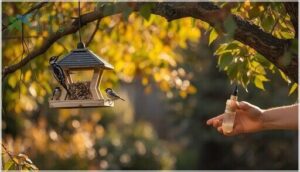
Getting the most out of your suet feeder isn’t just about choosing the right model—it’s also about where you put it and how you care for it. Proper placement keeps birds safe and makes feeding more convenient for you, while regular maintenance ensures your feathered visitors stay healthy.
Let’s walk through the essential tips that’ll help your suet feeder work beautifully year-round.
Ideal Feeder Height and Location
To keep your suet feeders safe and welcoming, position them 5 to 6 feet above ground—this sweet spot protects visiting birds from ground predators while making refills manageable. Smart feeder placement means considering your whole yard layout and how birds naturally move through space.
- Place feeders 10 to 15 feet from launch points like tree trunks to discourage squirrels
- Position 4 to 6 feet from branches for quick escapes during bird watching sessions
- Choose partly shaded spots where suet won’t melt in direct sun
Cleaning and Hygiene Best Practices
Once your feeder is well-positioned, regular cleaning protects the birds you care for. Wash feeders with warm, soapy water every two weeks during peak seasons, scrubbing all crevices to prevent suet mold and bacteria. Rinse thoroughly, air dry completely, and sanitize nearby perches to reduce parasite transfer—simple hygiene protocols that safeguard bird health while keeping your feeding station inviting.
| Cleaning Task | Frequency |
|---|---|
| Wash with soap and water | Every 2 weeks |
| Discard old suet | Before each refill |
| Sanitize perches | Monthly |
| Inspect for damage | Every cleaning |
| Deep clean and air dry | Bi-weekly |
Protecting Feeders From Squirrels and Pests
After keeping your feeder clean, you’ll want sturdy pest control methods in place. Squirrel deterrents like metal baffles and reinforced cages turn ordinary suet bird feeders into squirrel-proof feeders that safeguard your investment. Position bird feeders 5–8 feet high and 10–15 feet from structures to improve feeder security:
- Use metal or reinforced baffles
- Mount 5–8 feet off the ground
- Keep 10–15 feet from buildings
- Choose cage-style designs for wildlife management
Combining Suet Feeders With Other Feeders
Pairing suet bird feeders with seed or nectar stations creates feeder synergy that boosts bird diversity by 20–40% in mixed feeding setups. Space your outdoor bird feeders 6–10 feet apart to reduce competition at each suet station.
This wildlife harmony approach works especially well with squirrel proof designs, letting woodpeckers and chickadees thrive while multiple species enjoy your backyard buffet.
Environmental and Safety Considerations
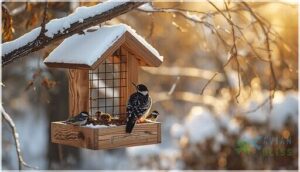
Choosing the right suet feeder means thinking beyond just attracting birds—it’s about keeping them safe and protecting the environment around your backyard.
From selecting non-toxic materials to understanding how weather affects suet quality, these considerations help you create a feeding station that benefits wildlife without causing unintended harm.
Here’s what you need to know to make responsible choices for your feathered visitors.
Sustainable and Recycled Feeder Materials
Choosing eco-friendly feeders made from recycled materials or sustainable woods like cedar aids wildlife conservation efforts and bird-friendly gardening practices. Products such as the Woodlink Going Green Top Feeder use post-consumer plastics, reducing environmental impact.
Green feeder options with reclaimed timber or powder-coated metals last longer outdoors, benefiting both your backyard birds and broader gardening for wildlife goals.
Safe Suet Ingredients for Birds
You’ll want to look for natural suet cakes with 50–70% animal fat and 30–50% peanut meals, seeds, or mealworms. Avoid products with artificial preservatives, high salt content, or excessive seasonings, as these can harm bird nutrition over time.
Unsalted rendered beef fat mixed with corn kernels makes excellent bird-friendly suet recipes, supporting healthy fat content without ingredient safety concerns.
Minimizing Waste and Local Wildlife Impact
Thoughtfully, you can turn your feeding station into a model of waste reduction and wildlife conservation. Sustainable feeders crafted from recycled wood or renewable materials lower your environmental footprint, while bird-friendly gardening practices keep non-target species at bay.
- Choose refillable suet packaging to cut down on plastic waste
- Install squirrel-proof feeders with chew-resistant doors to prevent seed spillage
- Size your suet cakes correctly to minimize leftovers and microbial growth
- Clean feeders regularly to avoid attracting opportunistic wildlife
- Select eco-friendly, sustainably sourced cedar or recycled-plastic models
Weather and Seasonal Safety Tips
Storm preparation and seasonal placement go hand in hand when you’re managing suet feeders. Heat protection becomes critical above 90°F—switch to fat-free formulations and ventilated designs. Winter feeding demands higher-fat suet and secure mounting against wind gusts. Monitor forecasts and remove feeders during severe thunderstorms to protect both birds and equipment.
| Season/Condition | Feeder Maintenance and Cleaning |
|---|---|
| Summer Heat | Replace suet with mold-resistant varieties; install away from heavy shade |
| Winter Storms | Secure feeders firmly; use high-fat formulations that resist freezing |
| Heavy Rain | Cover or remove during severe weather to prevent water damage |
| High Winds | Check mounting hardware; position feeders in sheltered locations |
| Year-Round | Clean weekly with diluted bleach solution; inspect for weather resistance |
Frequently Asked Questions (FAQs)
What is the 5 7 9 rule for bird feeders?
Picture your feeder as a castle, guarded by the 5 7 9 rule: set it 5 feet up, 7 feet from launch points, and 9 feet below branches.
This clever yard design helps with squirrel control and bird safety.
What is the best way to feed suet?
Place suet feeders 5–6 feet high near cover to attract woodpeckers and chickadees.
Use fresh suet cakes suited to the season, clean feeders monthly with hot soapy water, and refill before they’re completely empty.
Can I sprinkle cayenne pepper on suet?
Sprinkling cayenne on suet isn’t recommended—loose powder can irritate birds’ eyes and yours. For Cayenne Suet Safety, mix hot pepper into the suet itself.
Squirrel Deterrents work better when capsaicin is embedded, not dusted.
Do squirrels bother suet feeders?
Yes, squirrels frequently raid suet feeders, especially simple cage designs. Field observations show gray squirrels consume substantial suet within hours.
Weight-activated mechanisms, baffles, and inverted feeder designs offer effective squirrel-proof protection for your bird feeders.
What is the best suet for bird feeders?
High-quality suet for bird feeders combines 100% beef fat with peanut butter or mealworms, delivering concentrated energy that attracts woodpeckers and chickadees while resisting summer melt better than dairy-based alternatives.
Do birds like upside down suet feeders?
Many suet-loving species thrive at upside-down feeders. Woodpeckers, chickadees, and nuthatches readily cling to inverted designs, while starlings and grackles often avoid them—making these bird-friendly feeders excellent for attracting your backyard favorites selectively.
Where is the best place to put a suet feeder?
Your suet feeder works best at 5 to 6 feet high, about 10 feet from cover like shrubs or trees.
This height keeps predators away while giving birds clear visibility and safe approach paths.
Are suet feeders good?
Absolutely. Suet feeders deliver essential high-energy fat that sustains wild bird health during cold weather, attracting woodpeckers, chickadees, and nuthatches.
Enhancing feeder safety is achieved through proper design and bird-friendly gardening practices.
How do you clean a suet feeder effectively?
As the saying goes, “Cleanliness is next to birdliness.” Disassemble your suet feeder, scrub away suet residue with Cleaning Tools, soak in a bleach solution for Disinfection Methods, rinse thoroughly, and air-dry for maximum Bird Health.
What types of birds are deterred by suet?
Ground-foraging finches and nectar-specialized hummingbirds generally avoid suet feeders due to dietary preferences.
Starlings may be deterred by upside-down designs, while species lacking strong clinging abilities often ignore feeders positioned away from nearby perches.
Conclusion
Choosing the best suet feeder isn’t just a flight of fancy—it’s about matching design to the birds you want to welcome. Whether you need tail prop support for woodpeckers, upside-down protection from starlings, or weather-resistant cedar for year-round feeding, the right feeder transforms your backyard into a reliable refueling station.
Start with one quality model, observe which species arrive, then expand your setup to serve the unique needs of your feathered community.
- https://acehardware.dttq.net/c/264145/611504/9988?subId1=BV-RU&u=https%3A%2F%2Fwww.acehardware.com%2Fdepartments%2Foutdoor-living%2Fbird-and-wildlife-supplies%2Fbird-feeders%2F8137978
- https://www.extension.iastate.edu/smallfarms/make-your-own-birdseed-suet-cakes
- https://www.ourrecipesforsuccess.com/suet-recipe/
- https://www.audubon.org/
- https://www.birds.cornell.edu/