This site is supported by our readers. We may earn a commission, at no cost to you, if you purchase through links.
 The best time of day for bird watching in the UK is clearly early morning, between sunrise and 10 AM.
You’ll catch birds at their most active as they hunt for breakfast and defend their territory.
The dawn chorus creates nature’s own symphony, making identification easier.
Evening hours, roughly two hours before sunset, offer a second-best window when birds emerge for evening feeds.
Midday can be surprisingly quiet, though raptors often soar on thermal currents during warmer afternoons.
Weather plays a vital role too – overcast days keep birds active longer than blazing sunshine.
But timing isn’t everything in successful birding adventures, and considering the dawn chorus and evening hours can greatly enhance the experience, as birds are most active during these early morning periods.
Table Of Contents
- Key Takeaways
- Morning Melodies
- Midday Magic
- Evening Enchantment
- Seasonal Shifts
- Weather Wonders
- Gearing Up
- Birding Buddies
- Frequently Asked Questions (FAQs)
- How early should one arrive for the dawn chorus?
- Are there any nocturnal birds to watch for?
- What precautions should be taken during inclement weather?
- Are there any bird species specific to urban areas?
- How does one attract birds to their backyard?
- What time do nocturnal birds become active?
- How does moon phase affect nighttime birdwatching?
- Do urban areas have different optimal times?
- When should beginners start their first birdwatching trip?
- How long should each birdwatching session last?
- Conclusion
Key Takeaways
- You’ll get the best bird watching results during early morning hours between sunrise and 10 AM when birds are most active hunting for food and defending their territory through the dawn chorus.
- You can catch a second peak of activity during evening hours, roughly two hours before sunset, when birds emerge for evening feeds and prepare for nightfall routines.
- You’ll find that seasonal timing shifts dramatically throughout the year – spring’s dawn chorus starts earlier than winter’s delayed activity, while autumn migrations create exceptional evening viewing opportunities.
- You’ll discover that weather conditions like overcast days keep birds active longer than bright sunshine, and post-rain periods offer intense foraging activity as insects emerge.
Morning Melodies
Kick off your morning bird watching adventure before sunrise to catch the legendary Dawn Chorus. This optimal birding time transforms quiet mornings into nature’s concert hall, where robins, wrens, and blackbirds perform their Territory Songs with unmatched enthusiasm.
You’ll discover Early Feeders like finches and tits frantically searching for breakfast after their overnight fast. Dawn bird watching offers the best time birding for Songbird ID, as these feathered performers are less wary and more vocal.
During these peak bird activity hours, you’ll witness territorial disputes, courtship displays, and feeding frenzies that define successful birdwatching experiences. The songs are louder in the morning because of ideal acoustic conditions.
Midday Magic

While most birds rest during the heat of midday, this quieter period offers you excellent opportunities to spot soaring birds of prey like buzzards and kestrels that use warm thermal currents to hunt.
You’ll also catch migrating flocks passing overhead when visibility is at its clearest, making midday perfect for observing species that many birdwatchers miss during the busier dawn hours.
Migratory Birds
Midday brings incredible opportunities to witness UK bird migration in action.
Nearly 17 million birds use stopover habitats across Britain annually, making best time birding around noon ideal for spotting passage migrants.
You’ll observe fascinating navigation strategies as species like Bar-tailed Godwits refuel during epic journeys.
Climate impacts increasingly disrupt traditional migration patterns, creating unpredictable but rewarding sightings for patient observers.
Some species, like the Chaffinch, are year-round UK residents and don’t migrate.
Birds of Prey
When thermal currents rise during midday heat, you’ll witness spectacular raptor hunting techniques in action.
These majestic predators use thermal soaring to conserve energy while scanning for prey below. Ospreys, also known as, skilled "fish hawks", are also active during this time.
Prime raptor-watching locations:
- Open moorlands and fields where kestrels hover with precision
- Woodland edges for circling buzzards and sparrowhawks
- Coastal headlands ideal for peregrine falcon identification
Quality binoculars help distinguish species and observe their fascinating nesting habits across UK birding locations.
Evening Enchantment

Evening birdwatching offers you a second peak of activity as songbirds prepare for nightfall and waterfowl begin their evening routines.
You’ll witness the shift from day-active species to nocturnal birds, creating unique opportunities to observe both diurnal and crepuscular behaviors in a single session.
Songbirds
Evening’s dawn chorus echoes fade as garden songbirds prepare for dusk activity.
You’ll spot thrushes and robins displaying unique feeding habits near shelter sites, gathering insects before nightfall.
Their nesting behavior shifts during this quieter period, making observation easier.
Songbird migration patterns emerge at dusk when species like warblers move between roosts, offering excellent bird activity viewing opportunities.
Birdsong is most vibrant during the International Dawn Chorus Day.
Waterfowl
Beyond songbirds, waterfowl like ducks and geese become the evening stars at UK wetlands.
Dawn and dusk offer the best time to witness their spectacular movements between roosting and feeding sites.
During goose migration season, you’ll observe incredible formations overhead.
These wetland habitats showcase diverse duck diets and fascinating swan behavior, making waterfowl conservation efforts truly meaningful for dedicated birders.
Seasonal Shifts
You’ll notice that ideal birdwatching times shift dramatically throughout the year, with each season bringing unique patterns of avian activity.
Spring’s dawn chorus peaks earlier than winter’s delayed morning activity, while autumn migrations create exceptional evening viewing opportunities that don’t exist in summer months, showcasing unique patterns of avian activity.
Spring Awakening
Something magical happens when winter releases its grip across the UK. Spring awakening transforms bird watching into pure theater, with dawn offering the best time to witness nature’s grand reopening.
Dawn breaks the winter spell, turning British skies into nature’s most spectacular stage show.
Nesting Season kicks into high gear as Migration Patterns deliver spectacular arrivals:
- Territorial Displays intensify at dawn as males claim prime real estate
- Mating Rituals unfold during morning hours when energy levels peak
- Budding Blooms attract insects, drawing insectivorous migrants to gardens
- Courtship songs create symphonies that echo through dusk
- April-May delivers peak diversity as summer visitors join residents
This bird watching season rewards early risers with front-row seats to avian drama. Birds exploit the season by feasting at stopovers, fueling up for their breeding activities.
Summer Splendor
Summer breeding season transforms UK birdwatching into pure magic.
Dawn reveals songbirds at peak territorial displays, with males delivering powerful performances to attract mates.
Insect abundance fuels nesting activities throughout diurnal hours.
You’ll spot juvenile birds taking tentative flights from hedgerows.
Dusk offers family foraging scenes as parents teach fledglings essential survival skills.
- Peak territorial singing occurs during early morning hours
- Juvenile birds venture from nests in late afternoon warmth
- Summer migration brings diverse species to breeding grounds
- Evening family foraging provides heartwarming wildlife encounters with diverse species and essential survival skills
Autumn Artistry
As autumn migration transforms the UK landscape, you’ll discover a foraging frenzy unlike any other season.
Birds gorge on berries and nuts before winter’s arrival, creating spectacular viewing opportunities.
Dawn remains prime time, but afternoons reveal intensive feeding behaviors as species prepare for harsh months ahead.
| Time of Day | Key Species | Autumn Behaviors |
|---|---|---|
| Early Morning (6-8am) | Robins, Blackbirds, Thrushes | Territory establishment, berry foraging |
| Mid-Morning (8-10am) | Jays, Nuthatches, Woodpeckers | Acorn caching, nest abandonment cleanup |
| Afternoon (2-4pm) | Redwings, Fieldfares, Starlings | Fall migrations, flocking behaviors |
| Late Afternoon (4-6pm) | Finches, Tits, Wrens | Weather changes adaptation, fat storage |
| Dusk (6-8pm) | Corvids, Pigeons, Doves | Roosting preparation, autumn abundance feeding |
Winter Wonders
Winter transforms UK birdwatching into a magical experience. Cold adaptations drive birds to seek shelter and concentrate around bird feeders, creating prime viewing opportunities.
Frozen habitats reveal stunning plumage changes as arctic visitors arrive.
- Winter feeding stations attract flocks of finches and titmice
- Shelter seeking birds gather in hedgerows and gardens
- Frozen habitats host rare northern species like redwings
- Plumage changes showcase winter coats on resident birds
Weather Wonders

Weather conditions dramatically influence bird behavior and your chances of successful sightings throughout the day.
You’ll discover that rainy spells often drive birds to seek shelter and forage more actively afterward, while sunny periods create ideal opportunities for observing preening behaviors and increased thermal activity that attracts birds of prey.
Rainy Revelations
When rain starts falling, you’ll discover fascinating rainy behavior patterns.
Birds demonstrate remarkable bird survival instincts by seeking shelter in dense woodlands and hedgerows. This shelter seeking creates concentrated viewing opportunities – the best time for unique sightings during storms.
Post-rain food foraging intensifies as insects emerge, making these UK birding times incredibly productive for dedicated watchers.
| Weather Stage | Bird Activity | Bird Watching Tips |
|---|---|---|
| During Rain | Shelter seeking | Check dense vegetation |
| Light Drizzle | Increased foraging | Focus on open areas |
| Post-Storm | Peak activity surge | Visit woodland edges |
Sunny Serenades
Bright conditions create perfect visibility for spotting sunbathing birds during their essential feather maintenance routines.
You’ll witness sunlight preening behaviors as species bask in warmth, making identification easier than overcast days.
Weather impact proves minimal on sunny days, offering the best time of day for UK birding enthusiasts.
- Dawn remains the best time for peak activity levels
- Midday sunbathing reveals birds maintaining their plumage
- Clear visibility conditions enhance species identification accuracy
Gearing Up
You’ll need the right equipment to make the most of your birdwatching adventures, whether you’re heading out at dawn or dusk.
Essential gear includes quality binoculars for clear views, field guides for species identification, and appropriate clothing to keep you comfortable during extended outdoor observations, which can be enhanced by having the right field guides.
Binoculars

Good binoculars transform your UK bird watching experience, especially during dawn’s best time for spotting active species.
Choose 8x magnification for steady viewing and wide field-of-view. Quality lens coatings enhance clarity in low light. Close focus capability lets you observe nearby garden birds.
For general use, 8x magnification is often recommended.
Consider these features for ideal bird watching:
- Binocular magnification: 8×42 offers perfect balance of power and stability
- Image stabilization: Reduces hand shake during long observation sessions
- Waterproof construction: Essential for UK’s unpredictable weather conditions
- Comfortable eyecups: Vital for extended dawn and dusk birding sessions
Guides

When you’re starting your bird watching UK journey, Field Guides become your best companions for identifying species during those perfect dawn and dusk bird watching sessions.
Modern App Guides offer real-time bird calls and migration patterns, while Location Guides reveal the best time for specific hotspots.
Species Guides and Behavior Guides help decode what you’re seeing in your bird watching guide adventures.
Many enthusiasts find it helpful to purchase UK guides for their bird watching trips.
Attire
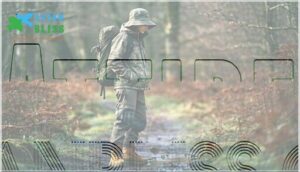
Weather-resistant gear forms your birdwatching foundation. Layer breathable fabrics for temperature changes throughout your UK adventures. Comfortable footwear with ankle support tackles muddy paths and uneven terrain. Camouflage clothing helps you blend seamlessly into natural surroundings.
Essential bird watching equipment includes:
- Waterproof jacket and trousers for unpredictable British weather
- Wide-brimmed hat offering sun protection and rain coverage
- Sturdy hiking boots with grip for wet morning grass
Your layering system determines comfort during those magical dawn sessions when the best time for bird watching UK offers unforgettable wildlife encounters. A durable waterproof shell is essential for staying dry, and having the right gear is crucial for a successful wildlife encounter in the UK, where unpredictable British weather can be a challenge, and a good waterproof jacket is vital.
Birding Buddies
You don’t have to tackle bird watching alone, as joining local birding groups and online communities can substantially enhance your identification skills and knowledge of prime viewing times.
These experienced birders share real-time sightings, weather insights, and location-specific timing advice that’ll help you spot more species during both morning and evening outings, which can be considered as prime viewing times.
Local Groups

Local groups transform your UK bird watching journey through shared wisdom and group benefits.
The RSPB’s 93 Natural History Societies offer beginner outings where experienced members reveal local hotspots and ideal timing.
These communities excel at skill sharing – teaching identification techniques while supporting conservation efforts.
You’ll discover the best time for species-specific sightings while building lasting friendships with fellow enthusiasts.
Online Communities

Digital bird watching forums and groups connect you with UK’s vibrant birding community year-round.
You’ll discover expert advice on best times for spotting species, receive identification help from seasoned watchers, and share your sighting reports with fellow enthusiasts.
These online platforms support conservation efforts while offering real-time updates on rare bird locations across Britain’s diverse landscapes.
Frequently Asked Questions (FAQs)
How early should one arrive for the dawn chorus?
You’ll want to slip out before the sun peeks over the horizon – arrive 30-45 minutes before sunrise to catch songbirds at their most vocal and active feeding period.
Are there any nocturnal birds to watch for?
You’ll spot several nocturnal species in the UK after dark.
Tawny owls, barn owls, and little owls hunt from dusk onwards.
Nightjars emerge on summer evenings, while woodcocks perform their distinctive "roding" flight displays.
What precautions should be taken during inclement weather?
When storm clouds gather, will you brave the elements?
Seek sturdy shelter like trees or bird hides. Pack waterproof gear and warm layers.
Birds stay active during rain, offering unique viewing opportunities despite challenging conditions.
Are there any bird species specific to urban areas?
Urban birds you’ll commonly encounter include house sparrows, starlings, pigeons, blackbirds, and robins.
Cities also attract magpies, crows, gulls near water sources, and increasingly, peregrine falcons nesting on tall buildings and bridges.
How does one attract birds to their backyard?
Sarah transformed her bare patio into a bird haven by adding a simple feeder and water dish.
You’ll attract feathered visitors by providing fresh water, seeds, shelter like shrubs, and maintaining consistency in your feeding schedule, which includes offering seeds.
What time do nocturnal birds become active?
Nocturnal birds like owls typically become active around dusk, roughly 30 minutes before sunset. You’ll notice peak activity from twilight through midnight, with some species remaining active until dawn approaches again.
How does moon phase affect nighttime birdwatching?
Full moon phases make nocturnal birdwatching easier since you’ll have better visibility to spot owls and nightjars.
However, bright moonlight can reduce owl activity as prey animals become more cautious and hidden.
Do urban areas have different optimal times?
Wonder why city birds behave differently?
You’ll find urban birds adapt to human schedules, staying active later into morning and becoming more visible during afternoon feeding times when street noise decreases slightly.
When should beginners start their first birdwatching trip?
Start your first birdwatching adventure at dawn when birds are most active and approachable. You’ll catch the morning chorus, spot feeding activity, and enjoy cooler temperatures with less wind interference.
How long should each birdwatching session last?
Plan your sessions, pace your patience, and prioritize your comfort.
You’ll want 2-3 hours for beginners, allowing time to spot species, practice identification, and enjoy nature’s rhythm without rushing or overwhelming yourself with fatigue.
Conclusion
Finding the best time of day for bird watching in the UK transforms your outdoor adventures into rewarding wildlife encounters.
You’ll discover that early mornings consistently deliver the most spectacular birding experiences, while evenings provide excellent alternatives when dawn isn’t feasible.
Weather conditions and seasonal changes will influence your success, but armed with proper equipment and local knowledge, you’re ready to explore Britain’s remarkable avian diversity.
Every outing offers new discoveries and deeper connections with nature’s fascinating feathered residents, making each experience unique and enriching, with proper equipment being key to a successful bird watching adventure.
- https://blog.mybirdbuddy.com/post/best-time-for-birdwatching
- https://wildlife-photography.uk/best-time-of-day-bird-photography/
- https://community.rspb.org.uk/wildlife/f/feeding-garden-visitors/110065/what-time-are-birds-most-active-or-in-the-garden
- https://www.reddit.com/r/birding/comments/95cxx9/what_isthe_best_timeof_day_to_go_birding/
- https://www.rspb.org.uk/birds-and-wildlife/wildlife-guides/birdwatching/