This site is supported by our readers. We may earn a commission, at no cost to you, if you purchase through links.
 The best way to warm a bird depends on your feathered friend’s needs and environment.
For indoor birds, maintain temperatures between 65-80°F using safe ceramic heaters or radiant heat panels placed away from cages.
Position cages away from drafts and cover them partially with breathable fabric.
Watch for cold stress signs like fluffed feathers, huddling, or lethargy.
For outdoor birds, provide insulated shelters and heated perches designed specifically for avian use.
Never use regular heating pads or space heaters near birds—they can overheat quickly or release toxic fumes.
Different species have varying temperature preferences, so understanding your specific bird’s requirements makes all the difference in keeping them cozy and healthy.
Table Of Contents
- Key Takeaways
- Bird Temperature Needs
- Cold Stress Signs
- Indoor Heating Solutions
- Cage Placement Strategies
- Outdoor Bird Protection
- Heating Devices and Safety
- Winter Care and Nutrition
- Frequently Asked Questions (FAQs)
- How to keep a bird warm in the winter?
- Can a heater warm up a bird?
- How do you keep a bird from overheating?
- Do birds need heaters?
- How to keep birds warm without electricity?
- How do you warm up a bird nest?
- How do you warm up a cold bird?
- How cold is too cold for a pet bird?
- What helps to keep the bird warm?
- How to save a bird from the cold?
- Conclusion
Key Takeaways
- Maintain 65-80°F consistently – Use ceramic heaters, oil-filled radiators, or heated perches positioned safely away from your bird’s cage to prevent overheating while ensuring steady warmth.
- Watch for cold stress warning signs – Look for fluffed feathers, huddling behavior, lethargy, and reduced vocalization as early indicators that your bird needs immediate warming.
- Position cages strategically – Place your bird’s cage away from drafts, windows, and exterior walls while covering three sides with breathable fabric to create a cozy microclimate.
- Never use unsafe heating methods – Avoid regular heating pads, space heaters with toxic fumes, or any device that could release harmful chemicals near your bird’s sensitive respiratory system.
Bird Temperature Needs
Your bird needs consistent temperatures between 65°F and 80°F to stay healthy, though some species like cockatiels prefer the warmer end of this range.
You’ll want to monitor your bird’s environment with a thermometer since sudden temperature drops can cause serious cold stress that affects their immune system and overall well-being.
Ideal Temperature Range
Your bird thrives within a precise bird temperature range of 65°F to 80°F (18°C to 27°C). Temperature monitoring with a reliable thermometer becomes your best friend for consistent warmth.
Here’s your thermostat checklist:
- Set temperatures between 65-80°F for universal comfort
- Install a digital thermometer near the cage for accurate readings
- Maintain steady conditions – avoiding fluctuations prevents stress
- Check readings twice daily to guarantee temperature stability
To help them stay warm, remember that birds use insulating down feathers to trap air.
Species Specific Temperature Preferences
Different bird species require customized temperature approaches. Cockatiels and parakeets thrive in warmer ranges around 75-80°F, while finches tolerate cooler conditions better.
Tropical birds need consistent warmth without fluctuations, whereas temperate species like raptors handle broader temperature ranges. Desert species show remarkable heat adaptations, tolerating higher temperatures than forest birds.
Understanding your specific bird species helps you provide ideal heating solutions. Notably, temperate birds often show slightly higher heat tolerances, which is a key consideration for their care.
Monitoring Temperature Fluctuations
Frequently check your thermometer placement to catch sudden changes before they stress your bird.
Position it near your feathered friend’s favorite perch for accurate readings.
Gradual shifts over several hours are manageable, but immediate action is needed when temperatures drop below 65°F.
Consistent monitoring helps you spot patterns and prevent cold stress signs from developing, which is crucial for maintaining your bird’s health and preventing damage from sudden changes, and ensuring overall well-being through consistent monitoring.
Cold Stress Signs
When your bird starts showing signs of cold stress, you’ll notice some clear warning signals that shouldn’t be ignored.
Watch for these telltale signs — your feathered friend’s body language speaks volumes before trouble sets in.
Recognizing these symptoms early helps you take quick action to warm your feathered friend before the situation becomes serious.
Fluffed Feathers Indication
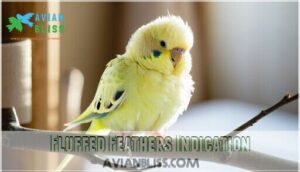
Spotting cold stress signs starts with Feather Insulation. If you see your bird fluffing feathers, it’s trying to trap warmth.
Wing Fluffing is another clue, showing bird distress. Preening Importance ramps up during chilly spells, helping with insulation.
Keep an eye out for these behaviors:
- Fluffing feathers
- Wing fluffing
- Increased preening
- Seeking heat sources, which can indicate cold stress.
Huddling Behavior

When multiple birds squeeze together like feathered friends at a campfire, you’re witnessing nature’s clever heat sharing system.
This huddling behavior creates group dynamics where birds pool their body warmth, reducing individual energy expenditure during cold stress.
Social bonding strengthens as species differences fade – small birds often huddle most effectively.
Observing this bird behavior signals distress and immediate need for additional heating sources, which can be crucial for their survival in cold stress.
Lethargy and Reduced Activity

You’ll notice your bird becoming less active when cold temperatures set in.
When birds experience bird hypothermia, their energy shifts from normal behaviors to conserving warmth, making lethargy one of the most telling bird cold signs during your bird behavior observation.
Watch for these Activity Level Changes and bird behavior patterns:
- Decreased Appetite – Your bird may eat less frequently or show less interest in favorite foods
- Social Interaction Decline – Normally social birds become withdrawn and less responsive to interaction
- Sleep Pattern Shifts – Extended periods of inactivity or sleeping during usual active hours
- Reduced Movement – Less hopping, climbing, or flying around their cage environment
- Feather Condition – Poor grooming habits combined with overall sluggish demeanor
Changes in Vocalization
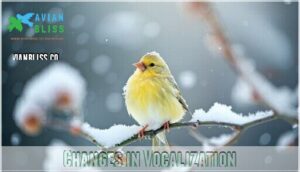
When your bird’s voice tells a different story, it’s often their clearest distress signal.
Vocalization changes serve as early warning signs of bird hypothermia and declining bird health. You’ll notice these shifts through careful bird behavior observation and vocalization analysis.
| Normal Vocalization | Cold Stress Signs |
|---|---|
| Regular chirping patterns | Reduced frequency of calls |
| Species-typical sounds | Weak, strained vocalizations |
| Social communication calls | Silence during active periods |
| Alert, clear tones | Muffled or raspy sounds |
Different species show unique vocalization changes when cold. A quiet bird that’s normally chatty signals trouble.
Watch for these distress signals alongside other symptoms to assess your sick bird’s condition promptly.
Indoor Heating Solutions
When your bird shows signs of cold stress, you’ll need reliable indoor heating solutions to maintain their comfort and health.
The key is choosing safe, consistent heat sources that won’t create dangerous temperature swings or expose your feathered friend to harmful fumes.
Space Heaters for Birds
When choosing space heaters for your bird environment, oil-filled radiators offer the safest heating option since they don’t emit harmful fumes and stay cool to touch.
Ceramic heaters work well too, but make certain they’re PTFE-free and positioned where your feathered friend can’t reach hot surfaces.
It’s best to avoid Honeywell heaters due to fire and oil leak concerns.
Always prioritize energy efficiency and include backup power considerations for consistent bird temperature control.
Heating Pads for Cages

Heating pads offer excellent temperature control for bird care through safe positioning and quality materials.
Place pads under or alongside cages, never blocking escape routes for burn prevention. Modern pad materials include chew-resistant cords and thermostatic controls maintaining ideal warmth.
These heating devices provide emergency warmth when needed. Many owners buy bird heating pads online.
Proper cage positioning with bird cage insulation creates safe heating options your feathered friends will appreciate, using quality materials.
Radiant Heat Panels
Beyond traditional space heaters, radiant heat panels offer a gentler warming approach for your feathered friends.
These panels deliver consistent infrared heat without creating disruptive air currents that can stress birds.
Here are five key advantages of radiant heat panels for bird care:
- Even temperature distribution prevents hot spots that could harm your bird
- Silent operation won’t disturb your bird’s natural sleep cycles
- Energy-efficient design reduces electricity costs during winter months
- Wall-mountable options keep heating elements safely away from curious beaks
- Precise temperature control maintains ideal bird cage conditions automatically
Proper panel placement guarantees maximum energy efficiency while maintaining bird safety.
To explore various options, consider different radiant models.
Mount panels at least 18 inches from the bird cage to prevent overheating.
Most radiant heat panels require minimal panel maintenance—simply dust monthly for peak performance.
These safe heating options work exceptionally well in dedicated bird rooms where consistent bird warmth is essential year-round.
Thermostat Regulation

You’ll want thermostats that maintain precise settings within your bird’s ideal temperature range of 65-80°F.
Modern digital thermostats offer energy efficiency through programmable schedules and temperature alarms that alert you to dangerous fluctuations.
Remote monitoring capabilities let you check conditions when you’re away, while backup systems guarantee safe heating continues during power outages or equipment failures.
Consider using dark colored surfaces for added heat absorption.
Cage Placement Strategies

Proper cage placement substantially affects how well your bird stays warm during cold weather.
You’ll want to position the cage away from drafts, cold windows, and exterior walls while creating a cozy environment with soft bedding and breathable covers, ensuring a warm space for your bird.
Draft Free Areas
Position your cage away from windows, doors, and air vents where cold drafts can reach your feathered friend.
Here’s your draft-proofing checklist:
- Interior walls – Place cages against warm interior walls rather than exterior walls that conduct cold
- Wind protection – Check for air currents by holding a tissue near potential problem spots
- Ventilation concerns – Make certain adequate airflow while blocking direct drafts with strategic cage covering
Smart cage positioning keeps your warm bird comfortable without compromising healthy air circulation.
Soft Bedding Materials
Choose bedding materials that prioritize warmth and safety for your feathered friends. Natural fibers like shredded paper and recycled paper towels offer excellent insulation without harmful chemicals.
Cedar and pine shavings contain oils that can irritate respiratory systems. Soft fabrics trap body heat effectively while allowing natural movement.
| Material Type | Safety Level | Cost | Maintenance |
|---|---|---|---|
| Shredded Paper | High | Low | Weekly change |
| Paper Towels | High | Medium | Bi-weekly |
| Cotton Strips | High | Medium | Weekly wash |
| Cedar Shavings | Avoid | Low | Daily spot clean |
Replace bedding materials regularly to maintain hygiene standards and prevent mold growth, ensuring the health and well-being of your birds with natural movement and excellent insulation.
Cage Covers for Insulation
Cage covers act like a warm blanket for your feathered friend.
Choose breathable materials with appropriate thickness to balance heat retention and air circulation.
Quality covers block light while reducing drafts around your bird cage.
Cotton or fleece provides excellent insulation without trapping moisture.
Cover three sides of the cage, leaving one side open for ventilation.
Considering the cage material selection is essential for safety and durability.
This simple bird cage accessory creates a cozy microclimate that maintains warmth throughout chilly nights.
Natural Wood Perches
Natural wood perches aren’t just perching spots—they’re tiny heat reservoirs that help your feathered friend stay cozy.
Unlike plastic or metal alternatives, wood’s natural insulation properties trap and slowly release your bird’s body heat.
Choose varying perch diameters and textures from safe woods like apple, birch, or manzanita to promote healthy foot circulation and warmth retention.
Outdoor Bird Protection
When your feathered friends spend time outdoors, protecting them from winter’s chill becomes essential for their survival and comfort.
Winter’s chill demands your immediate attention—every degree matters for your feathered friend’s survival.
You’ll need to create warm, draft-free environments using insulation materials, strategic shelter placement, and safe heating sources to keep outdoor birds healthy during cold months.
Insulating Outdoor Enclosures
When your birds face outdoor winter conditions, proper insulation becomes your first line of defense against harsh elements.
Tarp insulation wrapped around three sides of outdoor enclosures creates effective wind protection while allowing ventilation.
Layer straw bedding generously inside sheltered areas to absorb moisture and provide natural warmth.
DIY shelters using wooden crates lined with insulation materials offer cost-effective temperature control against fluctuations and drafts.
Heat Sources for Birds
Beyond traditional heating methods, outdoor birds need reliable heat sources that withstand weather challenges.
Power outages can leave your feathered friends vulnerable, making backup solutions essential.
Here are four effective heat sources for outdoor birds:
- Heat lamps with ceramic heat emitters – Provide consistent warmth without light disruption during nighttime hours
- Brooder lamps with safe placement – Offer targeted heating zones while preventing overheating risks
- Heating pads designed for pets – Create warm surfaces under shelters with built-in temperature control
- DIY heaters using safe materials – Emergency heat solutions like rice socks or hot water bottles for power outages
These heating solutions create a warm environment that keeps birds comfortable during harsh winter conditions.
Sheltered Areas for Cages
Position your cage where wind can’t penetrate your bird’s living area.
Wind Protection starts with choosing the right Cage Location – away from open doorways and windows.
Natural Shelters like overhangs or covered patios work perfectly.
Consider Shelter Size when selecting spots; your bird needs room to move comfortably while staying protected from temperature fluctuations and drafts.
| Location Type | Wind Protection Level | Best For |
|---|---|---|
| Covered Patio | High | Multi-bird setups |
| Building Corner | Medium-High | Single cages |
| Tree Canopy | Medium | Natural environments |
| Garage Entry | High | Emergency situations |
| Shed Overhang | Very High | Permanent outdoor housing |
DIY Shelters for Birds
For budget-friendly bird shelter construction, old wooden boxes make excellent starting points.
You’ll save money while providing essential weather resistance through simple designs using natural materials.
- Repurpose wooden crates – Line with straw for insulation and warmth
- Add multiple entrance holes – Guarantees predator proofing and escape routes
- Face away from prevailing winds – Maximizes weather resistance and comfort
- Include interior perches – Creates roosting spots within your bird shelter design
Heating Devices and Safety

When you’re choosing heating devices for your bird, safety should be your top priority since overheating can be just as dangerous as being too cold.
The right heating device will provide consistent warmth without creating hot spots or emitting harmful fumes that could harm your feathered friend, ensuring a healthy environment with consistent warmth.
Ceramic Heaters for Birds
Three ceramic heaters deliver consistent warmth without disrupting sleep cycles.
You’ll want proper Strategic Heater Placement outside cages for safe heating options.
Digital thermostats guarantee precise temperature control within 2°F accuracy.
Choose bird-safe models without toxic PTFE coatings for reliable bird comfort through cold months.
| Feature | Ceramic Heat Benefits | Safety Considerations |
|---|---|---|
| Temperature Range | 90°F-110°F ambient warmth | Anti-scald covers required |
| Energy Efficiency | Lower costs than space heaters | Automatic shutoff features |
| Sleep Compatibility | No light emission | Prevent direct contact burns |
| Lifespan | Long-term reliability | Regular inspection needed |
Oil Filled Heaters for Safety
Oil-filled heaters offer excellent safe heating options for bird owners.
These units radiate gentle warmth without exposed elements, making them birdsafe panels for temperature regulation.
You’ll appreciate their energy efficiency and quiet operation.
Three safety advantages that’ll give you peace of mind:
- Cool-to-touch surfaces prevent accidental burns if your feathered friend gets curious
- No fumes or emissions keep your bird’s sensitive respiratory system protected
- Consistent heat distribution eliminates dangerous hot spots that could harm your pet
For safe operation, place these heaters at least three feet from cages.
To further protect your feathered friends, remember to evaluate preventing window collisions.
Overheating prevention comes built-in with most models’ automatic shut-off features.
Regular maintenance tips include checking cords monthly and keeping vents dust-free.
These placement guidelines make certain your bird stays warm without compromising bird heating safety.
Infrared Heaters for Birds
Infrared heaters offer targeted warmth for birds without UV emissions that disrupt sleep cycles.
These bird-safe panels provide gentle heat penetration while maintaining proper placement flexibility.
Consider species sensitivity when positioning units—smaller birds need closer proximity for effective warming.
Monitor bulb lifespan regularly and guarantee infrared safety by maintaining proper distance from perches to prevent overheating.
Heated Perches and Pads
Heated perches provide targeted warmth directly to your bird’s feet, preventing heat loss through contact.
These safe heating options use low-voltage electricity and maintain perch temperature between 85-104°F.
For burn prevention, choose models with temperature gradients and regularly check your bird’s feet.
Heating pads work well for birds unable to grip perches, and proper pad placement under bedding guarantees safe warmth distribution.
Winter Care and Nutrition

Proper nutrition and environmental management are your bird’s best defense against winter’s harsh conditions.
You’ll need to focus on high-energy foods and fresh water access while creating natural shelter opportunities in your yard.
High Energy Food Sources
When your feathered friend needs extra calories to stay warm, think of food as fuel for their internal furnace.
Stock up on suet benefits by offering this high-fat energy source alongside seed variety like black oil sunflower seeds and peanuts.
Include nutritious fruits such as dried cranberries or fresh apple slices, plus mealworm advantage for protein-packed warmth.
Adjust feeding frequency to morning and afternoon sessions, helping birds maintain their energy reserves throughout cold days.
Fresh Water Provision
Water access becomes equally important when temperatures drop below freezing.
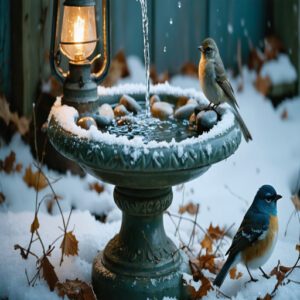
Use heated bird baths or add heaters to existing water sources for Freezing Prevention. Place shallow bowls with rocks for improved Accessibility Options, supporting proper bird water consumption.
Replace frozen water regularly to maintain clean Water Source Hygiene. Consistent hydration helps birds regulate body temperature effectively during winter months.
Native Plantings for Shelter
Beyond water, you’ll want to create long-term shelter solutions.
Native plants provide natural windbreaks and roosting cavities that birds depend on year-round. Plant native shrubs like winterberry and spicebush near feeding areas.
Evergreens offer dense shelter from harsh winds. Create brush piles from pruned branches for additional protection.
These natural shelters support birds better than artificial heating alone, providing natural windbreaks.
Avoiding Pesticides and Herbicides
Chemicals that kill weeds and bugs create dangerous ripple effects throughout your backyard ecosystem.
Pesticides and herbicides don’t discriminate—they poison the insects, seeds, and water sources birds depend on for survival.
Choose Safe Alternatives like companion planting, beneficial insects, and organic methods.
Natural Pest Control protects Bird Health while maintaining Ecosystem Preservation through thoughtful Organic Gardening practices.
Frequently Asked Questions (FAQs)
How to keep a bird warm in the winter?
Winter’s chill needn’t freeze your feathered friend.
You’ll want to maintain 65-80°F using space heaters, heating pads, or heated perches.
Position cages away from drafts, cover three sides with blankets, and guarantee consistent warmth monitoring.
Can a heater warm up a bird?
Yes, heaters can effectively warm birds when used safely.
Ceramic space heaters, oil-filled radiators, and infrared heaters work well for maintaining ideal temperatures between 65-80°F without creating dangerous fumes or burns.
How do you keep a bird from overheating?
Monitor your bird’s temperature with a thermometer, avoiding direct sunlight and hot air sources.
Provide proper ventilation, move away from heat sources if panting occurs, and maintain temperatures below 80°F to prevent overheating.
Do birds need heaters?
Birds don’t necessarily need heaters, but they benefit from consistent warmth between 65-80°F.
You’ll want supplemental heating if your home gets colder, especially for tropical species like cockatiels and parakeets.
How to keep birds warm without electricity?
Approximately 40% of bird species migrate seasonally, making non-electric warmth essential for winter survival.
You can use insulated shelters with straw bedding, cover cages with breathable blankets, provide warm perches, and offer high-energy foods like suet and sunflower seeds.
How do you warm up a bird nest?
Carefully place warming devices like heating pads or ceramic heaters near (not directly on) the nest. Monitor temperature closely, maintaining 70-80°F. Avoid disturbing birds during this delicate process.
How do you warm up a cold bird?
Like penguins huddling against Antarctic winds, cold birds instinctively seek warmth.
Place your bird in a draft-free area, cover three cage sides with breathable blankets, and use ceramic heaters or heating pads underneath the cage.
How cold is too cold for a pet bird?
For pet birds, temperatures below 65°F (18°C) become dangerous.
You’ll notice fluffed feathers, lethargy, and reduced vocalization as warning signs.
Maintain consistent temperatures between 65-80°F to prevent cold stress and potential health complications.
What helps to keep the bird warm?
While some birds shiver in cold, yours can stay cozy with proper heating.
Use ceramic heaters, heated perches, or warming pads to maintain 65-80°F.
Cover three cage sides with blankets, ensuring draft-free placement away from windows, to create a cozy environment.
How to save a bird from the cold?
Move your bird to a warmer location immediately.
Use gentle heat sources like heating pads under the cage or space heaters nearby.
Cover three sides of the cage with blankets to retain warmth and block drafts.
Conclusion
Ironically, while we spend countless hours keeping ourselves warm, many bird owners overlook their feathered companions’ heating needs until it’s too late.
The best way to warm a bird combines proper equipment, strategic positioning, and careful monitoring.
You’ll keep your avian friend comfortable by using ceramic heaters, maintaining consistent temperatures between 65-80°F, and watching for cold stress signals.
Remember that prevention beats treatment—establishing these warming practices before winter arrives guarantees your bird stays healthy throughout the coldest months ahead.
- https://tempcube.io/blogs/temperature-humidity/bird-cage-heating-solutions-exploring-different-methods-for-temperature-regulation
- https://windycityparrot.com/how-do-i-keep-my-bird-cage-warm-in-the-winter/
- https://birdsupplies.com/blogs/news/8-tips-for-caring-for-your-birds-this-winter
- https://www.wingdom.com/tips-for-keeping-your-pet-birds-warm-in-winter/
- https://www.dfwwildlife.org/ways-to-provide-heat-for-orphan-or-injured-wild-animal/