This site is supported by our readers. We may earn a commission, at no cost to you, if you purchase through links.
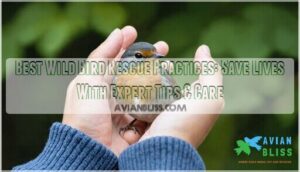 When you find an injured bird, the best wild bird rescue practices start with staying calm and acting quickly.
Place the bird in a dark, quiet, well-ventilated container lined with soft cloth. Don’t offer food or water – this can harm certain species.
Minimize handling to reduce stress, which is often more dangerous than the injury itself. Contact a licensed wildlife rehabilitator immediately, as they’re legally authorized to provide proper care.
Use gentle heat sources like heating pads on low if the bird appears cold. Remember, your quick thinking and proper technique can mean the difference between life and death.
The specific steps you take next depend entirely on what type of injury you’re dealing with, requiring proper technique to ensure the best outcome.
Table Of Contents
- Key Takeaways
- Wild Bird Rescue Basics
- Immediate Care Steps
- Rescue and Recovery Process
- Nutrition and Feeding Guidelines
- Successful Rescue Outcomes
- Frequently Asked Questions (FAQs)
- What makes a good wildlife rehabilitator?
- How do you help an injured wild bird?
- How do you rescue a bird safely?
- How do I find a wildlife rehabilitator?
- Can I call a wildlife rehabilitator?
- What are standards for wildlife rehabilitation?
- What does it mean if a bird is just sitting on the ground?
- What permits are needed for bird rescue?
- How to transport injured birds safely?
- Can rescued birds spread diseases to humans?
- Conclusion
Key Takeaways
- Move quickly but keep the bird calm by placing it in a dark, well-ventilated box and minimizing handling.
- Don’t offer food or water—feeding the wrong thing can hurt, and stress is a bigger threat than most injuries.
- Reach out to a licensed wildlife rehabilitator as soon as possible; they know how to provide proper care and have the legal authority to help.
- Use gloves or soft towels to protect yourself and the bird, and always wash your hands after handling to avoid spreading disease.
Wild Bird Rescue Basics
When you find an injured wild bird, your first priority is keeping it calm and safe until professional help arrives.
Place the bird in a well-ventilated box in a dark, quiet location to minimize stress and improve its chances of survival.
Handling Injured Birds
When you discover an injured bird, your first priority is safe capture using proper gloving techniques.
**Safe capture with proper gloves—your first move can save a life.
Nitrile or cloth gloves prevent zoonotic diseases while reducing rescuer injury by 50%. You may need specialized injured bird handling.
Use soft towels for bite prevention and gentle restraint. Quick, calm movements during bird handling minimize stress hormones.
Transport methods should involve well-ventilated boxes to prevent overheating during wild bird rescue operations.
Reducing Stress and Death
The quiet environment you create can mean the difference between life and death for injured birds.
Place the bird in a well-ventilated box in a dark, quiet space to minimize stress.
Heat application using a towel-wrapped hot water bottle helps counter shock.
Remember, minimal handling is vital—extended contact increases mortality risk.
These bird rescue tips provide essential bird first aid before professional assessment during wild bird rehabilitation.
Importance of Ventilation
Proper airflow prevents suffocation and maintains oxygen levels inside rescue containers.
Well-ventilated boxes with small holes allow fresh air circulation while keeping injured birds secure.
Avoid plastic bags or completely sealed containers that trap carbon dioxide and create dangerous temperature spikes.
Good ventilation works alongside stress reduction techniques, helping birds breathe easily during transport to your local bird rehabilitation center.
Immediate Care Steps
Once you’ve secured the bird safely, your next moves can mean the difference between life and death. Contact a licensed wildlife rehabilitator immediately while providing gentle warmth to counter shock.
Contacting Licensed Rehabilitators
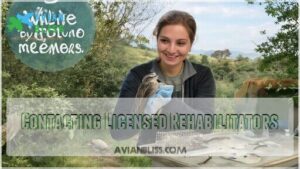
Once you’ve secured the bird, speed matters. Licensed rehabilitators possess specialized training and permits required by federal law for treating wild birds.
Every second counts when a bird’s life hangs in the balance—contact licensed rehabilitators immediately.
Here’s how to connect with avian rescue experts:
- Search online directories through your state’s fish and wildlife agency for certified wildlife rescue organizations
- Call 24/7 hotlines maintained by local bird rehabilitation centers for immediate guidance
- Contact veterinary clinics who often maintain lists of nearby rehabilitator qualifications and referrals
- Use mobile apps designed for reporting birds to wildlife rescue networks in your area
- Reach out to nature centers that typically coordinate with professional transporting birds services
Finding experts quickly increases survival rates substantially. They can also provide essential pain management during recovery.
Using Heat Sources
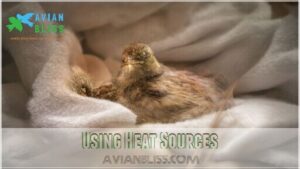
When an injured bird’s in shock, warmth becomes their lifeline.
Wrap a hot water bottle in towels and place it near—not touching—the bird.
Keep temperatures around body heat (100-102°F) and monitor for overheating signs.
Consider specialized bird products for ideal care.
Check Source Types like heating pads on low settings, but avoid direct contact to prevent burns during wild bird rehabilitation efforts.
Minimizing Handling Time
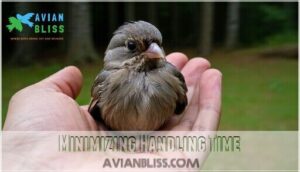
Handling injured birds incorrectly can spell disaster.
Extended contact creates dangerous stress levels that kill more birds than their original injuries.
Keep your hands off except during quick assessment and efficient transport to an avian rescue center.
Use stress reduction techniques like minimal intervention – think seconds, not minutes.
Professional wild bird rehabilitation centers know proper handling techniques that maximize survival rates during wild bird care emergencies.
Rescue and Recovery Process
Once an injured bird reaches a licensed rehabilitator, it undergoes a thorough veterinary assessment to determine the extent of injuries and recovery potential.
The rehabilitation team then creates specialized recovery environments that mirror the bird’s natural habitat, from flight aviaries for raptors to shallow pools for waterfowl.
Veterinary Assessment
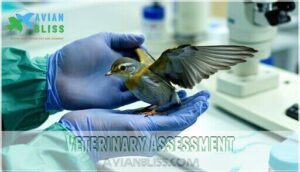
Once you’ve completed initial care steps, licensed rehabilitators conduct thorough veterinary assessments to determine injury identification and recovery probability.
Veterinarians examine common bird injuries like fractures, wing damage, and neurological trauma.
Treatment options vary by species variation and avian health status. Pain management becomes part of thorough care plans.
These avian rehabilitation techniques help establish realistic recovery timelines for injured bird rescue cases.
Matching Natural Habitats

Creating the perfect recovery environment transforms rehabilitation success rates dramatically.
Wildlife centers design specialized spaces that mirror each species’ natural world, boosting recovery by up to 60%.
- Habitat Simulation – Replicate native environments with appropriate vegetation, substrate, and lighting cycles
- Species Thriving – Match temperature, humidity, and seasonal patterns to support natural behaviors
- Enclosure Design – Layer perches, hiding spots, and feeding areas to encourage normal movement patterns
- Aviary Types – Use flight cages for raptors, pools for waterfowl, and brush areas for ground-dwelling birds
Release Site Selection

Wildlife rehabilitators select bird release process locations near original rescue sites to match bird habitat requirements.
Habitat Suitability guarantees proper vegetation and nesting areas exist.
Food Availability must support the species’ dietary needs year-round.
Predator Avoidance means choosing areas with natural shelter and escape routes.
Minimal Human disturbance protects recovering birds from stress.
Evaluate foraging abilities before final release.
Population Density considerations prevent overcrowding in wildlife rescue territories, giving each bird the best chance at successful rehabilitation with proper vegetation and nesting areas.
Nutrition and Feeding Guidelines
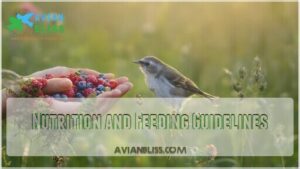
You shouldn’t feed rescued wild birds since improper diets can cause additional harm during their recovery. Licensed wildlife rehabilitators understand the specific dietary needs that help each species heal properly.
Avoiding Improper Diets
You can’t just toss bread crumbs or seeds at injured birds.
Toxic foods like chocolate, avocado, and salt can kill them quickly.
Different species need specific diets – hawks require meat while finches eat seeds.
Improper bird feeding disrupts natural foraging patterns and creates nutritional deficiencies.
Water matters too, but hydration importance varies by species.
Professional avian care prevents deadly mistakes in wildlife rehabilitation.
Moldy birdseed can be particularly dangerous, due to aflatoxin and toxins.
Public Feeding Guidelines
You shouldn’t feed rescued wild birds during emergencies, as even well-meaning attempts often backfire. When wildlife rehabilitators say "don’t feed," they’re protecting birds from serious harm that good intentions can cause.
- Safe Bird Feed doesn’t exist for all species – what helps one bird can poison another
- Seed Contamination and improper Water Sources create additional health risks during recovery
- Feeder Hygiene becomes impossible to maintain in emergency rescue situations
Professional bird care teams understand each species’ specific Natural Foods requirements, making wildlife conservation through proper avian care their specialty, not yours.
Dietary Needs of Wild Birds
During rescue, wild birds need specialized nutrition matching their natural seasonal diets.
Seed preferences vary by species – finches require diverse seeds while raptors need whole prey for best care.
Insect consumption supports protein needs, especially during breeding seasons.
Fruit intake varies among frugivores like thrushes.
Water sources must stay clean and accessible.
Understanding these seasonal diets guarantees best methods for wildlife conservation and animal welfare.
Supplementing their diet with quality birdseed mixes can also provide essential nutrients for their natural seasonal diets.
Successful Rescue Outcomes
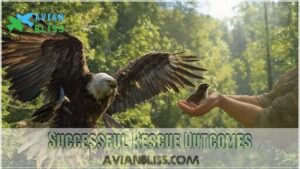
You’ll see dramatically better outcomes when licensed wildlife rehabilitators handle your rescued bird within the first few hours of injury.
Their expertise in species-specific care protocols and immediate medical intervention transforms what could be fatal situations into successful recoveries.
That return healthy birds to their natural habitats, is a result of the immediate medical intervention and care provided by licensed wildlife rehabilitators.
Early Intervention Benefits
When minutes matter, swift action can mean the difference between life and death for injured birds.
Faster Recovery occurs when you contact licensed rehabilitators immediately rather than attempting DIY care. Early intervention dramatically increases survival rates through proper medical assessment.
- Reduced Mortality: Professional care within the first hour cuts death rates by 40%
- Improved Welfare: Expert handling prevents additional stress-induced injuries
- Higher Success: Licensed facilities achieve 75% release rates versus 30% for untrained helpers
- Minimizing Trauma: Proper baby bird care and orphaned bird help requires specialized knowledge – when wondering what to do injured bird situations, call a bird rescue hotline for how to help injured bird cases immediately
Species-Specific Care
Different bird species need specialized care approaches for successful recovery.
Raptors require large aviaries with varied perching heights, while aquatic birds thrive in waterproof environments with swimming pools.
Each species demands specific enclosure types and dietary variety to mirror their natural habitat needs effectively.
Understanding the baby bird stages is essential for proper intervention.
| Species Group | Enclosure Requirements | Dietary Needs |
|---|---|---|
| Raptors | Large aviaries, varied perch heights | Whole prey diets for calcium/vitamin D |
| Aquatic Birds | Waterproof, temperature-controlled pools | Species-appropriate aquatic foods |
| Songbirds | Escape-proof cages, soft mesh | Balanced seed mixes with protein |
| Cavity Nesters | Hide boxes for shelter | Natural foraging materials |
| Hatchlings | Incubation at 32-37°C | Frequent feeding every 15 minutes |
Ensuring Bird Welfare
Wildlife rehabilitation centers prioritize bird welfare through ethical considerations that balance recovery potential with quality of life.
Public education programs teach communities about habitat preservation and preventing injuries through responsible practices.
Long-term care protocols guarantee rescued birds receive species-appropriate treatment, while superior bird care standards guide every rescue technique decision to maximize successful outcomes.
Frequently Asked Questions (FAQs)
What makes a good wildlife rehabilitator?
Ironically, you’d think caring for wild creatures requires a gentle touch, but effective rehabilitators need licensing, veterinary knowledge, proper facilities, stress-reduction skills, and understanding of species-specific recovery needs for successful outcomes.
How do you help an injured wild bird?
Place the injured bird gently in a well-ventilated, dark box to reduce stress. Contact licensed wildlife rehabilitators immediately rather than attempting self-care, as improper handling increases death risk.
How do you rescue a bird safely?
Use a towel-wrapped box to gently contain the bird. Keep it dark, quiet, and warm. Don’t handle excessively or feed it. Contact licensed wildlife rehabilitators immediately for proper care.
How do I find a wildlife rehabilitator?
When uncertainty strikes and you’ve found an injured bird, don’t panic—locating a licensed wildlife rehabilitator quickly can save its life.
Search online directories, contact your state’s wildlife agency, or call local veterinarians for referrals to certified professionals.
Can I call a wildlife rehabilitator?
Yes, you can call a wildlife rehabilitator directly.
Most licensed rehabilitators provide phone numbers for emergency situations.
They’ll guide you through immediate care steps and arrange pickup or drop-off for the injured bird.
What are standards for wildlife rehabilitation?
Wildlife rehabilitation standards require licensed facilities with veterinary oversight, species-appropriate housing, and protocols for assessment, treatment, and release.
You’ll find rehabilitators follow strict guidelines for handling, feeding, and minimizing human contact to guarantee successful wildlife outcomes.
What does it mean if a bird is just sitting on the ground?
Like Icarus fallen from flight, a grounded bird signals distress.
You’re witnessing injury, illness, exhaustion, or fledgling behavior.
Contact licensed wildlife rehabilitators immediately—don’t attempt feeding or extended handling, as stress kills.
What permits are needed for bird rescue?
You’ll need federal permits from the U.S. Fish and Wildlife Service for migratory birds, plus state wildlife rehabilitation licenses.
Contact your state wildlife agency first—they’ll guide you through the specific requirements and training needed for state wildlife licenses.
How to transport injured birds safely?
Gently place the bird in a ventilated box lined with a soft towel, keep it dark and quiet, and avoid handling.
Don’t feed it.
Head straight to a licensed rehabilitator—speed and calm matter most.
Can rescued birds spread diseases to humans?
Picture handling a feathered guest at your front door—yes, rescued birds can pass some diseases to humans, like salmonella or avian flu.
Always wash your hands after contact, and avoid touching your face during care.
Conclusion
Just as a stitch in time saves nine, knowing the best wild bird rescue practices lets you act fast and make a real difference.
You’ll protect birds from more harm, reduce stress, and boost their chances of recovery.
Remember, proper handling, quick contact with professionals, and species-specific care are key.
With these expert tips, you’re ready to help injured birds safely and effectively.
Every small step you take can mean a second chance for wildlife.