This site is supported by our readers. We may earn a commission, at no cost to you, if you purchase through links.
A birdhouse made from the wrong wood can fail within a single season, leaving your feathered visitors without shelter when they need it most. The wood you choose determines whether your birdhouse will last one year or twenty, and whether it’ll provide safe, comfortable nesting conditions or become a deathtrap during summer heat waves.
Cedar and redwood naturally resist rot and insects, but pine costs a fraction of the price, and cypress offers moisture protection that rivals premium options.
Each wood type brings distinct advantages in durability, insulation, and safety, and understanding these differences helps you build shelters that genuinely serve the birds in your yard. The right choice balances your budget with the specific needs of your local species.
Table Of Contents
- Key Takeaways
- Key Qualities of Wood for Bird Houses
- Cedar: The Classic Birdhouse Choice
- Redwood for Bird Houses
- Cypress: Moisture-Resistant Option
- Pine: Affordable and Accessible
- Fir and Douglas Fir Comparison
- Teak and Oak: Premium Wood Choices
- Treated Vs. Untreated Wood
- Best Wood Thickness for Birdhouses
- Eco-Friendly and Sustainable Wood Options
- Frequently Asked Questions (FAQs)
- What is the best material for a birdhouse?
- Is cedar wood good for birdhouses?
- Which Wood is best for a birdhouse?
- Is fir a good wood for a birdhouse?
- Is pine a good wood for a birdhouse?
- Can you buy wood for a birdhouse?
- What is the best wood for a birdhouse?
- What material is best for bird houses?
- How thick should wood be for a birdhouse?
- How long will a pine birdhouse last?
- Conclusion
Key Takeaways
- Cedar and redwood naturally resist rot and insects without chemical treatment, lasting 20-25+ years outdoors, while pine requires protective sealing but costs significantly less and can still serve well for 3-5 years with proper maintenance.
- Wood thickness matters for insulation and predator protection—aim for ¾-inch walls to regulate temperature extremes and provide structural integrity, with slightly thicker floors (⅝ to ¾ inch) for added durability.
- Never use treated lumber or toxic finishes inside birdhouses, as chemicals like formaldehyde, pentachlorophenol, and copper-based preservatives can leach into nesting spaces and harm birds’ respiratory systems and organs.
- Cypress offers moisture resistance comparable to premium woods at mid-range pricing, making it ideal for humid climates, though regional availability varies and it’s most accessible in the southern United States.
Key Qualities of Wood for Bird Houses
When you’re building a home for birds, the wood you choose makes all the difference between a safe haven and a structure that falls apart after one season.
The right material protects nesting birds from weather extremes, keeps out harmful chemicals, and lasts year after year without constant repairs.
Proper bird house installation also ensures drainage holes and ventilation work correctly, preventing moisture damage that shortens the structure’s lifespan.
Here are the three essential qualities you should look for in any birdhouse wood.
Durability and Weather Resistance
You’ll want wood that stands strong against rain, wind, and harsh sun, protecting the feathered families inside. Weather resistance and durability rely on three key factors:
- Natural oils and extracts that repel moisture and prevent wood decay
- Dense cellular structure that reduces water absorption and weathering effects
- Heartwood compounds that provide rot resistance and outdoor wood durability
Cedar and redwood excel here, offering rot prevention through their intrinsic moisture resistance and thermal stability. The study of scientific rigor in research audit trails can inform our understanding of durability in various materials.
Insulation and Temperature Control
Durability alone won’t protect nestlings if the wood can’t regulate heat. Cedar and redwood offer excellent thermal insulation thanks to their tight grain and natural density, slowing heat transfer through the walls. Pine’s open structure allows more temperature swings unless you add protective finishes.
Many builders find that following weatherproof birdhouse construction techniques helps them combine the right wood choice with proper ventilation design.
Proper ventilation systems work with wood density to manage moisture and keep interior temperatures stable, so chicks stay comfortable through scorching afternoons and cool nights.
When considering the best wood for bird houses, researchers often study language patterns to better understand the complex relationships between materials and environmental factors.
Safety and Non-Toxicity
Beyond thermal performance, you need wood free of toxic materials that could poison nestlings or adults. Untreated wood like cedar, redwood, and cypress naturally resists decay without chemical additives, making them bird-friendly finishes. Pine requires non-toxic coatings—water-based, zero-VOC options protect the wood while keeping nests safe. Eco-safe practices mean skipping pressure-treated lumber and choosing chemical-free woods from sustainable sources.
- Bare interiors prevent fume exposure in cramped cavities
- Natural wood eliminates leaching risks into nesting materials
- Ecofriendly wood promotes both bird safety and forest health
- Untreated lumber gives chicks the cleanest start possible
Cedar: The Classic Birdhouse Choice
Cedar has earned its reputation as the go-to wood for birdhouses, and once you understand its natural properties, you’ll see why so many backyard birders reach for it first.
Its durability also makes it an excellent choice for outdoor bird baths that need to withstand the elements year-round.
This wood brings together weather resistance, natural pest protection, and easy upkeep in a way that makes your job simpler and your feathered visitors safer.
To keep it protected through every season, you can seal it with a natural waterproof birdhouse protector that soaks deep into the wood without trapping harmful chemicals inside.
Let’s look at what makes cedar such a reliable choice for creating a healthy nesting space.
Cedar’s natural oils also help with natural bird house pest control, keeping mites and insects away without harsh chemicals.
Natural Weather Resistance
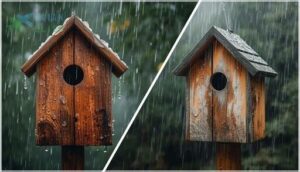
Cedar heartwood acts like a natural raincoat for your birdhouse, thanks to oils that create effective moisture barriers and boost weather resistance. This wood durability stems from the dense grain that limits water absorption, while natural extractives support rot prevention without wood finishes.
Unlike pine or fir, cedar delivers impressive weather resistance straight from the mill, making it ideal for protecting nesting birds year-round.
Insect and Decay Resistance
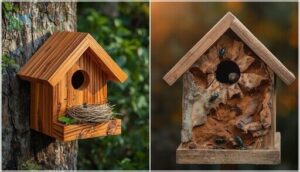
Those same natural oils that shield cedar from rain also handle fungal resistance and decay prevention without synthetic wood preservatives. Cedar’s built-in insect repellents and rot control mean you’re choosing sustainable wood that protects nesting birds naturally.
Here’s what sets this wood selection apart:
- Natural oils deter wood-boring insects and fungi simultaneously
- Concentrated tannins inhibit fungal growth in heartwood
- Dense grain structure limits moisture penetration for weather resistance
Maintenance Tips for Cedar
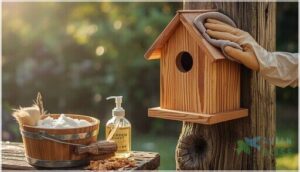
Each year, you’ll want to tackle cedar cleaning with mild soap and water to sweep out nesting debris and mites.
Apply a non-toxic, bird-safe wood finish every 1–2 years to preserve those natural oils and boost cedar durability.
Check for cracks after winter, seal with exterior-grade filler, and your birdhouse maintenance schedule keeps this wood strong for seasons ahead.
Redwood for Bird Houses
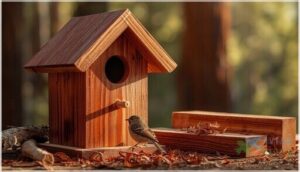
Redwood brings something special to the table when you’re building a birdhouse, and it’s not just about looks. This wood has natural oils and tannins that work like built-in armor against rot, decay, and the insects that usually ruin outdoor structures.
Let’s look at what makes redwood stand out, from its striking appearance to how long it lasts and where it comes from.
Unique Grain and Aesthetics
Redwood offers something cedar can’t quite match: a stunning visual presence that turns functional birdhouses into backyard showpieces. You’ll notice its rich, varied grain patterns shift from light amber to deep burgundy streaks, creating natural design elements that attract both birds and admiring neighbors.
- The wood texture displays distinctive ribbon-like markings that add dimensional visual appeal
- Western red cedar shows uniform grain, but redwood’s dramatic color variations make each piece unique
- Natural aesthetic value increases as the wood weathers to silvery-gray tones over time
Longevity and Rot Resistance
When durability testing reveals results, redwood stands among the champions of outdoor wood performance. Its heartwood contains natural extractives that provide outstanding fungal resistance, blocking decay organisms that compromise other species.
Moisture management improves through extractives that slow water uptake, a critical factor in rot prevention. Weather resistance remains effective across seasons without frequent interventions, making your wood choice for birdhouses practical and protective.
Wood decay slows considerably compared to untreated alternatives, extending outdoor durability with minimal wood durability and maintenance demands.
Sustainability Considerations
Choosing eco-friendly redwood requires careful attention to responsible sourcing and sustainable forestry practices. You’ll want to look for FSC or PEFC certification labels, which confirm the wood comes from responsibly managed forests with reduced biodiversity loss.
These sustainable wood options lower environmental impact compared to uncertified alternatives, and local suppliers decrease transportation emissions while supporting wildlife-friendly forest stewardship in your region.
Cypress: Moisture-Resistant Option
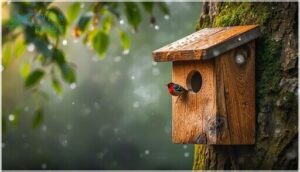
Cypress wood brings something special to the table: a natural ability to repel water that makes it stand out for outdoor birdhouse projects. This characteristic, combined with its durability and ease of working, places cypress as a strong contender when you’re selecting materials for your feathered visitors.
Let’s look at what makes cypress work well in wet climates, where you can find it, and how to keep it in good shape over time.
Natural Water Repellency
Cypress stands out because it acts like nature’s own raincoat for birds. Its natural oils and resins create a hydrophobic surface that sheds moisture, reducing water absorption and decay.
While Western Red Cedar offers excellent weather resistance, cypress rivals it with built-in moisture control. You’ll find its tighter grain minimizes capillary uptake, though periodic surface protection with natural wood finishes maintains that water resistance over time.
Availability and Workability
Finding cypress can be tricky depending on where you live, and that affects both material costs and your project timeline. It’s widely available in the southern United States, where native stands supply regional markets, but supply chains thin out as you move north or west.
Cedar and pine remain easier to source in most lumber yards nationwide, though cypress machines beautifully with standard woodworking tools when you locate it.
Maintenance Requirements
Once you’ve got your cypress in hand, keeping it in good shape isn’t complicated. Weather resistance doesn’t mean you can forget about it entirely—seasonal cleaning removes organic debris that traps moisture, and a breathable finish every 2–4 years keeps the wood performing well without blocking ventilation.
- Clean annually with mild soap to prevent grime buildup and wood decay
- Reapply non-toxic, breathable finish every 2–4 years for waterproofing
- Inspect for warping or checks during seasonal transitions for moisture management
- Maintain proper interior ventilation to control humidity and support weather resistance
- Monitor for insects and address pest control needs with bird-safe methods
Pine: Affordable and Accessible
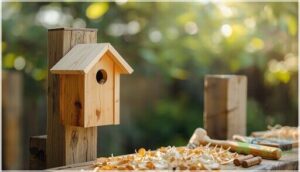
Pine stands out as the budget-friendly option that most backyard bird enthusiasts can pick up at their local hardware store without breaking the bank. It offers decent insulation for nesting birds, but you’ll need to give it some extra protection since it doesn’t naturally resist weather like cedar or redwood does.
Here’s what you should know about pine’s strengths and limitations before you start building.
Insulation Properties
Pine offers decent natural wood insulation, but its lower density and thermal mass mean you’ll notice greater heat transfer compared to cedar. The softwood structure creates tiny insulation gaps that affect moisture control, especially during temperature swings.
Here’s how pine stacks up for weather resistance:
| Property | Pine Performance | Comparison to Cedar |
|---|---|---|
| Wood Density | Lower (softer grain) | Cedar is denser, more stable |
| Thermal Mass | Moderate heat retention | Cedar holds temperature better |
| Moisture Control | Requires waterproofing | Cedar naturally resists moisture |
| Heat Transfer Rate | Higher (less insulating) | Cedar blocks heat more effectively |
Pine’s open grain allows air movement, which can actually help with ventilation but reduces overall insulation effectiveness in extreme weather.
Need for Protective Finishes
Given pine’s natural moisture vulnerability, you’ll want to apply protective finishes before installing your birdhouse. Water-based, eco-friendly coatings with UV resistance offer the safest option for your feathered visitors, extending wood life without chemical risks.
Effective waterproofing involves these finishing techniques:
- Sand surfaces smooth, then apply linseed oil or natural finishes for breathability
- Choose low-VOC wood sealants that cure completely before birds arrive
- Add UV-blocking topcoats to prevent sun damage and cracking
- Reapply oil finish every 1-2 years for continued moisture protection
Pros and Cons for Birdhouses
When you’re weighing wood selection for birdhouse design, pine brings some trade-offs worth considering. You’ll appreciate its affordability and workability for woodworking projects, plus decent insulation for nesting materials. However, pine lacks the natural rot resistance of cedar or redwood, requiring eco-friendly finishes to protect bird safety. It’s budget-conscious but demands more maintenance than premium options.
Fir and Douglas Fir Comparison
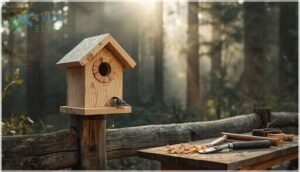
Fir and Douglas fir are solid middle-ground options that balance strength with reasonable cost, and they’re easy to find at most lumberyards. These woods hold up well outdoors with a bit of care, but they don’t have the same built-in weather resistance as cedar or redwood.
Let’s look at how fir performs when you’re building a safe home for your backyard birds.
Strength and Stability
Douglas Fir stands as a heavyweight champion for birdhouse construction, and you’ll appreciate why once you look at the numbers. With a modulus of elasticity that outperforms many softwoods, it resists bending under wind loads and temperature swings. Cedar and Redwood offer charm, but Douglas Fir’s density gives your project serious backbone when woodworking demands structural frame integrity.
| Wood Type | Dimensional Stability | Load Capacity | Weather Resistance | Material Durability |
|---|---|---|---|---|
| Douglas Fir | High | Excellent | Very Good | 15-20 years |
| Cedar | Moderate | Good | Excellent | 20+ years |
| Redwood | Moderate-High | Good | Excellent | 25+ years |
| Pine | Low-Moderate | Fair | Moderate | 5-10 years |
| Standard Fir | Moderate | Good | Good | 10-15 years |
Outdoor Performance
You’ll notice Douglas Fir holds up remarkably well when exposed to the elements, thanks to strong rot prevention that outpaces standard pine. Moisture management tests show cedar reduces water absorption by up to 40%, while fir retains over 90% of its original thickness after a full year outdoors. Weather resistance, paired with smart wood finishing and waterproofing, extends outdoor woodworking projects into decades of service.
| Wood Type | 12-Month Thickness Retention | Water Absorption Rate | Rot Resistance |
|---|---|---|---|
| Douglas Fir | 88-92% | Moderate | Good |
| Cedar | 90-95% | Low (40% less than pine) | Excellent |
| Standard Fir | 82-88% | Moderate-High | Fair-Good |
| Pine | 70-75% | High | Poor-Fair |
| Redwood | 92-96% | Very Low | Excellent |
Cost and Sourcing
Supply chains dictate what you’ll pay, and Douglas Fir typically runs 30–50% less than cedar per board foot at most lumberyards. Western Red Cedar commands premium material costs due to natural durability, while fir delivers budget optimization for builders who plan to apply protective finishes.
Sourcing strategies matter—bulk orders from regional mills slash wood pricing compared to retail, and sustainable materials certification adds 10–15% but backs responsible forestry.
| Wood Type | Typical Cost per Board Foot | Availability |
|---|---|---|
| Douglas Fir | $3–5 | Widely available |
| Cedar / Western Red Cedar | $6–10 | Regional variation |
| Standard Fir | $2.50–4 | Common nationwide |
Teak and Oak: Premium Wood Choices
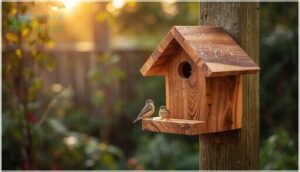
If you’re willing to invest a bit more, teak and oak offer some of the toughest protection you’ll find for backyard birds. These premium woods stand up to harsh weather, pests, and rot better than most other options, which means your birdhouse can last for decades with minimal care.
The tradeoff is cost and availability, but for long-term durability, they’re hard to beat.
Exceptional Durability
When you’re investing in premium wood for bird houses, you want materials that’ll stand strong season after season. Teak and oak bring outstanding durability to the table, with wood density that outperforms softer options like pine:
- Teak’s tight grain structure provides excellent moisture management, preventing warping even in high-humidity conditions
- Oak’s natural hardness offers excellent decay prevention through weathering tests spanning multiple years
- Both woods match or exceed the rot resistance of cedarwood and redwood, though at a higher initial cost
Resistance to Rot and Insects
Regarding rot resistance and insect control, teak and oak outperform most untreated wood options except cedar. Teak naturally contains silica and oils that provide fungal protection and decay prevention without any chemical treatments, while oak’s dense heartwood resists termites and rot-causing fungi.
These woods rival western red cedar for wood preservation, making them reliable choices when you need long-term durability for your feathered friends.
Budget and Sourcing Challenges
While teak and oak excel in performance, you’ll face steep wood costs and sourcing issues that complicate budget planning. Material availability varies by region, and supply chain constraints often limit access to these premium options.
Cedar, pine, and redwood provide better alternatives for sustainable woodworking projects, offering reasonable untreated wood choices that balance durability with accessibility for most backyard builders.
Treated Vs. Untreated Wood
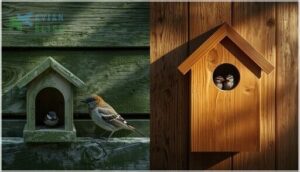
When you’re standing in the lumber aisle, treated wood might look like the practical choice, but it can pose serious risks to nesting birds. The chemicals used to preserve wood from rot and insects don’t just disappear—they can leach into the enclosed space where birds raise their young, and that’s a safety concern you can’t ignore.
Treated wood may seem practical, but its chemicals can leach into birdhouses and harm the nestlings inside
Let’s look at what makes treated wood problematic, how it affects the environment, and what practices will keep your feathered visitors safe.
Chemical Safety for Birds
Unfortunately, birds face serious risks from toxic wood treatments that many of us wouldn’t suspect. Formaldehyde from adhesives, pentachlorophenol in preservatives, and copper-based treatments can harm their delicate respiratory systems or internal organs. Even “non-toxic” human finishes aren’t always proven safe for our feathered friends, so you’ll want to verify bird-friendly finishes before applying anything to your birdhouse.
| Harmful Chemical | Found In |
|---|---|
| Formaldehyde | Adhesives, cabinet finishes |
| Pentachlorophenol/Creosote | Wood preservatives |
| Volatile Organic Compounds (VOCs) | Paints, stains |
| Copper-based preservatives | Treated wood |
| Unverified “non-toxic” finishes | Various coatings |
Environmental Impact
Beyond bird safety, your wood choice ripples outward into the ecosystem. Locally sourced cedar and pine carry a smaller carbon footprint than tropical hardwoods shipped across oceans, cutting greenhouse emissions dramatically. Untreated woods also protect soil and waterways from chemical leachates, supporting wildlife conservation in your own backyard. Durable options reduce waste, since you won’t replace birdhouses as often—a simple step toward sustainable living and eco-friendly gardening.
| Wood Choice Impact | Environmental Benefit |
|---|---|
| Local cedar/pine | Lower carbon footprint, reduced transport emissions |
| Untreated wood | Prevents chemical leachates, protects waterways |
| Durable species | Waste reduction, fewer replacements needed |
Recommended Practices
Now that you know the stakes, here’s how to put wood selection into practice. Start by choosing untreated cedar or redwood for bird safety and outdoor placement—their natural oils protect without chemicals. Before nesting materials go in, sand rough interior surfaces and apply a single coat of low-VOC finish to exterior panels only. Set maintenance schedules to inspect for rot each fall, and your outdoor woodworking will support generations of healthy broods.
| Birdhouse Construction Step | Wood Choice Recommendation | Woodworking Tips |
|---|---|---|
| Interior surfaces | Untreated cedar, rough-sawn | Never seal nesting cavity walls |
| Exterior panels | Cedar or redwood with low-VOC finish | One thin coat, reapply every 2–3 years |
| Fasteners and joints | Galvanized or stainless hardware | Pre-drill to prevent splitting |
| Ventilation holes | ¼-inch diameter, high on sides | Drill after assembly for precision |
| Annual inspection | Check for rot, cracks, pests | Replace compromised wood immediately |
Best Wood Thickness for Birdhouses
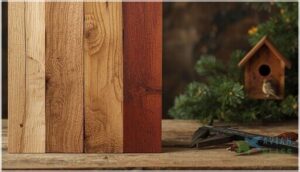
Choosing the right thickness for your birdhouse walls matters more than you might think, since it directly affects how well your feathered visitors stay warm in winter and cool in summer. Too thin, and the wood won’t provide adequate insulation or hold up to weather and predators, but too thick makes the house unnecessarily heavy and harder to work with.
Let’s look at the specific thickness guidelines that balance insulation, safety, and structural durability for your backyard birds.
Insulation and Bird Safety
Think of your birdhouse walls as a nest’s first line of defense—thermal insulation matters more than you’d guess. Wood choice directly impacts bird safety and health, since proper insulation prevents extreme temperature swings that stress nestlings.
You’ll want non-toxic materials with good ventilation systems to avoid moisture buildup and harmful vapors. Ecofriendly birdhouses support bird conservation while keeping nesting materials safe from wood toxicity.
Standard Thickness Guidelines
For small to medium birdhouses, you’ll want walls at least 1/2 inch thick to balance insulation with panel durability. Larger structures benefit from 3/4 inch thickness, especially when working with cedar, pine, or redwood in outdoor woodworking projects.
Keep your floor slightly thicker—around 5/8 to 3/4 inch—for enhanced material selection that prioritizes bird safety and structural integrity.
Structural Integrity
Joint design and wood stiffness work together to keep your birdhouse square and solid through storms and seasons. Cedar, pine, and redwood each offer different load capacities—stiffer species resist wind-driven flex better, while proper material selection for outdoor woodworking ensures frame stability.
Predrill screw holes to prevent splitting, and you’ll maintain the tight joints that protect nesting families for years.
Eco-Friendly and Sustainable Wood Options
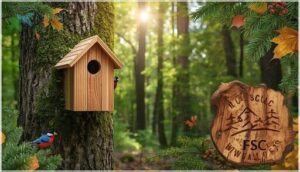
Building a birdhouse that’s good for the birds means thinking about where your wood comes from, and how it affects the bigger picture. You can reduce your ecological footprint by choosing materials from responsibly managed forests, and by avoiding finishes that release harmful chemicals into nesting spaces.
Let’s look at three practical ways to make your birdhouse project more sustainable and safe for the birds you’re inviting into your yard.
Sourcing Responsibly Managed Wood
When you’re choosing cedar or another wood for your birdhouse, look for certification programs like FSC or PEFC that verify sustainable forestry practices. These eco-labels provide wood traceability from forest to your outdoor woodworking project, ensuring responsible sourcing that’s both wildlife-friendly and eco-friendly.
Chain-of-custody certifications track each step, so your sustainable gardening efforts truly protect the ecosystems birds depend on.
Minimizing Ecological Impact
Your wood choice ripples beyond the backyard. Sourcing reclaimed lumber or locally harvested species slashes transportation emissions and bolsters sustainable forestry while embracing eco-friendly materials and green building principles.
Opt for FSC-certified woods to champion environmental stewardship and wildlife preservation. Skip exotic imports that risk introducing invasives.
Choose breathable, nature-friendly decor designs that reduce moisture buildup, extending your birdhouse’s life and honoring wildlife gardening and sustainable gardening values through wood recycling and eco-friendly practices.
Non-Toxic Finishes and Treatments
Water-based polyurethane and natural oils like linseed oil offer safe finishes for birdhouse construction, though you’ll want food-grade options that fully cure before occupancy.
Mineral oil blended with beeswax creates eco-friendly coatings and effective water repellents, while non-toxic sealants protect wood without harmful off-gassing.
Skip treated wood and copper-based preservatives—these woodworking tips and tricks prioritize your feathered neighbors’ health alongside durability.
Frequently Asked Questions (FAQs)
What is the best material for a birdhouse?
Natural materials work best—untreated wood like cedar, redwood, or pine offers breathability, insulation, and safety birds need.
Avoid treated lumber, metal, or plastic; they trap heat, leach chemicals, and compromise birdhouse longevity and bird safety simultaneously.
Is cedar wood good for birdhouses?
Yes, cedar performs exceptionally well for birdhouses. It naturally resists decay and insects, requires minimal maintenance, and provides safe nesting conditions.
Cedar’s durability and weather resistance make it a top choice for outdoor longevity.
Which Wood is best for a birdhouse?
Cedar stands out as the top choice for birdhouse construction, offering excellent durability, natural insect resistance, and weather protection that keeps nesting birds safe for 5–10 years without chemical treatments.
Is fir a good wood for a birdhouse?
Fir wood offers benefits such as being lightweight and workable, but it lacks cedar’s natural oils, requiring protective outdoor finishes.
Without proper sealing, moisture resistance suffers, and your birdhouse materials won’t last long.
Is pine a good wood for a birdhouse?
Pine wood is affordable and insulates well, making it suitable for birdhouses. However, it lacks natural rot resistance, requiring additional protection for outdoor use.
To enhance its durability, apply non-toxic finishes and ensure proper maintenance. Incorporate ventilation and drainage holes to further protect the wood and provide a safe environment for birds.
Can you buy wood for a birdhouse?
Most hardware stores carry birdhouse-friendly lumber, including cedar, pine, and redwood boards.
You’ll find untreated wood sourcing options at lumberyards, while online retailers stock eco-friendly birdhouse materials and pre-cut lumber kits for convenience.
What is the best wood for a birdhouse?
You’ll find that Cedar stands out as the top choice for birdhouses, offering natural weather resistance, excellent insulation, and safety for birds—all without requiring chemical treatments or constant maintenance.
What material is best for bird houses?
Wood reigns paramount for birdhouses because it breathes, insulates naturally, and resists temperature swings that synthetic materials can’t match.
Cedar, redwood, and pine offer durability, bird safety, and eco-friendly options at varying material costs.
How thick should wood be for a birdhouse?
You’ll want three-quarter-inch wood for birdhouse walls and roofs—it provides ideal insulation, moisture resistance, and structural integrity.
Cedar and pine at this thickness guarantee bird safety while withstanding weather without warping.
How long will a pine birdhouse last?
Your pine birdhouse will usually last one to three years outdoors without finish, but applying exterior-grade sealant extends pine durability to three to five years, especially in sheltered, dry climates with proper maintenance schedules.
Conclusion
Your birdhouse doesn’t need to be a Cadillac of construction to keep birds safe—it just needs the right foundation. Cedar and cypress deliver decades of service without fuss, while pine offers a budget-friendly start with proper sealing.
The best wood for bird houses ultimately depends on your local climate, target species, and maintenance commitment. Choose untreated lumber at least ¾-inch thick, skip toxic finishes, and you’ll create shelter that genuinely aids the birds who need it most.