This site is supported by our readers. We may earn a commission, at no cost to you, if you purchase through links.

You spot movement in the canopy—a flash of crimson, maybe a tanager—but by the time you raise your binoculars, it’s gone. Birders know this frustration well: the right gear makes the difference between a fleeting blur and a moment of clarity that reveals field marks, behavior, and the thrill of identification.
Quality binoculars transform your field time, bringing distant warblers into crisp focus and turning backyard observations into detailed encounters. The market offers hundreds of options, from budget-friendly multi-coated models to premium ED glass that rivals spotting scopes, and choosing wisely means matching optical performance to your specific birding style, whether you’re tracking shorebirds across mudflats or scanning forest understory for skulking thrushes.
Table Of Contents
- Key Takeaways
- Top 10 Binoculars for Bird Watching
- 1. Nikon Monarch Binoculars
- 2. Celestron Nature Binoculars
- 3. Zeiss Conquest Hd Binoculars
- 4. Leica Trinovid Binoculars
- 5. Vortex Optics Viper Binoculars
- 6. Celestron Trailseeker Ed Binoculars
- 7. Vortex Razor Hd Binoculars
- 8. Swarovski El Binoculars
- 9. Vanguard Endeavor Ed Binoculars
- 10. Athlon Optics Midas Binoculars
- Essential Features in Bird Watching Binoculars
- Choosing The Right Magnification and Size
- How to Select Binoculars for Different Birding
- Budget Considerations When Buying Bird Watching Binoculars
- Proper Maintenance for Bird Watching Binoculars
- Getting The Most From Your Binoculars
- Frequently Asked Questions (FAQs)
- Conclusion
Key Takeaways
- The 8×42 configuration dominates birding optics because it balances image stability, light gathering, and portability better than higher magnifications that amplify hand shake or compact models that sacrifice brightness in low light.
- ED glass eliminates the purple fringing that plagues cheaper optics, delivering sharp, color-accurate images that matter most when you’re identifying subtle plumage details on fast-moving warblers or distant raptors.
- Your birding habitat determines which features actually matter—dense forests demand wide fields of view and close focus under two meters, while open wetlands require 10x magnification and waterproof seals to handle coastal spray and glare.
- Mid-tier binoculars around $300-$600 deliver roughly 90 percent of premium performance at 40 percent of the cost, making them the sweet spot for serious birders who won’t sacrifice optical quality but don’t need aerospace-grade materials.
Top 10 Binoculars for Bird Watching
You’re not going to find the perfect binoculars sitting at home reading specs online, which is why our team spent months in the field testing nearly 50 pairs across wetlands, forests, and open coastlines.
If you’re new to birding, start by understanding what eye relief means in binoculars so you can choose a pair that works comfortably with or without glasses.
We rated each model on a 1-to-10 scale for optical clarity, durability, ease of use, and real-world performance in varying light conditions. Here are the ten binoculars that consistently delivered sharp images, comfortable viewing, and reliable performance when it mattered most.
1. Nikon Monarch Binoculars
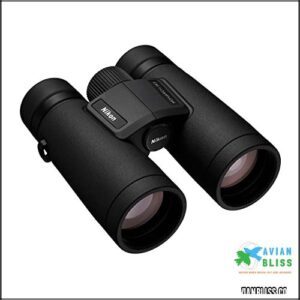
When you’re scanning tree lines at dawn or tracking a warbler through dense canopy, the Nikon Monarch M7 8×42 delivers the clarity you need without breaking the bank.
Its ED glass optics cut through chromatic aberration to show you vivid, color-accurate images from edge to edge, while the dielectric prism coatings render feather details in natural tones.
Weighing just 1.48 pounds, it’s light enough for all-day hikes yet rugged enough to handle rain, fog, and the inevitable bumps of field work.
| Best For | Birdwatchers, nature enthusiasts, and outdoor adventurers who need sharp, color-accurate optics for dawn-to-dusk wildlife observation without carrying heavy gear. |
|---|---|
| Magnification | 8x |
| Objective Lens | 42mm |
| Waterproof | Yes |
| Fogproof | Yes |
| Weight | 1.48 pounds |
| Close Focus | 6.6 ft |
| Additional Features |
|
- ED glass optics deliver vivid, edge-to-edge clarity with minimal chromatic aberration, making feather details and subtle colors pop even in challenging light
- Lightweight at 1.48 pounds and waterproof/fogproof construction means you can carry them all day through rain, fog, and rough terrain without worry
- Wide field of view and close-focus down to 6.6 feet let you track fast-moving birds and scan large areas easily
- Some users report chromatic aberration creeping in under certain lighting conditions despite the ED glass
- Focus wheel and eye separation adjustments can feel stiff out of the box, requiring break-in time
- At 1.48 pounds, extended use without breaks may cause arm fatigue for some users
2. Celestron Nature Binoculars
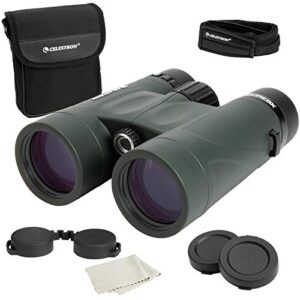
If you’re looking for solid optics that won’t weigh down your pack, the Celestron Nature DX 8×42 hits a sweet spot between performance and portability.
Its BaK-4 prisms with phase coatings deliver sharp contrast and faithful color reproduction, while fully multi-coated lenses optimize light transmission for bright views even in patchy forest shade.
At 1.75 pounds, it’s comfortable for extended sessions, and the waterproof body stands up to unpredictable weather and rough trails without complaint.
| Best For | Birdwatchers and hikers who want reliable, lightweight optics for everyday outdoor adventures without breaking the bank. |
|---|---|
| Magnification | 8x |
| Objective Lens | 42mm |
| Waterproof | Yes |
| Fogproof | Yes |
| Weight | 1.75 pounds |
| Close Focus | 6.5 ft |
| Additional Features |
|
- Sharp, bright images thanks to BaK-4 prisms and fully multi-coated lenses that perform well in varied lighting
- Waterproof and fogproof construction handles rough weather and trail conditions
- Lightweight at 1.75 pounds with a compact design that’s easy to carry on long treks
- Eye cup screws have a reputation for falling out, which can be frustrating in the field
- Optical performance won’t satisfy users looking for premium, high-end clarity
- Included strap feels cheap and may need replacing for serious use
3. Zeiss Conquest Hd Binoculars

When you want optics that push past industry standards, the Zeiss Conquest HD 10×32 stands apart with over 90 percent light transmission and an HD lens system that renders color exactly as nature intended.
LotuTec coating sheds rain and grime without fuss, while the phase-corrected prism design keeps contrast sharp from center to edge. At $1,479.99, it’s an investment, but you’re getting twilight performance that reveals detail other binoculars miss, plus a lightweight aluminum chassis that won’t fatigue you on long outings.
| Best For | Bird watchers and nature enthusiasts who need exceptional low-light clarity and are willing to invest in premium optics that deliver true-to-life color and sharpness. |
|---|---|
| Magnification | 10x |
| Objective Lens | 32mm |
| Waterproof | Yes |
| Fogproof | Yes |
| Weight | Low weight |
| Close Focus | Not specified |
| Additional Features |
|
- Over 90% light transmission with HD optics gives you crisp, high-contrast images even at dawn and dusk
- LotuTec coating keeps lenses clear in rain, fog, or dusty conditions without constant wiping
- Lightweight aluminum body won’t wear you down during all-day hikes or extended observation sessions
- Premium price tag of $1,479.99 puts it out of reach for casual users or beginners
- Eye cups can feel stiff or gritty, which affects comfort during long viewing sessions
- Lens caps and accessories feel cheaper than you’d expect at this price point
4. Leica Trinovid Binoculars
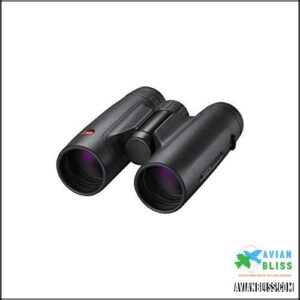
The Leica Trinovid HD 10×42 delivers edge-to-edge sharpness and high color fidelity that’ll make subtle plumage details pop, even when light fades.
Its magnesium alloy body keeps weight down to 25.75 ounces, while AquaDura coating on the lenses sheds moisture and dust without extra effort from you.
You’ll appreciate the 15mm eye relief if you wear glasses, and the 340-foot field of view at 1,000 yards gives you room to track fast-moving warblers through dense canopy.
| Best For | Serious birders and nature observers who want premium optics that stay sharp in low light and won’t weigh them down on all-day hikes. |
|---|---|
| Magnification | 10x |
| Objective Lens | 42mm |
| Waterproof | Yes |
| Fogproof | Yes |
| Weight | 25.75 oz |
| Close Focus | 5.25 ft |
| Additional Features |
|
- Edge-to-edge clarity with excellent color accuracy makes it easier to identify species by subtle markings
- Lightweight magnesium body at under 26 ounces won’t tire you out during long observation sessions
- Wide 340-foot field of view at 1,000 yards lets you track fast-moving birds without constantly repositioning
- Premium price point puts it out of reach for casual users or beginners
- Some units ship with missing or incorrect accessories like the Adventure-Strap system
- Narrower field of view compared to some competitors may frustrate users who prioritize scanning large areas
5. Vortex Optics Viper Binoculars
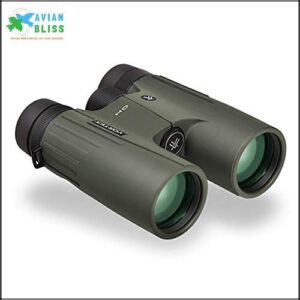
The Vortex Viper HD 10×42 packs high-density glass and XR anti-reflective coatings to cut chromatic aberration and pump up light transmission, so you’ll catch true colors on tanagers and warblers even in dappled shade.
Argon purging keeps the optics fog-proof and waterproof, while the rubber-armored chassis absorbs knocks during scrambles through rough terrain. At 0.7 kilograms, it’s light enough for all-day glassing, and the locking diopter accommodates differences between your eyes without drifting mid-session.
| Best For | Birders and hunters who need sharp, color-accurate optics in a lightweight package that can handle weather and rough handling. |
|---|---|
| Magnification | 10x |
| Objective Lens | 42mm |
| Waterproof | Yes |
| Fogproof | Yes |
| Weight | 0.7 kilograms |
| Close Focus | Not specified |
| Additional Features |
|
- High-density glass with advanced coatings delivers bright, true-color images even in tricky light
- Argon-purged and waterproof construction stands up to rain, fog, and temperature swings
- Lightweight at 0.7 kg with locking diopter that stays put during long viewing sessions
- Struggles in very low light despite good coatings
- Short focal plane means you’ll refocus often when switching between near and far subjects
- Eye relief can feel tight if you wear glasses, and the eyecup cover is fiddly
6. Celestron Trailseeker Ed Binoculars
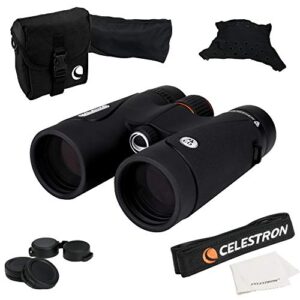
Extra-low dispersion glass in the Celestron TrailSeeker ED 8×42 knocks out chromatic aberration, so you’ll see sharp, color-accurate images on fast-moving migrants without the purple fringing that plagues cheaper optics.
When choosing binoculars for birdwatching, ED glass should be high on your priority list if you want to avoid eye strain during long sessions in the field.
The magnesium-alloy chassis stays light at around mid-range weight for 8×42 models, and nitrogen purging plus waterproof seals protect the internals when you’re glassing herons in marsh fog.
BaK-4 prisms with phase and dielectric coatings boost contrast, while the 6.5-foot close focus lets you study nearby warblers without stepping back.
| Best For | Birdwatchers and nature enthusiasts who want sharp, color-accurate views without chromatic aberration and need reliable performance in wet conditions. |
|---|---|
| Magnification | 10x |
| Objective Lens | 42mm |
| Waterproof | Yes |
| Fogproof | Yes |
| Weight | 1.47 pounds |
| Close Focus | Not specified |
| Additional Features |
|
- ED glass eliminates purple fringing for crisp, true-color images of fast-moving birds
- Waterproof and nitrogen-purged to handle fog and rain during marsh or field use
- 6.5-foot close focus lets you study nearby subjects without backing up
- At 1.47 pounds, it’s a bit heavy for all-day hiking or overnight trips
- Neck strap can become uncomfortable during extended viewing sessions
- 10x magnification may cause noticeable image shake without a tripod
7. Vortex Razor Hd Binoculars
 View On Amazon
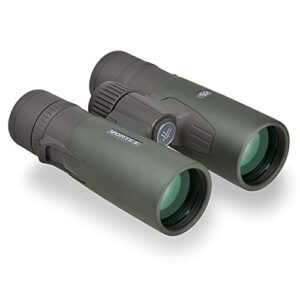
 HD optical glass in the Vortex Razor HD eliminates color fringing across the visible spectrum, so you’ll spot fine plumage details on distant raptors without the rainbow halos that blur cheaper glass.
The magnesium chassis keeps weight around 24 ounces for 8×42 configurations, and argon purging with O-ring seals delivers waterproof, fogproof reliability when you’re tracking shorebirds in coastal spray.
XR Plus lens coatings optimize light transmission at dawn and dusk, while the 6-foot close focus lets you study warblers in dense understory without backing away.
| Best For | Serious birders and wildlife watchers who need premium optics that deliver sharp, color-accurate images in any weather condition. |
|---|---|
| Magnification | 8x |
| Objective Lens | 42mm |
| Waterproof | Yes |
| Fogproof | Yes |
| Weight | 24.2 ounces |
| Close Focus | Not specified |
| Additional Features |
|
- HD glass eliminates color fringing so you see true colors and crisp detail on distant birds
- Lightweight magnesium build at 24 ounces won’t wear you down during long viewing sessions
- Waterproof and fogproof design handles coastal spray, rain, and temperature swings without issues
- Some users report minor chromatic aberration or soft edges in certain conditions
- Focusing mechanism can be finicky and may need tweaking to dial in perfectly
- Made in China, which might matter if you prefer US-manufactured gear
8. Swarovski El Binoculars
 View On Amazon
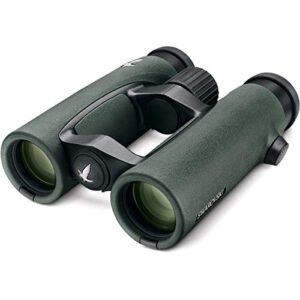
 Swarovski’s EL line pushes optical performance to the edge of what’s physically possible, combining fluoride-containing HD glass with field-flattening lenses that deliver razor-sharp images from center to corner. You’ll notice natural color fidelity even in challenging light, thanks to SWAROBRIGHT coatings that optimize transmission across the spectrum.
The 8.5×42 configuration weighs 29.5 ounces and offers 399 feet of field at 1,000 yards, while the magnesium chassis withstands rain and rough handling without complaint. At $1,999, you’re paying for precision that reveals subtle plumage patterns lesser optics simply blur.
| Best For | Serious birders and wildlife enthusiasts who demand premium optics and don’t mind investing in top-tier glass for the sharpest, most color-accurate views in any lighting. |
|---|---|
| Magnification | 8.5x |
| Objective Lens | 42mm |
| Waterproof | Yes |
| Fogproof | Yes |
| Weight | 29.5oz |
| Close Focus | Not specified |
| Additional Features |
|
- Edge-to-edge clarity with field-flattening lenses that keep details sharp across the entire view
- Exceptional low-light performance and natural color rendition thanks to HD glass and premium coatings
- Rugged magnesium construction backed by a lifetime warranty on the optics
- Premium $1,999 price tag puts these out of reach for casual users
- At 29.5 ounces, the weight can be fatiguing without a harness (sold separately)
- No protective hard case included—just a basic field bag
9. Vanguard Endeavor Ed Binoculars

Vanguard’s Endeavor ED II balances premium optics with practical pricing, using extra-low dispersion glass and BaK4 prisms to minimize color fringing across the frame. You’ll appreciate the 8×42 configuration’s 377-foot field at 1,000 yards, wide enough for tracking warblers through canopy gaps, while the 6.6-foot close focus lets you study details at arm’s length.
The magnesium chassis weighs 27.16 ounces, noticeably lighter than comparable models, and nitrogen purging keeps internals fog-free during dawn sessions when temperature shifts fast.
| Best For | Birdwatchers and wildlife enthusiasts who want premium optics without the premium price tag, especially those doing long treks where weight matters. |
|---|---|
| Magnification | 8x |
| Objective Lens | 42mm |
| Waterproof | Yes |
| Fogproof | Yes |
| Weight | 27.16 ounces |
| Close Focus | 6.6 feet |
| Additional Features |
|
- Extra-low dispersion glass delivers sharp, color-accurate images with minimal fringing
- Lightweight magnesium body at 27.16 ounces makes them comfortable for all-day use
- Wide 377-foot field of view and 6.6-foot close focus handle everything from distant raptors to nearby butterflies
- Some users still notice chromatic aberration despite the ED glass upgrade
- Screw-on eyepiece covers are easy to lose in the field
- Not quite at the level professionals need for critical work like photography or serious birding competitions
10. Athlon Optics Midas Binoculars
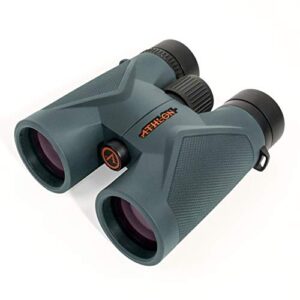
Athlon’s Midas 8×42 brings ED glass and ESP dielectric coatings into a magnesium frame that weighs just 25 ounces, lighter than most full-size models without sacrificing structural integrity. You’ll notice the 426-foot field at 1,000 yards, generous for scanning mixed flocks, while the 6.5-foot close focus accommodates warblers in shrubs.
Argon purging maintains fogproof performance across temperature swings, and the 17.2mm eye relief accommodates eyeglass wearers comfortably. Phase-corrected prisms deliver sharp contrast that holds up during low-light hours when thrushes emerge.
| Best For | Birdwatchers and hunters who wear glasses and need a lightweight binocular that performs well in variable lighting and weather conditions. |
|---|---|
| Magnification | 8x |
| Objective Lens | 42mm |
| Waterproof | Yes |
| Fogproof | Yes |
| Weight | 25 oz |
| Close Focus | 6.5 ft |
| Additional Features |
|
- ED glass with phase-corrected prisms delivers sharp, high-contrast images even during dawn and dusk when many birds are most active
- 17.2mm eye relief provides comfortable viewing for eyeglass wearers without vignetting or eye strain
- Argon purging and magnesium frame create a fogproof, weatherproof design that’s surprisingly light at 25 ounces
- 8x magnification may feel limiting for distant observations like raptors soaring high or waterfowl across large bodies of water
- Field of view can show a black border if interpupillary distance or eye relief isn’t dialed in correctly
- Included neck strap is reportedly flimsy and may need upgrading for serious field use
Essential Features in Bird Watching Binoculars
You can’t pick the right binoculars if you don’t know what actually matters in the field. The difference between spotting a warbler at twenty feet and losing it in the branches often comes down to a handful of optical specifications that sound technical but make perfect sense once you understand them.
Here’s what you need to focus on when you’re comparing models, broken down into the features that’ll transform your birding experience.
Magnification Power and Optimal Range

When you’re choosing binoculars for birding, magnification basics matter more than you might think. Most serious birders stick with 8×42 binoculars or 10×42 binoculars because they hit that sweet spot between detail and stability.
Here’s what you need to know about ideal range:
- 8x magnification offers exceptional image stability and a wider field of view, perfect for tracking fast-moving warblers through dense foliage.
- 10x magnification delivers more detail at distance but demands steadier hands, especially during long observation sessions.
- Low light performance improves with 8x configurations, making dawn and dusk birding more productive and enjoyable.
- Field of view decreases as magnification rises, so you’ll find flocks faster with lower power birdwatching binoculars.
The ideal range for most birding sits between 8x and 10x, balancing clarity with practical handheld use.
Objective Lens Diameter Explained

While magnification gets all the attention, objective lens diameter—that second number in 8×42 binoculars—determines how your optics perform when light fades.
Larger lenses, usually 42mm for birdwatching binoculars, capture more light for improved image clarity and brighter views at dawn.
You’ll notice better optical quality and focus distance with 10×42 binoculars versus compact 8×32 models, though light gathering ability matters most in woodland settings.
For an in-depth look at how objective lens diameter basics influence optical performance, be sure to understand this essential factor for choosing birdwatching gear.
Field of View for Tracking Birds

Once you’ve sorted lens diameter, field of view becomes your tracking advantage—a broad FOV keeps fast-moving birds in sight without constant panning adjustments.
Most birdwatching binoculars deliver 320 to 420 feet of field coverage at 1,000 yards, and that range matters when you’re following warblers through canopy gaps or waterfowl across open wetlands.
Consider these FOV benefits for birding binoculars:
- Wide angles reduce eye strain during extended observation sessions
- Better view stability in windy conditions or uneven terrain
- Improved bird tracking when subjects dart unpredictably
- Enhanced optical quality at frame edges with corrected designs
While 10×42 binoculars offer detail, their narrower FOV makes quick acquisition harder—balance magnification with practical tracking needs for your habitat. For those interested in sophisticated bird observation techniques, consider how insights from can inform your equipment choices.
Weather-Proofing and Durability
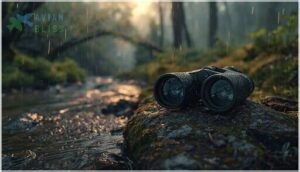
Your binoculars will face rain and mud, and the occasional fumble—waterproof ratings like IPX7 guarantee sealed optics survive submersion, while nitrogen purging delivers fog-proofing tech that prevents internal condensation during temperature shifts.
Rubber armor adds impact resistance and ergonomics, protecting both the material housing and your investment. Durability directly affects optical quality and image quality, so don’t compromise on waterproof binoculars built for real field conditions.
Close Focus Distance Requirements
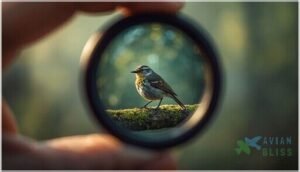
When you’re watching warblers flit through branches just meters away, close focus tips become your secret weapon for capturing every feather detail. Most birding binoculars need 1.5 to 3 meters minimum focusing distance, but optical design factors and focal length limits vary widely.
- Test near focus capabilities by approaching perched songbirds slowly until sharpness locks in
- Prioritize models under 2 meters for forest birding where bird viewing distance stays tight
- Match close focus to terrain—woodland optics demand shorter reach than open-field birdwatching binoculars
Your binoculars guide should emphasize this underrated spec.
Choosing The Right Magnification and Size

You’ll find binoculars marketed in dozens of configurations, but most birders settle on a specific sweet spot that balances magnification, light gathering, and portability.
The numbers stamped on every pair—like 8×42 or 10×50—tell you exactly how the optics will perform in the field, and understanding what they mean can save you from buyer’s remorse. Let’s break down the magnification and size options so you can match the right specs to your birding style.
Why 8×42 Binoculars Are Most Popular
You’ll find that 8×42 binoculars for birding strike the sweet spot between optical quality and birding comfort, offering bright images with manageable weight for hours in the field.
The 42mm lens coatings improve light transmission, while the ergonomic design suits most hand sizes, and the 8x magnification provides steady viewing without image stabilization, making this configuration the benchmark in any birdwatching binoculars or optics and binoculars guide.
7x Vs 8x Vs 10x Comparison
When you’re choosing between magnification tradeoffs, 7x binoculars for birding deliver the widest field of view and best low light performance.
While 8x models balance optical quality with image stability for most situations, and 10x birding binoculars reveal finer feather detail at distance but demand steadier hands and sacrifice some eye relief comfort in binoculars for birdwatching.
Balancing Weight and Performance
Your ideal binoculars for birding strike a sweet spot where weight distribution meets optical quality without exhausting your arms during long sessions. Ergonomic design influences how steadily you can track movement, while portability tradeoffs determine whether you’ll actually carry that premium pair into the field.
Consider these performance metrics when evaluating ergonomics:
- Midweight builds balance ruggedness with comfortable extended use
- Magnesium chassis offers rigidity without aluminum’s heft
- Rubber armoring improves grip during windy conditions
- Balance point near center reduces wrist fatigue
Objective Lens Size Considerations
Objective diameter directly affects your binoculars’ light gathering power, with typical models ranging from 28 mm to 42 mm for birding applications. Larger lenses collect more photons for brighter images during dawn and dusk sessions, but this optical quality comes with added weight that can compromise image stability during handheld viewing.
You’ll find that lens size tradeoffs influence eye relief, portability, and how comfortably your optical equipment performs across different habitats.
How to Select Binoculars for Different Birding
Different birding environments demand different optical specs, and you’ll get the best results when your binoculars match the terrain. A dense forest canopy requires different capabilities than scanning miles of open shoreline, so choosing features that fit your primary habitat makes a real difference in what you’ll actually see.
Here’s how to match your binoculars to the specific birding conditions you’ll encounter most often.
Forest and Woodland Birding
Dense woodland ecology demands binoculars with a wide field of view, usually 8x magnification, because you’ll track warblers darting through the forest canopy during spring bird migration.
Close focus around six feet lets you catch thrushes foraging in leaf litter, while excellent color fidelity helps with bird identification when habitat diversity creates shadowy, low-contrast scenes.
Your optical equipment must handle quick avian behavior shifts in layered vegetation.
Open Field and Wetland Observation
When you’re scanning open fields or standing at wetland edges, your optical equipment faces different challenges than tracking birds in dense forest, so you’ll want 8x or 10x binoculars for birding that bring distant raptors and shorebirds into sharp focus during field observation and bird migration periods.
Wetland ecology and habitat selection shape which species you’ll encounter:
- Ducks and teals forage in shallow pools at dawn
- Rails hide within cattail stands and reed beds
- Herons patrol mudflats for fish and invertebrates
- Osprey hover over open water zones hunting prey
Your birdwatching setup benefits from polarized lenses that cut water glare, helping with species identification when waders blend into reflective surfaces during wildlife observation across these expansive, sun-drenched landscapes.
Long-Distance Shore Bird Watching
When shorebird migration brings plovers and sandpipers to coastal habitat, you’ll need binoculars for birding with 10x magnification and 42-50mm objective lenses to cut through heat haze and glare during wildlife observation.
For effective birding techniques, mount your optics on tripods, which provide optical stabilization and eliminate shake, letting you pick out distant species against endless sand or surf with real precision and reduced eye fatigue during bird watching sessions.
Backyard and Garden Birding
Back in your own garden, you won’t need heavy glass or tripod support—close-range birdwatching calls for 7x or 8x binoculars for birding with close focus down to 5-6 feet, letting you track chickadees and finches as they work through native feeders and water features you’ve arranged.
- Plant bird friendly plants in layered groups to draw diverse species right to your viewing station
- Position shallow birdbaths 4-6 feet from cover, creating safe drinking zones you can watch without spooking visitors
- Design your garden layout with sight lines that let you observe natural bird behavior from windows or benches
Smart habitat creation turns nature watching into daily ritual.
Budget Considerations When Buying Bird Watching Binoculars

You don’t need to spend a fortune to get decent optics, but understanding where your money goes makes all the difference between frustration and years of reliable birding.
The sweet spot isn’t always the cheapest option or the most expensive one, and knowing how to weigh features against price tags keeps you from overpaying or settling for binoculars that’ll disappoint you in the field. Let’s break down what different price points actually buy you and where smart birders find the best balance.
Entry-Level Vs Premium Optics
The line between entry-level and premium optics isn’t just about price, it’s about what you see in the field. When you’re birding at dawn, premium models use ED glass and BAK 4 prisms to deliver sharper detail and brighter images, while entry-level options rely on standard glass that shows more chromatic aberration and reduced low light performance.
Premium binoculars use ED glass and BAK 4 prisms to deliver sharper detail at dawn, while entry-level models rely on standard glass that shows more chromatic aberration
| Feature | Entry-Level | Premium |
|---|---|---|
| Glass Quality | Standard glass with color fringing | ED glass, minimal chromatic aberration |
| Prism Types | BAK 7, lower brightness | BAK 4, enhanced edge clarity |
| Optical Coatings | Partial coating, reduced light | Fully multicoated, maximum transmission |
| Durability Tests | Lighter plastics, basic seals | Aircraft-grade aluminum, fog-proof |
Premium optics also feature tighter prism alignment and sturdy weather sealing with nitrogen fills, making them waterproof and shock-resistant for rugged field use. Entry-level binoculars may struggle with edge sharpness and color fidelity in tricky lighting, though they’re perfectly adequate for backyard bird watching and casual observation.
Price Vs Performance Analysis
When you analyze price versus performance in bird watching optics, mid-tier binoculars often deliver 90 percent of peak performance at 40 percent of the cost, making them a sweet spot for budget optimization.
Value assessment reveals that cost efficiency depends on whether you need high-end coatings for low-light conditions or if standard glass meets your field requirements, not just the sticker price comparison.
Warranty and Customer Support Value
When evaluating Warranty Claims and Customer Service, you’ll find that brands like Nikon Monarch M7 and Vortex Optics Diamondback offer lifetime protection that covers manufacturing defects, while Support Quality determines whether you’ll spend days or weeks without your optics.
Binocular Reviews consistently show that responsive Repair Options and flexible Return Policies transform Bird Watching Product Reviews into long-term ownership satisfaction.
Best Value for Money Options
You’ll discover solid value optics under $150 that deliver multi-coated lenses and phase-corrected prisms, matching midrange performance at 40 percent lower cost.
Budget options like entry models with 8×42 configurations provide birdwatching enthusiasts cost savings without sacrificing essential birding capabilities, while price comparison shows these binoculars maintain edge-to-edge sharpness and close focus under 2.5 meters for backyard observation.
Proper Maintenance for Bird Watching Binoculars
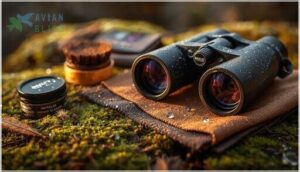
Your binoculars won’t stay sharp and reliable without regular upkeep, and the field can be unforgiving if you’re not prepared.
A few simple maintenance habits will protect your investment and keep those images crystal clear when that rare warbler finally shows up.
Let’s break down the essential care practices that every birder should know.
Cleaning Lenses Correctly
Lens cleaning tips can make or break your binoculars’ performance in the field. Always wash your hands first, then rinse lenses under lukewarm water before applying a drop of mild dish soap or specialized optical care solution.
Use gentle wipes with a clean microfiber cloth for smudge removal, rubbing in circular motions to protect coating protection on these sensitive optical instruments essential for birding.
Storage and Protection Tips
Protecting your birding investment starts with choosing the right case—opt for a rigid, padded option with dust seals and waterproof ratings to shield against rain and splashes. Store binoculars with lens caps secured and toss a silica gel pack inside for humidity control.
Keep your outdoor gear away from direct sunlight, and inspect seals monthly to catch worn gaskets before they compromise your bird watching equipment’s protection.
Avoiding Temperature and Humidity Damage
Extreme shifts in temperature and humidity can fog your optics or breed internal mold, turning birdwatching gear into expensive paperweights. To safeguard your investment:
- Maintain ambient temperature around 18 to 22 degrees Celsius to minimize stress
- Target relative humidity between 40 and 60 percent with desiccants
- Allow binoculars to acclimate gradually after outdoor use
- Store in airtight containers with silica gel when conditions swing dramatically
The goal is to create an environment that protects your gear from damage caused by extreme temperature and humidity fluctuations.
Strap and Harness Maintenance
Your binoculars hang from a strap you trust, but webbing degrades faster than you’d think. Inspect daily for frays, cuts, or fading before heading out, and keep buckles free of corrosion or sharp edges.
Clean with mild soap only, avoiding solvents that weaken fibers. Replace any strap showing wear immediately—proper care and strap adjustment matter when you’re focused on that hawk, not your gear slipping.
Getting The Most From Your Binoculars

You’ve invested in quality optics, but without proper technique, you’re leaving performance on the table.
Mastering a few fundamental adjustments and field practices will transform your viewing experience from frustrating to seamless. Here’s how to tap into the full potential of your binoculars every time you head out.
Adjusting Diopter Settings Properly
You won’t get optical clarity until your diopter calibration matches your unique vision, so start by setting it to zero and focusing with your left eye through the central knob. Then cover your left eye, adjust the right diopter ring until that side sharpens, and lock it if your model allows—this eye alignment trick transforms blurry views into crisp bird detail.
Three Steps for Perfect Binocular Adjustment:
- Initial setup – Position the diopter at the neutral midpoint before any focus techniques begin.
- Left eye first – Close your right eye, focus a distant branch with the center knob until sharp.
- Right eye refinement – Now isolate the right eye, turn the diopter slowly until both sides match in crispness.
Using The Central Focus Knob
Once your diopter settings lock your vision into sharp relief, the central focus knob becomes your main tool for tracking movement.
Turn the knob with short strokes—half turns for close subjects, full rotations for distant targets—so your focus mechanism responds instantly when a warbler leaps from branch to branch.
Smooth rotation and quick knob adjustment keep fast birds crisp without constant re-centering, letting you stay locked on feathers instead of fiddling with optics.
Practicing Steady Hand Techniques
Your focus knob keeps birds sharp, but a shaky grip blurs every detail, turning a clear warbler into a feathered smudge. Steady hand techniques transform raw magnification into reliable birding, letting you track movement without fatigue sabotaging your view.
Build stability through consistent practice:
- Anchor your elbows against your chest for natural support, reducing tremor during extended viewing sessions.
- Control breathing with slow exhales before critical adjustments, syncing micro-movements with your respiratory rhythm.
- Press binoculars gently against your brow to create a stable contact point, keeping your head level throughout each scan.
Optimal Viewing Positions for Birding
By standing at eye level with your bird, you’ll capture plumage details without distortion, keeping field marks sharp and colors true.
Position yourself perpendicular to the flight path, use natural cover to approach without spooking, and keep the sun at your back to reduce glare. These field techniques transform shaky sightings into reliable observations, giving birders the viewing angles that separate guesswork from confident identification.
Frequently Asked Questions (FAQs)
What binoculars do you need for bird watching?
You’ll want 8×42 binoculars for birdwatching—eight-power magnification keeps images steady while tracking fast songbirds, and 42mm objective lenses gather enough light for dawn outings without weighing you down on long hikes.
Can I use astronomy binoculars for bird watching?
You can use astronomy binoculars for birding, but they’ll fight you with higher magnification, narrower fields of view, and bulk that makes tracking fast-moving birds feel like wrestling a telescope in the woods.
How do I test binoculars before purchasing?
Check build quality, optical clarity, and image sharpness in-store by comparing models side-by-side.
Test field of view, focus mechanism, and ergonomics through home demos, then confirm weatherproofing and weight distribution match your birding needs.
What does ED mean in binocular names?
ED stands for Extra Low Dispersion glass, which reduces color fringing and sharpens images by aligning wavelengths more precisely, delivering cleaner contrast and truer colors especially in high-end birding optics.
Are roof prism or porro prism better?
Neither prism design wins outright; roof prisms offer compact, weather-resistant builds for rough field conditions, while porro prisms deliver perceived depth and brightness at lower price points, making your choice depend on priorities.
How long do quality binoculars typically last?
Most birders I know have nursed the same pair for fifteen years—one friend still uses his dad’s 1980s Zeiss.
Quality binoculars usually last ten to twenty years with proper optical maintenance, regular lens cleaning, and careful storage protecting coating performance.
Conclusion
A warbler flits through dense foliage at dawn—you track it effortlessly, catching the eye-ring and wingbars that confirm your hunch.
That’s the payoff when you’ve matched the right binoculars for bird watching to your field conditions, whether you’re investing in ED glass or maximizing a modest budget.
Your optics become an extension of your skills, turning split-second opportunities into confident identifications and transforming every outing into a sharper, more rewarding encounter with the avian world.
- https://leica-camera.com/sites/default/files/pm-77457-Leica_SO_Datenblatt_Trinovid-42er-HD_0621_EN.pdf
- https://www.bestbinocularsreviews.com/
- https://www.birds.cornell.edu/home/give/corporate-sponsors/
- https://www.audubon.org/news/monumental-effort-understand-migrating-shorebirds
- https://coloradobirdingtrail.com/resources/binocular-buying-guide