This site is supported by our readers. We may earn a commission, at no cost to you, if you purchase through links.
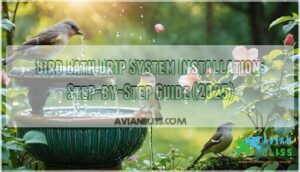 Last spring, I watched a cedar waxwing land on my plain ceramic bird bath, glance around for exactly three seconds, and fly off without taking a single sip. Moving water transforms an ignored basin into an irresistible oasis because birds hear those droplets from impressive distances and instinctively trust water that’s visibly fresh.
The next week, after I rigged up a simple drip system using a milk jug with a pinhole, that same bath became the neighborhood hotspot—warblers, finches, and even a shy hermit thrush showed up within days. Installing a bird bath drip system takes about 20 minutes with basic materials you probably already own, and the payoff is immediate: more species, longer visits, and the satisfaction of creating a backyard feature that actually works.
Table Of Contents
- Key Takeaways
- Why Install a Bird Bath Drip System?
- Choosing The Right Drip System Materials
- Step-by-Step Bird Bath Drip Installation
- Maintenance and Care for Bird Bath Drippers
- Advanced Tips and Creative Drip System Upgrades
- Frequently Asked Questions (FAQs)
- Do birdbath Drippers work?
- How do you put water in a birdbath?
- Do birdbath Drippers have adjustable valves?
- How do you keep a birdbath from dripping water?
- How do you drip a bird bath?
- How do you make a birdbath dripper?
- How do you prevent freezing in winter drips?
- Whats the ideal drip rate per minute?
- Can drippers work on shallow bird baths?
- How do you clean hard water deposits?
- Conclusion
Key Takeaways
- Moving water transforms a neglected bird bath into a wildlife magnet because birds hear dripping sounds from hundreds of feet away and instinctively trust fresh, circulating water over stagnant pools that harbor parasites and disease.
- A DIY drip system costs under $10 using recycled materials like milk jugs and takes about 20 minutes to install, delivering the same bird-attracting power as expensive fountains ($50-$200) without ongoing electricity costs or pump maintenance.
- The ideal drip rate is one to two drops per second—fast enough to create audible movement that attracts over 70% of migrating warblers and increases hummingbird visits by 25%, but slow enough to prevent water waste and frequent refilling.
- Regular maintenance every two days (scrubbing algae, refreshing water, flushing tubing monthly) keeps the system functional and safe for birds, while winterizing before the first frost prevents cracked tubing and damaged components.
Why Install a Bird Bath Drip System?
You’ve probably got a birdbath sitting out there collecting dust—or worse, mosquito larvae. The truth is, most birds cruise right past stagnant water like it’s a sketchy gas station bathroom.
But add a simple drip system, and suddenly your backyard becomes the neighborhood watering hole that actually works.
Benefits for Attracting More Birds
If you want your backyard to buzz with more feathered visitors—the kind that don’t just grab a seed and leave—a drip system turns your birdbath into a magnet that few species can resist. Moving water creates habitat that attracts Bird Diversity you wouldn’t normally see: warblers, flycatchers, and other insect-eaters that ignore feeders altogether.
Better Water Quality from constant circulation means healthier Bird Behavior, and that Species Attraction translates to real Habitat Creation right in your yard.
Why Moving Water Appeals to Birds
Birds don’t just see moving water—they hear it from hundreds of feet away, and that sound triggers an instinct that tells them safety, freshness, and a clean place to drink are nearby. Those Water Sounds drive Bird Attraction in ways still water never will. Here’s why Avian Behavior responds so powerfully:
Birds hear moving water from hundreds of feet away, triggering instincts that signal safety and freshness no still water can match
- Feather Care demands clean water—drips signal uncontaminated sources
- Bird Hydration instincts evolved around streams, not stagnant pools
- Moving water means fewer parasites and disease risks
That’s the edge you’re giving them.
Comparing Drippers Vs. Fountains
Fountains look impressive and sound delightful, but they’ll drain your wallet on electricity and demand constant pump maintenance—drippers give you the same bird-pulling power for pennies and almost zero upkeep.
Cost Comparison is brutal: fountains run $50–$200 plus ongoing power bills, while a DIY dripper costs under $10. Water Efficiency? Drippers waste less through evaporation. Noise Levels stay subtle with drips—no humming motors. Maintenance Needs drop to occasional refills.
Sure, fountains win Aesthetics Appeal, but your birds don’t care about Instagram-worthy centerpieces.
Bird Species Attracted by Drip Systems
Your drip might cost less than a fountain, but the real payoff? Species diversity skyrockets. Over 70% of North American warblers show up during migration when they hear that steady plink-plink. You’ll spot hummingbirds darting through droplets, finches splashing in groups, and even the occasional hawk stopping by for a drink—proof that moving water pulls in birds you’d never see at a static basin.
- Warbler migration brings Wilson’s warblers, Yellow-rumped warblers, and Townsend’s warblers to your yard
- Hummingbird attraction increases by 25% with drip features—Ruby-throated and Anna’s hummingbirds love the motion
- Finch behavior shifts as Goldfinches and Purple finches visit 15% more often with constant drips
- Sparrow diversity expands with Song sparrows and White-crowned sparrows bathing in flocks of 2–5 birds
The use of a birdbath drip system, also known as bird friendly features, can greatly boost the attractiveness of your yard to various bird species.
Choosing The Right Drip System Materials
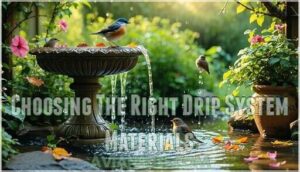
You don’t need to spend a fortune to bring the sound of moving water to your backyard. With a few simple materials—many you might already have—you can build a dripper that works just as well as the expensive options.
Let’s look at what you’ll need to get started.
DIY Dripper Options (Jugs, Bottles, Tubing)
You don’t need a fancy setup to bring the magic of moving water to your backyard—just raid your recycling bin and get creative. A plastic milk jug or maple syrup container works perfectly—poke a safety pin hole in the bottom for drip rate control, attach flexible tubing materials if you want distance, and adjust jug sizes based on how long you’ll be away. Bottle adapters and water flow regulators help fine-tune everything.
Store-Bought Vs. Homemade Drippers
Making the call between store-bought and DIY often comes down to what you value more—speed or savings. Cost Comparison shows commercial kits run $8–$40 for basics (solar versions hit $129+), while homemade versions cost under $2. Durability Tests favor store-bought brass or UV-resistant vinyl lasting 2–5 years versus plastic jugs needing replacement every 3–6 months, but Customization Options shine with DIY—paint it, hide it, tweak it. Water Efficiency and adjustable flow (0–1 GPH) give manufactured Dripper Materials the edge for precision control. When selecting a drip system, consider using a drip irrigation kit for ideal water distribution.
- Budget-friendly: Homemade drippers cost less than $2 using recycled materials
- Longevity: Commercial brass or stainless models last 2–5 years with warranties
- Precision control: Store-bought valves adjust flow from 0–1 gallon per hour
- Creative freedom: DIY versions offer unlimited camouflage and garden integration options
Essential Tools and Supplies Needed
Grab a drill, some tubing, and whatever’s lurking in your garage—you’re about to MacGyver a backyard oasis.
Start with a water jug (1–3 gallons works), a spigot kit or valve, ¼-inch tubing materials, adjustable drip valves, needle-nose pliers, a safety pin, and basic DIY hardware like zip ties or wire.
You’ll need a hanger or hook for mounting—test your drip rate before committing.
Eco-Friendly and Upcycled Material Ideas
Before you toss that empty gallon jug, consider this: your recycling bin might hold the most sustainable dripper material you’ll ever find. Transform trash into eco-friendly birdbath magic with these repurposed treasures:
- Recycled plastic milk jugs or maple syrup containers—drill, drip, done
- Sustainable materials like reclaimed clay pots with cork stoppers
- Repurposed wood blocks to regulate spigot flow naturally
- Old garden hose scraps as green designs for tubing runs
Step-by-Step Bird Bath Drip Installation
Installing a bird bath drip system isn’t rocket science, but getting it right means your feathered friends will actually show up. We’re breaking this down into four manageable steps that’ll have water dripping and birds splashing in no time.
Here’s exactly what you need to do.
Preparing Your Bird Bath and Location
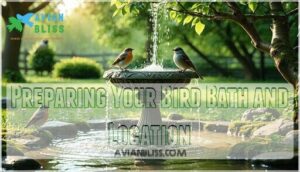
Setting up your bird bath in the right spot with the proper foundation makes all the difference between a dripper that works like a charm and one that becomes a frustrating headache.
Start with location planning—choose a spot within twenty feet of your water source to keep tubing runs manageable. Your birdbath size matters too, since larger basins catch drips better and require less frequent refilling.
For yard preparation, pick level ground with partial shade where birds feel safe from predators but can spot approaching cats.
Assembling and Positioning The Dripper
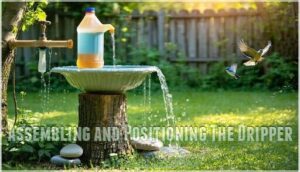
Now it’s time to put your dripper together and get it positioned over the bath—think of this as the moment your backyard transforms from a plain watering hole into a bird magnet that practically rings the dinner bell.
Here’s your assembly gameplan:
- Jug Placement: Set your container on a stump or hanger above the bath
- Spigot Control: Wedge a small piece of wood against the valve to regulate flow
- Rock Placement: Add stones to the basin for bird footing and tubing connection stability
Adjust the wood angle until you’ve got steady drips hitting your target zone.
Adjusting Drip Rate for Best Results
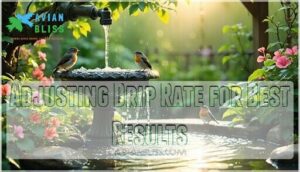
The magic’s in the timing—too fast and you’ll drain your jug before lunch, too slow and birds won’t even notice the trickle. Aim for one drop per second—that’s your ideal pace for perfect drip speed that keeps birds curious without wasting water.
Twist your dripper valve settings slowly, watching how each adjustment changes the water flow. You’ll know you’ve nailed the drip rate control when birds start showing up within minutes, drawn by that irresistible sound.
Hiding Tubing for a Natural Look
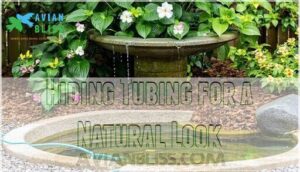
Once you’ve got your drip dialed in, that visible tubing can make your bird bath setup look more like a science experiment than a natural oasis.
Tuck it under bark mulch or loose soil for instant tubing concealment—these camouflage techniques blend your drip system aesthetics right into your natural landscaping.
Yard integration gets easier when you run lines behind existing plants or along fence posts where they disappear completely.
Maintenance and Care for Bird Bath Drippers
Getting your drip system up and running is just the first step—keeping it clean and functional is what brings birds back day after day.
Regular maintenance prevents algae, clogs, and stale water that can turn your birdbath from a bird magnet into a health hazard.
Here’s what you need to know to keep your drip system working smoothly through every season.
Cleaning and Preventing Algae Growth
Left unchecked, that thin green film on your birdbath isn’t just ugly—it’s a health hazard for every bird that stops by for a drink. Scrub it down every two days with a stiff brush and rinse thoroughly—no soap needed for algae removal.
For birdbath sanitizing, use a weak bleach solution (one part bleach to nine parts water) once weekly, then rinse completely for water purification.
Don’t forget drip system cleaning: flush your tubing monthly to maintain fresh water maintenance.
Keeping Water Fresh and Safe for Birds
Clean water isn’t a one-and-done deal—you need to swap it out every other day, even with that drip running, because bacteria and debris build up fast in summer heat. Check water quality daily—if it’s cloudy or has floating stuff, dump it immediately for bird health.
Your drip provides fresh water movement, which helps with algae control, but stagnant pools at the bath’s edge still need attention for proper water purification.
Troubleshooting Common Drip System Issues
Why’s your dripper barely trickling—or worse, flooding your birdbath? Clogged emitters cause over 50% of drip failures, usually from sediment or mineral buildup blocking the tiny opening.
Check water pressure first—anything below 10 psi kills flow rates fast. Leak detection matters too: small connection leaks waste 5–12% more water monthly.
For solid system maintenance, flush tubing with weak bleach solution and replace any visibly blocked drippers immediately.
Seasonal Adjustments and Winterizing
When temperatures drop below freezing, your drip system won’t just slow down—it’ll crack, burst, or turn into a useless ice sculpture unless you winterize it properly. Cold weather tips for seasonal maintenance include:
- Drain all tubing and remove plastic containers before the first hard frost—frost protection starts here
- Store drippers indoors to prevent cracking
- Use birdbath heaters for winter care instead of drip systems
- Insulate exposed outdoor spigots with foam covers for drip system insulation
Advanced Tips and Creative Drip System Upgrades
Once you’ve got the basics down, it’s time to level up your bird bath drip system with some clever upgrades that’ll turn your backyard into an irresistible oasis. These modifications aren’t just about attracting more birds—they’re about creating a healthier, more vibrant water feature that practically runs itself.
Here’s how to take your setup from functional to outstanding.
Adding Misters or Water Wigglers
If you want to turn your birdbath into an irresistible avian spa, misters and water wigglers are your secret weapons—they create movement and sparkle that birds simply can’t ignore. Misters produce a fine spray that catches sunlight beautifully, while water wigglers keep water constantly rippling without electricity.
Both birdbath enhancements work with existing drip variations—just add them to your current setup for instant spray features that’ll have birds lining up for their turn.
| Enhancement Type | Best For | Installation Difficulty | Water Usage |
|---|---|---|---|
| Mister | Hummingbirds, warblers | Moderate | Higher |
| Water Wiggler | All songbirds | Easy | Minimal |
| Combination Setup | Maximum attraction | Moderate | Variable |
| Solar Mister | Off-grid locations | Easy | Moderate |
Creating Recirculating Drip Systems
Recirculating systems transform your birdbath into a self-sustaining water feature that conserves every precious drop while keeping birds coming back for more. Smart Pump Selection is essential—choose a small submersible fountain pump (50-100 GPH) that quietly circulates water from a hidden reservoir below your bath.
Recirculation Methods include running tubing from the reservoir pump up to your dripper, creating continuous Flow Control that slashes water waste by up to 90%. This Drip System Design lets you dial in the perfect flow rate while your Water Conservation game stays strong—no more daily refills, just endless birdbath action.
Enhancing Birdbath Areas With Plants and Perches
Your birdbath shouldn’t exist in isolation—surrounding it with native plants and strategic perches turns a simple water feature into a backyard sanctuary that birds actually feel safe visiting.
Here are three key strategies to enhance your bird-friendly space:
- Native Plant Selection creates natural cover within 3-5 feet—shrubs like serviceberry or elderberry offer protection while your Water Feature Landscaping stays functional.
- Bird Perch Designs matter: add branched twigs or bamboo stakes 12-18 inches above water for preening stations.
- Garden Bird Habitat upgrades include Eco Friendly Decor like stacked stones for ground-feeders and low flowering plants for insect buffets.
Using Drip Systems for Mosquito Prevention
Moving water doesn’t just attract birds—it’s your secret weapon for Mosquito Prevention. A Drip System keeps water circulating enough to disrupt mosquito breeding cycles (they need 7+ days of still water).
Here’s what you need to know about Mosquito Control and Bird Health:
| Water Movement Strategy | Mosquito Impact |
|---|---|
| Steady drip (1-2/second) | Prevents egg laying |
| Fresh water every 2 days | Eliminates larvae stages |
| Ripple effect from drips | Disrupts surface tension |
| Combined with cleaning | Removes breeding sites |
Keep your Water Movement consistent, and you’ll protect Bird Health while reclaiming your yard from those buzzing invaders.
Frequently Asked Questions (FAQs)
Do birdbath Drippers work?
Yes, drippers absolutely work—bird attraction skyrockets when you add the sound of moving water.
The gentle splash creates an irresistible audio beacon that brings in species you’d never see otherwise, from warblers to chickadees, thanks to enhanced dripper efficiency and proven wildlife benefits.
How do you put water in a birdbath?
Fill your birdbath directly from a garden hose, pitcher, or watering can—aim for 1-2 inches deep.
Proper water level management and birdbath refilling keep birds safe and your drip rate control effective.
Do birdbath Drippers have adjustable valves?
Most drippers come with adjustable valves that let you control water flow and drip regulation—turning a simple nozzle transforms your setup from a splashy mess into a perfectly timed attraction with precise pressure settings.
How do you keep a birdbath from dripping water?
You don’t want a steady drip—that’s the whole point! But if you need overflow control or leak fixing, check your birdbath sealing, adjust valve settings for better water conservation, and guarantee drip prevention by tightening connections.
How do you drip a bird bath?
Install a dripper by suspending a container with a small hole above your birdbath—adjust the opening size to control water flow rates.
Proper birdbath placement near cover attracts more species using simple dripper materials like recycled jugs.
How do you make a birdbath dripper?
Grab a plastic jug, poke a tiny hole in the cap with a safety pin, fill it with water, and hang it over your birdbath—gravity does the rest, creating that irresistible drip.
How do you prevent freezing in winter drips?
The trick to freeze prevention isn’t fancy tech—it’s consistent heat.
Add a birdbath heater with a thermostat to keep water liquid, or insulate exposed tubing with foam sleeves and heat tape for cold weather solutions.
Whats the ideal drip rate per minute?
Think of it like a leaky faucet that’s just right—not a gush, not a tease. Aim for one to two drips per second for ideal drip speed and bird attraction rates.
This drip rate calculation ensures proper water flow control and drip system efficiency without waste.
Can drippers work on shallow bird baths?
Absolutely—shallow baths work great with drippers, especially for smaller songbirds. Keep Water Depth Effects minimal by maintaining one to two inches; this prevents drowning risks while maximizing Bird Attraction Rates through gentle Shallow Bath Drips and smart Dripper Placement near edges.
How do you clean hard water deposits?
White vinegar works wonders on hard water deposits—soak affected areas for thirty minutes, scrub with a brush, then rinse thoroughly.
For stubborn mineral buildup, try a paste of baking soda and water for extra descaling power.
Conclusion
A week without that drip system? Your bird bath sat empty, ignored, gathering dust. A week after installing one? You’re scrambling for your field guide because species you’ve never seen are suddenly regulars. That’s the shift moving water delivers—from boring fixture to backyard magnet.
Your bird bath drip system installation doesn’t need fancy gear or deep pockets, just twenty minutes and the willingness to experiment. Adjust that flow rate, watch who shows up, and you’ll wonder why you ever settled for still water in the first place.
- https://www.epa.gov/recycle/reducing-and-reusing-basics
- http://www.livingthecountrylife.com/gardening/recycled-bird-baths/
- https://www.birdwatchersdigest.com/bwdsite/learn/top10/attract-birds-with-water.php
- https://blog.nature.org/science/2015/03/09/backyard-bird-baths-science-birding-wildlife-habitat/
- https://www.allaboutbirds.org/news/attract-birds-with-birdbaths