This site is supported by our readers. We may earn a commission, at no cost to you, if you purchase through links.
 Let’s talk bird bath placement for shade—it’s a science and a slight art.
Tuck your bird bath under trees or near shrubs to keep water cool and slow evaporation, giving your feathered guests a spa day instead of a steam bath.
You’ll notice less algae too, since shade helps stop those green invaders in their tracks.
Go for dappled shade instead of deep cover; birds love visibility as much as relief from the sun’s glare.
Avoid placing it right under branches, though, unless you want leaf soup.
There’s more to keeping water clean and birds coming—just wait until you see what’s next.
Table Of Contents
Key Takeaways
- Place your bird bath in dappled or partial shade to keep water cooler, slow evaporation, and reduce algae—birds appreciate fresher, safer water.
- Avoid putting the bath directly under trees to prevent constant mess from falling leaves, seeds, and debris.
- Make sure your bird bath is easy for birds to spot and reach—too much deep shade hides it, but filtered sunlight keeps it visible and appealing.
- Balancing sun and shade throughout the day gives birds a comfortable, attractive spot while making your maintenance routine a whole lot easier.
Shade Placement Benefits
When you set your bird bath in the shade, you’ll notice the water stays cooler and cleaner, making birds flock to it faster than you can say “splash.”
Cooler, cleaner water in the shade turns your bird bath into the neighborhood’s favorite splash zone for feathered friends!
Shaded spots cut down on evaporation, slow algae growth, and keep your feathered visitors comfortable without turning their bath into a hot tub.
Reduced Water Evaporation
Imagine this: your bird bath sits in the shade, acting as its own umbrella and giving water evaporation a run for its money.
Shade for bird bath use works like an evaporation barrier, cutting down how often you need to refill.
Proper bird bath placement, along with smart material choice and depth optimization, makes refill frequency manageable—even during tough climate impact seasons.
Cooler Water Temperatures
Shifting from evaporation reduction, let’s talk temperature control. Placing your bird bath in shade helps water stay several degrees cooler, even on hot days.
Cooler water means:
- Less stress for birds in summer heat
- Longer-lasting water freshness
- Improved bird comfort—no scalded feathers here!
- Bird bath temperature stays ideal for wildlife
Shade for bird bath equals comfort.
Decreased Algae Growth
A shaded bird bath is your secret weapon for algae prevention.
Algae love sunlight, so placing your bath in partial shade cuts algae growth by more than half.
Use shaded materials, and try natural algaecides if you’re battling stubborn patches.
With less sun, you’ll find yourself cleaning less often and enjoying better water quality for longer stretches in your bird bath shade spot, utilizing natural algaecides.
Increased Bird Comfort
When you place your bird bath in the shade, you’re not just lowering algae—you’re giving birds a comfortable, safe spot to bathe.
A shaded bird bath offers birds a refreshing, safe retreat where they can relax, preen, and enjoy cool comfort all day.
Shaded bird baths keep water fresh, which promotes healthier feather preening and more bathing space.
With better predator visibility and safe access, birds feel right at home.
Smart bird bath placement means cooler water, happier wildlife, and a livelier backyard.
Choosing Shade Locations
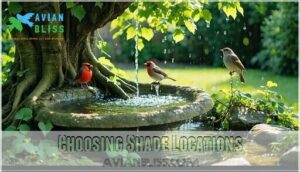
You’ll want to place your bird bath where it enjoys partial shade throughout the day, using trees or shrubs to shield the water from direct sunlight.
Think of it as helping your feathered guests avoid a hot tub on a summer afternoon, while also keeping algae and evaporation in check.
Partial Shade Options
How can you make your bird bath the hottest ticket in the backyard?
Go for partial shade. Filtered sunlight in the morning keeps the water fresh, while afternoon shade protects from overheating.
Use plant selection for dappled coverage—think leafy shrubs or small trees.
With the right bird bath placement, you strike a balance between sun protection and bird appeal every day.
Dappled Shade Benefits
Filtered sunlight is your bird bath’s best friend, balancing temperature regulation and moisture retention.
Dappled shade keeps water cool, slows algae, and boosts bird visibility—a real win in bird bath placement. To further enhance the appeal, consider adding perching spots for the birds.
Scientific perks of dappled shade include:
- Reduced algae prevention and water loss
- Natural bird bath sun protection
- Consistent moisture retention
- Improved bird bath shade exposure and comfort
Avoiding Direct Sunlight
You know how birds love a cooling dip, not a hot tub?
Dodging direct afternoon sun is key.
Too much bird bath sun can crank up water temps fast, increase evaporation, and invite algae parties.
For real bird comfort and sunburn risk reduction, treat your bath to steady dappled shade.
Consider adding moving water features to further attract birds.
Sun vs shade? Shade wins for cooler temperatures, Evaporation Reduction, and Algae Prevention.
Considering Local Climate
Every backyard tells its own weather story, so don’t just copy what works for your neighbor.
Regional Temperatures, Precipitation Levels, and local Microclimates all play a role in finding the best bird bath location.
Factor in Seasonal Adjustments—shade in summer makes water last, but the right sun vs shade balance is vital for smart bird bath placement and lasting bird comfort.
Bird Bath Placement Tips
You’ll want to choose a spot for your bird bath that avoids falling leaves, saves water, and brings in visitors of all shapes and sizes.
Let’s look at how placement near gardens—or away from messy trees—can keep things cleaner and attract more birds, all without making you refill it every hour, which helps to save water and attract more birds.
Placing Near Gardens

Tuck your garden bird bath close to flower beds or veggie patches, and you’ll score bonus points for garden irrigation and visual harmony.
Birds splash, water spills, and thirsty roots benefit. Smart bird bath placement also means fewer pests, since birds help with natural pest control.
Consider adding essential bird bath products to enhance the experience. Just watch for soil contamination—keep water clean for healthy plants and happier feathered guests, ensuring a positive impact on visual harmony.
Conserving Water

When you place your bird bath near Drought Tolerant Plants or a patch that soaks up runoff, you’re practicing water conservation without even trying.
Shady spots cut evaporation, while Efficient Bird Baths and savvy bird bath placement (away from strong sunlight exposure) help keep refills down.
Consider using specially designed models to minimize water waste.
Try Rainwater Harvesting or Water Recycling to save resources—every drop really counts.
Attracting Diverse Wildlife

Once you’ve set up your bird bath to conserve water, bring more variety to your backyard by focusing on wildlife water needs.
Position the bath in partial shade with nearby cover, but not too close to predator hideouts.
Consider adding a dedicated wildlife pond to further enhance the environment.
This bath habitat design, paired with good bird bath placement, encourages bird species variety—even a chipmunk or frog might drop by during seasonal wildlife changes!
Avoiding Tree Contamination

Amid shade and sunlight exposure, avoid locating your bird bath directly beneath dense foliage, as you’ll wind up with a side order of leaf debris, branch droppings, and seed contamination.
For cleaner water and easier pest control, follow these four pointers:
- Avoid thick tree canopies
- Check for overhanging branches
- Limit root intrusion
- Stay clear of sap-laden trees to ensure a healthier environment for your birds, promoting easier pest control.
Shade Considerations

You’ll want to pay close attention to shade when setting up your bird bath, since a splash of sunlight or too much heat can make water evaporate faster than birds visit on a summer day.
By understanding how shade helps regulate water temperature and reduces waste, you can keep your feathered visitors comfortable while saving yourself extra refills.
Regulating Water Temperature
Mastering water temperature means thinking like a bird on a summer stroll.
Shade isn’t just for lounging—it keeps your bird bath cooler, cuts down on evaporation, and stops algae from throwing a pool party.
By balancing sunlight exposure with climate considerations, you’ll create comfort for birds and keep their bath fresh.
Smart bird bath placement equals temperature balance every season, and this balance is crucial for maintaining a fresh bath.
Reducing Water Waste
After you’ve tackled water temperature, think about how shade helps with reducing water waste.
Efficient refilling gets easier since less water evaporates out of the bath.
Look for leaks, and use water collection systems or recycling water for plants nearby.
Choosing alternative materials like glazed ceramic limits seepage, and smart bird bath placement out of harsh sunlight exposure keeps more water where it belongs.
Enhancing Bird Experience
Between the leaves and branches, placing your bird bath in the shade amps up Bird Visibility while helping birds relax.
Shade keeps Water Freshness high, encouraging more frequent visits and bathing. With nearby foliage or trees, birds feel secure, keeping their Predator Awareness sharp.
Consider the importance of morning sun for warming and nestling comfort.
Smart bird bath placement guarantees Bird Comfort, letting feathered friends splash safely where sunlight and shade naturally meet, enhancing overall Water Freshness.
Minimizing Evaporation
Your bird bath’s placement can be the difference between a quick puddle and a lasting oasis.
Shade slows evaporation, so tuck your bath away from direct sunlight whenever possible.
Depth matters—shallow water vanishes faster.
Choose materials like stone for better insulation.
Smarter location choice means less refill frequency, letting you enjoy the birds more and refill less, rain or shine.
Bird Bath Design Factors
When choosing a bird bath, you’ll want to focus on key design factors—size, depth, material, texture, and water circulation all influence how birds use the bath and how easy it’s to keep clean.
Don’t worry, you don’t need an engineering degree; even small adjustments to these details can make your bird guests feel like they’ve checked into the best spot in the backyard.
Size and Depth Requirements
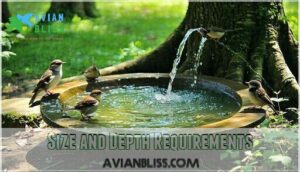
Let’s talk Basin Dimensions. If small sparrows and big robins are dropping by, size matters—a bath at least two feet wide offers room for all.
Stick to water depth between 1-2 inches for Depth Safety; deeper, and it’s a birdy swimming pool.
Choose a gently sloped Bath Shape, and shaded spots prevent sunlight from overheating your pond.
Material Selection Guide

When picking materials for your bird bath, think twice about what holds up to both sun and shade. It’s a bit like choosing shoes that fit every season.
- Concrete: Strong Material Durability, but cracks with freeze-thaw
- Resin: Lightweight, good Climate Resistance
- Metal: Needs care, can overheat in sun
- Ceramic: Looks great, not frost-proof
- Plastic: Cost Analysis winner, but fades
For long-lasting use, consider durable bird bath materials like stone or treated metal. Balance Bird Safety and Aesthetic Appeal!
Texture and Grip Importance
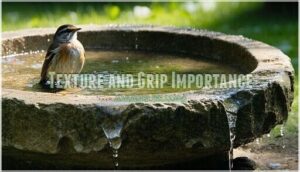
After choosing the right material, focus on surface texture.
A rough finish helps with bird footing and prevents slipping, making every landing secure.
Smooth surfaces look nice but may send a finch skating like it’s on ice.
For safe perching—even in shade or sunlight—Material Roughness matters just as much as water temperature or algae growth in bird bath placement, and it is crucial for secure landing.
Water Circulation Features

Grip helps birds feel safe, but water circulation is where the real action happens.
Even a gentle fountain creates movement, cools water, and limits mosquitoes. It’s like giving your backyard spa perks!
Here’s what proper water circulation in a shady bath can do:
- Fountain Benefits
- Aeration Methods for freshness
- Algae Control results
- Mosquito Prevention boosts
- Steady Water Movement, which provides mosquito prevention boosts.
Safety and Maintenance
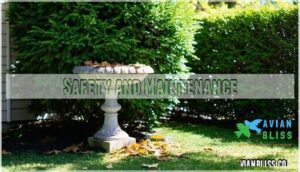
You’ll want to keep your bird bath in top shape by refilling it regularly, clearing away debris, and checking for wobbles.
Placing it about ten feet from shrubs helps protect visiting birds from curious neighborhood cats, so everyone gets to splash and dash safely.
Cleaning and Refilling
A clean bird bath is like a neighborhood café for feathered friends—regular bird bath cleaning keeps water freshness up and refilling frequency down.
Use simple cleaning solutions, rinse thoroughly, and adjust habits with the seasons. Keeping algae growth in check means you’re practicing effective bird bath maintenance.
Here’s a quick look:
| Task | Frequency | Why It Matters |
|---|---|---|
| Clean | Weekly | Algae prevention, safety |
| Refill | Every 2-3 days | Water freshness, birds return |
| Inspect | Each visit | Immediate bird bath water fix |
Effective bird bath maintenance involves regular tasks to ensure the water remains fresh and safe for birds. This includes regular cleaning and refilling, as well as inspecting the bird bath each time you visit to catch any issues early.
Preventing Algae Buildup
After scrubbing and refilling your bird bath, it’s time to tackle Algae Control head-on.
Placing your bath in the shade helps slow algae growth. Stick with smooth Bath Materials, as rough surfaces invite stubborn algae patches.
Use Cleaning Solutions like a diluted vinegar mix, swap water often, and sprinkle in some natural methods—try barley straw for a gentle boost in algae prevention and Water Quality.
To further inhibit algae, consider using grapefruit seed extract.
Ensuring Stability
After keeping algae in check, let’s make sure your bird bath stays put, even when local squirrels throw their wildest parties.
Use solid foundation materials like gravel or paving stones, and check for level ground.
Try base alternatives—like large flat rocks—for stability.
Prevent tipping by placing the bath in a spot shielded from strong winds, guaranteeing secure placement and safety.
Protecting From Predators
Steady baths aren’t just about balance; where you set them matters for bird bath safety, too. Place your bird bath at a safe distance from predator hideouts and use shade wisely.
Birds love spots with open views and thorny bushes nearby—just not so close that cats can pounce. Try predator deterrents and raised or elevated baths to outsmart four-legged prowlers.
- Use open views for early danger detection
- Place baths 10–15 feet from dense shrubs (safe distance)
- Choose elevated baths to limit ground predator access
- Plant thorny bushes nearby—not directly beside
- Consider motion-activated predator deterrents
Optimizing Shade Placement

You’ll want to place your bird bath where shade and sun work together, keeping the water cool and inviting while still letting the birds warm up when needed.
Watch how the sunlight and shadows move through your yard—adjust the bath’s spot with the seasons for happy, clean-feathered visitors.
Balancing Sun and Shade
Every yard’s a wild card, but you’ll want to strike a balance between shade and sunlight for top bird bath placement.
Too much shade cools water, but sunlight bumps water temperature and keeps algae growth in check.
Watch the sun’s arc—use partial shade for effective algae prevention, manage water temperature, and maintain high bird visibility for maximum bird comfort.
Climate considerations are key!
Considering Bird Behavior
After balancing sun and shade, think about how bird behavior guides your next move.
Birds love spots where they can easily scan for predators while enjoying a bath. Give them clear visibility and quick escape routes.
Different species have unique bathing habits and water needs. Paying attention to Bird Preferences means your shaded bird bath remains both safe and inviting for all, considering their need for clear visibility.
Creating a Serene Atmosphere
You want birds to feel right at home, like your yard’s their favorite coffee shop.
Placing your bird bath in shade—near calm environments, sheltered locations, and away from low noise areas—matters more than pretty aesthetics. Even the most stunning setup means little without comfort.
For a truly serene bird haven, remember:
- Avoid noisy spots
- Use shade from trees or foliage
- Minimize sudden movement
- Place baths in sheltered nooks
- Position away from glaring sunlight to create a haven.
Adapting to Seasonal Changes
As you perfect a peaceful setting, think about shifting your bird bath placement as seasons change.
In summer, a shady spot means cooler water; come winter, sunlight helps with Winterizing Baths.
Birds migrate, water evaporates, and a little Seasonal Cleaning never hurts.
Keep an eye on seasonal considerations with this handy guide:
| Season | Main Focus | Pro Tip |
|---|---|---|
| Summer | Summer Cooling | Move to deeper shade |
| Autumn | Migration Patterns | Monitor Water Availability |
| Winter | Sunlight for warmth | Use heated baths |
| Spring | Seasonal Cleaning | Refresh water often |
This guide provides essential tips for each season, ensuring your bird bath remains a welcoming spot for birds throughout the year, with a focus on Migration Patterns and the importance of Sunlight for warmth.
Frequently Asked Questions (FAQs)
Should you put a bird bath in the shade?
Like a cool oasis in a summer desert, placing your bird bath in the shade keeps the water fresh, reduces evaporation and algae, and attracts more birds, especially on hot days.
It’s science birds will thank you for!
Should a bird bath be under a tree?
Putting a bird bath directly under a tree isn’t ideal.
Falling leaves, seeds, and droppings quickly make the water messy.
Try placing it nearby, where birds feel safe but you won’t have to clean every hour.
Will shade affect the visibility of bird baths for birds?
Spotting a bird bath in dense shade can be like finding a needle in a haystack for birds, but partial shade works well.
Birds rely on sight, so keep your bath visible—avoid hiding it too deep under plants.
What types of plants provide the best shade?
Dense shrubs, small trees like dogwood or redbud, and broad-leafed perennials such as hostas or ferns all provide excellent shade.
You’ll get reliable cover, cooler spots, and a few well-placed leafy umbrellas for style points.
Can shade influence mosquito and insect presence in the water?
Shady water tends to stay cooler, slowing mosquito breeding since mosquitoes love warm, stagnant water.
Add a dash of movement—like a bubbler—and you’ll keep bugs at bay while giving birds a spa day, too.
Are specific birds more attracted to shaded or sunny baths?
You’ll notice robins, chickadees, and jays exploring sunny baths, especially on crisp mornings.
Meanwhile, shy thrushes and cardinals often prefer a shady retreat.
Offer both environments, and your backyard becomes their neighborhood café—everyone gets their favorite seat.
Conclusion
Imagine this: shaded bird baths can reduce water evaporation by up to 50%, keeping your backyard spa fresher, longer.
By mastering bird bath placement for shade, you’ll give birds cooler water, fewer algae issues, and a safer spot to sip and splash.
Don’t forget, placing your bath for shade isn’t just for appearance—it’s about function.
With these expert tips, you’ll be setting the stage for happy, healthy birds, plus far less scrubbing for you.
- https://fountainful.com/blogs/news/where-to-place-a-bird-bath
- https://www.birdspot.co.uk/bird-baths/the-best-place-for-a-bird-bath
- https://www.perkypet.com/articles/8-things-you-should-know-before-installing-a-bird-bath
- https://www.reddit.com/r/GardeningAustralia/comments/1iz2oaf/my_bird_baths_are_always_busy/
- https://kerstingveterinaryhospital.com/exotic-animal-services/bird-care-and-info/taking-your-pet-birds-outside