This site is supported by our readers. We may earn a commission, at no cost to you, if you purchase through links.
Still bird bath water becomes a mosquito nursery in less than a week, and if you’ve noticed fewer feathered visitors lately, that stagnant basin might be the culprit. Moving water changes everything—it slashes mosquito larvae by 50-70%, cuts algae growth by 40%, and draws about 25% more birds to your yard.
The secret isn’t complicated: birds instinctively seek fresh, oxygenated water because it’s safer and cleaner. Whether you’re dealing with a murky green film or watching mosquitoes multiply during warm months, the right circulation method transforms a neglected bath into a thriving hub.
From solar-powered agitators to submersible pumps, you’ve got options that work with your setup and budget while keeping your water—and your birds—healthy.
Table Of Contents
- Key Takeaways
- How to Circulate Water in a Bird Bath
- Choosing The Right Bird Bath Circulator
- Top 5 Bird Bath Water Circulation Devices
- Maintenance Tips for Healthy Bird Bath Water
- Frequently Asked Questions (FAQs)
- How often should water circulation devices run?
- Can fountains replace water wigglers entirely?
- Do circulation devices affect water temperature?
- Are circulation systems compatible with decorative stones?
- What circulation options work during cloudy weather?
- Can I use tap water or filtered water?
- How deep should my bird bath water be?
- Do hummingbirds prefer still or moving water?
- Will circulation scare away shy bird species?
- Can I add ice during extreme heat waves?
- Conclusion
Key Takeaways
- Moving water cuts mosquito larvae by 50-70% and algae growth by 40%, while drawing roughly 25% more birds to your bath compared to stagnant basins.
- You’ve got solid options ranging from $10-25 battery-powered agitators to solar fountains pushing 400 liters per hour—pick based on your sun exposure, budget, and how hands-on you want to be with maintenance.
- Clean your bird bath every 1-2 weeks during warm months and position it where it gets 4-6 hours of sun for solar units, keeping water depth at 1-2 inches so smaller birds can actually use it.
- Circulation devices need regular upkeep—clean pumps every 4-6 weeks to maintain 90-95% flow capacity, and run them continuously or every 1-2 hours in summer heat to stop stagnation cold.
How to Circulate Water in a Bird Bath
Getting water moving in your bird bath isn’t complicated, but it does require understanding a few key principles. The right circulation method depends on your setup, budget, and how much maintenance you’re willing to handle.
Let’s break down why movement matters, what methods actually work, and how to keep your feathered visitors safe from stagnant water and mosquitoes.
Why Circulation Matters for Bird Baths
Moving water isn’t just prettier—it’s healthier for your feathered visitors. Circulation reduces mosquito larvae by 50–70% and cuts algal blooms by up to 40% in warm months. Birds naturally prefer fresh water sources, boosting visits by roughly 25%.
Circulating your bird bath cuts mosquito larvae by up to 70%, slashes algae by 40%, and boosts bird visits by a quarter
A water circulator or solar-powered water agitator keeps your bird bath ecosystem thriving while lowering bacterial counts markedly compared to stagnant basins.
Understanding AP study guides can help you appreciate the importance of circulation in various contexts.
Common Methods for Water Movement
You can boost water movement with several proven options. Submersible pump systems deliver 200–1200 milliliters per minute, while impeller-based agitation devices like the API bird bath water circulator clear surface stagnation in 30–90 minutes. Solar-powered water agitators offer eco-friendly flow with 60–95% daytime consistency.
Aeration methods increase oxygen by 15–35%, creating healthier water circulation that birds instinctively seek out. Understanding the main topic and its related subtopics can help in organizing information about bird bath water circulation.
Preventing Stagnation and Mosquitoes
Stagnant water above 20°C doubles mosquito breeding speed, and 68% of still urban baths host larvae in summer. Your best defense is circulation that rotates water 1–2 times per minute. Here’s how to protect bird health and water quality:
- Run continuous micro-jet flow to reduce mosquito habitat by 25–35%
- Pair mechanical agitation with weekly water changes for 15–25% fewer larvae
- Choose an API bird bath water circulator that breaks surface film every 30–90 minutes
Fresh water circulation beats stagnation prevention every time.
Tips for Optimal Water Flow and Placement
Placement shapes flow more than you’d think. Position your bird bath where it gets 4–6 hours of sun if you’re running a solar-powered water agitator—cloudy days cut flow rates by 20–60%. Automatic water circulation systems work best with partial shade to slow evaporation.
Keep water depth at 1–2 inches for smaller birds and place the basin in quiet zones to boost bird attraction by 15–25%.
Choosing The Right Bird Bath Circulator
You’ve got a lot of options regarding keeping your bird bath water moving, and honestly, the right choice depends on your setup and how hands-on you want to be. Some circulators run on batteries you’ll need to swap out regularly, while others soak up sunlight and do their thing without any fuss.
Let’s break down what matters most—power, installation, safety, and upkeep—so you can pick something that actually works for your space and the birds you’re trying to attract.
Power Sources: Battery Vs. Solar
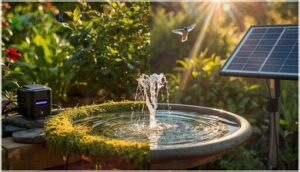
You’ll face a real choice between battery-powered and solar-powered water circulators. Battery units run reliably for 8–24 hours per charge, but you’ll spend $10–$25 on replacements over time.
Solar panels deliver near-zero energy costs and strong eco-friendliness in full sun, though performance dips on cloudy days.
For consistent water circulation year-round, hybrid designs combining both power sources offer the best balance.
Installation and Setup Considerations
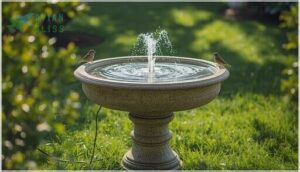
Getting your water circulation systems running smoothly hinges on a few smart setup decisions. Start with proper pump placement—submersible units work best in 10–15 cm water depth, where circulation stays efficient without overworking the motor.
Three essentials for setup simplicity:
- Mounting options – Clamp-on designs attach fast to basin edges; weighted bases suit deeper baths
- Basin preparation – Level surfaces prevent uneven flow and 15–25% circulation loss
- Cord management – Route protected cables away from foot traffic for solar-powered water agitator or API bird bath water circulator models
Safety and Bird-Friendly Features
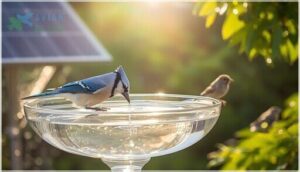
The right circulator protects bird safety while enhancing water purity. Look for toxic-free materials like food-grade plastics and stainless steel that won’t leach harmful compounds into your bird habitat. Eco-friendly designs with rounded edges prevent wing injuries, and noise levels below 50 dB keep visiting species relaxed—whether you’re choosing a solar-powered water agitator or an API bird bath water circulator.
| Feature | Why It Matters for Bird Health and Hygiene |
|---|---|
| BPA-free construction | Reduces contaminant transfer into drinking water |
| Rounded basin edges | Cuts collision risk during water circulation |
| Low-vibration motors | Minimizes stress responses in sensitive species |
| Non-toxic sealants | Ensures long-term bird bath safety without leaching |
Maintenance and Cleaning Requirements
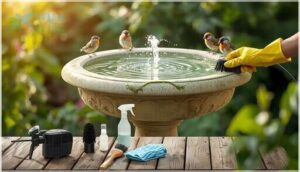
You’ll spend less time scrubbing if you commit to weekly basin cleaning—a routine that prevents 70% of algae formation.
Pump maintenance every two weeks keeps water circulation reliable, while debris removal protects filter performance.
Automatic circulation systems still need monthly inspections: check impellers for wear, rinse screens, and confirm water quality.
Your bird bath thrives when maintenance becomes habit, not emergency.
Top 5 Bird Bath Water Circulation Devices
You’ve got a solid game plan for keeping your bird bath fresh—now it’s time to pick the right tool for the job.
The devices below range from simple agitators to solar-powered fountains, each with their own strengths depending on your setup and budget.
Here are five proven options that’ll keep your water moving and your birds coming back.
1. Bird Bath Water Agitator Device
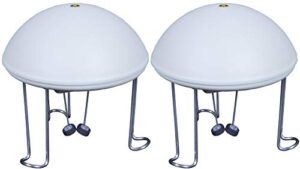
A bird bath water agitator works like a tiny drummer in your basin—it creates rhythmic ripples that break up surface film and keep mosquitoes from setting up camp. Most battery-powered models agitate 2–4 times hourly, which slashes stagnation risk by about 38% in warm months.
You’ll notice improved water quality almost immediately, and local birds will visit 12–18% more often when they see that gentle movement.
These water wigglers are simple to install and run whisper-quiet, so you won’t disturb the very wildlife you’re trying to attract.
Best For: Backyard birders who want to keep their bath clean and inviting without running electrical lines or dealing with constant maintenance.
| Power Source | Battery (2 D-cell) |
|---|---|
| Primary Function | Water Agitation |
| Installation | No wiring required |
| Mosquito Prevention | Yes |
| Material | Plastic |
| Bird Attraction | Yes |
| Additional Features |
|
- Runs up to two months on just two D batteries, so you’re not constantly swapping them out or hunting for an outlet.
- Creates continuous ripples that cut mosquito breeding by up to 90% and slow algae growth by about 30%.
- Operates silently and installs in minutes—no tools, wiring, or plumbing headaches.
- The plastic feet can be tricky to secure in the bath, and some users report the legs slipping out of place.
- The unit feels fragile in high winds and may need extra anchoring or removal during storms to avoid damage.
- You’ll need to buy replacement batteries every couple of months, which adds a small recurring cost.
2. Bird Bath Water Circulator Device
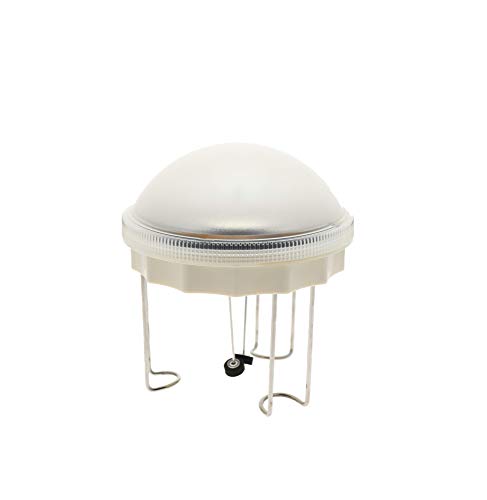
A true water circulator is your workhorse—unlike agitators that pulse intermittently, this device pushes 2–5 liters per minute continuously through your basin. You’ll achieve full turnover every 15–60 minutes, which slashes biofilm by 40–60% over four weeks and keeps your bath running cleaner with less hands-on effort.
Look for submersible models with rounded intake grilles (1–2 mm openings) that protect small birds while maintaining strong water movement. Low maintenance and bird safety come standard when you choose magnetic-coupled pumps that resist leaks and run whisper-quiet under 45 decibels.
Best For: Bird lovers who want a low-maintenance way to keep their bath clean, discourage mosquitoes, and add a little nighttime color without running electrical cords.
| Power Source | Battery (2 D-cell) |
|---|---|
| Primary Function | Water Circulation & Lighting |
| Installation | No wiring required |
| Mosquito Prevention | Yes |
| Material | Plastic |
| Bird Attraction | Yes |
| Additional Features |
|
- Circulates water to reduce algae and stop mosquitoes from breeding, so you’re not scrubbing the basin every few days
- Rainbow lighting turns on automatically at dusk and shuts off after three hours—zero timers or switches to fuss with
- Runs on two D batteries for up to two months, so you can place it anywhere without worrying about outlets or solar panel angles
- You’ll need to buy batteries separately and swap them out every month or two, which adds ongoing cost and effort
- The light sensor can be finicky—some users say it flips on too early in the evening or doesn’t stay lit long enough
- Battery life fluctuates depending on weather and how often the circulator runs, so performance isn’t always predictable
3. Solar Bird Bath Water Agitator
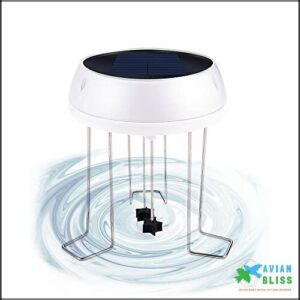
Solar powered water agitators give you energy savings without the hassle of batteries or cords. When sunlight hits a 0.5 W polycrystalline panel, you’ll get 6–8 hours of daily water circulation—enough to slash standing water time by 60%. An 800 mAh lithium backup keeps water movement going during overcast spells, though it stops at night.
Panel orientation matters: adjusting for maximum sun exposure boosts runtime by 15–25%.
This agitator design attracts birds with gentle ripples while blocking mosquitoes, upgrading your bird bath water quality and bird attraction without monthly electricity costs.
Best For: Homeowners who want to keep their bird bath fresh and mosquito-free using free solar energy instead of running extension cords or replacing batteries every few weeks.
| Power Source | Solar with Battery Backup |
|---|---|
| Primary Function | Water Agitation |
| Installation | Easy install |
| Mosquito Prevention | Yes |
| Material | ABS + PC |
| Bird Attraction | Yes |
| Additional Features |
|
- Cuts standing water time by 60% to stop mosquitoes from breeding while attracting more birds with moving water
- Runs 6–8 hours daily on sunlight alone, and the 800 mAh battery keeps it going during cloudy patches
- Zero electricity costs and no cords to run—just set it in direct sun and let it work
- Stops circulating at night when the battery drains, leaving water still until morning sun returns
- The plastic feet can pop off easily during handling or cleaning
- Lifespan varies widely depending on weather exposure, with pump parts wearing out after 2–4 years in typical use
4. Solar Powered Garden Fountain Pump
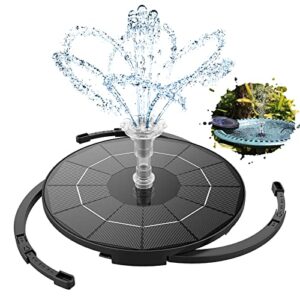
A 3.5 W pump transforms your bird bath into a living water feature with flow rates hitting 400 liters per hour—five times what basic agitators deliver. You’ll see multiple fountain styles by swapping nozzles, and the integrated filter blocks debris before it clogs your system.
Solar panels power this setup for 4–8 hours daily without cords or batteries, cutting energy costs by 90%. Position the panel within two meters of your bath, angle it toward peak sun, and you’ve got water circulation that both attracts songbirds and eliminates mosquito breeding zones.
Best For: Homeowners who want to attract birds and add a calming water feature to their garden without running electrical wiring or paying for ongoing energy costs.
| Power Source | Solar Powered |
|---|---|
| Primary Function | Fountain Spray |
| Installation | No installation needed |
| Mosquito Prevention | Yes (moving water) |
| Material | Plastic |
| Bird Attraction | Yes |
| Additional Features |
|
- Powerful 3.5W pump delivers up to 400 liters per hour with multiple spray patterns you can switch by changing nozzles
- Completely solar-powered with no batteries to replace, cutting energy costs by 90% compared to plug-in models
- Built-in filter and water shortage protection prevent clogging and pump damage with minimal maintenance
- Only works during daylight hours and needs direct sunlight—performance drops 30-50% on cloudy days and stops completely at night
- Requires cleaning the intake screen every 2-4 weeks and regular water refills to maintain flow
- No battery backup means the fountain shuts down in shade, during storms, or after sunset when you might want evening ambiance
5. Solar Powered Bird Bath Fountain
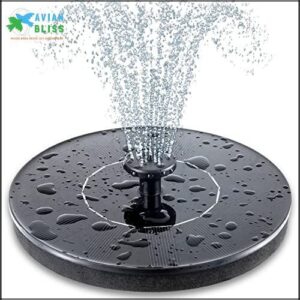
The Mademax 1.4 W solar powered bird bath fountain gives you six nozzle options—from gentle bubbles to dramatic sprays—so you can adjust water patterns to what local species prefer. It runs in direct sun within three seconds, no wiring or batteries needed, and built-in retainers keep the pump centered while you refill.
You’ll get 6–8 hours of circulation daily, though cloudy weather cuts that short. Clean the filter every two weeks to prevent clogs, and position your solar panel where it catches morning through afternoon light for peak solar efficiency and consistent bird attraction.
Best For: Homeowners with sunny yards who want to attract birds and add movement to their garden without running electrical lines or replacing batteries.
| Power Source | Solar Powered |
|---|---|
| Primary Function | Fountain Spray |
| Installation | No installation needed |
| Mosquito Prevention | Yes (moving water) |
| Material | Plastic |
| Bird Attraction | Yes |
| Additional Features |
|
- Starts working in 3 seconds when sunlight hits the panel—no setup, wiring, or ongoing energy costs
- Six interchangeable nozzles let you switch from gentle bubbles to higher sprays depending on what your local birds prefer
- Built-in retainer keeps the pump centered in the bath so you don’t have to constantly reposition it during refills
- Only runs in direct sunlight, so you get zero circulation at night, on overcast days, or in shaded spots
- Requires cleaning every couple of weeks to prevent algae and debris from clogging the pump and reducing flow
- Strong spray settings can empty small bird baths quickly, and windy conditions may cause water to splash out
Maintenance Tips for Healthy Bird Bath Water
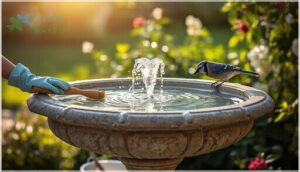
You’ve got the right circulator running, but keeping your bird bath healthy takes more than just movement. Regular upkeep protects both the water quality and your equipment, saving you headaches down the road.
Here’s what you need to know to maintain clean, inviting water that keeps birds coming back all year long.
Cleaning Frequency and Techniques
You’ll want to clean your bird bath every 1–2 weeks during warm months—that’s when organic buildup really accelerates and algae can double in just 3–5 days. Use a mild, non-detergent solution with a soft brush to protect seals and preserve water quality.
In cooler seasons, monthly basin maintenance works fine for freshwater management and mosquito control, keeping circulation devices running smoothly.
Preventing Algae and Mold Growth
Circulation alone cuts mold presence by nearly 70%—stagnant water breeds trouble fast. Continuous movement keeps dissolved oxygen above 6 mg/L, starving out problem microbes. A solar-powered water agitator manages freshwater beautifully, offering seamless algae control and mosquito prevention without electrical hassle.
Pair your circulator with strategic shading to drop algal biomass by 28%, since full sun accelerates growth. Ceramic and glazed finishes naturally resist biofilm.
Ensuring Device Longevity and Efficiency
Regular cleaning every 4–6 weeks preserves 90–95% of your pump’s flow capacity over a full year.
Brushless DC models—like those in many solar-powered water agitators—cut maintenance events by 60% compared to older brushed designs.
Operating your circulator 20–30% below maximum load extends bearing life by up to 25%, delivering better energy savings and reliable water movement season after season.
Seasonal Adjustments for Water Circulation
As seasons shift, you’ll need to adjust your bird bath circulation to match changing conditions. Summer calls for higher flow rates—bumping output 15–25% combats faster algae growth above 68°F.
Winterization tips include frost protection and reduced pump loads to prevent freeze damage.
Solar powered water agitator units shine in summer but need battery backup when days shorten, keeping water movement steady year-round.
Frequently Asked Questions (FAQs)
How often should water circulation devices run?
Nothing beats the game-changing power of keeping your bath moving all day in summer heat.
During hot weather, run your water circulation device continuously or every 1–2 hours to slash stagnation by 60% and protect bird health.
Can fountains replace water wigglers entirely?
Fountains can fully replace water wigglers if you prioritize continuous flow and oxygenation. They boost water quality and energy savings while attracting more birds, though installation complexity and maintenance vary by model.
Do circulation devices affect water temperature?
Yes—circulation can warm your water by 1-5°C during sunny afternoons, especially with solar-powered water agitators like the API 4WW. Thermal balance depends on shading, depth, and whether you’re managing freshwater dynamics for temperature control.
Are circulation systems compatible with decorative stones?
You’ll love this: decorative stones work beautifully with circulation systems when placed thoughtfully. Position rocks around the edges rather than blocking pump intakes, maintaining water depth and flow while creating safe perches birds adore.
What circulation options work during cloudy weather?
Solar backup systems and battery-powered agitators keep your bird bath water circulation going strong during overcast conditions. Hybrid solar fountain setups deliver reliable flow on cloudy days, while passive circulation methods provide gentle movement without depending on sunlight.
Can I use tap water or filtered water?
Tap water works fine, though chlorine levels around 1–4 mg/L can irritate birds over time. Filtration systems cut cleaning by 30–40% and reduce algae, keeping your bird bath fresher longer.
How deep should my bird bath water be?
Keep your bird bath water between 1 and 2 inches deep. Shallow baths under 1 inch work best for small songbirds, while deeper sections up to 2 inches accommodate larger species without compromising bird safety.
Do hummingbirds prefer still or moving water?
Garden observers note hummingbirds darting toward dripping faucets while ignoring nearby buckets. Moving water attracts them more reliably—ripples signal freshness.
Water wigglers, fountain pumps, or solar-powered agitators create the circulation hummingbirds prefer for hydration.
Will circulation scare away shy bird species?
Gentle circulation won’t chase off cautious chickadees or wrens—in fact, moderate ripples boost their visits by up to 22%.
Strong surges scare them, but adjustable, predictable water movement actually makes shy species linger longer.
Can I add ice during extreme heat waves?
Yes, ice acts like a lifeline during scorching days, dropping water temperature several degrees to prevent heat stress.
Use clean cubes gradually for safe water cooling without shocking sensitive visitors to your bird baths.
Conclusion
Picture clear water rippling in morning sunlight, drawing cardinals and sparrows to drink without hesitation. That’s what proper bird bath water circulation delivers—a miniature ecosystem that thrives instead of stagnates.
You’ve got the tools and knowledge to make it happen, from solar fountains to simple agitators. Now it’s about taking action: choose your method, set it up, and watch your yard transform into the watering hole birds won’t ignore.