This site is supported by our readers. We may earn a commission, at no cost to you, if you purchase through links.

Most backyard bird baths sit in full sun, where water temperatures can spike to 100°F by midafternoon—hot enough to stress out visiting songbirds and evaporate half your water in a single day. That’s why experienced birders position their baths in partial shade, where cooler water and slower evaporation rates create a more inviting oasis. Shaded spots also reduce algae blooms and give nervous birds the cover they need to drink without constantly scanning for hawks.
The trick is choosing bird baths for shaded areas that work with lower light levels while still attracting a steady stream of feathered visitors. From material choices that resist moisture buildup to circulation features that keep water fresh under tree canopies, the right setup transforms a dim corner into your garden’s busiest gathering spot.
Table Of Contents
Key Takeaways
- Positioning bird baths in partial shade cuts water evaporation by 20–30% and keeps temperatures 15–25°F cooler than full sun, reducing heat stress for visiting songbirds while slowing algae growth from 3–5 days to 7–10 days between cleanings.
- The best shaded bird bath designs feature textured surfaces for secure footing, multi-depth basins (1–4 inches) to accommodate different species sizes, and durable materials like concrete that resist moisture buildup while maintaining cooler water temperatures.
- Proper placement requires balancing dappled shade coverage with clear sightlines—position baths 18–36 inches high, at least 6 feet from dense bushes where predators hide, and under tree canopies that provide afternoon shade without excessive leaf debris.
- Even in shade, bird baths need fresh water every 3–4 days during mild weather (daily during heat waves) and weekly scrubbing with bird-safe solutions to prevent biofilm and maintain the clean, cool conditions that keep finches, chickadees, and other songbirds returning.
Why Shaded Locations Are Ideal for Bird Baths
You might think any spot works for a bird bath, but shade changes everything. It’s not just about keeping water cool—it’s about creating a space where birds actually want to hang out.
Let’s look at why a little dappled shade makes all the difference for your feathered visitors.
How Shade Reduces Water Evaporation
In partial shade, your bird bath loses water at half the rate it would under full sun. That’s because shade lowers the air temperature around the water surface, which slows down those tiny water molecules trying to escape. Dappled shade works especially well—it cuts heat buildup while keeping evaporation rates low, so you’ll refill less often.
Partial shade cuts bird bath water loss in half by cooling the surface and slowing evaporation
Similarly, employing a scientific study framework can help identify key factors influencing environmental conditions.
Cooler Water Benefits for Birds
Cool water does more than just refresh birds—it helps them regulate body heat during hot stretches. In shaded spots, lower water temperature means less heat stress for small songbirds, letting them hydrate without burning extra energy.
Field studies show:
- Finches drink longer at cooler baths, taking in more water daily
- Birds show fewer signs of heat-related fatigue
- Thermoregulation becomes easier during hot periods
- Drinking behavior improves in dappled shade locations
- Cooler microhabitats support extended bathing sessions
That’s why shade matters beyond just slowing evaporation. Shaded baths also help birds feel more protected while they drink and bathe, especially when paired with proper depth considerations for nervous visitors.
Reduced Algae Growth in Shade
Shade brings another bonus—algae control. Lower light intensity limits photosynthesis, slowing that green film buildup. You’ll clean less often because cooler temps slow algae metabolism too.
Here’s how shade affects water quality:
| Factor | Full Sun | Partial Shade |
|---|---|---|
| Algae Growth Rate | Rapid (3–5 days) | Slow (7–10 days) |
| Water Temperature | 75–85°F | 60–70°F |
| Cleaning Frequency | Every 2–3 days | Every 5–7 days |
| Nutrient Cycling | High photosynthesis | Reduced photosynthesis |
| Microbial Balance | Algae-dominated | Bacteria-assisted breakdown |
Low light means maintenance becomes manageable, not a chore.
Year-Round Comfort and Safety
Beyond cleaner water, shade benefits bird health across every season. Partial shade cuts water evaporation by 20–30%, keeping the bath inviting longer. Your birds stay cooler in summer, dodging heat stress while they drink. Choosing an easy-clean bird bath bowl helps you maintain that ideal partial-shade setup with less scrubbing effort.
Add nearby plants for predator control—those escape routes matter. Winter or summer, shaded spots reduce temperature swings, so bird comfort stays steady.
Water quality holds up better, and seasonal tips become simpler when you start with the right placement. If you’re ever unsure whether your setup is attracting unwanted guests, check out these tips for keeping bird bath water safe from pests and predators.
Best Bird Bath Designs for Shaded Areas
Not all bird baths work well in shade, and picking the right design makes a huge difference. The best ones keep water cool and clean while giving birds a safe, comfortable spot to splash around. Features like shallow depth and gentle slopes help attract birds with bath fountain setups that prioritize their safety.
Let’s look at the key features that turn a shaded bird bath from okay to excellent.
Optimal Size and Depth for Different Species

Matching water depth to your visitors’ size is like tailoring a spa experience—sparrows don’t need the deep end. Small birds thrive in 1–2 inches, while medium species like bluebirds prefer 2–3 inches for comfortable splashing.
Here’s your quick depth guide:
- Finches and sparrows: 1–2 inches keeps them safe and confident
- Thrashers and bluebirds: 2–3 inches balances bathing with secure footing
- Doves and woodpeckers: 3–4 inches accommodates vigorous dabbling
- Multi-depth designs: Sloped bottoms attract diverse species in partial shade
Species diversity increases when you offer depth variation across your bird bath.
Material Choices: Concrete, Resin, and Ceramic

Your birdbath’s material defines how well it survives shaded humidity and constant splashing. Concrete delivers superior durability—often exceeding 2,500 psi compressive strength—while resisting the cool, damp conditions under partial shade. Resin offers lightweight portability and corrosion resistance but may fade with dappled sunlight over time. Ceramic provides premium aesthetics yet cracks in freezing weather.
Cost analysis favors concrete for permanence, resin for flexibility.
| Material | Best For |
|---|---|
| Concrete | Long-term durability, weather resistance |
| Resin | Easy relocation, budget-friendly |
| Ceramic | Visual appeal, decorative gardens |
| Concrete | Cooler water temps in shade |
| Resin | Quick setup, slip prevention patterns |
Textured Surfaces for Secure Bird Footing
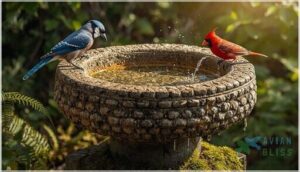
Grip matters more than most backyard hosts realize—smooth basins become slip hazards when wet. You’ll want surfaces that give birds traction while they splash in partial shade. Here’s how roughness helps:
- Gritty concrete boosts friction coefficients, preventing tumbles on damp mornings.
- Crosshatch patterns secure tiny claws when landing.
- Coarse ceramic glazes resist algae yet stay grippable.
- Pebble mosaics create uneven footholds.
- Aggregate exposure reveals granules that anchor feet naturally.
Water Circulation Features and Fountains

Stagnant water loses appeal fast—birds crave fresh, moving sources. You’ll cut water evaporation and boost oxygenation with a low-flow fountain or submersible pump.
Solar options work surprisingly well in dappled light, powering gentle circulation patterns without electrical hassles.
Adjustable-height designs let you dial splash intensity down, keeping your shaded birdbath peaceful while automatic recirculation maintains that inviting ripple birds can’t resist.
Built-in Shade Options and Umbrella Accessories
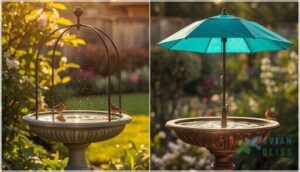
Some bird baths arrive with shade built right in—molded canopies or hooded tops that shield water from relentless sun. Others let you clip on a UV-stable umbrella accessory, swiveling to follow light throughout the day.
- Built-in canopy styles offer permanent partial shade with minimal upkeep
- Umbrella designs let you adjust tilt and swap between shaded areas
- UV-resistant shade materials and fixtures prevent sun degradation
- Vented canopy styles reduce wind lift while maintaining dappled shade coverage
Top Bird Baths for Shaded Garden Spaces

Now that you know what makes a great shaded bird bath, let’s look at specific models that actually deliver.
I’ve tested dozens of options in real garden settings, from tiny urban courtyards to sprawling suburban yards. Here are the standouts that perform beautifully in low-light conditions without breaking your budget or your back.
Birds and Beyond Fiber Clay Birdbath Review
You’ll love the lightweight design of this fiber clay birdbath—it’s easier to move than concrete but just as durable. The textured basin gives birds solid footing, while the matte finish keeps algae at bay in your shaded garden.
It resists freeze-thaw cracking when sealed properly, making it a reliable choice for bird-friendly gardening year-round. Maintenance is straightforward: drain, scrub, refill.
Best Budget-Friendly Options for Shade
When budget matters, shade fabric and budget umbrellas work wonders. Shade sails and affordable awnings create instant partial shade without breaking the bank. These simple solutions keep water cooler and birds happier—think of them as sunscreen for your feathered guests in dappled shade.
You can drape a DIY canopy over your bird bath using bamboo stakes and bird-friendly gardening materials.
Premium Bird Baths With Advanced Features
If you’re ready to level up your birdfriendly gardening game, premium models offer serious perks in shade. Smart sensors monitor water levels automatically, while solar pumps keep circulation going even when evaporation slows. Sophisticated filtration handles debris from overhanging branches without harsh chemicals.
- Heated basins extend bird comfort through chilly mornings
- Automated cleaning reduces your maintenance time by half
- Built-in UV sterilization keeps water fresh longer in low-light spots
Compact Designs for Small Shaded Areas
Space is tight but you still want feathered visitors? Small baths shine in compact shaded corners. Shallow one-inch bowls fit narrow strips between shrubs, while pedestal designs lift water above ground plantings without hogging square footage.
Modular units let you adjust for seasonal dappled shade shifts—just move sections as your canopy changes. Non-slip textures keep birds steady on those cool, shaded basins.
Placement Tips for Maximum Bird Visits
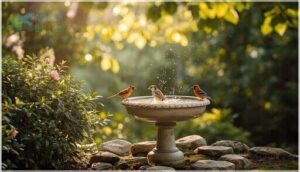
You’ve picked out the perfect bird bath for your shaded garden—now it’s time to position it where birds will actually find and use it. Location matters just as much as the bath itself, because even the most beautiful basin won’t attract visitors if it’s in the wrong spot.
Here’s how to place your bird bath in a way that makes feathered friends feel safe, comfortable, and keen to return.
Finding The Perfect Partial Shade Spot
Think of partial shade as the goldilocks zone—your bird bath needs dappled shade to stay cool without disappearing into darkness. Watch how sun patterns shift through midday to catch that peak-heat shade from trees or fences.
- Position under a deciduous tree for summer shade and winter light
- Keep a clear 6–8 foot radius around the bath for safe bird approaches
- Place near shrubs or hedges for predator screening and roosting comfort
- Confirm level ground prevents tipping and maintains stable water depth
- Verify shade coverage during your local climate’s hottest hours
This microclimate effect directly impacts bird behavior—cooler water means more visits, especially from finches and songbirds seeking comfortable drinking spots.
Avoiding Tree Debris and Leaf Contamination
Under partial shade, falling leaves turn your bird bath into a salad bowl faster than you’d expect. Install a bird bath skimmer or fine mesh guard over the water surface to catch tree debris before it sinks. Debris removal tools like shallow nets make quick work of cleanup.
Position your bath slightly away from dense canopies—think garden design that welcomes wildlife conservation without the maintenance headache.
Proper Height and Distance From Predators
Between 18 and 36 inches is your sweet spot for bird bath height—high enough to deter cats yet accessible to finches and sparrows. Elevation strategies matter for predator deterrence and bird safety.
- Mount at least 6 feet from dense bushes where predators hide
- Avoid direct placement under branches where squirrels leap down
- Choose stands over ground-level basins for better bird comfort
- Keep open sightlines on at least two sides for escape routes
- Balance shade with visibility—partial cover beats total concealment
Creating a Quiet, Undisturbed Environment
Generally, birds won’t linger if there’s constant foot traffic or nearby noise—they’re hardwired to flee disturbance. Position your bird bath away from patios, walkways, and seating areas to create a peaceful setting where feathered visitors feel safe.
Calm environments with noise reduction from surrounding vegetation build the serene atmosphere birds crave. Shade paired with quiet spots transforms your garden into a true wildlife habitat creation success story for bird-friendly gardening.
Balancing Visibility and Natural Cover
You want birds to spot your bath easily, but not at the expense of their safety. A moderate-height bird bath with low hedges or shrubs nearby strikes that visual balance—open enough for visibility, yet sheltered enough to reduce predation risk.
These shade strategies in your garden layout improve bird comfort while supporting wildlife habitat creation. Natural cover paired with clear sightlines encourages finches and songbirds to return again and again, building trust in your habitat design.
Maintaining Your Shaded Bird Bath

Your shaded bird bath won’t run itself—even in low light, you’ll need to stay on top of water quality and debris. The good news is shade makes maintenance easier since you’re already winning half the battle against evaporation and algae.
Here’s how to keep your setup fresh and welcoming year-round without turning it into a weekend chore.
Cleaning Schedule and Best Practices
Think of birdbath maintenance like tending a favorite houseplant—it thrives on consistent care. Clean your shaded bird bath every 1 to 3 days during warm seasons using bird-safe soap or a 1:10 bleach solution, then rinse thoroughly.
Scrub away biofilm, empty completely, and let it air-dry before refilling with fresh water. This simple routine keeps your feathered visitors healthy and happy.
Managing Algae in Low-Light Conditions
Shade slows but doesn’t stop algae growth—nutrients from rain and debris still fuel it. Check your bird bath every few days for slimy biofilm, and use gentle scrubbing to remove it before it spreads. Non-porous surfaces clean easier than rough textures.
For stubborn algae prevention, consider adding a small fountain to keep water circulating, which discourages stagnant conditions where algae thrives.
Water Replacement Frequency in Shade
Cleaning helps, but how often should you actually swap out the water? Even though shade cuts water evaporation in half, you’ll still want to refresh every 3–4 days when conditions stay mild. During hot stretches, switch to daily changes to keep bacterial control in check and prevent bird health risks.
- Check clarity daily—cloudy water signals time for a change
- Hot months demand fresh fills to combat algae growth faster
- Cool, shaded baths can stretch to 4-day cycles safely
- Temperature spikes override shade benefits, so adjust your water refresh rate
Seasonal Adjustments for Optimal Performance
Your bird bath’s performance shifts as seasons roll through. Spring and fall bring moderate temps, so you can ease back to 4-day water swaps in shade. Summer heat cancels out shade benefits—switch to daily fills even under cover.
As deciduous trees drop leaves, adjust your shade setup to keep that dappled light balanced. Temperature control matters more than the calendar, so watch your birds’ comfort levels closely.
Natural Solutions for Clear Water
You can skip harsh chemicals and still win the battle against murky water. Biological filtration relies on beneficial bacteria that colonize porous stones or ceramic media, breaking down organic matter naturally.
Pair that with gentle water circulation to prevent stagnation, and you’ve got algae suppression without scrubbing.
Nutrient control through regular debris removal keeps biofilm management simple, especially under shade where cooler water temperature already slows algae growth.
Frequently Asked Questions (FAQs)
What birds prefer shaded baths most?
You might think all birds flock to sunny spots, but many species actually prefer shaded baths. American robins cool off in afternoon shade, while chickadees and cedar waxwings seek dimmer water temperature conditions year-round.
Can birdbaths work in full shade?
Yes, birdbaths absolutely thrive in full shade. Shade tolerance means slower algae growth and better shaded water quality. Birds adapt well to low light maintenance spots, finding the cool water surprisingly comfortable year-round.
How does shade affect winter birdbath use?
In winter, shade slows evaporation and keeps water liquid longer near freezing. Cold Water Management improves with stable microclimate protection.
Birds prefer sheltered spots when wind chills rise, enhancing Bird Safety Measures year-round.
Do shaded baths need water heaters?
Most shaded bird baths don’t need heaters in temperate climates—passive thermal management works well.
But if you’re facing freezing temps, a low-watt heater offers solid freeze protection and energy efficiency for year-round bird comfort.
Should I add stones for perching?
Stones give birds secure footholds and reduce splash. Choose rough-textured, clean rocks placed at varying heights near the edge.
Position them away from drainage channels to keep water fresh and bird-friendly.
Conclusion
While sun-drenched baths evaporate by noon, your shaded setup quietly does the heavy lifting—keeping water cool, algae manageable, and birds coming back all day.
The right bird baths for shaded areas turn overlooked corners into hubs of activity, where chickadees splash without fear and water stays fresh for days instead of hours.
Position yours thoughtfully, clean it weekly, and you’ll transform that dim patch under the maples into the neighborhood’s most popular watering hole.
- https://elsevier.blog/sub-points-outlining-organization/
- https://www.youtube.com/watch?v=veex4I491Wc
- https://www.gauthmath.com/solution/1837934067002466/2-Main-point-1-Subpoint-2-Subpoint-3-Subpoint
- https://mcluhan.unk.edu/lawson/?page_id=187
- https://www.linkedin.com/posts/bohdanlukianets_tasks-study-research-activity-7373377539521667072-UTEi