This site is supported by our readers. We may earn a commission, at no cost to you, if you purchase through links.
 When your bird’s beak grows beyond normal limits, you’re facing a health issue that demands professional attention. Bird beak overgrowth solutions start with identifying the root cause—often nutritional deficiencies, soft diets, or infections disrupting natural wear patterns.
You can’t safely trim an overgrown beak at home; veterinary intervention using specialized tools like Dremel techniques ensures proper shaping without bleeding risks.
Prevention beats treatment every time: provide hard foods, calcium-rich diets, and appropriate chew toys to encourage natural grinding. Think of your bird’s beak like your fingernails—they need constant use to stay healthy. Smart dietary choices and environmental enrichment can transform your bird’s beak health completely.
Table Of Contents
Key Takeaways
- Don’t try home trimming – Your bird’s beak contains blood vessels and nerves that only veterinarians can safely navigate with specialized tools like Dremel techniques.
- Prevention beats treatment – You’ll prevent overgrowth by providing hard foods, calcium-rich diets, and textured chew toys that encourage natural beak wear patterns.
- Watch for warning signs – You need to monitor weekly for visible deformities, eating difficulties, or behavioral changes that signal beak problems requiring professional attention.
- Address root causes – You must fix nutritional deficiencies and soft diets that cause overgrowth, switching from seed-based to balanced pellet diets with proper vitamins and minerals.
Causes of Bird Beak Overgrowth
You’ll encounter beak overgrowth when your bird’s natural keratin growth outpaces the wear from normal activities like eating and perching.
Several factors contribute to this condition, including insufficient beak grinding from soft diets, nutritional deficiencies affecting keratin production, infections that disrupt normal growth patterns, and genetic predispositions in certain parrot species.
Insufficient Beak Wear
Without natural foraging opportunities, your bird’s beak won’t wear down properly. Wild birds constantly use their beaks on bark, seeds, and branches—this natural beak exercise keeps growth in check.
Pet birds need perch variety and toy rotation to mimic this. Provide wooden chew toys and textured surfaces. Think of it like filing your nails—without regular use, beak problems develop quickly.
Nutritional Deficiencies
Poor nutrition wreaks havoc on your bird’s beak health. Seed-based diets create a perfect storm of deficiencies that trigger abnormal beak growth:
- Vitamin A deficiency causes hyperkeratosis and thickened, crusty beaks
- Calcium deficiency leads to soft, rubbery beak texture
- Protein sources inadequacy results in brittle, deformed beaks
- Mineral imbalances disrupt keratin synthesis
- Vitamin deficiencies impair overall beak structure
Switch to balanced pellets for proper avian nutrition.
Systemic diseases, such as chronic liver disease, can also contribute to beak overgrowth.
Infections and Disease
When infections strike your bird’s system, they can disrupt normal beak growth patterns. Viral infections like Avian Poxvirus and Psittacine Beak and Feather Disease directly damage beak tissue.
Bacterial impacts and fungal diseases create inflammation that alters growth rates. Parasitic infestations weaken your bird’s immune response, while systemic illnesses like liver disease affect nutrient absorption.
These avian health issues require immediate veterinary diagnosis procedures.
Genetic and Trauma Factors
Beyond infections, beak genetic predispositions affect certain breed-specific beaks naturally. Some parrot species inherit congenital beak issues that mimic overgrowth.
Beak injuries from trauma can trigger injury-related overgrowth as tissue repairs itself incorrectly.
Your avian veterinarian can distinguish between genetics-based beak problems and true overgrowth, determining appropriate trauma repair methods for each unique situation.
Recognizing Signs of Overgrown Beaks
You’ll notice overgrown beaks through visible deformities like excessive length, crossbites, or curling that prevent proper closure.
Watch for behavioral changes such as difficulty eating, head tilting during meals, or reluctance to use perches, as these often signal discomfort from abnormal beak growth.
Visible Overgrowth and Deformities
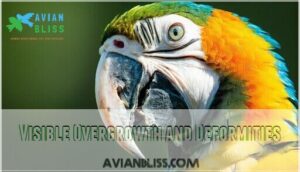
Spotting beak health issues starts with examining beak length compared to your bird’s normal appearance. Look for scissor beak alignment where upper and lower portions don’t meet properly. Beak twisting creates curved, corkscrew patterns that interfere with function.
Watch for spurs or spikes—sharp projections along beak edges. Beak discoloration often signals underlying problems requiring professional beak trimming to address overgrown beak concerns.
Behavioral Changes and Eating Difficulties
When your bird’s beak becomes overgrown, you’ll notice significant behavioral changes and eating difficulties that signal distress. Reduced grooming habits are common, as birds struggle to maintain their feathers properly. Vocalization changes often occur, with birds becoming quieter or producing strained sounds. Social isolation increases as discomfort grows.
These bird behavior changes require immediate beak problem solutions and dietary adjustments for recovery.
Discoloration and Abnormal Growths
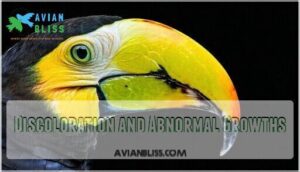
Your bird’s beak discoloration often signals underlying beak problems that demand immediate attention. Peeling beaks, irregular shapes, and abnormal growth patterns can indicate nutritional deficiencies or liver disease requiring veterinary evaluation.
- Beak Discoloration – Yellow, black, or unusual color changes
- Spur Formation – Sharp, pointed growths along beak edges
- Peeling Beaks – Flaking or scaling keratin layers
- Irregular Shapes – Twisted, curved, or asymmetrical development
- Abnormal Growth Patterns – Rapid or uneven beak overgrowth
Safe Solutions for Beak Overgrowth
When you’re dealing with beak overgrowth, you’ll need professional veterinary intervention to safely address the problem.
Don’t attempt DIY trimming at home—the beak contains blood vessels and nerve endings that require expert handling to avoid serious injury.
Professional Beak Trimming Methods
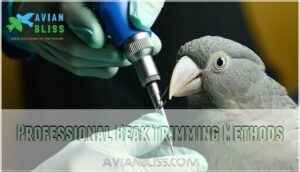
Modern avian veterinarians employ sophisticated beak trimming techniques using specialized tools. The Dremel technique utilizes motorized drills for precise shaping methods, while emery boards work for delicate cases.
Professional trimming minimizes bleeding risks through expert knowledge of beak anatomy. Anesthesia use ensures comfort during procedures.
Post-trim care involves monitoring healing and regrowth patterns.
Risks of At-Home Trimming
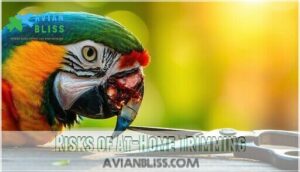
Attempting beak trimming at home poses serious bleeding risk since beaks contain blood vessels and nerve endings. Improper shaping can worsen overgrown beak conditions and create beak health issues.
DIY beak trimming techniques often cause stress induction and injury potential, leading to infection danger. Without proper veterinary care and professional equipment, you’ll likely harm your bird rather than help.
Veterinary Diagnosis and Treatment
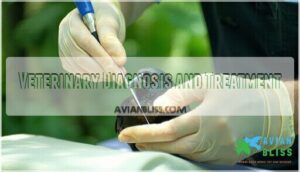
When dealing with complex beak problems, avian veterinarians employ sophisticated diagnostic imaging to assess underlying issues. Professional avian medicine requires careful evaluation of anesthesia risks during procedures.
Treatment options include:
- Specialized beak trimming techniques
- Infection management protocols
- Beak prosthetics for severe cases
- Thorough post-op care plans
Your avian health care provider will develop targeted veterinary care strategies for ideal recovery.
Preventing Future Beak Overgrowth
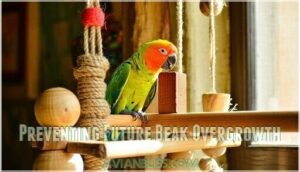
You can prevent future beak overgrowth through consistent environmental enrichment and proper nutrition that promotes healthy keratin development.
Regular monitoring and providing appropriate chew toys will help maintain natural beak wear patterns, keeping your feathered friend comfortable and healthy.
Dietary Adjustments for Beak Health
Nutrient deficiencies can wreak havoc on your bird’s beak health, making proper Bird Nutrition essential. Calcium sources and Vitamin A supplementation aid healthy keratin production. Replace seed-heavy diets with pellets, fresh vegetables, and controlled Calcium Intake. Hydration importance can’t be overstated—water aids nutrient absorption.
| Nutrient | Beak Health Benefit |
|---|---|
| Calcium | Strengthens beak structure |
| Vitamin A | Promotes keratin formation |
| Protein | Facilitates tissue regeneration |
| Zinc | Prevents growth abnormalities |
Environmental Enrichment and Chew Toys
Beyond proper nutrition, your bird’s environment plays a vital role in preventing beak problems. Provide foraging opportunities through puzzle feeders and hidden treats to encourage natural beak exercise. Rotate safe materials like untreated wood blocks, natural branches, and mineral blocks weekly to maintain interest.
This destructive chewing behavior isn’t misbehavior—it’s essential beak health maintenance that prevents overgrowth naturally.
Regular Beak Inspections and Grooming
Beyond providing enrichment items, you’ll need consistent beak condition monitoring for early detection of problems. Professional shaping isn’t always necessary when you catch issues early through proper home care and grooming tools.
Your bird beak care routine should include:
- Weekly visual inspections for length changes or deformities
- Monthly measurements using photos for comparison tracking
- Daily observation during feeding for eating difficulties
- Regular perch and toy rotation to encourage natural wear
Establishing this pet bird maintenance schedule helps prevent costly beak trimming procedures while maintaining ideal beak health through proactive monitoring.
Supporting Your Bird’s Overall Wellbeing

You’ve successfully addressed your bird’s beak overgrowth, but maintaining their overall wellbeing requires ongoing attention to their complete health picture.
Beyond beak care, you’ll need to monitor your feathered friend’s behavior, habitat conditions, and stress levels to guarantee they’re thriving both physically and mentally.
Maintaining a Clean Habitat
A spotless bird habitat forms the cornerstone of preventing beak complications. Cage sanitation requires daily cleaning of food bowls and weekly deep cleaning of bars. Water quality matters—change it daily to prevent bacterial growth.
Perch hygiene and toy maintenance prevent harmful buildup that could affect your bird’s health. Proper air purity promotes overall bird wellness strategies.
Monitoring for Pain or Distress
Watch for Pain Indicators like reduced activity or unusual vocalizations that signal beak health issues. Behavioral changes, including head tilting, excessive beak touching, or appetite loss, suggest discomfort.
Analyze your bird’s posture—hunched shoulders or reluctance to perch often indicate beak problems.
These Bird Wellness Strategies help you recognize when professional veterinary care from an avian veterinarian becomes necessary for ideal health.
When to Seek Veterinary Care
Recognizing when your bird needs immediate veterinary care can mean the difference between a quick fix and serious complications. Contact an avian veterinarian if you notice emergency signs or concerning beak health issues.
- Severe beak trauma – cracks, bleeding, or visible injury requiring immediate professional assessments
- Rapid growth rate changes – sudden lengthening or unusual development patterns over days/weeks
- Inability to eat or drink – beak problems preventing normal feeding behaviors
- Visible pain or distress – head shaking, pawing at beak, or behavioral changes
- Schedule preventative checkups – regular avian medicine visits catch issues early
Frequently Asked Questions (FAQs)
How often should birds visit avian veterinarians?
Your feathered friend isn’t invincible—many veterinarians recommend twice-yearly checkups for birds, though at minimum once annually.
Think of it as preventive maintenance for your parrot’s health engine. Early detection is possible with regular avian care.
Can beak overgrowth cause permanent beak damage?
Yes, untreated beak overgrowth can cause permanent damage. Severe overgrowth may lead to irreversible structural changes, nerve damage, and chronic eating difficulties that persist even after professional treatment.
What emergency signs require immediate veterinary attention?
Seek immediate veterinary care if your bird can’t eat, shows bleeding from the beak, displays severe pain or distress, has difficulty breathing, or exhibits sudden behavioral changes alongside beak issues.
How much does professional beak trimming cost?
Professional beak trimming usually costs $10-$50, with most avian vets charging around $20-$ You’ll also pay for the examination visit, usually $50-$ Call local avian clinics for exact pricing.
Are certain bird species more prone to overgrowth?
Genetics plays a bigger role than you’d think – parrots face 60% higher overgrowth rates than finches.
You’ll find cockatoos, macaws, and African greys most vulnerable due to their genetic makeup and naturally faster beak growth patterns.
Conclusion
Picture your bird’s beak as nature’s precision tool—constantly reshaping through daily use. Successful bird beak overgrowth solutions depend on your proactive approach combining proper nutrition, environmental enrichment, and professional veterinary care.
You’ve learned that prevention trumps treatment: hard foods, calcium supplements, and appropriate chew toys maintain natural wear patterns. Monitor your bird’s beak weekly, provide varied textures, and schedule regular vet checkups.
Remember, never attempt home trimming—bleeding risks are too high. With these evidence-based strategies, you’ll keep your feathered friend healthy and comfortable.
- https://amccorona.com/wp-content/uploads/2020/02/AVIAN-HEALTH-CARE-TIPS.pdf
- https://beaksandfeathers.co.za/the-connection-between-beak-deformities-and-diet/
- https://www.merckvetmanual.com/poultry/nutrition-and-management-poultry/vitamin-deficiencies-in-poultry
- https://www.catandbirds.com/nutritional-diseases-in-birds
- https://birdsupplies.com/blogs/news/signs-of-bird-malnutrition-and-how-to-save-your-bird-now