This site is supported by our readers. We may earn a commission, at no cost to you, if you purchase through links.
 You’ll master bird behavior observation techniques by watching flock dynamics, feeding patterns, and nesting habits.
Use binoculars with 8x magnification for a clear view, and listen for bird calls or subtle rustling to catch communication cues.
Jot down each change in activity, and note social interactions to track pecking order.
Try observing birds in natural habitats—parks, wetlands, or even near feeders, and Record repeat sightings with “Rep” for accuracy.
With patience and a sharp eye, you’ll notice migration patterns and seasonal changes.
There’s a whole world of bird behaviors waiting in the wings, ready for you to uncover their secrets.
Table Of Contents
- Key Takeaways
- What is Bird Behavior Observation?
- Essential Tools for Effective Observation
- Selecting The Best Birdwatching Locations
- Advanced Techniques for Observing Bird Behavior
- Ethics and Etiquette in Birdwatching
- Frequently Asked Questions (FAQs)
- How do bird scientists make observations?
- How to observe a bird?
- What are the techniques for hazing birds?
- What is an example of a learned behavior in birds?
- How can weather affect bird behavior observation?
- What clothing best suits long birdwatching sessions?
- How do birds react to human presence nearby?
- What safety precautions are needed in remote areas?
- How can group birdwatching impact observations?
- Conclusion
Key Takeaways
- You’ll sharpen your birdwatching by focusing on flock dynamics, feeding habits, and nesting behaviors.
- Use binoculars, listen for calls, and jot down notes to record accurate bird actions and patterns.
- Pick natural habitats and time your visits for dawn or calm days to boost your chances of spotting diverse feeding habits.
- Stick to ethical guidelines—move quietly, avoid disturbing birds, and record sightings discreetly for responsible observation.
What is Bird Behavior Observation?
When you observe bird behavior, you watch and record details like movement, feeding, and calls in their natural surroundings.
You gather facts that help you identify species and understand their actions.
Key Behaviors to Watch For
To boost your birdwatching observation skills, focus on flock dynamics, foraging habits, and nesting behaviors.
Watch how birds feed, communicate, and move in groups. Note social interactions—they reveal pecking order and teamwork.
Migration patterns also offer clues about seasonal changes. By targeting these bird behavior signals, you’ll sharpen your observation techniques and truly master bird behavior observation in the wild.
Visual and Auditory Observation Methods
Spotting bird behavior is more than just a keen eye—your ears play a part too.
Watch for quick flutters, head turns, and tail flicks.
Train your Auditory Skills to catch Bird Calls and subtle rustling.
Here are four observation tips for sharper Sensory Awareness:
- Notice movement patterns
- Listen for bird call recognition
- Observe Visual Cues
- Practice focused observation techniques.
Understanding bird behavior involves recognizing mobbing defense mechanisms that help them survive in various environments, using complete concepts and focused observation to improve your skills.
Recording and Interpreting Bird Actions
When you’re out in the field for bird behavior studies, start by noting bird actions in a journal for accurate bird documentation.
Record details of movement, feeding, or calls—these are the basics of Wildlife Monitoring and Data Logging.
Over time, you’ll spot Behavior Patterns.
This method transforms birdwatching observation into meaningful Bird Tracking and Action Analysis, improving your understanding.
Essential Tools for Effective Observation
You need the right tools to observe bird behavior clearly and accurately. Binoculars, cameras, field guides, and notebooks help you spot details and record your observations.
Choosing The Right Binoculars
When you’re picking birdwatching binoculars, the right birding gear makes all the difference.
Focus on:
- Binocular Magnification—try 8x for a wide view.
- Lens Quality—clear, bright birdwatching optics matter.
- Eye Relief—important if you wear glasses.
- Field Width—for tracking birds in flight.
- Image Stabilization—helps steady your view on distant targets.
Understanding binocular specifications is essential for making an informed decision when selecting the perfect binoculars for birdwatching.
Using Cameras and Telephoto Lenses
When capturing birdwatching photography, choose a telephoto lens with a long focal length—this keeps you distant but close in detail.
Master Camera Settings for sharp images. Image Stabilization reduces blur, especially while handholding. Smart Lens Selection helps you adjust quickly.
Use basic telephoto tips: keep your camera equipment ready, record bird behavior discreetly, and track movements with steady bird observation.
Understanding the right telephoto camera equipment is essential for capturing high-quality images.
Field Guides and Birding Apps

Anyone venturing into bird observation needs a solid field guide or a reliable birding app.
Bird ID tools and species databases make bird identification straightforward.
Field guide apps offer instant Guidebook Updates, plus App Reviews help you choose the best fit.
Digital Journals let you track sightings seamlessly, supporting modern birdwatching techniques for accurate, timely field records.
The use of birding apps enhances the overall birdwatching experience.
Notebooks and Journals for Records
Keep a birdwatching journal handy—you’ll thank yourself later.
Organize your birdwatching records and sharpen your observation skills with these five steps:
- Choose a log book or digital journal type.
- Practice concise note taking during sightings.
- Record key behaviors and plumage details.
- Analyze data for patterns.
- Cross-reference entries with your field guide.
Using a birding journal can substantially enhance your recording capabilities and help you sharpen your observation skills with a well-organized journal, making it a valuable tool for birdwatching.
Selecting The Best Birdwatching Locations
You’ll get the best results by observing birds in areas that closely match their natural habitats.
Choose locations with diverse environments and minimal disturbance to maximize your chances of identifying different species and behaviors, which will help you achieve the best results.
Importance of Habitat and Environment

Once you’ve got your binoculars and field guides, understanding bird habitats becomes key.
Each environment shapes bird behavior and supports different species. Scan wetlands, forests, or grasslands for patterns in movement and activity.
Use habitat analysis software to assess habitat diversity and ecosystem balance. Respecting habitats helps preserve biodiversity, maintain bird ecology, and supports wildlife conservation efforts—your choices impact environmental balance.
Effective birdwatching requires knowledge of habitat preservation strategies to identify and protect vital ecosystems.
Finding Local and Global Hotspots

When you’re thoughtful about Habitat Selection, birdwatching locations get interesting fast.
Local feeders and city parks often host surprises, while wetlands offer prime opportunities for Wetland Exploration.
Follow migration patterns during prime seasons and rely on birdwatching hotspots listed in global birding apps.
These sites showcase diverse bird habitats and make finding top birdwatching destinations both practical and rewarding.
Timing Visits for Optimal Activity

With the right timing, your birdwatching techniques will get results.
Try these strategies:
- Dawn Patrol—birds are most active right after sunrise, revealing peak hours for bird activity.
- Weather Watch—calm, dry days boost sightings; rain keeps many birds hidden.
- Check moon phases and tide times to observe migration patterns and unique bird behavior during low-light or high-activity periods.
Advanced Techniques for Observing Bird Behavior

You can improve your birdwatching skills by using focused listening, tracking flight patterns, and observing seasonal changes. These advanced techniques help you record accurate details and understand complex bird behaviors.
Listening to Bird Calls and Songs
Tuning your ear to bird vocalizations transforms a quiet forest stroll into a live orchestra of call patterns and song recognition.
Bird calls and songs reveal species, moods, and territories. Try audio recording sessions for future study.
Use birdwatching techniques and species identification guides to connect bird behavior with sound, helping you decipher the hidden language of bird communication.
By studying bird song tools, you can improve your skills in identifying various bird species.
Tracking Flight Patterns and Movements
Many birdwatching techniques rely on reading the sky. Watch for these clues:
- Sudden swoops signal changes in flock dynamics or a predator’s presence.
- Synchronized turns reveal species’ aeriel behavior and social cues.
- V-shaped formations hint at bird migration patterns and population shifts.
Tracking flight patterns, wing movements, and migration routes gives you deeper insight into species behavior modeling and bird population dynamics. Understanding bird migration tracking techniques involves analyzing migration route networks to better comprehend the complex movements of bird species.
Stealth and Patience in The Field
Patience and silence set you apart in the field.
Use Camouflage Techniques and Bird Blinds for effective Concealment Methods.
Birdwatching stealth relies on a Silent Approach—slow movements and quiet breathing help avoid birdwatching disturbance.
Practice Still Observation to let birds return to normal.
These birdwatching patience techniques align with the birdwatching ethics code and improve your birdwatching recording methods.
Recognizing Seasonal and Mating Behaviors
With every season, bird behavior transforms.
Watch for these key signs to master mating behavior observation and nesting behavior observation:
- Vivid plumage changes during Bird Courtship.
- Territorial aggression marking Breeding Cycles.
- Nest building indicating ready pairs.
- Mating Rituals like courtship feeding.
- Flock size drops as Seasonal Patterns shift toward breeding.
Noticing these helps track migration patterns and bird social interactions.
Understanding bird mating behaviors is essential for effective birdwatching.
Ethics and Etiquette in Birdwatching
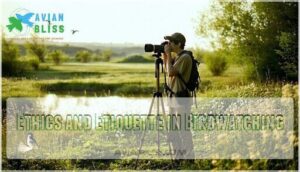
You need to respect birds and their habitats by minimizing disturbance and following access rules. Careful observation and responsible recording help protect both wildlife and the environment.
Minimizing Disturbance to Birds
With a Quiet Approach and Slow Movement, you’ll reduce bird stress and boost your chances of Hidden Observation.
Use Bird Blinds and Camouflage Gear for ethical practices and distance observation.
Always show habitat respect—Leave No Trace behind.
Think of yourself as a guest in their world, keeping noise low and avoiding sudden moves to protect their routines, and remember to follow ethical practices.
Following Trails and Access Rules
Respecting birdwatching ethics means sticking to Trail Etiquette and following birdwatching guidelines.
When you pick a location, remember:
- Stay on marked paths for Habitat Preservation.
- Get Access Permissions or birdwatching permits if needed.
- Avoid restricted areas to support Wildlife Protection.
- Leave no trace to aid Conservation Efforts.
Birdwatching access depends on responsible choices—don’t wander off!
Responsible Use of Bird Calls and Playback
In the context of bird behavior observation techniques, Bird Call Ethics matter.
Limit playback calls to under two minutes, especially during nesting season.
Responsible birdwatching means using Playback Techniques sparingly and relying on Call Recognition and passive listening.
Choose Audio Equipment that records rather than broadcasts.
Sound Management helps protect sensitive species and supports ethical birdwatching.
Follow birdwatching ethics for lasting enjoyment.
Recording Sightings Without Impact
Slip into the background with a Silent Approach and Minimal Gear.
Jot down bird behavior observation details using a notebook or birdwatching app—no flashy equipment needed.
Ethical Recording means you stay low impact, never disturbing the birds.
Stick to birdwatching ethics: be discreet, record sightings quietly, and let the birds go about their day, none the wiser, with a Minimal approach.
Frequently Asked Questions (FAQs)
How do bird scientists make observations?
Listen for calls, look for patterns, and jot down notes—you’re channeling your inner scientist.
You use binoculars, notebooks, and sometimes apps to observe birds, record every detail, and track everything, just like the experts do.
How to observe a bird?
Find a quiet spot, stay still, and watch for movement.
Use binoculars to spot details like color, shape, and behavior.
Jot down notes about calls, feeding, or flight patterns.
Patience brings the best sightings.
What are the techniques for hazing birds?
Did you know 90% of bird hazing relies on visual or auditory deterrents?
You can use reflective tape, loud noises, or predator decoys to gently discourage birds from nesting or feeding in unwanted areas without causing harm.
What is an example of a learned behavior in birds?
You’ll notice birds like crows learning to use sticks to dig for food.
That’s a classic example of learned behavior.
They watch others, experiment, and adapt, showing intelligence and problem-solving skills beyond simple instinct.
How can weather affect bird behavior observation?
Weather shapes your birdwatching game.
Rain keeps birds low and quiet, while sunny mornings spark singing and feeding.
Wind scatters flocks or grounds them.
Cloudy skies stretch activity, making those rare sightings possible if you’re patient, and overall, weather conditions like sunny mornings significantly impact your birdwatching experience.
What clothing best suits long birdwatching sessions?
Go for light, earth-toned layers and waterproof, quiet footwear so you can blend in and stay comfy all day.
Toss in a hat and long pants—you’ll dodge sunburn, bugs, and sudden chills.
You’ll thank yourself later, for taking the time to prepare with complete concepts in mind.
How do birds react to human presence nearby?
Roughly 70% of birds will flee if you get too close—think of them as jumpy neighbors watching out for threats.
You’ll see them freeze, hide, or dart away, so keep quiet and move slowly to blend in.
What safety precautions are needed in remote areas?
Carry a charged phone, share your location, and pack extra water and snacks.
Dress for the weather, use insect repellent, and wear sturdy boots.
Stay on marked paths, watch for wildlife, and always let someone know your plans.
How can group birdwatching impact observations?
Like a flock working together, group birdwatching lets you spot more species and share knowledge.
You’ll cover more ground, but noise and movement can scare birds away, so coordinate quietly and keep conversations low.
Conclusion
Did you know that over 10,000 bird species display unique behaviors worldwide?
By using bird behavior observation techniques, you’ll spot patterns in feeding, migration, and social interactions.
Remember, detailed notes and the right tools help you track changes over time.
Stay alert for calls and movement, and choose habitats wisely.
Stick to ethical guidelines to avoid disturbing birds.
With patience and attention, you’ll gain valuable insights into bird life and improve your birdwatching skills every day.
- https://klamathbird.org/science/methods/
- https://www.uvm.edu/femc/attachments/project/1345/TB153_chapter4.1_.pdf
- https://www.parks.ca.gov/pages/734/files/imap%20bird%20protocol%20table%20.pdf
- https://theoryandpractice.citizenscienceassociation.org/articles/10.5334/cstp.604
- https://www.fws.gov/sites/default/files/documents/2024-04/904.pdf